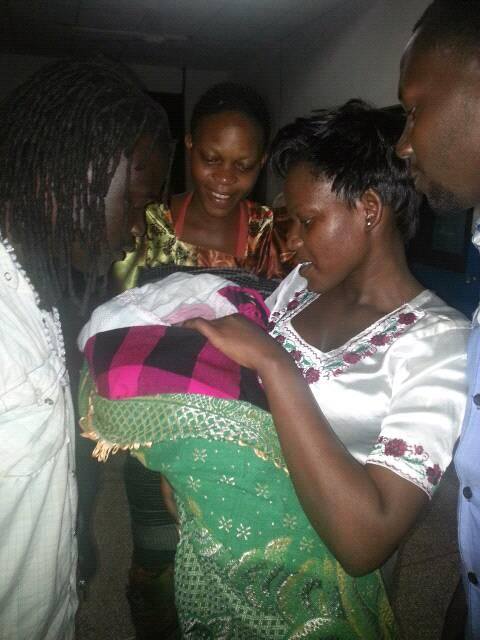
MOTHER AND CHILD LOVE: Henry Tigan's better half cuddles the new-born baby. Both are reportedly in good health.
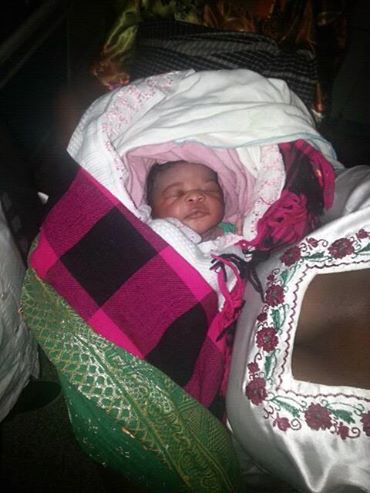
Henry Tigan is now a father! The ‘Aneganye’ singer was this morning blessed with a baby girl, a development that has left the musician who is trying to re-launch his career, a happy man.
BUNDLE OF JOY: Henry Tigan’s baby girl.
“Thanx for ur prayers #tusumulukuse #tulibaawo it was a hard time……twegweko in another party #tigan’s family baby gal.” Both baby and mother are doing well, he says.
For those familiar with the music industry, this is indeed a good year for Tigan, a musician once ranked among the biggest artistes in the country.
Indeed, his ‘bundle of joy’ comes just weeks after the musician belted ‘Webale Mukama’, a gospel song which is doing well on local airwaves, after about 10 years in music limbo. Earlier this year the musician also completed construction of his house.
Congs Henry Tigan!
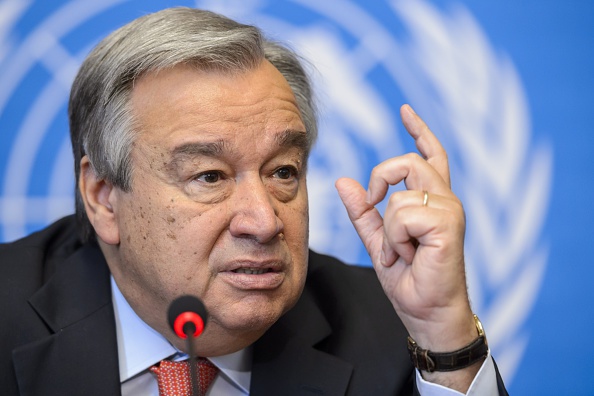
SOUGHT BY MACHAR: The incoming United Nations Secretary General Antonio Guterres at a past press conference. PHOTO / FABRICE COFFRINI /AFP/Getty Images)
Despite putting up a record seven candidates, the post of United Nations Secretary General is still elusive for women, as Portugal’s former Prime Minister Antonio Guterres is poised to become the next UN top diplomat.
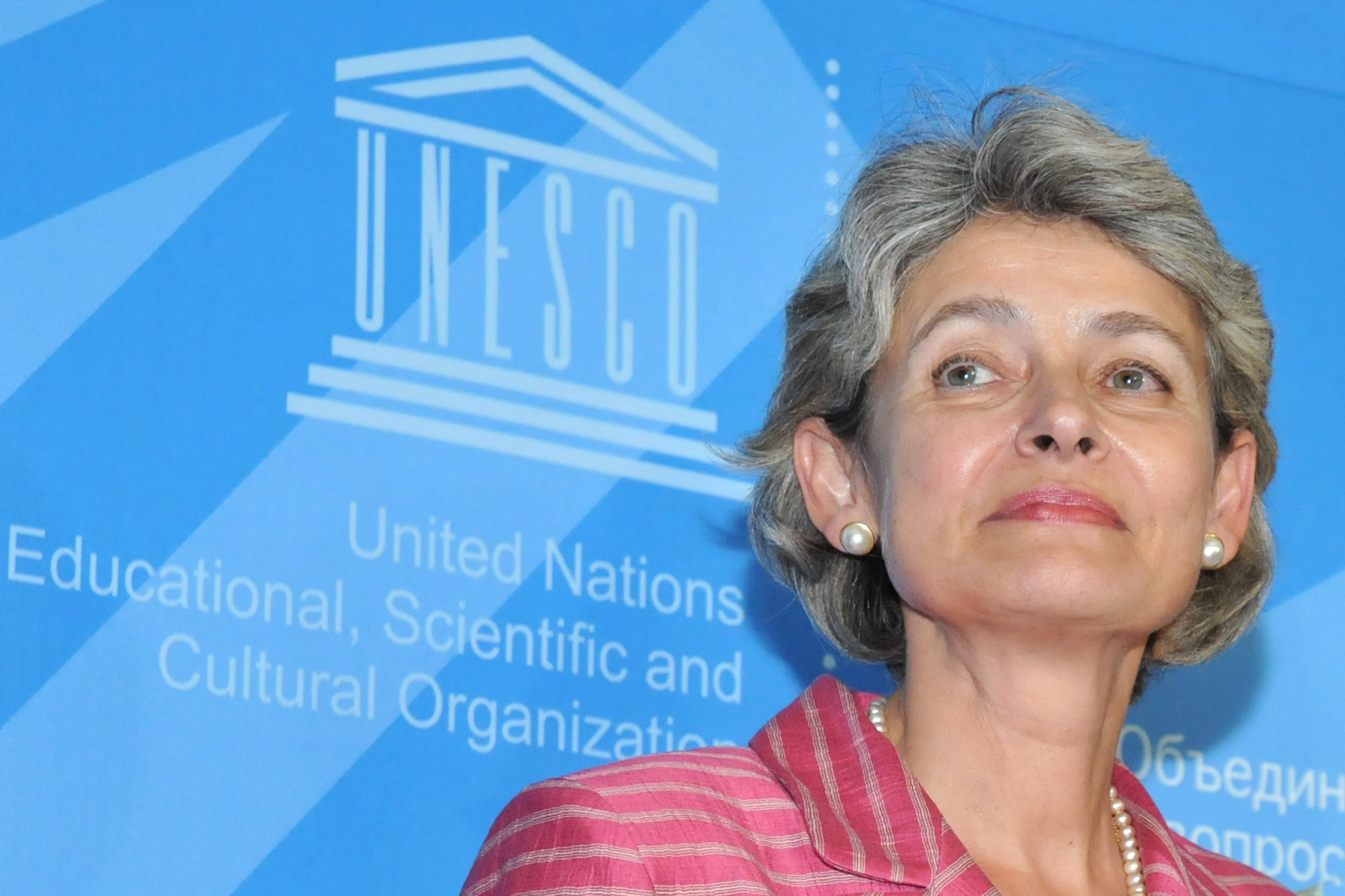
TOP WOMAN CONTESTANT: Irina Bokova, the UNESCO Director General
The UN has never had a woman in the top job and of the 13 candidates this year, seven were women, including: Irina Bokova, 63 – Bulgarian politician and director general of Unesco; Helen Clark, 66 – former prime minister of New Zealand (1999-2008) and current head of the UN development programme; Natalia Gherman, 47 – Moldovan politician who was deputy prime minister and minister of European integration from 2013-2016.
Others are Vesna Pusic, 62 – Leader of the liberal Croatian People’s Party. Served as a first deputy prime minister and minister of foreign and European affairs until January this year and, Kristalina Georgieva, 63, who was announced just days ago, current European Commissioner for budget and human resources.
In the end, the highest-placed woman, Irina Bokova, came fourth, after Serbian candidate Vuk Jeremic, a former president of the UN General Assembly, who came second, followed by Slovakia’s Miroslav Lajcak.
But Mr Guterres, 67, was the ‘clear favourite’, Russia’s UN ambassador Vitaly Churkin announced, and formal vote will take place in the UN Security Council today to confirm the choice of nominee.
Mr Guterres, who led the UN refugee agency for 10 years, will take over from Ban Ki-moon early next year.
Who is Guterres?
An engineer by trade, Mr Guterres first entered into politics in 1976 in Portugal’s first democratic election after the “Carnation revolution” that ended five decades of dictatorship.
He quickly rose in the ranks, becoming leader of the Socialist party in 1992 and was elected prime minister in 1995.
As head of the UNHCR refugee agency from 2005 to 2015, Mr Guterres led the agency through some of the world’s worst refugee crises, including Syria, Afghanistan, Iraq.
During that time, he repeatedly appealed to Western states to do more to help refugees fleeing the conflicts.
Former Portuguese President Anibal Cavaco Silva said earlier this year that Mr Guterres had ‘left a legacy’ at the refugee agency ‘that means today he is a respected voice and all the world listens to him’.
How has the world reacted?
Russia’s ambassador and current head of the UN Security Council, Vitaly Churkin, said all the candidates had ‘a lot of wisdom, understanding and concern for the fate of the world’, but “we have a clear favourite, and his name is Antonio Guterres”.
There was some disappointment among campaigners who had hoped for a first female secretary general, or a candidate from Eastern Europe – which has never held the position.
But the process was ‘remarkably’ uncontroversial, said Samantha Power, the US representative to the UN.
“In the end, there was just a candidate whose experience, vision, and versatility across a range of areas proved compelling,” she said, adding that the process involved more scrutiny than ever before.
“People united around a person who impressed throughout the process.”
The UK’s Matthew Rycroft said Mr Guterres “will take the United Nations to the next level in terms of leadership” and be “a moral authority at a time when the world is divided on issues.”
How is the UN Secretary General appointed?
The 15-member Security Council cast secret ballots for each of the 10 candidates on Wednesday and none were found to oppose Mr Guterres.
They were asked to select from a choice of ‘encourage’, ‘discourage’ or ‘no opinion’ for each candidate, with the former Portuguese prime minister receiving 13 ‘encourage’ votes and two ‘no opinion’ votes.
He beat nine other candidates, including EU budget commissioner Kristalina Georgieva from Bulgaria, to become the next UN chief.
His nomination came despite a concerted effort to appoint the UN’s first female secretary general.
A formal vote will take place today to recommend Mr Guterres to the UN General Assembly, which must approve his nomination.
In January 2017, Mr Ban will stand down after 10 years at the helm.
The post lasts for five years but is limited to a maximum of two terms.
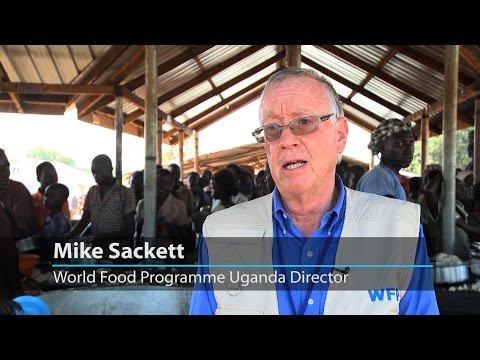
PARTIALLY RELIEVED: WFP’s Acting Country Director, Mike Sackett
The United Nations World Food Programme (WFP) has lauded the United Kingdom for recent contributions of more than US$21 million to support WFP’s food assistance programmes in Uganda, noting that the funds are already making a difference for people in Karamoja and for refugees.
The UK government provided US$12.4 million for community-based projects and nutrition assistance in Karamoja, and US$9.2 million to help WFP provide lifesaving food assistance for refugees.
“Currently Uganda hosts more than 660,000 refugees, most of who rely heavily on WFP’s assistance for survival. There is no way we can meet all their needs without generous contributions, such as this one from UK Aid,” said WFP’s Acting Country Director, Mike Sackett.
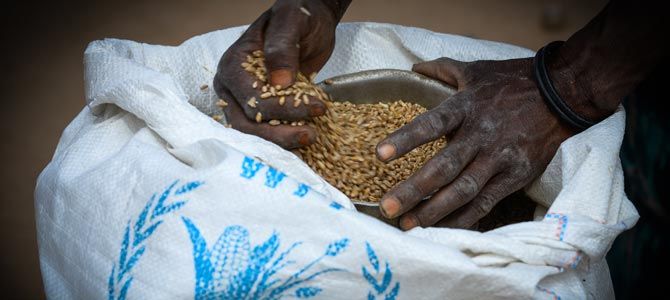
FOOD: In-kind food assistance
The UK Aid funding will help WFP, working closely with the UN refugee agency UNHCR, to provide two types of support for refugees: monthly food assistance – in the form of either food or cash – and livelihoods support aimed at reducing post-harvest food losses.
“WFP needs about US$7 million per month to meet the food needs of more than half a million refugees in Uganda, and these costs will continue to rise as the number of refugees grows,” Sackett said.
Since August, a shortage of funds had forced WFP to cut food assistance in half for all refugees who arrived in Uganda before July 2015 – with the exception of particularly vulnerable groups such as orphans, the elderly, or people who are chronically ill and malnourished – in order to prioritize food assistance for refugees who have arrived more recently. That reduction remains in place, but the UK Aid funding helps WFP avoid deeper cuts, and enables WFP to continue providing life-saving assistance for people seeking refuge in Uganda from recent conflict erupting in their home countries. This includes more than 180,000 South Sudanese refugees who have sought shelter in Uganda in the last three months.
Increasingly, WFP is providing food assistance to refugees through cash transfers so they can buy the food they prefer in the local markets. Cash allows refugees to buy fresh foods and other items to diversify their diets, and stimulates local economies by increasing demand for locally produced food. WFP currently assists 65,000 refugees in Uganda with cash, and plans to expand cash-based assistance to 140,000 people by the end of the year, using funding from UK Aid and other donors.
The UK funds will also help sustain WFP’s livelihoods support activities, which assist longer-term refugees and host communities achieve self-reliance and peaceful co-existence. WFP specifically supports refugees and host communities to reduce post-harvest food losses. Such activities are part of a UN initiative – the Refugee and Host Population Empowerment strategy, or ReHOPE – which supports the government’s Settlement Transformative Agenda, part of the second National Development Plan.
This year the United Kingdom is the second largest contributor to WFP’s programmes in Uganda, and the largest donor to WFP’s nutrition and resilience activities in Karamoja.
The new UK funds will enable WFP to continue assisting nearly 200,000 people in Karamoja who are participating in the public works programme. The UK contribution will also make it possible for WFP and the Ministry of Health to provide specialized nutritious food to treat 65,000 malnourished children and adults in the region.
“The nutrition and public works activities in Karamoja are assisting Uganda to address chronically high rates of acute malnutrition, while helping communities build their resilience to shocks and stresses by creating productive assets,” Sackett said. These assets include water ponds and irrigation projects. As communities build them, individual households will participate in income-generation activities such as cultivation of vegetables and drought resistant staple crops for consumption and sale.
The UK Aid grant also allows WFP to support the creation of a digital information management system in Karamoja so that the Government and development partners can avoid gaps and duplication in assistance. The new digital system will contain information about social assistance programmes in Karamoja, and highlight which households are receiving support from the various programmes. The system will boost transparency, efficiency and accountability, and provide crucial information for monitoring the effectiveness of programmes.
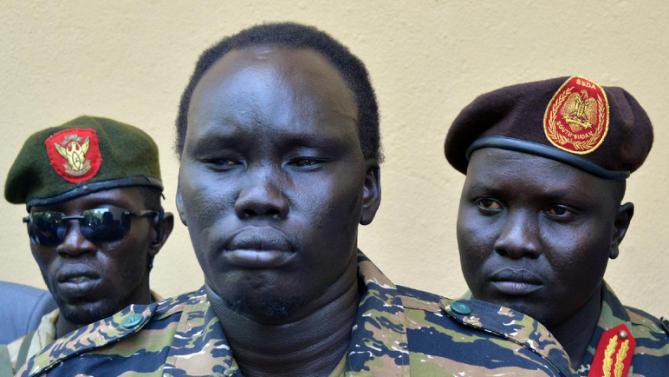
ON WATCH LIST: South Sudan Deputy Defence Minister General David Yau Yau. Photo credit/equatoriaunion1870.wordpress.com
South Sudan’s security and military intelligence officers have put the country’s deputy defence minister General David Yau Yau and several other members of ethnic Murle officers in the army on watch list, saying their past conduct and actions warranted a close monitoring to gauge whether they are part of the recent decision by some of their members to defect to wage an armed struggle.
Several security personnel and military intelligence officers said that Gen Yau Yau has not been placed under house arrest but that he and several of his colleagues have been put on a watch list after his former deputy in the South Sudan Democratic Movement/Army-Cobra Faction (SSDM/A-Cobra Faction) General Boutrus Khalid, defected from the government last week.
The group, based in Pibor county of Boma state, home for ethnic Murle, declared to wage an armed struggle with the liked minded opposition groups, probably under the leadership of former First Vice President, Riek Machar, to change the regime in Juba.
A high ranking military official denied rumoured orders to arrest Gen Yau Yau but added that he is being monitored closely in case he may decide to defect too.
“Actually I am not aware of such orders as having come from the president or anybody in the Security Council. What I know, and which is a normal practice in the security for precautionary and preemptive measures that such people, like David Yau Yau, who is known for changing sides, are usually placed under closed monitoring and surveillance measures,” the military official said when asked to comment on reports alleging David Yau Yau had been put under house arrest in Juba.
“You know Yau Yau is unreliable. Who knows, he may be part of the conspiracy behind the recent defection. For this reason, he and some of his group [members] need to be closely watched until they prove otherwise,” he said.
Gen Khalid declared his defection last week and claimed he defected with 16,000 soldiers of the SSDM/A. Other sources also said another officer has recently defected to the opposition with 5,000 troops to join General Khalid.
Senior officials in Boma state, including governor Baba Bedan, have however downplayed the defections, saying it will not impact on the situation on the ground.
Observers however say the defection may result into renewed violence in Jonglei state which had experienced violence pitting government forces against those of the ethnic Murle fighters between 2010 and 2014.
The opposition fighters signed a peace agreement with the government in 2014, but have accused the government of not implementing its provisions.
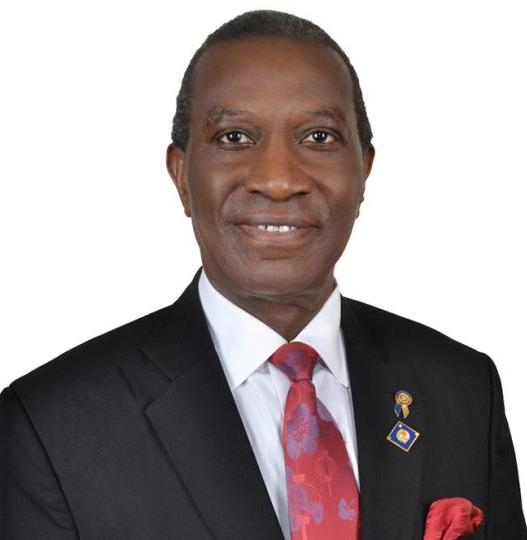
DEDICATED TO ROTARY VISIBILITY: Incoming Rotary International President Samuel Owori.
The membership and visibility od Rotary Clubs around the world is the priority for incoming President Samuel Owori, a Ugandan banker and humanitarian.
According to Owori, who becomes the 108th president beginning July 1 next year, world needs to know and understand Rotary’s impact and values of advancing international understanding, goodwill and peace aimed at ‘improving lives and bringing positive, lasting change to communities around the world’.
“We are all too busy and we’ve lost our patience. Through friendship and service, membership in Rotary offers countless ways to connect and create meaningful change in your community, as well as opportunities to see the world through a more global lens,” Mr Owori was quoted as saying on the occasion of being confirmed as ‘president-nominee’ of Rotary International.
“Rotary has become a way of life for me – with the intrinsic value and core belief in mutual responsibility and concern for one another as a cornerstone. I feel immense satisfaction knowing that through Rotary, I’ve helped someone live better,” Owori, who has been a Rotarian for 38 years, said.
The logo of Rotary International
Rotary members contribute their time, energy and passion to carry out impactful and sustainable projects in the areas of peace and conflict resolution, disease prevention and treatment, water and sanitation, maternal and child health, basic education and literacy, and economic and community development, and in Uganda Mr Owori is famed for playing an instrumental role in growing the number of Rotary Clubs from nine to 89 over the course of 29 years.
As president, Owori will oversee Rotary’s top humanitarian goal of eradicating the paralyzing disease polio. Rotary launched its polio immunization program PolioPlus in 1985, and in 1988 became a spearheading partner in the Global Polio Eradication Initiative with the World Health Organization, UNICEF, US Centers for Disease Control and Prevention (CDC), and was later joined by the Bill & Melinda Gates Foundation. Since the initiative launched, the incidence of polio has plummeted by more than 99.9 percent, from about 350,000 cases a year to 26 confirmed to date in 2016. Rotary has contributed more than US $1.6 billion and countless volunteer hours to immunize more than 2.5 billion children in 122 countries.
Currently, Owori is chief executive officer of the Institute of Corporate Governance of Uganda, and before that he was executive director of the African Development Bank, managing director of Uganda Commercial Bank Ltd., and director of Uganda Development Bank. He has studied law, employment relations, business management, corporate resources management, microfinance, and marketing at institutions in England, Japan, Switzerland, Tanzania, and the United States, including Harvard Business School.
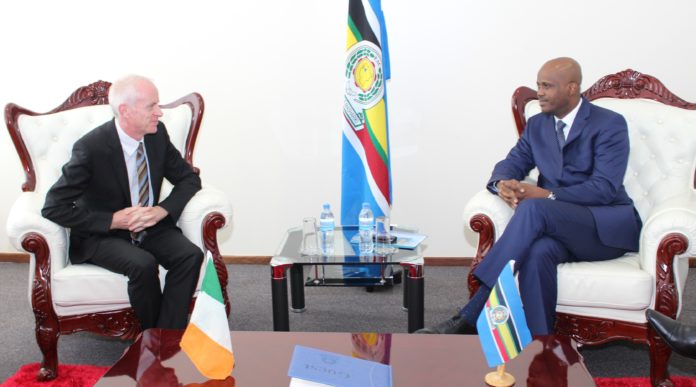
CORDIAL TALKS: The East African Community Secretary General Amb. Liberat Mfumukeko (right) holds talks with the Irish Ambassador to Tanzania and the EAC, H.E. Paul Sherlock, at the EAC Headquarters in Arusha, Tanzania. The two leaders discussed various issues including the status of the EAC-EU Economic Partnership Agreements (EPAs) and the Inter-Burundi Dialogue.
The Secretary General of the East African Community Liberat Mfumukeko and the newly-accredited Irish Ambassador to the community Paul Sherlock have discussed several issues including the status of the EAC-EU Economic Partnership Agreements (EPAs) and the Inter-Burundi Dialogue.
The two also explored areas of collaboration in trade and investment, agro-processing, tourism and ICT, with the Secretary General informing Amb Sherlock that the EAC Secretariat was ready to mobilize and send an EAC Mission to Ireland to meet the Irish Chamber of Commerce and Industry, Tourism and Investment Agencies, and other stakeholders to concretize the specific areas of cooperation.
DISCUSSED TRADE TIES: EAC Secretary General Amb. Liberat Mfumukeko (left) with the Irish Ambassador to Tanzania and the EAC, H.E. Paul Sherlock, after they held bilateral talks at the EAC Headquarters in Arusha, Tanzania. They explored areas of collaboration in trade, investment, agro-processing, tourism and ICT. Photo credit/EAC
Amb Mfumukeko and Mr Sherlock made the deliberations during the hand over of the Irish envoy’s accreditation letter dated August 30, 2016 from the Irish Minister of Foreign Affairs Mr Charles Flanagan, addressed to the EAC Secretary General, appointing Amb Paul Sherlock as the Irish representative to the EAC.
During the talks the Secretary General also briefed Amb Sherlock on the current achievements in the pillars of the regional integration and development process. He said the Community had expanded tremendously within a short spell of time, which has necessitated the Community to review its institutional set-up and work on sustainable financing mechanism.
Amb Mfumukeko further informed his guest of the reforms instituted within the EAC, aimed at cost cutting and prudent financial management.
In his remarks, Amb Sherlock hailed the Secretary General for the good work done in deepening the regional integration agenda. He said achieving the Customs Union and the Common Market and moving towards a Monetary Union within such a short time for the Community was commendable.
Present at the accreditation ceremony were Mr Robert Hull, the Second Secretary at the Embassy of Ireland in Dar es Salaam, Deputy Secretaries General Mr. Charles Njoroge (Political Federation) and Hon. Christophe Bazivamo, and other senior officials at the EAC Secretariat.
Rt. Hon. Rebecca Kadaga takes oath as a Member of the 10th Parliament in Kampala on Monday. (Source: @Parliament_UG)
The Cuban government will help train Ugandan workers pursuing the healthcare vocation at various universities in the country.
“Cuba will continue to support Uganda through human resource training at several Uganda Universities. Healthcare is one of the key areas that will form part of our cooperation,” the Cuban Vice President Salvador Valdes Mesa, while meeting the Speaker of Parliament Rebecca Kadaga.
According to Vice President Mesa, his visit to Uganda was aimed at reactivating the historic ties that the two countries have shared since the independence and liberation movements of the 1960s.
Mr Mesa also announced plans to have Uganda tap into the unique methods that the government of Cuba has used over the years to eradicate illiteracy.
“Other than the scientific innovations that have seen Cuba produce unique medicines to cure diabetes hepatitis B and Meningitis, Cuba has also used cost effective but very efficient methods to educate its population,” he added.
In response Speaker Kadaga, who met Mr Mesa at Parliament on October 5 applauded the government of Cuba on advancements in health and scientific innovation, and called for strengthening of ties between the two states.
“Uganda has undertaken a programme to reskill our youth. We call for support in technical education that will enable our population to become entrepreneurs,” she added.
Kadaga also called for an end to economic and financial sanctions placed on Cuba by the United States government since the 1960s.
She condemned the sanctions and reaffirmed the commitment of Parliament to have the embargo lifted.
“We condemn the over 50 years blockade. It was not justified in the first place. We shall continue to demand for an end to the sanctions,” she told the visiting Cuban delegation.
Kadaga also announced plans to revamp the Uganda- Cuba Parliament friendship Association that will enable legislators in both states exchange skills and ideas.
Ugandan Legislator and Parliament Commissioner Cecilia Ogwal applauded Cuba for its milestones in empowering women who constitute 66% of the professional scientific labour force.
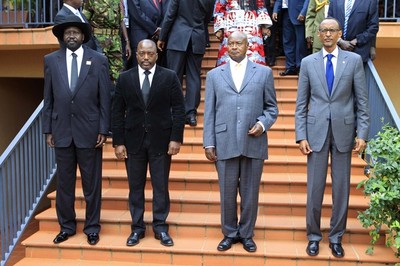
THE EAC REGION POWER MEN Presidents (from L) Salvar Kiir of South Sudan, Joseph Kabila of the Democratic Republic of Congo, Yoweri Museveni of Uganda and Paul Kagame of Rwanda pose for a photo opportunity.
Troops loyal to Riek Machar, South Sudan’s former first vice president, currently in the Democratic Republic of Congo (DRC), would be welcome in South Sudan areas controlled by the Sudan People’s Liberation Army in opposition (SPLM-IO), says Machar spokesman James Gadet Dak.
This, following a military confrontation in South Sudan between opposing forces loyal to President Salva Kiir and his former first vice president in the capital, Juba.
Dak’s comment came after the government in Kinshasa, citing security concerns, reportedly told the United Nations peacekeeping force in the DRC (MONUSCO) to remove about 750 troops loyal to Machar from its territory.
The troops accompanied Machar who crossed into the DRC where he was rescued and given medical attention by the UN mission. He is currently in the Sudanese capital, Khartoum, but his troops who have been disarmed, remain in the DRC.
The UN mission is providing shelter to the SPLIM-IO troops, near Goma, in the North Kivu province in the DRC. Residents in North Kivu expressed concern that the presence of SPLM-IO troops is creating tension. They say national troops from South Sudan could attack the area because of the presence of troops loyal to the former first vice president.
“Our forces do not intend to stay longer in the Democratic Republic of Congo. They went there to accompany Dr. Riek Machar when he was chased across the border and he was also airlifted and relocated to Sudan where he is now,” Dak said. “So the forces were supposed to follow him to come back to our liberated areas in our headquarters in Pagak. So if the United Nations can do that, then we have no problem about that.”
Last month, Machar called for an armed struggle against Kir’s government, a move observers say could mark a resurgence of the country’s civil war. This, following a statement after a meeting in Khartoum of Machar’s SPLM-IO.
Opponents say Machar should be prosecuted at the International Criminal Court for war crimes and crimes against humanity if he engages in any military confrontation with the government in Juba.
But Dak says that it is Kiir who should face the ICC, and insists Machar remains the legitimate first vice president, even after Kiir replaced him in July with Taban Den Gai. East African regional groups and the international community appear to back his appointment as the country’s first vice president to partner with Kiir in the implementation of the peace agreement ahead of an election.
Kiir and Machar signed a peace agreement in August 2014 to end South Sudan’s more than two years of civil war.
“The legitimate first vice president according to the agreement is Dr. Riek Machar, and anything done illegally should not have been endorsed by the region or the rest of the international community,” Dak said.
“The [prosecution] should go to President Salva Kiir who has violated the peace agreement… We know that war is not good because it would cause further suffering for the people of South Sudan, but what do we do when Salva Kiir has been attacking our forces? So, we naturally have the right to self-defense… What we are saying is that what we want is to resuscitate the peace agreement itself so that it goes back to normal, plus the redeployment of a regional protection force. If this can be done, then we can see a way forward,” Dak added.
Camera shy: The musician ducked from the flashes after he was found active at a beer event during Ramathan
Forget the MTV Africa Music Awards (MAMAs) Bebe Cool has been nominated in another international awards.
His monster song, ‘Love You every day’ has made it to UK’s awards, the London UK Unsigned music Awards.
It has been nominated in international music video category.
It battles other songs like; Burn The Ballroom – Crazy, Madyx – Some Kisses and Lion In The Mane – Waiting.
This year’s awards will be held on October 27 at the Troxy Theatre in London. Laura Whitmore (MTV) and Chris Stark (BBC Radio 1 -The Scott Mills Show) have been announced as the hosts of the first ever Unsigned Music Awards.
The UMAs started last year. Their main focus is mainly on unsigned and independent artists, especially in the marketing of influential high-street brands around the world.
Bebe Cool is among the few African artists that made it to the nominations.
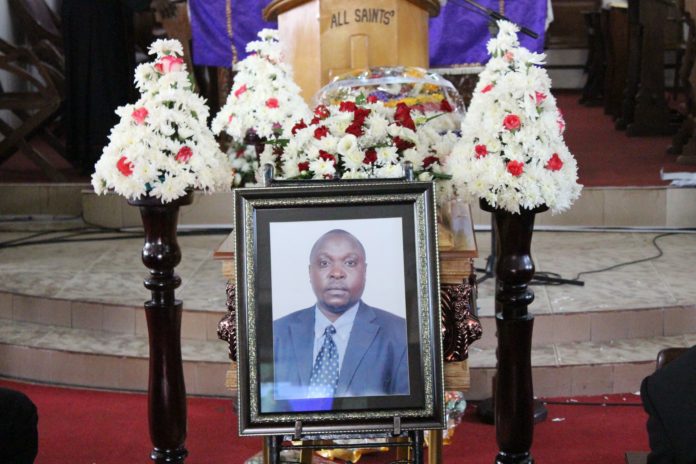
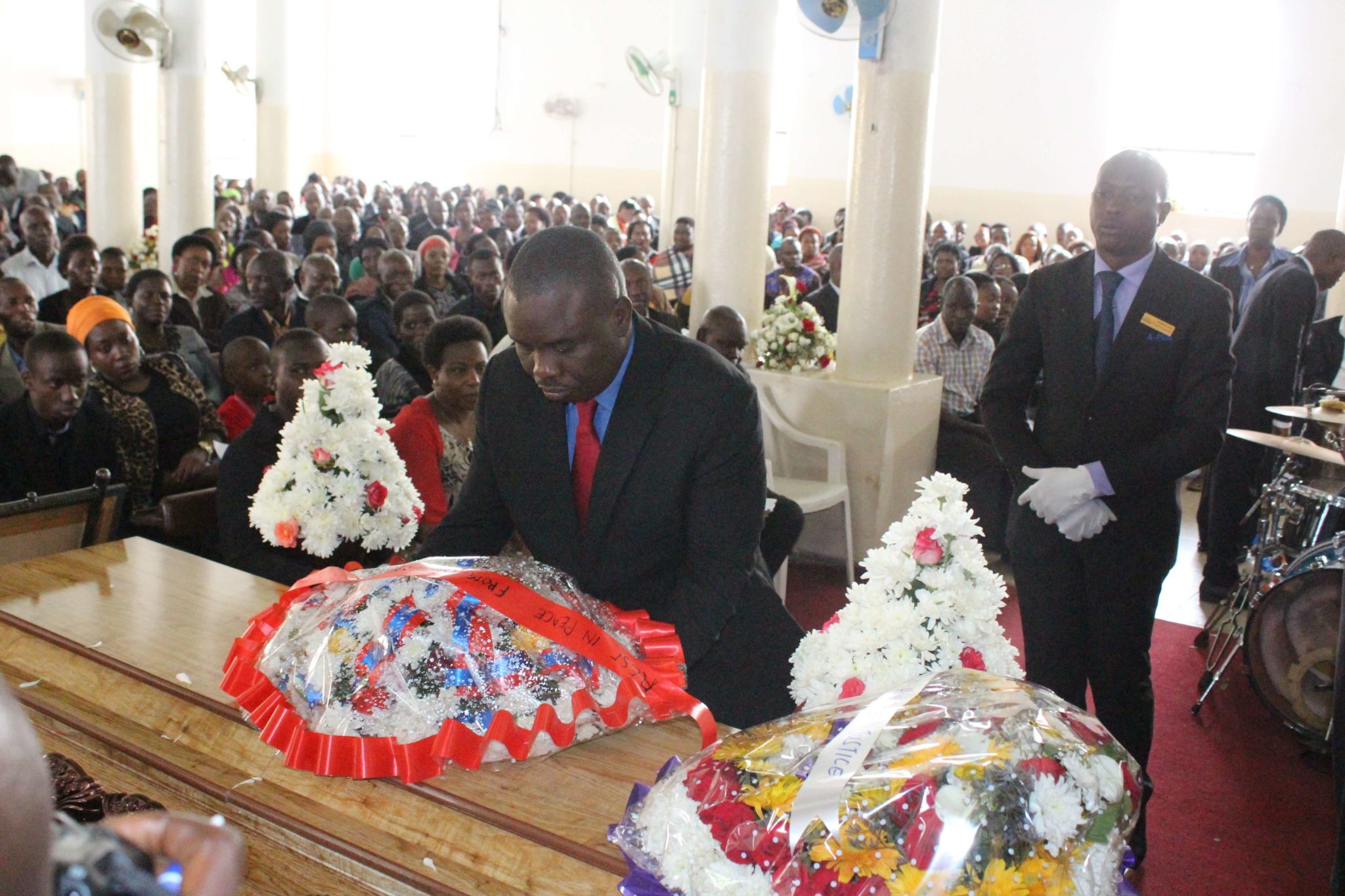
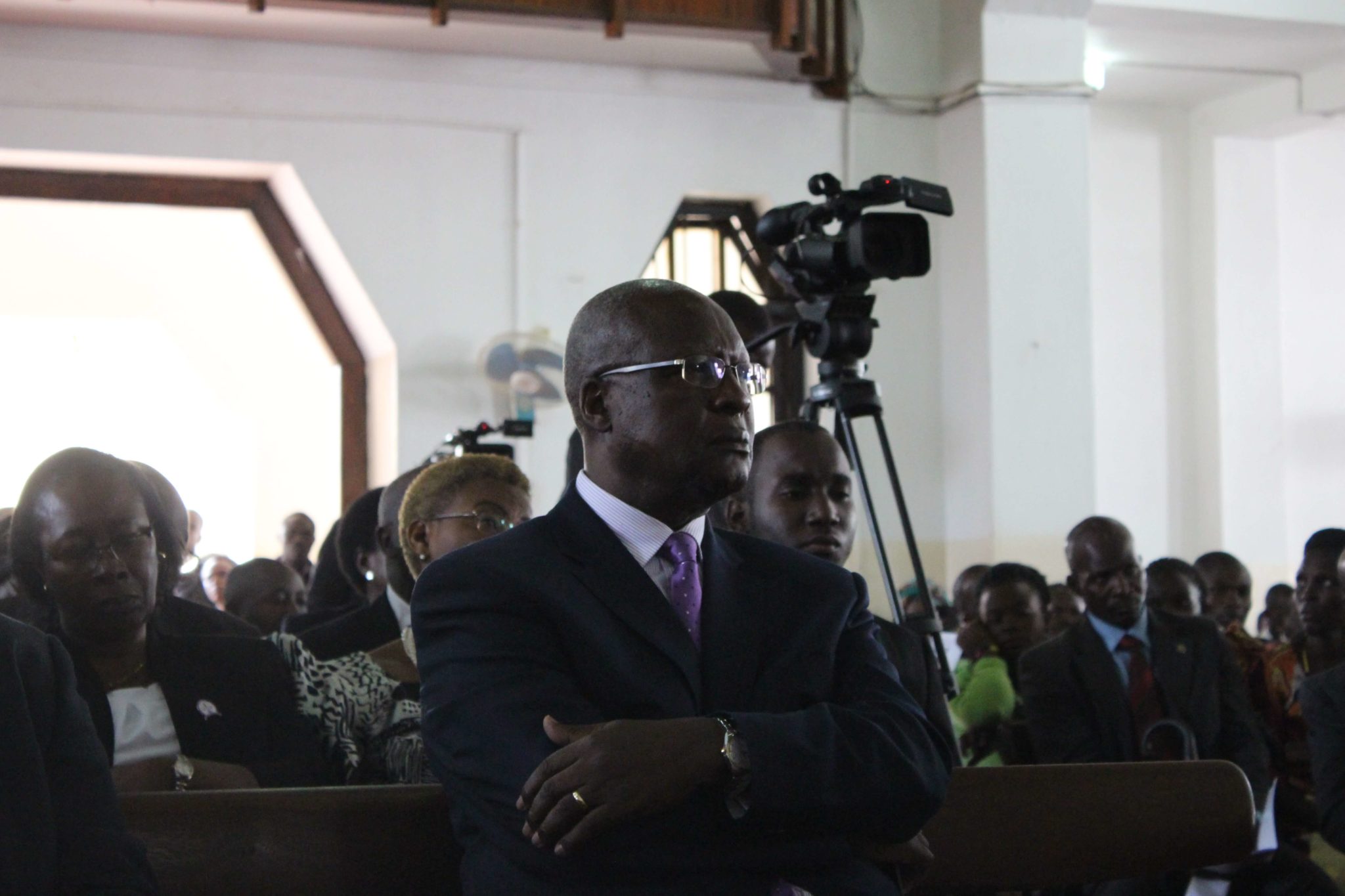
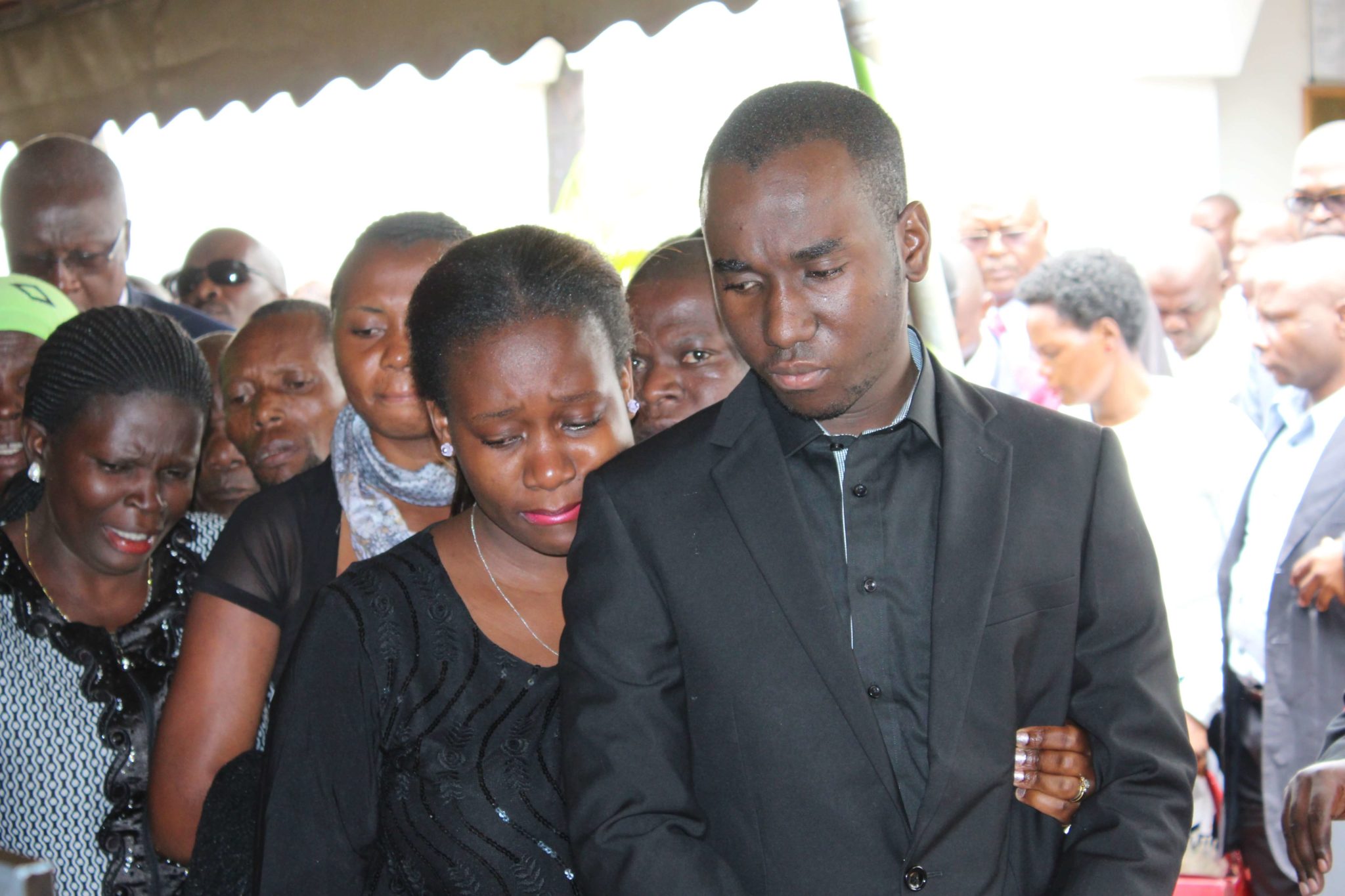
The Chief Justice, Bart Katureebe has praised the deceased Makindye Chief Magistrate’s Court, Richard Mafabi as a great judicial officer who made a great contribution in furthering justice.
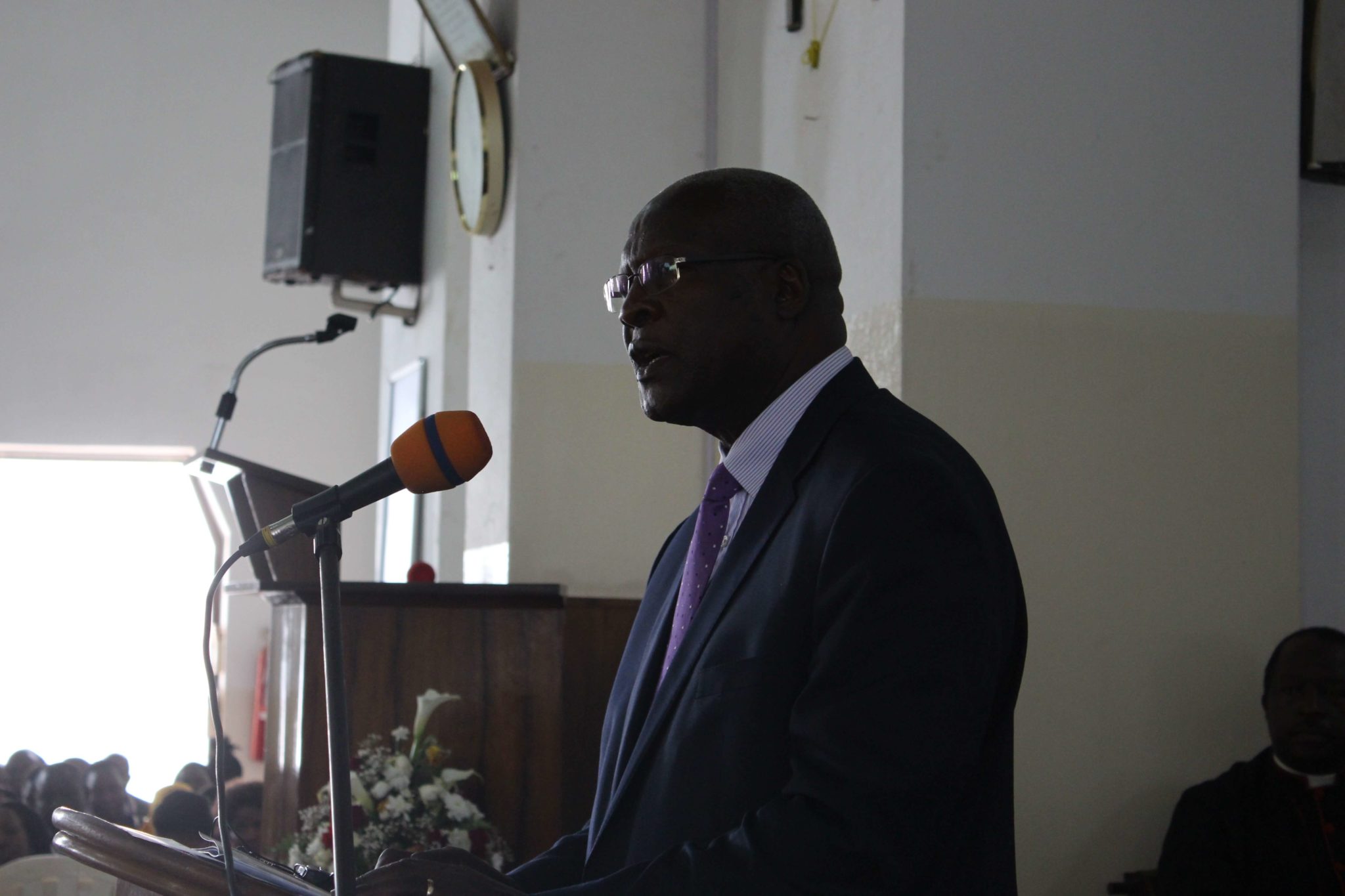
Speaking at a funeral service at All Saint Cathedral at Nakasero this morning, Justice Katureebe said nobody should fear death because once one is born, he/she makes an appointment with death and therefore, the question should be what kind of legacy one leaves behind.
“On Friday, I happen to have been at Royal suits in Bugolobi addressing senior Magistrates and at that very conference, I made reference to the ugly Makindye court saga and I even asked for him to standup for recognition because of his firm stand. And guess what happens on Sunday only getting a Whatsup message that his is dead.” He said
Adding “And what came to my mind first was that this could have been an accident which turned out not be but even now I can’t believe that he is gone but that is life” Katureebe elegized.
Katureebe told the service that although Mafabi was no more, he played his part as he made his contribution and will be remembered for. Katureebe emphasized that Mafabi did what he can using the available means to defend the Constitution.
In reference to the events in Makindye where goons in support of Inspector General of Police Gen. Kale Kayihura surrounded court threatening those that had petitioned court about police brutality. Katureebe said “it is upon us as citizens to enforce rule of law and for us as leaders we must primarily obey the law”
Mafabi issued criminal summons to Kayihura to appear in court in relation to police beating of Kizza Besigye supporters and bystanders.
Kampala Capital City Authority (KCCA) Lord Mayor, Erias Lukwago narrated how events unfolded at Makindye praising Mafabi for being a true patriot and never letting down the rule of law.
Mafabi died on Sunday evening at Mukwaya memorial hospital Nsambya where he had been rushed. The cause of his death is yet to be disclosed as a postmortem report is yet to be made public. He will be laid to rest in Buteza Sub-County in Sironko district on Friday.