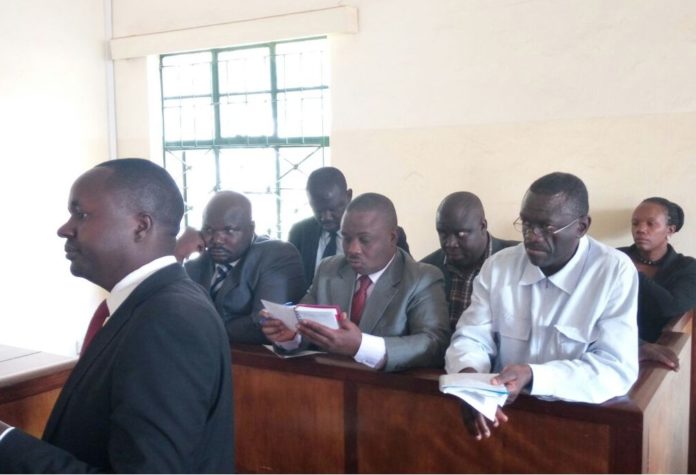
Opposition leader Dr Kizza Besigye, Kampala Lord Mayor Erias Lukwago and Kawempe South MP Mubarak Munyagwa are currently appearing before Agatonica Mbabazi, the Kabale Chief Magistrate, for the hearing of their longstanding case of inciting violence and causing malicious damage.
The former FDC presidential candidate had earlier missed a court appearance in June because he was in jail on treason charges. Besigye has since been released on bail, paving the way for him to be in Kabale for today’s court session.
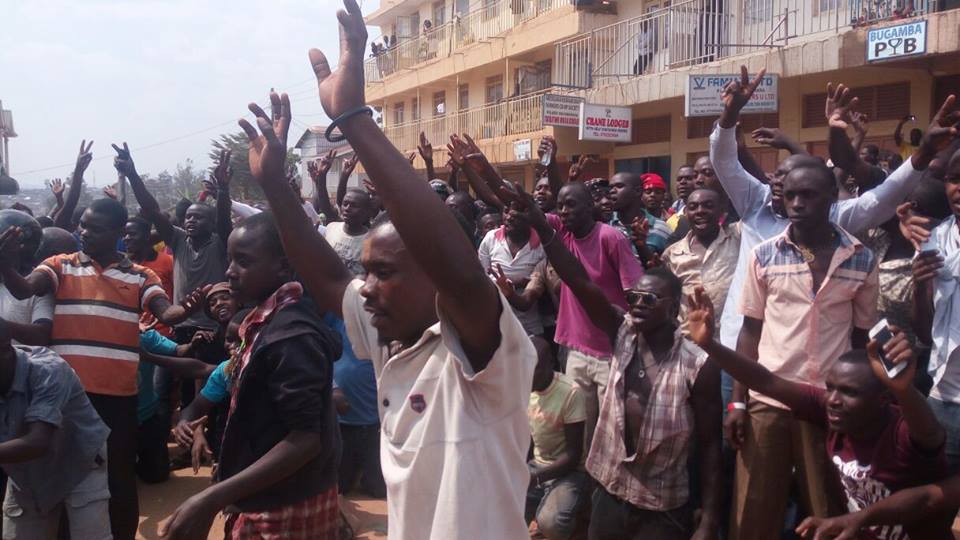
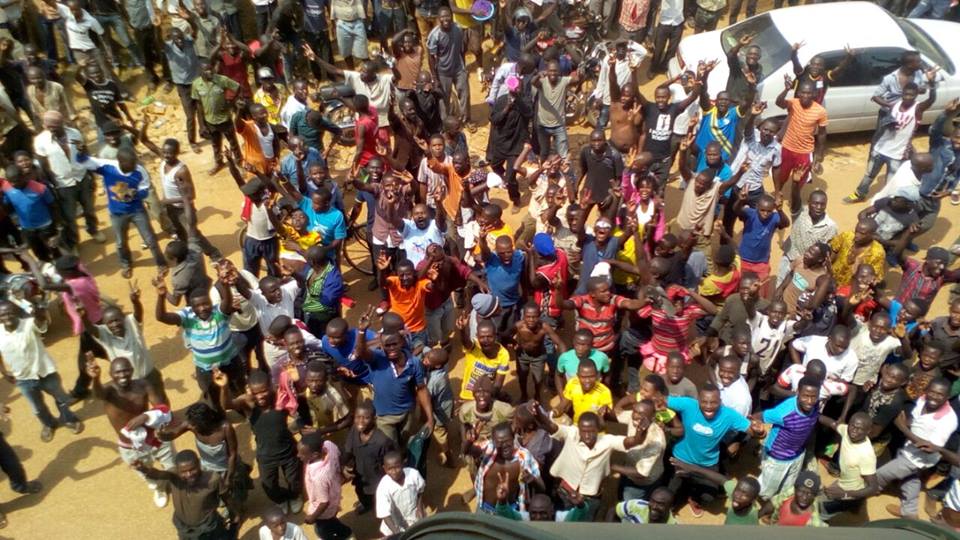
Besigye’s other co-accused include Ingrid Turinaawe, FDC secretary for mobilization, Roland Kaginda, Rukungiri municipality MP, Imam Makumbi, the Mbarara DP chairperson. The five opposition leaders’ procession in Kabale town this morning sent the usually silent south western town into commotion.
The politicians are accused of inciting violence during their rally in Kabale Municipality stadium in 2012. Prosecution claims Besigye and others injured four police officers and vandalized three police vehicles.
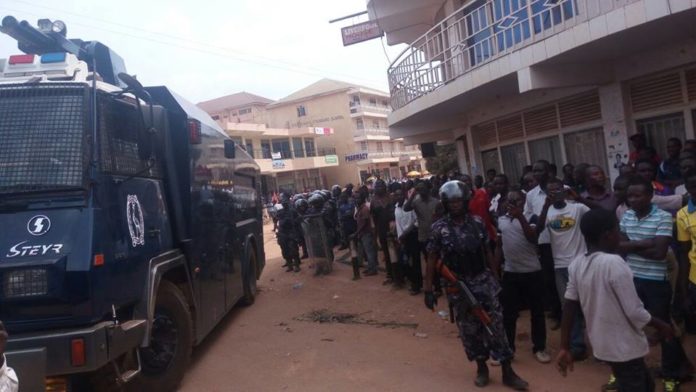
This morning, Police heightened security in Kabale municipality, deploying several patrol vehicles and water cannons trucks along the major roads . Several police officers are also strategically deployed near FDC party offices at Humura House along the Kabale – Katuna road where party members are expected to hold a meeting with Besigye after the court appearance.
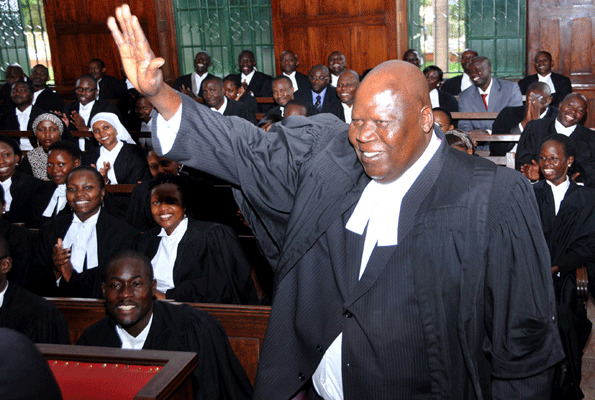
Long serving minister General Moses Ali, 77, is today set to appear before Parliament’s Appointments Committee after he missed the initial process in June while indisposed.
Gen Ali, the 1st Deputy premier, had been lined up to be vetted alongside fellow senior minsters Kirunda Kivejinja (2nd Deputy Premier), Janet Kataaha Museveni (Education), Muruli Mukasa (Public Service), Amelia Kyambadde (Trade, Industry and Cooperatives), Jeje Odongo (Internal Affairs), Vincent Ssempijja Bamulangaki (Agriculture, Animal Industry and Fisheries) but said he had issues with pressure and diabetes. The General has a wound on the right leg resulting from his diabetic ailment but his office says his condition is currently under control.
According to Gen Ali, a team of medics at Nsambya supervised by Dr. Silver Bahendeka looked after him well before he returned home in Naguru, a Kampala suburb where he has been recovering.
Pointing out the enormous contributions to nation building over the years, the General asked the media not to present him in a bad light.
Gen Ali, alongside Second Deputy Prime Minister Kirunda Kivejinja and Justice minister Kahinda Otafiire, are the longest-serving cabinet ministers in the NRM government.
In 1990 Gen Ali did a stint in Luzira prison on allegations of involvement in subversive activities but bounced back in Cabinet on release a year later.
He lost the East Moyo County seat in 2006 and was subsequently dropped from Cabinet. He however, bounced back as MP in 2011 and was appointed First Deputy Prime Minister and Leader of Government Business.
President Yoweri Museveni has paid tribute to the late Gregory Karuretwa who contributed immensely to Uganda’s liberation struggle in the late 80s and early 90s.
The President took time off his busy schedule at the 27th AU summit in Kigali to pay his respects to the late Karuretwa who died in Kigali aged 77 years.
Karuretwa migrated to Uganda in the early 60s as a refugee and settled in Sembabule where he became a progressive farmer and successful businessman.
During the NRA liberation struggle, the late Karuretwa sacrificed a lot of funds, recruited combatants for the struggle and also contributed food essentials to the liberators.
He was awarded the Nalubaale Medal by President Yoweri Museveni for his contribution towards the political development of Uganda either through armed struggle or civilian disobedience or otherwise from colonial times to-date.
With the return of peace in Rwanda, Karuretwa returned to his homeland where he has been living with his family until his death.
The President described the late Karuretwa as a uniting factor for both Uganda and Rwanda and hailed him for his historical contribution to the liberation struggle.
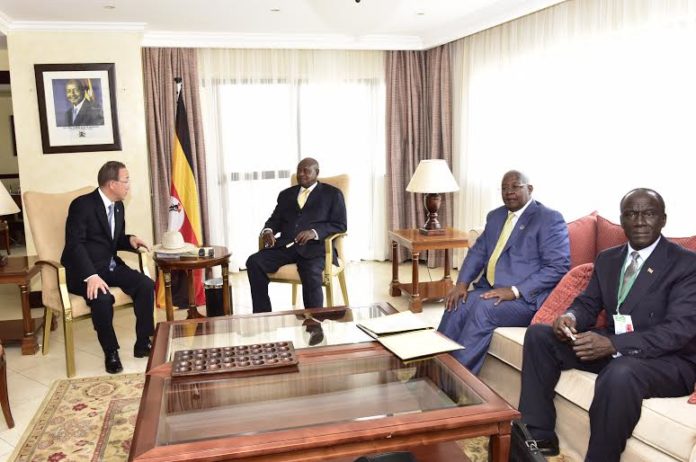
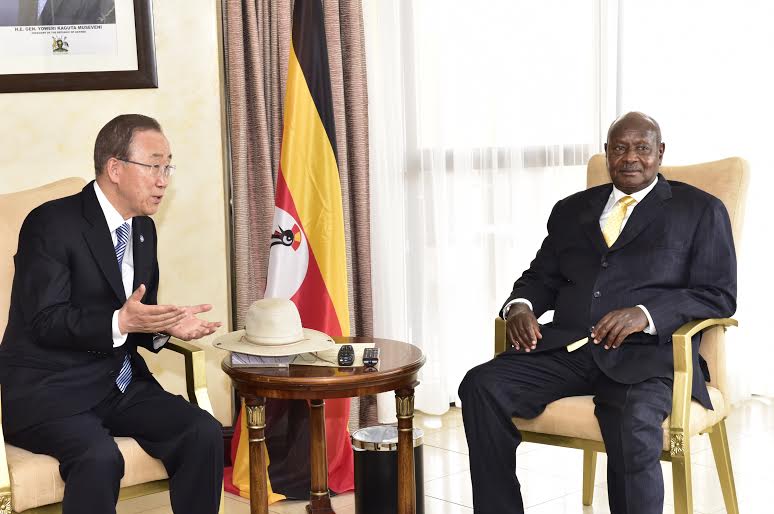
KIGALI-President Yoweri Museveni and United Nations Secretary General Ban Ki Moon are pushing for a strong message to the leaders of South Sudan involved in the conflict whom they said, despite receiving unconditional support regionally and internationally, have squandered the good will that was so generously given at the birth of the new nation.
Recent clashes between South Sudan government and opposition forces left some 272 people, including 33 civilians dead.
President Museveni has proposed three issues that need to be immediately handled including a regional protection force (in the transition period) for Vice President Riek Machar who does not trust SPLA for his protection, no new fighting in Juba and working towards elections and democracy as soon as possible.
“Deal with them carefully and work towards peace and elections. Votes will force them into alliances. Democracy will force them to work together. Now they know they are not accountable to the people,” he said.
Museveni’s recommendations follow UN Secretary Generals’ proposals to the United Nations Security Council to send a strong message to the warring factions in South Sudan including; imposing an arms embargo on South Sudan, sanctions on the people responsible for the violence and fortifying and strengthening the United Nations mission in the country.
Ban Ki Moon said the violation of the ceasefire agreement by the two leaders in South Sudan makes the UN position very the signing of the Belgium striker Michy Batshuayi from Marseille.
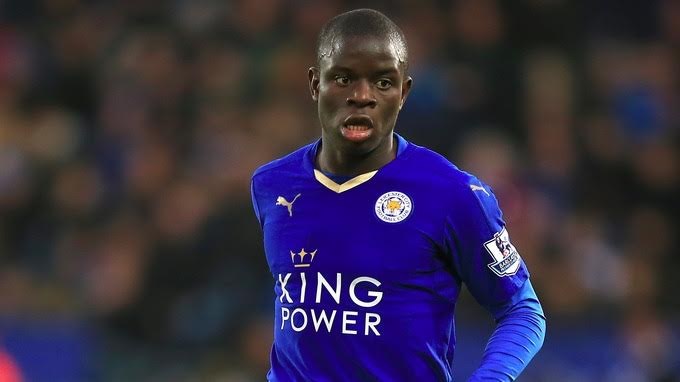
Chelsea FC have completed the signing of French midfielder N’Golo Kanté from Leicester City for a fee of around £32m on a five year deal.
The Premier League champions confirmed that they reached an agreement with Chelsea for the sale of the 25-year-old France midfielder.
Kante makes the move to Stamford Bridge after playing a key role in Claudio Ranieri’s Leicester side winning their first-ever Premier League title in May.
He was offered an improved four-year deal before the start of the European Championships in the hope he would stay and help the club as they enter into their first season playing in the Champions League.
The defensive midfielder joined from Caen last summer for £6m and went on to make 40 appearances in Leicester’s Premier League-winning campaign.
His first season in English football was very special and he hopes to go on to achieve even more during his time as a Chelsea player.
The midfielder decided to join new manager Antonio Conte at Chelsea off the back of his exploits with France at Euro 2016 despite the Blues being unable to offer him Champions League football.
Kanté becomes the second acquisition of the summer for Chelsea, who have already completed
FORUM for Democratic Change strongman, Kizza Besigye and Inspector General of Police, Gen. Kale Kayihura have collided in the Western town of Mbarara as Besigye heads to his Rukungiri home.
Besigye who is returning to his ancestral birthplace after two months at Luzira prison on treason allegations will also travel to Kabale Magistrate Court next week to hearing a case in which he and Lord Mayor, Erias Lukwago and Kawempe South legislator, Mubarak Munyagwa are accused of inciting violence that led to the injuring of four police officers and damaging of three police vehicles in 2012.
Others are FDC Chief Mobilizer Ingrid Turinawe, Roland Kaginda Mugume the Rukungiri municipality MP and Imam Makumbi the Western Uganda DP Vice President of the Democratic Party.
However, as Besigye embarked on his journey, Gen. Kayihura pitched camp in the same town since last evening trying to lay strategies on how to handle the opposition honcho who is followed by masses whenever he travels up country. Dr. Besigye’s visiting is also the first time after his house was vandalized while in the coolers.
Indeed this morning Mbarara town was beleaguered by police who had been deployed along Masaka road to curtail crowds from following Besigye.
Gen. Kayihura on Thursday during the police briefing revealed that his force would not allow Besigye to ‘export’ defiance to the western region.
“Even as we talk now, there are plans for Western Region where he is going and we have picked this from intelligence and I am saying Dr. Besigye doesn’t have clean hands because he is defying the law” Kayihura said.
Adding “We will not allow him and we wish to call members of the public especially the youth not join Besigye”
Nevertheless, Besigye stormed Mbarara in his usual way and the police that were deployed along roads gave way as he drove through to Rukungiri.
UGANDANS who were rescued from South Sudan, have finally arrived.
The returnees that were escorted by Uganda Peoples’ Defence forces are now at Central police station (CPS) where their relatives are to pick them before they go to their homes.
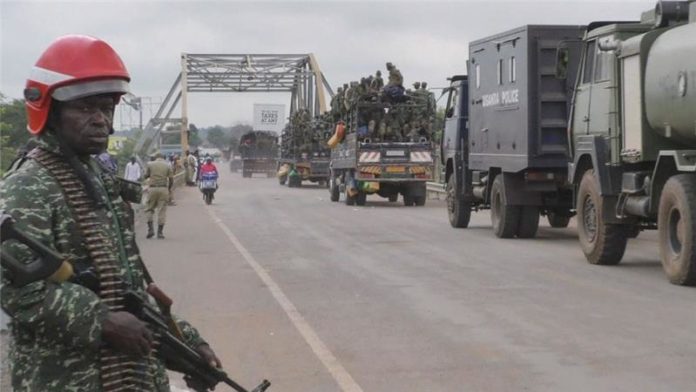
The heavily-armed Ugandan military convoy crossed into South Sudan on Thursday to evacuate the over 5000,trapped Uganda citizen in the capital Juba as fears persist that days of fierce fighting might reignite despite a ceasefire.
The United Nations has warned of tension and the possibility of fresh fighting in Juba, where a ceasefire has held since late Monday.
President Salva Kiir on Thursday called on arch-rival Riek Machar to meet for talks to salvage peace. “I don’t want any more bloodshed in South Sudan,” Kiir said.
Uganda’s army chief Brigadier Leopold Kyanda said the mission involving 2,000 soldiers would likely last “two to three days” but an intelligence officer said some Ugandan troops may remain in Juba.
“Why not? We have the capacity to support the government of South Sudan and we were there before,” said the plain-clothed officer accompanying the convoy.
The Ugandan army joined the conflict in South Sudan soon after it began in December 2013, fighting on Kiir’s side against a rebel force led by Machar, now the country’s vice president. The troops only pulled-out late last year.
Four days of intense battles in the capital left hundreds dead and forced around 40,000 to flee their homes. Aid agencies are warning of a worsening humanitarian crisis with a lack of both water and food.
The recent violence in the capital echoed the fighting that triggered the civil war and marks a fresh blow to last year’s deal to end the bitter conflict that began when Kiir accused Machar of plotting a coup.
Kiir is a member of the Dinka tribe, while Machar is a Nuer, and the dispute has split the country along ethnic lines and caused tens of thousands of deaths.
The evacuation mission also saw attack on the UPDF convoy going to South Sudan on Thursday to evacuate stranded Ugandans.
According to sources, they attacked the last vehicle in the convoy but UPDF soldiers jumped out of the vehicles and chased the attackers until they were captured.
On arrest, the Ugandan army realized they were SPLA soldiers under Salva Kiir but who were taken to Bilphpam military headquarters.
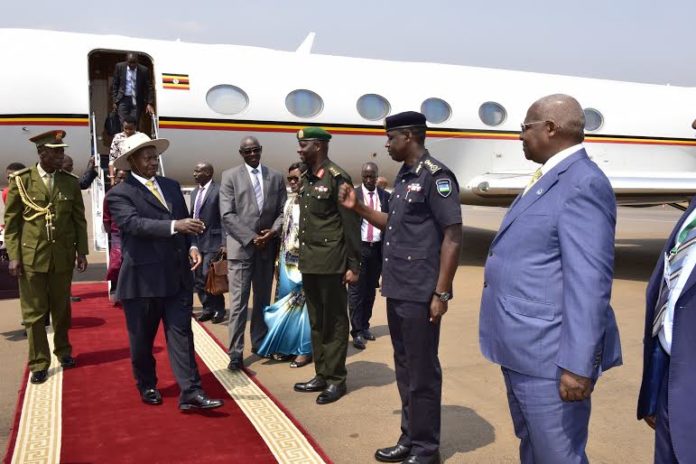
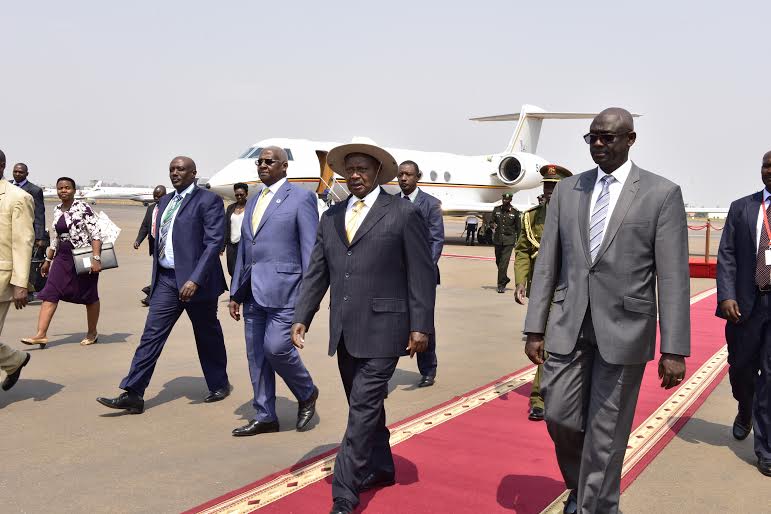
President Yoweri Museveni has this afternoon arrived in Kigali, Rwanda to join other African Heads of State in attending the 27th African Union Summit currently taking place at Kigali Convention Centre.
The summit is being held under the theme; African year of human rights with particular focus on the rights of women.
The President was received on arrival at Kigali International Airport by Rwanda’s Minister of Justice Johnston Busingye.
On Ugandan side, the Museveni was received by the Minister of Foreign affairs, Sam Kutesa and Uganda`s Ambassador to Rwanda Richard Kabonero.
During the summit Heads of state from across Africa are expected to discuss Integration and free movement of people with also focus on women and human rights by elaborating on education, health and security.
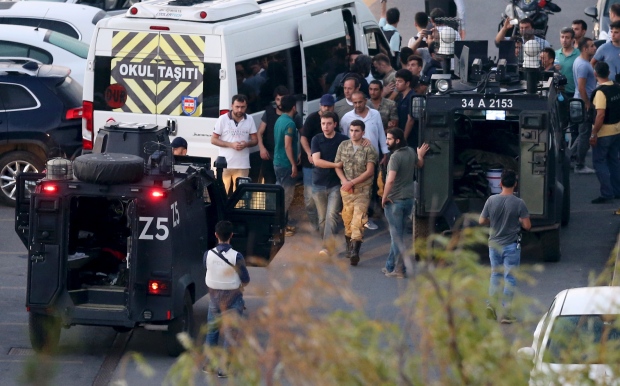
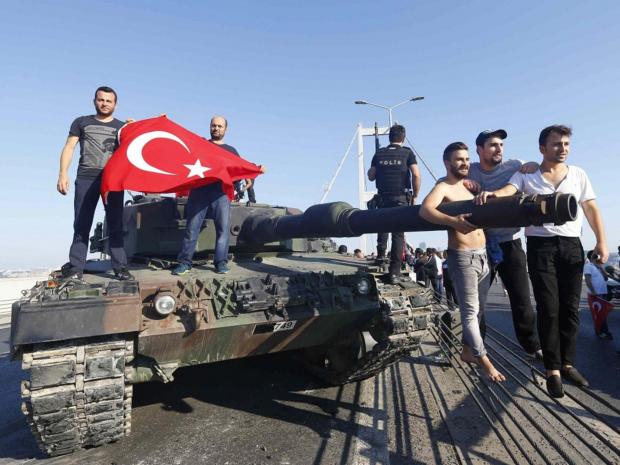
The soldiers, who had blocked the bridge over the Bosphorus throughout the coup, surrendered earlier on Saturday.
Graphic pictures have been shared on social media allegedly showing the beheading of a Turkish soldier following an attempted coup.
The pictures show the man’s body on one of the bridges crossing the Bosphorus River in Istanbul, after he was allegedly beheaded by supporters of the ruling Justice and Development Party (AKP).
The soldiers, who had blocked the bridge throughout the coup, surrendered earlier on Saturday.
Forces loyal to Turkey’s president quashed a coup attempt in a night of explosions, air battles and gunfire that left dozens dead Saturday.
Authorities arrested thousands of people as President Recep Tayyip Erdogan vowed those responsible “will pay a heavy price for their treason.”
The chaos capped a period of political turmoil in Turkey — a NATO member and key Western ally in the fight against Isis — that critics blame on President Erdogan’s increasingly authoritarian rule.
He has shaken up the government, cracked down on dissidents, restricted the news media and renewed conflict with Kurdish rebels.
Prime Minister Benali Yildirim said 161 people were killed and 1,440 wounded in the overnight violence.
He said 2,839 plotters were detained. A source at the office of the presidency, speaking on condition of anonymity in line with government rules, said the 161 toll “excludes assailants”.
Mr Yildirim described the night as “a black mark on Turkish democracy” and said the perpetrators “will receive every punishment they deserve.”
Bebe Cool and Lois Aber, Brand Manager- Premium Spirits at Uganda Breweries Ltd (UBL) unveil Johnnie Walker Black Label as a sponsor of the 2016 'Life of Bebe Cool' concert
Celebrated artiste Bebe Cool born Moses Ssali’s new music hasn’t been well-received by fans or critics. While he’s aware of the negative feedback, the veteran prides himself on being a “legend.”
Actually, a section of his fans started boycotting Bebe Cool’s music for political reasons for having lent his talent to the pro-Museveni Tubonga Naawe hit.
Well aware of what made him a darling before emotions boiled over after the presidential elections won by his candidate, Yoweri Museveni, in February, Bebe went and released Taata, Ki Ekiganye and Kabulengane which have not quite been as popular has his earlier songs.
“Bebe Cool is a legend, so people expect legendary performances from him. When it’s not that, you got to keep working to get to that. I am a record breaker and a history maker,” Bebe said at Liquid Silk at Village Mall Bugoloobi on Friday afternoon as Johnnie Walker Black Label announced their sponsorship for the ‘Life of Bebe Cool’ 2016 concert that will take place on 5th August, 2016 at the Kampala Serena Hotel.
“When I started out with Silk Events, we used to hold concerts in open venues like Lugogo and Nakivubo hoping we’d get more numbers but now it is different we have to do events indoors like at Serena where fewer people will attend,” he added.
“After 18 years, I have changed a lot in the Ugandan music industry because at the end of the day I set a standard,” said the renowned Ugandan artist.
“To be recognized by Johnnie Walker whose philosophy is about inspiring personal progress encourages me to work even harder at my craft and be the best that I can be,” Bebe Cool one of their brand ambassadors in Uganda held.
“This concert is a celebration of my 18 year musical journey hence the name ‘Life of Bebe Cool’. As the name suggests, it will be a rendition of the best of Bebe Cool performed in an arrangement that relates to my life story as an individual and an artist,” said Bebe Cool.
Announcing the sponsorship, Ms. Lois Aber, Brand Manager-Premium Spirits at Uganda Breweries Limited (UBL) said Johnnie Walker was pleased to be part of a celebration of a great artist and his music and said; “He is one of Uganda’s most popular and celebrated artists. I’m sure if you looked back at your past, you can remember singing along or dancing to one of his songs.”
“We celebrate and fuel personal progress and we find it fitting to do so with Bebe Cool. He is one of Uganda’s most popular and celebrated artists. I’m sure if you looked back at your past, you can remember singing along or dancing to one of his songs.”
JW will treat the first 300 guests at the concert to free cocktails. There will also be a whisky mentorship session for the VVIP guests before the concert.
The other sponsors include Pepsi, MTN, Chano8, 24 Media, Tesa, Silk Events and Matooke Republic.
Bebe’s third concert at Serena Hotel Kampala will be a four hour live band musical experience during which the artist promises to perform a unique selection of singles, some of which will be picked from the Go Mama album. Tickets for UShs100, 000 and tables will be sold at UShs5m.