With Uganda’s economy struggling and having to cope with ever-growing unemployment levels, even young people need to be ready to seize viable opportunities and work them out in order to survive these challenges.
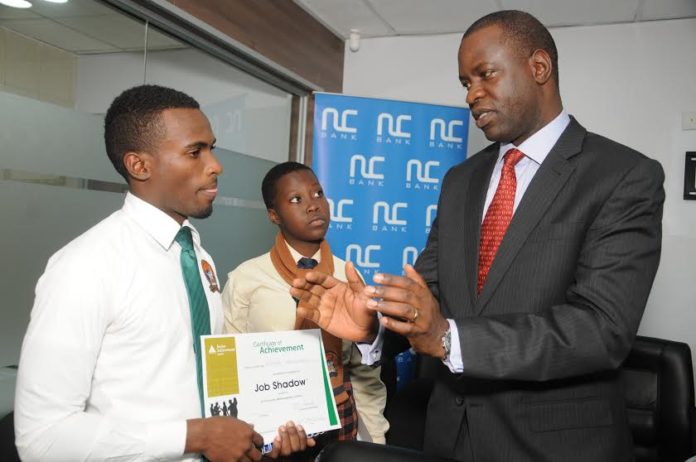
It’s against this background that NC Bank, the Ugandan subsidiary of Nairobi Securities Exchange listed NIC Bank, in partnership with Junior Achievement Uganda on Wednesday June 29, 2016 organized a one day event to give secondary school students hands on job training the bank’s premises.
The training which is under the job shadow program was held at the two branches of NC Bank; Rwenzori Towers and Bugolobi. The training was attended by 20 students (Achievers) from Seroma Christian High school and St Kizito Secondary school.
During the exercise, students were allocated to different departments of the bank, where they were mentored by the bank’s different heads of departments. They were also given a chance to work as tellers, credit officers, retail managers, corporate affairs managers, among others.
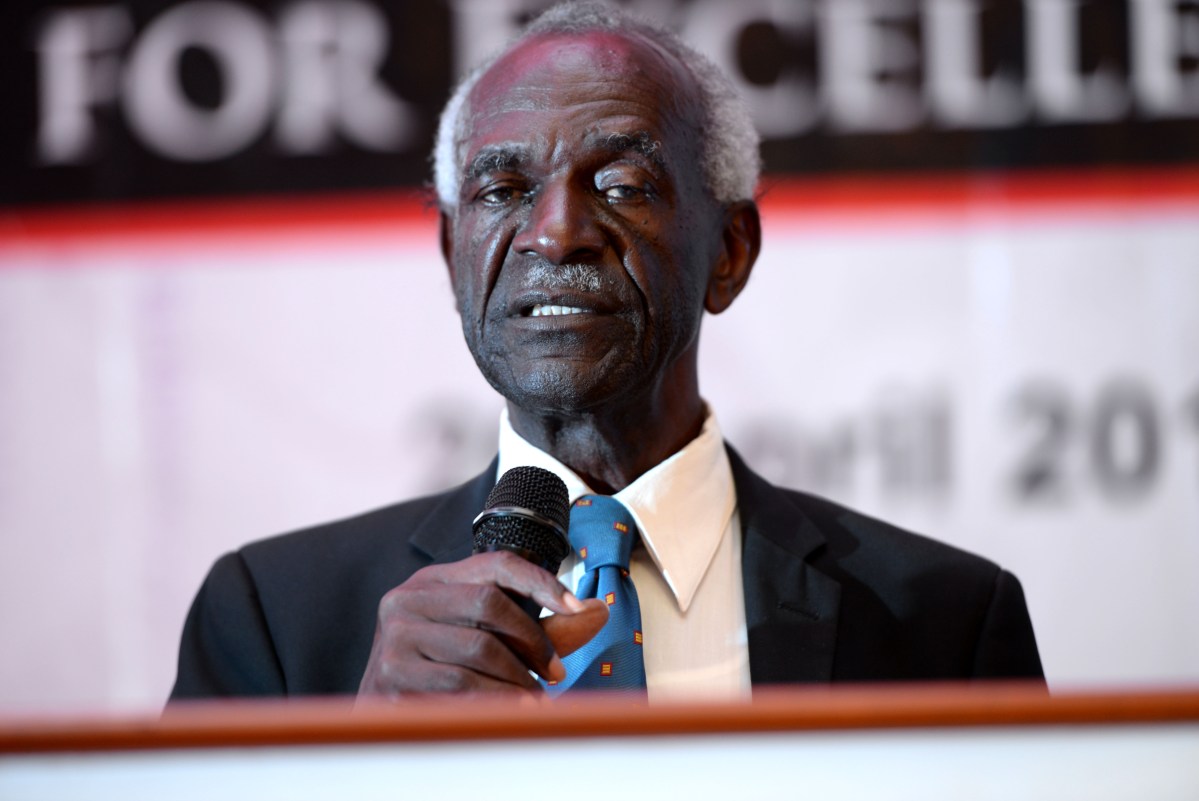
According to Sam Ntulume the Managing Director of NC Bank, the training, which is part of the bank’s citizenship activity, is aimed at nurturing work-ready people and expose them to the actual working environment in the field.
“We would like to bridge the gap between the classroom theoretical knowledge and the real workplace challenges. Our aim is to instill ethical business practices, social responsibility and career mapping at a tender age,” he added.
Addressing the students after the training, Mr Ntulume urged the students to put the lessons learnt into action and learn the value of contributing to their communities and begin appreciating entrepreneurship as a key support to their academic excellence and individual economic emancipation,
Josephine Kaleebi the CEO of Junior achievement Uganda encouraged the students to uphold values of integrity in their lives and future workplaces. “Endeavour to uphold the issues of integrity and personal values as you have experienced today at NC Bank and earn an honest living,” she added.
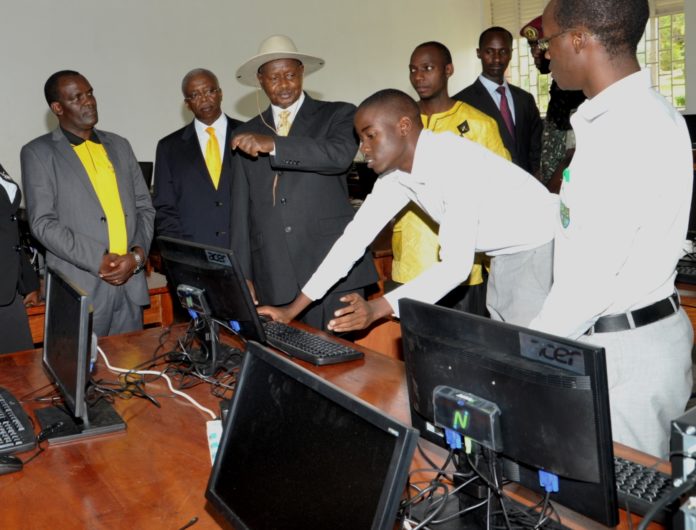
President Yoweri Museveni has asked Frank K Tumwebaze, the Minister of ICT, Information National Guidance to streamline efforts to develop high technical capacity in the field of electronics.
Mr Museveni, who was chairing the second session of the inaugural cabinet at State House Entebbe on Thursday, tasked the ICT ministry set up departments to do intelligent monitoring both by modern IT systems and knowledgeable Electronic engineers whose skill and capacity he directs the ministry of ICT to build.
Uganda in 2009 banned the importation of used computers, freezers and refrigerators to protect the environment but the Government has since failed to uphold the ban and stop the country from being used as a dumping ground.
Old computers contain hazardous materials like lead, mercury and cadmium that have toxic effects on the environment if they end up in landfills.
Seven years later, government has even failed to create an e-waste facility similar to the one in Kenya, besides failing to implement the banning used computers altogether.
President Museveni also called for responsible and disciplined media reporting that is not injurious to the image of Uganda.
Mr Museveni tasked government agencies to always communicate timely and factually about government work and thus the reason he merged the communication agencies into one ministry for easy coordination.
Museveni proud to be computer illiterate
During the opening of the 2013 NRM retreat at Kyankwanzi, Museveni told ruling party lawmakers that he is computer illiterate.
“I am computer illiterate and I am comfortable the way I am. I refused to learn the computer,” said Museveni.
However, he also warned leaders to stop watching television during working hours. Well, we don’t expect the president to be a geek or IT-savvy but a few IT skills would help him accomplish a number of tasks.
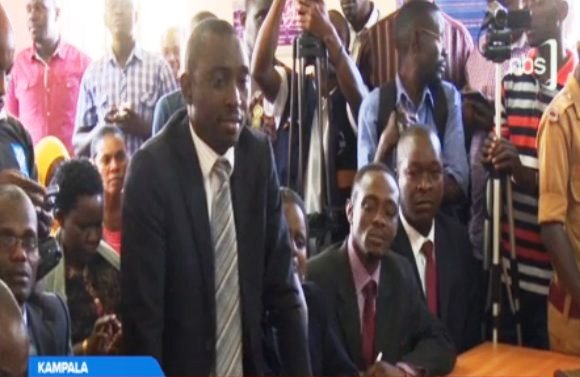
Forum for Democratic Change (FDC) former presidential candidate Kizza Besigye has Friday told court the Director of Public Prosecution (DPP) is abusing his office after state withdrew disobedience case.
Kasangati Grade One court Magistrate Fred Egesa revealed that the DPP had presented the withdrawal letter and he has no option but to discharge.
State lawyer Joseph Kyomuhendo opted to withdrew charges against Dr Besigye of disobeying lawful orders and the jailed opposition strongman insisted this ought to be addressed as state loses interest.
Without giving details, Mr. Kyomuhendo told court that Article 120 allows the DPP to withdraw any criminal charges against any suspect. “This is not the first case to be withdrawn. Neither is it the last one,” he said.
State lawyer Joseph Kyomuhendo told Besigye and lawyers to contact the DPP’s public Relation’s office if they wanted to know why the case was withdrawn.
“We have a public prosecutor who is clearly abusing his office,” Dr Besigye retorted.
“This is total abuse of power. The issue of the DPP abusing his office should be addressed. This is not the first time the state is withdrawing such a case,” he added.
The dropped case arose from the events between Kalerwe and Mulago round about in Kampala, during which prosecution alleges Dr Besigye disobeyed lawful orders from a police officer.
Prosecution alleges that Dr Besigye “willfully” disobeyed orders issued to him by Mr Daniel Bamuzibire, a senior superintendent of police, to take Yusuf Lule Road instead of driving towards Wandegeya from Mulago round about. Dr Besigye was going to FDC party headquarters in Najjanankumbi on Entebbe Road for the weekly prayers, which was a form of protest against the February general elections, which the party insists Dr Besigye, and not President Museveni, won.
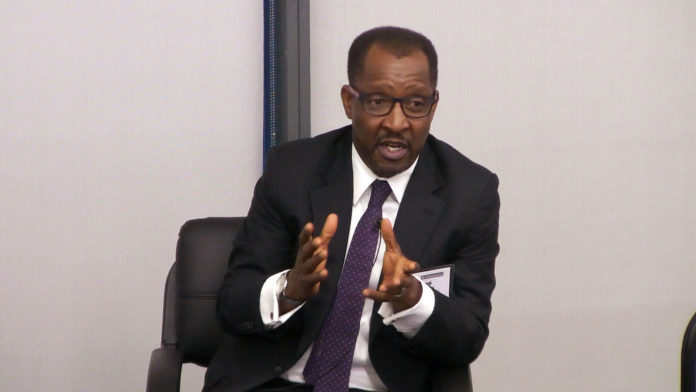
NSSF Managing Director Richard Byarugaba, is credited with growing the fund.
The National Social Security Fund (NSSF) “Friends with Benefits” has recorded a positive response, with over 360 beneficiaries’ entries so far received, the NSSF Head of Marketing and Communications, Barbara Teddy Arimi, has said.
The retirees “Friends with Benefits” campaign, which is aimed at inculcating a savings culture among Ugandans, was launched in May.
Friends with Benefits is also aimed at showcasing inspirational success stories from members who have received and used their benefits to change their lives, those of their families and even the communities they live in so as to motivate existing and potential members to invest in retirement savings.
“We have received over 360 entries from members who have made tremendous investments with their retirement benefits received from the Fund. We are certain their stories will inspire millions of Ugandans who are either saving with NSSF or are yet to start saving with NSSF to register with the Fund in order to ensure a better life,” Arimi said.
She added that the submission for entries closed on Thursday, June 30th, 2016. She said that entries that have been received touch on all the six benefits offered by the Fund; Age Benefit, Survivors Benefit, Withdrawal Benefit, Exempted Employment, Emigration Grant and Invalidity Benefit.
“Some of the stories are really touching, others are inspirational while others show that it doesn’t matter how much one earns; everybody can make a difference irrespective of their income,” she said.
The four-month campaign will run as a TV show programme profiling retired workers who invested or used their NSSF benefits to transform their lives, and those of the communities around them.
“The campaign will spur national conversations about the need for every single Ugandan, regardless of their background or salary level, to save and invest for a better life hence cultivating a savings and investment culture among Ugandans,” Arimi added.
Arimi echoed that the Fund has also improved the time it takes to pay benefits from a high of 120 days five years ago to an average of 8 days this year, with a target to pay within five days, and even less for the age benefit.
According to the current figures from the Fund, 97 per cent of benefits are paid to living members and not their next of kin.
The best story among the best 20 submissions will earn the beneficiary Shs30 million at a grand finale in November. NSSF, which now has total assets of Shs6.46trillion, has a total membership of about 1.6 million contributors.
Former Presidential Independent candidate in 2016 race John Patrick Mbabazi has said he isn’t silent but busy.
Although Mbabazi didn’t reveal what has kept him busy said he happy his longtime political aide, Pt. Emmy Katabazi was finally out of military detention.
Asked by his follower on Twitter why he went silent Mbabazi replied “I am not silent. I am just busy”
On Katabazi he said he was the last of his strongholds who kept their promise of supporting him until the ‘struggle’ is fulfilled.
“Emmy Katabazi was the last bastion of the struggle for freedom and justice. He had devoted his life to this struggle. He has paid the price…Katabazi was obviously detained, for 9 months without trial, because of his historical role and his politics,” Mbabazi said on Social media.
Katabazi has been at Makindye military prison over what military officials say was misconduct contrary to army rules and regulations. He was also openly accused of participating in Parisian politics when he backed Mr Mbabazi.
Mbabazi has been silent since the disposal of his court case challenging the re-election of President Yoweri Museveni in February 18, general elections. His silence has left the population pondering on what his next move would be.
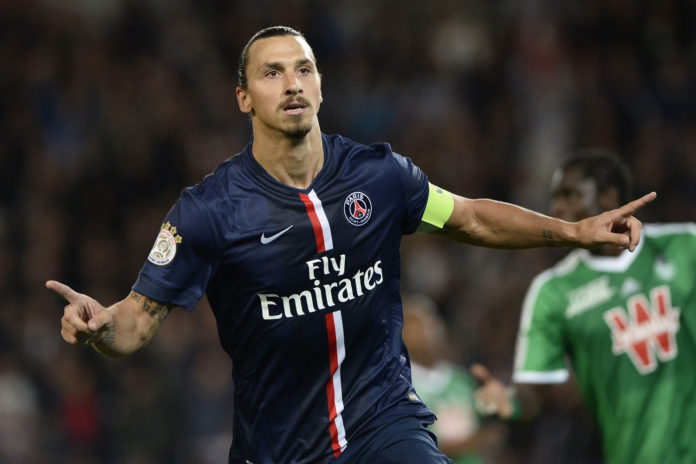
Swedish striker Zlatan Ibrahimović has confirmed that he will be joining Premier League side Manchester United this summer a deal he announced via his official Twitter account this evening. The 34-year- old was out of contract after four years at the French champions, PSG confirmed that he will joining England side this summer.
“Time to let the world know. My next destination is Manchester United,” he tweeted.
The Swedish striker will fly to England to complete the deal on Friday and has already agreed personal terms on a one-year contract and personal terms worth £220,000 a week. He will link up again with his former Inter Milan boss Jose Mourinho at Old Trafford. Mourinho and Ibrahimovic have worked together before, at Inter Milan in 2008/09 season.
Zlatan will now attempt to win a league title in a fifth major European league under Mourinho’s guidance. Manchester United, who will formally unveil Mourinho early next week, are also hopeful of securing the Borussia Dortmund play maker Henrikh Mkhitaryan, 27, after the German club admitted they had received “a much improved offer for the Armenian. Zlatan will become José Mourinho’s second signing for United, following the capture of Villarreal’s Ivory Coast defender Eric Bailly.
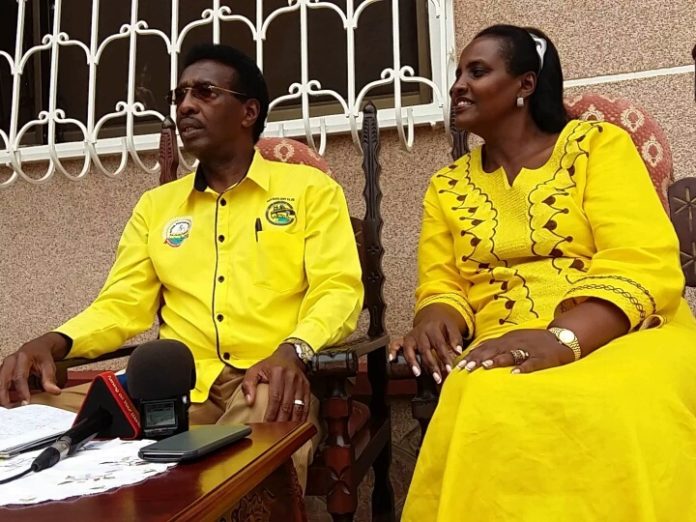
WHAT NEXT? Maj Gen Jim Muhwezi with his wife Suzan at their country home in Rujumbura, Rukungiri district. Mr Muhwezi was addressing the press and said he was willing to serve in any capacity the appointing authority would assign him.
Rujumbura County of Rukungiri District, a region with a thought-provoking ethnic and religious mix, has produced several prominent persons who have served in Yoweri Museveni’s regime since 1986 among them (RIP) .General Robert Aronda Nyakairima, Lt. Gen. (rtd) Henry Tumukunde, Col (rtd) Dr Kizza Besigye, Mathew Rukikaire, Athanius Rutaro, Prof. Mondo Kagonyera, Dr. Alex Kamugisha, Maj. Gen. (rtd) Jim Muhwezi Katugugu, Priscilla Seezi Mbaguta, Secretary to Treasury Keith Muhakanizi, UNRA Executive Director Allen Kagina, the Commissioner General of Prisons Johnson Byabashaija, MP Paula Turyahikayo and political activist Charles Rwomushana.
Between them all the above persons have played an important role to ensure that Rukungiri, one of the most politically endowed regions of Uganda (only shrouded by Bugweri County), maintains the status quo. But some names stand out and one of those is that of Maj. Gen. Jim Muhwezi Katugugu, a man who has been the Member of Parliament for Rujumbura for 20 years.
With an impressive career that began with graduation as a lawyer from Makerere University, Gen. Muhwezi joined the Uganda Police Force as a Detective Assistant Superintendent of Police (D/ASP), stationed at Mbale Police Station.
At the time Milton Obote had just returned to power through a controversial election in December 1980, the precursor to Yoweri Museveni’s declaration of war against the regime. So, given his tribal background and perceived political inclination then, Mr Muhwezi and other future comrades including David Munungu Sejusa, then also ASP, were the subject of suspicion by the Uganda Peoples Congress (UPC) government, prompting them conjure survival instincts, that led them to stage a dramatic escape from the cells at Jinja Road Police Station that was partly facilitated by Engineer Winnie Byanyima, to join Museveni in the jungles af Luwero in mid 1981, this time round as rebels, wanted and hunted by the government.
Given his background as a detective, while in the bush Mr Muhwezi was assigned spying roles, a trait that followed him even after the war ended in 1986 when he was named the first Director General of the Internal Security Organisation (DGIS), where he served for 10 years.
But his dramatic life in government and politics was just beginning; during that time, precisely 1994, he contested for the Rujumbura Constituent Assembly Delegate (CAD) and lost to then youthful political activist and former Makerere University Guild President Charles Rwomushana.
MUHWEZI NEMESIS? Political activist Charles Rwomushana
With the Constitution-making process done in 1995, Mr Muhwezi was again to stand for political office in 1996, this time trouncing Rwomushana to represent Rujumbura County in the Sixth Parliament and also joining cabinet as the State Minister for Education in charge of Primary Education. Interestingly, at the time Mr Muhwezi held the rank of Brigadier in the National Resistance Army, while his boss Education and Sports Minister Nuwe Amanya Mushega, was a Major. Both men have since been retired by the army, with Muhwezi retiring at the rank of Major General while Mushega was promoted to Colonel and also retired.
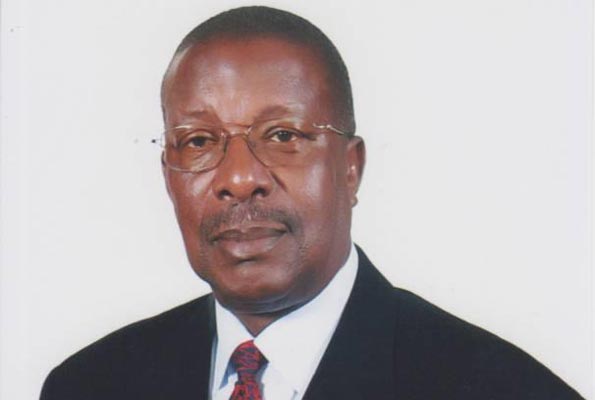
BOSS? Former Education minister minister Nuwe Amanya Mushega, who was Mr Muhwezi’s boss
However, while serving as Rujumbura MP Muhwezi was censured by Parliament after it emerged he had acquired immense wealth, allegedly not commensurate with his earnings at the time.
After sometime in political oblivion, Mr Muhwezi was to bounce back in style, this time as minister of Health, where he worked with a cabinet colleague from Rukungiri, Dr Alex Kamugisha. The two were to be dropped for allegedly misappropriating the Global and Gavi funds that were purposely for fighting HIV/Aids and for immunization, respectively.
It was at this point in time that the President instituted a probe chaired by then High Court Judge James Ogoola Munange, that Mr Muhwezi made his most unforgettable quote, asking the judge where he (Ogoola) was when they (Muhwezis) went to the bush. But Mr Museveni would hear none of Mr Muhwezi’s threats and swear words; the President cracked the whip and dropped all the three ministers serving the health ministry then. Once again Mr Muhwezi found himself in political oblivion, going low and remaining MP.
‘Where were you’? Mr Muhwezi asked Justice James Ogoola. (pictured).
Then something happened internally in the ruling National Resistance Movement (NRM); in February 2014 then female Youth MP Northern Evelyn Anite went for the party retreat at the National Leadership Institute (NALI) in Kyankwanzi and, on bended knees, ‘begged’ Chairman Yoweri Museveni to offer himself for party flag bearer in the 2016 elections.
Prime Minister John Patrick Amama Mbabazi was not very impressed with the youthful legislator from Koboko and initially resisted signing the ‘Anite petition’ till he finally relented, signing in at No.202. Obviously there was a crack in the party that has been running affairs of state for 30 years. And this disturbing dent in the cohesion of the NRM had to be plugged, most probably by ‘old hands’ who had withered storms.
Jim Muhwezi was one of those chosen to put to a halt the Mbabazi engine that seemed to have gained traction that was capable of destabilizing the party. Subsequently, in late 2015 Mr Muhwezi was appointed Minister of Information and National Guidance, a docket that was critical in mobilizing for the 2016 elections. The General was expeditious in executing the task, appearing on TV talkshows to explain the position of the party.
ANOTHER INSTRUMENTAL SON OF RUKUNGIRI: New Security Minister Lt Gen Henry Tumukunde
Indeed, the plot to engage the services of the likes of Mr Muhwezi and others like Lt Gen (rtd) Tumukunde seemed to work and, despite holding on to a spirited campaign trail, Mbabazi was deflated. He got one per cent of the vote, sinking further into political obscurity. The ‘Muhwezi magic’ had worked; he thus relaxed, awaiting the fruits of his expertise in neutralising Mr Mbabazi. But this was never to come; he lost the Rujumbura County seat to the Forum for Democratic Change (FDC) candidate Fred Turyamyhweza and again, on June 15, 2016, slightly more than a month after swearing in Mr Museveni announced a new cabinet with Mr Muhwezi’s name missing! He was reportedly not happy about missing on the cabinet list but however, managed to maintain his deafening silence till his wife Suzan Kabonero Muhwezi let out an outburst: her husband, the doyen of politics in Rujumbura in particular and Rukingiri in general, had been ‘sidelined’ yet he had immensely contributed to the re-election of Mr Museveni.
Since then Mr Muhwezi has maintained his loud silence, and possibly made his point by not attending the hand over of office to his successor Frank Tumwebaze, the former ‘Super Minister Jr’ who held the portfolios of the ministries of the Presidency and Kampala, concurrently.
And with that kind of suspense emanating from a spy of long-standing, what remains to be seen is whether Mr Muhwezi’s ‘thought-provoking silence’ will bear fruit and pave the way for his political return.
Joseph Nsubuga is set to join SC Villa from Bright Stars after the two clubs struck a 'special arrangement’
Uganda Cranes and Bright Stars right back Joseph Nsubuga looks set to join SC Villa from Bright Stars after the two clubs reached a deal, Jogoo fans attaché Perez Ngasirwaki revealed on Thursday.
Nsubuga, 22, is expected to sign a two-year deal for a transfer fee of some 10 million shillings.
Nsubuga got his full international debut during Uganda’s surprise 1-0 win over Nigeria last year
He joins SC Villa set for another massive player turnover with skipper Jonathan Mugabi, Nicholas Ssebwato, Misi Katende, Karim Ndugwa,Sulaiman Ochero and Isaac Muleme all leaving. Apart from Muleme, the other five players released have been under suspension since mid-last month for what the club describes as “indiscipline.”
Nsubuga got his full international debut during Uganda’s surprise 1-0 win over Nigeria in March 2015 which was met with astonishment around the continent.
Nsubuga’s rise to fame started when he turned out for the national under-23 side, Kobs against Mozambique recently in the All Africa Games qualifiers.
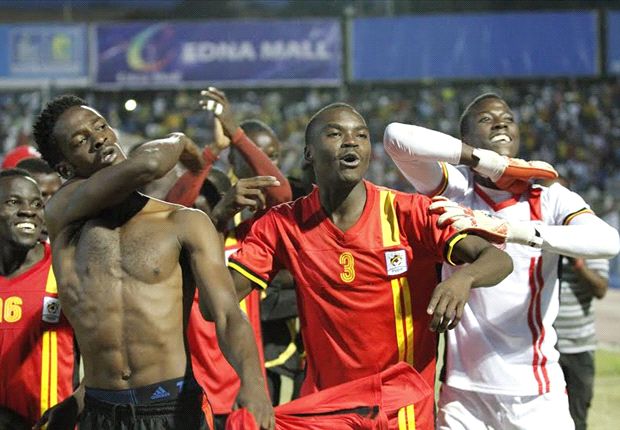
He is a regular figure on the national team. Here pictured celebrating at the 2015 CECAFA finals with Murushid Jjuuko, and goalkeeper Ismail Watenga
The former Lubaga boys defender honed his skills competing in the La-Mennais Cup that pits schools of the Brothers of Christian Instruction like St Mary’s College Kisubi, St Henry’s College Kitovu and Kasasa SS among others, against each other every year in football competitions.
It’s from there that he played for Kyadondo and Buwekula in the Masaza Cup between 2011 and 2013 and then later joined Bright Stars FC. Nsubuga is known for being a humble and disciplined young man, but very tough and tenacious in defence.
Observers said he doesn’t look comfortable as a right-back. He doesn’t move easily with the ball at his feet and has been criticized for playing so many back passes to the goalkeeper on top of his many long balls, some of which came as a result of unnecessary early crossing. He will need to work on that if he is to be a mainstay in the team.
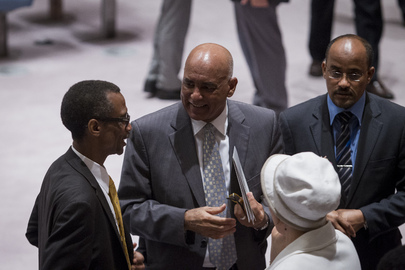
Omer Dahab Fadul Mohamed (C), Sudan’s Permanent Representative to the UN, and his deputy Hassan Hamid Hassan (left), at the Security council meeting on June 29, 2016 (UN Photo)
The United Nations Security Council (UNSC) has extended the mandate of the African Union-United Nations Hybrid Operation in Darfur (UNAMID) until 30 June 2017, stressing that the situation in the western Sudan region continues to constitute a threat to international peace and security.
Despite Khartoum calls to withdraw UNAMID, the 15-member Council unanimously decided that UNAMID would maintain a deployment of up to 15,845 military forces, 1,583 police personnel and 13 formed police units of up to 140 personnel each in the Darfur region.
In its resolution 2296 (2016), the Council underlined that, in the context of limited progress on meeting benchmarks and ongoing insecurity, the mission must use its capacity and resources to protect civilians, deliver humanitarian assistance and meditate between the Government of Sudan and armed movements that had signed the Doha Document for Peace in Darfur.
The 15-member body, also, called on Darfur conflicting parties to immediately end the violence and commit themselves to a lasting ceasefire under the auspice of the African Union mediation team. Further it urged the Sudan Liberation Movement-Abdel Wahid to join the peace process without pre-conditions.
The resolution demanded the parties to create suitable conditions to allow the voluntary return of refugees and Internally Displaced Persons. It also demanded the cessation of sexual and gender-based violence.
Regarding the Darfur administrative referendum of April 2016, the council noted concern about voter eligibility and timing, however it welcomed the plebiscite which maintained the region’s five-state structure.
The new element in this year’s text is related to the exit strategy. The resolution has requested the Secretary-General to make recommendations within four months of the adoption of the resolution on practical steps that can be taken by all Sudanese parties with the support of UNAMID to achieve the mission’s benchmarks.
The achievement of the benchmarks is seen as a prerequisite for UNAMID’s exit, which Sudan continues to call for.
The benchmarks include an inclusive peace process between the government and the holdout armed groups; the protection of civilians, unhindered humanitarian access and the safety and security of humanitarian workers; and the prevention or mitigation of community conflict.
Further, the Council requested that the Secretary-General report on the political, humanitarian and security situation in Darfur, on violations of the status-of-forces agreement, and on progress towards the attainment of UNAMID’s strategic priorities.
Sudan’s supporters, like Russia and China worked to amend the draft resolution which was prepared by the United Kingdom (UK). The Russian Ambassador described the adopted text as a balanced outcome of intensive consultations. While the Chinese envoy praised the successful holding of the referendum, and said the Government was promoting peace and security in Darfur.
On the other hand, United States welcomed the Sudanese government’s steps on the cessation of hostilities and acknowledged the progress made. However, Washington underscored that tribal fighting and violence against civilians continued, with approximately 80,000 people newly displaced in 2016.
UK Ambassador stressed that the resolution was much more than a simple mandate renewal. “It was, in fact, a recommitment to the people of Darfur. By striking a balance, it sought to deliver progress on benchmarks that would ultimately allow UNAMID to leave Darfur,” he said.
UNAMID NO LONGER NEEDED
Sudanese envoy to the United Nations Omer Dahab Fadl Mohamed told the Council that the security situation in Darfur is improving, adding that there were no rebellions or armed movements in the region.
“UNAMID is no longer needed,” he further stressed.
“The resolution adopted today was replete with contradictions and did not reflect facts on the ground. In fact, Darfur had witnessed the return of 800,000 IDPs and an improvement in the humanitarian situation,” he said.
Mohamed recalled that the Sudanese government had requested that UNAMID begin its exit strategy in 2014.
“The Joint Working Group had provided proof that the situation in Darfur supported the mission’s drawdown, but some Member States refused to accept that recommendation.”
He reaffirmed the importance of allowing the Joint Working Group to continue its work. Citing “procrastination and delays” on the part of the United Nations. Also, he reiterated that UNAMID’s exit strategy must be promptly formulated, and called for an end to “delaying tactics”.
The Government is ready to carry out an assessment, or accept an assessment mission that would provide evidence of the facts that some sought to ignore, he said.
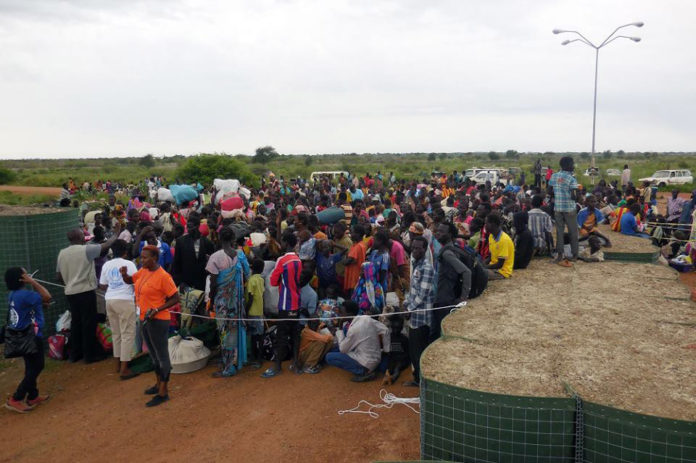
At least 100,000 people have fled South Sudan in recent months to the neighboring countries of Kenya, Sudan, the Democratic Republic of Congo and Uganda, and UN agencies say this number is set to rise to 150,000 by the end of June.
This comes in the wake of fighting in northwestern South Sudan between government troops and a newly formed rebel group, and as food shortages in the country hit their highest levels in two years.
The Medical aid group Doctors Without Borders (MSF) said that nearly 70,000 people have fled their homes in the town of Wau since Friday, with about 10,000 of them taking shelter at a United Nations base in the area, where streams of displaced continue to arrive.
“We don’t yet know how many people were killed, but dead bodies are still lying in the streets,” said MSF deputy medical coordinator David Kahindi.
The government has blamed the violence on a new hardline rebel group that includes former government troops, fighters from the Ugandan-led rebel group the Lord’s Resistance Army (LRA) and a Sudanese militia known as the Janjaweed.
Government spokesman Michael Makuei said Tuesday that the rebel group was being led by Muslim veteran politician Ali Timi Fartak. Fartak has not yet commented on the government’s claims.
The United Nations warned on Wednesday that up to 4.8 million people in South Sudan face severe food shortages in the coming months, the highest level since conflict erupted more than two years ago.
Meanwhile, clashes between warring factions in South Sudan have continued to flare despite a peace deal signed in August last year aimed at ending violence that began in December 2013.
The deal has been slow to take hold, allowing the country’s economic crisis to steadily worsen. Heavy rains and ongoing conflict mean that many of South Sudan’s farmers have been unable to access their crops.
“The deteriorating situation coincides with an unusually long and harsh annual lean season, when families have depleted their food stocks and new harvests are not expected until August. The level of food insecurity this year is unprecedented,” three UN agencies said in a joint statement.
The UN World Food Programme said it was planning to assist 3.3 million people this year with emergency food assistance, life-saving nutritional support and other aid.
“We are very worried to see that food insecurity is spreading beyond conflict areas as rising prices, impassable roads and dysfunctional markets are preventing many families, even those in towns and cities, from accessing food,” said Serge Tissot of the UN Food and Agriculture Organisation.