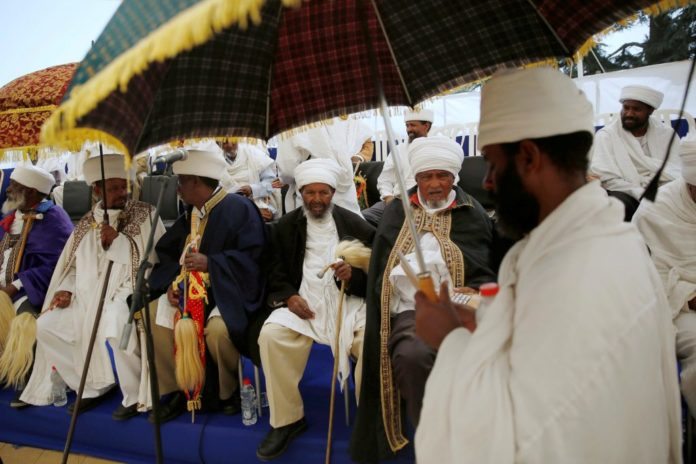
Israelis of Ethiopian descent attend a memorial ceremony commemorating Ethiopian Jews who died during their immigration to Israel, at Mount Herzl in Yerushalayim on Sunday./Photo credit/ Reuters
An estimated 3,000 people gathered in Yerushalayim yesterday for the annual ceremony memorializing Jews who died on the way to Israel from Ethiopia.
Between 1984 and 1985 roughly half of those who attempted the perilous trek from Ethiopia through Sudan never reached their destination. Of some 8,000 who left for Israel, 4,000 reportedly perished on the way.
In 2007, a monument was erected on Mount Herzl to commemorate the fallen, and in 2011 the Knesset passed a resolution making the memorial an annual event that is held on Yerushalayim Day.
Israeli Prime Minister Binyamin Netanyahu and President Reuven Rivlin addressed the crowd, both noting the sacrifices made to come to Israel, and the difficulties that many from Ethiopia continue to face in Israeli society.
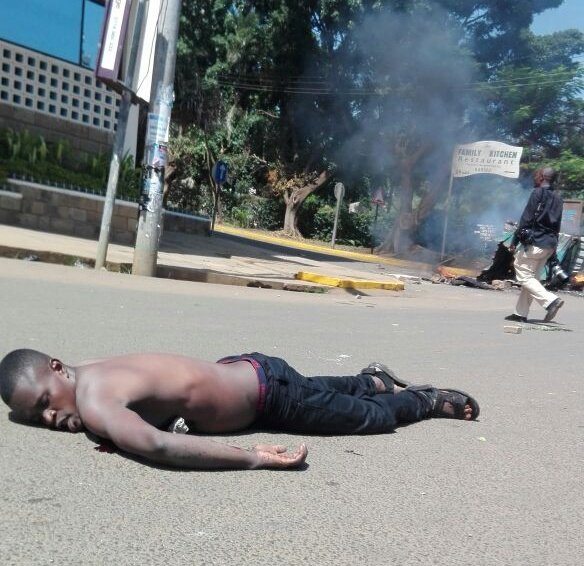
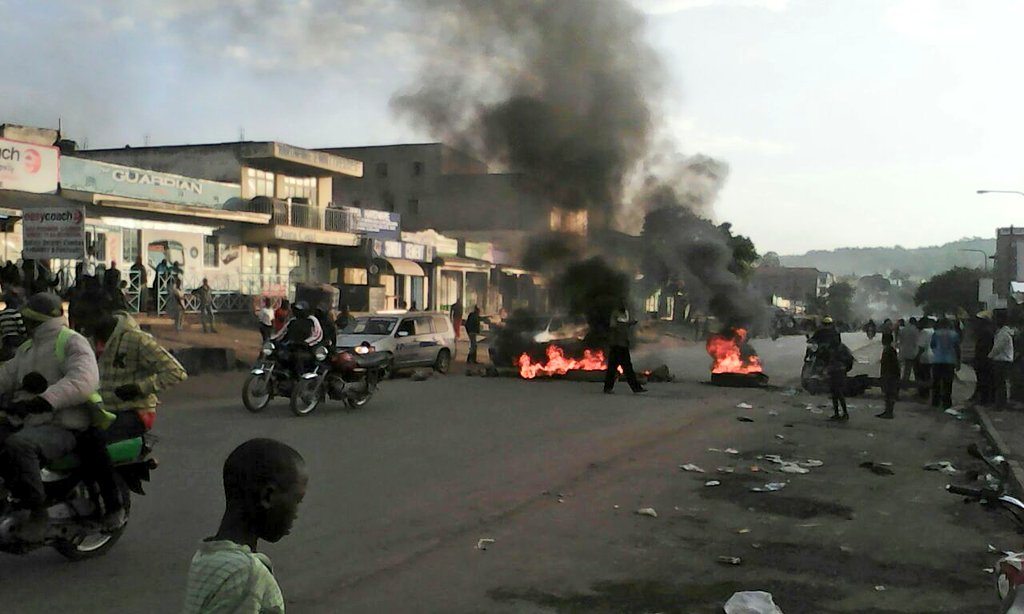
Man lies on the road injured in Kisumu, as demonstrators have taken over the town-Photo credit-CapitalFMKenya.
Nairobi-The High Court in Nairobi has dismissed an application by Kabete MP Ferdinand Waititu seeking to block protests against Independent Electoral and Boundaries Commission. While delivering the ruling on Monday morning, Judge Joseph Onguto said that CORD has the right to picket and ordered the police to provide security.
He asserted that the demonstrations have always been peaceful. “Pending hearing and determination of the petition herein, a conservatory order is issued by way of a mandatory order compelling the police to ensure security, public safety and observance of law and order …” read the ruling. CORD Senators James Orengo and Johnstone Muthama had criticized a declaration by Nairobi Police Commandant Japtheth Koome’s remarks that full force will be used on anyone who takes to the streets. They argued that a previous order issued by Justice Isaac Lenaola does not bar them from holding protests but was against destruction of property. Koome had threatened mass arrests of CORD protesters and that a detailed operation had been put in place to ensure no demonstrations in the city.
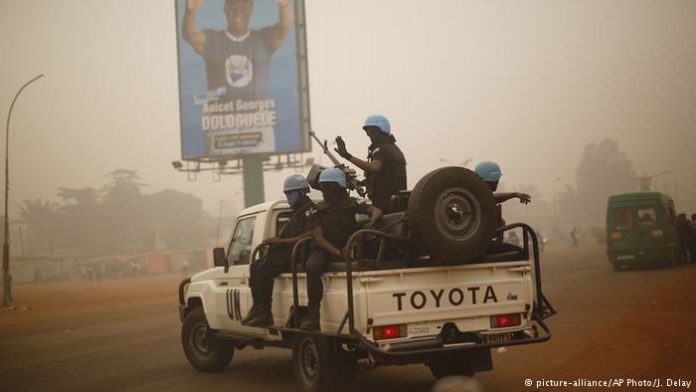
Burundi UN peacekeeping police officers in Bangui, CAR.Photo credit /dw.com
The UN is ending the involvement of police units from Burundi in the Central African Republic. This follows what the UN describes as ‘serious and ongoing human rights violations.’
UN officials announced that Burundi’s police units stationed in the Central African Republic (CAR) will not be replaced at the end of their tour, around September. Burundi has 280 police officers deployed with the UN mission in the nation’s capital, Bangui.
“In light of the current situation in Burundi, a decision has been taken at UN headquarters not to replace the units serving in the country when their tour of duty ends,” UN spokesman Farhan Haq said in a statement.
In February, Burundian nongovernmental organization FOCODE requested that the UN investigate allegations of human rights abuses by the police units serving in Bangui.
According to FOCODE, Burundi’s President Pierre Nkurunziza has rewarded security personnel with a history of targeting his political opponents by offering them roles in UN missions.
The UN’s decision was made ‘given the current allegations of serious and ongoing human rights violations in Burundi,’ said Stefan Feller, the top police adviser for UN peacekeeping.
Although the African nation’s police units are affected, some 840 Burundian military troops will continue serving in the Central African Republic, the UN said. Burundi also has thousands of soldiers serving at the Africa Union Mission in Somalia, Amisom.
The UN’s announcement comes as the US Treasury Department sanctioned two government officials and one rebel leader linked to violence that has followed Nkurunziza’s decision to run for a third term, which opposition groups said violated the nation’s constitution.
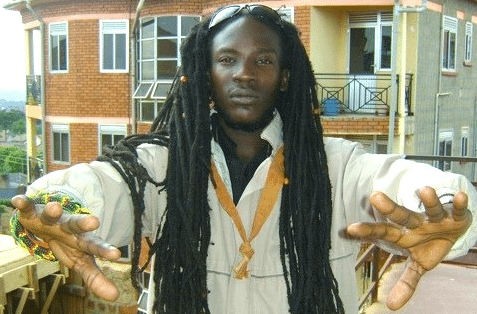
Once hailed as one of Uganda’s biggest talents, ragga crooner Mad Tiger has returned from the abyss to the rescue of fellow artists who campaigned for President Museveni in the last elections.
“It makes no sense boycotting musicians work because of their political affiliations. As for myself a music veteran I say it’s useless, Ugandans love good music for example if you are to see Bebe Cool and Chameleone are all doing well. The Tubonga Naawe boycott no sense will fade away,” said the veteran who prefers to call himself Mutoto Wa Afrika (Child of Africa)
“I personally performed at all Radio and Weasel’s recent Omwana Wa Baandi album launch shows, they were all massive except the Mukono show that did not take place,” he added.
Veteran Tiger who was in 2013 once arrested for herding cattle in the city suburbs of Natete is currently promoting his ‘Ffe Tuliko’ song off his new ‘Across The Nile’ album which he is slated to launch in December.
“I am still promoting my ‘Ffe Tuliko’ tune and recently got done with the shooting of its video at JahLive studios. Very soon it’s coming out. I should be launching my album in December because people have showed me love and I feel am back in the game,” Mad Tiger said.
Mad Tiger has nine albums .He became popular in 2001 hit with his hit ‘Obulamu bwensi bunyuma kilo’.
His latest album has tracks like Across the Nile, Ffe Tuliko, Lonely, Many Many, New Day, A Uganda, Police, Jah Jah, Dem A Feel and Ina Di Dancehall.
Hon Dora Byamukama has been granted leave to introduce the EAC Prohibition of Female Genital Mutilation Bill, 2016
A member of the East Africa Legislative Assembly (EALA) has said that over 200 million women in Africa have faced Female Genital Mutilation (FGM).
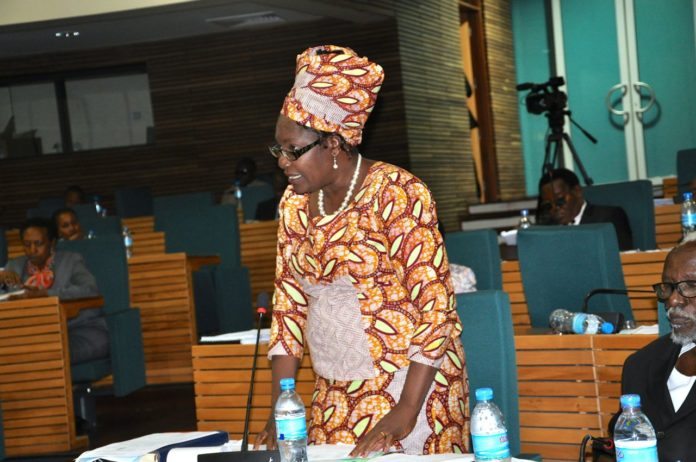
Contributing to debate on the East African Community Prohibition of Female Genital Mutilation Bill, 2016, Hon Judith Pareno said the huge number of victims of FGM were carried in 27 countries across the continent including Uganda.
Hon Pareno’s disclosure comes in the wake of the EALA granting leave to Hon Dora Byamukama to introduce the Bill that among others, seeks to outlaw the backward cultural practice that is also practiced among the Sebei in Uganda.
According to Hon Byamukama, the culture of FGM brings with it a number of complications including early child marriage and defilement, health complications that sometimes lead to transmission of HIV and AIDS, death and injuries to those who bear the practice.
Further, she says, with the advent of the Common Market Protocol which necessitates free-movement and cross-border nature, the influence of culture and hence spread is expected to increase if not checked.
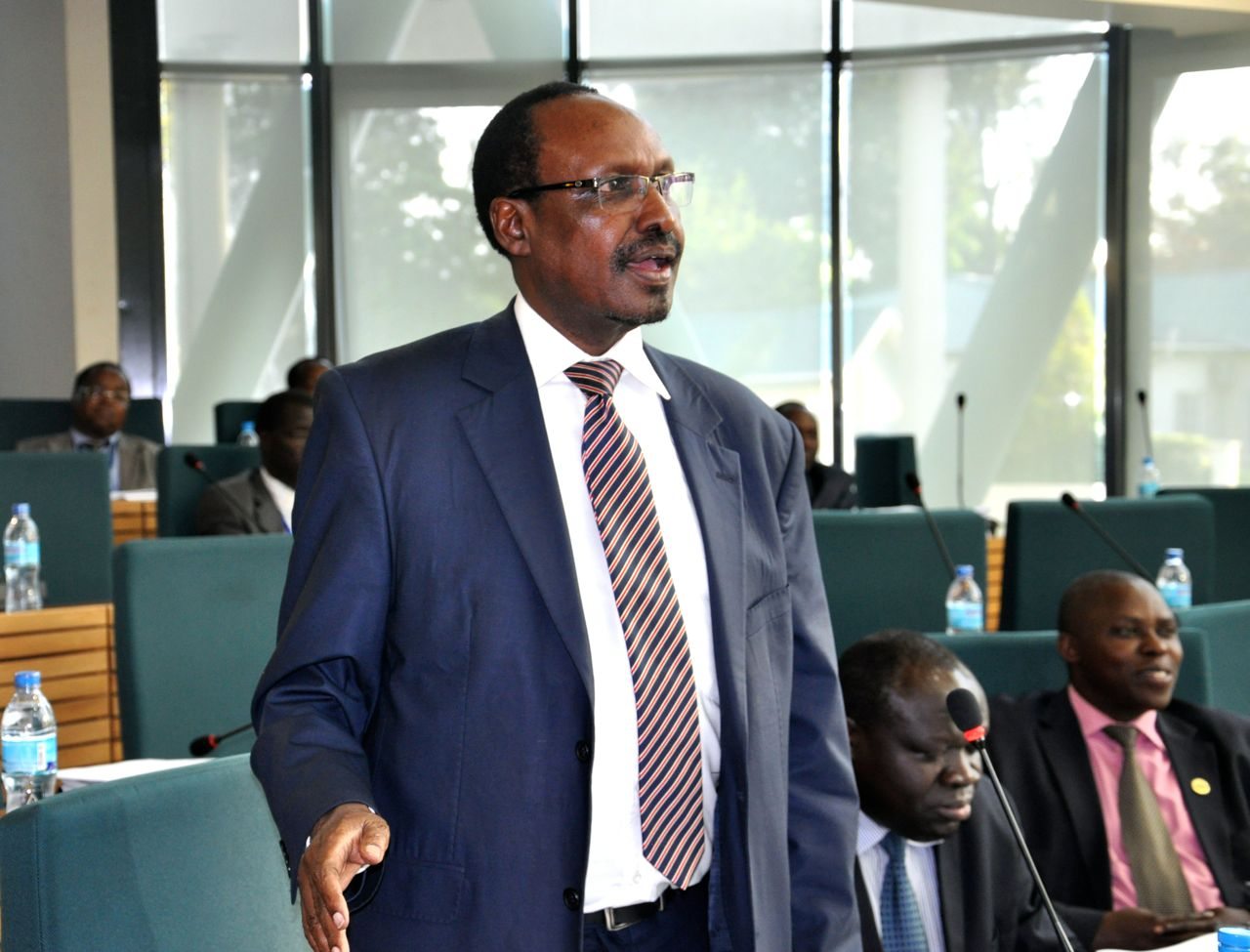
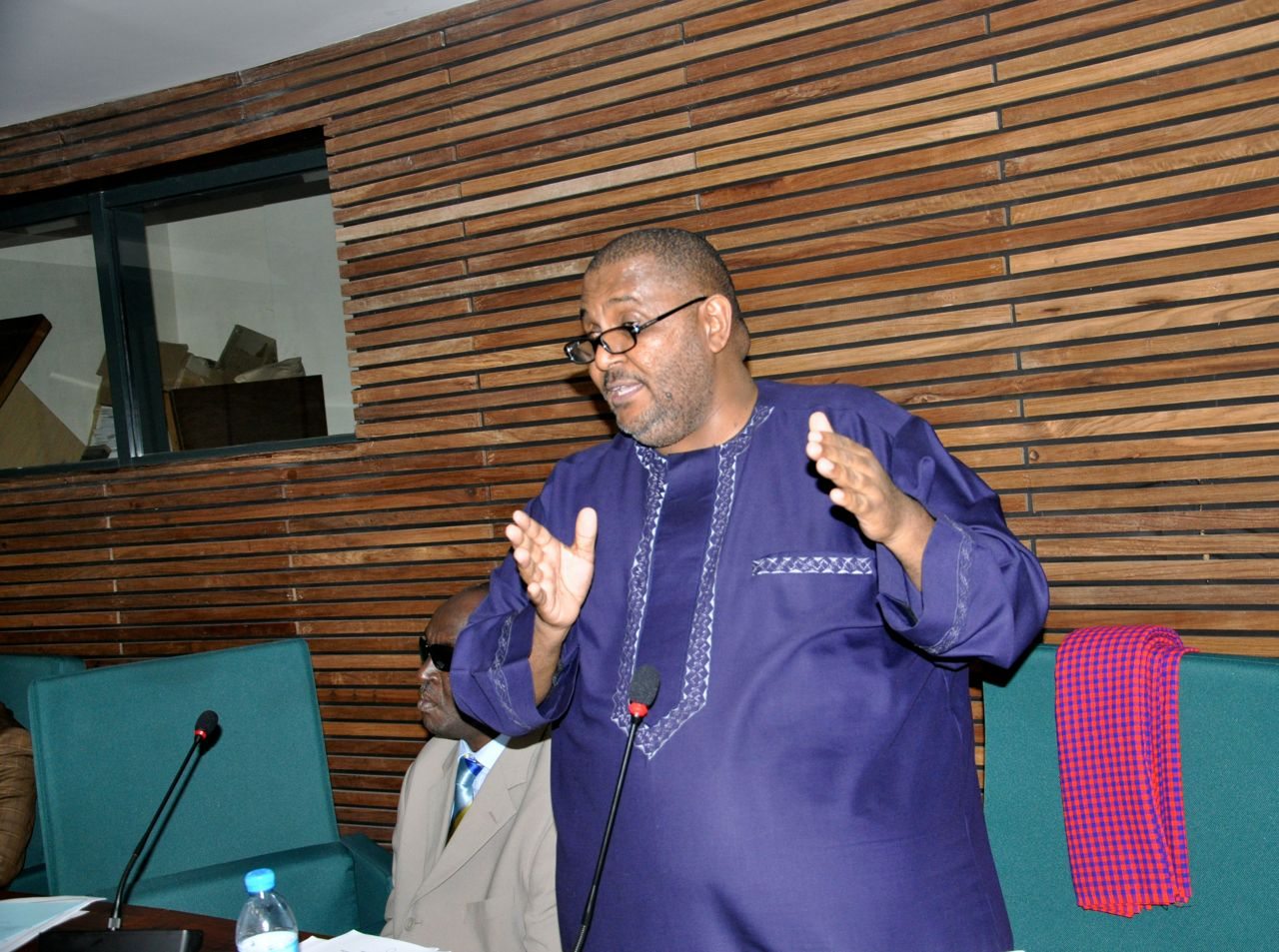
Hon Saoli ole Nkanae makes his contribution to the House
Hon Saoli ole Nkanae noted that the practice is prevalent among the Maasai people in East Africa, terming it a serious matter. Also rising in support of the motion was Hon Frederic Ngenzebuhoro.
Female Genital Mutilation (FGM) is the ritual removal of some or all of the external female genitalia and is rooted in gender inequality and attempts to control women’s sexuality and ideas about purity, modesty and aesthetics.
In 2016 UNICEF estimated that 200 million women had undergone the procedures in 27 countries in Africa, as well as in Indonesia, Iraqi Kurdistan and Yemen, with a rate of 80–98 percent within the 15–49 age group in Djibouti, Egypt, Eritrea, Guinea, Mali, Sierra Leone, Somalia and Sudan.
FGM is usually initiated and carried out by women, who see it as a source of honour, and who fear that failing to have their daughters and granddaughters cut will expose the girls to social exclusion.
The health effects of FGM can include recurrent infections, difficulty urinating and passing menstrual flow, chronic pain, the development of cysts, an inability to get pregnant, complications during childbirth, and fatal bleeding.
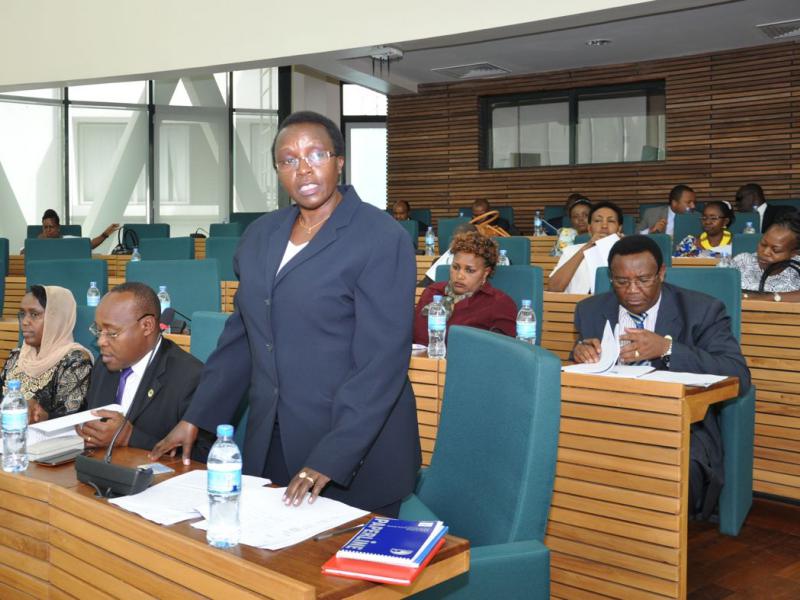
Hon Dr Susan Kolimba, Chair of the Council of Ministers responds to questions from Members
EALA has debated and passed the 2016/17 Budget totaling $101,374,589 with amendments following reallocations.
Dr. Susan Kolimba, Chair of the EAC Council of Ministers
Tanzania Deputy Minister for Foreign Affairs and East African Co-operation, Hon Dr Susan Kolimba presented the Budget speech to an attentive House on behalf of the substantive Minister and Chair of the EAC Council of Ministers Hon Dr Augustine Mahiga.
The 2016/2017 Budget is a drop down from $110,660,098 million presented to the House in the previous Financial Year. The Budget themed Towards Full Implementation of the EAC Common Market Protocol and Enhancing the Implementation of the Monetary Union Protocolprioritizes the full implementation of the EAC Single Customs Territory, enhanced implementation of the EAC Common Market Protocol especially additional commitments and interconnectivity of border immigration systems.
Prior to passing of the Budget, the Assembly resolved itself into a Committee of Ways and means to consider the Financial Statement for 2016/7 and a similar Committee of Supply to approve the Estimates of Expenditure for the same.
With it, the Assembly also passed the East African Community Appropriation Bill, 2016.
Debate of the Budget Speech was preceded by the presentation of the Committee on General Purpose on the EAC Budget Estimates for Revenue and Expenditure for the Financial Year 2016/17 by the Committee’s Chairperson, Hon Dr Odette Nyiramilimo.
EAC Budget Estimates for Revenue and Expenditure Committee Chairperson Hon Dr Odette Nyiramilimo
The Report indicates that the Community would focus on a number of areas in the coming Financial Year including the full implementation of the Single Customs Territory, as well as the enhanced implementation of the Common market Protocol. Other key priority areas are development of infrastructure, institutional strengthening and the implementation of EAC Peace and Security initiatives.
In reviewing its recommendations, the Committee once again emphasises the efficient use of Community resources and the proper delimitation of the role and responsibilities of the finance and advisory committee. With it comes the need to align the budget with the EAC objectives and its strategic objectives. On the size of the budget, the Committee notes the downward trend over the last three years against a number of programmes and projects of the Community.
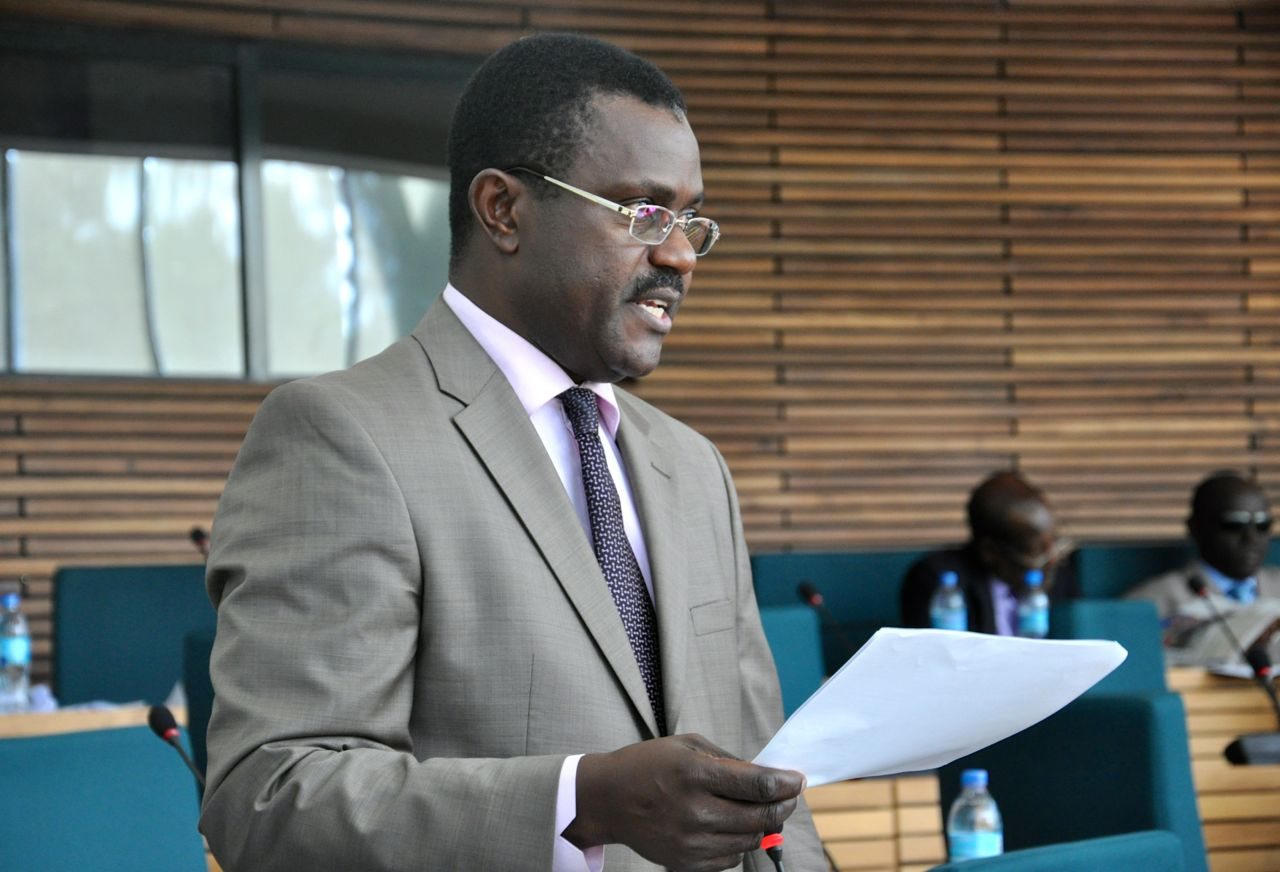
Hon Bernard Mulengani presents to the House
It thus recommends for the Council of Ministers to look seriously into the issue of inadequate funding, allow it (the Committee) to hold deliberations with the Council on sustainable funding as well as proposals for strong legislative and institutional support for the Common Market and the Monetary Union stages.
The Assembly is also emphatic that Partner States must desist from using the General reserves as a source of funds to substitute remittances, a move it terms as a high risk in terms of liquidity on the one side and that of litigation on the other.
Following reallocations by the House, the Budget is allocated to the Organs and Institutions of the EAC as follows; East African Community Secretariat ($57, 741, 185), East African Legislative Assembly ($16,086,224) and the East African Court of Justice ($4,286,477).
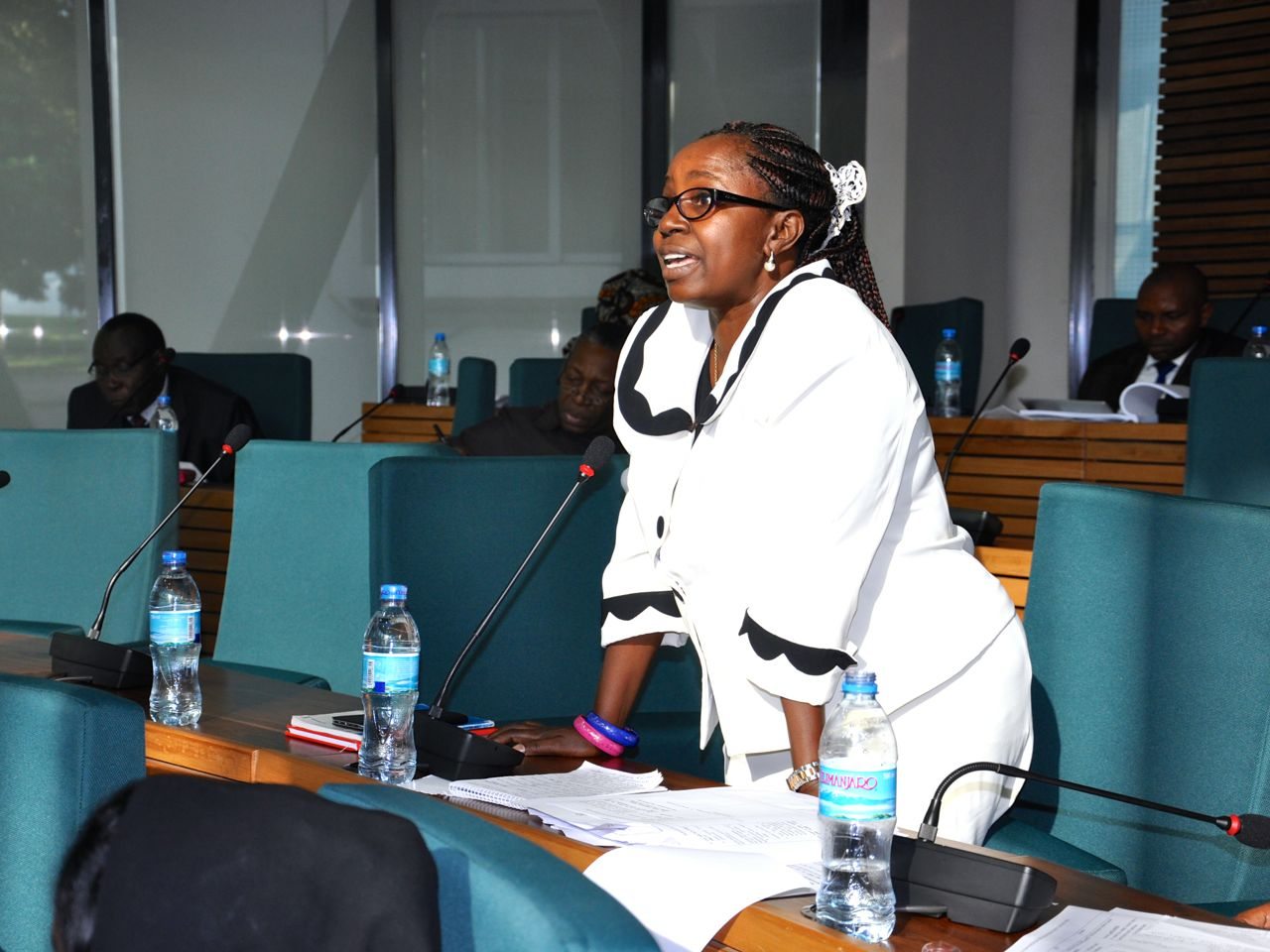
Hon Emerence Bucumi supported the Motion passing the EAC Budget
The Inter-University Council for East Africa shall receive ($4,553,890), Lake Victoria Basin Commission ($11,214,708) while $ 2,131,422 is earmarked for the Lake Victoria Fisheries Organization. On their part, the East African Science and Technology Commission shall receive ($ 1,196,542), East African Kiswahili Commission ($ 1,179,542) and the East African Health Research Commission ($ 1,397,438). The East African Competition Authority is to benefit from $ 1,587,565 in the Financial Year.
Hon Abubakar Zein makes a point during the debate
The following members contributed to the debate; Hon Bernard Mulengani, Hon Ussi Maryam, Hon Emerence Bucumi, Hon Jeremie Ngendakumana, Hon Dora Byamukama, Hon Saoli ole Nkanae, Hon Frederic Ngenzebuhoro, Hon Pierre Celestin Rwigema and Hon Christophe Bazivamo.
Others were Hon Chris Opoka, Hon Straton Ndikuryayo, Hon Sarah Bonaya, Hon Abubakar Zein, Hon Nusura Tiperu, Hon Mumbi Ngaru and Hon Martin Ngoga.
The debate was preceded by the passage of the EAC Supplementary Appropriation Bill, 2016 amounting to USD 1,569,941 for the Financial Year ending 30th June 2016. The Supplementary estimates were not passed at the previous 5th Meeting of the 4th Session held in Dar Es Salaam in March 2016.
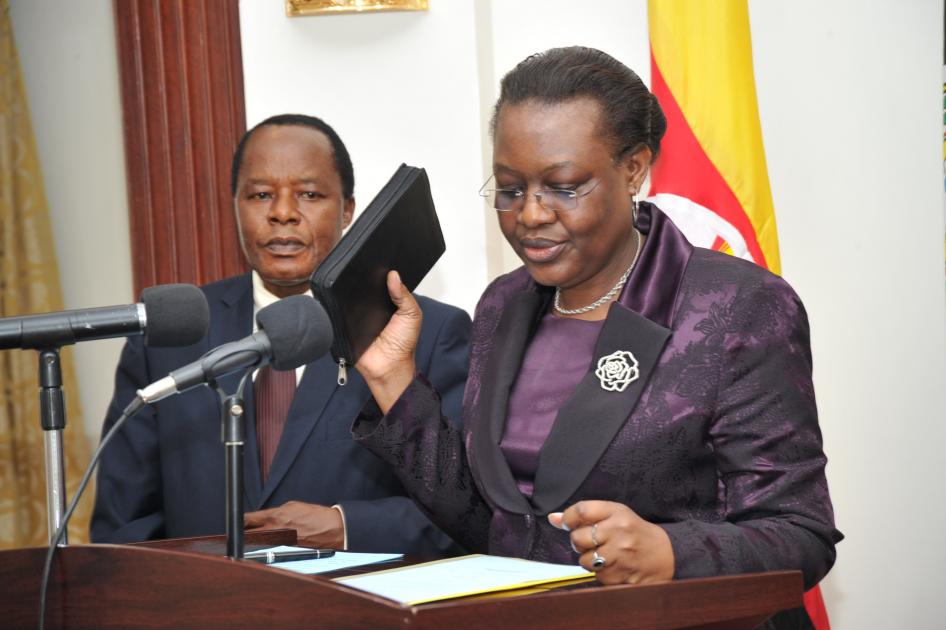
Kampala Capital City Authority Executive Director Jennifer Musisi has vowed to work with city leadership to develop the city. She was giving her speech at the start of the long awaited swearing in ceremony for councillors and Lord Mayor-elect, Erias Lukwago that is happening today.
ED Musisi welcomed the appointees, emphasising need to work together to transform Kampala City.
“We are mindful of the challenges but we are ready to work with you [elected leaders] to transform our city Kampala that is currently named the best city in the region and a benchmark for great cities in the world,” she added.
Mr. Lukwago made his way to KCCA offices for the swearing-in ceremony almost an hour ago, while by press time some of the 250 city councillors had been sworn in.
The opposition party strongman garnered 176,637 votes (80 per cent) to beat his two other rivals NRM’s Daniel Kazibwe aka Raggae Dee, who polled 49,366 and Democratic Party’s Issa Kikungwe with 7,759 votes in the February general elections to return for a second term.
It should be noted that Mr. Lukwago’s swearing-in had originally been set for June 1 but was postponed on the advice of Uganda Police, citing inadequate security as most of their personnel were engaged during the state visits of the presidents of South Korea and Turkey, and also the hectic Martyrs’ Day celebrations.
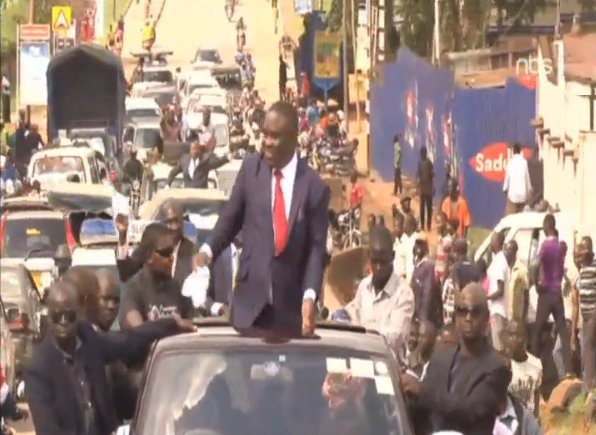
Lord Mayor-elect Erias Lukwago procession blocked from using Kiseka Rd, diverted to Gadaffi Rd
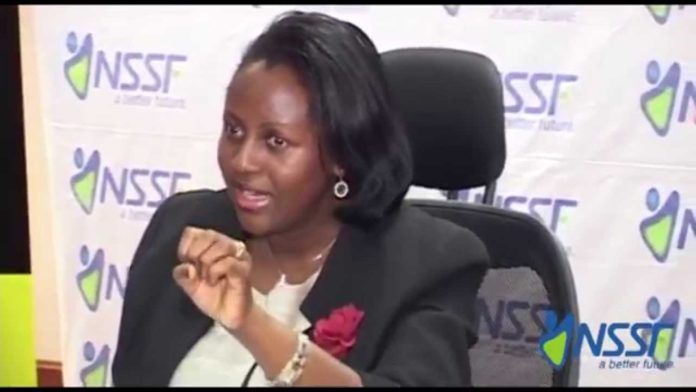
OUT: Former NSSF Deputy Managing Director Geraldine Busuulwa Ssali
An anonymous person has written to the Inspector General of Government (IGG) Irene Mulyagonja Kakooza, saying the NSSF Deputy Managing Director Geraldine Ssali Busuulwa, is not fit to hold the office.
In the communication, ‘Mrs Geraldine Ssali Busuulwa is not fit to be NSSF Deputy Managing Director’ dated May 20 and received by the IGG’s office on May 30, the whistleblower, that says has worked with the NSSF for more than years, makes a litany of accusations against Ms Ssali, among them ‘misconduct and insubordination’.
IGG Irene Mulyagonja Kakooza
Giving a detailed narrative of the requisite qualifications including the job description for the NSSF Deputy MD, the whistleblower says Ms Ssali had breached her duty as prescribed, by failing ‘to provide leadership to the Fund’.
As a responsible staff member, I am required by the Fund’s Code of Ethics to bring to the attention of management the conduct and actions of Ms Ssali that I consider unethical or unlawful conduct,’ the whistleblower wrote in a four-page communication addressed to among others the Office of the President/State House; the Minister of Finance, Planning and Economic Development; the Executive Director of the Uganda Retirement Benefits Regulatory Authority (URBRA); the Attorney General and to the Board Chairman and Managing Director of NSSF, respectively.
The whistleblower also expresses reservations as to whether Ms Ssali, who formerly worked as Head of the Directorate of Management in Her Majesty’s Treasury in the United Kingdom, is capable of meeting the job obligations of the multi-trillion shilling NSSF, an institution the whistleblower says, has over one million members.
‘For a person to qualify for that position, they must possess at leat 10 years working experience at a Head of Directorate level in a large financial services related organization. In addition, prior experience in managing large and complex business organisations with a big workforce whose skills are diverse; familiarity with the current global and local regulatory environment for investment funds as well as a demonstrated ability to on top of the developments in the pension sector globally are desirable. All those she didn’t have. For that matter, she lied about her track record and experience,’ the whistleblower writes.
The whistleblower adds: Therefore, Mrs Ssali misled the appointing authority, for this case the Minister of Finance, Planning and Economic Development’.
Ms Ssali is also accused of professional misconduct for allegedly leaking ‘vital information to the media on the running of the Fund, a thing that contravenes the ethical code required of all employees of the Fund’.
Further, the whistleblower takes a jibe at Ms Ssali for suing the Fund for Shs2.5 billion ‘for her personal gain’, and for neglecting advice by the finance minister to drop the suits.
‘How can a top manager who is responsible for the savers money be the very one demanding for over Shs2.5 billion,; does she care for the organization and most importantly the savers’ money or is she here for only personal gain,’? the whistleblower wonders.
CALLED FOR CALM IN WAU: South Sudan President Salva Kiir Mayardit
South Sudan’s president, Salva Kiir has directed the country’s state governors to welcome members of armed opposition Sudan People’s Liberation Movement in Opposition (SPLM-IO) under the leadership of his political rival and first deputy in the coalition government, Riek Machar in the interest of peace and stability.
“I want you to go back to the states and tell people that Riek has come. He is now in Juba and the new government of national unity in which he and his members have been appointed has been formed. It is the government that will work for the implementation of peace agreement and tackle the economic matters. So go and tell people to embrace peace and stop unnecessarily fighting and killings,” said President Kiir.
“Also I want you to welcome members of SPLM IO when they go to the states, whether as individuals or group. They will be going to visit their families, their relatives and friends, welcome them”, he added.
Kiir, according to the governor of Ruweng state, also urged them (governors) to sensitize communities on the importance of peaceful of coexistence and to explain the prevailing political situation in the country after the formation of the government national unity.
“We have received directives from His Excellency, the president of the republic, General Salva Kiir Mayardit to sensitize communities to accept each other and live in peace,” Governor Mayol Kur said.
“The creation of states was not to divide people and kill themselves, no the objective as it was explained by the establishment order was to take the government and the services close to them to the people in light with the vision of the SPLM”, he further added.
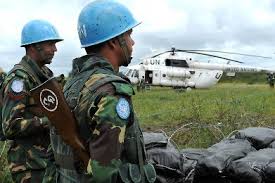
British UN troops in South Sudan. Photo credit/Sudan Tribune
British troops have arrived in South Sudan where they will be part of a UN peacekeeping mission, the Ministry of Defence has confirmed.
South Sudan, in north-eastern Africa, became the world’s newest country in 2011 when it gained independence from Sudan after a long-running civil war.
However, there is ongoing fighting there between the government and rebel forces, which has killed thousands and displaced millions from their homes.
Up to 300 UK troops are to be sent.
The small military team, which is the first wave of troops from Britain, will join more than 12,000 UN troops from more than 50 nations currently stationed in the country.
The UK personnel will be split into two engineer squadrons to provide ‘vital engineering work to strengthen infrastructure as well as further advisory support’, the MoD said.
There will be further deployments throughout the rest of 2016, it added.
Defence Secretary Michael Fallon said: “The arrival of British personnel clearly demonstrates our commitment to supporting UN efforts to improve conditions in some of the world’s most destabilising conflicts.”
Britain has long been a large financial contributor to UN peacekeeping missions and is the fifth highest provider of funds.
But its troop commitment has been relatively small – focused mainly on 250 soldiers based in Cyprus who wear the distinctive blue berets of the UN.
Prime Minister David Cameron announced last year the UK would double its contribution to active peacekeeping in 2016, with the deployment of British troops to South Sudan, as well as a team of 70 UK personnel to Somalia.
The first British troops arrived in Somalia last month.
It was in the UK’s interests to ‘step up’ in supporting both missions because it would lead to ‘less terrorism, less migration, less piracy’ Mr Cameron said.
British troops would not be involved in combat roles, he added.
After decades of fighting in the region that is now South Sudan, both sides signed a peace deal last August.
Opposition leader Riek Machar was sworn in as the country’s vice president in April as part of a new unity government with his rival, President Salva Kiir.
However, fighting has continued, and an estimated 1.7 million people are displaced from their homes, according to latest UN figures.
Since the UN’s South Sudan mission started in 2011, 17 peacekeeping troops have been killed.