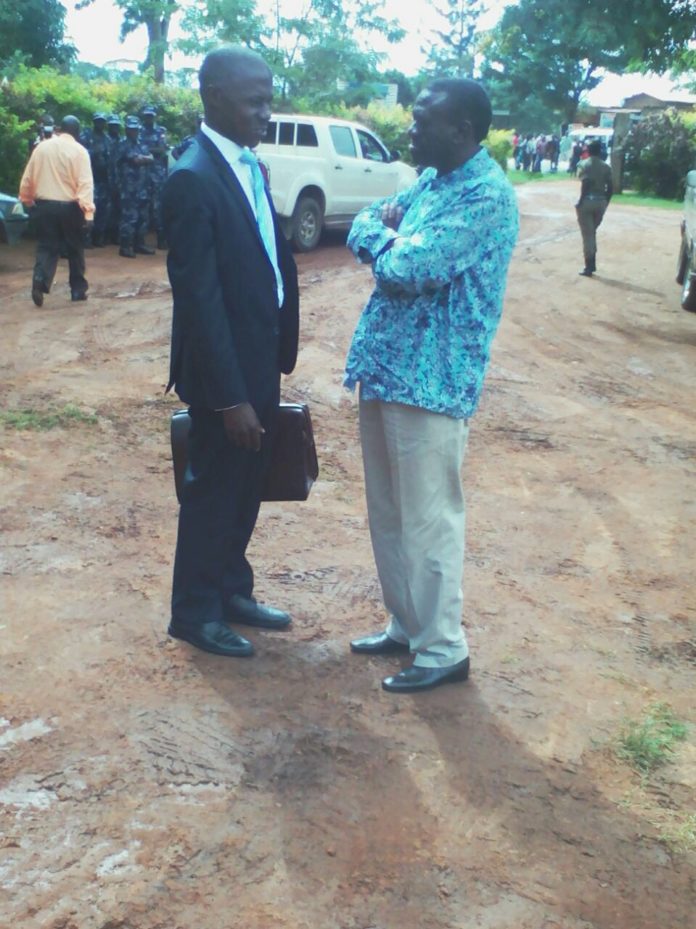
Dr Besigye speaks to a supporter outside the Kasangati magistrate's court
The Kasangati Grade one magistrate Fred Egesa has this morning adjourned a ‘disobeying of lawful orders’ case against Dr Kizza Besigye to May 27.
Dr Besigye is accused by police of disobeying police directives on April 5 when his convoy was intercepted at Mulago roundabout as he made his way for the weekly ‘Free my vote’ prayers at the Forum for Democratic Change (FDC) party offices, just a day after police had withdrawn from his home.
The four time presidential candidate, clad in a blue shirt, arrived at court at 10:15am in the company of his lawyer Fred Mpanga.
State witness Senior Superintendent of Police (SSP) David Ulama, 46, from Naguru barracks said that Dr Besigye rejected police orders to use a different route as directed and to deter the procession accompanying him.
Meanwhile, on the sidelines defence lawyer Fred Mpanga told journalists that they are waiting for the state prosecution led by Joseph Kyomuhendo to conclude submission of evidence at the next hearing to determine their next move.
Police on several occasions have blocked Besigye from accessing the city centre especially in company of his supporters; he has on most of these occasions been arrested, detained and released later without charges.
Recently, after a brief agreement with police, Dr Besigye’s movements have not been hampered on condition that he doesn’t move with a procession and that in case a crowd starts to build around him, they either get beaten or arrested as witnessed yesterday at Kibuye as Dr Besigye left FDC offices .
The Administration Block of Mbarara University of Science and Technology
The Ministry of Education has released the admission list for government sponsored students at Mbarara University of Science and Technology (MUST).
Government sponsors 2,500 students in the five public universities of Makerere, Kyambogo, Mbarara, Gulu and Busitema, with Makerere University taking the lion’s share of 2,000 students while 500 students are shared amongst the four other public universities.
Government has two programmes where it sponsors bright but needy students and these are; the quota system that targets students that are bright but can’t afford university tuition.
The second is a loan system, where government avails loans to bright students that qualify for entry into university but are unable to pay tuition.
Those enrolled under the loan scheme are supposed to repay the fees spent on their tuition two years after leaving university.
Energy ministry Permanaent Secretary Kabagambe Kaliisa
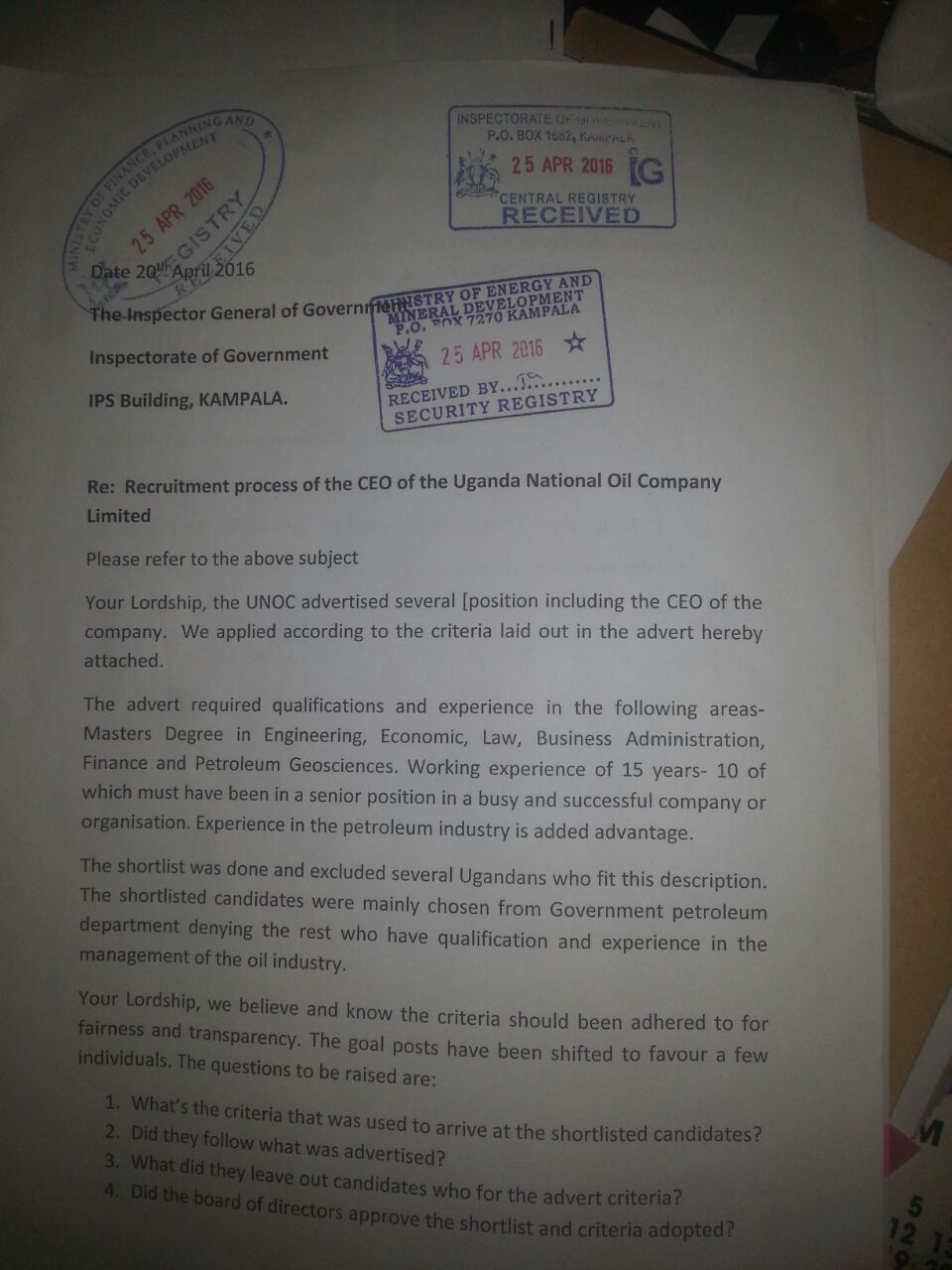
A whistleblower has written to the Inspector General of Government, claiming that the process to recruit the Chief Executive Officer of the Uganda National Oil Company is fraught with irregularities.
According to the complainant, several people who applied for the post and had the requisite qualifications were omitted from the shortlist, in preference for those working in the Petroleum Department of the Ministry of Energy and Mineral Development.
‘Your Lordship, the UNOC advertised for several (position) sic including the CEO of the company. We applied according to the criteria laid out in the advert attached hereby,’ the petition dated April 20 and copied to the Ministry of Finance and that of Energy and Mineral Development reads in part. The petition was received by the three addressees on April 25.
According to the petitioner, candidates for the job were required to have a Masters Degree in Engineering, Economic(s), Law, Business Administration, Finance and Petroleum Geosciences, with a minimum of 15 years’ experience, ‘ten (10 years) of which must have been in a senior position in a busy or successful company or organization. Experience in the petroleum industry is an added advantage.’
The petitioner further imputes that the set criteria was not followed and also seeks to know whether the UNOC Board of Directors approved the final shortlist.
Efforts to get comment from the energy ministry Permanent Secretary Kabagambe Kalisa were futile by press time as he was attending a meeting.
The Uganda National Oil Company (UNOC), also known as the National Oil Company of Uganda, is a limited liability petroleum company owned by the Uganda Government and established under the Petroleum (Exploration, Development and Production) Act, 2013 of Uganda. Its board of directors chaired by businessman Emmanuel Katongole was inaugurated on October 23, 2015 by President Yoweri Museveni.
Other Board members include Francis Nagimesi, a former chief executive officer of the defunct Coffee Marketing Board of Uganda; Francis Twinamatsiko, a principal economist in the Ministry of Finance and Economic Development; Grace Tibwita Bagaaya, a physical planner; Irene Pauline Batebe, a chemical/refinery engineer in the Petroleum Directorate of Uganda; Godfrey Andama, a senior geoscientist; and Stella Marie Biwaga, a lawyer.
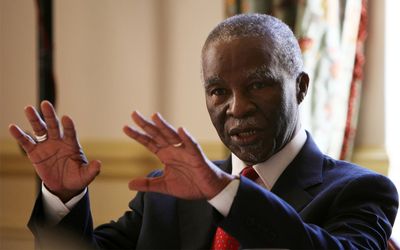
UN High Level Panel on Illicit Outflows chairperson Thabo Mbeki
The amount of money leaving Africa through illegal and criminal means every year has hit the 90 billion dollar mark, the UN has established.
Making the revelation Monday, the Chairman of the United Nations Economic Commission for Africa (UNECA) High Level Panel on Illicit Outflows Thabo Mbeki said this figure had risen from US$50 billion a few years ago.
According to the findings of the Mbeki panel, the commercial sector in Africa was responsible for two thirds of the illegal outflows that ‘could be used for development’, while the remaining third is derived from criminal activities including human trafficking, corruption and drug dealing.
A report, the ‘Illicit Financial Flows and the Problem of Net Resource Transfers from Africa: 1980–2009’ indicated that Africa lost between US$1.2 trillion and US$1.4 trillion over the 29 year period, amounts that by far surpassed foreign aid during the same period.
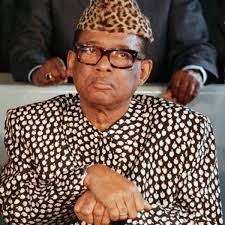
Over the years several African leaders and their political cronies have been cited in illicit dealings involving millions of dollars, the most notable being Mobutu Sese Seko of Zaire and Teodoro Obiang Nguema Mbaso
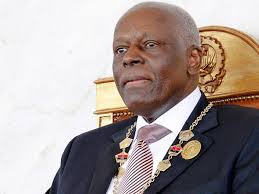
Africa’s richest President Jos Eduardo Dos Santos
go of Equatorial Guinea, whose properties in the US were sanctioned. Another leader who is under the spotlight is oil-rich Angola’s long-serving President Jos Eduardo Dos Santos, whose billionaire daughter Isabel Dos Santos is reportedly the richest African woman, with a fortune that is largely stashed away in the West.
Former DRC/Zaire President Mobutu Sese Seko
In 2013 Isabel’s wealth was estimated at US$3 billion by Forbes magazine, while that of her father, also said to be the richest man in Africa, is valued at over US$20 billion.
Other Presidents in Africa include:
Mohammed VI of Morocco – US$2.1 billion
Teodoro Obiang Mbasogo Nguema of Equatorial Guinea – US$600 million
As we mentioned a few weeks back, studies show that the female orgasm could all be down to how the clitoris ‘migrates’ towards the vaginal wall during sex. The closer the clitoris gets to the vaginal walls, the more likely an orgasm will occur – which can be affected by some smart sex positioning.
But new research suggests that it’s not all about angles (although missionary and woman on top tend to work best). If you’re struggling to achieve orgasm, it could be because of the shape of your vagina.
As reported by Medical Express, new research suggests that women whose clitoris and urinary opening are closer together will have a better chance of orgasm than those with a greater distance between the two.
Elisabeth Lloyd from the Kinsey Institute suggests that 2.5 centimetres is the magic distance for getting those orgasms. Get out the ruler.
For women whose clitoris is further up and therefore further away from the urinary opening, it can be very difficult – and even impossible – to have an orgasm during sex, because standard sex doesn’t provide enough friction to stimulate the clit.
So, what can we take from all of this?
First off, being unable to climax isn’t your fault or your partner’s, necessarily. It might just be how your body is.
But here’s point two: that doesn’t mean you should just give up and accept an orgasm-free existence. Try to pay more attention to the clitoris. If standard sex positions aren’t working for you, feel free to add in some manual stimulation.
The clitoris is the key, and just because it might not be in the optimal position doesn’t mean it shouldn’t be getting loads of love. Orgasms for all.
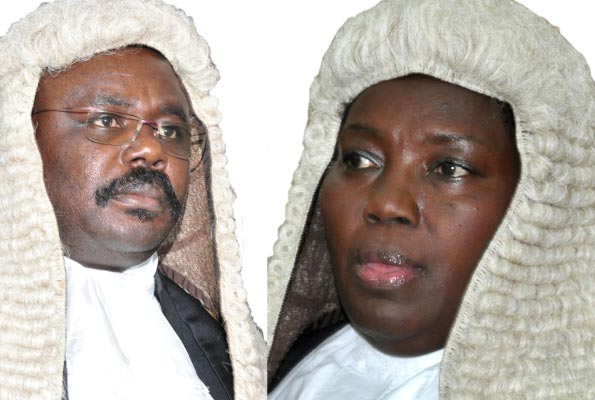
Current Speaker of Parliament Rebecca Kadaga (R) and her deputy Jacob Oulanyah.
President Museveni has reportedly set the record straight about false claims he was favouring one candidate against the other in the race for Speaker of the 10th Parliament.
The battle is Speaker Rebecca Kadaga and her deputy Jacob Oulanyah.
He’s also dealing with talkative Lwemiyaga MP Theodore Sekikubo, Wilfred Niwagaba of Ndorwa East, Mitooma Woman MP Jovah Kamateeka, National Female MP and Kumi Woman MP-elect Monicah Amoding, West Budama South MP Oboth Oboth and Ajuri MP Dennis Hamson Obua.
The President is said to have over the weekend at Entebbe State House warned all of them against ring fencing the position of the speaker and deputy speaker.
We’re told this was during the National Resistance Movement-NRM party Central Executive Committee-CEC meeting held on Sunday.
Museveni, who is alike a big brother to all the contestants insists the positions should be free to contest in a leveled playing ground.
“The President said that as has been done in the past, those interested should state their intentions and the NRM caucus in Parliament will thereafter vote for their preferred candidate,” the source quoted Museveni as saying.
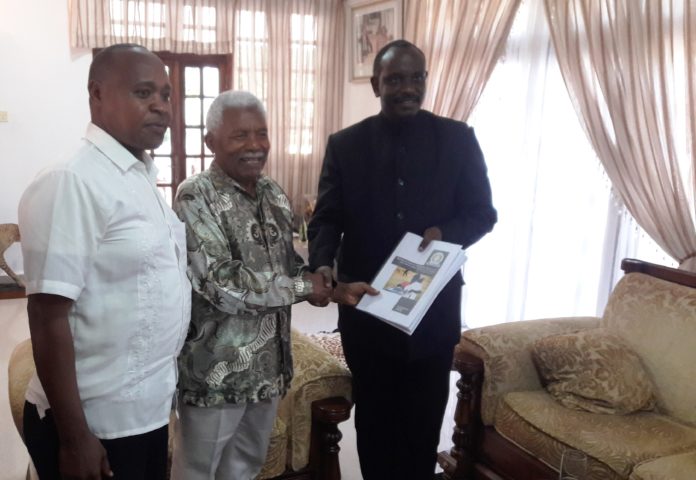
From L-R; Hon Peter Mathuki, EALA MP, H.E. Ali Hassan Mwinyi and Dr Richard Sezibera display EAC Observer Mission Report
The Chairperson of the East Africa Community (EAC) Election Observer Mission to Uganda Ali Hassan Mwinyi, recently handed over the final observation report of Uganda’s presidential elections to the EAC Secretary General Dr Richard Sezibera.
HE Mwinyi, a former President of Tanzania, led the 50-man team that was in Uganda from February 9 to observe the February 18 presidential elections and over the weekend presented to Amb Sezibera the report at his home in Dar es Salaam.
The Mission’s mandate was to observe the overall electoral environment, pre-election activities, the polling day, the counting and tallying of results.
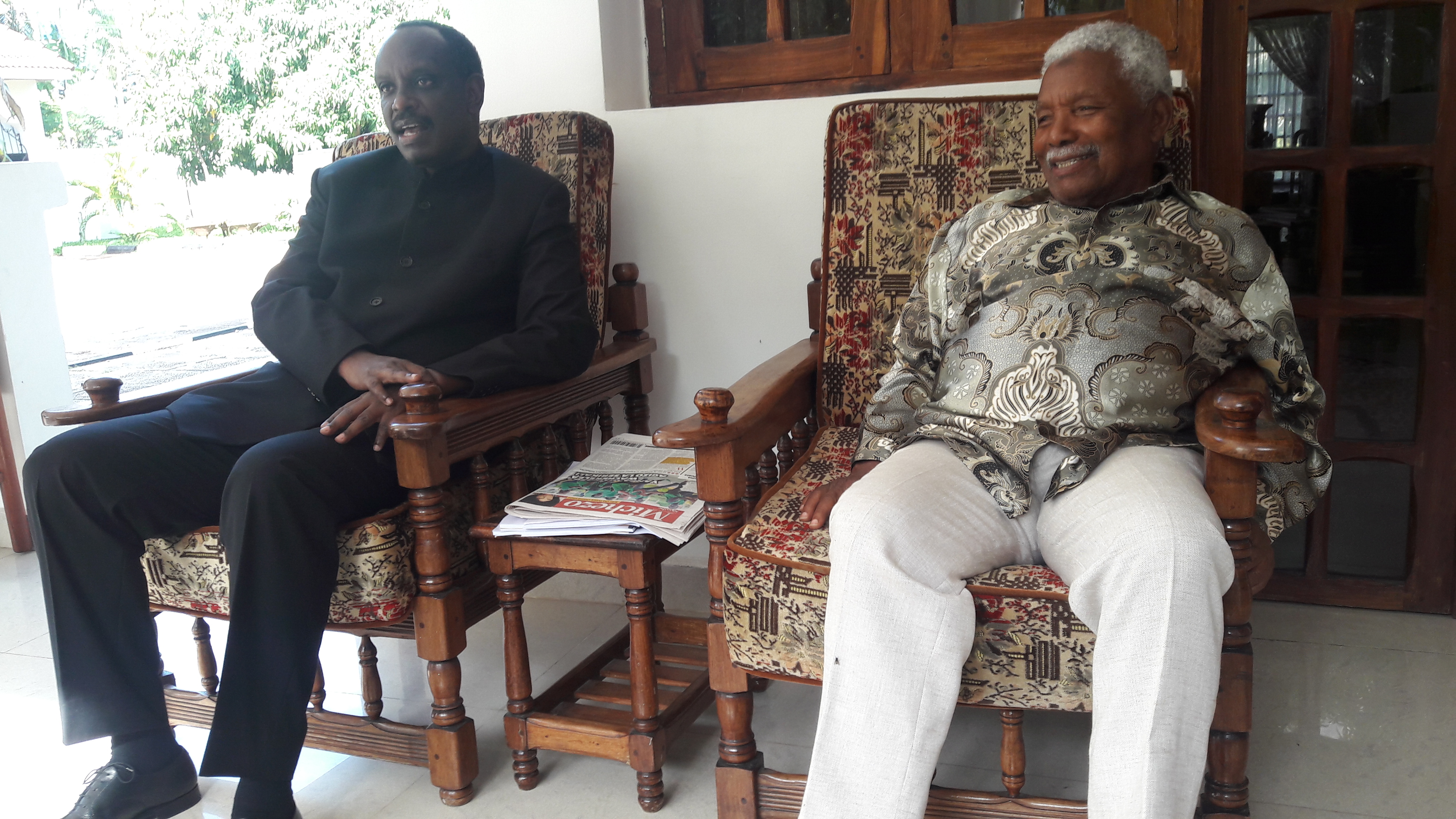
H.E. Ali Hassan Mwinyi, Former President of the United Republic of Tanzania and Amb. Dr Richard Sezibera, EAC Secretary General in discussion
“I was very happy to observe the patience and orderliness with which the people of Uganda conducted her General Elections,” Mr Mwinyi said, adding: “These and many other things that have also been highlighted in the report can be used as benchmarks for which other countries can borrow good practices from.
Receiving the report the Secretary General thanked Mr Mwinyi for his leadership and commitment to the EAC Elections Observers Mission, and noted that: “the cooperation between the EAC and other stakeholders led to sustainable peace in the country.”
The report consists of recommendations to streamline and improve the electoral process for future in Uganda, and will be submitted to, among others, the Electoral Commission of Uganda, through the EAC Council of Ministers for consideration.
The members of the EAC Election Observer Mission were drawn from different but complementary disciplines and include: members of the East African Legislative Assembly, delegates from four Partner States (Kenya, United Republic Tanzania, Rwanda and Burundi), EAC Youth Ambassadors, Mission Leader, Mission Coordinator, one EAC Executive Staff and technical officers from the Secretariat as well as EALA.
The EAC Observer Mission was a response to the invitation of the Uganda Electoral Commission as well as the decision of the EAC Council of Ministers on observation of elections in the Partner States.
Burundi rights activist and laureate Marguerite Barankitse
An exiled Burundian laureate has attacked several African leaders and the Africa Union Chairperson Nkosazana Dlamini Zuma, saying their corrupt tendencies and lackluster attitude have helped destroy her country.
Africa Union Chairperson Nkosazana Dlamini Zuma
Speaking in the Armenian capital Yerevan, where on Sunday she became the inaugural laureate of the Aurora Prize, Ms Marguerite Barankitse said the African Union’s efforts were hobbled by corrupt presidents seeking to cling to power themselves.
CRITICISED: Uganda’s Yoweri Museveni
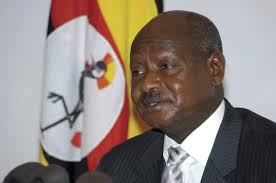
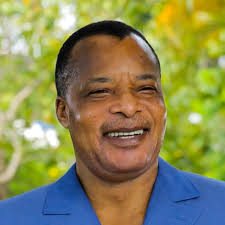
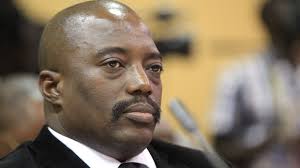
According to Ms Barankitse, who won a $1.1m humanitarian Aurora Prize on Sunday, South African President President Jacob Zuma, Uganda’s Yoweri Museveni, Denis Sassou Nguesso of Congo Brazzaville and Joseph Kabila of the Democratic Republic of Congo (DRC) are among those who have failed to ensure that peace returns to Burundi, a country embroiled in civil war over the last one year when President Pierre Nkurunziza announced he would seek a third presidential term.
Congo Brazzaville President Denis Sassou Ngueso
“How can you expect the African Union to help Burundi when it has so many corrupt presidents?” she asked. “Do you want Sassou Nguesso in Brazzaville, or the president of DRC who wants to run again?
CITED: DRC President Joseph Kabila
“They give us a mediator like Museveni. He’s now spent 30 years in power. They’re making a mockery of us and I’m convinced they’re going to come when it’s too late, like in Rwanda, and they’re going to cry crocodile tears.”
And, taking swipe at Jacob Zuma, Ms Barankitse, who is at times referred to as Burundi’s Mandela, said the South African president had destroyed Nelson Mandela’s legacy of peace-building in Burundi.
“Thanks to Mandela, we completed a peace and reconciliation deal,” she said in an interview. “And now today, it’s a South African president, Jacob Zuma, who has brought shame and destroyed what our hero Mandela had built,” Ms Barankitse, who is currently exiled in Rwanda, said.
She added: “South Africans themselves want to tell him no, and he resists… [African Union Commission chairperson Nkosazana Dlamini-Zuma] decided to send 5 000 soldiers to protect the Burundian people. And it’s African presidents, including her ex-husband, who refused to do that. This is serious. “Zuma, he’s corrupt. And that makes a mockery of us. Quite frankly, it’s a mockery.”
Peace prize
The Aurora Prize was created in memory of the Armenian genocide with the aim of honouring individuals who have risked their own lives to save the lives of others.
A Tutsi who sheltered her Hutu neighbours when the civil war in her country, Ms Barankitse on Sunday received $100 000 to support her own work and a further $1m to donate to other charities who support her causes.
She cared for orphans and refugees, eventually caring for 30 000 children through her Maison Shalom and opening a hospital that has treated 80 000 patients.
The violence last year forced her to close Maison Shalom but she is now working with Burundian refugees in neighbouring Rwanda.
Reports indicate Mandela’s efforts at peace in Burundi helped ended a civil war that left 300 000 dead and forced one million people from their homes in genocidal violence between ethnic Hutus and Tutsis, but Barankitse said her country has returned to a ‘situation of total fear’ with 250 000 people again fleeing the country.
The voting exercise for the winner of ACIA 2016 Special Award category has started this week.
This award aims to recognise the Government of Uganda’s development efforts, especially in the promotion of e-Government.
It’s being contested for by 12 Government Ministries, Departments and Agencies (MDAs) have submitted entries to demonstrate their ICT prowess in offering e-government services to Ugandans. These MDAs are Education Service Commission (ESC), Inspectorate of Government (IGG), Ministry of Education, Science, Technology and Sports (MoESTS), Ministry of Energy and Mineral Development (MoEMD) and Ministry of Finance, Planning and Economic Development (MoFPED).
Others are the Ministry of Lands, Housing and Urban Development (MoLHUD), National Medical Stores (NMS), National Social Security Fund (NSSF), National Water and Sewerage Corporation (NWSC), Uganda Revenue Authority (URA) and Uganda Wildlife Authority (UWA).
The public is being asked to determine who of the above-mentioned MDA offers the Best e-Government Service in Uganda. The voting is being done electronically at: www.acia.ug/vote
The five-day exercise ends onApril 29, 2016. The winner and runners up will be announced during the ACIA 2016 Awards Gala night that will take place at Serena Conference Centre on May 20, 2016.
Overall, there are six major award categories for ACIA 2016. The other five award categories are:Young Innovators, Business Excellence, Service Excellence, ICT for Development, and Digital Content. These winners and runners up of these five categories shall be determined by a panel of eminent and independent judges.
Launched in 2010, ACIA – Annual Communication Innovation Award – is an initiative of the Uganda Communications Commission (UCC) with the aim of encouraging local ICT innovations and applications through ACIA. Since then, the event has now become a signature of Uganda’s innovation industry.
The ACIA 2016 Awards gala will be preceded by a one-day Exhibition held on the same day.
It might have occurred to you as you notice hate speech on different social media platforms that Uganda has a bit of a admiration problem.
But when it comes to countries with the biggest media freedom, Uganda doesn’t even make the top 50.
This is all manifested in the manner with which an elected member of the 3rd East African Legislative Assembly representing the republic of Uganda, Hon. Fred Mukasa Mbidde attached the persona of President Museveni to the South Sudan leadership disputes.
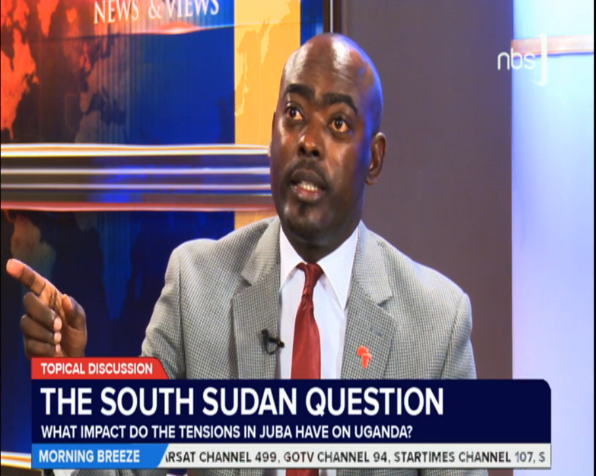
Mr Mbidde while appearing on NBS TV on Tuesday alleged President Museveni was the custodian of the ‘partisan politics gone wrong’ in the world’s youngest state. He was answering questions on the impact tensions in Juba have on Uganda.
“President Museveni lacks the moral authority to intervene in South Sudan right now because he partly helped bring in the power the current leaders who are fighting,” Mbidde said.
He hastened to add that that doesn’t mean the Great Lakes region’s longest serving leader has no experience if he wished.
The staunch Democratic Party member claimed that the deployment of Uganda Peoples Defense Force (UPDF) in South Sudan in December 2013 to safeguard the country’s interests was a bad move yet government said it was specifically guarding key installations in Juba and also protecting the strategic town of Bor against being over-run by the rebels.
Mr Mbidde said: “Given its silence, Uganda is perhaps beginning to recollect its initial stand on South Sudan. Remember we fled the country.
“The problem with President Museveni is that he acts alone; Congo, South Sudan. He is deaf to western threats.
“In East Africa, what we have are individuals (Museveni, Kagame) or parties (CCM in Tanzania) that want to remain in power forever.
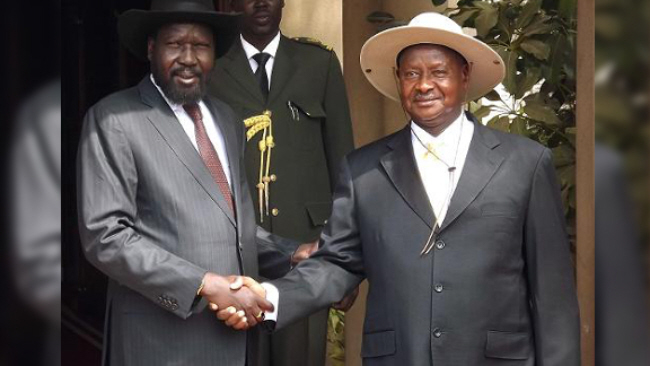
South Sudan’s President Salva Kiir has apologised to the people of South Sudan for the conflict caused by the leaders of the country, according to a transcript of a speech from Radio Tamazuj.
He was speaking after the swearing in of Riek Machar as the country’s First Vice President in a new unity government.
In a key passage he said: “Though the road ahead will still continue to have challenges… we are committed and determined to move our country forward.Thank you for the long patience and I ask you to to continue to endure with us. I also ask you to join me and my brother Riek Machar in the spirit of forgiveness and reconciliation as our people are tired of war and they need peace now.”