Stanbic Bank
Stanbic Bank
17.6 C
Kampala
Stanbic Bank
Stanbic Bank
Home Blog Page 219

Parliament reallocates shs750b after reconsidering the Appropriation Bill

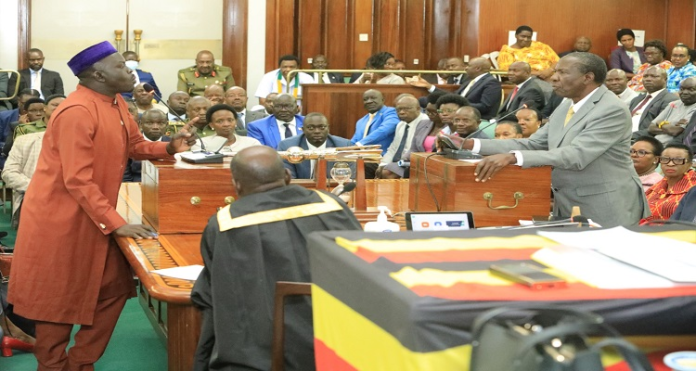
Finance Minister Matia Kasaija on right facing off with another legislator during the reallocation of the appropriation bill.

WHY ROKO CONSTRUCTION COMPANY IS A PRIORITY THAN FUNDING HOSPITALS AND BUYING AMBULENCES

Parliament has re-allocated Shs750 billion after reassessing the Appropriation Bill, 2024 which President Yoweri Kaguta Museveni objected to assent to.

In the 2024/2025 Budget passed earlier, legislators had allocated the Shs750 billion to areas that they described as critical. These included among others procurement of ambulances, maintenance of bridges, construction of sub-county headquarters and support to families with income generating projects among others.

At a sitting of the House on Tuesday, July 2, 2024, the Speaker Anita Among read the President’s letter which highlighted the reasons for his rejection of the bill.  

Museveni cited what he described as indiscipline in budgeting, sabotage of national priorities and corruption among lawmakers.

The Bill, which initially sought to authorise public expenditure from the Consolidated Fund was first passed on May 16,2024 and later, sent to the President for approval on May 31, 2024.

In his letter, the President also expressed his disapproval accusing the MPs of interfering with the constitutional mandate of the Finance Minister in budgeting.

“There are mistakes here. These are indiscipline in budgeting, sabotaging the national priorities and now the suspicion of massive corruption. I am therefore writing to request that this practice stops,” the President stated in his letter.

Museveni cited the Shs440 billion utilised to reconstruct 127 kilometers of the Kampala-Masaka Road adding diverting Shs3.71 trillion over four years is equivalent to aborting nine similar major road projects.

The Speaker ruled that the House constitutes itself into a Committee of Supply since the Budget Committee was not yet fully constituted.

Erute South MP Jonathan Odur and Butambala District Women Representative, Aisha Kabanda supported her proposal adding that the Budget Committee lacked the moral authority to investigate the issues listed by Museveni due to the corruption accusations.

However, Members of Parliament did not take the President’s accusations.

They were particularly displeased that the executive branch had piled blame on parliament for deviating on the government priorities.

Kira Municipality MP, Semujju Nganda criticised the Gen. Museveni’s proposal to prioritize Roko at the expense of other public needs.

“The President’s priority is that you move money from the ambulances and regional referral hospitals to create Shs300 billion for Roko, a private company”, he said.

However, State Minister for Finance, Henry Musasizi said that, ‘these are funds for government obligations under the share subscription agreement in servicing Roko bills of exchange, and payment of EFT bank charges of Bank of Uganda, among others’.

Napak District Woman MP Faith Nakut implored the House to search for answers to the questions raised by the president insisting that the Budget Committee had done the right thing.

This was re-echoed by the former Chairperson of the Budget Committee, Patrick Isiagi who insisted that the allocations by parliament were made to fund critical sectors for the good of the country. He later conceded to the reallocations.

“But given the guidance of the president on the priorities and commitment to stick to the budget, I concede”, he stated.

The proposal was put to a vote and was unanimously seconded by the MPs, allowing the Minister of Finance, Planning, and Economic Development, Matia Kasaija to move a motion for the House to reconsider the Bill.

The reconsidered Appropriation Bill approved an expenditure of over Shs72.136 trillion reflecting a Shs14 trillion increase from the initial estimates of Shs58.34 trillion.

The budget includes Shs18.9 trillion for recurrent expenditures and Shs34.7 trillion for development. Government acquired shares in Roko construction after the firm was declared bankrupt. However, other sources allege that top regime operatives were using Roko as a cover in the construction world in order to edge out other competitors in the construction sector.

Stories Continues after ad

Former CMI Deputy Director Brig CK Asiimwe sent DRC as Military Attaché

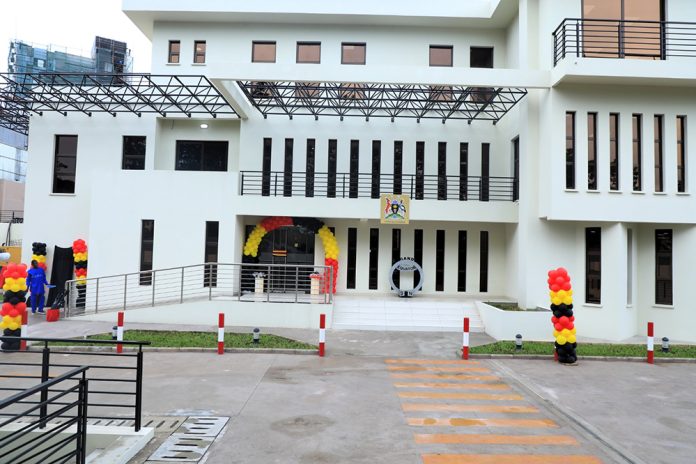
Uganda's new Chancery building in DRC.

Former Deputy CMI boss Brig CK Asiimwe has been appointed and sent to the Democratic Republic of Congo as a military attaché to Uganda’s Embassy.

 Brig. Asiimwe who was dropped from the military intelligence position in February 2022 and sent for further training will be in charge of military and intelligence operations at the mission.

Brig Asiimwe was dropped together with his boss, Maj Gen Abel Kandiho who was also removed from his position and sent to police as Chief of Joint Staff.  Kandiho has since returned to the army for redeployment.

At the moment, CMI is now under the leadership of Maj Gen James Birungi.

Stories Continues after ad

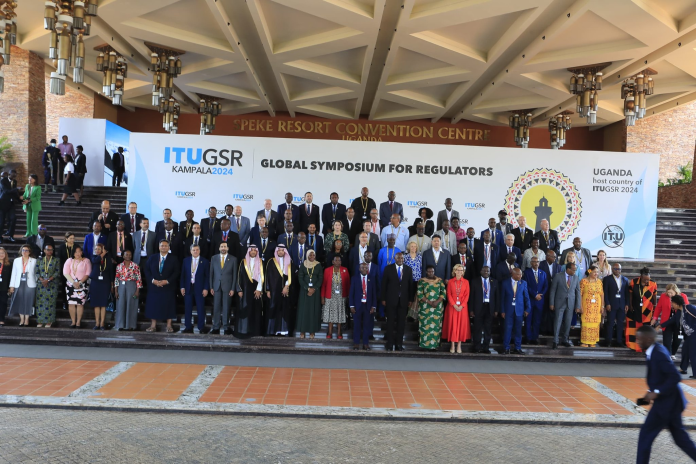
Global symposium for regulators kicks off at Speke Resort

President Yoweri Kaguta Museveni, represented by the Vice President Jessica Alupo, opened the Global Symposium for Regulators-2024 at Speke Resort and Convention Centre, Munyonyo, Kampala, on July 2, 2024.

The event, under the theme: “Regulation for Impact’ is organized by the International Telecommunication Union (ITU), bringing together regulators, policymakers, and industry stakeholders from around the world to share experiences and best practices in the ICT sector.

In his speech, Museveni welcomed delegates from outside Uganda and commended ITU for convening the symposium, which is aimed to promote effective regulation and policy-making in the rapidly evolving ICT sector.

The President highlighted the importance of regulating the ICT sector to promote economic wellbeing, innovation, safety, privacy, and the rights of digital technology users. He urged regulators to maximise the benefits of ICTs while minimizing negative consequences.

Uganda, he noted, had pioneered telecom sector reforms in Africa, establishing an independent regulatory body, the Uganda Communications Commission (UCC), in 1996. This move increased penetration and raised the standard of telecommunication services in the country.

The symposium’s theme, “Regulation for Impact,” resonated with President Museveni’s call for effective regulation. Delegates discussed topics like artificial intelligence, robotics, climate, space, and digital financial services, seeking to harness ICTs for sustainable development.

Museveni urged the ICT regulators to promote the sector’s contribution to the economic wellbeing of the people.

“The theme you have chosen is appropriate because it emphasizes the importance of implementing effective regulations that aim to positive outcomes,” Museveni said.

Museveni noted that Artificial Intelligence being a component of the 4th industrial revolution is increasingly becoming part of people’s lives in homes and workplaces with its ability to analyze vast amounts of data, identity patterns and providing accurate predictions.

“To ensure that Uganda is not a spectator in the 4th industrial revolution, the government established the National Task Force on the 4th industrial revolution to coordinate the integration of Artificial Intelligence into the country’s development agenda,” he said.

He added that Uganda has a fast-growing communication sector that is ripe for more investment, citing, “We have a robust regulatory framework, a good return on investment and a young population that is ICT savvy.”

However, he cautioned on the issue of cyber security which deserves greater attention.

“In the recent years we have witnessed technology being used as a tool for political interference and economic sabotage. Unlike traditional warfare where you can just secure your country by guarding the borders against intrusion, cyber warfare calls for collaborative efforts especially when emanating from outside your jurisdiction. Technology must not be used to undermine the peace and sovereignty of nations but rather to support development.”

The event provides a platform for regulators to share knowledge, exchange ideas, and collaborate on best practices, aligning with President Museveni’s vision for a vibrant and responsible ICT sector in Uganda and beyond.

Stories Continues after ad

Trial of Katanga murder suspects kicks off, wife and children plead not guilty

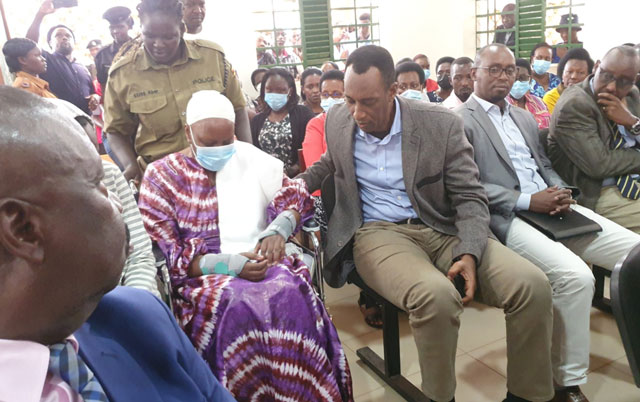
Katanga murder prime suspect Molly Katanga and her supporters in court.

The trial of Molly Katanga, the wife and prime suspect in the shooting of city businessman Henry Katanga, has kicked off at the Criminal Division of the High Court in Kampala.

Earlier today, the frail and ailing suspect, Molly, was wheeled into the courtroom ahead of the hearing of the matter.

Appearing before High Court judge Justice Isaac Muwata, Molly and her co-accused pleaded not guilty.

The matter was adjourned to tomorrow, when the judge will rule on a prosecution request to amend the charge sheet and allowed the accused (Molly) to attend court via zoom due to her medical conditions.

Molly Katanga is accused of killing her husband, Henry Katanga. The businessman was allegedly shot dead by his wife on November 2, 2023, at their home in Mbuya, Nakawa Division, Kampala City.

Molly is charged alongside her two daughters, Martha Nkwanzi and Patricia Kakwanza; George Amanyire, a shamba boy; and Charles Otai, a health worker.

Nkwanzi and Kakwanza are accused of tampering with evidence at the crime scene, rendering it unidentifiable for judicial proceedings. Amanyire and Charles Otai, a health worker, are accused of assisting others involved in the crime.

In February, the four were granted Shs2 million in cash bail, while their sureties were bonded at Shs20 million and ordered to surrender their passports.

Stories Continues after ad

Police detain SFC soldier for shooting four family members dead

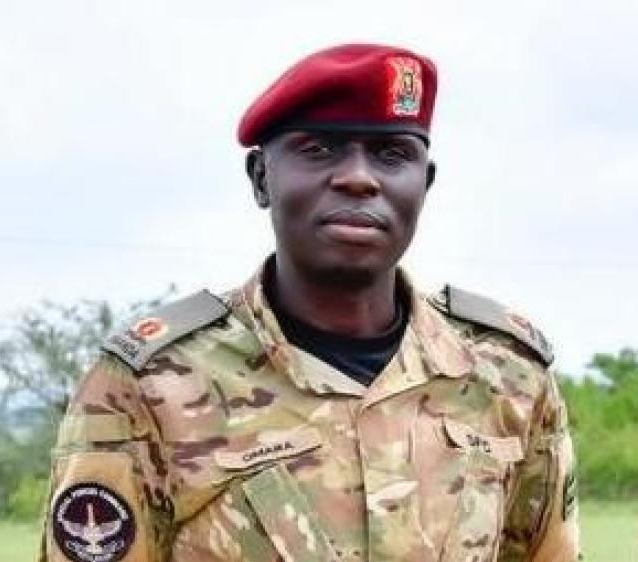
SFC Spokesperson, Maj. Jimmy Omara.

Police are holding Pte. Robert Herbertson Birivumbuka, a soldier attached to Special Force Command (SFC), for shooting four people dead.

His arrest was confirmed by Claire Nabakka, Deputy Police Spokesperson.

Pte Birivumbuka is reported to have escaped from his place of work and proceeded to Namale village, Kabayingire parish, Buwaya sub-county, Mayuge District, where he walked into the home of Buyinza Mudhasi Isaac 40 and started spraying bullets into the house.

During the shootout, Mudhasi was killed, and his three children died on the spot, while five other family members were critically injured. The shooting is linked to land wrangles.

According to Maj. Jimmy Omara, the SFC Spokesperson, upon committing the offense, the said soldier then rushed back to his place of work in a bid to allude to any possible suspicion, but his unit had already detected his absence.

“Once he returned, he was arrested because all fingers pointed to him. He is detained in the SFC facility, awaiting the long arm of the law to dispense justice,” he said.

Maj. Omara urged the people of Namale to cooperate with the investigators so that the suspect is quickly brought forward to face the law.

Stories Continues after ad

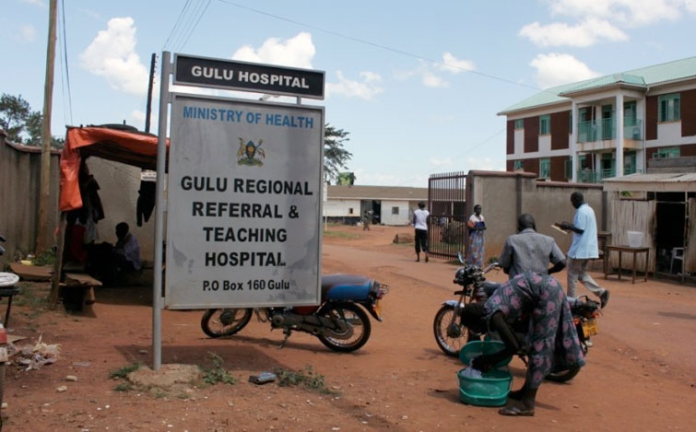
Assurances Committee calls for investigations into Gulu Hospital’s ICU 

The Parliament Committee on Government Assurances and Implementation is investigating the circumstances surrounding the dismantling of the Intensive Care Unit (ICU) at Gulu Regional Referral Hospital.

Chaired by Abed Bwanika, the committee is scrutinising government commitments in the health sector and developments in new cities and districts.

In 2019, Parliament approved a loan request, permitting the government to borrow approximately Shs200 billion from the International Development Association (IDA) of the World Bank Group under the Intergovernmental Fiscal Transfers (UgIFT) Programme.

The funding was proposed for upgrading health centre II’s to health centre III’s in sub counties lacking government-owned health centre III facilities.

In 2021, a further loan request of Shs352.2 billion from the IDA was approved by Parliament to complete the upgrades, construct and equip new health centre III’s, and recruit staff for all upgraded health centre II’s, among other objectives. Government also procured ICU for all regional referral hospitals.

During the committee’s visit to Gulu Regional Referral Hospital on Friday, 29 June 2024, it was discovered that despite receiving 10 ICU beds, only four were operational as an ICU.

Components such as monitors, ventilators, and ICU beds had been relocated to other hospital areas, severely compromising the ICU’s functionality. Additionally, two ICU beds were out of service.

The committee’s deputy chairperson Joyce Bagala, expressed concern over the incomplete ICU units presented to the committee, noting discrepancies in the equipment supplied by the Japan International Cooperation Agency and the Government.

Bwanika demanded explanations from the hospital administration regarding the whereabouts of the ICU components and the reasons behind their dismantling.

“It is regrettable that expensive ICU equipment has been dispersed within the hospital, rendering the ICU ineffective, the individuals responsible appear unable to account for these items, some of which were repurposed as standard hospital beds,” Bwanika said.

Reports indicated that senior hospital management had decided to redistribute some ICU components to various wards, including maternity, surgical, and emergency units after the end of #Covid-19.

An ICU unit typically comprises an ICU bed, ventilators, drug pumps, oxygen supply, and suctioning machines. However, several ICUs at the hospital were found lacking these essential components.

In response to the situation, the hospital’s storekeeper, Robert Vupale, was escorted to the police station to record a statement on the dismantling of the ICU and the missing equipment.

Robert Ssekitoleeko (NUP, Bamunanika County, Luweero) proposed holding the entire hospital administration accountable for the ICU’s degradation.

“The responsibility for this issue lies with all involved parties, including the director and technical staff managing the ICU. A comprehensive investigation should be conducted to address the breakdown in institutional management,” proposed Ssekitoleeko

Following discussions, the committee decided that the hospital’s Director, Dr Peter Mukobi, currently away on official duties in Kampala, should report to the Gulu Central Police Station and record a statement regarding the situation before the Police can determine how to proceed with investigations into the matter.

Stories Continues after ad

Former Rubaga Deputy RCC Burora arrested

Former Rubaga Deputy RCC Herbert Burora.

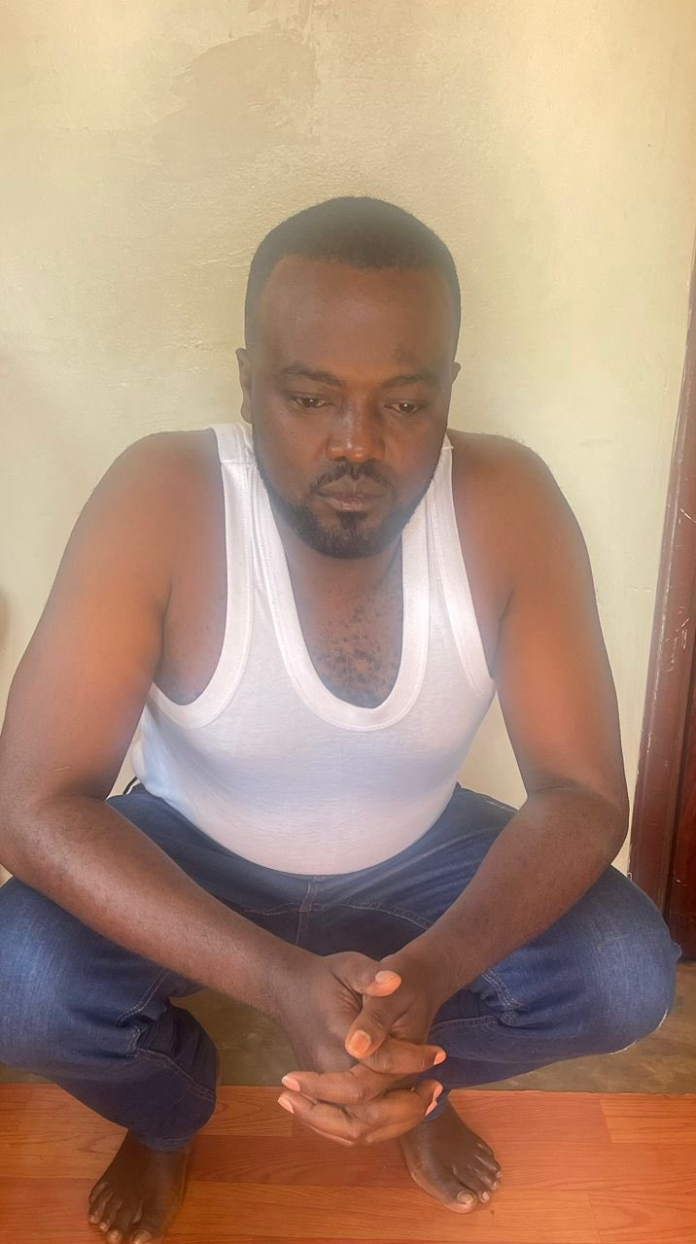
Former Rubaga Division Deputy Resident City Commissioner Anderson Burora has been arrested and is currently detained at Kira Division Police Station. He was picked in the wee night hours from his home around Najjera.

“My home has been besieged by unknown men who claim that I should go with them,” Burora wrote on his x handle (formerly twitter).

Burora was in mid-March suspended from office for alleged continued violation of the Uganda Public Service standing orders 2021. He had openly confronted the Speaker of Parliament, Annet Anita Among following reports about suspected cases of abuse of public resources at Parliament.

He recently formed a National Resistance Movement (NRM) group to fight corruption.

Burora lost his job as RCC after he was accused of using his social media accounts to criticize Anita Among the speaker of Parliament over alleged mismanagement of the 11th parliament.

He has resisted attempts by the RDC secretariat to silence his views against corruption at Parliament and other public bodies.

He has turned his guns to the Inspectorate of Government accusing the incumbent of failing to execute her mandate. He says the IGG, Beti Kamya should immediately resign for failure to fight corruption even when she is fully facilitated by the government.

Recently Burora handed in his resignation letter to his bosses and said that he was not ready to take on any NRM job whatsoever citing the increased rate of corruption among party members.

“I resigned and I told them that I am not going back to work, even if I get paid, I will take back that money. I don’t want to be like the IGG who is paid and facilitated with everything but the best she can give is to lament,” Burora stated.

Stories Continues after ad

NIRA ED decries low staffing levels at the Authority

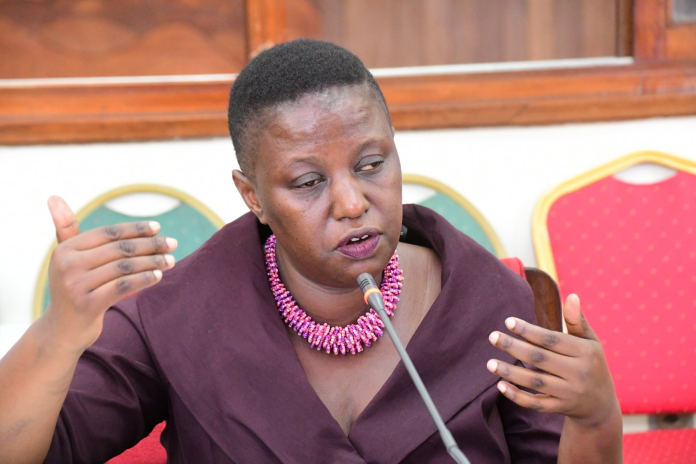
Executive Director of National Identification and Registration Authority (NIRA), Rosemary Kisembo.

The Executive Director of National Identification and Registration Authority (NIRA), Rosemary Kisembo, has decried the low staffing levels at the Authority, saying this has created a huge workload for staff, where each officer is required to serve 80,000 unregistered Ugandans.

Kisembo made the remarks while appearing before Parliament’s Committee of Commissions, Statutory Authorities and State Enterprises (COSASE), where she said that some Ugandans are forced to travel 80-100Km to access their services in 24 districts and 10 cities.

“NIRA was established in 2015, today, it is 9 years. From the time of establishment, to date, it has registered 27.4 million people with NIN and issued 17.3million cards, although it has printed 20 million cards. From the time of inception, NIRA’s staffing levels have never exceeded 50% meaning that the ratio of unregistered Ugandans to staff in NIRA is 1: 80,000. We are present in 112 districts, meaning, we aren’t present in 24 districts and 10 cities,” explained Kisembo.

“There is a bulk of districts where we aren’t present like Kalaki and Kapelebyong in some of those areas, they are quite a distance apart from our service points and people have to travel between 80-100Kms to access the nearest service. The initial budget for the first year, because we would be buying equipment and chairs would come to close to Shs6.7Bn and subsequently, that budget would go down because of recurrent expenditures,” explained Kisembo.

Allan Mayanja (Nakaseke Central) asked Kisembo to explain the modalities that are being undertaken to help Ugandans whose fingerprints were destroyed in line of work, especially those working in salons and the construction industry.

“We have so many Ugandans, specifically those ladies working in salons and gentlemen who are in construction, cement destroyed their fingerprints, and these people cannot access national IDs. How are you trying to help out such people because I have so many in Nakaseke,” Mayanja said?

“The ten fingerprints sometimes all don’t work, but we try to work with the minimum of six. If all the 10 fingerprints fail, we pick the six strongest fingerprints. At the back of your ID is placed your strongest fingerprints. We have one million people on the register that didn’t satisfy fingerprints and for those ones, the biometric used for their identification is their face,” explained Kisembo.

Stories Continues after ad

A Legacy of 60 years: Dfcu bank celebrates six decades of financial leadership

Dfcu bank management, and Guest of honor cutting cake during bank's 60 year anniversary. celebrations at Mestil Hotel

Dfcu Bank marked its 60th anniversary at a grand gala, celebrating six decades of operation and impactful service towards fulfilling its purpose of ‘Transforming Lives and Businesses.

The Diamond anniversary event, hosted at Mestil Hotel, Kampala, brought together distinguished guests, including government officials, business leaders, clients, and partners, to commemorate the Bank’s remarkable journey and legacy in Uganda.

From the very beginning, our purpose was deeply rooted in the aspiration to empower Ugandans and contribute to the prosperity of our country. Over the past six decades, the business has grown together with our nation, and we have been partners of growth and development with Uganda and to ensure that we support industrialization, businesses and other opportunities that come in Uganda,” Charles M. Mudiwa, CEO Dfcu Bank remarked.

The night was marked by impact stories of businesses that have been transformed through their partnership with Dfcu Bank and stories of the deep-rooted legacy that the Bank has entrenched in Uganda. Having started as a development finance institution in 1964, the Bank has evolved over the years into a Tier I commercial bank with a network of 54 branches spread across Uganda and over 2,000 agent banking outlets.

Jimmy D. Mugerwa, Chairman, Board of Directors, Dfcu Limited commented on the growth of the bank saying, “Our transition from a Development Finance Company to one of the largest Commercial Banks in Uganda was made possible by the vision of our funders and shareholders and our formidable investors who over the years have directly enabled our growth and expansion.”

In the past six decades, the bank has been a champion for women-led enterprises and initiatives through its Women in Business (WIB) program which has supported over 80,000 women-owned businesses. One of the WIB beneficiaries, Linette Akol, commended the Bank for helping her improve the governance of her business, Krystal Ice Limited, by guiding her in instituting a Board of Directors.

The 60-year anniversary gala also highlighted transformative partnerships fostered by Dfcu Bank. In particular, the Bank’s partnership with the Agribusiness Development Centre (ADC) was celebrated. This strategic partnership has established Dfcu as a key player within Uganda’s agricultural sector, positively impacting over 28,000 individuals and entities. Through this collaboration, Dfcu actively supports and empowers farmers and agribusiness stakeholders, contributing to positive change across the industry.

“In the soil, we found a diamond! The Best Farmers Competition, which we sponsor underscores our commitment to growing Uganda’s agribusiness. For 60 years, we have focused on enhancing the agricultural sector, recognising Uganda as a global food basket and playing our part to make the sector even more productive,” Dr. Winifred Tarinyeba Kiryabwire, Chairperson, Board of Directors, Dfcu Bank said.

“Celebrating 60 years is truly remarkable, especially when many companies do not survive beyond their first year! I commend the bank for its incredible journey from a Development Finance Company in 1964 to now being a domestically and systematically important bank today. It is an era of growth for Dfcu and we believe that the bank is well-positioned to make even more impact in the coming years,” Dr. Tumubweinee Twinemanzi, the Executive Director Supervision, Bank of, commented, while making his remarks.

The Attorney General of Uganda Kiwanuka Kiryowa, who was the Guest of Honor at the celebratory gala, spoke of his relationship with Dfcu Bank, which spans years. “I am privileged to be here this evening, to celebrate this milestone achievement of a Ugandan institution which has defied both time and odds to get to this day. This is a celebration of innovation, resilience and above all, patriotism.”

“I thank and applaud Dfcu for the role it has played in advancing Uganda’s socioeconomic transformation through its services, people, commitment to local development and focus on demographics such as women, the youth and SMEs which typically find it strenuous to access favourable banking services. As you mark your diamond jubilee, it is our sincere hope that the next years will bear more fruit and that you will continue to live true to your purpose of transforming lives and businesses in Uganda,” the Attorney General concluded.

The night was marked by entertainment from Ugandan artistes and deejays including Afrigo Band and Joseph Sax.

Stories Continues after ad

Finance Ministry summoned over criteria for company bailouts

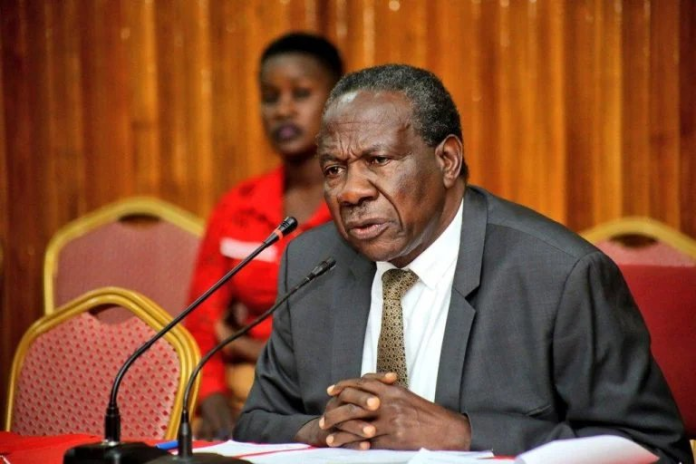
Finance Minister Matia Kasaija.

Legislators on the Committee on Commissions, Statutory Authorities and State Enterprises have tasked the finance ministry to present documentation on the criteria used in granting bailouts to companies in financial crises.

According to the committee chairperson, Medard Sseggona, companies belonging to foreign investors have mostly benefited from bailouts compared to companies belonging to Ugandan investors.

“What is the legal and policy framework on which you base to determine who should benefit from your bailouts and who should not? You are helping AYA but you are not helping Sembule who has invested in development of your technology and skills,” said Sseggona.

The delegation appearing before the committee was led by finance minister, Matia Kasaija.

Ssegona also tasked the minister to present a schedule of all companies in which the government has bought shares and appraise the committee with details by Friday July 6, 2024.

He cited companies including Atiak Sugar Factory and Roko Construction Limited.

“We want to know what we have injected, what the worth of our investment is in terms of shareholding, and our level of participation in managing these companies. We must be able to reap back our money,” Sseggona added.

Hon. Timothy Batuwa (FDC, Jinja South Division West) also tasked the minister to appraise the committee on the status of companies that receive tax waivers from the government.

“On that list, let us have Bujagali Energy Limited. Year after year, they seek tax waivers and we want to know what benefit the government has derived from this move,” Batuwa said.

Sseggona added that the ministry ought to show the monetary contribution of companies receiving tax waivers, to the economy over the last three years.

Nathan Itungo (Indep., Kashari South County) raised concern over selective release of funds, citing that some universities receive 100 per cent release of funds whereas others receive only 60 per cent by the close of the financial year.

“If you are releasing, release 70 per cent across the board. But if you give Makerere University 100 per cent and then you give Bunyoro University or Kabale University 55 per cent, that is not good,” Itungo said.

Kasaija told the committee that money for approved budgets is released on a timely basis, adding that the releases are based on the cash available.

On queries by the committee about URA’s inability to assess and collect taxes on gold exports, Kasaija clarified that in May 2024, the Minister for Energy and Mineral Development issued a statutory instrument imposing a levy $200 per kilogramme of processed gold exported.

He added that the level of purity of gold exported was specified to be at 99.9 per cent.

“URA started the assessment and collection accordingly. From July 1, 2021 to 30 June 2023, a total of 65,135 kilogrammes of processed gold were exported and total tax assessed was Shs47.28 billion. Of this, Shs2.17 billion was paid, leaving Shs45.1 billion in outstanding tax arrears,” Kasaija said.

He added that for the period between May 24, 2024 and June 27, 2024, a total of 4,006 kilograms of refined gold was exported and taxes amounting to Shs3.114 billion were collected.

Stories Continues after ad