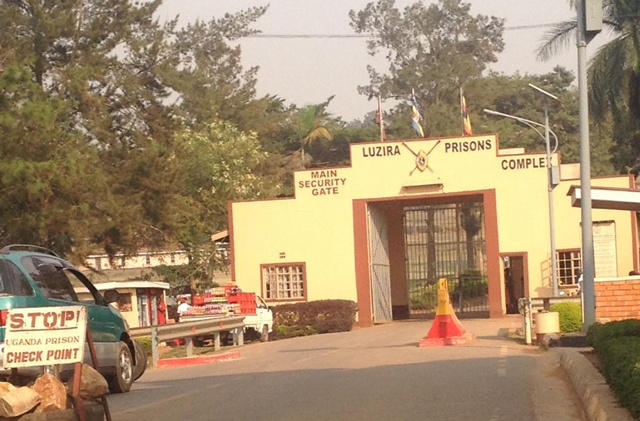
The National Water and Sewerage Corporation (NWSC) has disconnected water services to Luzira Prison Complex due to outstanding water bills worth Shs18, 272,450,274.
Frank Baine, Senior Commissioner of Prisons said that NWSC disconnected the water services on August 13, 2024.
“This disconnection occurred despite the Ministry of Finance, Planning and Economic Development releasing Shs7, 996,253,000 that has already been remitted to NWSC,” Baine said.
He added, “This situation is a matter of national concern. However, the Uganda Prisons Service is currently utilizing water bowsers to mitigate the water crisis.”
Frank Baine revealed that meanwhile, negotiations are going on between the Ministry of Finance, Planning and Economic Development, Ministry of Internal Affairs, Uganda Prisons Service and National Water and Sewerage Corporation to restore the water situation to normal.
However, the affected prisoners and staff have been urged to remain calm as long-term solutions are being sought.
“Uganda Prisons Services remains committed to upholding its mission of providing safe, secure and humane custody of offenders.
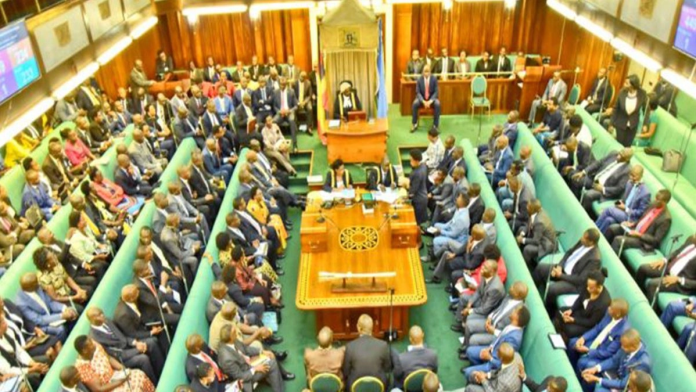
Some Opposition Members of Parliament (MPs) have defied caution by Joel Ssenyonyi, Leader of Opposition not to attend the Regional Parliamentary Sittings due to the financial strain they will impose on taxpayers, saying the budget for the sittings was passed by Parliament, so it is wastage of time by the Opposition to feign ignorance about these sittings.
Leading the defiance was Abed Bwanika (Kimaanya-Kabonero) of National Unity Platform-NUP and Naboth Namanya (Rubabo County) FDC who made their stances ahead of their departure to Gulu, with Bwanika arguing that the National Unity Platform should have used this opportunity to seek for support from the Northern region, a region that never supported the Party during the 2021 general elections, instead of opposing the activity just because it is being spearheaded by Speaker Among.
“If the Opposition was clever, we would have been the first to camp in Northern Uganda so we gather the region and support us, but if you start this kind of politics that I am not going because it is Speaker Among in charge, that means you have never understood politics. The Northern region didn’t support us. The National Unity Platform doesn’t even have any MP from that region,” Bwanika said.
Bwanika also disputed Leader of Opposition, Joel Ssenyonyi’s claims that he wasn’t aware of this activity, saying the money for the regional sittings was approved by MPs and went on to question Ssenyonyi’s understanding of the budget process in Uganda.
“This would have been the best opportunity for the Party to expand its structures, but instead of expanding the Party structure, he is saying I am not going, I was never informed, Ssenyonyi, where are you always when the budget is being passed because you don’t seem to understand anything? Where are you always when Parliament budgets are being passed? I heard you say Shs5 trillion, which isn’t even in the budget,” he added.
Although Naboth Namanya (Rubabo County) is opposed to the holding of regional sittings citing wastage of taxpayers’ money, he said that if the Opposition wanted to stop the regional parliamentary sittings, they should have protested the budgetary allocations, but since they were overpowered by the numerical strength by their counterparts in NRM, he decided to go as decision taken in the regional Parliaments are likely to affect his people in Rubabo-Rukungiri district.
“Now if you say we shouldn’t go because the Leader of Opposition said we shouldn’t go, does it mean that in every decision made in Parliament where the NRM means, we should leave? Our Opposition budget was Shs43 trillion and those people passed the Shs72 trillion budget, so should we abandon the national budget because our Opposition budget was rejected? So fundamentally, we can accept some issues and reject others. I am opposed to spending taxpayers’ money in these regional parliaments, but because our colleagues decided that, let me go with the majority and go and represent my nation,” Namanya added.
Paul Asaba (Kyaka North) claimed that the Shs20 trillion cited by the Leader of Opposition as expenditure for the regional sittings is forged, but just like all the people disputed Ssenyonyi’s figure, Asaba also declined to reveal that actual amount that Parliament was going to spend on these activities.
‘So, if they just say that now, that we are changing the venue from Kampala to Northern Uganda, even if they hadn’t put the Parliamentary buses as a Member of Parliament, we are given a vehicle, fuel I can drive my vehicle and go to Northern Region and we also sit in the Northern region,” remarked Asaba.
“We have heard some voices from some MPs, more especially from those in Opposition, I don’t think from our Party (NRM), there are those who are refusing. They are saying that the expenditure is going to be so high, they are even forging some amounts, that this money would build a health facility, but that isn’t true. First of all, MPs get salary and allowances and we use the money that we are paid for to come here, stay in Kampala and deliberate on issues concerning our constituencies,” argued Asaba.
“We are going as Parliament and the Parliamentary proceedings are going to be the same- normal. We have just changed the area where we are going to be, only that, but the rest will be normal. The only thing that we want to hear from this, we want to hear all the things affecting that region, we discuss and we see how best the Government can intervene and help them. So, the only thing that we want is to at least sit, carefully listen from those people who come from that particular region, the challenges that affect them, we sit down as Parliament, listen and harmonise and understand what the best remedy for that region could be,” Stephen Kangwagye (Bukanga County)-NRM.
“You are coming to a place (Gulu City) where God lives. The beauty about having these regional parliamentary sittings is that it is an opportunity to focus on that particular region. So, this to us, this is an opportunity to give a deeper focus on Northern Uganda. It is also an opportunity to have Parliament closer to the people, there are so many schools that want to be there and follow how Parliament conducts business, but also, there are critical issues that the leaders in Northern Ugandan have actually assembled together that we will be presenting before Parliament,” Mapenduzi Ojara (Bardege-Layibi Division) -Independent.
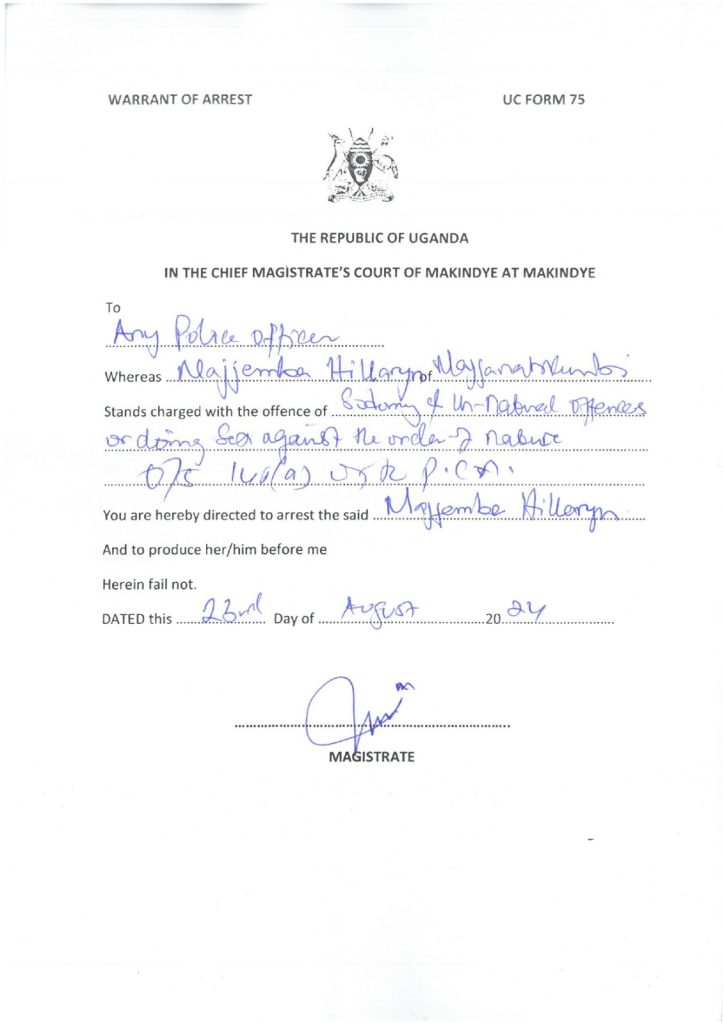
The Chief Magistrate’s Court of Makindye, on August 23, 2024, issued a warrant of arrest against a 21-year-old woman accused of engaging in homosexuality. The woman identified as Najjemba Hillaryn was reportedly arrested and taken into custody by police after authorities described her as a suspect in what they termed as a ‘lesbian relationship.” Sources familiar with the matter indicate that the arrest followed a tip-off from the local community.
Police officers allegedly apprehended the young woman and transported her to the Industrial Area Police Station for questioning. According to the letter of intention to sue reviewed by this publication, the alleged offence is said to have occurred in July 2024. A case of “unnatural offence” (sodomy) was reportedly registered at Industrial Area Police Station under Reference No 01/19/28/2024.
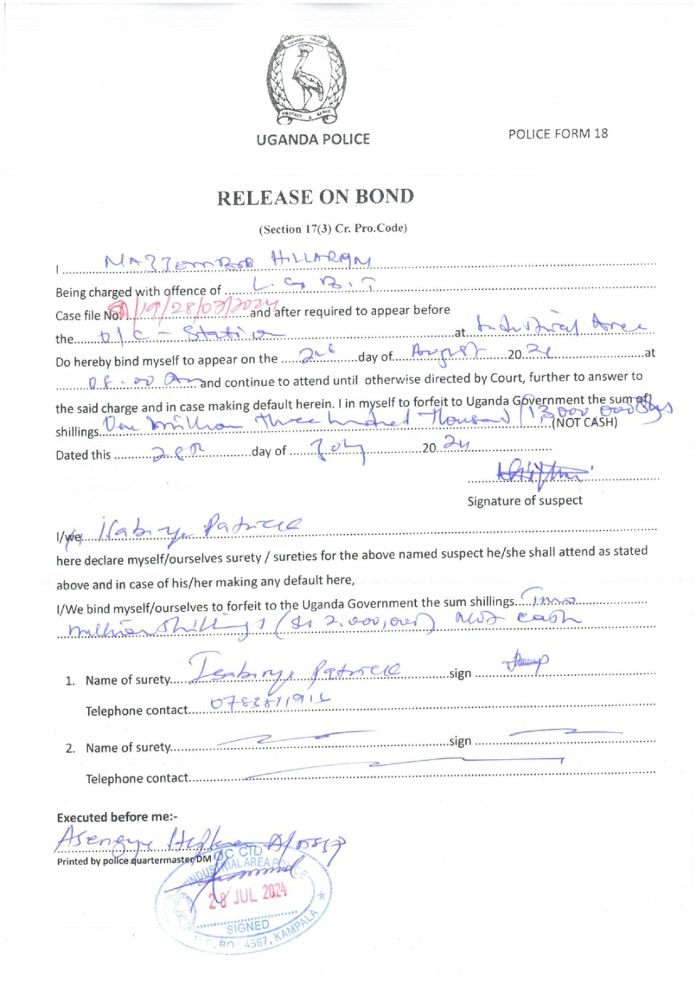
Following her initial detention, Najjemba was reportedly released on police bond pending further investigations. However, police later stated that she failed to comply with bond conditions and did not report as required. Authorities subsequently declared her whereabouts unknown, and as a result, police reportedly circulated a public notice within areas of her known residence, urging members of the public to provide any information that could assist in locating and rearresting her.
In addition, after the matter was reported to the police by the complainant’s mother through Baraka Legal Associates Advocates, it is said to have filed a case before the Makindye Magistrate’s Court. Court proceedings reportedly led to the issuance of a warrant of arrest to secure the rearrest of Najjemba Hillaryn.
Sources at Entebbe International Airport indicate that the accused may have left the country although the specific destination has not been independently confirmed . Uganda Police has reported indicated that Interpol may be engaged to assist in tracing and apprehending the suspect.
Under Uganda’s Penal Code Act, Cap 120, section 145, any person who has carnal knowledge of another person “against the order of nature” commits an offence and is liable upon conviction to imprisonment for a term exceeding seven years.
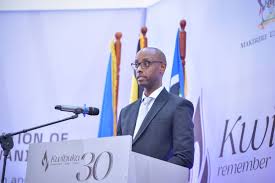
Amb. Philip Rukikaire during a public lecture at Makerere University organised by Rwanda High Commission in Uganda to commemorate 30 years of the Genocide against the Tutsi in Uganda
Ms Lenina Mbabazi and her husband Philp Rukikaire have been appointed envoys.
Ms Mbabazi is a daughter to former ‘super’ Minister Amama Mbabazi while her husband Mr Rukikaire is a son to former Minister for Privatization Mathew Rukikaire.
The two were crafted into foreign service less than two years ago and sources at Ministry of Foreign Affairs indicate that the couple will be posted to Canada where Mr Rukikaire is heading as head of mission (High Commissioner) while the wife will serve as First Secretary.
Mr Rukikaire will replace Ms Joy Ruth Acheng who the Canadian government declared persona non grata and who returned to Uganda last week. She was granted persona non grata after a seven paged protest letter was drafted to Kampala on personal behavior and the conduct of immediate family members.
Both Mbabazi and Rukikaire were members of the external wing of the National Resistance Army/Movement (NRA/M) that ushered in Mr Yoweri Museveni into power. The two were tasked with recruitment and resource mobilization for the rebellion.
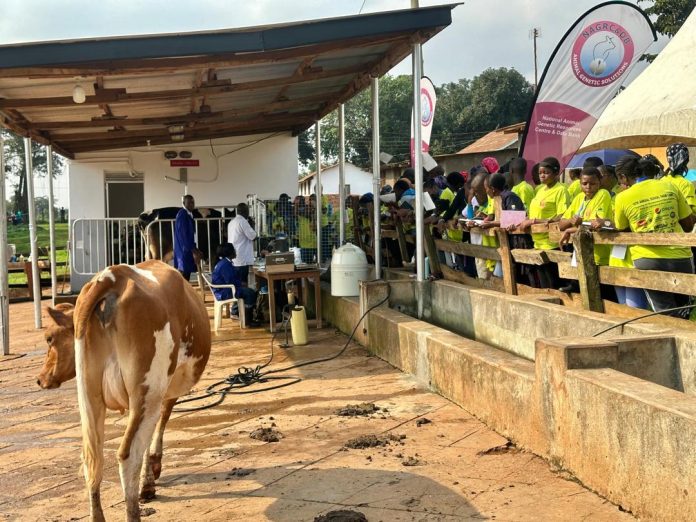
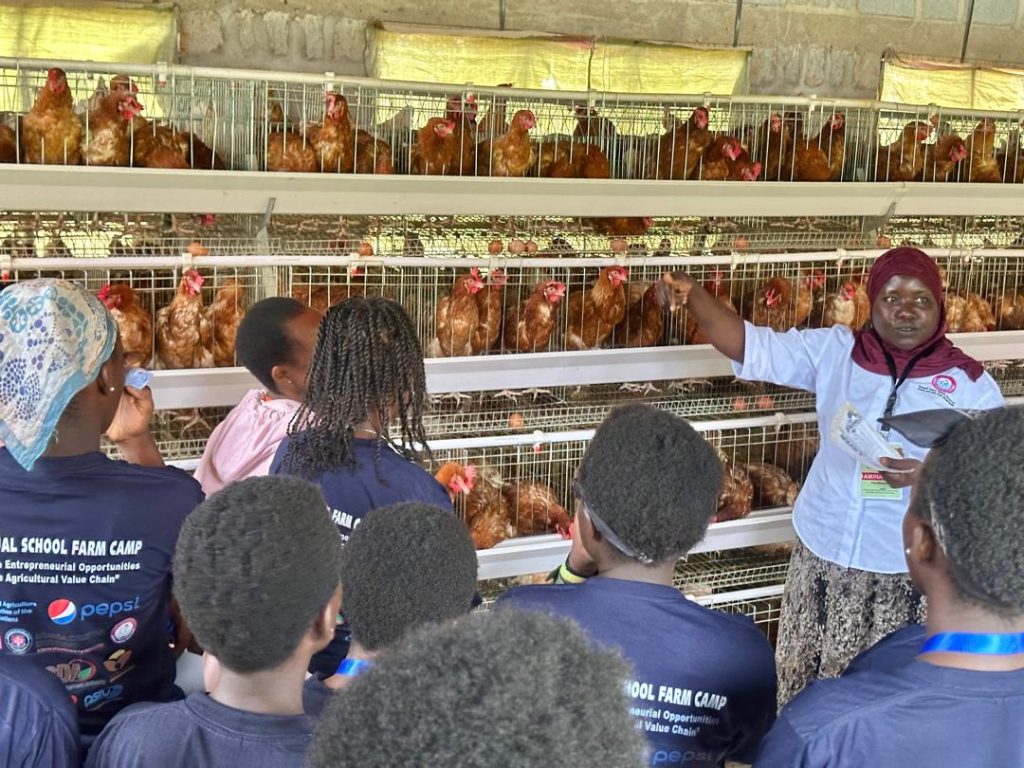
Participants at the annual Gayaza High School Farm Camp.
The National Animal Genetic Resources Centre and Data Bank (NAGRC&DB) has been praised for its efforts in reviving the Gayaza High School farm and its participation in the annual farm camp that has seen the initiative grow but also extended to other similar learning institutions.
The school was further gifted with the Biogas plant to supplement its energy obligations.
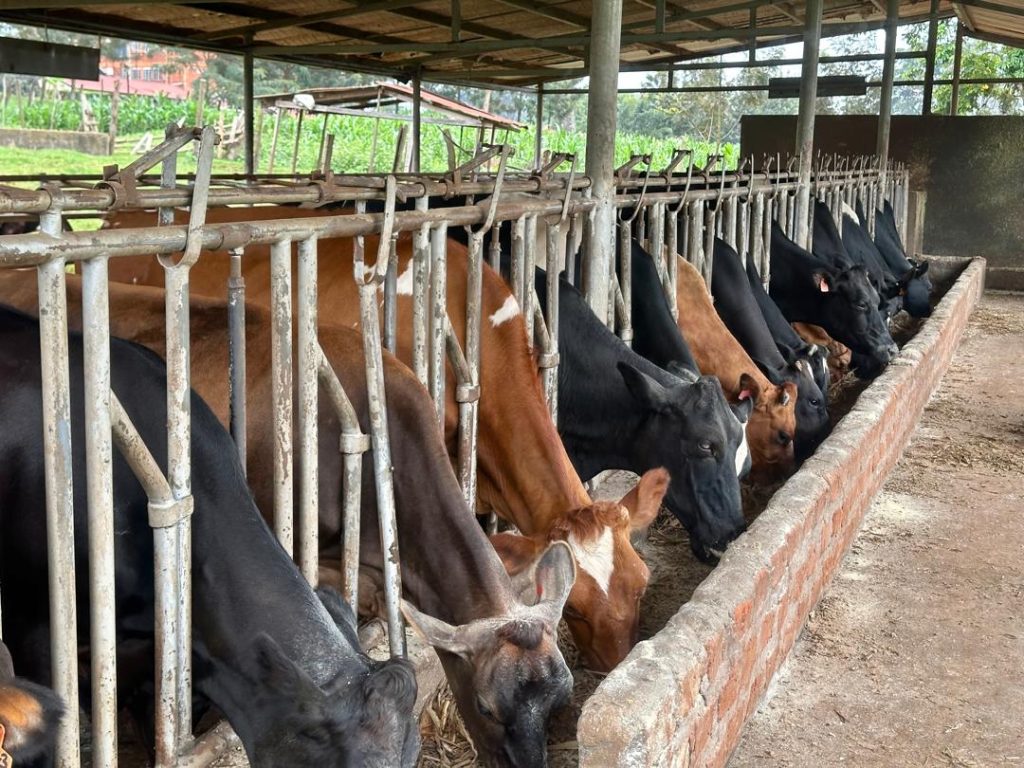
Ministry of Agriculture Animal Industry and Fisheries has supported the Gayaza High School Farm Camp since its inception. Through the National Animal Genetic Resources Centre and Data Bank (NAGRC&DB) supported to repair school’s dairy section particularly the milking parlour and stores, to establish maize and pastures for silage and hay respectively, and rehabilitated the biogas plant in 2014. Through NAGRC&DB, MAAIF donated 10 dairy crosses, including two Grey cattle, two Friesian, two Guernsey, two Jersey, and two Ayrshire breeds. This was in support of a new programme championed by Gayaza High School the Innovative Agricultural School Development Programme.
The cows were donated to Gayaza High School, with an intention to multiply and disseminate good genetics to farms of other participating schools in the now annual study camp. With continuous guidance and monitoring it was ensured that the female calves were passed on. By 2020, 10 heifers had been passed on to eight schools. With these breeds, students at Gayaza, and those from other schools who participated in the annual study camp were skilled and given practical exposure to selection of good breeds and other aspects or breeding. The “pass on of good genetics” program that has been demonstrated for the last nine years needs shall be scaled out to cover other schools in livestock keeping communities. In addition to these efforts, NAGRC&DB has also consistently supported the training provided during the annual school camp in areas such as dairy, beef, piggery, and poultry management.
State Minister for Agriculture in charge of Animal Husbandry, Bright Rwamirama praised the initiative by Gayaza for championing the annual farm camp saying it has brought impacted farming skills to the learners at the tender age.
“It is an honour and pleasure to be part of this very important occasion—the 10th Gayaza High School Annual Farm Camp. This event has become a beacon of hope and innovation for the agricultural sector in Uganda, and it is heartening to see the commitment of all stakeholders present here today.As we gather here, we are reminded of the crucial role agriculture plays in our nation’s development. It is not just a source of food and income, but also a cornerstone for national growth, sustainability, and resilience. The theme of this camp, which focuses on youth involvement in agriculture, is both timely and significant” The Minister said.
Adding “I would like to extend my appreciation to Gayaza High School for their continued leadership in promoting agricultural education among the youth. The school has demonstrated that agriculture is not only a viable career path but also an essential tool for empowering the next generation of leaders.
The involvement of various partners—such as FAO, MAAIF and its agencies-NARO, NAGRC&DB, and the private sector representatives present—underscores the importance of collaboration in driving the agricultural agenda forward. It is through such partnerships that we can ensure the sustainability and scalability of initiatives like this School Farm Camp”.
The Minister further said that MAAIF recognizes the importance of school demonstration farms in its National Agriculture Extension Strategies as crucial centres of technology transfer to the community. These farms also can serve as incubation centres to champion and develop ready to market enterprises for different agricultural value chains.
He revealed that MAAIF, partnered with different schools across the country including Gayaza High School in the Orange fleshed Sweet Potato project where school farms were given potatoe vines to multiply and the students were even able to take this technology back to their homes. MAAIF under its FAO, China-Uganda South to South Project donated a biogas plant to Gayaza High School to support energy saving technology transfer.
“Through farm camps like this one, we are presented with a unique opportunity to inspire and equip young minds with the knowledge and skills necessary to revolutionize agriculture in Uganda. The hands-on experience provided by this camp will undoubtedly shape the future of these young participants and, by extension, the future of our country”.
Successful farm camps like Gayaza High School Farm Camp, Farm to School Africa in Nigeria, Muscoot Farm in New York, have proven that experiential learning is invaluable. Such camps not only provide agricultural education but also foster skill development, entrepreneurship, and community engagement, contributing significantly to food security and sustainable practices.
“As the Minister of State for Animal Industry, I am particularly pleased to see the emphasis placed on animal husbandry and sustainable farming practices. These are critical areas that, when properly managed, can significantly contribute to food security, economic development, and environmental conservation.I also commend the efforts to integrate modern technologies and climate-smart practices into the current secondary school curriculum. This is in line with our national strategy to build a more resilient agricultural sector that can withstand the challenges posed by climate change”.
The annual farm camp was attended by representative from Engosol, Uganda Revenue Authority, Stanbic Bank, Movit, Pepsi, Field of Hope, URUS, Riham, BRIDC, NUCAFE, Private Sector Foundation, SUMZ for Food Industries and Uganda Christian University.
Dfcu Bank has announced its financial results for the first half of fiscal year 2024, reporting an improved performance in Net profit after tax, which increased by 45% to Shs42 billion in June 2024 from Shs29 billion in June 2023.
Half-Year Financial Highlights:
Net profit after tax increased by 45% to Shs42 billion in June 2024 from Shs29 billion in June 2023. This growth is attributed to significant reduction in credit losses from loans and advances, owing to sustained recoveries efforts
It was also attributed to reduction in the interest expense cost as a result of a deliberate effort to balance the bank’s deposits drivers and growth in fees and commission arising from the increase in transacting customers year on year
Compared to the full year 2023, this performance was an increase of Shs13.6 billion, a 48% growth year on year.
Net loan loss provisions decreased significantly by 114% from a loss of Shs50 billion in June 2023 to a credit of Shs6 billion in June 2024. The decrease resulted from management’s efforts to reduce the non-performing loans and diversify the portfolio thereby lowering the concentration risk.
Management continues to closely monitor the non-performing loans to rehabilitate them and make recoveries. The current strategy resulted in the reduction of the non – performing loans ratio from 15.2% in June 2023 to 5.2% in June 2024.
The bank’s asset base increased by Shs6.5 billion from Shs3,158 billion in December 2023 to Shs3,164 billion in December 2024. The growth was mainly attributed to the increased investment in government securities that registered a growth of 4% (Shs36.5 billion), a strategy by management to diversify earning assets given the cautious approach to credit risk during the first half of the year.
The Company’s deposit base remained flat at Shs2,319 billion in June 2024 from December 2023. Management continues to drive a balance in the bank’s deposit mix, keeping interest costs within target.
Shareholders’ funds grew by 6% from Shs644 billion in December 2023 to Shs684 billion in June 2024 arising from the increase in retained earnings at half year.
The Company remains well capitalized with capital ratios of 29% and 30% for core and total capital respectively. Liquidity position remains strong with an average liquid assets ratio above 40%. Considering this robust liquidity and healthy capital position, management is optimistic that the Company is well positioned for future growth and higher financial performance.
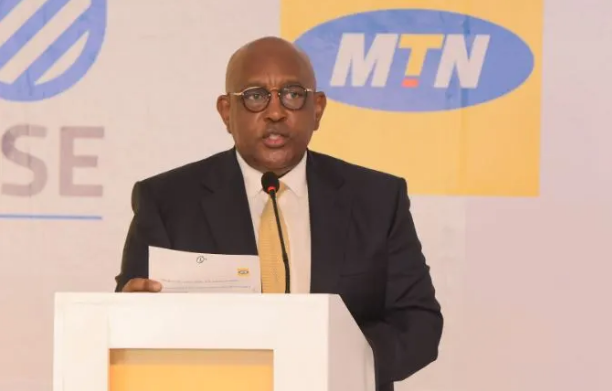
MTN-Uganda Chairman, Charles Mbire who owns 4% of the giant telecom shares.
Mobile giant MTN has registered an increment in the value of their shares on the stock market.
The current share price of MTN Uganda is Shs177.99.
MTN Uganda closed its last trading day on Thursday August 22, 2024 at Shs177.99 per share on Uganda securities Exchange (USE) recording a 1.1% gain over its previous closing price of Shs176.00.
The price per share of MTN was at Shs170 eight weeks ago while as per yesterday, the share was at Shs176.99 while as per this morning, the price per share had increased to Shs177 meaning there has been an increment by Shs1 from yesterday’s Shs176.99. it has gone up by Shs
Top shareholders are MTN Group Limited which has 83.1% holding 18,593,811,989 shares. National Social Security Fund (NSSF) 9.53% holding 2,132,631,877 shares. Charles Mbire 4% holding 895,561,877 shares while minimal other shares are held by Bank of Uganda retirement scheme.
Based on the above, the price of NSSF earned worth Shs16,338,061,855 billion ($4. 416,677 million) from MTN share price increment as Mbire who doubles as chairmen of MTN whose value of his shares went up by Shs7,155,538,862 billion ($1,931,995 million) in eight weeks.
In conclusion, NSSF value of MTN shares has gone up by $4.4166 million and Mbire has also gone up by $1,931, 995 million in eight weeks of trading.
Manufacturing sector players have called for a reduction in the cost of digital tax stamps (DTS) in a bid to drive usage by all the targeted users.
The manufacturers claim that the high costs of digital tax stamps continue to hinder the growth of the manufacturing sector.
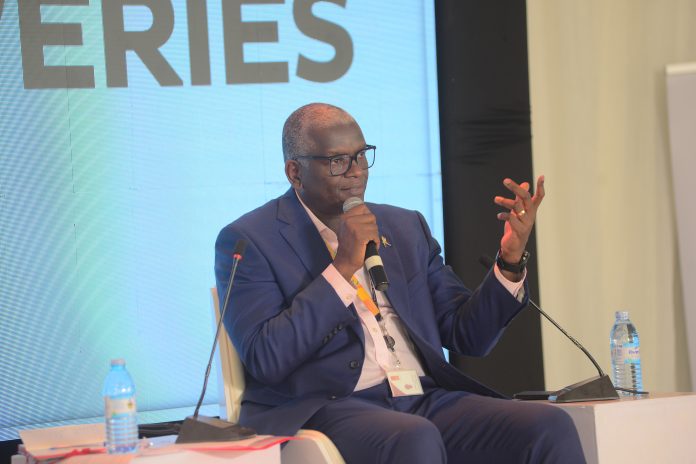
Uganda Breweries Managing Director Andrew Kilonzo said that the earlier promise was that once all manufacturers embrace digital tax stamps, the cost of the stamps would reduce, but that has not been achieved.
“The promise of the system was that all manufacturers would get into it and ensure a level playing field. However, in the outlets, you will see our products, such as Uganda Waragi bearing tax stamps, being sold next to items that do not have them,” he said.
In Uganda, the use of DTS was rolled out in the financial year 2019/20 following the launch of the Domestic Revenue Mobilization Strategy by the Finance Ministry. DTS was also aimed at addressing revenue leakages.
In Kenya, DTS was rolled out in 2013, while Tanzania and Rwanda both launched DTS in 2019. While the intention behind these measures is commendable, the varying costs of digital tax stamps across the region have created a complex business environment. For each country, the cost of the stamp for each category of goods has been set out in the respective regulations governing the operation of DTS.
The solution providers for DTS are the same across the region, but the cost of stamps differs significantly. The stamp fee is additional to the excise duty tax payable under the country’s respective Excise Act.
In Uganda, DTS costs are at Shs110 (wines and spirits) and Shs36 for beer; in Kenya, DTS charges are Shs134.88 for wines and spirits and Shs80.93 for beers. Tanzania’s charges for DTS are Shs51.75 for wines and spirits, Shs23.02 for locally produced beers) and Shs27.58 for imported beers, while for Rwanda, DTS charges are Shs761.13 and Shs152.23 for spirits and wines, respectively.
According to Kilonzo, the high cost of digital tax stamps keeps the cost of doing business high; hence, some manufacturers find value in avoiding the stamps.
“Maybe we need a different approach, if you bring down the cost of digital tax stamps, it stops being a barrier, and you get more players embracing it, hence driving volumes up.”
Kilonzo said that through the Farm for Success Program, Uganda Breweries is supporting people in farming communities who supply the organization with raw materials such as sorghum and barley used in alcoholic beverage production.
On an annual basis, Uganda Breweries invests Shs52 billion in farmers involved in the supply of raw materials.
“We are touching the lives of at least 50,000 farmers; we work with the National Agricultural Research Organisation (NARO) to improve the yields; we were very excited when the government came with the Parish Development Model (PDM) because we are exactly working with people in communities,” he stated.
Decarbonizing efforts
In April 2024, UBL commissioned a state-of-the-art Shs37 billion biomass plant.
The facility represents a substantial investment by UBL and excellent progress in its decarbonizing journey. Powered by locally sourced biomass materials, the plant also exemplifies UBL’s dedication to harnessing sustainable manufacturing while offering livelihood opportunities to local communities.
“We have cut our carbon emissions by 92% and by 2030, we want to be carbon neutral; we are almost there. What’s remaining is for our diesel generators for backup, but we are looking for the solution,” said Kilonzo.
The commissioner general of the Uganda Revenue Authority (URA), John Musinguzi, pledged to push for a review of the costs of digital tax stamps.
“The cost of implementing DTS is designed to be manageable and is outweighed by the benefits of improved tax compliance and the reduction of illicit trade. Our primary challenge is not the system’s expense but ensuring that all businesses comply with these necessary regulations,” he noted.
Since its introduction in 2019, DTS has significantly broadened Uganda’s tax base, with a notable increase in registered manufacturers and importers.
The system has been pivotal in curbing tax evasion and enhancing supply chain transparency across various sectors. However, resistance to full compliance in certain sectors continues to undermine its potential benefits.
“We have observed a significant improvement in sectors where compliance is high,” the CG noted.
URA statistics underscore that DTS not only serves as a regulatory tool but also stimulates economic activity by leveling the playing field among businesses.
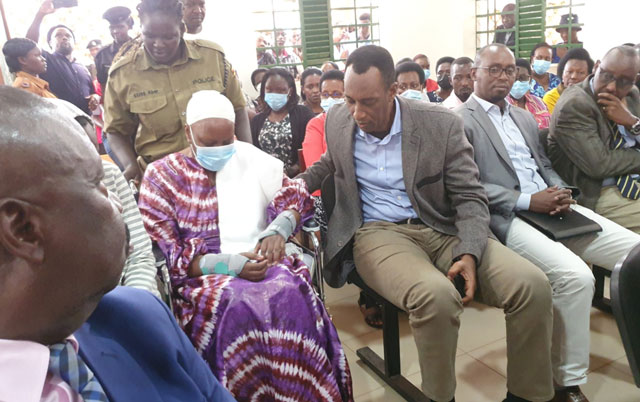
Katanga murder prime suspect Molly Katanga and her supporters in court.
The murder of city businessman Henry Katanga was registered as a suicide case at Bugoloobi Police, a prosecution witness told the court.
Appearing before the trial judge Isaac Muwata, Dr. Richard Ambayo, a police pathologist who appeared before court for the second time to testify against the gun down of Katanga, said officers from Bugolobi Police Station which handed over the deceased’s body to him, had indicated on the form that they were investigating a matter of suicide.
The previous day, Ambayo said the bullets that killed the businessman were fired at close range. The lawyers of the accused further cross-examined Dr. Ambayo on the size of the entry and exit bullet wounds found on Katanga’s head.
He noted Dr. Ambayo said the bullet had entered Katanga’s head seven centimeters below the vertex and exited through the ear, causing commuted fractures and injuring his brain.
Dr. Ambayo further confirmed to the court that he is a qualified pathologist, which requires one to have a degree in medicine as a minimum qualification.
The prosecution still has several witnesses who are supposed to appear in court before the accused’s lawyers start tendering their defense.
Molly Katanga is accused of killing her husband, Henry Katanga. The businessman was allegedly shot dead by his wife on November 2, 2023, at their home in Mbuya, Nakawa Division, Kampala City.
Molly is charged alongside her two daughters, Martha Nkwazi and Patricia Kakwanza; George Amanyire, a shamba boy; and Charles Otai, a health worker.
Nkwanzi and Kakwanza are accused of tampering with evidence at the crime scene, rendering it unidentifiable for judicial proceedings. Amanyire and Charles Otai, a health worker, are charged with assisting others involved in the crime.
In February, the four were granted Shs2 million in cash bail while their sureties were bonded at Shs20 million and ordered to surrender their passports.
CEO Summit Uganda, a leading think-tank, together with National Social Security Fund have launched the Lean Forward Modular Program, a comprehensive initiative aimed at transforming the leadership landscape by empowering women to take on top roles in their industries.
The program, which kicks off on August 23, 2024, is designed to address the challenges women face in leadership, providing them with practical tools, perspectives, and support to thrive. Participants will engage in workshops, mentorship sessions, and interactive modules, learning from experienced leaders and peers.
“It is with immense pride that I welcome you to the launch of the Lean Forward Modular Program, a comprehensive and diverse leadership program aimed to equip female leaders with the tools and confidence to tap into their potential and succeed as leaders within their organizations,” said Stephen Mukasa, Country Lead at CEO Summit Uganda.
“Leadership begins with self-awareness, and this program is more than just a course; it’s a movement about changing the narrative, breaking down barriers, and building a future where women are leaders who drive change, inspire innovation, and create lasting impact,” Mukasa added.
The six-month program will focus on nurturing a diverse leadership landscape, examining identities as leaders, and recognizing leadership potential. With only 32.2% of women in senior leadership positions worldwide, this initiative aims to close the leadership gender gap.
“By offering mentorship, training, and opportunities for professional growth, the Lean Forward Modular Program is designed with a clear and focused mission to empower women with the tools, perspectives, and confidence needed to excel,” Mukasa remarked.