Stanbic Bank
Stanbic Bank
18.7 C
Kampala
Stanbic Bank
Stanbic Bank
Home Blog Page 2197

KCCA ready for Lweza – Mucureezi

Lweza vs KCCA, Wankulukuku, 4pm

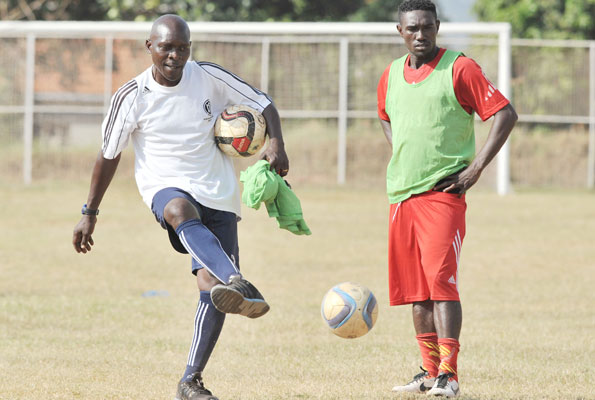
Midfielder Paul Mucureezi believes “togetherness is the most important thing” for KCCA fc when they visit bogey side Lweza FC at Muteesa II Stadium, Wankulukuku in the Uganda Premier League on Tuesday.

KCCA head into the second leg of their tie after they were surprising held to a 1-all draw the first round at home, but there is widespread belief among Kasasiro Boys that three points are possible, and Mucureezi who scored in their last time out is in agreement, providing his side are always in sync with one another.

“Playing together is the most important thing [today], when we attack and defend,” the midfielder told EagleOnline.

“We must be very focused, enter the game with a cool head and, most importantly, play football.

“That must be the strength of KCCA, playing football and being patient.

“I feel responsibility and have no problem with it. I feel good, but most of all it’s not about one player.

“It’s about the team, and we have to be compact and do things together. One player can’t solve anything alone. The priority is always the team.

The table leaders are still without striker Ceaser Okhuti, defender cum midfielder Lawrence Kasadha, defender Hassan Wasswa Dazo while goalie Benjamin Ochan is a doubt after being involved in an accident.

Stories Continues after ad

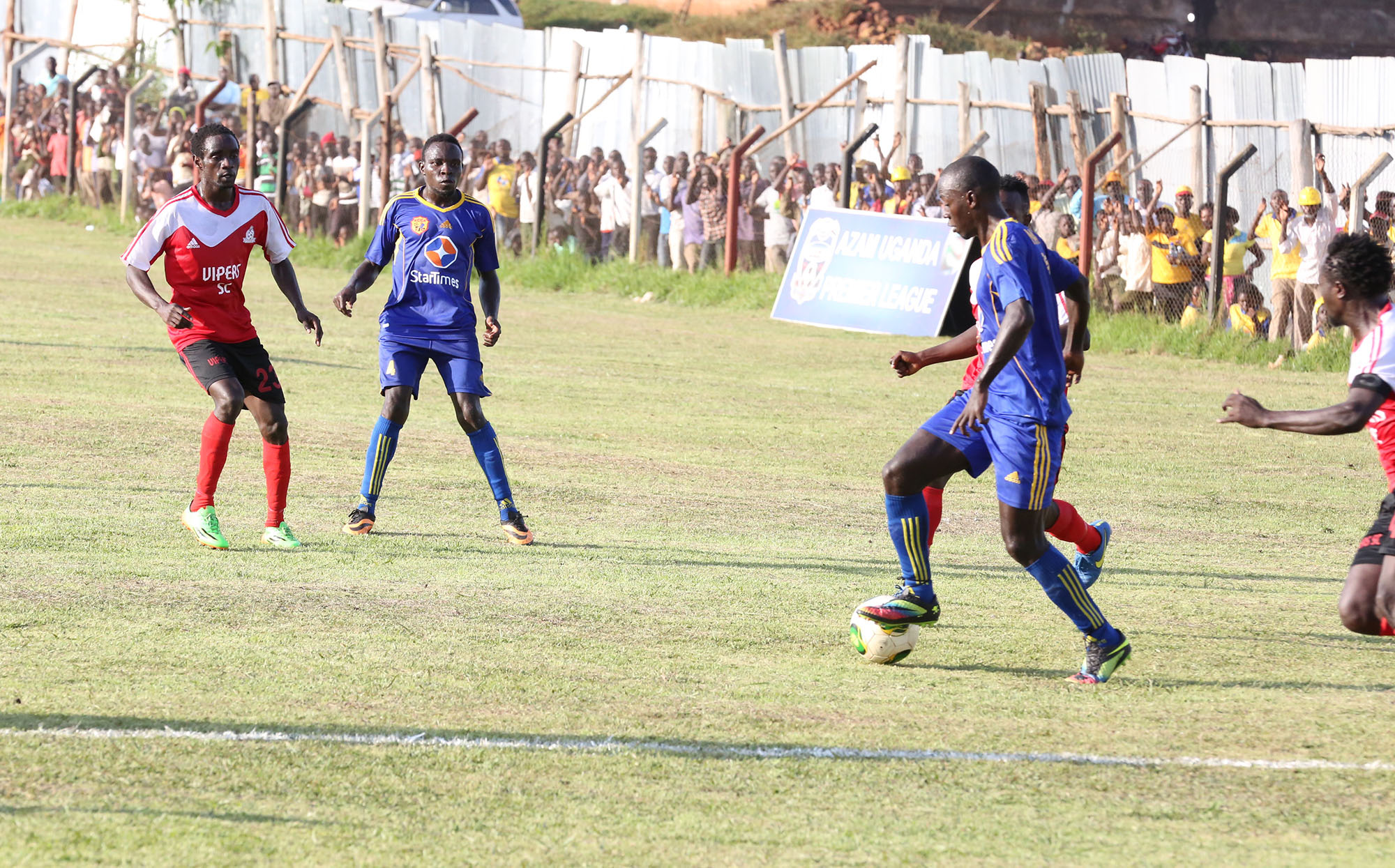
Bright Stars seek redemption against unrelenting Vipers

Today, 4pm

Bright Stars vs Vipers – Champions Stadium, Mwererwe

With 30 points from 23 matches played, and with seven to go, 10th-placed Bright Stars are not about to be relegated from the Azam Uganda Premier League (UPL).

The Mwererwe side did their job by kicking the ground running early as they kept in the top five for the better part of the first round.

But events have been a bit worrying since the turn of the second period of the season, winning none of their last five matches to fall like a pack to 10th.

Now they face a championship chasing team in defending champions Vipers on Tuesday hoping to arrest the rot that has also seen their once fortress, Mwererwe, breached more than once.

The good news from Mwererwe in Matugga, however, is that club coach Fred Kajoba has been discharged from hospital after he was admitted ill on return from Burkina Faso with the Cranes two weeks ago.

But Kajoba does not return to the dugout immediately, meaning his assistant Paul Kiwanuka will continue carrying the reins for now.

However, Kiwanuka and the Stars’ woes are not about done. They face Vipers without first choice goalkeeper Mathias Kigonya.

Kigonya has been handed a one-match ban by the league secretariat for alleged indiscipline in their recent 2-1 loss to KCCA.

But Vipers and coach George Nsimbe will care less. What matters for them is three points to keep table leaders, KCCA, in sight. Vipers trail KCCA, who are on 47 points, by eight but have played one game less.

Erisa Ssekisambu, who scored in Vipers victory over Bright Stars in the reverse fixture, will lead the hunt for goals for the champions.

@ UPL

Stories Continues after ad

Police ‘begs’ Besigye to scale down on defiance

Police have Tuesday morning dispatched Wesley Nganizi the Regional Police Commander Kampala North to former FDC presidential candidate Kizza Besigye’s home in Kasangati, Wakiso for peace talks.

“Regional Police Commander Mr. Wesley Nganyizi came in wee hours to state house Kasangati and humbly beg to talk to president Dr Kizza Besigye,” Besigye’s aide Tumwekwasize Bahene Francis told EagleOnline.

“The President (Kizza Besigye) told gate man to allow him in. He is been telling KB (Besigye) he came for one purpose; to beg him accept the route Police wants Besigye to take while going Najjanankumbi,” he added.

According to Police spokesperson, Fred Enanga, Dr. Besigye has persistently demeaned police orders most recently during last Tuesday’s incident in which the opposition strongman was intercepted at the Mulago hospital roundabout on his way to the FDC party headquarters in Najjanankumbi to attend weekly protest prayers.

Though FDC called off their ‘stay at home’ campaigns,  Mr Ibrahim Ssemuju, the FDC official spokesperson said the Tuesday protest prayers and other boycotts would stand.

Unusually, Dr Besigye today obliged with Police orders and avoided crowds; left his home using his brand Land Cruiser TX  through the leafy Kyanja environs to Ntinda where he found more Police escorts who helped him enter Kampala through Jinja Road via Lugogo Bypass. Besigye’s contingent made it to Najjanakumbi at exactly 10.40am in time for the prayers.

Just last week, Police summoned Besigye for allegedly disobeying lawful orders. They warned Dr Besigye “to desist from carrying out any procession because he had not notified police in time as required by the Public Order Management Act.”

Stories Continues after ad

‘No amnesty for Rwenzori region killers’ –Museveni

President Museveni shakes hands with Omusinga Charles Wesley Mumbere

President Yoweri Museveni has said that no amnesty will be granted to those perpetrating the killings in the Rwenzori region. He urged all leaders to be strict with such mistake makers to make them learn how to live in a civilized way in society.

“I came to Bundibugyo not as a tourist but to resolve this issue once and for all. Fortunately we now have the capacity. The Army has a big capacity to deal with trouble causers unlike in the past when we were running around with Kony and the ADF. I came to stop this nonsense and it will stop. Everybody involved will be held accountable,” he vowed.

The President made the remarks while meeting a delegation from the Omusinga’s palace shortly after having tete-a-tete talks with the Omusinga of Rwenzururu, Omumbere Charles Wesley Mumbere at Mweya Safari Lodge in Kasese district. President Museveni, who gave a detailed account of the killings in the Rwenzori Region since 2011, said that during the talks that he had just held with the King, he was satisfied with the Omusinga’s explanations that exonerated the Rwenzururu King from those heinous acts.

“I met the King this afternoon and he assured me on all issues I was hearing and I am satisfied with his explanations. Therefore, I appeal to you to support the accountability for these killings. It is not a good idea to keep on covering-up criminals who kill innocent people with impunity,” he said.

President Museveni said he was in the region in many capacities as a freedom fighter who has struggled for a long time for peace, security, unity and the development of Uganda as well as the past and future President of the country. He vowed that as President, he will not tolerate such criminal acts to continue in Uganda.

He added that NRM, from the very beginning, abhorred sectarianism along religious or tribal lines, marginalizing women and other vulnerable groups, the more reason why the Movement laid emphasis on security of person and property and the unity of the people of Uganda. He informed members of the Omusinga’s delegation that he had held meetings with several groups of people from the Rwenzori Region during which some of them talked of reconciliation.

President Museveni further pointed out that the chaos in such a predominantly tourist area, will only serve to deny the people income earning opportunities adding that the national economy will also suffer a setback as tourists will no longer be able to visit the country.


Stories Continues after ad

Zika virus ‘scarier than thought’

The Zika virus can be transmitted via mosquito

The Zika virus is “scarier” than first thought and its impact on the US could be greater than predicted, public health officials have admitted.

A wider range of birth defects has been linked to the virus, said Dr Anne Schuchat of the US Centers for Disease Control and Prevention.

And the mosquitoes that carry the virus could travel to more US states than previously thought, she said.

The current Zika outbreak began almost a year ago in Brazil.

Zika

It has been linked to thousands of birth defects there and has spread widely through the Americas. “Most of what we’ve learned is not reassuring,” said Dr Schuchat at White House briefing on Monday.

“Everything we know about this virus seems to be scarier than we initially thought.”

Earlier this year, US President Obama asked the US Congress for $1.8bn (£1.25bn) in emergency funding to combat the virus.

In the meantime it has been using money totalling $589m left over from the Ebola virus fund.

That was a temporary stopgap and inadequate to get the job done, said Dr Anthony Fauci of the National Institutes of Health.

The US now needs more money to fight the mosquitoes and to fund better research into vaccines and treatments, he said.

“When the president asked for $1.9 billion, we needed $1.9 billion.”

He said there had been recent discoveries about how destructive Zika appeared to be to foetal brains. There were also reports of rare neurologic problems in adults, he said.

The CDC announced that Puerto Rico is to receive $3.9m in emergency Zika funding as the number of cases there doubles every week.

In February, the first US case of locally transmitted Zika was reported in Dallas, Texas – spread through sexual contact, not a mosquito bite.

Stories Continues after ad

Respect the Constitutional Court ruling-Mbeki to Zuma

It is pay back time for Mbeki as Zuma was instrumental in his woes before he resigned in 2009.

Former South African President Thabo Mbeki has challenged his successor Jacob Zuma to respect the Constitutional Court ruling on the separation of powers and use of government resources to develop Nkandla.

Mbeki served nine years as president from 14 June 1999 to 24 September 2008 after replacing Nelson Mandela.

On 20 September 2008, with about nine months left in his second term, Mbeki announced his resignation after being summoned up by the National Executive Committee of the ANC, following a conclusion by judge C. R. Nicholson of improper interference in the National Prosecuting Authority (NPA), including the  alleged prosecution of Jacob Zuma who was then his deputy for corruption.

“It has therefore made a critical contribution in terms of the evolution of our democracy by posing and answering the question – what does our Constitution prescribe in terms of how South Africa should be governed?” Mbeki wrote in his length letter to Zuma.

“One of the crucial elements of our constitutional vision is to make a decisive break from the unchecked abuse of State power and resources that was virtually institutionalized during the apartheid era. To achieve this goal, we adopted accountability, the rule of law and the supremacy of the Constitution as values of our constitutional democracy.”

Adding “For this reason, public office-bearers ignore their constitutional obligations at their peril. This is so because constitutionalism, accountability and the rule of law constitute the sharp and mighty sword that stands ready to chop the ugly head of impunity off its stiffened neck.”

Thabo Mbeki’s full letter on Zuma

Former president Thabo Mbeki has written a letter about the Constitutional Court’s finding against President Jacob Zuma over improvements to his Nkandla home.

On 31 March, 2016, Chief Justice Mogoeng Mogoeng conveyed the unanimous decision of the Constitutional Court (ConCourt) in the matter of “Economic Freedom Fighters v Speaker of the National Assembly and Others; Democratic Alliance v Speaker of the National Assembly and Others [2016] ZACC 11.”

This decision has evoked much understandable and inevitable political discussion and activity in our country, which has included calls for the immediate removal of the President of the Republic.

However what must also preoccupy the Nation, including and especially the Political Parties, is the wider and deeper significance of the ConCourt decision.

That wider and deeper significance derives from the fact that in its consideration of the “Nkandla matter”, the ConCourt made an outstanding contribution to the clarification of the issue – what do we mean when we say that ours is a Constitutional Democracy?

It has therefore made a critical contribution in terms of the evolution of our democracy by posing and answering the question – what does our Constitution prescribe in terms of how South Africa should be governed?

In this context it has also answered the question in the affirmative – should any consequences arise from any failure by anybody or any governance institution to act according to the Constitutional prescripts?

The adoption of the Constitution in 1996 constituted a strategically important step forward towards defining the kind of new South Africa we all want, thus to end the centuries-long period of conflict-ridden colonial and apartheid rule.

The Constitution was therefore conceived and designed as an agreed social compact about South African Governance that is binding on the Nation as a whole.

Necessarily it constituted and constitutes a United National Response to the question – what must we do in the new South Africa to avoid the fundamentally Bad Governance which characterised the old South Africa of colonialism and apartheid?

The ConCourt put this matter in these words:

“One of the crucial elements of our constitutional vision is to make a decisive break from the unchecked abuse of State power and resources that was virtually institutionalized during the apartheid era. To achieve this goal, we adopted accountability, the rule of law and the supremacy of the Constitution as values of our constitutional democracy. For this reason, public office-bearers ignore their constitutional obligations at their peril. This is so because constitutionalism, accountability and the rule of law constitute the sharp and mighty sword that stands ready to chop the ugly head of impunity off its stiffened neck.”

Thus, to constitute the new, we took the solemn decision to define our System of Governance as a Constitutional Democracy.

Together, through the Constitutional Assembly and the extensive National Consultations which contributed to the outcomes of the Assembly, we therefore made the determination that it will only be through respect for and the implementation of the provisions of our Constitutional Democracy that:

  • we will avoid the conflict-ridden Bad Governance of the past, including through the full application of the rule of law;
  • we will be able to regulate the contending interests which had become entrenched because of that past, as well as those that would arise in future;
  • We will achieve national unity and reconciliation; and,
  • We will build a new South Africa that truly belongs to all who live in it, committed, among others, to heal the divisions of the past.

It therefore stands to reason that when all of us decided to establish a Constitutional Democracy, we accepted and committed ourselves to respect the legal, political and ethical obligations which attend this strategic decision about our System of Governance.

By definition, the practice of Constitutional Democracy means recognition of the Constitution as the supreme law of the land and therefore the central determinant of our Governance System.

Indeed, in this regard, our Constitution says:

“This Constitution is the supreme law of the Republic; law or conduct inconsistent with it is invalid, and the obligations imposed by it must be fulfilled.”

It was to honour this Constitutional precept, which is fundamental to any Constitutional Democracy, that in considering the “Nkandla matter”, the ConCourt had to make the determination for which it is constitutionally empowered, as to whether the decisions and actions of the State Organs concerned were consistent with the Constitution.

In this context it underlined the requirement that the obligations imposed by the Constitution must be fulfilled.

It therefore commented that:

“Certain values in the Constitution have been designated as foundational to our democracy. This in turn means that as pillar-stones of this democracy, they must be observed scrupulously. If these values are not observed and their precepts not carried out conscientiously, we have a recipe for a constitutional crisis of great magnitude. In a State predicated on a desire to maintain the rule of law, it is imperative that one and all should be driven by a moral obligation to ensure the continued survival of our democracy.”

One of these ‘foundational values’ is obviously the prescript that all the obligations imposed by the Constitution must be fulfilled.

As a corollary to this, the ConCourt therefore made the determination that failure to observe these ‘foundational values’ might threaten the very ‘survival of our democracy’, and therefore constitute a counter-revolutionary act, where the revolution is understood as the establishment of our Constitutional Democracy.

Ours is a young Constitutional Democracy and will inevitably make mistakes as it works faithfully to implement the provisions contained within this Democracy, as prescribed by the Constitution.

It therefore stands to reason that everybody concerned and all State Organs should regularly assess their decisions and actions taken over time, to determine whether these have been correct in the context of the legal, political and ethical obligations arising from the continuous effort to ensure the proper functioning of a Constitutional Democracy.

This assessment would make it possible for all concerned to take such corrective action as might be necessary.

The eminent ConCourt Judgment relating to the “Nkandla matter” has laid a vitally important foundation for such an assessment

which, again, all those concerned should act upon.In this regard, and as all of us know, the ConCourt dealt definitively with such matters that are important to our Constitutional Democracy as:

  • the separation of powers among the Executive, the Legislature and the Judiciary;
  • the role and tasks of the Executive, especially the President of the Republic;
  • the role and tasks of the National Assembly;
  • the role and tasks of the Judiciary; and,
  • The role and tasks of the Public Protector.
  • In this regard all of us will have studied the comments of the ConCourt about the role and tasks of the President of the Republic when it said that, among others:
  • “The President is the Head of State and Head of the National Executive. His is indeed the highest calling to the highest office in the land…As the Head of State and the Head of the National Executive, the President is uniquely positioned, empowered and resourced to do much more than what other public office-bearers can do…
  • “He is after all, the image of South Africa and the first to remember at its mention on any global platform…
  • “He is a constitutional being by design, a national pathfinder, the quintessential commander-in-chief of State affairs and the personification of this nation’s constitutional project…The President is a constitutional being. In the Constitution the President exists, moves and has his being. Virtually all his obligations are constitutional in nature because they have their origin, in some way, in the Constitution…
  • “Unsurprisingly, the nation pins its hopes on him to steer the country in the right direction and accelerate our journey towards a peaceful, just and prosperous destination that all other progress-driven nations strive towards on a daily basis…
  • “Only upon him has the constitutional obligation to uphold, defend and respect the Constitution as the supreme law of the Republic been expressly imposed.
  • “The promotion of national unity and reconciliation falls squarely on his shoulders…to unite the nation, obviously with particular regard to the painful divisions of the past…
  • “He initiates and gives the final stamp of approval to all national legislation.
  • “And almost all the key role players in the realization of our constitutional vision and the aspirations of all our people are appointed and may ultimately be removed by him…
  • “The President has the duty to ensure that State resources are used only for the advancement of State interests. On the other hand, there is the real risk of him closing an eye to possible wastage, if he is likely to derive personal benefit from indifference. To find oneself on the wrong side of Section 96 (of the Constitution), all that needs to be proven is a risk. It does not even have to materialize…The President is expected to endure graciously and admirably and fulfill all obligations imposed on him, however unpleasant.
  • “He is required to promise solemnly and sincerely to always connect with the true dictates of his conscience in the execution of his duties…
  • “The President (should) do all he can to ensure that our constitutional democracy thrives. He must provide support to all institutions or measures designed to strengthen our constitutional democracy. More directly, he is to ensure that the Constitution is known, treated and related to, as the supreme law of the Republic…
  • “He is required to (discharge his responsibilities) with all his strength, all his talents and to the best of his knowledge and abilities.”
  • Arising from all these critically important responsibilities of the President of the Republic, and in the context of what we have suggested concerning a periodic assessment of our success in terms of ensuring the proper functioning of our Constitutional Democracy, it would seem obvious that:
  • whatever Political Party/s present candidates to Parliament for election to the post of President of the Republic, they must satisfy themselves that such candidate/s have the capacity to discharge their Constitutional responsibilities in our Constitutional Democracy;
  • Parliament must take all necessary measures to satisfy itself that the person it elects is capable of and is committed to this discharge of their Constitutional responsibilities in our Constitutional Democracy;
  • subsequently, in honouring its oversight responsibilities over the Executive, Parliament should regularly make an assessment of whether the elected President is indeed carrying out his/her Constitutional responsibilities; and,
  • Government and the State should ensure that the President is provided with the ways and means to empower her/him effectively to discharge the said Constitutional responsibilities.
  • It is also important that we understand the observations made by the ConCourt concerning the National Assembly, including its comments that:
  • “The National Assembly, and by extension Parliament, is the embodiment of the centuries-old dreams and legitimate aspirations of all our people. It is the voice of all South Africans, especially the poor, the voiceless and the least remembered.
  • “It is the watchdog of State resources, the enforcer of fiscal discipline and cost-effectiveness for the common good of all our people.
  • “It also bears the responsibility to play an oversight role over the Executive and State organs and ensure that constitutional and statutory obligations are properly executed. For this reason, it fulfills a pre-eminently unique role of holding the Executive accountable for the fulfillment of the promises made to the populace through the State of the Nation Address, budget speeches, policies, legislation and the Constitution, duly undergirded by the affirmation or oath of office constitutionally administered to the Executive before assumption of office.
  • “Parliament also passes legislation with due regard to the needs and concerns of the broader South African public. The willingness and obligation to do so is reinforced by each member’s equally irreversible public declaration of allegiance to the Republic, obedience, respect and vindication of the Constitution and all law of the Republic, to the best of her abilities…Parliament ‘must act in accordance with, and within the limits of, the Constitution’, and the supremacy of the Constitution requires that ‘the obligations imposed by it must be fulfilled’…
  • “In sum, Parliament is the mouthpiece, the eyes and the service-delivery-ensuring machinery of the people. No doubt, it is an irreplaceable feature of good governance in South Africa.”
  • Arising from all the foregoing, it would seem obvious that:
  • all Political Parties must ensure that their Parliamentary members understand that their first responsibility as Members of Parliament, above Party loyalty, is to serve as the ‘voice of all South Africans, especially the poor, the voiceless and the least remembered’;
  • similarly, Parliament should conduct induction processes for all its Members such that they understand this principal individual and collective responsibility on their part;
  • consequently Parliament should educate its Members to understand the meaning of their oversight role over the Executive and State organs, which includes ensuring that these properly execute their Constitutional and Statutory obligations, and meet the commitments they have made to Parliament, again above Party loyalty;
  • Parliament should also help to ensure that each Member understands that with regard to whatever she/he does, she/he is duty bound to honour to their best of her/his ability her/his public declaration of allegiance to the Republic, and obedience, respect and vindication of the Constitution and all law of the Republic;
  • The Parliamentary Presiding Officers in particular must ensure that Parliament implements all Decisions handed down by the Courts relating to Parliament, consistent with the Separation of Powers, including as this relates to oversight over the Executive and the State Organs; and,
  • These Presiding Officers must ensure that in everything it does, Parliament respects the reality that ours is a Constitutional Democracy and therefore that the Constitution is the supreme law of the Republic with obligations which must be fulfilled.
  • The ConCourt also made observations which relate to the Judiciary, including itself, the ConCourt, as when it said:
  • “As the highest court in constitutional matters and “the ultimate guardian of the Constitution and its values”, (the ConCourt) has “to adjudicate finally in respect of issues which would inevitably have important political consequences”.
  • “Also to be factored into this process is the utmost importance of the highest court in the land being the one to deal with disputes that have crucial and sensitive political implications…
  • “Courts must be conscious of the vital limits on judicial authority and the Constitution’s design to leave certain matters to other branches of government. They too must observe the constitutional limits of their authority. This means that the judiciary should not interfere in the processes of other branches of government unless to do so is mandated by the Constitution.
  •  “Courts are required by the Constitution ‘to ensure that all branches of government act within the law’ and fulfill their constitutional obligations…
  • “It falls outside the parameters of judicial authority to prescribe to the National Assembly how to scrutinize executive action, what mechanisms to establish and which mandate to give them, for the purpose of holding the Executive accountable and fulfilling its oversight role of the Executive or organs of State in general. The mechanics of how to go about fulfilling these constitutional obligations is a discretionary matter best left to the National Assembly.
  • “Ours is a much broader and less intrusive role. And that is to determine whether what the National Assembly did does in substance and in reality amount to fulfillment of its constitutional obligations. That is the sum-total of the constitutionally permissible judicial enquiry to be embarked upon.”
  • Again arising from the foregoing, it would seem obvious that given the delicate role that the Judiciary must play within the context of the Separation of powers in a Constitutional Democracy, it would be important that:
  • the processes to select and appoint Members of the Judiciary should be such that they give the best possible guarantee that those selected are properly qualified truly to understand the meaning and application of the Separation of Powers and the role and place of the Judiciary in this regard, in the context of the reality that ours is a Constitutional Democracy;
  • the leadership of the Judiciary, especially the Chief Justice, should undertake the processes that Members of the Judiciary are properly schooled with regard to the immediate foregoing; and,
  • This leadership, especially the Chief Justice, should engage the Members of the Judiciary in educational processes to ensure that these Members understand the national circumstances which gave birth to, as well as those under which our Constitutional Democracy must function.
  • Of course the ConCourt also commented on the matter of the Public Protector and said, among others:
  • “The institution of the Public Protector is pivotal to the facilitation of good governance in our constitutional dispensation…
  • “The Public Protector is thus one of the most invaluable constitutional gifts to our nation in the fight against corruption, unlawful enrichment, prejudice and impropriety in State affairs and for the betterment of good governance.
  • “The tentacles of poverty run far, wide and deep in our nation. Litigation is prohibitively expensive and therefore not an easily exercisable constitutional option for an average citizen. For this reason, the fathers and mothers of our Constitution conceived of a way to give even to the poor and marginalised a voice, and teeth that would bite corruption and abuse excruciatingly. And that is the Public Protector…The Public Protector is one of the true crusaders and champions of anti corruption and clean governance…
  • “The purpose of the office of the Public Protector is therefore to help uproot prejudice, impropriety, abuse of power and corruption in State affairs, (in) all spheres of government and State-controlled institutions. The Public Protector is a critical and indeed indispensable factor in the facilitation of good governance and keeping our constitutional democracy strong and vibrant…
  • “As with other Chapter Nine institutions, the Constitution guarantees the independence, impartiality, dignity and effectiveness of this institution as indispensable requirements for the proper execution of its mandate. The obligation to keep alive these essential requirements for functionality and the necessary impact is placed on organs of State. And the Public Protector is one of those deserving of this constitutionally-imposed assistance and protection…
  • “If compliance with remedial action taken were optional, then very few culprits, if any at all, would allow it to have any effect…
  • “The power to take remedial action is primarily sourced from the supreme law itself. And the powers and functions conferred on the Public Protector by the Act owe their very existence or significance to the Constitution. Just as roots do not owe their life to branches, so are the powers provided by national legislation incapable of eviscerating their constitutional forebears into operational obscurity…
  • “Our constitutional order hinges also on the rule of law. No decision grounded on the Constitution or law, (such as remedial action prescribed by the Public Protector), may be disregarded without recourse to a court of law. To do otherwise would “amount to a licence to self-help”.
  • Given its Constitutional mandate and powers, it would seem obvious that:
  • the Public Protector should, at all times, be given sufficient resources to carry out her/his important work;
  • it should further be popularised among the people as a whole to encourage these to access it as need may arise; and,
  • the (State) National Executive should take all necessary action to familiarise the Executive authorities and State Organs in all the Spheres of Government both with the powers of the Public Protector and their responsibilities to support her/him in the discharge of her/his duties
  • It is critically important that all of us should understand that the ConCourt Judgement on the “Nkandla matter” has raised many vitally important issues about the functioning of our Constitutional Democracy on which all those concerned should act.
  • In this regard these should keep in sharp focus that the solemn decision to establish this Constitutional Democracy was born out of the immense sacrifices that were made by countless numbers of our people, up to and including the sacrifice of many lives, as well as the millions in the rest of Africa and across the globe who joined us in struggle to end the system of apartheid and help ensure the birth of our Democracy.
  • That decision to establish a Constitutional Democracy sought to entrench an outcome which would help to ensure that the need should never arise again for future generations to have to make similar sacrifices.
  • Among others the decision to establish a Constitutional Democracy means that we wanted to ensure that Executive Power is not abused to undermine the Constitutional and Statutory rights of the people and to weaken the capacity of the State Organs to discharge their Constitutional obligations to the Nation and the country.
  • It also means that Members of all Political Parties elected to Parliament should understand that they share a collective responsibility to act in concert to discharge the responsibilities imposed by the Constitution, at all times to honour their public declarations of submission to the Constitution and all laws, and to respect their primary obligation to serve as true peoples’ tribunes, which makes them accountable, first and foremost, to our people as a whole whom they are elected to represent.
  • The decision to establish a Constitutional Democracy also means that all Members of the Judiciary, others in the Criminal Justice System, as well as all those who serve in other State Organs should not allow themselves to be “owned” by any Political Party and/or any other interest, remaining loyal to the fundamental proposition advanced recently by the Chief Justice when he said – “My soul is not for sale.”
  • It also means that all Chapter Nine institutions, regardless of who heads them, should do everything possible, acting without fear or favour, strenuously to discharge their Constitutional and Statutory responsibilities.
  • The decision to establish a Constitutional Democracy also means that all Political Parties which function within this Democracy, whether in the Executive and/or the Legislature, have a primary obligation to help develop and entrench this Constitutional Democracy, at all times respecting and popularising the understanding that they, like everybody else, are obliged to operate within and under the imperative that the Constitution is the supreme law of the Republic which dictates the nature and functioning of our System of Governance. In this regard they would be acting to honour their legal, political and ethical commitments attendant to the acceptance of a Constitutional Democracy.
  • That strategic decision to establish a Constitutional Democracy also imposes the obligation on the masses of our people, and all their organisations, continuously to act as the guardians of our Constitutional Democracy, at all times determined to defend it as the product of their sacrifices and their guarantee that the people shall govern!
  • We owe it to our Constitutional Court to salute the Chief Justice and his fellow Judges for the meticulous manner in which they discharged their Constitutional responsibilities as our Apex Court, clearly to identify the national imperatives binding on everybody with regard to the strategic task to ensure the vibrant functioning of our Constitutional Democracy!


Stories Continues after ad

President Museveni meets Mumbere over killings

President Yoweri Museveni held meeting with the Omusinga of Rwenzururu, Charles Wesley Mumbere, over at Mweya Safari Lodge on Monday over the instability that has rocked the Rwenzori region.

“This meeting is significant as government engages all key stakeholders to ensure a permanent solution is found to the political/economic issues affecting the Rwenzori sub-region,” a Statehouse spokesperson said.

The Obusinga bwa Rwenzururu has been blamed by some political players for being the catalyst of the violence in the aftermath of the 2016 election that has claimed over 40 civilians.

The commander in chief President Museveni last week ordered immediate increase in deployment of security forces in the region where conditions have been volatile to hunt for attackers responsible for killings in the region.

Tension is high especially in Kasese where businesses close early while residents return home as early as 6pm as security forces step up deployment.

Mumbere

Museveni meets Mumbere1

Stories Continues after ad

URA takes over WBS TV to recover Shs7.2b

Uganda Revenue Authority (URA) officials have today raided WBS Television Naguru offices under receivership in a rare ‘deal’ to recover Shs7.2billion in tax arrears.

Abiselem Waiswa, Manager Debt Collection URA told EagleOnline WBS had let its Pay as You Earn [PAYE] and Value Added Taxes [VAT] accumulate to Shs7.2billion, more than any other company in the country.

WBS TV, one of the oldest private Media stations in the country is, according to sources, going through a hard time balancing its books and it’s not surprising that the tax man raided it barely a week after rivals NBS TV threatened to drag them to courts for airing their content without permission.

“Its true URA as mandated by the government has taken over the television by means of appointing a substantial manager to run the business on our (URA) behalf as we collect the money to pay the tax debt,” Mr Waiswa told this website.

“The rumours on social media that we have raided WBS are exaggerated. Placing a creditor into Receivership is one of the modern methods of enforcing collection,” he added.

The Nakawa based tax body then tweeted, “We have not closed WBS, and We have only used one collection method among many to collect arrears. WBS is still going strong.”

“The Receiver has been given mandate to appraise WBS operations & collect funds to settle arrears. WBS is still owned by Prof. Wavamunno, different management.

“Considering associated effects like loss of employment. This could enable us collect the arrears without necessarily closing down the TV.

The station managers immediately issued a statement on their Facebook page announcing the sudden change in supervision.

WBS

In January this year, the station was published on top of Uganda Revenue Authority’s tax defaulters’ shame list so it was simply a matter of time before the siege.

Stories Continues after ad

PHOTOS: Makerere 6-floor building collapses, scores dead

At least 8 people are reportedly killed when a six-storey building still under construction collapsed near Makerere University in Kampala, eyewitnesses say.

A Makerere University student told EagleOnline the Kyaseka Towers a commercial building along Makerere Hill road after Ham Shopping Mall but before Makerere College School female hostels collapsed on Monday afternoon after the owners had added floors despite lacking a permit from authorities, which had sealed off the site – a common problem in Kampala surburbs where law enforcement is weak.

Makerere building collapse4

Makerere building collapse5

Makerere building collapse6

14ed7dc1-5049-4bd8-89f4-ec5994447a10

46d739dc-86c4-40c7-9815-fcd2ee23f988

MUK

Makerere building collapse3


Good Samaritans initially put the death toll at five, but by press time Police were reportedly pulling out more victims from the rubble.

The building site had been inhabited by boutique owners on the ground floor.

“After they (the owners) finished building the house, rain fell and the house shifted a bit. They put iron in front of the house (but) the iron couldn’t hold the house,” said a man formerly working on the site to an eyewitness.

“They left it like that and continued building.”

More details to follow …

Stories Continues after ad

Kasese district FDC leaders against ‘Yiira state’

President Museveni addresses Kasese district FDC leaders

The Forum for Democratic Change (FDC) leadership in Kasese district led by the LC V Chairman-elect Kasese district Geoffrey Sibendire Bigogo has rejected the idea of the demand and formation of the ‘Yiira Republic’.

Speaking at a meeting between the FDC leadership of the district and President Yoweri Museveni at Mweya Safari Lodge in Kasese district, Mr Bigogo said that they are ready to work together with the NRM government to bring about peace and development in Kasese district in particular and Uganda in general.

This follows allegations that there is a scheme by the Bayiira of Uganda and those in the Democratic Republic of Congo to break away from their nations and form their own State called Bayiira.

President Museveni blamed some of the so-called prophets who instead of positively guiding the youth, mislead them by using witchcraft to fight for the so-called Yiira Republic.

“The earlier it is clear to everybody the better,” he cautioned.

He warned of dangerous repercussions from the Congo side in-case they press ahead to demand for the Yiira state adding that it will also cause unnecessary friction between the two governments of Uganda and that of the DRC.

Museveni advised them to instead work positively to create unity among the people at home as well as those living across the borders who have similar linkages and advise them to rout-out the ADF’s and the Interhamwe’s for everlasting peace to prevail in the area.

President Museveni rubbished allegations that NRM is marginalizing the Bayiira in Uganda adding that under the NRM government the population in Kasese has increased from 190,000 in 1994 to 700,000 now, something he attributed to a successful immunization programme in the country.

“Socio-economic problems are now cropping up including in Kasese. Now some false prophets come in to take advantage of peoples’ problems they have not bothered to solve. They say the Bayiira are suffering, those in DRC are being killed and Mugurusi Museveni does not care for the ones in Uganda because he is part of the Hima-Tutsi Empire. But I am the one who has increased the Bayiira for the first time in four million years. The population of Kasese was 190,000 in the CA elections of 1994.The population now is 700,000.Who has increased the population? Museveni. The Bayiira you are talking about are my Bayiira and they have increased because of my work,” he pointed out.

President Museveni earlier reminded the FDC leadership of the role of leaders at all levels of getting people out of poverty through adopting modern commercial farming especially in the rural areas.

He emphasized the issue of enterprise selection coupled with thorough calculation for better results.

Responding to some of their concerns President Museveni defended what some FDC leaders called unnecessary arrests adding that there is incriminating evidence against some of the culprits arrested.

President Museveni also clarified on the absence of the Minister of Defense Dr Crispus Kiyonga, who is undergoing treatment after being operated three times in South Africa. Dr Kiyonga hails from the region.

“I didn’t know that Dr Kiyonga was sick, because I was looking for him. I only talked to his wife because he had just been brought out of the operation theatre,” he said.

Later the FDC leadership reiterated their stand of working together with NRM government for peace and development, and also denounced ‘some people who want to use the cultural institution to cause problems within the region and in the DRC’.


Stories Continues after ad