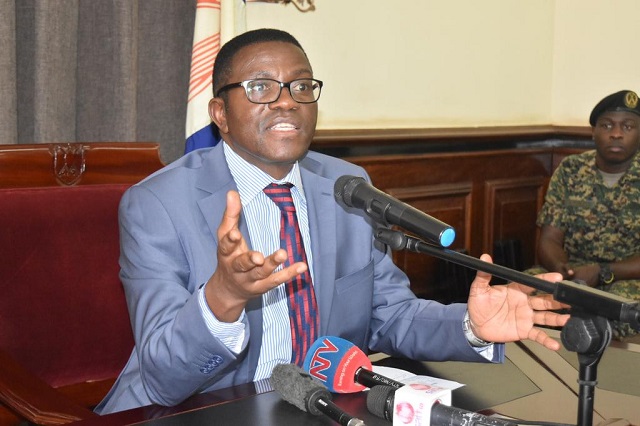

KAMPALA — Buganda Katikkiro Charles Peter Mayiga has stirred sharp public debate after suggesting that the Uganda Martyrs could have been viewed as “traitors” by the Buganda Kingdom leadership during the reign of Kabaka Mwanga II.
The remarks, made in an interview published by the Daily Monitor ahead of Uganda Martyrs Day, have drawn mixed reactions from religious believers, historians and cultural commentators at a time when thousands of pilgrims are gathering at Namugongo for annual commemorations.
Mayiga reportedly argued that history should be understood within its political context, saying that while Christians honour the martyrs as heroes of faith today, the kingdom administration at the time may have regarded them as subjects who defied royal authority.
According to the Katikkiro, the young converts openly resisted some instructions from the Kabaka and increasingly aligned themselves with foreign religious teachings introduced by European missionaries — actions that could have been interpreted as betrayal within the kingdom’s political structure.
His comments immediately triggered heated discussions online, with some Ugandans accusing him of diminishing the sacrifice of the martyrs, while others defended the statement as a historically grounded observation rather than an attack on Christianity.
The Uganda Martyrs remain among the most respected religious figures in Africa’s Christian history. The 45 martyrs — including both Catholic and Anglican converts — were executed between 1885 and 1887 after refusing to abandon their Christian faith.
Many historians believe the killings occurred during a period of intense political tension in Buganda, where traditional authority structures were increasingly being challenged by the arrival of foreign religions and external influence.
At the center of the conflict was Kabaka Mwanga II, who feared the growing power of Christian converts within his royal court and viewed foreign missionaries as a threat to the sovereignty of his kingdom.
The executions later transformed the young converts into symbols of religious courage and resistance. In 1964, Pope Paul VI canonized the Catholic martyrs during a historic visit to Uganda, elevating their significance in global Christianity.
Today, Uganda Martyrs Day is one of the country’s largest annual religious events, attracting millions of pilgrims from across Africa and beyond to Namugongo Martyrs Shrine.
Despite criticism directed at Mayiga, some historians argue that the Katikkiro’s remarks reflect a broader academic debate that has existed for decades — whether the martyrs should be viewed solely through a religious lens or also within the political struggles of pre-colonial Buganda.
Political analyst and historian discussions on social media intensified following publication of the interview, with many emphasizing that historical figures are often interpreted differently depending on perspective.
Others, however, insisted that using the word “traitors” in reference to the martyrs was inappropriate, particularly during a sacred period of remembrance for Christians.
By Tuesday evening, major church leaders had not issued official statements responding directly to the controversy.
The debate now adds a new layer of tension and reflection to this year’s Martyrs Day celebrations, an occasion traditionally marked by prayer, pilgrimage and messages of unity.
As Uganda commemorates the martyrs’ sacrifice, Mayiga’s remarks have reignited difficult questions about loyalty, faith, colonial influence and how history should be remembered in modern Uganda.
Related Posts
 Gov't to set up Muslim Martyrs Shrine at Namugongo - Museveni
President Yoweri Kaguta Museveni has promised to set up a Muslims Martyrs Shrine at Namugongo.…