Stanbic Bank
Stanbic Bank
18.9 C
Kampala
Stanbic Bank
Stanbic Bank
Home Blog Page 2200

Museveni says integration will ensure survival of EAC

EA SPIRIT? L-R Kenyan President Uhuru Kenyatta, Ugandan President Yoweri Kaguta Museveni , Tanzanian President John Pombe Magufuri and Rwandan President Paul Kagame interact shortly after a group photograph during the 17th Summit of the East African Community in Arusha, Tanzania on 2nd March 2016.

President Yoweri Museveni has hailed the East African Community (EAC) for accepting South Sudan as a member saying this reminds the community of the three purposes of integration mainly; How to survive in a competitive world; how to guarantee prosperity as a region and how to be secure in the modern world.

President Yoweri Kaguta Museveni looks through the dammy E- copy of the East African passport together with other East African Heads of State during the 17th Summit of the EAC on Wednesdsay 2nd March 2016.

Museveni was today speaking during the 17th Ordinary Summit of the East African Community Heads of State at the Ngurdoto Mountain Lodge, Arusha, in Tanzania.

The summit is being held under the theme: EAC: ‘Advancing Market-Driven Integration’.

“On this day when South Sudan joins the East African Community, we need to remind ourselves of the main purpose of our integration in three words; How to survive in a competitive world; How can we guarantee our prosperity. We are prosperous by buring from each other and; How to be secure in this modern world,” he said adding that China, India and the United States of America were highly competitive while Europe defends itself through NATO despite each individual country being strong.

“Here we are scattered. I thank God that he has given me a long life to see all these things. We must ensure means for the survival of the black people,” he said.

He said that we must strive for prosperity as a way forward. He challenged the summit and other leaders to work towards our security in the modern world.

President Museveni said that with South Sudan joining the East African Community, the regional block’s geographical area is now almost the same size as India.

The EAC presidents  at the Heads of State Summit today
The EAC presidents at the Heads of State Summit today

President John Pombe Magufuli who has retained the EAC chair was pleased to note that the Community has recorded a lot of progress including movement of goods with the transit time for goods from Mombasa to Rwanda reduced from 21 to 6 days and to Uganda by three days. He noted that the region was endowed with abundant resources.

On Industrialization, Magufuli called for industrialization in the region.

“There is a critical factor for industrialization. Today we produce commodities that we do not consume and we consume what we do not produce. This trend must stop,” he said noting that the community was working towards promoting textiles and leather industries in the region. He thanked the East African leaders and other officials for their contribution in promoting the Community.

Magufuli called for tolerance in the East African Community and said that while each country has its own challenges, the community must remain united for development.

Magufuli lashed out at the EAC secretariat over being extravagant saying while it budgeted for US$ 50 per person at the Ngurdoto Mountain Lodge, it would have saved about US$20 dollars if they had held the conference at their headquarters.

He reminded the EAC officials that there was need to save for the sake of the poor people and reminded them that they were there for the benefit of the poor population.


EAC launches new international East African e-Passport

The summit also saw the new Chairman of the EAC President Magufuli lead the launch of the new international East African e – passport that will easy transport in the region and internationally.

Among others, the document is designed to facilitate the fight against international crime.


EAC retains Museveni as Burundi mediator appoints Mkapa facilitator

The EAC 17th EAC Summit also clarified that President Yoweri Museveni is the EAC appointed mediator for Burundi and that it has also appointed former Tanzania President Benjamin Mkapa as lead facilitator. Mkapa will be reporting to President Museveni as mediator.

President Magufuli hailed Museveni for working tirelessly with the people in Burundi to restore peace and called on the people of Burundi to support his efforts so that lasting peace is achieved in Burundi.

The host, Tanzanian President Joseph Pombe Magufuli while addressing the summit as the Chairman paid tribute to President Museveni for working tirelessly to enable the parties in Burundi to resolve their differences. He prayed the East African member country gets lasting peace. He looked forward to improved trade among the EAC members.


EAC Heads of State welcome South Sudan to Community

The 17th EAC summit saw South Sudan join the East African Community as a full member, a move described by South Sudanese Second Vice President James Wani Iga as a historical event for his country. Iga who represented President Salva kiir said this was not just about politics but about Economics and history. “This is where we belong,” he said.

Leader after leader hailed the move by the community for bringing South Sudan into the fold said it will ensure prosperity for the people through a big market.


Ugandan student wins EAC essay competition

A Ugandan student Oscar Azookire of Luyanzi College in Bweyogere emerged fourth with a cash prize of US$ 750 in an EAC essay writing competition among the five east African states. The Competitions launched by President Yoweri Museveni 12 years ago to sensitize the youth about the benefits of the EAC integration and the role of the youth in the process saw all the finalists get certificates and the first prize of a certificate and US$1500 went to Simon Sabaya Nolel from Nzumbe SS in Tanzania, second prize went to Beryl Njoki Mungai of Kerugoya girls in Kenya who won US$1000, third prize went to Iteka Greta of cornerstone Leadership academy of Rwanda while the 5th position went to Irumra Arni Aley of D’Cee Notre Dame De Rohero of Burundi who got US$650.

While handing over the certificates President Magufuli insisted to see the money for the beneficiaries handed to them alongside the certificates. All the winners had presidential handshakes with all the Heads of state.


Magufuli hailed on election, Museveni on re-election, Kagame on referendum

The EAC leaders also congratulated the new Chairman of the EAC President Magufuli upon his recent election to the Presidency of Tanzania and also congratulated President Museveni on his re-election that was described by the East African Business Council’s Dennis Karera as an obvious win. The leaders also congratulated President Kagame upon the successful referendum.


Stories Continues after ad
South Sudan: 50,000 killed in conflict , says UN

South Sudan's President Salva Kiir (L) and Vice President-designate Riek Machar Teny commander Riek Machar exchange documents after signing a ceasefire agreement during the Inter Governmental Authority on Development (IGAD) Summit on the case of South Sudan in Ethiopia's capital Addis Ababa

At least 50,000 people have been killed in South Sudan’s two-year civil war, a senior United Nations official said, a five-fold increase in the death toll given by humanitarian agencies in the early months of the conflict.

A political dispute between President Salva Kiir and his former deputy, Riek Machar, sparked the war in December 2013, which has reopened ethnic fault lines between Kiir’s Dinka and Machar’s Nuer people.

“Fifty thousand killed, maybe more, 2.2 million refugees and displaced, famine coming and looming in just a few months,” the senior official, who spoke on condition of anonymity, told a small group of reporters. He added that he saw little prospect of implementing an August peace deal.

The United Nations said last month that South Sudan’s warring parties are killing, abducting and displacing civilians and destroying property despite conciliatory rhetoric by Kiir and Machar.

After months of ineffective negotiations and failed ceasefires, both sides agreed in January to share positions in a transitional government, and last month Kiir reappointed Machar to his former post as vice president.

“Where are we on the implementation of the peace agreement? Nowhere,” the senior UN official said. “We see violence spreading along ethnic lines in other parts of South Sudan which had been spared so far.”

A UN panel that monitors the conflict in South Sudan for the Security Council stated in January that Kiir and Machar are still completely in charge of their forces and are therefore directly to blame for killing civilians.

UN peacekeepers are sheltering nearly 200,000 people at six protection sites in South Sudan.

Angola said last week it had proposed that the UN Security Council impose an arms embargo on South Sudan, but veto-power Russia has said it was opposed to such a move as it did not believe it would be helpful.

Last week, US Secretary of State John Kerry said Kiir and Machar would face individual sanctions if they did not deliver on the peace deal, warning of a ‘critical moment for South Sudan’s survival’.

The conflict in South Sudan, whose 2011 secession from Sudan had long enjoyed the support of the United States, has torn apart the world’s youngest country.


Stories Continues after ad
Burundi takes EAC SG slot

New EAC Secretary General Liberat Mfumukeko

The Heads of State Summit held Wednesday in Arusha, Tanzania, appointed Dr Libérat Mfumukeko as the new Secretary General of the East African Community (EAC).

Mfumukeko, who is expected to assume office in April replacing Dr Richard Sezibera, is Burundian.

He has been the Deputy Secretary General in charge of finance and administration at the regional bloc, a post to which he was appointed last year.

Before joining the EAC, Mfumukeko worked as the Director General of the Burundi’s energy and water utility, REGIDESO and was also the Chairman of the Steering Committee of the East African Power Pool (EAPP).

He replaces Sezibera, who has been the EAC Secretary General since April 2011.

The 17th Ordinary Summit of the East African Community Heads of State also admitted South Sudan to the bloc, joining Rwanda, Uganda, Kenya, Burundi and Tanzania as the sixth member.

President John Pombe Magufuli of Tanzania is the Chairperson of the East African Community.


Stories Continues after ad
Dangote scales Forbes billionaire list

Nigerian billionaire Aliko Dangote

Africa’s richest man, Nigeria’s Aliko Dangote, has risen up the annual Forbes list of world billionaires, with his fortune increasing to $15.4bn (£11bn). 

Mr Dangote is ranked 51, compared with 67 in the 2015 list when the magazine put his fortune at $14.7bn. 

He is the founder and chairman of Dangote Cement, Africa’s continent’s largest cement producer. 

The second-richest African is another Nigerian, Mike Adenua, who is worth $10bn, while South Africa’s diamond mining magnate Nicky Oppenheimer is in third spot with $6.6bn, Forbes says.

The magazine puts Mr Adenua, who built his fortune in the oil and telecom industries, at 103 in the list of world billionaires and Mr Oppenheimer at number 174.

Top 10 Forbes billionaires

1.Bill Gates US$75b

2. Amancio Ortega US$ 67b

3. Warren Buffet  US$60.8b

4. Carlos Slim Helu US$50b 

5. Jeff Bezos US$45.2b

6. Mark Zuckerberg US$44.6b

7. Larry Elison US$43.6b

8. Michael Bloomberg US$40b

9. Charles and David Koch US$39.6b

10. Lilliane Bettencourt US$36.1b

Stories Continues after ad
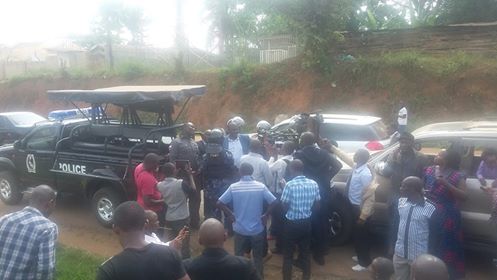
No headgear for Rio 2016 male boxers

The Bombers coach Dick Katende taking his charges through drills

If Ugandan national team boxers, the Bombers, manage to qualify for the 2016 Olympic Games in Rio de Janeiro, Brazil, they will not be draped in headgear.

No Ugandan boxer has so far qualified for the 2016 Olympics but the Bombers are set to participate in competitions in preparation for the July Summer Games, with the only remaining hope a scheduled Association of International Boxing Association (AIBA) African Olympic qualifier on the cards, slated for March 9-20 in the Cameroonian capital, Yaounde.

By press time EagleOnline had failed to get comment about the new change on headgear from the Bombers’ coach Dick Katende.

This is the first time in 32 years that male boxers will be able trade punches without any headgear after the International Olympic Committee (IOC) sanctioned a change introduced by world boxing federation, AIBA.

AIBA adopted the change for amateur fighters some three years ago but needed to bring it to the IOC Executive Board, which noted it without objection yesterday, essentially rubber-stamping the decision.

The IOC said AIBA had presented medical research that showed concussions were less likely to occur without headgear than with.

“AIBA provided medical and technical data that showed the number of concussions is lower without headgear,” IOC spokesman Mark Adams said, and added: “They have done a lot of research in the last three years. The rule will go ahead for Rio.”

Boxers have been wearing headguards since the 1984 Los Angeles Olympics, with the last Games without them in Moscow in 1980.

Women boxers, who first competed at the 2012 Olympics in London, will continue wearing their protective gear.

Stories Continues after ad
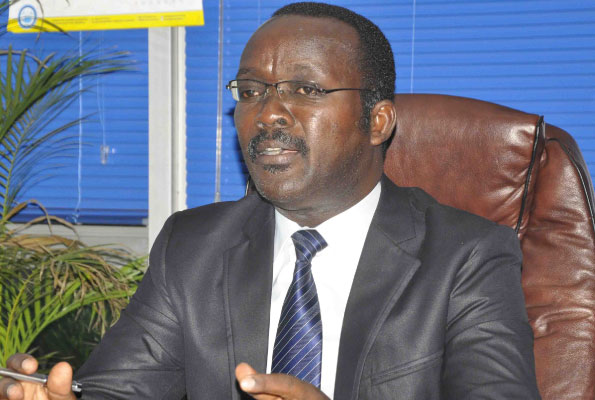
FDC speaks out on post-election roadmap

WROTE TO PARLIAMENT: FDC President Maj Gen Mugisha Muntu

The Forum for Democratic Change has today officially declared that the presidential elections were rigged in favour of the president-elect, Yoweri Museveni.

Addressing the media today at the FDC headquarters in Najjanankumbi party president Maj Gen Mugisha Muntu said the Independent Electoral Commission had tinkered with the results of the February 18 elections, to the disadvantage of its candidate Col (rtd) Dr Kizza Besigye.

“There is a glaring contradiction between the results of Electoral Commission and the results we have,” Gen Muntu told the press, adding: “This time they forgot to put on their gloves. They left finger prints all over.”

Gen Muntu also demanded that an independent audit of the presidential election results be carried out.

Speaking on a number of electoral matters, the FDC president, who was flanked by party Chairman Wasswa Birigwa Ssekyondwa and Ms Alice Alaso Ebaju, also said the party had failed to petition the Supreme Court for alleged electoral malpractices because its flag bearer Col (rtd) Dr Kizza Besigye is under round-the-clock police restriction.

“We were unable to file a petition in the set 10 days because Kizza Besigye has been arrested 9 times in the last 11 days,” Gen Muntu said, before demanding for the immediate removal of police and army officers from Dr Besigye’s home and at the FDC headquarters.

“It is a legitimate right of every Ugandan to engage in civil action. It is our constitutional duty to defend our rights,” he and added: “We can only feel secure when we are protected by the law.”

The FDC boss also said his party would engage religious leaders, civil society, the diplomatic community and the population, to arrive at an amicable and peaceful solution.

Gen Muntu’s assertions come in the wake of a criticized election which some observers from the European Union and Commonwealth have castigated as not meeting the international electoral standards.

Following the elections, the IEC declared the National Resistance Movement candidate Yoweri Museveni winner with 61% of the vote against Dr Besigye’s 35%, figures which were contested and led another candidate, John Patrick Amama Mbabazi of the Go Forward group to file a petition in the Supreme Court yesterday, challenging the results. ‘One electoral petition for any Presidential candidate is sufficient to challenge the 2016 election and Mr Amama Mbabazi MP has successfully petitioned the Supreme Court today’ the FDC wrote on its Facebook page yesterday.


Stories Continues after ad
Bin Laden left £21m for Jihad

Osama Bin Laden

Al Qaeda leader Osama Bin Laden had a staggering £20.8 million when he was killed – that he wanted to be used on waging jihad.

The figure was revealed in a handwritten will that was part of the treasure trove seized by US soldiers after the raid on his compound in Abbotabad, Pakistan, in 2011.

Released for the first time among a batch of 100 documents found inside the building, the will showed that Bin Laden planned to divide his fortune among his relatives, but wanted most of it spent on carrying out the work of the Islamic extremist terror network behind the September 11 2001 attacks.

He urged his family to spend his inheritance on “jihad, for the sake of Allah” – but it is not clear whether any of the inheritance found its way to his heirs.

Other writings from the 9/11 mastermind show that the threat of sudden death was on his mind years before the fatal raid in Pakistan.

In a 2008 letter to his father, he wrote: ”If I am to be killed, pray for me a lot and give continuous charities in my name, as I will be in great need for support to reach the permanent home.”

The documents were released by the US Office of the Director of National Intelligence and show fractures between al Qaeda and al Qaeda in Iraq – which eventually splintered off into what is now known as the Islamic State.

In another letter, addressed to “The Islamic Community in General,” Bin Laden mocked the progress of the war against terror.

He wrote: “Here we are in the tenth year of the war, and America and its allies are still chasing a mirage, lost at sea without a beach.

“They thought that the war would be easy and that they would accomplish their objectives in a few days or a few weeks, and they did not prepare for it financially, and there is no popular support that would enable it to carry on a war for a decade or more.”

He added in the letter, thought to have been written in 2010: “America appears to be hanging on by a thin thread.

“We need to be patient a bit longer. With patience, there is victory.”

More documents found in the compound are set to to be made public next year.


Stories Continues after ad
SPLA leaves ‘limited’ troops in Juba

SPLA troops aboard a military truck

The South Sudan government has today said it has left behind a limited force in the national capital, Juba, allegedly to provide security in the capital until when a joint force with opposition faction is deployed.

In accordance with the August 2015 peace agreement signed between South Sudan’s President Salva Kiir and Riek Machar, leader of the armed opposition faction of the Sudan People’s Liberation Movement (SPLM-IO), government forces should withdraw from Juba to 25kms away. A joint police and military force of more than eight thousand would be deployed in the capital to provide security.

However, units of forces from the SPLM-IO have not yet arrived in Juba, forcing the government not to withdraw all its forces from the capital, according to Michael Makuei Lueth, the minister of information.

“The government is fully committed to demilitarizing Juba in accordance with the security arrangement. This process has already started with redeployment of the forces, including some forces from presidential guards force division,” Lueth told reporters in Juba on Tuesday.

“The redeployment process would have been completed long time ago if the SPLM-IO forces had come and become part of the joint force; but the coming of SPLM-IO forces is slow,” he added.

Lueth further explained that due to the delay in arrival of the SPLM-IO forces to Juba, it was necessary to leave behind an unspecified number of troops in the capital.

He asserted that “Security in Juba is paramount not only to a political agreement, but also to ensuring that there is no repeat of the fighting in the capital” that sparked the conflict which consumed the country for more than two years.

He also attributed the delay for the coming of the opposition forces to logistical and political obstacles, raising fears it could possibly lead to the delay of the planned return of the opposition leader, Machar.

Observers say the return to Juba of troops from the SPLM-IO is a key step in the implementation of the peace agreement, particularly the formation of a transitional government of national unity.

The government and SPLM-IO reached an agreement that the armed opposition faction would send to Juba 1,370 armed military personnel in preparation for the return to Juba of Machar, while the rest of over 1,500 would come later by river. But it is unlikely the troops will beat the 1 March deadline.

Government officials and diplomats close to the implementation process say they are waiting for key information from the opposition faction for them to assemble their forces.

Armed opposition officials say neither the government nor the Joint Monitoring and Evaluation Commission (JMEC) has availed shelter, food, water and health care for the soon to arrive forces, causing the delay in their arrival.


Stories Continues after ad
Africa’s gambling potential to get boost

The Sheraton Hotel in Lagos, venue of the gaming conference

Africa’s gaming potential will be explored and celebrated at World Regulatory Briefing (WrB) Africa taking place on April 11-12 at The Sheraton Lagos Hotel, Nigeria.

As part of the WrB Series run by Clarion Events, WrB Africa is the first ever summit dedicated to exploring the exciting opportunities and encouraging a regulatory framework that will produce a thriving and sustainable gaming industry in Sub-Saharan Africa.

“We have launched WrB Africa for those seeking to unlock the huge potential of this region, but who may be unsure of the complexities of the regulatory environment. Perhaps they are already operating in one of the fast growing African regions but want to step up a level”, says Curtis Roach, senior conference producer on the event.

Delegates will be presented with a heavy-weight agenda and over 30 market-leading organisations to network with and to do business with, as well as the opportunity to learn directly from the leading companies based in East, West and Central Africa, in addition to the continent’s major regulators.

The speaker line-up includes a keynote session from Lanre Gbajabiamila, chief executive of the Lagos State Lottery Board (LSLB).

Other speakers include John Kamara, Director of Global Gaming Africa, Tarimba Abbas, Director General of Tanzania Gaming Board, Edward Lalumbe, COO of the Gauteng Gambling Board and Matthias Jacek Wojdyla, Head of International Affairs at FIFA.

Gbajabiamila is optimistic about the continued growth of gambling in Lagos and Nigeria, with technology and the public’s appetite for sport among the driving forces.

“The Nigerian gaming industry is an evolving one and gradually expanding. More states and individuals are becoming more aware of the opportunities that exist in the industry in terms of entertainment, revenue and employment.

“We are really pleased to be associated with WrB Africa, it’s a great event that the market demands and I’m excited at the opportunities that it will create for the Sub-Saharan gaming industry.”

Rory Credland, Event Director added: “It will be fantastic to bring together so many people from across the globe to talk about responsible gambling and how we can help to create a sustainable future for one of the Gaming industry’s high-potential markets.”

Stories Continues after ad
Anzisha Prize for Africa’s youngest entrepreneurs increases to $100,000

Logos for the three Anzisha award partners
The 6th Anzisha Prize application phase is now open, and the search is on to find 12 of Africa’s youngest, most innovative social and business entrepreneurs under the age of 22.

Organisers are calling for more nominations from the public this year to ensure they discover the very best talent on the continent.

African Leadership Academy (ALA) and The MasterCard Foundation – co-hosts of the Anzisha Prize – are also excited to announce a significant increase in the support available to selected entrepreneurs over the next five years. Each of the 12 finalists will now receive a $7,500 USD fellowship package with the ALA’s Youth Entrepreneur Support Unit (YES-U) which includes the Anzisha Week boot camp, mentorship and consulting services, travel opportunities to network and business equipment.

In addition, a new $25,000 USD prize category has been created to recognize Anzisha Fellows who have created further social and economic value through their ventures by effectively leveraging the opportunities provided by the fellowship with ALA.

This brings the total prize pool to $100,000 USD annually, with the Grand Prize Winner taking home $25,000 USD, 1st Runner-up receiving $15,000 USD and 2nd Runner-up receiving $12,500 USD. The remaining nine finalists will receive $2,500 USD each.

“It is essential that we nurture young, African entrepreneurial talent if we want to see the economic gains we all hope for in the future,” says Koffi Assouan, Program Manager for the Anzisha Prize at The MasterCard Foundation. “Through the provision of leadership skills, access to finance and business networking opportunities, these young entrepreneurs will have the opportunity to reach their full potential and to improve their lives and the lives of others.”

The prize is open to any African national under the age of 22 with an active project, social venture or for-profit business based on the continent. Judging criteria for the prize have been refined for 2016 to better represent the entrepreneurial talent that the Anzisha Prize wants to uncover and support. These criteria can be found in all application materials.

Applications will close on 15 April 2016, and the Anzisha Prize team wants to encourage nominations from teachers, parents and community members to identify talented young people. The Anzisha Prize is one of the most accessible and inclusive pan-African opportunities for youth. Application forms and information are available in English, French, Portuguese and Arabic, and the Anzisha Prize Tour team will visit key hubs across the continent and engage local media in every region. Both paper and electronic applications are accepted.

“The true impact of our work is only possible if we can find the top entrepreneurial potential wherever it may be,” comments Grace Kalisha, Manager of the Anzisha Program at African Leadership Academy, “If anyone out there has seen or heard of young people running amazing projects or businesses, we want to hear from you!”

The 2015 Grand Prize Winners Chris Kwekow, (Nigeria), Fabrice Alomo (Cameroon) and Mabel Sugo of Ghana.


Stories Continues after ad