Stanbic Bank
Stanbic Bank
20.1 C
Kampala
Stanbic Bank
Stanbic Bank
Home Blog Page 2202

KCCA out to extend lead

Lugogo based Kampala City Capital Authority FC  have a chance to extend their lead atop the league table when they visit Bright Stars in a mid-week Uganda Premier League tie at Champions Stadium Matugga.

The match that kicks off at 4pm and KCCA have enjoyed a perfect run since the second round of the season got underway and are top with six-point cushion over second placed Vipers SC.

The Kasasiro boys registered an emphatic 2-1 win over Police FC during their last outing to rise on top of the 16 team’s summit with 41 points.

“I respect Bright Stars; there are no big or small teams in the league. We need to work even harder in the next couple of matches. I have told the players to stay calm and not get carried away just because we’re top of the table, there is no room for complacency,” head coach Mike Mutebi quipped.

The former Uganda Cranes tactician added, “There is always room for improvement, we are not as strong as we want it to be yet, nonetheless, there is notable progress every day. We need to win the game to maintain our ascendancy and that’s our target.”

The team will however be without the experienced crew Hassan Wasswa Dazo, Ivan Ntege, Ronald Kikonyogo, Muzamir Mutyaba and Lawrence Kasadha but manager Mutebi believes the available team can do a good job.

KCCA are yet to lose a game in five of their last encounters with Bright Stars with the last clash at Luzira grounds in the first leg ending in a 1-0 win through midfielder Owen Kasule (now on loan at The Saints FC).

KCCA starting XI: Benjamin Ochan, Saka Mpiima, Denis Okot, Timothy Awany, Hakim Senkumba, Godfrey Sembatya, Paul Mucureezi, Ceaser Okhuti, Jackson Nunda, Joseoh Ochaya.

Subs: Emmanuel Opio, Martin Mpuga, Sulaimon Akinyemi, Derrick Nsibambi, Herman Wasswa, Nelson Senkatuka, Emmanuel Magembe

Stories Continues after ad

Premier League title race resumes

Vipers will travel to Kavumba in Wakiso District on Tuesday aware that anything less than victory could see KCCA get out of sight in the race for the 2016 Azam Uganda Premier League (UPL) title.

The reigning champions face a Police side equally desperate for points. Vipers’ fortunes hardly look grim when you glance at the table standings.

Coach George Nsimbe’s men are level on 35 points with second-placed Express, and six adrift of leaders KCCA, who travel to Bright Stars on the same day.

Even more encouragingly for Vipers, they have a game in hand, which if won, would bring them within just three points of KCCA.

Coach Sam Timbe’s Police on the other hand are seventh with 32 points but have played two more matches than Vipers.

Yet both Vipers and Police have endured mixed fortunes in their last five matches that have seen KCCA stretch the lead on the former in the title rush and the latter slump down the table.

Vipers have picked only seven points from a possible 15 in their last five, losing twice to Express and Lweza, beating Simba and scoring late to rescue a point against Villa last Friday.

Relatedly, Police have managed just six points from a possible 15 in their last five, winning twice over SCVU and Bul, and losing to URA, JMC Hippos and their latest, a defeat to KCCA last Saturday.

Both will be desperate to correct the sequence when they clash at Kavumba. And for Vipers, on top of ensuring KCCA remain in sight, they will be intent on avenging a 3-1 first round defeat top the Cops.

“This game is equally important like any other,” coach Nsimbe told the club website, “We must balance both the attack and defense to get maximum points.”

Nsimbe, who will hope Erisa Ssekisambu and Saddam Juma get to the scoresheet as they did against Villa, welcomes back Halid Lwaliwa.

The defender missed the stalemate against Villa while away on international duty in Rwanda with the U-20s.

Police forward Steven Mugisha, who came from the bench to score a late winner in the Cops 3-2 victory over Bul – his first for the club since transferring from Entebbe -, is vowing to fight on.

“The win over Bul improved our standings and boosted our morale but then lost to KCCA,” Mugisha told the league’s official website, “But as players, we shall keep fighting till the end.”

Tuesday fixtures -4pm

Bright vs Stars KCCA @ Matugga

BUL vs Express @ Kakindu

Lweza vs Saints @ Wankulukuku

Maroons vsJMC @ Luzira Prisons

SCVU vs Sadolin @ Namboole

URA vs Simba @ Metha, Lugazi

Police vs Vipers @ Kavumba

@UPL

Stories Continues after ad

Kisala gives URA injury update

Uganda Revenue Authority’s head coach, Kefa Kisala, has given updates on the respective injuries to Savio Kabugo and Julius Ntambi, saying they’re progressing well.

The two national team players have been struggling with injuries for two weeks after the 2-1 home loss to Express and haven’t trained with the side since.

It is thought that all two players could make a return to action in a fortnight as the tax collectors look to revive their season, and Kisela says he’s eager to get a regular centre-pairing going in his defence.

“Tuesday’s match is not easy,” he told media on Monday. “We drew but i believe we are going to win since the boys have rested enough since our last game to Express,” Kisala added.

His side who lay sixth on the log with 32 points face struggling army side Simba at home in Lugazi Mehta Stadium.

Kickoff is at 4pm

Stories Continues after ad

LRA commander Kwoyelo trial to begin on 2nd May

Thomas Kwoyelo, seen here after his capture, will begin his trial in Gulu next month

The International Crimes Division (ICD) of the High Court has set 2nd May in Gulu district as the commencement of the trial of former senior commander of the Lords Resistance Army Thomas Kwoyelo.

The pretrial conference held on Monday has been carried out one year after the Supreme Court. The state has lined up 113 witnesses to testify against former commander.

“They have 113 witnesses and unless we do it like we did this other case of terror suspects, I don’t think it’s going to be an easy trial for all the parties involved,” says Caleb Alaka, Thomas Kwoyelo’s lead lawyer. The former rebel boss’ defence team also has Nicholas Opiyo, Onyango Owor and Evans Ochieng.

Kwoyelo is charged with twelve counts of cases including murder, rape, defilement, recruitment of children into rebel ranks and the destruction of property and crops during the insurgency that ended in 2006.

Kwoyelo was captured in the Democratic Republic of the Congo (DRC) by the Uganda People’s Defense Forces (UPDF) in 2008. While in custody, he made a declaration denouncing rebellion and sought amnesty. In March 2010, the Amnesty Commission forwarded his application to the Director of Public Prosecutions (DPP) for consideration.  The DPP did not respond to this letter but instead charged Kwoyelo with various offences under Article 147 of the Fourth Geneva Conventions Act.

In April 2015, the Supreme Court overturned the decision that Kwoleyo deserved amnesty through the Uganda v. Thomas Kwoyelo, Constitutional Appeal No. 01 of 2012, paving the way for the International Crimes Division (ICD) of the High Court to exercise its judicial mandate to try grave crimes and consequently realize the principle of complementarity that is at the heart of the Rome Statute.

Stories Continues after ad

Kenya’s William Ruto due to hear war crimes case ruling

DP-William Ruto

Kenyan Vice-President William Ruto is due to find out whether a crimes against humanity case against him will be thrown out by judges at the International Criminal Court (ICC).

Mr Ruto denies murder, deportation and persecution charges during violence that followed the 2007 elections in which about 1,200 people were killed.

His lawyers want the case to be terminated due to a lack of evidence.

Mr Ruto is one of the most senior politicians to be tried by the ICC.

The prosecution case against him has been dogged by repeated setbacks.

In February judges at the ICC barred the use of recanted testimony, meaning that prior recorded witness statements could not be used by prosecutors.

Several key witnesses in the case have changed their statements, which prosecutors said was due to intimidation and bribery.

Mr Ruto’s lawyers say he should be acquitted because so many key prosecution witnesses have either dropped or changed their original statements.

ICC prosecutor Fatou Bensouda has acknowledged that the loss of witnesses has weakened the case against the deputy president – but she has argued there still remains enough evidence to proceed with the trial.

A spokesman for the ICC has told the BBC’s Anna Holligan in The Hague there are a number of possible scenarios.

The judges could clear Mr Ruto of all the charges, they may ask the prosecution to consider changing the charges or they could reject the defence team’s arguments and allow the trial to continue.

In 2014, the prosecutor dropped similar charges against Kenyan President Uhuru Kenyatta, alleging that witnesses had been intimidated to make them change their testimony.

The future of the case now appears to depend on whether the prosecution has proved that it has sufficient evidence to offset a no-case-to-answer move from Mr Ruto’s lawyers.

The use of prior testimony falls under Rule 68 of the Rome Statute, which set up the ICC.

But William Ruto’s defence team argued this was unfair because changes to the rule were brought in after the case against him and his fellow defendant, the journalist Joshua arap Sang, had started.

Presiding Judge Piotr Hofmanski ruled that prior-recorded testimony was delivered without an opportunity for the accused to cross-examine the witnesses.

Mr Sang, who is accused of using his radio show to organise attacks in the election aftermath, said at the time that the decision was “one step to our freedom”.

Mr Ruto and Mr Kenyatta were on opposite sides of the 2007 election, but formed an alliance that won the 2013 election.

Stories Continues after ad

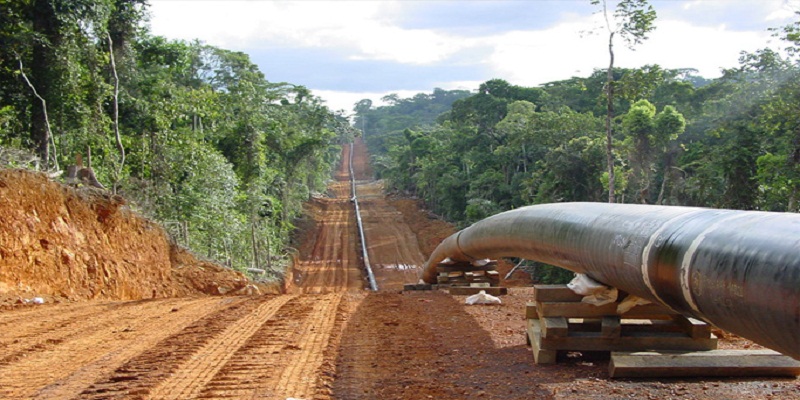
Ugandans lost US$400m in the Panama Papers

Uganda lost US$400m to lobbyists during the negotiations involving oil companies and the government.

According to the Panama Papers that on Monday unearthed dubious offshore financial dealings, a company EagleOnline can’t disclose as yet because of legal implications, wanted to sell a prospective oil field in Bunyoro Kingdom reportedly paid Mossack Fonseca to help it avoid $400m in taxes in Uganda.

That’s more than the Uganda’s annual health budget and the law firm apparently did this by simply changing the company’s tax haven.

The International Consortium of Investigative Journalism has already detailed the offshore holdings of a dozen current and former world leaders, as well as businessmen, criminals, celebrities and sports stars.

But the Washington-based outlet has also released a video that shows the ‘victims of the Panama Papers’.

The documents revealed how law firm Mossack Fonseca helped clients to save money using off-shore tax havens (none of it was illegal).


Stories Continues after ad

Dubious Fufa bosses, Dhaira family fight over shs12 million burial fees

Ugandans on Monday held a memorial service for national team goalkeeper Abel Dhaira, who died from cancer last month, aged 28.

Despondently his family and the local football body officials fought over money State House had put up to assist in returning the body from Iceland, where he played for IBV Vestmannaeyjar, for burial.

A source close to the bereaved family said as the late Dhaira was getting the worthy praise, his cousin Mayembe Faisal and officials from Fufa were squaring over who should be responsible for over $8000 meant to transport the body from Kampala to Jinja at the late Dhaira’s home just a mere 86kms west.

The burial organising team is made of Fufa senior Vice President Justus Mugisha, Rugyendo Arinaitwe (Chairman FUFA Super League Limited Board), Norah Nassimbwa (State House), Katende Ssemakula (National Council of sports), Mayemba Faisal (Abel Dhaira’s family Member).

Their initial $54000 budget was rejected by State House as exaggerated and instead, President Museveni gave them shs30m off which shs12m was given directly to Fufa to handle funeral arrangements back home.

However, drama started when Dhaira’s father, Bright Dhaira wanted to handle the funeral and burial activities of his beloved son himself but Fufa resisted. On the day of picking the money from State House, both Dhaira’s family and Fufa officials reached Entebbe at the same time and immediately started arguing before President Museveni’s staff on especially whether the shs12m that Fufa had received from government earlier on to be paid to the funeral home that was to receive the body at Entebbe International airport.

“Fufa was claiming they already paid A-Plus funeral home Shs12m yet Mr. Dhaira wanted his preferred Uganda Kampala Funeral Services to do thejob. I actually asked those Fufa people if they found it fine to start fighting with the boy’s father over who should bury him and how,” the source revealed to EagleOnline.

As the ping-pong continued, Dhaira’s father cut off communication with Fufa saying he doesn’t want them to run the burial of his son.

“He was unhappy because when his son was in Nsambya Hospital last year, no one from Fufa ever went to check on him or even make a phone call save for former Cranes captain Andy Mwesigwa who has looked out for Dhaira since he was still finding his mark at Express FC. Dhaira Snr. thought they were only pretending to care,” the source added.

However, it has also been exposed that Iceland authorities had notified panicky Uganda officials that they were not releasing the body if there was no person, let alone a funeral home registered as having accepted to receive it in Uganda.

To solve that glitch as the disagreement over money went on, Internal Affairs spokesperson Pamela Ankunda, who was helping the family secure the money from State House was selected as the recipient of the body, with Kampala Funeral Services as the local funeral home.

Probably to avoid shame, Fufa at last relented and released the Shs12M that they had pocketed to the grieving father and allowed him to use a funeral home of his choice. They also added him Shs5M as the federation’s contribution toward the burial arrangements.


Family, politicians praise Dhaira

The fallen goalkeeper’s sister Olivia Dhaira narrated to a sombre congregation at All Saints Cathedral in Nakasero about how her brother lived his last moments:  “He was in so much pain and prayed to God: ‘let me rest.’ moments later, he died.”

“Abel was a strong man but due to too much pain, he reached a point and preferred to rest. When they proposed to cremate Dhaira, we were sad,” she added. “We wanted to bury our brother and not ashes. Thanks go out to all Ugandans for the love and support you have showed us during this trying period.

“Before you start talking to them ask yourself, is it a message of praise, is it a message of compassion? If not please just keep quiet,” sad Rev. John Musana Lakor who preached about love, exemplary and pure living in society.

Minister of state for Sports Hon. Charles Bakabulindi represented the Government and appreciated the generosity of President Yoweri Kaguta Museveni towards all the assistance to transport the body of Dhaira from Iceland where he died back to Uganda for a decent burial.

“Abel Dhaira lived a strong legacy worthy to be emulated. We also thank President Museveni for the assistance rendered” Bakabulindi said.

“Dhaira all I can say is, gone too soon. God’s judgment is final and no one can avoid it.” To Uganda Cranes, in honour of our fallen brother Dhaira, can we make him proud by qualifying for the AFCON 2017?” Kampala Lord Mayor Erias Lukwago said.

The mass was also attended by Uganda Cranes head coach, Milutin Sredojevic, Uganda Cranes player Tonny Mawejje and a number of Eric Dhaira’s (young brother to Abel Dhaira) friends at Soana F.C.

From All Saints Church, Abel’s body was taken to Nakivubo Stadium, home to Ugandan football, for public viewing. Hundreds braved the rain to take a last look at their fallen star.

It then headed to Jinja, where it, again, was taken for public viewing at Jinja Senior Secondary School, his alma mater for viewing by his high school colleagues and current students.

Dhaira’s family also offered land, in Walukuba, Jinja district to anyone who would wish to set up a cancer institute in honor of his name.

Dhaira will be laid to rest on Wednesday in Mayuge district in Eastern Uganda.

He made his debut for the national team in 2009 and helped the Cranes win the regional Council for East and Central African Football Associations (Cecafa) Senior Challenge Cup in 2012 on home soil.

As well as playing in Iceland his club career included stints with Uganda sides Express and URA before moving to play DR Congo’s AS Vita and later Tanzania’s Simba.


Stories Continues after ad

Sons, daughters and business associates to African presidents’ top Panama leaks

Ahmad Ali al-Mirghani, former Sudanese president.

A HUGE leak of confidential documents has revealed how the rich and powerful use tax havens to hide their wealth. Eleven million documents were leaked from one of the world’s most secretive companies, Panamanian law firm Mossack Fonseca, and were passed to German newspaper Suddeutsche Zeitung, which then shared them with the International Consortium of Investigative Journalists (ICIJ).

They amount to approximately 3 terabytes of data, including corporate records, emails and more. It is about 100 times larger than the 1.7 GB of data dumped in 2010 by Wikileaks.

In amongst these records were global figures such as footballer Lionel Messi, actor Jackie Chan and those named reached the highest political tiers such as Russian president Vladamir Putin and British politicians Lord Ashcroft, Baroness Pamela Sharples and former Tory MP Michael Mates.

In their research on the panama leaks’ “Power Players”, the ICIJ focused in and explored the stories behind the use of offshore companies of politicians and their relatives and associates specifically. These totalled more than 100 in all and for each of them the consortium indicated that they had contacted them for comment.

Here are the stories of current or former senior African officials, relatives of presidents and VIPs, or business people featured on this list, but bear in mind that there are legitimate uses for offshore companies, foundations and trusts. This is not to suggest or imply that any persons, companies or other entities listed here have broken the law or otherwise acted improperly:

Ahmad Ali al-Mirghani, former Sudanese president

Al-Mirghani died in November 2008. He was the democratically-elected president of Sudan from May 1986 until he was overthrown by a coup in June 1989.

Inside the Mossack Fonseca data: Offshore company owned a London apartment

Al-Mirghani was the owner of the British Virgin Islands Company Orange Star Corporation, created in 1995. That same year, Orange Star Corporation purchased a long lease of an apartment in an expensive area of London north of Hyde Park for more than $600,000. At the time of Al-Mirghani’s death, he held assets through the company worth $2.72 million.

Alaa Mubarak

Alaa Mubarak, son of former Egyptian president

Alaa Mubarak is a wealthy Egyptian businessman and the eldest son of ousted former Egyptian President Hosni Mubarak.

Inside the Mossack Fonseca data: Offshore company triggered investigations by financial authorities.

Alaa Mubarak owned the British Virgin Islands firm Pan World Investments Inc., managed by Credit Suisse. In 2011, the year in which his father resigned the Egyptian presidency and was arrested along with Alaa and another son, BVI authorities told Mossack Fonseca to freeze Pan World’s assets, an order prompted by a European Union law.

In 2013, Mossack Fonseca was fined $37,500 for failing to properly check into Alaa Mubarak, “a high risk customer.” Credit Suisse, however, wrote Mossack Fonseca that Pan World’s activities – “one investment with HIG Venture Fund” and a cash account with the bank – did not contravene Switzerland’s freeze on Mubarak’s assets. In 2014, a second BVI agency started investigating Mossack Fonseca and Pan World. Company employees admitted internally that they could be found “in further breaches.” Noting they had “very little control” over Mubarak’s company, they resigned as its agent in April 2015.

Mounir Majidi

Mounir Majidi, personal secretary to the King of Morocco

Majidi is the head of SIGER, the holding company of Morocco’s royal family with stakes in mining, agricultural and telecommunications businesses.

Inside the Mossack Fonseca data:  British Virgin Islands company was used to purchase luxury 1930s schooner used by Morocco’s king.

In March 2006, Mounir Majidi received power of attorney privileges for SMCD Limited, which was incorporated in the British Virgin Islands in 2005. In January 2006, SMCD Limited authorized the purchase of a luxury 1930s schooner “Aquarius W” and put Majidi in charge of handling the transaction.

After the purchase, the vessel was registered in Morocco. Renamed “El Boughaz I,” the schooner is now owned by King Mohammed VI. SMCD Limited was also used to make a loan for an unknown purpose to a Luxembourg-based company, Logimed Investments Co., Sàrl. SMCD Limited was liquidated in 2013. Majidi was also administrator of a Luxembourg company called Immobiliere Orion S.A., which borrowed $42 million in 2003 from a Mossack Fonseca-incorporated company to buy and renovate a luxury Paris apartment. It is unclear who owned the company that lent the money.

A lawyer for Majidi said: “The two companies to which you refer were created in strict accordance with laws in place and their existence is available from public registers.”

John Addo Kufuor

John Addo Kufuor, son of Ghana’s former president

John Addo Kufuor is the eldest son of John Agyekum Kufuor, who led the country from 2001 to 2009.

Inside the Mossack Fonseca data: His offshore company controlled a $75,000 bank account for Kufour and his mother.

In early 2001, shortly after the start of his father’s first presidential term, Kufuor appointed Mossack Fonseca to manage The Excel 2000 Trust. Later that year, it controlled a bank account in Panama worth $75,000. His mother – Theresa Kufuor, then-Ghana’s First Lady – was also a beneficiary. In November 2010, an employee in Mossack Fonseca’s compliance office in the British Virgin Islands suggested to colleagues that “due to the apparent prevalence of corruption surrounding Mr. Kufour we would not recommend us taking him on as a client or continuing business with him.” Mossack Fonseca, however, continued to do business with Kufuor. In 2012, Kufuor asked Mossack Fonseca to close the trust.

Jean-Claude N’Da Ametchi

Jean-Claude N’Da Ametchi, associate of former Ivory Coast president

Jean-Claude N’Da Ametchi is a banking executive from the Ivory Coast. In April 2011, the European Union sanctioned N’Da Ametchi for allegedly helping to fund the “illegitimate administration” of former president Laurent Gbagbo. Gbagbo oversaw a civil conflict in which 3,000 people were killed when he refused to accept his defeat in the 2010 presidential elections.

Inside the Mossack Fonseca data: An offshore firm held assets for N’Da Ametchi and a bank account in Monaco.

Cadley House Ltd. was registered in the Seychelles in 2006. Although the company was at first held through so-called bearer shares, which do not list an offshore company’s owner, emails confirm that the firm belonged to N’Da Ametchi. The company’s purpose was described as “management of personal assets…[and] ownership of a bank account in the Principality of Monaco.” In one 2011 email from N’Da Ametchi to Mossack Fonseca’s Geneva office, the business executive discussed selling assets and the transfer of nearly $5,000. Although N’Da Ametchi’s financial managers told Mossack Fonseca in 2014 that “the beneficial owner of the company does not wish to maintain his company and wish to terminate it,” the company was still active in 2015. There is no indication from emails whether Mossack Fonseca was aware of the European sanctions.


Clive Khulubuse ZumaClive Khulubuse Zuma, nephew of South African president

Clive Khulubuse Zuma is a nephew of South Africa’s president Jacob Zuma. A mining magnate, Khulubuse Zuma reportedly has a lavish lifestyle. In June 2015, a South African court found Zuma liable as chairman in the collapse of a gold mining company that led to more than 5,000 job losses.

Inside the Mossack Fonseca data: Offshore firm was accused of questionable oil field deals.

Zuma was authorised to represent Caprikat Limited, one of two offshore companies that controversially acquired oil fields in the Democratic Republic of Congo. In late summer 2010, as published reports raised questions about the acquisition, British Virgin Islands authorities ordered Mossack Fonseca to provide background information on Zuma, which the law firm had not previously obtained. That same year, Mossack Fonseca decided to end its relationship with the companies. Zuma and representatives of the companies have rejected allegations of wrongdoing and claimed the oil deals are “quite attractive” to the DRC government.

Mamadie Touré

Mamadie Touré, widow of former president of Guinea

Mamadie Touré is the widow of Lansana Conté, the former dictator and president of Guinea. U.S. authorities allege that Touré received $5.3 million in bribes to help a mining company obtain rights to the world’s richest iron ore deposit. In 2014, US authorities raided Touré’s Florida home, seizing properties, restaurant equipment and an ice cream cooler collectively worth more than $1 million.

Inside the Mossack Fonseca data: Offshore company timing coincides with disputed award of a mining contract by her late husband.

Touré was granted the power of attorney to Matinda Partners and Co. Ltd, a British Virgin Islands company, in November 2006. That same year, she began a relationship with a mining company that US authorities alleged had paid her $5.3 million to help it win a disputed mining concession from her husband, then-President Lansana Conté, shortly before he died in late 2008. Investigators said Matinda was a conduit for much of the money paid to Touré. Touré, who is cooperating with US authorities as part of an ongoing probe, has admitted to receiving bribes in order to influence her husband. She used a stand-in shareholder, Beneficence Foundation, and a Swiss company as the foundation’s manager, which reduced public connections between Matinda and Touré. The company ceased to operate on 30 April 2010.


Jaynet Désirée Kabila Kyungu

Jaynet Désirée Kabila Kyungu, DR Congo Member of Parliament

Jaynet Désirée Kabila Kyungu is the twin sister of Joseph Kabila, the president of the Democratic Republic of the Congo. Famed for secrecy and meticulousness, she was elected to parliament in November 2011 and took office in February 2012. Kabila is the president of the Laurent Desire Kabila Foundation, named after her father, and owner of Digital Congo, a television, Internet and radio conglomerate. In 2015, Jeune Afrique reported that Kabila had become “the most influential person in the president’s entourage.”

Inside the Mossack Fonseca data: Offshore company has holding in Congo’s wireless communications business.

Keratsu Holding Limited was incorporated in Niue on June 19, 2001, a few months after Kabila’s brother became president of the Democratic Republic of the Congo. Jaynet Désirée Kabila Kyungu appeared as co-director with Congolese businessman Kalume Nyembwe Feruzi. The DRC Company Keratsu Holding Ltd has owned stakes in one of the DRC’s major mobile phone operators.

Abdeslam BouchouarebAbdeslam Bouchouareb


Abdeslam Bouchouareb, Algerian Minister of industry and mines

A former business executive, Bouchouareb entered politics in 1994. He served as minister of industry from 1996, minister of employment from 2000 and vice president of the National Assembly in 2012.

Inside the Mossack Fonseca data: Offshore company said to be used for business activities in Turkey, the United Kingdom and Algeria.

Abdeslam Bouchouareb has been the sole owner of the Panamanian company Royal Arrival Corp., which was created in April 2015, since July 2015 . Through this company, Bouchouareb held a Swiss bank account at NBAD Private Bank SA. He managed Royal Arrival Corp. via a Luxembourg company, Compagnie d’Etude et de Conseil (CEC). In emails sent to Mossack Fonseca, CEC said the activities of Royal Arrival Corp. were commercial representation and negotiation, commercial contracts, public works, railway and maritime transport, which took place in Turkey, the United Kingdom and in Algeria.

Response from his reps: A Luxembourg financial firm that set up the company for Bouchouareb, confirmed his ownership, noting that it “was constituted in all transparency.” It was set up to own and manage inherited property, the firm said. Because of Bouchouareb’s ministerial position, “We, with his agreement, decided to delay any use of the company, and the opening of the bank account at NBAD Geneva was never finalized…Mr. Bouchouareb asked us to freeze this company for the duration of his public mandates.”


josé maria botelho de vasconcelos1

José Maria Botelho de Vasconcelos, Angola’s minister of petroleum

Botelho de Vasconcelos first served as petroleum minister from 1999 to 2002 before becoming Minister for Energy and Water. He was re-appointed Minister of Petroleum in 2008 and was president of the Organisation of the Petroleum Exporting Countries (OPEC) in 2009.

Inside the Mossack Fonseca data: Offshore use goes back to his first time as minister of petroleum.

On 6 March 2002, when Jose Maria Botelho de Vasconcelos was minister of petroleum for the first time, he was named one of two individuals who had power of attorney for Medea Investments Limited, a company that put its own value at $1 million. The company was incorporated on September 13, 2001 in Niue and moved to Samoa in 2006. It was inactivated on Feb. 16, 2009. In both Niue and Samoa, the company was held by “bearer” shares, which belong to the individual who physically holds them, making it easier to obscure ownership. Medea Investments Limited (Samoa) was one of two companies to hold shares in the New York Company Blue Nile Consulting LLC in October 2007.


Kalpana Rawal,

Kalpana Rawal, Kenya’s Deputy Chief Justice

Kalpana Rawal, who became Kenya’s Deputy Chief Justice in June 2013, has been fighting an attempt by the Judicial Services Commission to force her to retire from Kenya’s Supreme Court since her 70th birthday in January 2016. She filed suit in September, arguing she was appointed under a previous constitution that let judges work until they turn 74. In December, a five-judge panel ruled against her, but she has appealed. She has noted that the issue is bigger than just her case and could effect the retirement and pension rights who were appointed under the previous constitution.

Inside the Mossack Fonseca data: Used offshore companies to buy and sell London real estate

Rawal and her husband were directors of two companies based in the British Virgin Islands, prior to her joining the nation’s Supreme Court. The family used other offshore companies to buy and sell real estate in London and nearby Surrey.

Her response to this is that she has not been involved with the family businesses except for generally knowing they were involved in real estate. She was listed as director on two of them without her knowledge by her husband when he was told two directors were required, she said.


Ian Stuart Kirby, senior judge in Botswana


Kirby has served as president of the Court of Appeal in Botswana since 2010. A former private attorney and tax specialist, Kirby was Botswana’s deputy attorney general from 1990 to 2000 and served as a High Court judge from 2000 until late 2003, when he ascended to the post of attorney general. He eventually returned to the High Court bench in 2006.

Inside the Mossack Fonseca data: One of many shareholders in offshore companies, some of which owned UK real estate

Kirby first appeared in documents sent to Mossack Fonseca as a shareholder of Bellbrook Estates Limited in May 2005, while Kirby was attorney general of Botswana. Bellbrook Estates Limited carried out unspecified activities in the United Kingdom, according to a 2014 list by Mossack Fonseca of active companies for which it served as registered agent. Although specific details of the offshore companies in which Kirby held shares are not available, at least three of those BVI firms held properties, including commercial real estate, in the United Kingdom.

In response Kirby said that the companies were special purpose vehicles formed by a joint venture to acquire, develop and resell a particular property in the UK, as an investment.


Bruno Jean-Richard

Bruno Jean-Richard Itoua, Head of national oil company

Bruno Jean-Richard Itoua rose to power in the Republic of Congo through his family’s close association with President Denis Sassou-Nguesso, first serving as the president’s hydrocarbons adviser, then becoming head of the national oil company (SNPC) in 1998. Itoua was implicated in a massive diversion of company funds that came to light in 2003. A lawsuit two years later by one of Congo’s creditors accused Itoua and the SNPC of conspiring to “divert oil revenues … into the pockets of powerful Congolese public officials.” After a US federal appeals court ruled in 2007 that American courts did not have jurisdiction over the suit against the SNPC because it was a government agency, the creditor did not pursue its case against Itoua.

Inside the Mossack Fonseca data: Held offshore companies when in charge of energy and the national oil company.

Bruno Jean-Richard Itoua had power of attorney to represent two offshore companies in 2004, while he was energy adviser to the President of the Republic of Congo and CEO of SNPC, the Congolese national oil company. The companies, Denvest Capital Strategies Inc., based in the British Virgin Islands, and Grafin Associated SA, based in Panama, had previously issued unregistered shares which belong to the person who physically holds them. The companies became inactive in 2006 and 2007 respectively, according to Mossack Fonseca’s records.


James Ibori, Former Governor of Delta State

James Ibori, governor of Nigeria’s oil-rich Delta State from 1999 to 2007, pleaded guilty in a London court in 2012 to conspiracy to defraud and money laundering offences. Ibori admitted using his position as governor to corruptly obtain and divert up to $75 million out of Nigeria through a network of offshore companies, although authorities alleged that the total amount he embezzled may have exceeded $250 million. Ibori received a 13-year prison sentence.

Inside the Mossack Fonseca data: Offshore company figured in fraud and money laundering investigation.

Mossack Fonseca was the registered agent of four offshore companies connected to James Ibori, including Julex Foundation, of which Ibori and family members were beneficiaries. Julex was the shareholder of Stanhope Investments, a company incorporated in Niue in 2003. Ibori was also connected to Financial Advisory Group Ltd. and Hunglevest Corporation, although Mossack Fonseca’s files do not specify the exact nature of his connection. In 2008, Mossack Fonseca received a request from the Seychelles government to produce documents as part of a probe by the Crown Prosecution Service, England’s principal prosecuting authority, of Ibori and alleged criminal activities.

Emmanuel Ndahiro, Rwanda’s former Chief of Intelligence


Emmanuel Ndahiro, Rwanda’s former Chief of Intelligence

Emmanuel Ndahiro served as President Paul Kagame’s physician, security adviser and spokesman. He also served as military spokesman when Kagame was minister of defence from 1994-2000. Ndahiro led Rwanda’s National Intelligence and Security Services from 2004-2011. In 2015, he was promoted to brigadier general.

Inside the Mossack Fonseca data: Director in offshore company owned by an army colleague.

Emmanuel Ndahiro became a director of British Virgin Islands Company Debden Investments Limited in September 1998.


Attan Shansonga, Former Zambian ambassador to the US

Attan Shansonga, Former Zambian ambassador to the US

Attan Shansonga, ambassador of Zambia to the United States between 2000 and 2002, was arrested in the Zambian capital of Lusaka in 2002 amid an investigation into the diversion of millions of dollars out of Zambia when President Frederik Chiluba’s was in office.

Shansonga fled Zambia in 2004 and, two years later, was accused by the Zambian government of receiving “misappropriated monies” and using offshore accounts to launder the loot. In 2007, an English civil court held that Shansonga served as a conduit for $1.3 million to President Chiluba’s spy chief. Following the ruling, Zambia reportedly recovered “significant sums of money from him.” Attempts by the Zambian government to extradite Shansonga have failed.

Inside the Mossack Fonseca data: One offshore company was accused of looting the Zambian state.

In 1998, Shansonga became a director of Starflight Ventures Limited, Stacey Investment Holdings Ltd and Debden Investments Limited. The activities of these companies were not revealed. In 2005, Mossack Fonseca received court documents because it was the agent for Hearnville Estates Ltd., a British Virgin Islands-based company named as one of 20 defendants, including Shansonga himself, in a corruption case that the Zambian government pursued in an English court. The company, incorporated in 1998, was allegedly used to purchase apartments in Lusaka with money looted from the Zambian state.


Kojo Annan

Kojo Annan, son of former United Nations secretary general

The Swiss company Cotecna hired Kojo Annan in 1995 for work in Nigeria. By early 1998, he had quit to become a consultant to Cotecna. Months later, the United Nations awarded the firm a contract as part of Oil-for-Food humanitarian programme in Iraq, prompting allegations of impropriety. An independent panel investigated the program, including Kojo Annan, and issued a report in 2005 that found no evidence that he tried to influence or to use family connections to benefit from the program.

Inside the Mossack Fonseca data: Offshore used to buy $500,000 London apartment

Kojo Annan was sole director of the Samoan company Sapphire Holding Ltd, originally incorporated in Niue in 2003, which he had used to buy an apartment in central London. The apartment was purchased in a transaction completed in 2003 for more than $500,000, according to UK records.

A lawyer for Annan responded that his companies “operate in accordance with the laws and regulations of the relevant jurisdictions and, insofar tax liabilities arise, they pay taxes in the jurisdictions in which taxes are due to be paid. In other words, any entity and account held by Mr. Annan has been opened solely for normal, legal purposes of managing family and business matters and has been fully disclosed in accordance with applicable laws.” He also noted that an investigation found no evidence that Annan tried to influence anyone in the UN to award contracts to any company with which he was associated.


Mamadou Pouye, former Senegalese minister

Mamadou Pouye, former Senegalese minister

Mamadou Pouye is a childhood friend of Karim Wade, son of Senegal’s former President Abdoulaye Wade, and held several key ministries during his father’s presidency. Karim Wade and Pouye were arrested in April 2013 after investigations into a corruption scandal in which Wade and associates were charged with illegally amassing assets worth $240 million – Pouye was sentenced to five years in prison for complicity in illegal enrichment.

Inside the Mossack Fonseca data: Offshore companies received millions for consulting services related to the port in Senegal’s capital, Dakar.

Pouye first appeared in Mossack Fonseca’s files in October 2008, instructing the law firm to open a bank account for the Panama company Seabury Inc. Between December 2008 and August 2012, two companies connected to Pouye — the Panamanian Latvae Group, of which he was shareholder, and Seabury, in which his role was unspecified — signed contracts worth about $35 million for consulting and advisory services relating to the port in Senegal’s capital, Dakar. At the corruption trial against Pouye and Karim Wade, which has been criticised by the United Nations and human rights organisations for violating the rights of Wade, Pouye and others, authorities alleged that they enriched themselves through government contracts, involving the port, the airport and other activities.


Stories Continues after ad

Magufuli scraps Union Day celebrations

Mr Magufuli spent Independence Day picking up rubbish in Dar es Salaam

Tanzania’s President John Magufuli has cancelled celebrations to mark Union Day as part of his cost-cutting efforts.

“People should cerebrate this day at home or continue with their personal business”, said a statement by his office.

He said the money government had set aside for the celebrations should be spent on improving roads in Mwanza in north-western Tanzania.

Union Day is marked on 26 April to commemorate the formation of Tanzania in 1964 through the merger of Tanganyika and Zanzibar.

Last year, Mr Magufuli scrapped celebrations to mark 54 years of independence from the UK, and led a clean-up campaign instead.

Sammy Awami, BBC Africa, Dar es Salaam

Stories Continues after ad

Ceaserous working on new video release

Upcoming dancehall artist called Solomon Sentongo aka Ceaserous’ last video releases for his Into You and Fall In Love singles were eye catching but Nice&Good promises to be a more experimental affair: Studio whiz Jim Resley directed the new single which, according to a sources, features almost four minutes of extensive scenery.

“My last two videos were done in South Africa ‘falling in love’ and ‘Into you’ directed by Kyle White. This time I wanted to have a video done in back home in Uganda,” Ceaserous to EagleOnline. “Working with guys as good as Jim Resley really helped me find what I was looking for.”

23 year old Sentongo’s music is a blend of RnB, reggae and dancehall, having started out in 2008 as part of the duo Smash & Ceaserous.

Here is a taste of Ceaserous’ previous single Into You.

https://www.youtube.com/watch?v=hrVR_HUOnKQ

Stories Continues after ad