Stanbic Bank
Stanbic Bank
18.7 C
Kampala
Stanbic Bank
Stanbic Bank
Home Blog Page 2231

Zuma’s friends want to pay Nkandla bill

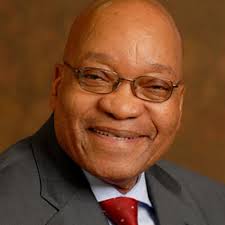
Embattled South Africa President Jacob Zuma

The Friends of Jacob Zuma Trust will help the president repay what he owes for his Nkandla upgrades if he approaches them, its founder has said.

“As an organisation we are virtually non-existent because we did what we had to do back then. But if he needs us individually, we will always support him, like we always did in the past,” businessman Don Mkhwanazi said.

He said Zuma had not approached the organisation for financial help, but would also not comment when asked if he would personally help Zuma out.

Recently, Zuma asked the Constitutional Court for an order that Auditor General Thembekile Kimi Makwetu and Finance Minister Pravin Gordhan determine how much he should repay for those upgrades to his private Nkandla homestead not related to security, namely the visitors’ centre, amphitheatre, cattle kraal, chicken run and swimming pool.

Mkhwanazi said Zuma’s decision should be applauded as he had done it in the country’s long-term interest.

“I believe he wants to put this matter to rest so that we can focus on more important things and so that people can stop sniping at him.”

The trust, comprising the country’s leading businessmen, helped pay Zuma’s legal bills during his fight against his corruption charges.

Zuma’s long-time friend and ally, Durban businessman Vivian Reddy, also said Zuma had not approached him for any financial help.

In 2012, Reddy that he had lent Zuma money to pay for the first phase of Nkandla and that he had repaid it, and added that Zuma took out a bond for the home.

Greytown businessman Philani Mavundla, who previously publicly said he would settle Zuma’s Nkandla bill, did not want to comment. But the construction tycoon said that Zuma’s backers had discussed his debt.

Neither Zuma’s son, Edward, nor nephew, Khulubuse, were immediately available for comment.

Trying to find out whether Zuma will be able to pay it out of his own pocket is more difficult than it seems.

As president, he is entitled to a level of privacy regarding any assets and interests he may want to dip into to settle the account.

To get a list of what he owns requires an application to the secretary of Cabinet, director general in the Presidency Cassius Lubisi.

In 2010 Zuma was forced to apologise for delays over submitting his register of interests and at the time his lawyer, Michael Hulley, said it was the size of his family that made it complicated, as well as anomalies in the Executive Ethics Code.

Although he is private about his family, it is known that Zuma has four wives and is believed to have 20 children.

He has stated that he has a bond on his home at Nkandla, KwaZulu-Natal, where he was born and brought up, but it is not known if it is paid off.

The son of a policeman and domestic worker, Zuma was not born with a silver spoon in his mouth.

And the trial in which he was acquitted of rape would have set him back millions were it not for the fund-raising efforts of the Friends of Jacob Zuma Trust.

When he became president in 2009 Zuma, whose salary is R2.7 million a year, became entitled to the use of an official house in Durban, Cape Town and Pretoria, with most costs paid for by the state.

 

Stories Continues after ad

EU slashes Somalia peacekeepers allowances

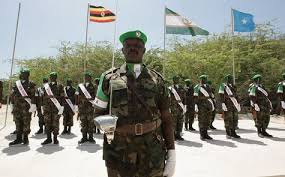
Members of the Uganda contingent in Somalia

The European Union has reduced the allowances for peacekeeping troops serving in Somalia under Amisom. According to the EU, each peacekeeper earns a ‘strict’ allowance of US$1028 but with the new changes the take home per month will come down to US$822.4.

The disclosure was made by the Chief of Defence Forces General Edward Katumba Wamala, who said the allowances of a peacekeeper had been slashed by 20 per cent, beginning January this year.

“I can tell you and I know you are going to turn it around, but from January (2016) the European Union started cutting down on the allowances (of the troops) by 20 per cent,” Gen Katumba Wamala, who was responding to a question over a reported seven-month salary delay for the Amisom troops, reportedly told The Observer.

According to Gen Katumba Wamala, the bureaucratic chain of disbursement also contributes to the delay in payments.

“The allowances are got from the African Union. African Union gets money from the European Union because African countries cannot raise the money to pay troops. So, the EU, which supports this mission, pays the AU and then the African Union pays the troop-contributing countries who pay the troops,” Gen Katumba said.

Uganda was the first country to deploy peacekeeping troops to war-ravaged Somalia in March 2007 and to date has the biggest contingent of over 5000.

Meanwhile, the Uganda Peoples Defence Forces celebrates 35 years of a transformational process that included its predecessor, the National Resistance Army (NRA), which was started as a rebel outfit in 1981. And tomorrow, February 6 marks the day the then rebels attacked Kabamba military barracks, where the hero of the day was General Elly Tumwine Tuhirirwe, who fired the first shot during the early morning raid on the military training installation.

As part of the celebrations, the UPDF has been carrying out a series of exercises among them cleaning of health units in different areas.


Stories Continues after ad

Controversial Buhweju RDC removed

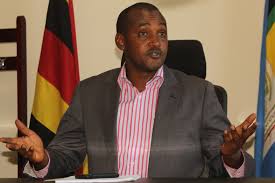
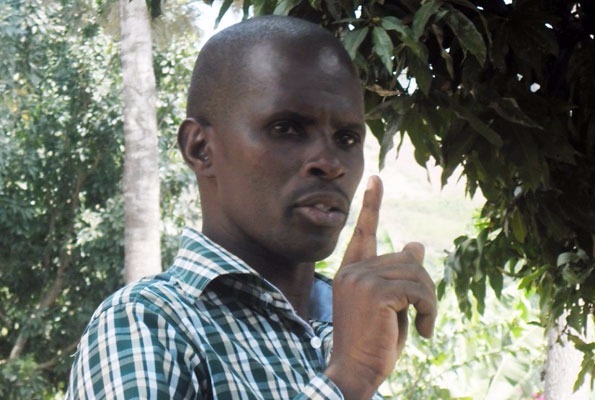
Moses Mwebesa, the controversial Buhweju Resident District Commissioner (RDC), who banned several Catholic church activities including night prayers, has been removed.

Embattled RDC Moses Mwebesa


In a statement released by the Minister for Presidency Frank Tumwebaze, he confirmed that Mwebaze had been removed and replaced by Mbarara Deputy RDC Emmy Kateera.

“We have removed the RDC of Buhweju to investigate the allegations,” Tumwebaze wrote.

He stressed that if the embattled RDC acted irregularly, he will be punished. “But if he is being framed because of local politics on the ground we shall also know.” He cautioned.

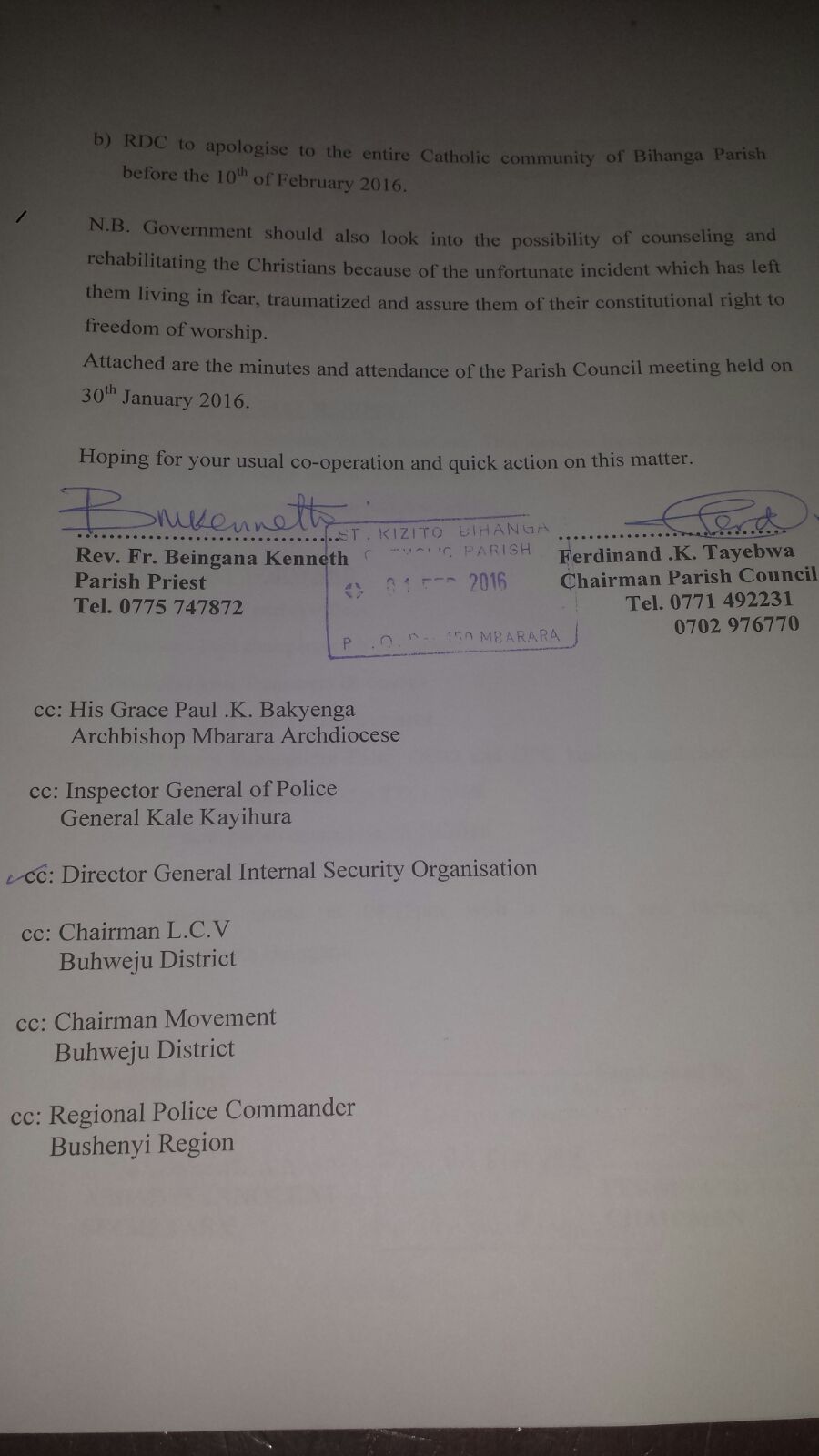
Last week, Christians from St. Kizito, Bihanga Catholic Parish in Buhweju, and clergy at Mbarara Archdiocese petitioned Tumwebaze to reprimand Mwebesa, whom they accused of invading their church during night prayers and disorganizing the congregation.

The petition letter
The petition letter
Stories Continues after ad

Uganda, Kenya form committee to rescue indebted Uchumi

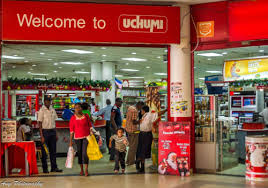
The Uganda and Kenya governments have formed a 10-man committee to sort out Uchumi supermarket, indebted to the tune of about Shs1 billion to Ugandan creditors.

Adressing the press at Uganda Media Centre in Kampala, the Minister of Trade and Industry Ms Amelia Kyambadde said government had intervened in the Uchumi saga because it was a source of employment for many Ugandans.

“Creditors wanted to attach Uchumi property. We agreed that we would engage with the Kenyan government to see a way forward,” she said.

She disclosed that on January 14, her ministry and 40 creditors held a meeting and agreed that the Uganda government engage that of Kenya to find a solution.

The committee will consist of five prominent members from both countries, with the Kenyan team led by Ambassador Tom Amolo, its Political and Diplomatic Secretary, while Ambassador Julius Onen, the Permanent Secretary of the trade ministry will lead the Ugandan team.

“The Inter-Government Committee will sit and review claims, make recommendations and also decide on the time frame for settlement of creditors,” Ms Kyambadde said.

She also urged the Uchumi management to withdraw the bankruptcy petition and urged creditors to withdraw the court cases against the superstore.

“If they file for bankruptcy, they will not be able to pay their creditors,” Ms Kyambadde said and called upon all those with complaints about Uchumi to contact her ministry or the Private Sector Foundation (PSF).

About 300 employees of the mega super store lost their jobs when it closed its operations countrywide in 2015. It had branches in Kampala, Gulu and Mbale among others.


Stories Continues after ad

Uganda procures armoured vehicles ahead of elections

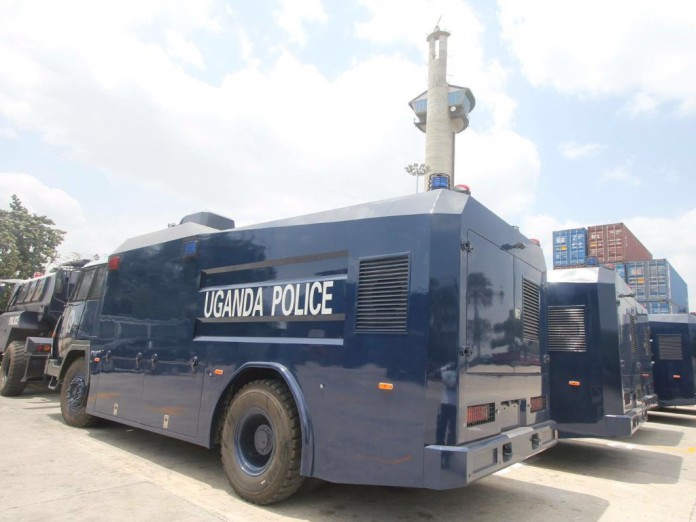
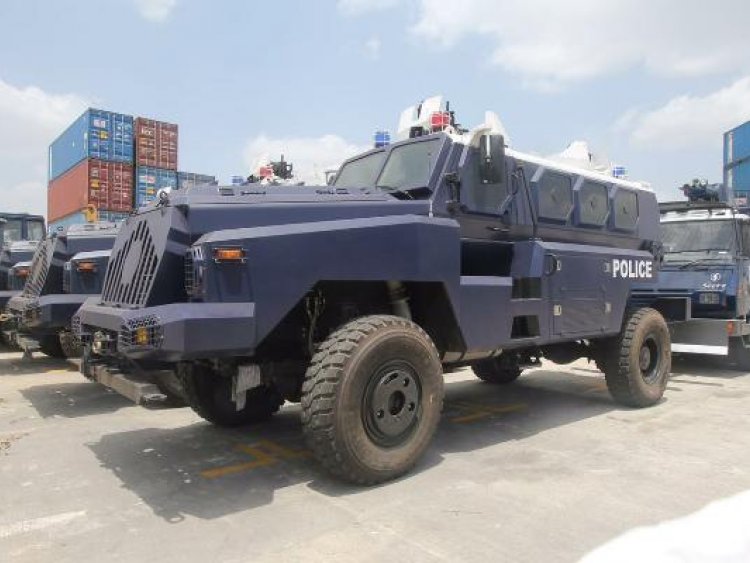
Uganda has procured armoured police cars, similar to those Kenya acquired at the end of January, ahead of its general election set for February 18.

The armoured vehicles, some of them embossed with the words ‘Uganda Police’ and that have features including water cannons, riot controls and wedged front plows were spotted at the G-section of the Port of Mombasa but Kenya Ports Authority (KPA) officials declined to comment on the ‘sensitive’ matter.

cars

Uganda Consular General Tayebwa Katureebe said he has not received any information concerning the embossed vehicles, but denied they are related to the elections.

“I am not aware about police cars at the Port, but if they are there they are not meant for elections,” Katureebe said.

He noted however, that Uganda has been part of the war against terror for a long time, including joining the fight against al Shabaab in Somalia in 2007.

Contacted on phone for comment on the matter police spokesperson Fred Enanga first denied, but when told some of the armoured vehicles were embossed with Uganda Police inscriptions, he said the media should wait for the day when the armoured vehicles are unveiled in Uganda.

“You are rushing us; do you know where they are or how many they are?” he asked before hanging up.

This year’s election pits incumbent President Yoweri Museveni, who is seeking to extend his 30-year rule, against longtime opposition leader Kizza Besigye and his ally-turned-rival, Amama Mbabazi.

Meanwhile, rights groups have accused the Uganda government of using state security to stifle criticism and intimidate Museveni’s rivals, charges the state denies.


Stories Continues after ad

Pan African insurance journalism awards on

Journalists from across Africa have until the February 29, 2016 to submit their entries for the inaugural pan-African reinsurance Journalism Awards.

Dr Femi Oyetunji, Group MD/CEO of Continental Reinsurance said the media needs to be recognized for its contribution to the growth of the insurance and re-insurance sectors.

“The insurance and reinsurance sector has a valuable role to play in Africa’s economic growth and development and we want to recognise the respected contribution of the media to the sector’s growth,” he said.

Continental Reinsurance Plc launched the pan-African Journalism Awards to develop re/insurance reporting in Africa and to encourage journalists to develop their knowledge on the sector and importantly to recognise the outstanding work of journalists from across Africa.

Each entrant must submit their published article together with their name, media organisation, the date the article was published, their brief profile and photo, together with a 250-word motivation for writing their editorial article.

“The awards are an extension of our continued commitment to the advancement of excellence in the industry,” says Oyetunji.

The four Award categories are Best re/insurance feature article; Best re/insurance news reporting; Best re/insurance industry analysis and commentary and Pan-African reinsurance journalist of the year award, to be awarded at a ceremony in the Seychelles in April 2016.

An international judging panel comprising industry experts and academics in journalism will judge the Continental Reinsurance Journalism Awards entries according to the quality of information and how it contributes to raising awareness of the insurance and reinsurance sector in Africa.


Stories Continues after ad

South Sudan defectors ‘rejoin national army’

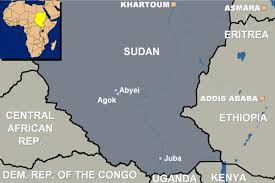
South Sudanese army soldiers who defected to join the Sudan People’s Liberation-North (SPLM-N) rebels last week in protest over the alleged failure to resolve the status of the disputed region of Abyei have returned to their places after the community intervened, authorities and military officers in the disputed area confirmed.

The army’s deputy chief of general staff for operations, Lt Gen James Ajonga Mawut said he had verbally been informed that the group returned.

“I have no official information about the decision regarding what you are talking about [military defection in Abyei area]. I just heard they have changed their minds, which is good for them and the people of Abyei”, he said yesterday.

The chief administrator of the disputed area, Chol Deng Alaak, said he was not aware of any rebellion in the area, declining to discuss military matters.

It emerged last week that a group of over 1,500 soldiers and officers announced they had switched allegiance from the South Sudanese military in protest at the way the leadership of South Sudan, under President Salva Kiir was handling the matter of Abyei, which remains a contested area between Sudan and South Sudan following the latter’s secession in 2011.

The region of Abyei was supposed to hold a referendum at the same time when South Sudan held its self-determination referendum, but differences over who was eligible to vote at the referendum contributed to the postponement of the vote, prompting members of the nine Ngok Dinka chiefdoms to unilaterally conduct in October 2013, a community referendum whose result was not accepted by Sudan and South Sudan.

Major Ayuel Kiir, one of the officers who defected, confirmed in a separate interview yesterday that he and his group were persuaded by community members to abandon rebellion and rejoin the army in the area.

“I am now speaking to you in Agok. We are all fine. No problem. That issue which you heard has been taken over by the community leadership and decided that the issue of Abyei will be pursued through peaceful means,” said Maj Kiir.

He added: “They said the issue of Abyei is no longer an issue between the two countries. It is now an international matter. So we accepted and returned home.”


Stories Continues after ad

UN accuses Rwanda of training Burundi rebels

President Paul Kagame

A confidential report to the United Nations Security Council accuses Rwanda of recruiting and training Burundian refugees with the goal of ousting Burundian President Pierre Nkurunziza.

The report by experts who monitor sanctions on Democratic Republic of Congo contained the strongest testimony yet that Rwanda is meddling in Burundi affairs and comes amid fears that worsening political violence could escalate into mass atrocities.

The report cites accounts from several rebel fighters, who told the sanctions monitors the training was done in a forest camp in Rwanda.

Nkurunziza’s re-election for a third term last year sparked the country’s crisis and raised concerns that there could be a bloody ethnic conflict in a region where memories of Rwanda’s 1994 genocide are still fresh.

The experts said in the report that they had spoken with 18 Burundian combatants in eastern Congo’s South Kivu province.

“They all told the group that they had been recruited in the Mahama Refugee Camp in eastern Rwanda in May and June 2015 and were given two months of military training by instructors, who included Rwandan military personnel,” according to the report.

The Burundian combatants, which included six children, told the UN experts they were trained in military tactics, use of assault rifles and machine guns, grenades, anti-personnel and anti-tank mines, mortars and rocket-propelled grenades.

They said there were at least four companies of 100 recruits each being trained in a forest camp while they were there.

“They were transported around Rwanda in the back of military trucks, often with Rwandan military escort,” the UN experts wrote. “They reported that their ultimate goal was to remove Burundian President Pierre Nkurunziza from power.”

Burundi and Rwanda have the same ethnic mix, about 85 percent Hutus and 15 percent Tutsis. A 12-year civil war in Burundi, which ended in 2005, pitted a Tutsi-led army against Hutu rebel groups.

Rwandan UN Ambassador Eugene Gasana dismissed the accusations against Kigali contained in the report: “This further undermines the credibility of the Group of Experts, which seems to have extended its own mandate, but apparently investigating Burundi.”

The UN report did not say why the Burundian fighters had crossed into Congo but Russia’s Deputy UN Ambassador Petr Iliichev said last month that there had been reports of Burundian rebels trying to recruit more fighters in Congo.

“The Burundian combatants showed the group fake DRC identification cards that had been produced for them in Rwanda, so they could avoid suspicion while in the DRC,” the report said.

Burundi accused Rwanda in December of supporting a rebel group that was recruiting Burundian refugees on Rwandan soil, but Rwandan President Paul Kagame dismissed the allegations as ‘childish’.

The accusations by Burundi were prompted by the charity Refugees International, which said in a December report it was ‘deeply concerned’ by claims of Burundian refugees in Rwanda that they were being recruited by ‘non-state armed groups’.

The UN Security Council traveled to Burundi in late January, its second visit to the country in less than 10 months and the UN has estimated the death toll in Burundi at 439 people but has said it could be higher. More than 240,000 people have fled abroad and the country’s economy is in crisis.

US Ambassador to the United Nations Samantha Power said during the visit to Burundi that the 15-member council had expressed concern about the allegations of external interference.


Stories Continues after ad

World commemorates 10th World Cancer Day

Today, February 4, 2016, the world commemorates the 10th anniversary of the annual global cancer awareness campaign, with more than 590 public activities planned worldwide.

To be commemorated under the theme ‘we can. You can’, this year’s campaign is to prove that every single person can make a difference in the fight against cancer.

The theme depicts measures to be taken to counter cancer including: stop myths that lead to stigma against cancer patients; encourage schools to educate children on how to prevent cancer and to demand governments to increase the funding for cancer treatment facilities.

In Uganda, the common cases of cancer are cervical cancer for women with the risk being on females aged from 15 years and an average of 3,915 cases is registered annually.

Prostate cancer is highly pronounced among Ugandan men.

World Cancer Day is part of the global campaign adopted following the world summit against cancer for the new millennium. The summit took place on February 2000 and subsequently, the first ever World Cancer Day was on February 4, 2006.


Stories Continues after ad

Ordinary Passport stock runs low

The Directorate of Citizenship and Immigration Control has issued a public alert showing a reduction in the number of ordinary passports.

In a statement signed by the Commissioner Citizenship and Passport Control Nicholas Ongodia, this crisis which will go on until mid February 2016 has been brought about by the overwhelming number of applications that the Directorate received in the last three months, a number that gradually shot from the average of 300 daily applicants to 700, more than double of the planned figure.

The anomaly has been linked to the long queues lately seen at the passport office, but according to Ongodia, the matter will be solved by mid February.

“Emergency issues will be given priority in the meantime,” the statement indicates.


Stories Continues after ad