Stanbic Bank
Stanbic Bank
20.3 C
Kampala
Stanbic Bank
Stanbic Bank
Home Blog Page 2232

How plan to arrest Gen Sejusa was hatched

It is not an easy task to arrest a General and that is why so many behind-the-scenes plans took place before the eventual arrest of the former Coordinator of Intelligence Services General David Sejusa on Sunday, January 31.
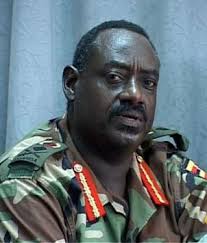
SEJU 1

According to sources, speaking on condition of anonymity, the plan to arrest General David Sejusa started four months ago when President Yoweri Museveni called top army officers to discuss how to handle the controversial General, who returned from exile in London, only to involve himself in politics, something that is against the Army/UPDF Code of Conduct.

According to sources, Mr Museveni met Generals – Salim Saleh, Moses Ali, Katumba Wamala and Elly Tumwine in November and decided to postpone the arrest that was looming because Gen Sejusa had addressed Dr Kizza Besigye’s first campaign rally in Nakivubo after the latter was nominated on November 5, last year.

The postponement came after General Saleh reportedly told the meeting that the intelligence and security agencies should ‘first study and understand the strength of Sejusa before he is arrested’.

The same meeting was also supposed to agree on who would effect the arrest, and sources say President Museveni had first told Gen Tumwine to lead the arresting team but that Tumwine told the meeting he was not comfortable with the assignment.

However, sources said President Museveni insisted that Gen Sejusa cannot be left to continue participating in political activities yet he is still a serving officer; the President reportedly told the meeting that Gen Sejusa was setting a bad precedent by continuing to make political utterances in public.

Indeed, sources say it was after that that arrangements to arrest Gen Sejusa intensified, and the UPDF reportedly renovated and put in place all facilities befitting a four-star General in a room in Makindye Military Barracks, to pave the way for the eventual arrest.

However, according to the sources, as all the above was being done Gen Sejusa reportedly got to know about his impending arrest through his contacts but remained defiant.

It is also during the same period that, sources say, several attempts were made by Gen Tumwine and Gen Saleh to reach out to Gen Sejusa, and ask him why he had continued to be defiant.

Gen Sejusa, who applied to retire from the army but his application was turned down, reportedly told them that he would not keep quiet if the army does not let him go.

Sources say what infuriated Gen Sejusa was President Museveni telling him that he had approved his application to retire and it was waiting for the Chief of Defence Forces (CDF) Gen Katumba Wamala to sign the retirement certificate.

And, after waiting for months and there was no response from Gen Katumba, Gen Sejusa reportedly decided to resume ‘verbal attacks’ on government and President Museveni.

Sources say that in the ensuing period the assignment to arrest Gen Sejusa was given to the Deputy CDF Lt Gen Charles Angina, an officer of a lesser rank, to execute the order.

Lately, Gen Angina is reportedly very close to the Commander of the Special Forces Command (SFC), the sources say.

In a related development, sources say that in December last year, the Chieftaincy of Military Intelligence (CMI) and Police compiled a report, which indicated that Gen Sejusa and Dr Besigye were mobilizing militia groups to disrupt the February 18 elections.

Then again in January, during a UPDF High Command meeting in Entebbe, soldiers reportedly asked President Museveni why Gen Sejusa had been left to continue making political statements.  In response Museveni reportedly said the ‘issue of Sejusa’ should be left to him to handle.

Consequently, throughout December and January, sources said a team of spies was given the necessary resources to carry out 24-hour surveillance on the General.

Then on Sunday, January 31, the army swung into action, raided the General’s Naguru home and took him to Makindye military barracks, where he is currently being held after appearing in the Military Court Martial on Tuesday, February 2.

The Generals at the ‘operation arrest Sejusa’ meeting

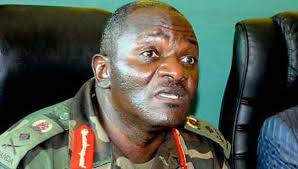
Gen Edward Katumba Wamala
 

KATUMBA

Gen Edward Katumba is the current Chief of Defence Forces (CDF), appointed to the post in 2013 to succeed the late General Aronda Nyakairima. Gen Wamala has served in the military for close to forty years, and has risen through the ranks to become a four-star General.

In 1979, during the post- Idi Amin era, Gen Wamala attended the cadet officers’ course at Monduli Training institution in Tanzania. The other officers who attended the same course were Gen Elly Tumwine, Gen Jeje Odongo, the late NRA army commander Sam Magara, former deputy army commander Maj Gen Joram Mugume, Maj Gen Pecos Kuteesa, Brig Julius Chihandae, the late Brig Peter Kerim, Brig Stephen Kashaka and the late NRA director of Finance Frank Guma.

It is also said that it was then Lt Katumba, serving in the Uganda Naltional Liberation Army (UNLA) during the Obote II government, who aided the escape of then Platoon Commander, 2nd Lieutenant Salim Saleh to Luweero to join the then rebel movement, the Peoples Resistance Army (PRA) under Yoweri Museveni.

Therefore, by the time Katumba joined the NRA in 1986, he was already an insider; he had carried out a number of covert operations for the NRA, destabilising the UNLA from within.

In 1986, Katumba was appointed an Aide de Camp (ADC) serving three Army Commanders: Gen Elly Tumwine, Gen Salim Saleh and Maj Gen Mugisha Muntu, in succession. General Elly Tumwine
TUMWINE

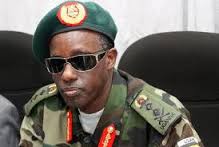
In 1978 General Elly Tumwine Tuhirirwe left his teaching career to join the Front for National Salvation (FRONASA) forces led by Yoweri Museveni  to fight the Idi Amin regime. He trained as a Cadet Officer in Monduli in Tanzania and was commissioned 2nd Lieutenant on return to Uganda.

Then, following the 1980 elections that were allegedly rigged by Obote, Tumwine was to join the then rebels under the command of Museveni, and history has it that he fired the first-ever bullet on February 6, 1981 that announced the start of the PRA/NRA five-year struggle that culminated in the defeat of the Obote II regime on July 27, 1985 and subsequent ouster of General Tito Okello’s military regime on January 26, 1986.

Ealier, just like many of his colleagues, during the fighting between the NRA and the UNLA, Tumwine sustained facial injuries that led to loss of sight in one eye.

He was named 1984, Commander of the National Resistance Army (NRA), a post he held until 1987, when he was succeeded by General Salim Saleh.

General Tumwine enjoys close friendship with General David Sejusa and they both in early 1990s, installed the late Prince John Barigye as the Omugabe of Ankole  Kingdom, in defiance of a position taken by government on the issue of Obugabeship. Indeed, the function at Nkokonjeru was ordered to come to a halt on the orders of President Museveni but the ‘installation of the Omugabe’ brought the two officers in the limelight for defiance against their boss.

An officer known for his strictness against corruption, Gen Tumwine has served the army in various capacities including Chairman of the General Court Martial.

General Moses Ali
GEN ALI

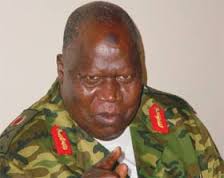
General Moses Ali is the 3rd Deputy Prime Minister and Deputy Leader of government business in Parliament.

He has held several senior governmental positions, including Minister of Finance in the government of Iddi Amin. In the 1980s he led the Uganda National Rescue Front (UNRF) in an armed rebellion against the government of Milton Obote. In 2012 Gen Ali was promoted from Lieutenant General to become a four-star general, joining the exclusive club of Museveni, Salim Saleh, Aronda Nyakairma (RIP) Elly Tumwine, Abubaker Jeje Odong and General David Sejusa. Before that, in 2001, he had reportedly complained about not being promoted, after he had served as Brigadier for about 20 years.

He served in the Ugandan Parliament and he says is aged 77.

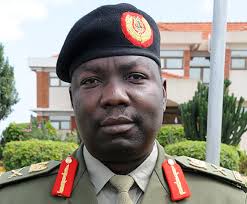
Lieutenant General Charles Angina
ANGINA

Lieutenant General Charles Angina is the Deputy Chief of Defence Forces, the second highest post in the Uganda Peoples Defence Forces (UPDF). He was named D/CDF in 2013 succeeding Lt Gen Ivan Koreta and promoted to the rank of Lieutenant General.

Earlier, Angina had served in the Uganda National Liberation Army (UNLA), attending a training course in Monduli in Tanzania and on return to Uganda was commissioned in 1983, rising to the rank of Lieutenant in 1985.

Following the 1986 ouster of the Milton Obote II regime, Angina reportedly surrendered to the victorious National Resistance Army (NRA), and was then ‘incorporated’ in the army, serving as an Intelligence Officer.

Since then he has served in various capacities in the army, in command, administration and diplomacy. Lt Gen Angina (54) is also one of the 10 UPDF representatives in Parliament, and at one time served as the Chairman of the General Military Court Martial.

Recently, Lt Gen Angina, a three-star General led the team that arrested renegade four-star General David Sejusa, an officer one rank above him.



Stories Continues after ad

Zim court strikes criminal defamation laws

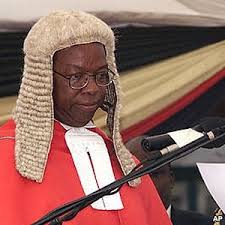
Zimbabwe Chief Justice Godfrey Chidyausiku

The Zimbabwe’s Supreme Constitutional Court has ruled that the country’s criminal defamation laws are unconstitutional.

The court’s panel of nine judges, led by Chief Justice Godfrey Chidyausiku, ruled that all laws assigning criminal penalties to defamation contradict guarantees of press freedom enshrined in Zimbabwe’s constitution.

Media advocacy group, the Committee to Protect Journalists (CPJ) said the ruling ‘is a welcome step toward safeguarding press freedom.

“This is an important victory for freedom of expression in Zimbabwe,” said CPJ Deputy Executive Director Robert Mahoney, adding: “The government has too often resorted to criminal defamation to muzzle independent journalists.”

The ruling was in response to a lawsuit brought by the Zimbabwean branch of the Media Institute of Southern Africa and four journalists – Nqaba Matshazi, Godwin Mangudya, Sydney Saize, and Rodger Stringer – who were individually arrested on charges of defaming politicians in 2011, according to press reports.


Stories Continues after ad

800,000 at risk of landslides in Uganda

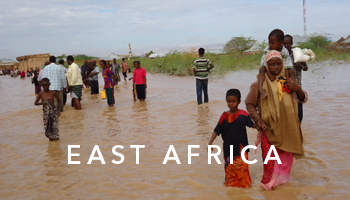
A flood scene in East Africa

In Uganda, El Niño is likely to result in above average rainfall up to February 2016 and an estimated 800,000 people will be at risk of landslides and floods with humanitarian consequences that could last until mid-2016.

According to a report by the United Nations Office for the Coordination of Humanitarian Affairs (UNOCHA), wet conditions in the country may increase the incidence of infectious diseases such as malaria, cholera and dysentery.

Acute respiratory infections may rise to outbreak levels in 30 of 112 districts, and in October, the Government and partners produced a National El Niño Preparedness and Contingency Plan requiring US$1.4 million.

Meanwhile, due to El Niño conditions, 22 million people are expected to be food insecure across Ethiopia, Somalia, Eritrea, Djibouti and South Sudan.

The UNOCHA report also states that in Ethiopia alone, 10.2 million people require emergency food assistance and numbers are expected to rise to 18 million by the end of the year.

Further, over 14 million people are food insecure in southern Africa today and the number could rise significantly over the coming months as the planting window has closed and food prices across the region have been on the rise.

Lesotho and Swaziland both expect that one third of their population will be food insecure, while Malawi and Zimbabwe indicate that 3 million and 1.5 million people respectively are already food insecure today.


Stories Continues after ad

EALA adopts Community Annual Report

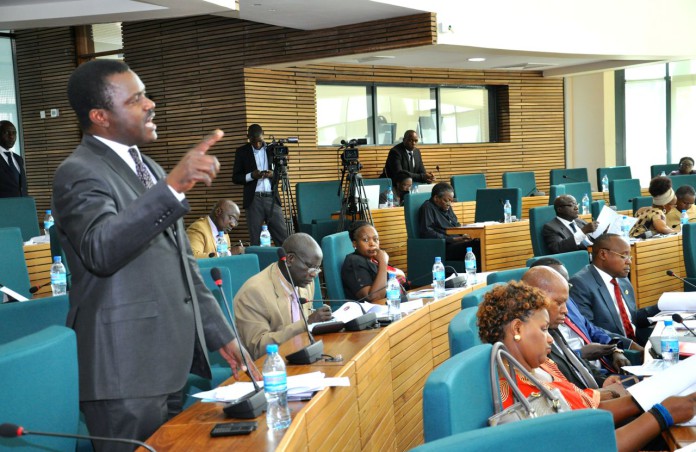
Hon Bernard Mulengani stresses a point to an attentive House

The East African Legislative Assembly (EALA) yesterday debated and approved the EAC Annual Report 2013/14, with members calling upon the Council of Ministers to ensure enhanced supervision and quality control of all the Community’s documents.

The debate was preceded by tabling and debate of the Report of the Committee on General Purpose on the EAC Annual Report for 2013/2014, which followed the consideration of the Annual Report for the year 2013/14.

‘The Committee Report presented by the Chairperson of the Committee on General Purpose, Hon Dr Odette Nyiramilimo urges the Council of Ministers to make follow up on actions with intention to amend, retract or correct identified parts of the Annual Report that may be erroneous’, an EALA release states in part.

The Committee on General Purpose further called for additional details to be included on the status of major Community Projects such as those under Infrastructure Sector, including  updates on status, causes for delay and other challenges realized under the Road network, Railway sector and the EAC Master Plan.


The Committee also observed that the EAC Annual Report 2013/14 contains no section on challenges either than what is mentioned by the Deputy Secretary General of the EAC in his submission to the Committee.


“As it has been noted in previous reports tabled before the House, there is apparent hesitation to clearly point out challenges in the EAC Annual Report,” Hon Odette Nyiramilimo noted. Each year, the Chairperson of the Council of Ministers submits an Annual Report on the activities and achievements of the Community to key stakeholders in line with Article 49(2) (c) of the Treaty.


The Annual Report illustrates the accomplishments of the various Organs and Institutions of the Community within their respective mandates and missions.   The 2013/4 Report captures the progress made in implementation of various activities including the Protocol on establishment of the East African Monetary Union, operationalization of the single Customs Territory, Infrastructure development, productive and social sectors and the progress on the internationalization of the new generation EAC e-Passport.


At debate, Members called on the Council of Ministers to cause for take up more shares in East African Development Bank (EADB).


Hon Shyrose Bhanji supported the move for Partner States to take more shares in the EADB.


“It is in shocking to hear that our partner States have minority shareholding the Bank.  We are supposed to take advantage of the bank.  What is the problem?  We cannot be seen to transform agriculture which is our backbone through donor funding,” she added.


Hon Dora Byamukama supported the adoption of the Annual Report but said it was necessary for the Assembly to debate on documents that are current. Others who supported the report were Hon Christophe Bazivamo, Hon Nancy Abisai, Hon Bernard Mulengani, Hon Straton Ndikuryayo and Hon Valerie Nyirahabineza.


The Chairperson of the Council of Ministers, Hon Dr Susan Kolimba affirmed that the Council would make every effort to enhance the quality of its Annual Reports.

Stories Continues after ad

MTN in US$40m partnership with continental online travel giant

Travelstart, the South African-based Online Travel Agency (OTA) with offices throughout Africa and subsidiaries in the Middle East and Turkey, today announced a US$40 million funding from Amadeus Capital Partners, the global technology investor.  The new funding comes a strategic partnership with Africa’s largest mobile telecommunications provider MTN, which has a subscriber base of more than 230 million. The funding will be used for Travelstart’s expansion and to solidify the company’s position as the biggest OTA player on that continent.

Africa is considered the last frontier in online travel. In most developed countries Internet and mobile travel purchases now represent the lion’s share of the online travel market while in Africa web-based travel companies share less than 5% of the entire market.

“Travelstart celebrates 10 years in Africa this year,” says Travelstart CEO Stephan Ekbergh, “In that time our in-house team has built a robust platform to serve consumers and significantly lower fares for all travellers. We take all the complexities out of travel for both travellers and suppliers and solve real problems that only exist in the most diverse of markets.”

The investment is the largest of its kind on the African continent in Turkey and the Middle East, “Africa alone is a US$50 billion travel market growing between 3% and 5% annually. The investment from Amadeus Capital and the MTN partnership is a fantastic fit for our company as we share the same ideology and long term commitment,” said Ekbergh.

Amadeus Capital Partners’ Andrea Traversone will join Travelstart’s Board of Directors as part of this financing. “The market potential for Travelstart is huge and the company is already a tour de force in emerging markets. They are one of the most profitable e-commerce companies on the African continent and with this new round of funding Travelstart will be able to fast-track its already rapid growth. We’re excited to spearhead this round and to see the company’s continued growth and success,” said Traversone.


Stories Continues after ad

‘Sejusa youth’ accuse government of persecution

UYP member Allan Kitonsa Saava

Two youth attached to Uganda Youth Platform (UYP), a pressure group whose patron and founder is General David Sejusa, have accused the government of President Yoweri Museveni of persecuting them for associating with the embattled General.

Writing on his Facebook Page, Allan Kitonsa Saava, a member of the group who is also a Museveni critic on social media, claimed he was arrested by operatives of the Special Forces Command (SFC) and taken to Kabalagala Police Station where he was allegedly questioned about his association with General Sejusa.

Mr Kitonsa further claimed he was later detained at Kireka CIID headquarters until today when he was released on police bond.

Among the questions fired at him, he said, were why he left the NRM party and what he knows about the Forum for Democratic Change (FDC) flag bearer Dr Kizza Besigye’s ‘P10 strategy’, where it is said Besigye is  recruiting ten youth per village  ‘to protect’ his votes come polling day on February 18.

Kitonsa’s colleague, UYP National Coordinator Jude Nkoyoyo, also said that some of the group’s members are being arrested and that others including himself are targets by police and other security agencies.

“Allan Kitonsa was arrested; he was accused of dealing with Gen Sejusa and his relationship with me. I know Allan, he is a liberation fighter like me, I will not hide because SFC are planning to arrest me,’’ Nkoyoyo wrote on his Facebook page, adding: “our resolve is very clear, we must be liberated from dictatorship.”

General Sejusa was arrested last Sunday by the army and detained at Makindye Military Barracks and at a Court Martial hearing yesterday, the four star General was charged with insubordination, Absent without Official Leave AWOL), participation in partisan politics and appearing on a radio station without permission from the army.

Gen Sejusa was remanded to Luzira until February 9, when he will be produced again.


Stories Continues after ad

Israel illegal deportees enter Uganda via Rwanda

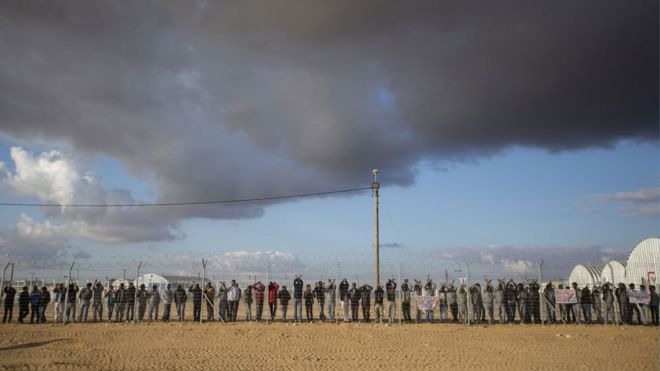
Asylum seekers stage a protest by leaning against the fence of the Holot detention centre

Human trafficking gangs are involved in the transportation and ‘resettlement’ of Africans deported from Israel to Rwanda and eventually into Uganda, a media report dubbed ‘Israel’s unwanted African migrants’, indicates.

According to a report by the British Broadcasting Corporation (BBC), the gangs, most likely with support from Israel, transport the deportees for a fee of about US$300, with the Israel to Rwanda leg of the journey going for US$150 and the Rwanda to Uganda section also going for US$150.

According to the BBC, the illegal immigrants numbering about 45,000 in Israel, with most from Sudan and Eritrea, are given three options: ‘go home; stay in Israel and face indefinite imprisonment or accept departure to a third country’.

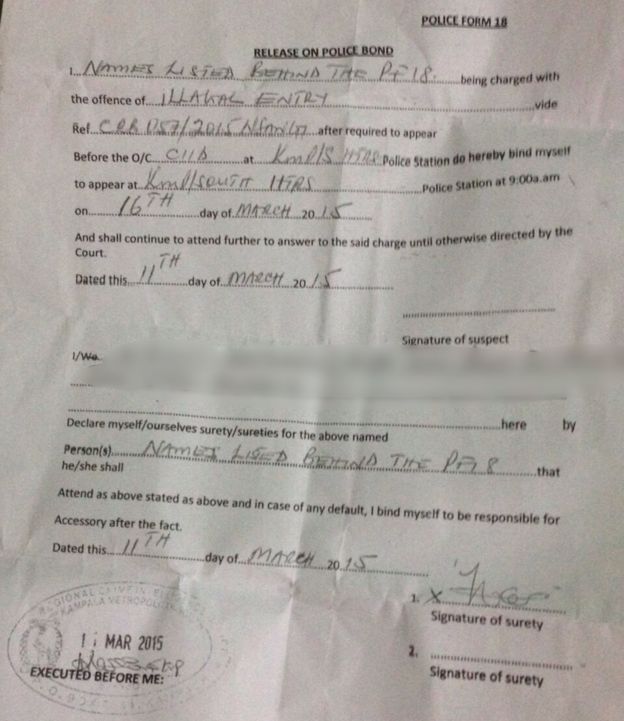
_88062032_ugandapolicewarranttesfay

‘The Israeli government has deals with two countries in Africa to host its unwanted migrants. It promises that people who take the option of ‘voluntary departure to third countries’ will receive papers on arrival that give them legal status in the country.

As an extra incentive, they’re given $3,500 (£2,435) in cash, handed over in the departure lounge of the airport in Tel Aviv. Israel refuses to name the two African countries but the BBC has spoken to migrants who say they were sent to Rwanda and Uganda’, the BBC report says.

The report further says that on arrival in Uganda the deportees are abandoned, only to be arrested by police.

‘One is Tesfay, an Eritrean who was flown to Rwanda in March 2015, and he told me that far from being offered legal status, a home and the chance of a job in Rwanda – as he had been promised in Israel – he became a victim of trafficking’.

According to the report Tsefaye said his identity papers – a travel document and a single-entry visa to Rwanda, both issued in Israel – were immediately confiscated at Kigali airport.

He was further quoted as saying that along with nine other Eritreans, he was taken to a ‘guest house’ and held for two days before being told they were going to be relocated.

“You are going to Uganda. But before you go, you need to pay $150,” said a man who introduced himself as John. “Then from the border to Kampala you need to pay again,” Tsefaye was quoted as telling the BBC.

Crammed into a minibus, they made the six-hour journey to the Ugandan border, where they were told to get out of the bus.

“When we crossed the border, that’s when I understood that we were being smuggled,” Tesfay says. “We went on foot, silently. We were being smuggled from one state to another.”’

‘But inevitably, having entered as illegal immigrants, they were arrested on arrival and put behind bars – after police had relieved them of about half the cash in their pockets, Tesfay was quoted by the BBC as saying.

Quoting Tsefaye, the BBC said he managed to use some of the money left to secure bail (police bond), and then used the remainder to get smuggled out of Uganda to Kenya.

‘With what was left, Tesfay managed to post bail. He was due to appear in court five days later and having already been warned he was likely to be deported to Eritrea – the repressive authoritarian state he had fled in the first place – he decided to take no chances. He paid another smuggler to get him into Kenya, where he is now seeking asylum,’ the report states.

The issue of the illegal deportations has turned contentious, once again putting Israel on the spot given that it is a signatory to the UN Refugee Convention, which it signed over half a century ago in 1954. Rwanda and Uganda, the two alleged ‘third countries’ are also signatory to the Convention.

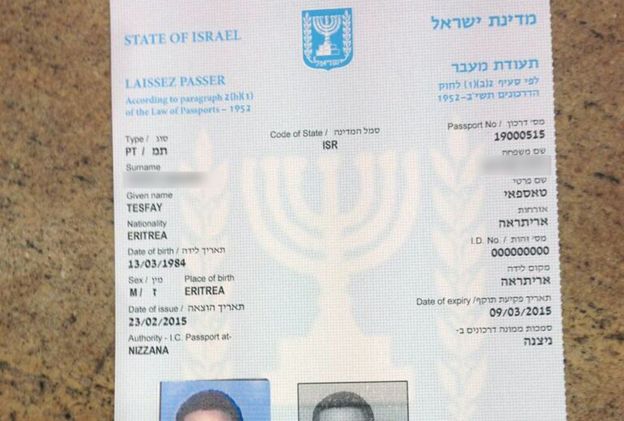
_88069071_israeldocumentblurred

This is not the first time the claims are coming up, but when the issue first surfaced in 2013, the Uganda government denied any such deal with Israel existed.

Commenting about the issue then, the Uganda government spokesman Ofwono Opondo said Uganda cannot carry out any such engagement without the involvement of the United Nations, and also dismissed claims of any such bilateral agreement with the Israeli government.

“And therefore it is not true, Uganda has no such arrangement to have en-masse deportation or transfer of refugees from anywhere in the world into Uganda,” Opondo was quoted as saying.

Below is the full BBC report:‘Israel’s unwanted African migrants’

For nearly a year Israel has been offering African migrants cash and the chance to go and live in what is supposed to be a safe haven in a third country – but the BBC has spoken to two men who say that they were abandoned as soon as they got off the plane. One was immediately trafficked, the other left to fend for himself without papers.

Adam was 18 when he arrived in Israel in 2011. Attackers had burned down his home in Darfur at the height of the genocide, and he had spent his teenage years in a UN refugee camp in another part of Sudan. With no prospects in the camp and no sign of an end to the conflict in Darfur, he made his way north through Egypt and the lawless Sinai peninsula to Israel.

But Israel – which has approved fewer than 1% of asylum applications since it signed the UN Refugee Convention six decades ago – has not offered asylum to a single person from Sudan. It turned down Adam’s application, and last October, when he went to renew the temporary permit allowing him to stay in the country, he was summoned to a detention centre known as Holot, deep in the Negev desert.

This was no surprise for Adam. As most Sudanese and Eritreans in Israel know, it’s just a matter of time before they get the call to Holot.

The government calls Holot an “open-stay centre”, but it’s run by the prison service and rules are strict, including a night-time curfew, which, if broken, will land you in jail.

It’s in such an isolated area that there’s very little to do and nowhere to go.

I talked to Adam and a group of his friends just outside the gates of Holot, where, at that time, they spent most of their day playing cards or snooker, and eating and cooking in makeshift restaurants.

They told me they took turns to make the hour-long bus ride into the nearest town, Beersheva, where they bought food. The meals served in Holot were insufficient, they said, and contained little meat or protein.

Most of the men there were young – in their 20s or early 30s. Some had been teachers, activists or students in their own countries.

“We are wasting our youth here,” Adam says. “If someone lives in Holot, they have no future… You find many people here go crazy.”

Since I visited Holot, those makeshift restaurants and game areas have all been demolished on the orders of the government, leaving those inside with even fewer ways to pass the time.

ere those who refuse to leave Israel may be held indefinitely

Adam will be held in Holot for 12 months. Then he is likely to face a stark choice:

  • Go home to Sudan
  • Stay in Israel, but be imprisoned indefinitely
  • Accept departure to a third country

The Israeli government has deals with two countries in Africa to host its unwanted migrants.

It promises that people who take the option of “voluntary departure to third countries” will receive papers on arrival that give them legal status in the country.

As an extra incentive, they’re given $3,500 (£2,435) in cash, handed over in the departure lounge of the airport in Tel Aviv.

Israel refuses to name the two African countries but the BBC has spoken to migrants who say they were sent to Rwanda and Uganda.

One is Tesfay, an Eritrean who was flown to Rwanda in March 2015, and he told me that far from being offered legal status, a home and the chance of a job in Rwanda – as he had been promised in Israel – he became a victim of trafficking.

 His identity papers – a travel document and a single-entry visa to Rwanda, both issued in Israel – were immediately confiscated at Kigali airport, he says.

Then, along with nine other Eritreans, he was taken to a “guest house”. None of them was allowed out. It would be dangerous without papers, they were told. Then, two days after arriving, the men were told it was time to leave.

took this picture of the guest house in Rwanda

“You are going to Uganda. But before you go, you need to pay $150,” said a man who introduced himself as John. “Then from the border to Kampala you need to pay again.”

Crammed into a minibus, they made the six-hour journey to the Ugandan border, where they were told to get out of the bus.

“When we crossed the border, that’s when I understood that we were being smuggled,” Tesfay says. “We went on foot, silently. We were being smuggled from one state to another.”

As promised by “John”, they had to pay another $150 to continue their journey to the Ugandan capital, Kampala.

But inevitably, having entered as illegal immigrants, they were arrested on arrival and put behind bars – after police had relieved them of about half the cash in their pockets, Tesfay says.

With what was left, Tesfay managed to post bail. He was due to appear in court five days later and having already been warned he was likely to be deported to Eritrea – the repressive authoritarian state he had fled in the first place – he decided to take no chances. He paid another smuggler to get him into Kenya, where he is now seeking asylum.

Rwanda has never confirmed that it struck a deal to host Israel’s unwanted migrants. The Ugandan government, for its part, has denied outright that such a deal exists – it told the BBC it was investigating how migrants who claimed to have been sent from Israel were entering the country.

The BBC spoke to a man from Darfur who said he was flown to Uganda from Israel with seven others in 2014, before the third country policy became official.

For safety reasons, he asked to remain anonymous.

“None of the things I was promised were given to me,” he said. “No documents, no passport, no assistance – nothing. (Israel) just wants to take people and dump them.”

nced the Egyptian border in 2013, reducing the flow of migrants into the country

In October, Israeli immigration authorities said 3,000 asylum seekers had left Israel for a third country. But the BBC has learned that only seven have registered with the UN High Commissioner for Refugees in Rwanda, all of them Eritreans, and only eight, mostly from Sudan, in Uganda.

Meanwhile, there are about 45,000 Eritreans and Sudanese in Israel. The government won’t deport them – that would be a clear breach of the UN Refugee Convention, which it signed in 1954. Under the Convention, no-one can be forcibly returned to a country where they have a justified fear of persecution.

But if Israel treats them as refugees at least in this respect, why does it then refuse them asylum?

Foreign Ministry spokesperson Emmanuel Nahshon says the migrants threaten the security, and the identity, of the Jewish state.

“It’s obvious that we live here in a situation which is rather complex and complicated. And if you add this element of migrants who come here and who want to stay here – undoubtedly because this is a rich and prosperous country – then it could become also a challenge to our identity here in Israel.

“It’s not only about the 45,000 or 50,000 people that already are here in Israel, it’s about the potential. Because those people tell their friends and families back home – ‘Look, this is a very nice place. Do come over.'”

on a street in Tel Aviv

And, of course, in Israel there is also the ever present issue of security.

“Open borders through which migrants can pass mean also open borders through which terror organisations can penetrate Israeli territory and commit terror acts,” Nahshon says.

But lawyers fighting against the Third Country policy in Israel’s Supreme Court argue that the country is in breach of its obligations under the UN Refugee Convention.

“[Migrants] are stigmatised as ‘infiltrators’ and then have their asylum application adjudicated in sort of a conveyor-belt system which rejects everyone,” says one of the lawyers, Anat Ben-Dor.

“And then the whole idea of asking them to give their ‘voluntary’ consent to something they do not know because this is a secret arrangement… Of course this is not voluntary because you are using the threat of putting them indefinitely in prison if they refuse to go.

“And then when they land in one of those two countries the lack of proper monitoring cannot really secure, in the necessary certainty, that those people would not end up either without [legal] status, or in prison, or – worst of all – being returned to places where they would face danger.”

Sigal Rozen, from the Israeli human rights group Hotline for Refugees and Migrants, says that the failure by Israel to guarantee the migrants’ security in Rwanda and Uganda means they are forced to risk their lives elsewhere.

“Some of them continue to South Sudan, others to Kenya, to Ethiopia, and many end up in Europe after they take the route through Libya and Italy. Unfortunately many others die on the way and we never hear from them again,” she says.

There’s a joke among the migrants, she says, that the Israeli government’s departing “gift” of $3,500 is just enough money to get to Europe.

But the Israeli government is adamant that it’s acting within the framework of international law and is offering a fair deal to the migrants.

But in Tesfay’s opinion, he did not get a fair deal.

“The Israeli authority – it’s not what they promised. I have no safety – I have no protection at all,” he says.

The risk is that Adam and the other residents of Holot will experience exactly the same thing when they arrive in Africa.

Stories Continues after ad

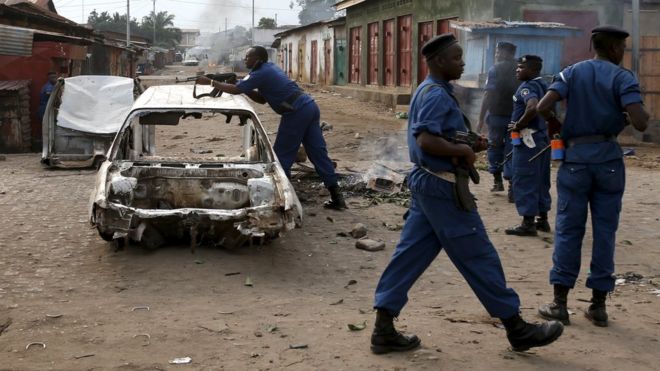
Bujumbura rocked by grenade explosions

Protests erupted in Burundi against President Pierre Nkurunziza's third-term bid.

Three grenade explosions have rocked the capital of the troubled central African nation of Burundi.

The blasts occurred in Bujumbura’s central business district, and reports suggest at least four people were injured.

Burundi has been in crisis since April 2015 when President Pierre Nkurunziza ran for a controversial third term.

This led to ongoing violence and fears that Burundi is sliding into ethnic conflict.

Media sources said the latest attacks are unusual because they occurred in daylight, and in the centre of the city, whereas most violence happens at night.

Two grenades were hurled around midday, near the central post office and a building hosting a mobile phone operator, injuring four people.

The third grenade was detonated at a bus station south of the capital, behind what used to be the central market.

At least 439 people have died and 240,000 have fled abroad since last April, the UN says.

Last month, human rights group Amnesty International published satellite images it said were believed to be five mass graves near Burundi’s capital, where security forces were accused of killing scores of people in December.

A fact-finding mission by the AU has reported arbitrary killings, killings, torture and the ‘closure of some civil society organisations and the media’.

Stories Continues after ad

TATA to change car name following outbreak of the Zika virus

A car company has been forced to change the name of their brand new Zica vehicle after the global outbreak of the head shrinking virus of an almost similar name.

Tata Motors had branded the Zica the ‘next big thing’ but their timing couldn’t be any worse as the Zika virus became a public health emergency.

The company’s website still features the Zica model, with the hashtag ‘Fantastico’ and is set to be unveiled at the New Delhi auto show later today.

But Zica – a blend of ‘Zippy Car’ – will be renamed to make sure it isn’t confused with the virus that has led to a global health alert, particularly for pregnant women.

“While it carries the ‘Zica’ label for the duration of the event, the new name will be announced after a few weeks, ensuring all necessary consumer/ branding and regulatory aspects are addressed, and the launch will take place thereafter,” Tata Motors said in a statement.

The Zika virus was declared a public health emergency by the World Health Organisation yesterday after the disease spread from Latin America to Europe and the United States.

Pregnant women were warned to avoid travelling to South America and Florida as the mosquito that spreads the virus is prevalent in these areas.

Symptoms for adults are similar to mild fever but it has been linked to microcephaly, which causes brain damage and unusually small heads in newborn babies.

Yesterday it was confirmed that a patient in Dallas, Texas, contracted the virus through sexual contact rather than a mosquito bite.

The person infected had not travelled to affected areas but his girlfriend had recently returned from a trip to Venezuela.

Stories Continues after ad

Go Forward blames Museveni for violence

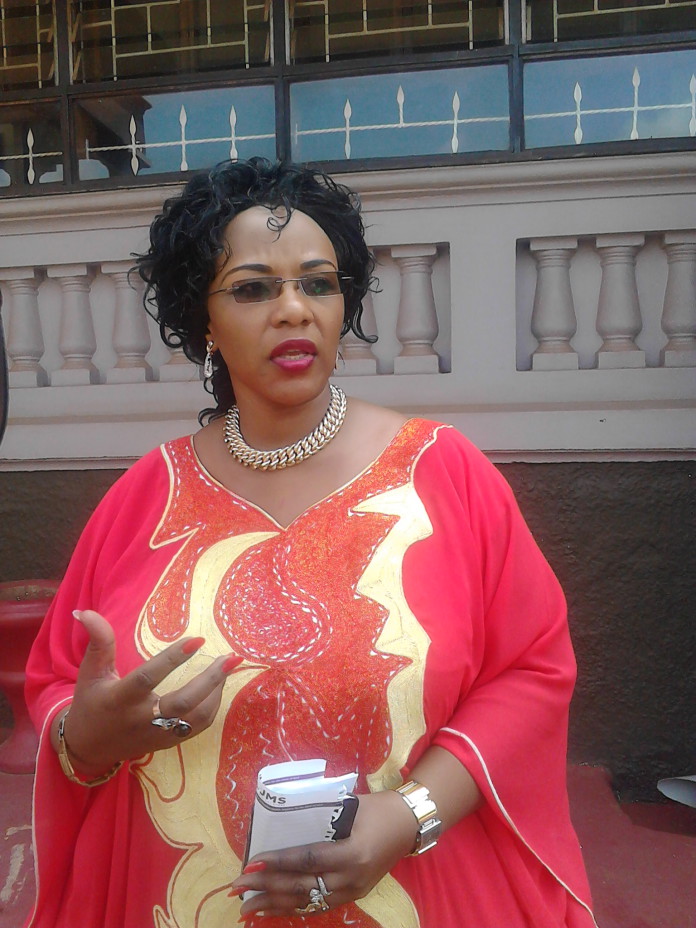
Go Forward Chief of Staff Solome Kaweesi Nakimbugwe

Opposition group Go Forward under The Democratic Alliance (TDA) has said that presidential candidate Yoweri Kaguta Museveni is to blame for the violence during the election period.

“The main perpetrator of this violence is president Museveni; one time he actually said he is the master of violence,” Said Go Forward Deputy spokesperson Saddam Gayira.

Mr Gayira, who was addressing journalists at the Go Forward offices this morning, added that the president Museveni is quiet while his officials are sounding war drums.

“Threats towards Ugandans by the Inspector General of Police and Justine Lumumba (NRM Secretary General) are not a coincidence; this is a deliberate and systematic move to instigate violence by the state,” Mr Gayira said.

The Go Forward officials also expressed concern about the increasing disappearances of party aides in different parts of the country, something he said the victims’ relatives attribute to the police.

Since the campaigns began there have been isolated cases of violence, with supporters of the different parties engaging in bloody running battles.

Also, of recent some government and ruling party officials have come under intense criticism for allegedly uttering statements that border on incitement and threatening violence. However, they all denied the accusations.


In a related development, Ms Solome Nakaweesi Kimbugwe, the Chief of Staff at the Go Forward Secretariat said that they have records of 13 missing people which include one mobiliser in Nateete, and a Bishop in Rukungiri among others.

“We have reported all these cases to the police but as we all know, the Uganda Police are highly partisan, nothing has been done about it,” Ms Kimbugwe said.

She also accused the Independent Electoral Commission (IEC) of ignoring all complaints filed by Go Forward, adding that the electoral body neither acts nor sends a reply.

Contacted on phone, IEC Spokesperson Jotham Taremwa and Police Spokesperson Fred Enanga said they were busy, with Mr Enanga referring The EagleOnline to his deputy Ms Polly Namaye. However, by press time efforts to contact her were futile.

Meanwhile, at today’s conference, women leaders under their umbrella organization, the Uganda Women Network (UWONET), have asked the Go Forward to participate in observing peace before, during and after elections.

“We, the  women of Uganda, would like to express our deepest concern at the increasing level of political violence  and intolerance which is countering citizens aspirations for peace, inclusion and genuine democracy, “ said Ms Ritah Aciro, the Executive Director UWONET.

She added: “We strongly condemn and will not tolerate any form of violence during this period.”


Stories Continues after ad