Stanbic Bank
Stanbic Bank
19.3 C
Kampala
Stanbic Bank
Stanbic Bank
Home Blog Page 2250

Political parties and social media interaction

NRM Social Media guru Innocent Don Wanyama

In the 21st century, with the rapid rise of new media, the whole world has turned to social media platforms like Facebook, Twitter and others that spring up by day. Society finds life easier as these platforms can help people communicate, relate, market and connect across the globe. And, unlike the ancient mail times, a single post on Facebook in Uganda can be shared all over the world in just 30 minutes. That is just how powerful a tool the Social Media is.

Social media is supported by use of internet and according to a report by the Uganda Communications Commission (UCC), 32.1% of the country’s 35 million people use internet. Of the platforms, Facebook is the most commonly used by Ugandans, with around 1.8 million users by November 2015. Twitter comes in second with about 250,000 users.

Of interest to note however, there has been vigorous activity on both Facebook and Twitter as the country heads to polls next month, with political parties seemingly becoming active out of the blue.

And basing on these particular two platforms, Eagleonline looks at the ‘social media share’ of the main political parties in the country.


National Resistance Movement (NRM)

The ruling party led by Yoweri Museveni carries the biggest portion of social media followers, with around 48,300 Facebook followers and 11,400 twitter followers.

Forum for Democratic Change (FDC)

Led by Maj Gen (rtd) John Greg Mugisha Muntu, this is the second biggest party in the country and has 37,400 Ugandans following it on Facebook and 6,700 Twitter followers.

Democratic Party (DP)

Led by Norbert Mao, the DP is the oldest political party in the country but it has a paltry 1,600 followers on Facebook and zero presence anywhere on Twitter.

Conservative Party (CP)

Led by John Ken Lukyamuzi, the CP has a total of 1,400 Facebook followers with no presence on Twitter.

Go Forward

This is a pressure group formed by former Ugandan premier John Patrick Amama Mbabazi after he cut relations with the NRM party. The Go Forward political organisation has neither a Facebook account nor Twitter handle but its presence on social media is seen by the individual participation of its leader Amama Mbabazi and Communications Director Ms Josephine Mayanja Nkangi. It also possesses various Facebook groups that have between 300 and 1000 members.

Peoples Progressive Party (PPP)

This has about 332 followers on its Facebook page with no Twitter presence.


The Uganda People’s Congress (UPC), JEEMA  and other political parties seemingly lack a presence on social media.


Stories Continues after ad
EALA plans youth representation at the legislative body

A section of the Members of the Public who attended the Plenary Sitting

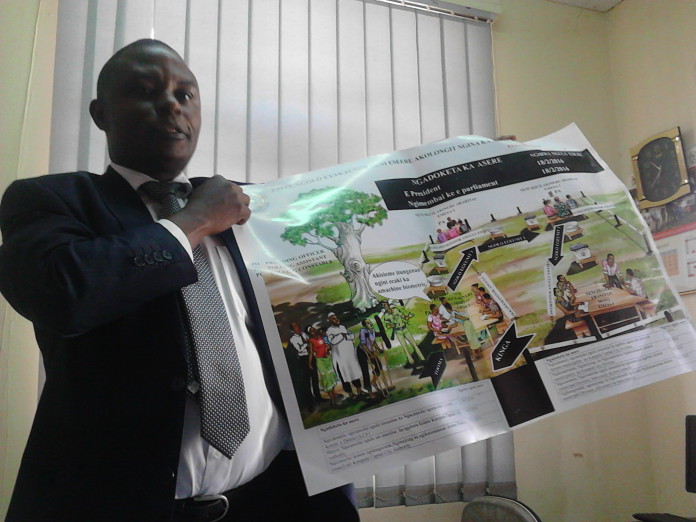
The youth of the East African Community yesterday received a boost with regional legislators calling out for their full involvement in integration matters. Central to the plank is a call to amend Article 50 of the Treaty for the Establishment of the EAC to create slots for youth in the Assembly even as it reflects fair representation citizens’ diversity. The Assembly also called on all Partner States that are yet to establish National Youth Councils to do so.

The Assembly however states and succinctly so, that lobbying for youth representation at EALA and at National Parliaments/Assemblies should begin at the level of youth organisations’ at the national levels to create the desired reforms.

While still at it, legislators are also advising youth that while their efforts are appreciated, a change of strategy is necessary where they (youth) focus on developing capacities in order to realize aspirations. This is to enable them to register significant gains which lead to gainful recognition they seek at both national and regional levels.

The deliberations sum up the mood of the debate of the Assembly on the Report of the Committee on General Purpose Committee on the petition to advocate for key issues concerning the Youth in the EAC.

The petition was presented to the EALA Speaker by a team of Youth and Deputy Youth Ambassadors appointed during the 3rd EAC University Students debate.  The Youth Ambassadors presented the petition in March 2015 in Bujumbura, Burundi.  The salient prayers of the petition to EALA include calling for establishment of an EAC Youth Council, and advocacy for the operationalization of vibrant National Youth Councils.  The petitioners also make a strong appeal to the Partner States’ National Assemblies to consider reserving slots for youth representation at the national level.

At debate time, Hon Mukasa Mbidde called for the amendment of Article 50 of the Treaty specifically to allow for specific slot(s) to be set aside for youth. Hon Maryam Ussi urged the Secretariat to establish a Youth Desk to handle youth matters that revolve around integration. On her part, Hon Susan Nakawuki affirmed that currently, youth matters were considered a priority of the 3rd Assembly. She however noted that it was important for the structures of youth participation in politics to be harmonized right from the grassroots level to the national and eventually regional level.  The legislator further called on Tanzania to finalise the establishment of its National Youth Council.

Hon Shyrose Bhanji said that youth constituted a percentage of over 60% in the region and said there was need for them to be well represented.

She observed that Rwanda has a special slot for youth and urged other Partner States to follow suit.

Hon Peter Mathuki said the region could do more for the youth and said it may be necessary for them to be granted an Observer Status at the EAC.

In her remarks, the Chair of the Council of Ministers, Dr Susan A. Kolimba lauded the petitioners (East African Community Youth Ambassadors) and re-affirmed that the Council of Ministers was committed to addressing matters facing the youth.
She noted that Regional Youth Councils were greatly dependent on the vibrancy of the National Youth Councils.

“Some of the National Youth Councils are not as vibrant as they ought to be in representing and lobbying for youth Affairs,” Hon Dr Kolimba said.

The Deputy Minister said Parliament of Tanzania had last year passed a law on EAC Youth Council Act, 2015 paving way for the establishment of the EAC Youth Council once the regulations are completed and in place.

The Minister added that a framework for the establishment of the Regional Youth Council is in the process of development and the first meeting of experts to discuss the framework will be convened in the next financial year 2016/17.

Hon Dr Kolimba said that the Children and Youth position at the EAC Secretariat as recommended at the 18th Council of Ministers’ meeting was still pending.

Stories Continues after ad
Uganda gets US$18m for refugees

UN Secretary General Ban ki Moon

Uganda gets US$18m for refugees

Uganda is set to receive US$18 million in humanitarian aid, to assist thousands of refugees who have flocked into the country over the years.

According to a release by the Office of the Coordinator for Humanitarian Affairs (OCHA) signed by Pete Manfield, the United Nations Secretary-General Ban Ki-moon today released US$100 million from the UN Central Emergency Response Fund (CERF) for severely underfunded aid operations in nine neglected emergencies including Uganda.

The funds will enable life-saving help for millions of people forced from their homes in Central and Eastern Africa, those affected by conflict and food insecurity in Libya and Mali, and the most vulnerable and at risk of malnutrition in the Democratic People’s Republic of Korea.

“This funding is a lifeline for the world’s most vulnerable people. It is a concrete demonstration of our shared commitment to leave no one behind,” the release quotes Mr Ban ki Moon as saying.

Some $64 million from the CERF allocation will allow humanitarian partners to respond to the displacement crises in Central and Eastern Africa caused by conflict and violence in South Sudan, Burundi and the Democratic Republic of the Congo, the release adds.

Urgently needed funds will help an estimated 1.7 million refugees, internally displaced people and host communities in Burundi ($13 million), Ethiopia ($11 million), Kenya ($4 million), Sudan ($7 million), Tanzania ($11 million), and Uganda ($18 million).

According to the release, a further $28 million will help relief agencies address the humanitarian needs of up to 350,000 people affected by conflict and food insecurity in Libya ($12 million); and in Mali ($16 million), where an estimated 300,000 people will be assisted, especially in the North.

An allocation of $8 million will support urgent life-saving humanitarian assistance for more than 2.2 million vulnerable people in DPR Korea, including 1.8 million children who need urgent nutrition assistance.

“With so many crises competing for attention around the world many people in need are forgotten. These CERF grants will help sustain life-saving assistance and protection in emergencies where the needs of the most vulnerable communities are alarmingly high but the resources enabling us to respond remain low,” said the Emergency Relief Coordinator, Stephen O’Brien said adding: “I thank our donors for their support to CERF so far in 2016. A strong and well-resourced CERF will help us focus on addressing the most critical needs.”

To date, CERF has allocated almost US$4.2 billion for humanitarian operations in 94 countries and territories.


Stories Continues after ad

New Somali Parliament to have 30 pc women

Somali President Hassan Sheikh Mohamud

The new Somali Parliament to be constituted after elections this year is to have a female representation of 30 per cent, a development that follows widespread consultations between stakeholders including the Somali government and the United Nations.

“He (UN Secretary General) particularly applauds the commitment to representation of women and minority groups, including that women will comprise 30 per cent of the next Parliament, in line with the Mogadishu Declaration of December 2015,” said a statement issued by Mr. Ban ki Moon’s spokesperson.

Mr Ban’s remarks follow a presentation made to the United Nations Security Council by Michael Keating, the Special Representative of the Secretary General (SRSG) to Somalia.

“It gives me particular pleasure to share some breaking news with you,” Mr Keating said and added: “This morning, a decision was taken by the Somali Cabinet on the electoral model to be used later this year. This is the culmination of almost six months of intense consultations. It may be a watershed moment, marking the growing political maturity of a federal Somalia.”

The UN chief also reiterated the urgency of establishing a political roadmap towards universal suffrage in Somalia by 2020, to ensure continued momentum in the country’s transition to democracy.

In the Security Council, Mr. Keating, who is also the head of the UN Assistance Mission in Somalia (UNSOM), said the electoral model is ‘Somali-devised, Somali-led and Somali-owned’, adding that real momentum could and should result from the ‘breakthrough’ achieved. Meanwhile, Mr Keating told the UNSC that success in Somalia this year will depend upon managing threats, notably those posed by the terrorist groups Al-Shabaab.

Noting that military and counterterrorism efforts need to be accompanied by stronger policing and rule of law, Mr. Keating added that a priority must be to strengthen federal and regional capabilities within Somalia as a basis for a longer term transition plan for the African Union Mission in Somalia (AMISOM), which has been in the country since 2007.

“Too many civilians and too many soldiers are dying. Al-Shabab remains a potent threat,” the UN official warned, while nonetheless stating he is encouraged by the commitments made by the President of Somalia, Hassan Sheikh Mohamoud, to security sector reform.


Stories Continues after ad

Besigye driver held

Fred Kato, the hardnosed driver of Forum for Democratic Change (FDC) flag bearer Dr Warren Kizza Besigye has been arrested at the Buganda Road Magistrate’s court.

Sources told the EagleOnline that Kato, who has been out on bail, had gone to report to court and found when the courtroom he was supposed to appear before had been changed. In the confusion, the source said, Kato was unable to locate where to report.

“They changed the courtroom and he was unaware… so by the time he realized the right room an arrest warrant had already been issued. They just nabbed him,” the source said on condition of anonymity.

In May last year Mr Kato was arrested for reckless driving after a cat and mouse chase with police at a time Dr Besigye started a campaign he described as ‘reforms before elections’.

Subsequently, Mr Kato was produced before the Buganda Road Magistrates Court and was released on a Shs 400.000 bail, paid by FDC head of Mobilisation, Ingrid Turinawe.

No details were given for Kato’s arrest today, and efforts to get comment from the judiciary on the alleged abrupt change of courtroom were futile by press time.

Meanwhile, FDC youth leader Moses Byamugisha has said the arrest of Mr Kato was aimed at disrupting Dr Besigye’s campaign schedule.

“This is being done to slow Besigye’s ability to penetrate the remaining villages but we have ‘Plan B and C’ to win by defiance,” byamugisha posted on his Facebook page.


Stories Continues after ad

South Sudan hails re-opening of border

South Sudan President, Salva Kiir

The South Sudan government has welcomed the decision by the government of neighbouring Sudan to allow free movement of people and goods between the two countries, five years after Sudanese authorities restricted the movement, forcing retail traders to engage in limited smuggling business practices.

President Omer Hassan al-Bashir on Wednesday issued a directive, instructing that the borders be reopened between Sudan and South Sudan, which separated and formed its independent state in 2011.

This came after South Sudanese President, Salva Kiir, issued a statement last week asking his army units of the Sudan People’s Liberation Army (SPLA), to pull back to 5 miles (8 km) from the borderline with the Sudan, asserting that his government had decided to improve relations with Sudan in the interest of peace and stability between the two countries.

The move to reopen the borders was a major step toward improving relations between the neighbouring countries whose diplomatic relations have been strained over post secession issues as well as differences over oil charges and transit fees.

The new nation took much of what was known as the Sudan’s oil reserves before the split in 2011 but later agreed to pay the north a fee to access international markets with her oil through its pipelines. Bashir has agreed to consider cutting those fees.

Both sides have also battled over unresolved border disputes, including control of another large oil field.

But South Sudanese foreign affairs and international cooperation minister said that relations between the two countries were improving for the benefit of the two nations.

Minister Barnaba Marial Benjamin said he hoped the two countries would work together to enjoy the importance of close ‘political, economic, social, cultural, administrative and personal ties’.

“Economically, South Sudan is extremely important to Sudan. It is by far the Sudan’s main trading partner, in terms of exports. There are also common issues which bind us together that we cannot ignore no matter political or administrative issues that may come up from time to time,” said Minister Benjamin.

South Sudanese government accused Sudan of backing anti-government rebels while Sudan alleged that the young country supported separate rebellions in Darfur region, Blue Nile and South Kordofan states.

Civil war broke out in South Sudan in mid-December 2013, sending hundreds of thousands of people fleeing into Sudan.


Stories Continues after ad

No cars for new Zimbabwe MPs

Asleep? Robert Mugabe

Parliament is struggling to secure more than $1.2 million to buy all-terrain vehicles for about 35 recently sworn-in Members of Parliament, five months after the legislators assumed office through by-elections and proportional representation.

The lawmakers assumed office last year following the recall of 21 MDC-T legislators while others took office thanks to the expulsion of some Zanu-PF legislators who were implicated as belonging to a putschist cabal led by deposed Vice President Joice Mujuru.

Dr Mujuru was fired from both Zanu-PF and Government after she was implicated in a ploy to assassinate President Mugabe among other vices.

Others replaced those that had died while others went into office to replace Vice President Emmerson Mnangagwa and Dr Mujuru who ceased to be Members of Parliament after they were elevated to be Vice President respectively at various intervals.

Since their swearing in, most of them have been using their own vehicles despite the fact that the majority of legislators took delivery of parliamentary vehicles during the commencement of First Session of the Eight Parliament that came into effect after the July 2013 harmonised elections.

Clerk of Parliament Mr Kennedy Chokuda confirmed the failure by Parliament to secure vehicles for the new legislators.

“We have not yet provided some MPs with vehicles. We give each of them a maximum of $35 000 worth of vehicles. We have an obligation to provide them with the vehicles but we are still hamstrung by financial resources because Treasury has not made disbursements to that effect,” said Mr Chokuda.

Most Members of Parliament in the current session took delivery of Ford Ranger Offroad vehicles as part fulfillment of Parliament’s vehicle loan scheme.

The legislators are not allowed to sell the vehicle before the expiry of their term as it is meant for easy mobility in their respective constituencies and attending Parliament sittings.

Treasury released $12.2 million for the procurement of the vehicles for all the legislators at the commencement of Eighth Parliament.

This come as Parliament has instituted proceedings against expelled legislators to pay for the vehicles extended to them before their ejection.

Parliament administration has since written to the MPs informing them about their indebtedness arising from the vehicles that they took delivery of and were yet to pay.

Also being pursued is whether Parliament could not recover its money through an offset from sitting allowances of those expelled legislators provided that the figure is higher than the sums they owe.


Stories Continues after ad

Amnesty claims evidence of ‘mass graves’ in Burundi

Uganda has been receiving about 8,800 refugees a day

Rights group Amnesty says it has found five possible mass graves near Burundi’s capital, where security forces are accused of killing scores of people in December.

Amnesty says satellite images show disturbed earth at sites in the Buringa area on the edge of the capital Bujumbura that are consistent with witness reports.

“These images suggest a deliberate effort by the authorities to cover up the extent of the killings by their security forces and to prevent the full truth from coming out,” said Muthoni Wanyeki, Amnesty’s regional director for East Africa, the Horn and the Great Lakes.

At least 87 people were killed in December’s crackdown, which came after military bases were attacked by gunmen, but the UN said the true number may be much higher.

The UN said it was also analysing satellite images to investigate reports of at least nine mass graves, including one in a military camp said to contain more than 100 bodies.

Meanwhile, police said they had arrested French journalist Jean-Philippe Remy, Africa bureau chief for French daily Le Monde, and British photojournalist Phil Moore, as well as 15 other people on Thursday. The two journalists were reporting on armed groups, police said.

“The two foreigners were arrested in the company of armed criminals,” the security ministry said in a statement, adding that a mortar, a Kalashnikov rifle and pistols were also seized.

Le Monde has demanded their release (in French) while the Foreign Correspondents’ Association of East Africa said it was ‘extremely concerned’ by the arrests.

The two journalists have covered the region for many years and have won awards for their work.

Violence in the country began last April, when President Pierre Nkurunziza announced he would seek a third term.

At least 439 people have died and 240,000 have fled abroad, the UN says.

African Union (AU) leaders are due to discuss the crisis in Burundi at a summit in Ethiopia.

They want Mr Nkurunziza to accept peacekeeping troops to prevent Burundi sliding into ethnic conflict, but analysts say he is unlikely to agree.

Stories Continues after ad

Foreign journalists arrested in Bujumbura swoop

Pierre Nkurunziza

At least 17 people, including two foreign journalists, have been arrested in a late night police raid in Burundi’s capital Bujumbura, a presidential spokesman said.

Willy Nyamitwe said in a series of tweets late on Thursday that officers arrested 17 people in the Jabe and Nyakabiga neighbourhoods, and that they recovered a cache of weapons.

French journalist Jean Phillipe Remy, the Africa bureau chief for Le Monde newspaper, and Phil Moore, a British freelance journalist and regular contributor to Al Jazeera English, were among those held.

In a separate tweet, Nancy Ninette Mutoni, described as a senior media and communications adviser to the government, said that a source confirmed that Remy and Moore were the two people identified as having ‘press accreditation’ by a police spokesman who announced the 17 arrests on state television.

Earlier on Thursday and before his arrest, Moore mentioned raids in the area in a number of tweets.

Burundi has been in political crisis since President Pierre Nkrunziza announced his intention to run for a third term in office in April, going on to win a heavily-disputed election  three months later.

Rights groups say that authorities have since cracked down on opposition parties, human rights activists and the media. At least 300 people have been killed  in intermittent violence during the crisis and 215,000 others have fled the country.

African leaders are scheduled to vote next week on whether to deploy a 5,000-strong African Union peacekeeping force to the country, a move Burundi strongly opposes.

In November, Robert Mahoney, deputy director of the Committee to Protect Journalists (CPJ), a press freedom lobby group, described independent media in Burundi as being under attack.

“Many journalists have fled the country. Those who remain are trying to work but the authorities seem intent on preventing them from covering hard news. This must stop,” Mahoney said.


Stories Continues after ad

Scores injured in matatu accident along Kampala-Fort Portal road

An accident has occured along Kampala-Fort Portal road. A number of passengers have been injured.

Eye witnesses say the passenger taxi number UAU 189F was overloaded with merchandise on top yet it had passengers inside. They claim its overloading could have caused the accident since the Fortportal highway is hilly and could have caused the vehicle to lose balance.

IMG-20160128-WA0030

No fatals were recorded but a number of passengers were rushed to nearby clinics for treatment. The matatu was heading from Mubende to Kampala.

Stories Continues after ad