Stanbic Bank
Stanbic Bank
25 C
Kampala
Stanbic Bank
Stanbic Bank
Home Blog Page 2253

Kiir, Machar face sanctions

South Sudan's President Salva Kiir (L) and Vice President-designate Riek Machar Teny commander Riek Machar exchange documents after signing a ceasefire agreement during the Inter Governmental Authority on Development (IGAD) Summit on the case of South Sudan in Ethiopia's capital Addis Ababa


The United Nations Security Council should place an arms embargo on South Sudan, while the oil-rich country’s President Salva Kiir and a rebel leader qualify to be sanctioned over atrocities in a two-year civil war, UN sanctions monitors said in an annual report.

The confidential report by a UN panel that monitors the conflict in South Sudan for the Security Council stated that Kiir and rebel leader Riek Machar are still completely in charge of their forces and are therefore directly to blame for killing civilians and other actions that warrant sanctions.

The 15-member Security Council has long-threatened to impose an arms embargo, but veto power Russia, backed by council member Angola, have been reluctant to support such an action. Russia’s UN Ambassador Vitaly Churkin said yesterday he was concerned that an arms embargo would be one-sided because it would be easier to enforce on the government.

The panel asked the council to blacklist ‘high-level decision makers responsible for the actions and policies that threaten the peace, security and stability of the country’.

The names of the individuals the panel recommend for sanctions in the form of an international travel ban and asset freeze were not included in the body of the report. But a diplomat familiar with the contents said that a highly confidential annex calls for blacklisting both Kiir and Machar.

A political dispute between Kiir and Machar, who was once Kiir’s deputy, sparked the civil war. But it has widened and reopened ethnic fault lines between Kiir’s Dinka and Machar’s Nuer people. More than 10,000 people have been killed.

The panel wrote that ‘there is clear and convincing evidence that most of the acts of violence committed during the war, including the targeting of civilians … have been directed by or undertaken with the knowledge of senior individuals at the highest levels of the government and within the opposition’.

However, they said the government appears to have been responsible for a larger share of the bloodshed in the country in 2015.

‘While civilians have been and continue to be targeted by both sides, including because of their tribal affiliation, the panel has determined that, in contrast to 2014, the government has been responsible for the vast majority of human rights violations committed in South Sudan (since March 2015)’, the U.N.’s panel coordinator, Payton Knopf, told the Security Council sanctions committee on Jan. 14, according to prepared remarks circulated to council members.

The South Sudan mission to the United Nations in New York was not immediately available to comment on the report.

The conflict in South Sudan, whose 2011 secession from Sudan had long enjoyed the support of the United States, has torn apart the world’s youngest country. The UN panel reported that some 2.3 million people have been displaced since war broke out in December 2013, while some 3.9 million face severe food shortages.

The UN report described how Kiir’s government bought at least four Mi-24 attack helicopters in 2014 from a private Ukrainian company at a cost of nearly $43 million.

‘They have been vital in providing an important advantage in military operations, have facilitated the expansion of the war and have emboldened those in the government who are seeking a military solution to the conflict at the expense of the peace process’, according to the report.

Knopf told the council that Machar’s rebels were trying to ‘acquire shoulder-fired anti-aircraft missiles to counter the threat of attack helicopters, specifically citing the need to continue and indeed escalate the fighting’.

Both sides signed a peace deal in August but have consistently broken a ceasefire, while human rights violations have “continued unabated and with full impunity,” the panel wrote.

According to the report, those violations include extrajudicial killings, torture, sexual violence, extrajudicial arrest and detention, abductions, forced displacement, the use and recruitment of children, beatings, looting and the destruction of livelihoods and homes.

The panel said that almost every attack on a village by the warring parties involved the rape and abduction of women and girls and that ‘all parties deliberately use rape as a tactic of war, often in gruesome incidents of gang rape’.

Knopf told the council committee that the human cost of the war was comparable to the conflicts in Syria, Iraq and Yemen relative to South Sudan’s population of 12 million. And he said there was ‘a real risk of even larger scale mass atrocities within South Sudan’.

Stories Continues after ad

30 years later, where are the men who participated in the capture of Kampala?

Today, January 26 2016, marks 30 years since a triumphant rebel outfit, the National Resistance Army (NRA), captured Kampala after a sustained assault on the Uganda National Liberation Army (UNLA) forces.

The EagleOnline retraces some of the instrumental men who were directly responsible for the assault on, and subsequent capture of Kampala City that was led by the Overall NRA Commander Yoweri Museveni.

  1. General Elly Tumwine Tuhirirwe

Tumwine was the first Army Commander in the post-war NRA/M government, and served in that capacity for about two years before he was sent for a course in Russia. Given his post then, Tumwine played an important role in planning and coordinating the attack on Kampala and its subsequent capture.

Gen. Elly Tumwine

On his return from Russia the soft-spoken General was assigned other command roles in the NRA/UPDF, including being one of the 10 UPDF Representatives in Parliament. Gen Tumwine has also served as the Chairman of the General Court Martial, the military court. Gen Tumwine also served as Minister of State for Defence and also had a stint as the Director General of External Security Organisation (ESO).

His first post-war rank attained in 1987 was Major General, one of only three, the others being Maj Gen Salim Saleh and Maj Gen Fred Rwigyema.


  1. Gen Salim Saleh aka Rufu

On this day in 1986 Gen Saleh aka Caleb Akandwanaho Rufu was the Commander of the NRA Mobile Brigade, and coordinated the overall operation that brought Kampala down. His first post-war rank was Major General and he was appointed Army Commander in 1987, replacing Gen Tumwine. Like Tumwine, Gen Saleh has also served in various capacities in the NRA/UPDF and is currently the Senior Presidential Advisor on Defence and Security.

gen._saleh

He is also the overall Coordinator of Operation Wealth Creation (OWC), a government initiative to alleviate poverty. General Saleh at one time also served as Minister of State for Defence and also Finance, in charge of Micro-finance.

  1. Major General Fred Gisa Rwigyema

At the time of capturing Kampala in 1986, Rwigyema was the Deputy Army Commander, also coordinating the attacking NRA forces. On awarding ranks in 1987, he was decorated with the pips of Major General by then Rwanda President Juvenal Habyarimana, a man who loathed Rwigyema’s ethnic group. Rwigyema, who at one time was Minister of State for Defence, died on October 2, while commanding Rwandan refugees in an attack on their home country, from which they had been debarred for close to 30 years.

  1. Commander Fred Mugisha aka Karampenge

Commander Mugisha led the 1st Battalion that attacked the then Lubiri Barracks. Little is known about his subsequent military undertakings in the NRA, but he reportedly died in the 1990s at the rank of Lieutenant Colonel.

  1. Colonel Patrick Lumumba Ruyondo

Lumumba was the Commander of the 3rd Battalion, which stormed the Central Business District (CBD) of Kampala. On awarding ranks in 1987 Lumumba was made Lieutenant Colonel and later promoted to Colonel. He died in Germany in the 1990s and was accorded state recognition. The late Col Lumumba was a son to the former Town Clerk of Masaka Nathan Ruyondo, the gentleman who gave President Museveni a getaway car that took the current president to the jungles of Luwero. He was a brother to among others city businessman Kwame Ruyondo and Doreen Ruyondo.

  1. General David Sejusa (Tinyefuza)

On this day Sejusa was active along the Hoima – Masindi road, blocking any anticipated reinforcements and the fleeing UNLA soldiers. On awarding ranks in 1987 Sejusa was made Brigadier, alongside Matayo Kyaligonza and the late Tadeo Kanyakole. Like most of his colleagues Sejusa has served the army in various capacities including the most recent, the Coordinator of Intelligence Services.

Sejusa

In 2013 he fell out with government after penning ‘a-not-so-good’ dossier on ‘succession’ and later went into exile in the United Kingdom. He returned to Uganda from self-exile in December 2014 and has since associated with the opposition.

He at one time served as State Minister for Defence.

  1. Lieutenant General Ivan Koreta

On January 26 1986 Koreta was commanding the 13th Battalion, which combed the southern parts of Kampala like Kawempe and Bwaise. On awarding ranks in 1987 Koreta was made Lieutenant Colonel and served in many capacities in the NRA/UPDF including the Deputy Chief of Defence Forces, deputizing the late General Aronda Nyakairima.

Lieutenant-General-Ivan-Koreta

He one time served as the Director General of the Internal Security Organisation (ISO) and also served as the Chairman of the General Court Martial (GCM). Today Lieutenant General Koreta is Ambassador Designate.


  1. Major General Matayo Kyaligonza aka Blackbomber

At the fall of Kampala, Senior Officer (SO) Kyaligonza commanded the 7thBattalion and then advanced towards Jinja in the East. At the award of ranks in 1987 Kyaligonza was made Brigadier, one of only four, the others being then Brig David Tinyefuza aka Sejusa, Honorary Brig Eria Tukahirwa Kategaya.

Matayo Kyaligonza

Today, Maj Gen is Uganda’s Ambassador to Burundi and also serves as the National Resistance Movement (NRM) Vice Chairman for western region.

  1. Brigadier Julius Chihandae

On this day in 1986 Chihandae was commanding the 9th Battalion, operating along the Hoima-Masindi axis. On awarding ranks in 1987, Chihandae was made Colonel, one only of three, alongside Pecos Kutesa and Joram Mugume Kanyaruhara, both now Major Generals. He went into oblivion after allegedly aiding Lt Col Kashillingi flee to Zaire (DRC) but has since been ‘rehabilitated’ and deployed to the Ministry of Foreign Affairs. Not so long ago Chihandae, now a retired Brigadier, served as Uganda’s Military Attaché to Egypt.

  1. Brigadier Peter Kerim

On capturing Kampala Kerim commanded the 19th Battalion, which later advanced till Nebbi in West Nile. At the award of ranks in 1987 Kerim was made Lieutenant Colonel, and he also served the NRA/UPDF in various command capacities. At the time of his death in 2012 Brigadier Kerim was the Deputy Reserve Force Commander.

  1. Colonel Stanley Muhangi

Thirty years ago on this day, Muhangi was commanding the NRA forces that captured Makindye Barracks. On awarding ranks in 1987, Muhangi was made Lieutenant Colonel, but was later promoted to full Colonel, the rank at which he died.

  1. Colonel Samsom Mande

On January 26 Mande was commanding the 15th Batallion. At the time of awarding ranks in 1987 Mande was made Lieutenant Colonel but was later promoted to full Colonel. He fell out with government and fled the country. He currently lives in Sweden but there are claims he plans to return. 

  1. Lieutenant Colonel Ahmed Kashillingi

On this day in 1986 Kashillingi was commanding the 5th Battalion that was operating along Kampala-Entebbe Road. On awarding ranks in 1987 Kashillingi was named Lieutenant Colonel and later became Director of Records in the NRA. During his tenure records office at army headquarters, Republic House, caught fire, destroying crucial documents.

kashilingi

As a result, Lt Col Kashillingi fled the country and went into exile in then Zaire Republic, now the Democratic Republic of Congo (DRC). He was pardoned and returned to a low profile life and is currently attached to the security ministry.

  1. Lieutenant Colonel Jet Johnson Mwebaze

Known as a brave fighter, Jet Johnson Mwebaze was commanding the 29th Battalion on the capture of Kampala in January 26, 1986. On awarding ranks in 1987 he was made a Captain, but was to rise to Lieutenant Colonel, a rank at which he died in 1998 following a plane crash. He was a young brother to former UPDF Army Commander Major General James Kazini Bunanukye.

Stories Continues after ad

Security Council reforms to top AU Summit agenda


The Committee of 10, an Africa-led group including Uganda that wants reforms at the United Nations Security Council (UNSC) has resolved to have the contentious reforms debate as top priority on its agenda at the 26th Heads of State Summit in Addis Ababa between January 30 and 31.

Other members of the group are Equatorial Guinea, Kenya, Libya, Algeria, Sierra Leone, Senegal, Namibia, Zambia and Congo Brazzaville, all of which are supposed to spearhead efforts aimed at securing a veto power status for at least one African country.

The issue of UNSC reforms has attracted a lot of interest in Africa, with most countries calling for the expansion of the most powerful UN arm to accommodate Africa’s interests.

However, the thorny reform issue has met stiff resistance from the five permanent UNSC members: USA, UK, France, Russia and China, prompting almost all the African leaders including AU Chairperson Robert Mugabe, the long-serving Zimbabwe president and his Equatorial Guinea counterpart Teodoro Obiang Nguema Mbasogo, another long-serving ruler, to add their voices.

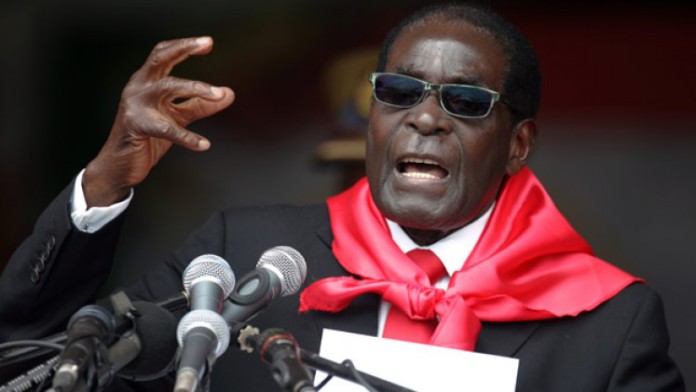
Outgoing Africa Union Chairman Robert Gabriel Mugabe has said the continental body will among other issues discuss reforms of the United Nations Security Council (UNSC).

Outgoing AU Chairman Mugabe, whose chairmanship of the continental body ends on January 31, weighed in on the matter at a joint press conference with Mbasogo, who was in Zimbabwe for a three-day visit.

“So, on the eve of the meeting of the Africa Union, we saw it fit to discuss what our positions would be in regards to various matters: The issue of the reform of the Security Council and what our position as Africa should be; and that is what we would want to discuss also with others at the African Union meeting in Addis Ababa,” Mr Mugabe was quoted as saying.

Stories Continues after ad

NRM celebrates 30 years in power


The National Resistance Movement (NRM) government will tomorrow,January 26, celebrate thirty years since it came to power in 1986.

Tomorrow’s celebrations are going to be held in Fort Portal, a town in a region that bore part of the brunt of war during the five-year struggle that brought NRM to power.

Led by Yoweri Museveni, the NRM and its armed wing the National Resistance Army (NRA) stormed Kampala and its environs in the early afternoon hours, with the soldiers under the command of then Senior Officers Salim Saleh aka Caleb Akandwanaho and Patrick Lumumba of the 3rd Battalion taking over strategic locations like Radio Uganda and UTV; the Bank of Uganda and the General Post Office.

The NRM/A overthrew the short-lived six month regime of General Tito Okello Lutwa, which had earlier on July 27 1985 also overthrown the Uganda Peoples Congress (UPC) regime of Apollo Milton Obote.

Other NRA senior officers involved in the Jan 26 takeover of Kampala included Elly Tumwine and Ivan Koreta, then Commander of the 13th Battalion.

Stories Continues after ad

US issues ‘travel alert’ for Uganda

The State Department has issued a travel alert during the election period, for its citizens who wish to come to Uganda

The State Department has issued a travel alert during the election period, for its citizens who wish to come to Uganda and that resident in the country.

‘The State Department recommends US citizens maintain a high level of security awareness leading up to, during, and following the election period,’ a release indicates, adding that the alert expires on March 31, this year.

The release advises Americans to ‘avoid political rallies, polling centres, demonstrations and crowds of any kind’ saying that peaceful gatherings can ‘become confrontational and turn violent’.

According to the release however, there are no indications that US citizens are targets of violence.

Uganda goes to the polls in February, beginning with the presidential and parliamentary elections on 18, followed by other lower rung local elections between February 24 and March 10, and results are expected in about a week.

Campaigns in the country began after the November 4-5, 2015 presidential nominations, and since then there have been isolated cases of violence in some campaign areas.

The campaigns have also been laced with vitriolic words by some candidates, prompting some Ugandans to question the prospects of an incident-free election.

However, state authorities led by the Independent Electoral Commission (IEC) and the Uganda police have assured the nation of having an election conducted in a peaceful atmosphere.


Stories Continues after ad

Mbabazi alleges ballot stuffing

Presidential aspirant John Patrick Amama Mbabazi has accused the Independent Electoral Commission (IEC) of planning to rig the elections through ballot stuffing.

‘Very many ballots have been brought in for purposes of stuffing’ Mr Mbabazi wrote on his twitter handle earlier today, before calling upon his supporters to be more vigilant.

“That is why we are asking people to be more vigilant,” Mbabazi said, without stating exactly who the rigging would favour.

But contacted for comment IEC spokesperson Jotham Taremwa said Mbabazi was engaging in propaganda.

“That is just his campaign propaganda, if he knows where they (ballots) are, let him show us the place where they are being kept,” Taremwa said on phone.

He said the IEC would make public the date of arrival of the ballots.

“We will invite the media to witness the arrival of the ballot papers, so Amama is just politicking,” Mr Taremwa added.

Meanwhile, Mr Mbabazi also accused the state of harassment, saying security operatives raided Endigyito FM studio, carried away equipment and cut the transmission wires, after the station hosted him.

Twitting about oil, Mbabazi said that president Museveni personally handled the deals, in apparent reference to the debate on Friday January 15 where he was asked about his role in any oil deals.

‘They were never discussed in cabinet,’ Mr Mbabazi wrote.


Stories Continues after ad

Machar to meet Museveni over South Sudan stalemate

South Sudan rebel leader Riek Machar meets President Yoweri Museveni, a key player in efforts aimed at restoring peace in the wartorn South Sudan.

The chairman and commander-in-chief of the armed opposition group, the Sudan People’s Liberation Movement (SPLM/A-IO), Riek Machar, is in Uganda to meet President Yoweri Museveni.

The opposition leader left the Ethiopian capital, Addis Ababa, yesterday night to consult with Museveni on the outstanding issues in the implementation of the South Sudan peace agreement.

At a brief press conference at his residential area in Addis Ababa, the First Vice President designate, according to a peace agreement he signed with the South Sudanese President, Salva Kiir, said he will be trying to persuade Uganda to play a key role in convincing President Kiir reverse the order of expanding South Sudan states from 10 to 28.

According to Machar, Uganda which had been part of the conflict since day one, has lately been playing an important role for the two conflicting parties to reach agreements.

Machar said he believed Kampala will play a crucial role with regard to the existing misunderstanding on the 28 states, a decree which has become an emerging challenge threatening the implementation of the peace deal.

Machar’s visit to Uganda is his first since conflict in the young east African nation erupted in mid-December 2013. The opposition leader gave the press briefing shortly after his arrival from his headquarters in Pagak, where he had consultations with senior members of the advance team who returned from Juba.

Efforts to get comment from deputy government spokesperson Col Shaban Bantariza were fruitless by press time.

Meanwhile, during a day and half consultations, SPLM-IO officials passed a resolution to stick to the ten states.

“We have decided to stick to the terms of the agreement and implement it that way,” Nyarji Jermlili Roman, deputy spokesman for Machar said.

Roman said the implementation should take place based on the ten states and any other proposals regarding the expansion of states should be discussed during the interim period.

The two South Sudanese signatory parties on Saturday pointed fingers at each other of having intentions to obstruct the implementation of the peace agreement signed in August 2015 to end 21 months old conflict in the young east African nation.

However, Machar said the issues of 28 states is the only factor hindering implementation and holding back the amendment of the constitution. He said a transitional government of national unity cannot be formed while there is no constitution, further arguing the constitution is the anchor of the agreement and the government.

Machar added that amendment of the constitution should first be finalized then to be passed by the interim national assembly thereby to form a transitional government of national unity.

According to Roman the advance team is facing challenges in Juba with regard to the amendment of the constitution but is heeding to find a way forward to the deadlock.

He said he is optimistic a fruitful outcome will emerge from Kampala but he added that if failed the opposition group will consider addressing the issues to partners of the agreement – the international community, the Troika and the African Union.

According to Machar lasting peace won’t be easily achieved in South Sudan if the peace implementation process went according to the 28 states.

Stories Continues after ad

Kadaga urges parties to support women candidature

The Speaker of Parliament, Rt Hon Rebecca Kadaga, has said that political parties in Africa need to support women candidates because their financial limitations represent a substantial obstacle for them making a contribution in the governance of their countries.
Kadaga made the remarks while closing a four-day Commonwealth Women Parliamentary Conference (Africa Region) in Dar-es-Salam, Tanzania on Friday, 22 January 2016. 
“Women have the confidence to run for public office. They have good public speaking skills and can mobilise the support of local groups. Their only setback is inadequate financial strength,” she said.
Laddi Ayii Ayambo, a Member of Parliament from Ghana, reiterated that it is critical to fund and help women in political parties because when women remain under-represented in the political arena, their expertise and perspectives on policy agendas is underutilized.
Lindiwe Maseko, Chairperson Commonwealth Parliamentary Association explained that increased presence of women in political offices helps parties to compete more effectively and thereby drawing attention to important policy issues that have previously been overlooked.
The meeting resolved to encourage all political actors to promote equal participation of women and men in political parties, with a view to achieving better gender-balanced representation for elected public offices at all levels of decision-making.
In a related event, Kadaga advocated for the recognition and celebration of the achievements of women who took part in the liberation struggles across Africa and in the Commonwealth. She explained that their efforts have had an impact on the social, political, academic and entrepreneurial spheres of countries.
“Women, particularly in Africa, were part of the struggles before and after independence,” she said adding that: “it is important to acknowledge the struggles of these women some of whom were united to fight against gender-based injustices.”
The Commonwealth Women Parliamentarians applauded Kadaga for her activism and resolved to celebrate the lives and works of dynamic and inspiring women world over.   


Stories Continues after ad

Mbabazi convoy in another accident

Mbabazi accent3Two people were reportedly injured when one of the vehicles in the convoy of presidential aspirant John Patrick Amama Mbabazi got involved in an accident early this morning.

Mbabazi accident2

Eyewitnesses said the car carrying band members on Mbabazi’s entourage was speeding and skid off the road after its driver failed to negotiate a sharp bend at Kanyende, in Busheshe Sub County, after Ibanda town.

Mbabazi accident4

The two injured people, one Gaucho and Tony, were later rushed to a health facility for treatment.

This is not the first time Mbabazi’s convoy is involved in an accident; about two weeks ago, while he campaigned in the Karamoja sub region, a Toyota Custom omnibus Reg No UAT 654Z carrying members of his private security team got involved in an accident, overturning several times and injuring some of his private guards.

Also, about a week earlier, another accident involving Mbabazi’s supporters occurred in Apac, when a Toyota Prado TX Reg No UAN 565H skid off the road and injured people by the roadside. The injured were rushed to Atapara hospital for better management.

A source that spoke to The EagleOnline attributed the ‘campaign accidents’ to excitement among supporters following their candidates.


Stories Continues after ad

Sudan prelates invite Pope, get ‘positive response’

Pope Francis seen here being welcome to Uganda in November 2015.

If Pope Francis I honours an invitation from the South Sudan and Sudan Archbishops who visited him at the Vatican City this week, he will become the first reigning Pope to visit Africa twice during his tenure.

In November last year, the Pope visited Kenya, Uganda and the Central African Republic (CAR), and just last Wednesday the prelates from the two Sudans invited him to visit their respective countries: South Sudan which has a huge Catholic population and the predominantly Muslim Sudan.

Catholics make up over a third of the population in South Sudan and make up just over 3% of the population in Sudan, where the vast majority of the people are Muslims.

The bishops are in Rome for a meeting organized by the Vatican’s Congregation for the Evangelization of Peoples and according to Vatican Radio, the Pope and Sudanese prelates were joined by the Apostolic Nuncios in both countries, and they discussed variety of topics including among others, peace and poverty in the respective countries.

The Archbishop of the Archdiocese of Juba, Paulino Lukudu Loro, said Pope Francis accepted to visit the two countries at an appropriate time which was not fixed, however.

“He said I am ready. I want to. I want to. I want to. But we have to leave everything in the hands of the Lord,” Archbishop Paulino Lukudu quoted Pope Francis as saying.

He told Vatican Radio’s 105Live the ‘issue of peace’ is still a priority in both countries, especially South Sudan, ‘because we are at war’.

South Sudan, which split from the Sudan in 2011, has been embroiled in civil war for the last two years since December 2013, and the violence has led to more than a million refugees and internally displaced people. The new civil war has also led to the death of tens of thousands of people.

“Without peace, religion has difficulties,” Archbishop Loro said, adding that the Catholic Church must also address the issue of vacant dioceses as well as providing support for the local clergy.

“We must discuss with our superiors in the Congregation [for the Evangelization of People] about how to proceed and accomplish our goals,” the Archbishop said. “There are many questions from us on how to proceed.”

The Catholic Church in South Sudan has one archdiocese, and six Suffragan dioceses. The bishops are members of the Sudan Catholic Bishops’ Conference, which includes the bishops from Sudan.

In 1993, at the height of the civil war between the mainly Muslim north and the animist and Christian south, Pope John Paul II visited Khartoum and denounced the use of violence in the name of religion.

Stories Continues after ad