Stanbic Bank
Stanbic Bank
18.1 C
Kampala
Stanbic Bank
Stanbic Bank
Home Blog Page 2260

Mugabe rallies African countries to ‘pull out’ of UN

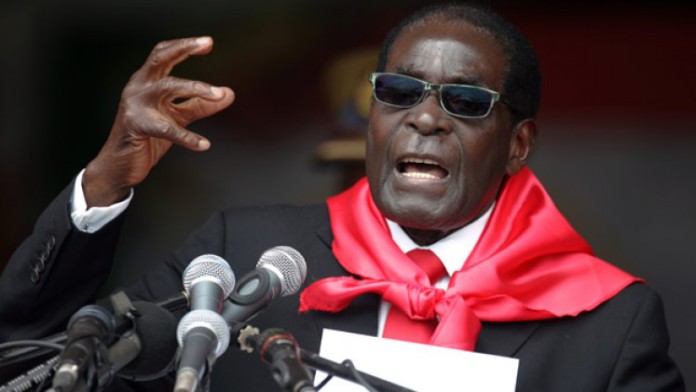
I AM STILL AROUND! Zimbabwe President Robert Mugabe

African countries will not hesitate to walk away from the United Nations if Westerners continue to block efforts to reform and democratise the organisation, Zimbabwe President Robert Gabriel Mugabe has said.
In an address interrupted several times by thunderous applause, appreciative whistling and standing ovations from Heads of State and other delegates yesterday, the outgoing African Union Chair warned that the day was coming when the continent would say ‘enough was enough’.

The no-holds-barred speech, made as 91 year-old President Mugabe opened the 26th Ordinary Summit of the AU in Addis Ababa, was a tour de force in oratory and gave the world nearly an hour of the Zimbabwean leader at his imperious and peerless best on the international stage.

From the start, when giving an impassioned call to action on the Palestine issue, to the end when President Mugabe announced Chad’s President Idriss Déby Itno as his successor at the AU, the gloves were off.

Indeed, on assuming the Chairmanship, President Déby conceded that it was not everyone who could give such a frank talk on the state of Africa and the world.

President Mugabe spoke soon after Palestine’s President Mahmoud Abbas thanked Africa for its support for a two-state solution to end Israeli aggression in the Middle East.

Mugabe, credited before the Summit for bringing the Palestinian question back to the centre, rallied African support for fellow oppressed peoples.

He spoke with real fire about the world sitting back as Israel brutalised Palestine — he was to use similarly powerful language later on when denouncing global inaction over Morocco’s continued colonisation of the Saharawi Arab Democratic Republic — before neatly tying this in with the warning that continued injustice would see the continent abandon the UN.

UN Secretary-General Mr Ban Ki-Moon sat at the high table with President Mugabe, and nodded his head as the outgoing AU Chair passionately spelt out the travesty of denying African countries equality in the comity of nations.

“We are supposed to be free and independent Mr Ban Ki Moon; supposed to be free— the 54 countries (of Africa). We come to the United Nations for the ceremonial (General Assembly); every year, September, we are there.

“We pay lots of money, go there and attend the General Assembly and make speeches, go back home: year in year out.

“But the bosses in the Security Council say you shall never have the powers that we have as permanent members … Reform the Security Council!” President Mugabe thundered as African leaders stood as a body in sustained applause, the second such interlude of note after the earlier approbation following his remarks on justice for Palestine.

President Mugabe pressed home the point with a light touch that drew a mixture of laughs and applause when he continued: “I want to tell you, Mr Ban Ki-Moon, you are a good man. But, of course, that does not make you a fighter; it’s not what your mission was.”

Then it was back to straight shooting and the warning that Africa would pull out of the UN.
“We will fight for our own identity, for our own integrity and personality as Africans. We are Africans. If we decide – and we shall certainly do so one of these days – that down with the United Nations, (then) we are not members of it.

“Others are real members of it, we are artificial members of it. We can’t continue to be artificial members of it

How can only a handful of people (dominate the Security Council)?

“In fact, there is only America and the Europeans – those who say they are white-skinned. . .because they are white-skinned. ‘Anyone who is not like us shall not have the powers, strength and integrity that we have.’ If the United Nations is to survive, we must be equal members of it; equal members who can say when we go to the body, that we are now speaking fully as members with a voice that’s understood, respected and honoured.

“But no, that’s not it. We met in Swaziland years ago and we came up with (the) Ezulwini Consensus. We have said we want two permanent members with a veto if the veto is to continue. We don’t like it, but if the veto is to be retained those (African) members must also have it, but if the veto is to be abolished they shall be like others.”

The AU’s common position on UN reform as captured by the Ezulwini Consensus demands at least two permanent seats with veto power and five rotating seats on the Security Council.

Britain, China, France, Russia and the US are the current veto-wielding permanent members of the Security Council.

China and Russia have been open to discussing reforms, as have emerging powers like India and Brazil who also want to sit on the Security Council.

 

Stories Continues after ad

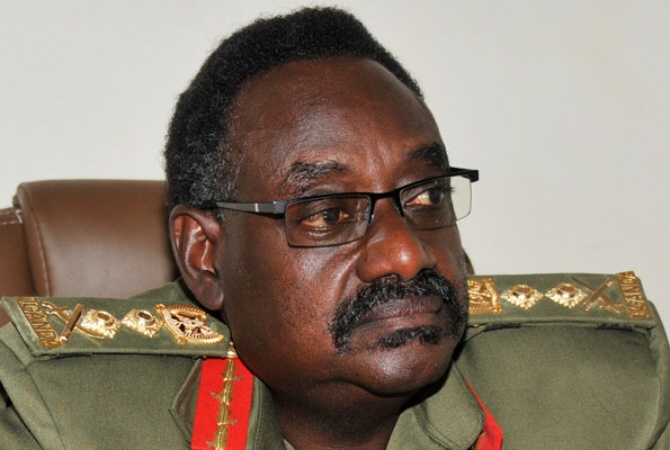
Gen Sejusa arrested

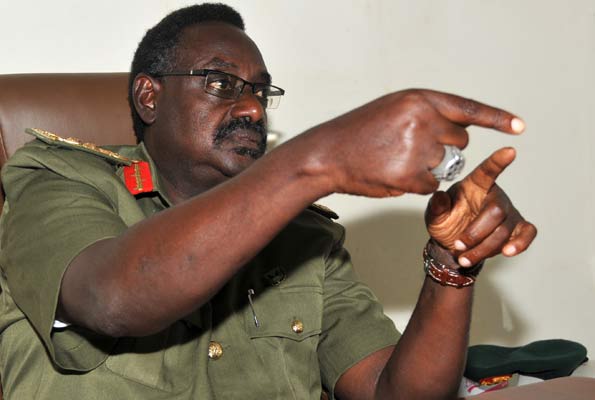
Gen David Sejusa

Military Police has today arrested the former Coordinator of Intelligence Services General David Sejusa.
According to sources, Gen Sejusa is suspected of being the mastermind behind the anti-regime ‘defiance’ campaign associated with the Forum for Democratic Change flag bearer Dr Col Kizza Besigye.

In April 2013 Gen Sejusa penned a letter to the Director General of Internal Security Organisation (ISO) Brig Ronnie Balya, claiming that there was a ‘succession’ plan where Mr Yoweri Museveni was grooming his son Brig Muhoozi Kainerugaba to take over power from Museveni. Gen Sejusa later fled to exile in the UK but was to return after two years, albeit still recalcitrant.
And since his campaigns began on November 5 Col Besigye has been insisting that he is carrying out a defiance campaign against the National Resistance Movement government, which has been in power for 30 years and has allegedly robbed him of electoral victory twice, in 2006 and 2011.

And the General weighed in and said that Besigye’s electoral victory was ‘stolen’ in 2006, something that could have put him in more trouble, leading to his arrest today.
The relations between Col Besigye and Gen Sejusa go back a long way, with both having been in the same hall of residence at Makerere University.

Sources say that Besigye and Sejusa stayed in the same house on Akii-Bua Road in Nakasero just after the 1896 capture of power by the NRM. Later, Besigye was to become Gen Sejusa’s Bestman.

Stories Continues after ad

Gen. David Sejusa Arrested

Gen David Sejusa.

General David Sejusa, also known as Tinyefuza has been arrested and detained at Makindye Military barracks.

This comes a few hours after military surrounded Sejusa’s home in Naguru. It is said that Gen. Sejusa is heading youth who are planning violence and defiance during and after elections.

This is a developing story. We shall keep you posted as it unfolds.

Free Uganda Committee Issues a statement.

The military police in Uganda have surrounded the home of Ugandan General David Sejusa, who is currently the Chairman of Free Uganda (FU), and organisation that is at the heart of the pro-democracy struggle going on in the East African nation.

It is thought that the Museveni regime, which has ruled Uganda for nearly 30 years, and may be facing defeat at the coming elections on 18th February 2016, has a plan to arrest top Uganda pro-democracy activists, like General Sejusa, so as to forestall possible mass uprising that is seen as inevitable should Museveni refuse to hand over power to the victorious political opposition.

Free Uganda is closely monitoring the situation on the ground, but in the meantime calls upon all FU members and operatives to be prepared for any eventuality in case Mr Museveni decides to play his usual ill-informed monkey tricks and stupid political game plays.

All the youth activists aligned to Free Uganda, and all the nation’s liberation forces are advised to be on standby should their services be required.

All the people of Uganda are also called upon not to be worried, but to understand that any stupid mistake by Museveni to disorganise the freedom struggle meant to cause positive change in the country will be vigorous dealt with by the People’s Resistance Forces.

General David Sejusa is staying firm and un-phased by the situation building up outside his Naguru home.

He requests the country not to panic, as any stupid antics by Museveni will be adequately handled.

The people of Uganda and the world at large will be kept informed of any further developments.

A Luta Continua.

[Statement issued by Dr. Vincent Magombe, the Secretary Free Uganda Leadership Committee and Press Secretary FU – 31/01/2016]

Stories Continues after ad

Burundi: ‘re-election complicates AU troop deployment plans’

A protester jumps over a barricade during a protest

Plans to deploy Africa Union peacekeepers to Burundi might suffer a major setback following the re-election of the troubled country to the African Union’s Peace and Security Council.

The AU had sought to deploy 5,000 peacekeepers in the central African state, where hundreds have died in the worst violence since an ethnically charged civil war ended in 2005.

But President Pierre Nkurunziza – who triggered the crisis by standing for a third term in July elections – has rejected the plan, saying the arrival of any such force would be seen as an invasion.

Burundi kept its place on the 15-member council unopposed on Thursday due to a lack of rival contenders from its region.

“There wasn’t any other choice but to rubber-stamp Burundi’s entry,” said one diplomat, speaking on condition of anonymity.

Countries on the council are barred from voting on motions about their own affairs. However, diplomats said Burundi could still use its prominent position to influence debates.

African Union leaders are expected to try to persuade President Nkurunziza to accept the force during the AU summit this weekend. Diplomats said they were not optimistic that he would change tack.

Nkurunziza won the July election that was boycotted by most of the opposition. Opponents said a third term violated the constitution. Loyalists cited a court that said he could run.

More than 400 people have been killed in protests and crack-downs over the past nine months, raising worries of a return to the kind of conflict that pitted Burundi’s Tutsi minority against the Hutu majority in the civil war.

The renewed violence has rattled a region where memories of the 1994 genocide in neighbouring Rwanda are still raw. Burundi and Rwanda share the same ethnic mix.

Amnesty International said on Friday that satellite images showed five possible mass graves in Burundi.

US Ambassador to the United Nations, Samantha Power, said yesterday that perpetrators of atrocities in Burundi ‘must realize that the international community is watching’ and those responsible will be brought to account.

“If the government of Burundi wants to prevent more mass graves, there has to be a prompt inclusive political dialogue outside Burundi and a significantly expanded international presence to offer protection inside,” she said.

Power visited Burundi last week with the UN Security Council.


Stories Continues after ad

Uganda is free of the Zika virus – Govt

The Ministry of Health has declared the country free from the Zika virus that is ravaging many parts of South America amid reports that the virus originated from Uganda.

According to the ministry, recent surveillance reports across the country indicate that there is no threat of the virus, and that the current virus spreading in South America is a different species from the one once recorded in Uganda.

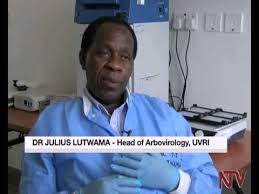
During an interview with the British Broadcasting Corporation (BBC), Dr Julius Lutwama, a leading virologist at the Uganda Virus Research Institute (UVRI) differentiated between the mosquitoes that transmit the virus in South America and the ones in Uganda.

“The Aedes we have, Aedes aegypti formosus, normally does not bite humans. And then we have other [mosquitoes] which live in the forests and prefer to bite at dusk and dawn,” Dr Lutwama said.

He noted that this is in contrast to South America, where a different sub species, the Aedes aegypti aegypti, is spreading the Zika virus.

The Zika virus is reported to have been discovered accidentally in Uganda in 1947 by Ugandan, American and European scientists in Zika forest located between capital, Kampala and Entebbe.

Only two cases of the virus in Uganda have been recorded since then.


Stories Continues after ad

Tanzania ‘mini-skirt story’ Editor transferred

The Standard Digital Editor David Ohito

The Standard Media Editor who delivered a blow to African quality journalism by promoting gender stereotyping and sexism by knowingly publishing false stories about women in Tanzania and Eritrea has been moved from his job.

According to Kenyan media reports, Standard Media Group Digital Editor David Ohito, who approved two hoax stories, was moved to another job.

‘Standard Group Digital Editor, David Ohito has tarnished the groups image and overall credibility and has been transferred to Kisumu to ‘put things in order’’, a statement read.

The two stories – the ban on mini-skirts in Tanzania and compulsory polygamy in Eritrea – could have necessitated the action against Mr Ohito.

Tanzania vehemently protested the story, with the Office of President John Pombe Magufuli releasing a statement on The Standard, which was forced to pull out the story.

Eritrea Information Minister Yemane Gebremeskel, was not impressed either and expressed his disgust at the negative light in which Eritrea had been portrayed.


Stories Continues after ad

ADF cited in DRC violence

ADF leader Sheikh Jamil Mukulu. He is currently facing several charges including murder and terrorism.

Despite the capture of its leader Sheikh Jamil Mukulu, Ugandan rebel group, the Allied Democratic Front (ADF), and other renegade groups like the Democratic Forces for the Liberation of Rwanda (FDLR) and the Mai Mai have forced large numbers of people to flee the ‘cycle of misery’ in eastern Democratic Republic of the Congo (DRC), three years after a major rebel offensive was defeated by United Nations and Government forces in North Kivu.

According to the United Nations High Commission for Refugees (UNHCR), the belligerent groups are again targeting the region, ‘rich in minerals but lacking in law and order’, for violence and putting thousands of civilians on the run.

“In the latest major forced mass movement, more than 21,000 people had fled from Miriki village and surrounding areas in North Kivu’s Lubero Territory on 7 January after the killing of at least 14 people in a night raid by suspected Democratic Forces for the Liberation of Rwanda (FDLR),” Leo Dobbs, spokesperson for the UNHCR told journalists in Geneva.

Since November, at least 15,000 people have sought shelter in sites for the displaced run by UNHCR or the International Organization for Migration (IOM). Tens of thousands more are estimated to be living with local families while others have returned to their homes.

“UNHCR is calling on the authorities to ensure security in the areas of return and to facilitate humanitarian access,” said Mr. Dobbs, also underscoring the importance for the authorities to address growing tensions in eastern DRC and scale up support to the newly-displaced.

While the battle between the FDLR and Mai Mai groups has forced thousands to flee home, the ADF, meanwhile, continues to wage a campaign of terror and sporadic attacks and ambushes against the local population and Congolese armed forces in the north of the province.

The UN refugee agency is now providing support by running 31 displacement sites, providing shelter materials, coordinating protection and advocating for their rights.

Mr. Dobbs cited the continuing violence in the DRC as ‘very much a neglected story’, and noted that the UN Office for the Coordination of Humanitarian Affairs (OCHA) earlier this month estimated that 7.5 million people in DRC, or nine per cent of the population, are in need of food and other humanitarian aid after decades of crises.


Stories Continues after ad

Russia opposes sanctions against South Sudan

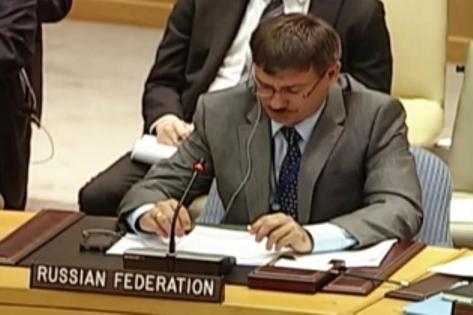
Russia's Deputy UN Ambassador Petr Iliichev,

Russia said yesterday it was opposed to placing a United Nations arms embargo on South Sudan or blacklisting President Salva Kiir and rebel leader Riek Machar as such moves were not helpful to the implementation of a peace deal agreed by the pair in August.

UN sanctions monitors said in a report, seen by Reuters on Monday, that the UN Security Council should put an arms embargo on South Sudan and sanction the oil-rich country’s rival leaders over atrocities in a two-year civil war.

“(It’s) not conducive, not conducive for the peace process,” said Russia’s Deputy U.N. Ambassador Petr Iliichev, confirming that Kiir and Machar were among several names proposed for targeted sanctions by the UN experts in a confidential annex.

A political dispute between Kiir and Machar, who was once Kiir’s deputy, sparked the civil war. But it has widened and reopened ethnic fault lines between Kiir’s Dinka and Machar’s Nuer people. More than 10,000 people have been killed.

On a possible UN arms embargo, Iliichev said: “For us it’s a no go, the region is already inundated with arms, so what we need is to control the arms that are there.”

Iliichev said it would be hard to enforce an arms embargo on opposition fighters, putting the government at a disadvantage.

The conflict in South Sudan, whose 2011 secession from Sudan had long enjoyed the support of the United States, has torn apart the world’s youngest country. The UN experts said some 2.3 million people have been displaced since war broke out in December 2013, and 3.9 million face severe food shortages.

Kiir and Machar signed a peace deal in August but both sides have consistently broken a ceasefire, while human rights violations have “continued unabated and with full impunity,” the UN experts reported.

U.S. Ambassador to the United Nations Samantha Power said on Thursday that implementation of the peace deal had stalled.

She said the 15-member Security Council would need to look at whether an arms embargo and targeted sanctions could be “a means of stabilizing the situation on the ground or getting the implementation of the agreement back on track.”

This is not the first time Russia is shielding embattled African leaders from facing possible UN sanctions; just last week Mr Iliichev opposed possible sanctions against Burundi leaders including President Pierre Nkurunziza, and the deployment of 5000 AU troops to the troubled country.


Stories Continues after ad

Kiir absent at AU Summit

South Sudan President, Salva Kiir

South Sudan President, Salva Kiir, will not participate in the African Union (AU) annual summit in the Ethiopian capital, Addis Ababa, on Saturday, his office said on Friday.

The continental summit, to be attended by heads of state and government from across Africa, will also discuss the delayed formation of a transitional government of national unity (TGoNU) in South Sudan and the obstacles to the implementation of the peace deal which President Kiir and his rival, Riek Machar, signed in August last year.

President Kiir’s spokesman, Ateny Wek Ateny, said Juba’s team to the AU headquarters will be led by the minister of foreign affairs and international cooperation, Barnaba Marial Benjamin.

“He [President Kiir] is not attending [the AU] summit,” said Ateny when contacted on Friday to confirm Kiir’s trip to Addis Ababa.

“The president is attending to other urgent things here in Juba,” Ateny added.

President Kiir and his former Vice President Riek Machar – who is now leading the SPLM in Opposition – were expected to meet in Addis Ababa in the corridors of the AU summit in order to iron out the difficulties in forming a transitional government.

Ateny declined to delve into details of such commitment that President Kiir is committed to do over the weekend in Juba, despite the seemingly priority AU summit on his country’s future.

South Sudan Ambassador to Ethiopia, Akuei Bona Malwal, confirmed the absence of President Kiir at the AU summit in a separate interview earlier on Friday.

“We decided that he better attends to the business at home and the delegated Nhial Deng Nhial [Chief Negotiator] and the Minister of Foreign Affairs [Barnaba Marial Benjamin] to attend the summit, which is actually a normal practice, and he is not alone,” Malwal said.

He said Kiir was working on formation of transitional government and this made it impossible to participate in the AU summit.

President Kiir last visited Addis Ababa in August 2015 when he attended the final day of peace talks. The president, who did not sign the document, was reportedly prevented from leaving the country in fear of senior generals who had been against the peace agreement.

It is not the first time for President Kiir to avoid attending gathering of world leaders to discuss his country. Last September he failed to attend a United Nations high profile meeting of world leaders in New York to discuss peace in South Sudan.

Observers allude to his skipping the summit as a way to avoid pressure from regional leaders who may call on him to reverse his decision of unilaterally creating 28 states in violation of the peace agreement.

Meanwhile, the leader of the opposition faction, Riek Machar, is said to have been waiting in Addis Ababa for the AU summit and to have that rare opportunity to meet President Kiir over the outstanding issues including the controversial 28 states.

“My chairman, Dr Riek Machar, is in Addis Ababa to participate in the AU summit. This will also be an opportunity for him to meet President Salva Kiir and discuss some sticking points in the implementation of the peace agreement,” Machar’s press secretary, James Gatdet Dak, said when contacted on Friday.

He said there is need for the parties to abide by the peace agreement in spirit and letter and incorporate it into a new transitional constitution based on the existing 10 states.

A transitional unity government, he said, would be formed based on a new constitution drawn from the peace agreement.

Ban ki Moon ‘deeply disappointed’

UN Secretary General Ban Ki-moon Friday said he was ‘deeply disappointed’ and urged the South Sudanese parties to settle the outstanding issues and to form the transitional government.

“I call on all parties urgently to resolve the disputes that are preventing the establishment of the government. The parties must place the interests of their young nation and its people, who have suffered long enough, above their own,” Ban said in a meeting of the African Union Peace and Security Council in Addis Ababa.

The signatories to the peace agreement ending the nearly two year conflict in South Sudan failed to meet the January 22 deadline for the formation of the Transitional Government of National Unity.

The UN Secretary General also called on the African Union and the Inter-Governmental Authority on Development, IGAD, to hold the South Sudanese parties accountable for following through on their commitments.

He reiterated the readiness of the United Nations to lend its full support to the chairperson of the Joint Monitoring and Evaluation Commission (JMEC) President Festus Mogae, the African Union High Representative President Alpha Oumar Konaré, and IGAD, in their efforts to end the suffering of the South Sudanese people.


Stories Continues after ad

Kenyan national arrested for human trafficking

A Kenyan national, Khalima Abdalla, has been arrested in Uganda for human trafficking.

According to a release by the police Deputy Spokesperson Polly Namaye, Ms Abdallah, a resident of Makindye Division in Kampala is suspected of using her company in 2015 to recruit people for the benefit of employment in countries like Saudi Arabia and United Arab Emirates (Dubai) as housekeepers and cleaners, contrary to section 3 (I) of the Prevention of Trafficking Act.

The operation to arrest Ms Abdallah was carried out in partnership with Kyampisi Child Ministries, a local NGO, and cases have been preferred against her and ‘others still at large’.

In the release Ms Namaye said police at the Special Investigations Division (SID) Kireka received communication of sexual harassment, assault, denial of payment and abuse of the girls taken by Ms Abdalla’s company.

Subsequently, 34 girls were intercepted and denied travel to the Middle East, while over 100 passports, ‘fraudulently acquired’, were also confiscated from the office of the suspected traffickers. By press time it was not possible to establish how the passports were acquired.

Meanwhile, According to Kyampisi Childcare Ministries, ‘so many girls that were trafficked are still stranded in the middle east countries’.

In the wake of several complaints related to human trafficking to the Middle East, about a week ago the Minister of Gender, Labour and Social Development Wilson Mukasa Muruli, wrote to the Ministry of Foreign Affairs in Kampala, informing the officials of the cancellation of a labour export agreement signed between Uganda and Saudi Arabia last year.

“You may be aware that the ministry on 7th January 2015 signed an agreement with the Ministry of Labor in Saudi Arabia regarding employment of domestic workers from to Saudi Arabia. The two countries also agreed on a standard employment contract which shall govern the employment in Saudi Arabia of Ugandan domestic workers or household service workers and which shall be followed by all employers and Ugandans in Saudi Arabia,” Muruli’s release to the foreign affairs ministry, states in part.


Stories Continues after ad