Stanbic Bank
Stanbic Bank
22 C
Kampala
Stanbic Bank
Stanbic Bank
Home Blog Page 2263

James Mutende, The humble hardworking Minister

RIP! James Mutende [NET Photo]


 Kampala: He always wore his necktie tight to the neck, his suit spotlessly pressed. A tradition he probably picked from Busoga College Mwiiri.

Just last week, he drove into grand imperial hotel, his car draped in campaign posters with ‘vote Mutende’ slogans.

He was planning to contest again for Mbale Municipality. However, he was found in bed unresponsive and pronounced dead at Nsambya hospital. As we write this, the cause of death is yet to be known.

James Mutende joined government in 2011 as a junior minister for industry and an ex-officio in Parliament, a position he held till the time of his death.

He was a regular attendant of plenary, always coming in earlier than most of his cabinet friends albeit rarely contributing to debate as is the case with the majority of cabinet ministers.

He has been described, by his Mbale politics colleagues, as hardworking, honest a committed servant, with great dignity, who gave his all to perform his duties and responsibilities. He was also known to be honest and a man of great dignity.

“I first met him in Mwiri when he was in senior three while I was in senior one and when I was joining University he was in third year and so we have been great friends and I will miss him a lot,” Nandala Mafabi (Budadiri West) said, adding that he was “indeed a man of principle.

“I always joked with him. He is used to call me a small boy because of my small size, and I used to call him big boy,” he said. Mutende was actually smaller compared to Mafabi.

Simon Mulongo (NRM, Bubulo West) remembers him as a well-groomed gentleman and academician.

“He was more of a technical person than political. He was never a selfish person and was not a person who used every means to get what he wants.

“In him we have lost a very resourceful person both to the people of Mbale and the country as a whole,” he said.

Mutende was instrumental in drafting the NRM manifesto and helping to build party structures in Mbale.

According to Mulongo Mutende leaves behind the legacy of construction of the industrial park in Mbale, a feat he achieved after talking to the President who provided money for acquisition of land and compensation of affected people

Leader of Opposition in Parliament Hon. Wafula Oguttu said Mutende was humble, social, and never indulged in dubious actions like many politicians of our time.

“Mutende was free from any corruption scandal right from his days at the National Investment authority to his appointment as Minister,” says Wafula.

Mutende comes from a family of distinguished technocrats and politicians. His father Michael Mutende was the first Ugandan Town Clerk of Mbale Municipality, from 1964 until 1974.

His uncle James Francis Wapakhabulo was Uganda’s foreign minister at the time of his death in 2004.

A holder of a PhD in economics he was one of the three most highly educated ministers in Museveni’s current government.

He was born in Mbale in 1962. He attended locals schools before joining Busoga College Mwiri . In 1984, he joined Makerere University where he studied Veterinary Medicine graduating in 1988.

In 1999, he graduated with a Master of Business Administration. He received a Doctor of Philosophy in Economics from New School University in New York.

He began his career as a teaching Assistant at Makerere University in 1987, during his final undergraduate year, continuing in that until 1989.

He joined national politics when he contested for Mbale Municipality Member of Parliament seat only to be defeated by Jack Wamayi Wamga. In 2011, he again contested and was still defeated by Jack Wamayi Wamanga before being appointed Minister of State for Industry.

By the time of his death, he was seeking to contest for Mbale Municipality Member of Parliament seat on the NRM ticket. Four children and wife, Lydia Wanyoto, survive him.

May his soul Rest in Peace.

Stories Continues after ad
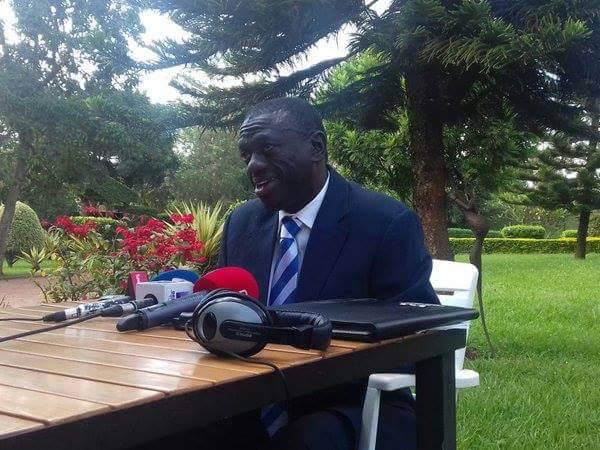
Gen Bamuze is dead

RIP! Bamuze

Maj Gen Ali Bamuze, the former commander of the Uganda National Rescue Front (UNRF) II rebel group, on Sunday night collapsed and died in State House, Entebbe. Details to follow.

RIP! Bamuze
RIP! Bamuze
Stories Continues after ad

Breaking News: Minister Mutende dead 

RIP! James Mutende [NET Photo]

Breaking News: Minister Mutende dead 

Richard Wanambwa

Junior minister for industry James Mutende is dead. He was 53.

According to a family member, Mutende was found unresponsive in bed at his Makindye home.

Mutende replaced the late James Wapakhabulo in Mbale municipality before losing the seat to  FDC’s Wamanga Wamai. He was former deputy director Uganda investment authority. He was also a key member of 2011 and 2016 manifesto task force.

RIP! James Mutende [NET Photo]
More to follow.

Education Background

He was born in Mbale, on 26 February 1962. After attending local schools, he was admitted to Busoga College Mwiri, an all-boys boarding secondary school near Kakira in Jinja District. He graduated from Mwiri, with the Uganda Certificate of Education in 1980 and with the Uganda Advanced Certificate of Education in 1983. In 1984 he was admitted to Makerere University to study veterinary medicine, graduating in 1988 with the degree of Bachelor of Veterinary Medicine. In 1999, he was awarded the degree of Master of Business Administration, also by Makerere University. Later, in 2005, he received the degree of Doctor of Philosophy in Economicsfrom New School University in New York City


Stories Continues after ad

EC sets new fees, amends election roadmap

Electoral commission (EC) Chairperson , Badru Kiggundu
Independent Electoral Commission (IEC) Chairperson , Badru Kiggundu


The Electoral Commission has set new fees for presidential and parliamentary aspirants. This move follows the recent amendments made to the Presidential Elections Act.

Addressing journalists at the EC headquarters in Kampala, the Chairperson Eng Badru Kiggundu revealed that presidential aspirants will now have to pay Shs20 million, up from Shs 8 million, while fees for those aspiring for Parliamentary seats will have to pay Ush 8 million, up from Shs 200,000.

“The presidential aspirants who had already made a payment of shs 8,000,000 are advised to pay the balance of the fees before nomination days,” announced Kiggundu.

He announced other amendments to the Elections Act which included the scraping of a requirement that entailed a presidential candidate campaigning in every district. The EC chairperson also disclosed that the Commission would not facilitate presidential candidates in next year’s elections. In the previous elections, presidential candidates were each given Shs20 million, a vehicle and security to help in the campaigns.

Also adjusted were the voting hours, which were changed from 5pm to 4pm.

In another development the Electoral Commission has extended the nomination dates for presidential candidates. EC boss Eng. Badru Kiggundu says this was caused by the recent amendments to the electoral laws.

“The Electoral Commission found it necessary and took a decision to extend the dates for the nomination of candidates for the 2016 presidential elections,” he noted.

Nominations which were supposed to be held on 5 and 6 October will now be held on 3 and 4 November. EC has set Mandela National Stadium in Wakiso district as the venue where the nominations will be conducted.

“The extension will among other others enable EC and aspiring candidates to fully comply with the provisions of the amended electoral laws,” stressed the EC chairperson.

The nomination exercise will commence at 10 in the morning and close at 4 on both dates. After the inspection of nomination papers and harmonization of campaign programmes, the candidates will start their campaigns on November 9 to February 10 although EC has not set the polling date for the Presidential Elections.

The Commission also extended submission of lists of supporters by aspiring candidates, and the exercise will end on October 23.

“Therefore, aspiring candidates should ensure that they comply with the (nomination) requirements so that their nomination is successful,” Kiggundu implored.

Stories Continues after ad
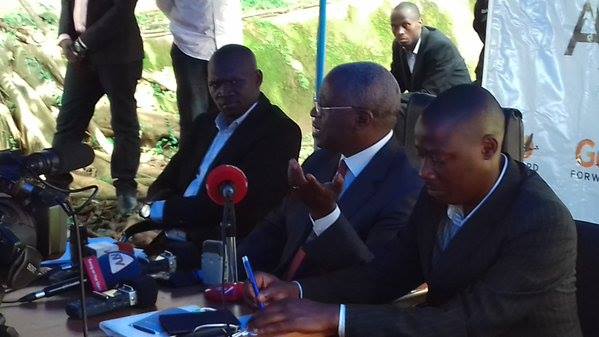
EU issues travel restrictions for four Burundi officials

The Council of the European Union has imposed travel restrictions on four Burundi officials implicated in human rights abuses following the protests and violence that erupted after President Pierre Nkurunziza announced he was running for the ‘third term’.
 
“Member States shall take the measures necessary to prevent the entry into, or transit through, their territories of natural persons undermining democracy or obstructing the search for a political solution in Burundi, including by acts of violence repression, or inciting violence,” the statement issued in Luxembourg on October 1 by E Schneider on behalf of the Council President, reads in part.
In the statement titled: ‘Council Decision (CFSP) 2015/1763 of 1 October 2015 concerning restrictive measures in view of the situation in Burundi’, the Deputy Director General of the National Police Godefroid Bizimana, the Head of Cabinet of the Presidential Administration (Presidence/Police) Gervais Ndirakobuca alias Ndakugarika;  Mathias Joseph Niyonzima of the National Intelligence Service and, Leonard Ngendakumana, a former army General have been prohibited from travelling to any European Union country for one year.
‘On 22 June 2015, the Council expressed its deep concern at both the number of victims and the number of cases of serious human rights violations reported since the beginning of the crisis, particularly those abuses attributed to the security forces and to members of the Imbonerakure. The Council also reiterated that it was determined to adopt, if necessary, targeted restrictive measures against those whose actions might have led or might lead to acts of violence and repression and serious human rights violations, and/or might hamper the search for a political solution within the framework proposed by the African Union and the East African Community,.
Bizimana,47,  Ndirakobuca, 45, and Niyonzima are being accused of undermining democracy by among others fomenting violence, training and arming the Imbonakure militia, carrying out acts of repression and violence during the period when President Pierre Nkurunziza announced his ‘third term’ candidacy on April 26 2015, the ensuing protests and coup attempt on May 13, and the President’s post-election era, while Ngendakumana, 47, one of the putschists is accused of ‘publicly supporting violence as a means of achieving political goals’.
“…Responsible for obstructing the search for a political solution in Burundi by participating in the attempted coup d’état of 13 May 2015 to overthrow the Burundi Government. Responsible for acts of violence — grenade attacks — committed in Burundi, as well as for incitement to violence,” the statement says of General Ngendakumana.
Since April Burundi has been embroiled in persistent chaos following President Nkurunziza’s announcement that he would stand for election for a third term, an issue that has bred violence, leading to the killing of tens of thousands, while hundreds of thousands others have fled the tiny central African country.
Stories Continues after ad
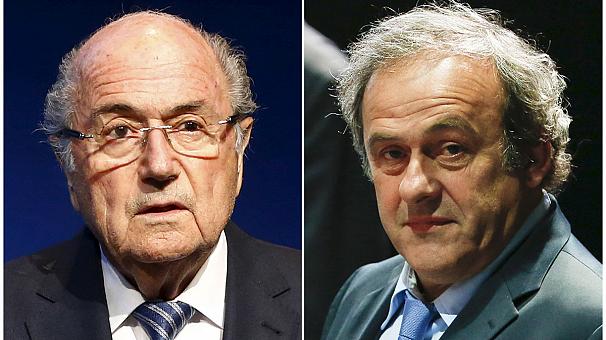
FDC announces Besigye nomination date

Dr Besigye trying to calm his supporters at Silver Springs hotel in Bugolobi this evening.

Opposition Forum for Democratic Change flag bearer is set to be nominated as a presidential candidate on November 3, 2015, the party has confirmed.
In a letter to the Electoral Commission, the FDC Chief Electoral Commissioner, Michael Kabaziguruka pointed out that the development has been occasioned by the alteration of the nomination exercise by the Electoral Commission.

The Electoral Commission extended nomination dates for presidential aspirants from October 6 to November 4 as the deadline for returning nomination forms. Presidential campaigns will now begin on November 9 and run for 120 days to February 10, 2016.
EC chairman Dr Badru Kiggundu says the extension is to allow candidates comply with the change in electoral laws passed on
Thursday, adding that the decision was taken without pressure from government.

Stories Continues after ad
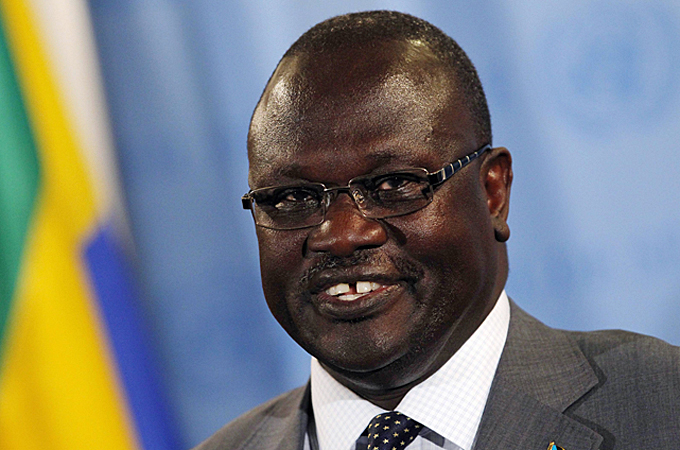
Burundi’s Minister accuses Rwanda of training rebels

nyamitwe1

Burundi has accused neighbouring Rwanda of training rebels seeking to destabilise the country.

It is hosting Burundi’s failed coup leader, and helping rebels launch cross-border attacks, Foreign Minister Alain Nyamitwe told the BBC.
Rwanda denies the allegation, and says Burundi is trying to deflect attention from its own problems.
The two governments have a tense relationship, with both countries sharing a similar ethnic make-up.
 Africa Live: BBC news updates
 What Burundi could teach Rwanda about reconciliation
Burundi has been hit by a spate of assassinations and attempted assassinations since President Pierre Nkurunziza won disputed elections in July.
He survived a coup attempt in March. It was led by renegade Gen Godefroid Niyombare, who opposed his bid for a third term.
Gen Niyombare has not been seen in public since then.
About 70,000 Burundians are living in refugee camps in Rwanda after fleeing the unrest.
Mr Nyamitwe told the BBC Kinyarwanda service that Rwanda was “facilitating” attacks that the coup plotters were orchestrating in Burundi.
“We also have extensive information about recruitments in refugee camps, especially in Mahama refugee camp, where refugees are taken for military training, and some of the trainers are Rwandans,” he added.
On Tuesday, Rwanda’s foreign ministry official Olivier Nduhungirehe accused Burundi of harbouring rebels from the Democratic Forces for the Liberation of Rwanda (FDLR) group, which was linked to the 1994 genocide in Rwanda.
Mr Nyamitwe said a fact-finding team, sent to Burundi by regional leaders, found there was no truth to the allegation.
The team visited Burundi after Rwanda made similar allegations in the past, he added.
Both Rwanda and Burundi have long experienced ethnic conflict between a Hutu majority and a Tutsi minority which has traditionally been dominant.
Rwanda sees the mainly Hutu FDLR as a major threat to its stability, and is pushing for its disarmament.
Mr Nkurunziza is a Hutu former rebel leader, while his Rwandan counterpart Paul Kagame is a Tutsi.
However, the unrest in Burundi is not linked to ethnic divisions, analysts say, and the two presidents used to enjoy good relations, even playing football together.

Stories Continues after ad

Germany commits 37m Euros for EAC integration

The Federal Republic of Germany has committed 37 million Euros to the East African integration process.
According to a release by the EAC Secretariat, 10 million Euros with be used to prevent and control the spread of epidemics and communicable disease; 10 million Euros will be used for water resource management on Lake Victoria, while 17 million Euros will go towards strengthening the EAC Secretariat and economic integration between 2016 and 2018.
‘The programme is focussing on institutional strengthening of the EAC Secretariat and on supporting the implementation of the Customs Union, Common Market Protocols and Monetary Union. This includes the elimination of Non-Tariff Barriers such as tax harmonisation as well as Mutual Recognition Agreements for qualifications. At the same time Germany will support the EAC in promoting private investment especially in the pharmaceutical sector, including the establishment of a regional quality infrastructure for the pharmaceutical sector, the release states in part.

‘’We have truly benefited from the German support which has catalyzed other development Partners to support our projects and programmes. In addition, Germany has given the EAC a permanent home by financing  the construction of the new Headquarters that today houses the Secretariat, the Court and the Assembly under one roof thus greatly easing the EAC Organs interactions and communication’’, the  EAC Deputy Secretary General in charge of Finance and Administration, Mr Liberat Mfumukeko said during the talks at the EAC headquarters in Arusha.

He highlighted the successes achieved through German support in the realisation of the fully fledged Customs Union, the Common Market, and the commitments to support the realisation of the Monetary Union in the succeeding programme.
Mr Georg Rademacher, Head of the German delegation, said: “Our support underlines the importance we give to the East African Community. The EAC is a role model and pace-setter in Africa and we are proud working closely with you in order to contribute to the well-being and prosperity of the citizens of this region”.
He underlined that Germany is also supporting substantial regional infrastructure projects with promotional loans of the German Development Bank, KfW.

Last week Ambassador Kochanke and Secretary General Ambassador Richard Sezibera signed a financial agreement to commit 30 million euros for live-saving vaccines in the EAC and the establishment of the EAC Regional Centre of Excellence for Health Supply Chain Management in Kigali.

With a view to strengthen the pandemic preparedness in the EAC, Germany had announced its willingness to provide an additional 3 million euros in technical assistance for the region`s crisis response capacity (out of special funds for 2016).
Since cooperation began in 1998 the total volume of German support to the EAC amounts to almost 213 million euro. Germany also has substantial bilateral cooperation with all five EAC member states.

Stories Continues after ad

Kabila man defects over ‘third term’

Moise Katumbi

The ‘third term effect’ has dogged the East and Central Africa region, recently catching up with the Democratic Republic of Congo (DRC) where Moise Katumbi, one of the staunch supporters of President Joseph Kabila’s Peoples Party for Reconstruction and Development (PPRD) has resigned from the party over attempts to alter the Constitution to allow the President run for a third five-year term.
Katumbi, who also resigned his post as Governor of Katanga Province, has been critical of Kabila’s political machinations to extend his rule beyond 10 years.

Moise Katumbi
Moise Katumbi

“If I have resigned, it’s because I am myself a democrat. I will get together with my brothers, with active forces to save democracy in our country. You know, I have been governor for eight and half years. I want to take a break and then I will be listening to the people so we can have a nice country where democracy will continue to prevail. All Congolese are free to participate in the reinforcement of our young democracy. And I will be here also as a citizen for that,” Katumbi, the owner of TP Mazembe Football Club and one of the DRC’s richest men, was quoted telling BBC.
There have been speculations that Katumbi, a Jewish-Congolese might run for office in 2016 after Kabila’s two terms come to an end.
In the recent past president Kabila has faced several challenges associated with his attempts to amend the Constitution to run for a third term, with opposition party, the UDPS breaking off negotiations for national dialogue on the electoral process.
Also, seven respected politicians, some of them allied to Kabila, recently signed an ‘open letter’ to the President, asking him to respect the Constitution.
The East and Central region is likely to experience serious political shifts since most of its leaders’ mandates are expired or nearing expiry. In Burundi President Pierre Nkurunziza was the latest leader to face the wrath of voters in his country, after they thronged the streets of Bujumbura protesting against his third term aspirations.
Also, in Burkina Faso protesters took to the streets last year, kicking out long-serving President Blaise Campoare, while in Uganda Parliament amended the Constitution to remove term limits in 2005. Since then long-serving President Yoweri Museveni has been elected twice, bringing the cumulative number of years he has ruled Uganda to 29, with elections looming in 2016 where he has been endorsed by his party, the National Resistance Movement (NRM) as ‘sole candidate’.
Meanwhile, in Rwanda the people there seem content with extending the mandate of President Paul Kagame beyond his two seven-year term which ends in August 2017.

Stories Continues after ad

Palestinian flag raised at UN

Palestinian flag at the UN would be a “proud day”
The Palestinian flag has been raised for the first time at United Nations headquarters in New York, at a ceremony attended by the President of the Palestinian Authority Mahmoud Abbas.
Addressing the UN General Assembly, Mr Abbas said it was unconscionable that the question of Palestinian statehood remained unresolved.

He also warned that the PA no longer felt bound by agreements with Israel he claimed were “continually violated”.
“As long as Israel refuses to cease settlement activities and to release of the fourth group of Palestinian prisoners in accordance with our agreements, they leave us no choice but to insist that we will not remain the only ones committed to the implementation of these agreements,” Mr Abbas said.
“We therefore declare that we cannot continue to be bound by these agreements and that Israel must assume all of its responsibilities as an occupying power.”

Israeli Prime Minister Benjamin Netanyahu’s office said Mr Abbas’s speech was “deceitful and encourages incitement and lawlessness in the Middle East”.
“We expect and call on the Authority and its leader to act responsibly and accede to the proposal of… Israel and enter into direct negotiations with Israel without preconditions.”
Mr Abbas has in the past threatened to dissolve the PA and hand sole responsibility for the West Bank to Israel if there is no chance of a peace deal.
The PA was set up as an interim administration for the major Palestinian cities in the West Bank and the Gaza Strip after the 1993 Oslo Accord. It was envisaged that a comprehensive treaty would be concluded within five years.
However, more than two decades of talks with Israel have failed to achieve a final peace settlement and an independent Palestinian state. The last round of negotiations collapsed in April 2014.

On Tuesday, Mr Abbas had said the raising of the Palestinian flag at the UN would be “a most emotional and proud day”.
raising of the flag was a “blatant attempt to hijack the UN”
The UN General Assembly passed a motion earlier this month to raise the Palestinian and Vatican flags. Israel voted against the motion, along with the United States and six other countries. Forty-five countries also abstained.
Israel’s permanent representative to the UN, Ron Prosor, said at the time that the move was a “blatant attempt to hijack the UN”. He insisted that the only way Palestinians could achieve statehood was through direct negotiations.
In 2012, the UN General Assembly voted to upgrade the status of the Palestinians to that of a “non-member observer state” – the same position that the Vatican holds.
It followed a failed bid by the Palestinians to join the international body as a full member state in 2011 because of a lack of support in the UN Security Council.
The BBC’s Kevin Connolly in Jerusalem says Palestinians faced with falling living standards and life under Israeli occupation on the West Bank are growing impatient for some sign of progress in their quest for a Palestinian state.
Raising the flag at the UN may not be as effective as raising that issue further up the world’s diplomatic agenda but it is a tangible achievement and it was within Mr Abbas’s power to deliver immediately, our correspondent adds.

Stories Continues after ad