Stanbic Bank
Stanbic Bank
27.6 C
Kampala
Stanbic Bank
Stanbic Bank
Home Blog Page 2265

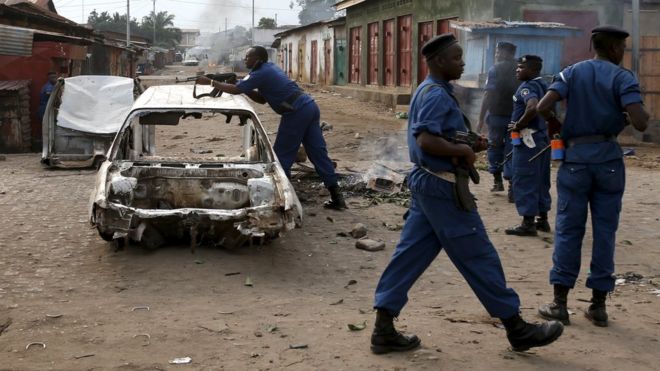
UN calls for stop to ‘senseless killings’ in Burundi

Protests erupted in Burundi against President Pierre Nkurunziza's third-term bid.
Amid the deadly escalation of violence in Burundi, the United Nations human rights chief sounded the alarm at the unfolding crisis in the country and urged all actors in the current crisis to take every step possible to stop the growing violence and engage in a meaningful and inclusive dialogue.
“More than ever before, there is an urgent need for decisive action from the international community to stop this senseless violence. We cannot turn our backs on the people of Burundi at this turning point of their history,” spokesperson for the UN High Commissioner for Human Rights, Cécile Pouilly told reporters in Geneva during a regular press briefing.
The latest call comes following the attacks on December 11 against several military camps in Bujumbura, which killed dozens of people in the course of heavy fighting prompting the UN Secretary-General to condemn the attacks and add that “such acts of violence can lead to a further destabilization of the situation in crisis-torn Burundi.”
According to Ms Pouilly, the security forces carried out intensive house searches later in the Musaga and Nyakabiga neighbourhoods, where they arrested hundreds of young men, allegedly summarily executing a number of them and taking many others to unknown locations.
“With this latest series of bloody events, the country seems to have taken a new step towards outright civil war and tensions are now at bursting point in Bujumbura,” said Ms. Pouilly.
She added that the UN High Commissioner for Human Rights, Zeid Ra’ad Al Hussein urged all stakeholders to start inclusive dialogue and added that there is an urgent need for decisive action from the international community to stop the senseless violence.
Burundi has been in the midst of a political crisis that has driven countless people fleeing to safety in neighbouring countries since President Pierre Nkurunziza decided to run for a controversial third term earlier this year. Mr. Zeid and a host of senior UN officials including Secretary General  Ban Ki-moon have repeatedly called for calm and the resumption of the national dialogue that was suspended in mid-July.
At a press conference in the UN headquarters, two UN Emergency Directors briefed the media about their recent visit to Burundi and warned that “urgent action is needed to prevent a descent into catastrophic violence in Burundi.”
“Burundi is facing a critical crossroads. The levels of displacement and food insecurity are already concerning, but we risk another full-blown humanitarian crisis without urgent progress on the political front,” John Ging, the Emergency Director of the Office for the Coordination of Humanitarian Affairs OCHA told reporters.
At the same press conference, UN Children’s Fund (UNICEF) Emergency Director, Afshan Khan stressed that children are bearing the brunt of the violence in Burundi, as many have been killed wounded and arbitrarily detained and many more are living with the constant sound of gunshots and grenades.
“These violations against the children of Burundi must end now. Children must be protected from all forms of violence and their rights must be respected,” warned Mr. Khan.
According to UNICEF and OCHA, intensified violence in the country is worsening the humanitarian plight of an already vulnerable population, with over 80 per cent of families below the poverty line, 7 per cent of the population severely food insecure, and 58 per cent of people chronically malnourished, placing Burundi at 184 out of 187 on the recently released Human Development Index.
 
The UN agencies also added that many areas of the country are suffering the ill-effects of El Niño, with widespread flooding having destroyed homes and livelihoods.
Before the crisis, donor funding accounted for over half of Burundi’s budget, however, several bilateral donors have suspended budget support in response to the political crisis, which is further straining the provision of essential public services like health and clean water, warned the UN Agencies.
Free healthcare for young children and mothers has just been suspended, a cut which is likely to have severe public health impacts, they added.
The UN agencies reported that in the past four days, about 100 people have been killed by violence in Bujumbura, and an estimated 340 people have been killed since April.
“Action is needed now to prevent a descent into catastrophic violence. Worsening tension in a country with a history of deep ethnic divisions must be urgently addressed to protect civilians from further harm,” warned Mr. Ging.
Further, the UN agencies noted that popular protests following the political crisis have been heavily repressed by security forces, resulting in significant human rights abuses and repression of the media.
Additionally, they also reported that nearly 220,000 people have fled Burundi and an additional 15,000 people have been displaced within the country since April.
The Emergency Directors of seven UN agencies, the International Organization for Migration and three international NGOs travelled to Burundi from December 2 -5 to assess the deteriorating humanitarian situation, according to the UN agencies.
Stories Continues after ad

UN increases South Sudan peacekeepers by 1000

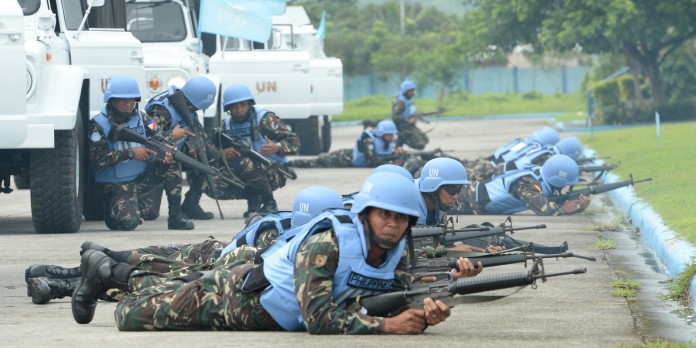
TO GO WITH: Philippines-UN-military,FOCUS by Joel Guinto In this photo taken on September 11, 2014, Filipino peacekeeper trainees, taking their positions during a drill simulating a hostile environment in a peacekeeping mission at the peackeepers training center in Capas town, Tarlac province, north of Manila. To help guard the world's war zones, the Philippines plucks soldiers from the frontlines against Al-Qaeda-linked militants and communist insurgents. But battle-hardened as these "warrior peacekeepers" are, they are also trained to turn on the charm when deployed to UN missions in Syria, Haiti and Liberia. AFP PHOTO/TED ALJIBE (Photo credit should read TED ALJIBE/AFP/Getty Images)


The Security Council has increased the United Nations peacekeeping force level in strife-torn South Sudan by over 1,000 to a ceiling of 15,000 troops and police, and extended its mandate for another six months, citing protection of civilians “by all necessary means” as its top priority.

In a resolution adopted just two weeks in the face of repeated ceasefire violations by both the Government and opposition, the 15-member body asked Secretary General Ban Ki-moon to prioritize the complete deployment at the new level, including tactical military helicopters and unarmed unmanned aerial systems.

The development follows a warning by the UN Under-Secretary-General for Peacekeeping Operations Hervé Ladsous to the Council earlier this month, that South Sudan is at a critical juncture, necessitating an increase in UNMISS forces.

The UN Mission in South Sudan (UNMISS) was originally set up on the eve of the country’s independence in July, 2009, with an initial ceiling of 7,000 and a mandate to support the Government in peace consolidation by fostering state building and economic development.

But both ceiling and mandate changed radically two years ago when a conflict erupted between President Salva Kiir and his former Vice-President Riek Machar, killing thousands, displacing over 2.4 million people, tens of thousands of whom have sought refuge at UNMISS bases, and impacting the food security of 4.6 million.

UNMISS currently has some 12,500 uniformed personnel on the ground.

The UN resolution voiced grave concern that according to reports “there are reasonable grounds to believe that war crimes and crimes against humanity, including those involving extrajudicial killings, rape and other acts of sexual violence, enforced disappearances, the use of children in armed conflict, arbitrary arrests and detention, and attacks on schools and hospitals have been committed by both Government and opposition forces.”

It asked Mr. Ban to develop a plan for UNMISS “to take appropriate action to deter and respond to any escalation of violence in and around Juba (the capital), in order to effectively protect civilians, and to protect critical infrastructure.”

To deter violence against civilians, it called for “proactive deployment, active patrolling with particular attention to IDPs (internally displaced persons), including but not limited to those in protection sites and refugee camps, humanitarian personnel and human rights defenders, and identification of threats and attacks against civilians.”

It also urged a mission-wide early warning strategy, including information gathering and monitoring, to counter threats and attacks against civilians, as well as full investigation of abuses against children and women, including all forms of sexual and gender-based violence.

Stories Continues after ad

EAC set for US$8.5m intra-African deal

The International Trade Centre (ITC) and the East African Community (EAC) are to launch a new US$8.5 million joint project to boost intra-African trade.
 
The Trade and Regional Integration Project (TRIP) to be initially financed by Finland was announced by the EAC Secretary-General Amb Dr Richard Sezibera and ITC Executive Director Arancha González on the sidelines of the World Trade Organization’s Ministerial Conference taking place in Nairobi, Kenya fromDecember 15-18.
 
The new initiative aims to strengthen existing efforts by East African Partner States for closer economic integration, including the East African Customs Union and the EAC Common Market, and the ITC and the EAC will intervene at three levels:  enterprise, institutional and at the trade policy level ‘to provide integrated solutions to problems of SME competitiveness’.
The TRIP for EAC project set for implementation in January 2016 also sets out to support the African Union’s Action Plan for Boosting Intra-African Trade and the recently agreed tripartite free-trade agreement among the Common Market for Eastern and Southern Africa (COMESA), the EAC and the Southern African Development Community (SADC).
Specifically, the project aims to boost the competitiveness of EAC-based small and medium-sized enterprises (SMEs), enabling them to step up intra-and inter-regional trade. The project will have a strong focus on women’s economic empowerment, and will also support wider private-sector development in the EAC to spur deeper economic integration, including in agriculture, information and communication technologies (ICT), and tourism.
 
According to Ms Gonzalez, regional integration led by the private sector is a powerful vehicle for boosting growth, creating jobs and promoting economic development.
 “Enabling the private sector and policymakers to take advantage of trade opportunities is at the heart of what ITC does. We are looking forward to doing this in collaboration with the EAC, and to ensuring sustainable growth for East African countries and their SMEs,” Ms González added.
EAC Secretary General Ambassador Sezibera said the cooperation will contribute to improve the global competitiveness of the EAC region and to trigger sustainable economic growth.


Stories Continues after ad

Two years since the South Sudan war broke out

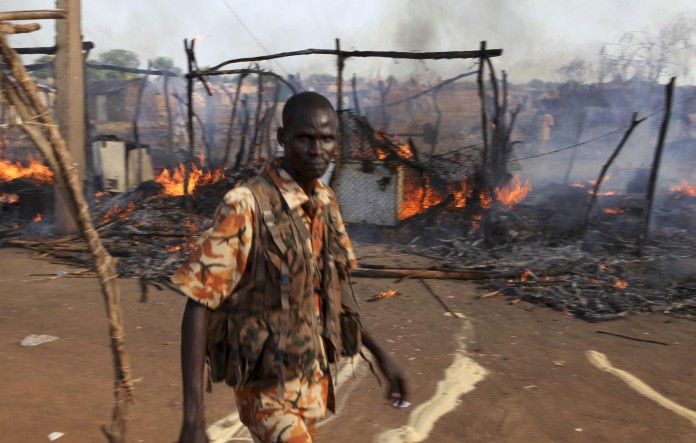
A policeman walks past the smouldering remains of a market in Rubkona near Bentiu in South Sudan Monday, April 23, 2012. A boy was killed and at least two people were wounded Monday when Sudanese aircraft bombed an area near the town of Bentiu in South Sudan, an official and witness said, increasing the threat of a full-scale war breaking out between the two nations. (AP Photo/Michael Onyiego)
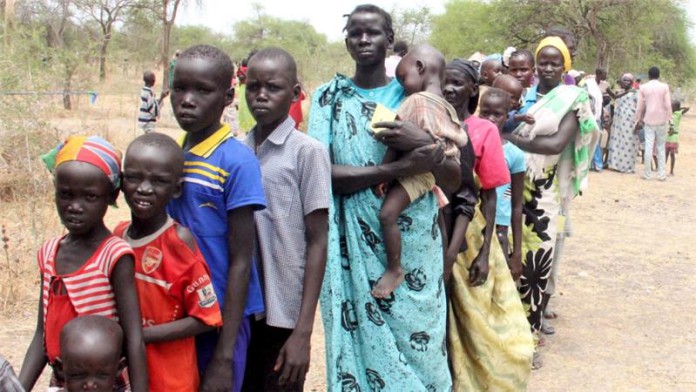
The 15th of December 2015, marked the second anniversary of the outbreak of war in South Sudan.  In a mere two years, thousands of people have been killed, including 1,457 children, millions displaced, including 1,550,000 children, 16,000 children recruited by armed groups, 413,000 children forced out of school, and almost 10,000 vulnerable children have been separated from the protection and loving care of their parents and extended families.
Statistics such as these can sometimes appear to be faceless – often shielding the fact that there is a human face behind every figure – including that of children who are least able to defend themselves in times of conflict.  To mark this second anniversary, Save the Children reached out to and recorded testimonies of ordinary people whose lives were badly affected by the war.
 Marina is the Aunt of 9year old Joseph* and his 14year old brother Jonathan* who were separated from their mother when fighting started in Bor, in Jonglei state.  Here-below, she talks about war, survival, separation, and reunification:
 I have three children of my own, and I am also looking after my sister’s children.  They were separated from their mother in Bor when the fighting started. They were living in the camp (UN Protection of Civilians Camp – aka PoC) but it wasn’t safe. The camp was often attacked by soldiers and many people were killed.
Then the rebel army took over the town and started transporting the children out to safety. There was no space for their mother in the vehicle, so she sent them first. But then the rebels were pushed out of Bor and the vehicle couldn’t return. She was stuck there.
 I don’t know where she is now. The last time I heard from her she was in Juba, but I haven’t managed to communicate with her for over a year.
 When the children arrived here, they were scared and really sad that they had to leave their mother behind. They were very withdrawn and would not speak to anyone or eat their food. It took them a long time to adapt.
 It’s a strange place to them and they didn’t know anyone. Even me, they hadn’t seen me for over two years – and they were very young.
 The older one, (Jonathan*) he understood why they had to leave, but Joseph* was still young and didn’t really understand why they had to leave their mother and come to Waat.
 
He used to tell me that when they were leaving the camp, (PoC) he saw all the dead bodies on the side of the road, and that people chased them with big guns and tanks, and that they were firing at them when they were running away.
 He was really traumatised – he wouldn’t talk to anyone. But after a while he started going to the play area (‘Child Friendly Spaces’ set up by Save the Children) and each time he returned, I could see an improvement. It really helped him forget what he experienced there.
 He is always asking for his mother. If someone arrives from Juba, he asks: “have you seen my mother?”
 The biggest challenge I have is that I can’t provide them with enough food to eat, clothes to wear, or even soap to wash.  Save the Children has given us sleeping mats, blankets, mosquito nets, shoes, buckets and soap. It made a big difference for us – especially the mosquito nets.
 They used to get malaria all the time, but not anymore. And the blankets stop them from getting sick during the cold nights in the dry season.
 Save the Children has also helped them at school with books and pens, and the play area (Child Friendly Space) has helped them to integrate better here. They didn’t know anyone here before but now they have many friends.
 “…The thing I want most is to see my mum again and go to a good school,” says nine year-old *Joseph*.
 
The writer is a Media & Communications Manager, Save the Children South Sudan
Stories Continues after ad

Europe can do a lot in tackling corrupt Africa leaders

Prosecution in France is following up on some African leaders and their relatives who have plundered their countries’ wealth and stashed the loot in France.
Top on the list is Teodorin Obiang, son of Dictator Teodoro Obiang, and also one of Equatorial Guinea’s vice presidents, who has allegedly stolen millions of dollars and is facing embezzlement charges. The others being investigated by France for stealing and stashing their countries’ wealth include Congo’s Dennis Sassou Ngweso and Gabon’s Omar Bongo.
It is an open secret that the looters of African wealth, passing off as leaders, stash their ill-gotten wealth in some European countries, while millions at home suffer from containable maladies like disease, poverty and lack of education among others.
Last year the younger Obiang was indicted in the US on accusations of stealing about US$300 million, and the shameless ‘leader’, whose desire for lavishness is unprecedented, was forced to spew out US$30 million in ill-gotten wealth.
Similarly, the French authorities have seized the younger Obiang’s six-story mansion, several luxury cars and other ill-gotten valuables after charging him with money-laundering.
The Obiang story is being replicated all over Africa, but there are few exceptions like that of Botswana President Ian Khama and the maverick John Pombe Magufuli, the new Tanzanian president who has set a record in fighting corruption and injustices.
The few exceptional African leaders who abhor corruption need to be recognized and their efforts complemented by moves such as that of France and the US, wresting the loot from the plunderers, prosecuting them and returning the loot to the rightful owners, the citizens of the respective Africa countries.
Indeed, Europe can do a lot to help curb corruption in Africa!
Stories Continues after ad

EAC varsity debate for Uganda

All is set for the 4th EAC University students’ debate scheduled to take place onDecember 18 and 19 at the International University of East Africa in Kampala, Uganda.
The debate is expected to bring together university students, lecturers, academia, policy makers, media, youth leaders and high school students within the region.
The EAC University Students’ Debate Model is an interactive and representational style of debating aimed at educating, discussing and making resolutions among the Youth in East African to nurture a bond of “eastafricaness”.
‘Apart from ascertaining the analytical skills of debaters; encouraging research among the debaters about the EAC integration process; as well as encouraging diplomatic policy formulation among the debaters; the EAC University students’ debate aims at discovering leadership talent and appoint Youth Ambassadors to champion the integration process’ a release by the EAC Secretariat, states.
The debate will comprise of two teams; Affirmative Team made up of Secretary General, Deputy Secretary General, Chairperson of the Council of Ministers, Amicus Curiae and the Counsel to the Community, and the second team will be the Alternative Strategy Team comprising of the Attorneys General from each Partner State. This has been set as the correct position for this form of dialogue to avoid the word “opposition” used in the context in which it is always perceived.
Each team will comprise of 5 debaters drawn from the five Partner States making 10 debaters from the two teams. Prof. Dr. Sandy Stevens Tickodri Tagaboa, Uganda’s State Minister in charge of Higher Education, Science and Technology is expected to officiate at the official opening. Others expected are Prof. Olubayi Olubayi, Vice Chancellor, International University of East Africa; Prof. Alexandre Lyambabaje, the Executive Secretary of the Inter-University Council of East Africa, and Mr. Charles Njoroge, the EAC Deputy Secretary General (Political Federation).
A gala dinner and award ceremony to be officiated at by the EAC Secretary General Amb Dr Richard Sezibera,  accompanied by the VC – IUEA, State Minster in charge of Higher Education and the Speaker of EALA will crown the 4th EAC University students’ debate on Saturday December 19.
The East African Community Youth Summit on EAC Integration and Development Processes held in Arusha in November 2007 set the precedent for youth participation in the EAC integration, while the Secretariat initiated the EAC University Students Debate on Regional Integration in 2012.
Stories Continues after ad

Child soldiers: it is our responsibility to wake up and save them

Latest report indicate that the number of child soldiers recruited by more that 12 warlords in South Sudan since December 2013 has reached 16.000.

According to a recent report, the child soldiers are grabbed from their villages and forced into fighting.

This, of course, is in negation of their basic rights as children, and also in contravention of global human rights charters.

Children are supposed to enjoy the benefits that accrue from community compassion and these include love, care and recognition of their rights, among other attributes.

Indeed, children are supposed go to school, access healthcare and grow up in a fairly familiar set, with both parents offering guidance about societal norms and values.

But this is not to be in most of the war ravaged areas, mostly in Africa; they instead provide labour as combatants or as sex slaves.

Reports indicate there are an estimated 250.000 child soldiers in the world today, with 40 per cent of these girls, some of who are just used as sex objects by the commanders.

The resultant effect is teenage pregnancies and teenage motherhood and, the contracting of deadly diseases like HIV/Aids, gonorrhea and other sexually-transmitted infections (STIs).

Inevitably then, there is need to reverse this pitiable development by putting the warlords to task to compel them release these children and allow them to be re-integrated in the communities.

Also, measures should be put in place by governments that face the problem of child soldiers among their rank and file to discharge them and also provide the necessary psycho-social facilities that allow for an orderly re-integration into society.

It is through such ‘small’ efforts that our children will stop being ‘cannon fodder’ for belligerent opponents.

Stories Continues after ad

EAC holds ‘citizen integration’ activities at Cyanika border post

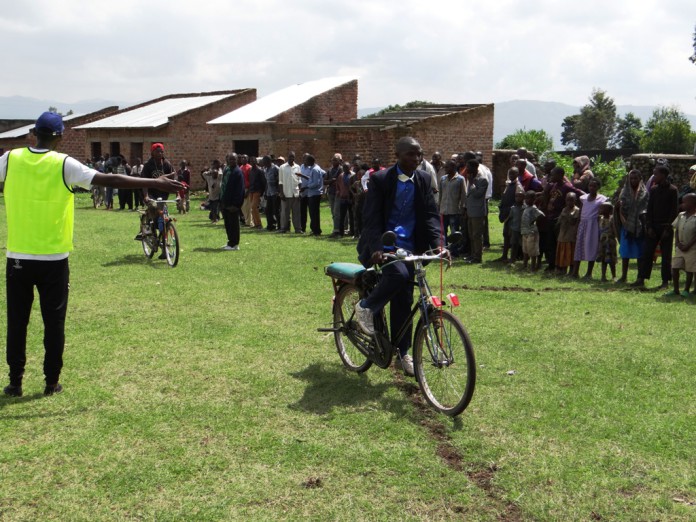
 In a bid to promote stronger cross border interactions and community engagements, the EAC Secretariat in collaboration with East Africa Local Governments Association (EALGA), the International Republican Institute (IRI) and the German International Development Agency (GIZ), organized a fun-filled sports and cultural festival at Cyanika town at the border of Uganda and Rwanda over the weekend.
kid dancers
The events were a culmination of recommendations of the 21st  Sectoral Council of Ministers Responsible for EAC Affairs and Planning meeting in October 2014, which recommended that 2015 be declared the year of the East African Citizen”.
Bringing together over 1,300 festival-goers, the town of Cyanika was painted in an array of sports, including football, volleyball and cycling, cultural expressions and artistry from Uganda and Rwanda. The Festival was graced by Mr Sam Byibeshyo, the Lord Mayor of Kisoro town in Uganda and Mr Samuel Sembagare, the Lord Mayor of Burera district-Northern Provence of Rwanda. Other attendees included government officials from the district regional offices in Kisoro and Burera, police and immigration officers from the local border authorities, women and young traders. 
“This is an exciting step forward for the Community in getting East Africans more engaged in the integration process,” said Mr. Richard Owora Othieno, EAC’s Principal Information and Public Relations Officer. “We hope that after today, other border communities will initiative similar activities at their border points,” he added. 
local dancers RW (1)
Speaking at the Festival, Mr Byibeshyo expressed his gratitude to the EAC Secretariat and local governments for bringing together citizens from Uganda and Rwanda to work together and promote integration, adding that, “we will continue to support the journey that the EAC has started, and I call upon every East African to join hands and fight whatever obstacles that hinder the integration of East Africa.”
local dancers UG
In concurrence with the Ugandan Mayor, Mr. Sembagare, empathized on the importance of East Africans to take ownership of the integration process and, “use the opportunities availed by the Common Market and the Single Customs regimes to enhance good neighbourliness and community development.”
The year of the East African Citizen is in line with the EAC Consultative Dialogue Framework which ensures continuous dialogue between the EAC Secretariat, Organs and Institutions, Local governments Civil Society Organizations (CSOs), Private Sector Organizations (PSOs) and other Interest Groups both at the national and regional level.  
The Consultative Dialogue Framework is aimed at ensuring that the integration process proceeds with the involvement of the citizens of EAC Partner States and is undertaken in the context of multi-stakeholder partnerships.
Stories Continues after ad

HRW wants South Sudan warlords investigated over child soldier recruitment


More than a dozen senior commanders and officials who children say recruited them as soldiers in South Sudan should be investigated, Human Rights Watch (HRW) said on Tuesday. The United Nations says 16,000 children have joined armed groups since South Sudan’s civil war erupted two years ago.

“It’s the brutal recruitment that is the most heart wrenching,” Skye Wheeler, the report’s author, told the Thomson Reuters Foundation.

“Forces come through their village and grab them and force them into fighting. It’s an absolute negation of their basic rights as children, but also as people, not to be treated just as cannon fodder.”

South Sudan was plunged into a civil war in December 2013 when a political crisis triggered fighting between forces loyal to President Salva Kiir and rebels allied with his former deputy Riek Machar. The conflict has reopened ethnic faultlines that pit Kiir’s Dinka people against Machar’s ethnic Nuer people.

A peace deal was signed in August but the two sides have repeatedly accused each other of violations.

A third of 74 boys interviewed who fought in the current conflict said they were forcibly recruited, often at gunpoint.

Many said they were detained until they agreed to fight or simply abducted, handed a gun and sent into battle.

“I had no experience of holding a gun before,” said one boy in the report who was abducted from school by opposition forces.

“They told us this is how you use it… Then we began fighting.”

Around half of the boys interviewed said they willingly joined armed groups to protect themselves and their communities.

“Without the protection of a gun and an armed group, many boys believed they would have been even more vulnerable to being killed,” the report said.

Half of the child soldiers interviewed fought or worked for government forces or their allies.

Among the most prominent names cited in the report is Matthew “Pul” Puljang, an ethnic Bul Nuer commander who fought in a Unity State militia before joining the government in April 2013.

South Sudan’s army spokesman Philip Aguer said its Child Protection Unit had planned to visit Unity State in 2013 to investigate allegations of Puljang using child soldiers.

“But the visit was interrupted by the violence and it has never taken place,” he said.

“We welcome all investigations to prove any allegations.”

HRW also called for another former rebel who has joined the government side, David Yau Yau, to be investigated.

Yau Yau has released 1,755 child soldiers from his ranks since he signed a peace deal with the government in 2014.

“It not going to be solved just by releasing boys,” Wheeler said. “There also needs to be accountability for commanders who have recruited and used child soldiers to end this endless cycle.”

Stories Continues after ad

Museveni urges African countries to respect borders

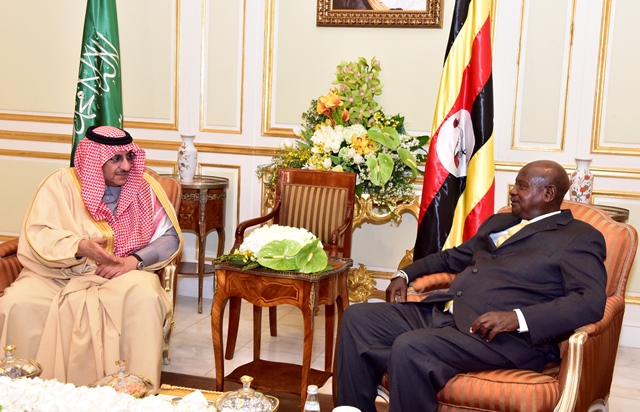
President Museveni holds talks with Saudi Arabia's Crown Prince Muhammed bin Naif Al-Saud bin Abdal Aziz who paid him a courtesy call at his residence in Riyadhi Saudi Arabia


President Yoweri Museveni has called on African leaders to respect borders in order to avoid unnecessary conflict.

The President, who is on a two-day state visit to Saudi Arabia at the invitation of His Majesty King Salman Bin Abdulaziz Al Saud, the custodian of the two Holy Mosques, said this while meeting the Secretary General ofOrganisation of Islamic Cooperation, Dr Iyad Ameen Madani who called on him at his residency in the King Saud Palace, in Riyadh.

President Museveni holds talks with Saudi Arabia's Crown Prince Muhammed bin Naif Al-Saud bin Abdal Aziz who paid him a courtesy call at his residence in Riyadhi Saudi Arabia
President Museveni holds talks with Saudi Arabia’s Crown Prince Muhammed bin Naif Al-Saud bin Abdal Aziz who paid him a courtesy call at his residence in Riyadhi Saudi Arabia

The President noted that there has always been a cold war between Somalia and Kenya stemming from the borders, which has resulted into unprincipled conflict, which the African Union does not condone.

”There has always been a cold war between Somalia and Kenya but we always said; respect the borders wherever they are, since you found them there,” he said, referring to the stand of the African Union.

Mr Museveni was responding to Dr Madan’s comment on the OIC’s interest in the development and humanitarian situation in war torn African countries like Somalia and South Sudan.

President Museveni, however, told his visitors that he will take the issues to the African Union so as to allay fears by Somalia regarding border conflicts with Kenya.

He suggested that Somalia be helped to acquire road equipment so as to open their murram roads and repair the tarmac ones in order to improve transport as well as enable the army to keep security in the country.

President Museveni holds talks with Saudi Arabia's Crown Prince Muhammed bin Naif Al-Saud bin Abdal Aziz who paid him a courtesy call at his residence in Riyadhi Saudi.
President Museveni holds talks with Saudi Arabia’s Crown Prince Muhammed bin Naif Al-Saud bin Abdal Aziz who paid him a courtesy call at his residence in Riyadhi Saudi.

On tribalism, President Museveni said that that NRM has been successful because of her non-sectarian policy where prosperity, pan Africanism and patriotism are given precedence over identity.

“If your identity is not attacked why don’t you emphasize prosperity,” he said.

The OIC Secretary General Dr. Madan suggested that observers be sent to South Sudan to monitor the peace process, an idea that president Museveni also supported.

Meanwhile, President Yoweri Museveni has held bilateral talks with Saudi Crown Prince HRH Prince Mohammed bin Naif Al Saud bin Abdulaziz.

The Crown Prince, who is also the Minister for Interior Affairs of the Kingdom of Saudi Arabia, paid a courtesy call on the President at his residency in the King Saud Palace in Riyadh.


Stories Continues after ad