Stanbic Bank
Stanbic Bank
18.5 C
Kampala
Stanbic Bank
Stanbic Bank
Home Blog Page 228

How is the UPDF different from its predecessors?

Ambassador Henry Mayega.

By Ambassador Henry Mayega

At the swearing in of Yoweri Museveni as President in 1986, he promised amongst others thus “…this is not a mere change of guards but a fundamental change…” Skeptics murmured and geared but Uganda’s best President since independence soldiered on with a clear agenda namely to change the trajectory of our country’s politics.

This President, a security dynamo, repudiated the ignominy of insecurity that had dogged us for far too long and plateaued; it had become a hot-button issue; the NRA, originally a rebel outfit which would later morph into the current professional UPDF helmed the stabilization of Uganda.

First, the UPDF under President Yoweri Museveni’s tutelage has been very instrumental in ensuring not only peace in Uganda but it has, as well, pragmatically been involved in peacekeeping and enforcement missions on the African continent. Some of the countries where this has occurred include Sierra Leon, Somalia, South Sudan and the DRC. In all those countries, the situation would have been much dire with far reaching consequences for the region; this President has been a strong believer in a real shift from the politics of symbolism on this issue to essentially align with the dictum of providing African solutions to African problems. Between 1971 – 1986, Ugandans saw four coups/takeovers; those had become uncontroversial anyway; in a sense they were a sine qua non and a metric of our country’s global image.

Secondly, the UPDF is absolutely different from its predecessors (that included amongst others the Kings African Rifles of the colonizers, Uganda Army and the UNLA); because whereas on the one hand the KAR was a machine built to support and anchor the colonizers’ subjugation of the gullible colonized, the UA and UNLA outfits were, on the other, caught flat-footed repressing Ugandans with reckless abandon through extrajudicial killings, pillaging as well as despoliation. The UPDF has an expertly dedicated department that manages the army-civilian relations, something unheard of as an integral part of past militaries.

Thirdly, whereas its predecessors were the source of insecurity to citizens, the UPDF has been the source of peace, stability and security in the country by insulating us from both external and internal threats; Uganda is sandwiched by a volatile region that is increasingly bothersome. The insecurities in the DRC, South Sudan, Burundi and from as far as Somalia have, for instance, poured into our borders huge numbers of refugees who found the doors flung open by the Yoweri Museveni administration. Uganda currently hosts the largest number of refugees in Africa (1.5 million). We have even accommodated Afghans after others caused insecurity in Afghanistan. Why? People run away from insecure environments to stable ones. That’s exactly what Uganda under this President offers hence validating his and the UPDF’s competence theses.

Fourth, despite Elias Lukwago and his ilk’s denials and quackery, of course out of ignorance, questioning UPDF’s involvement in civil affairs, examples from other countries meticulously confirm constructive engagement by the military in civil works. In the Philippines, after the earthquake in Tacloban in 2019, the military was very instrumental in the evacuation and resettlement of the displaced. Just recently, the US army constructed a pier to aid relief deliveries into beleaguered Gaza. So, there’s absolutely nothing wrong for the UPDF getting involved in civil matters. Typified by the SFC’s carrying out road works in Kampala, that confirms the splendid peace times in Uganda; during the insecurities that dogged Uganda between 1971-1986, our respective armies had no time and guts for civil works.

The UPDF engineering department’s civil works profile includes: repairing Namboole stadium, completion of Makerere University’s perimeter wall and expansion of Entebbe International Airport, construction of the Kololo Airstrip pavilion amongst others.

Lastly, something that has prominently differentiated the UPDF from its precursors is its readiness to always combat crime together with other security agencies, most especially the police. The UN recommends one police officer for every 450 citizens; Uganda’s total police force strength stands at 52,000 against the population of 47.25 million (2022) which translates into a police population ratio of 1:908; twice the standard set by the global club. Given our budgetary constraints, the UPDF, unlike its predecessors, will rightly continue to work with other agencies to secure us.

Ambassador Henry Mayega

Consul General

Uganda’s Consulate General

Dubai, UAE

Stories Continues after ad

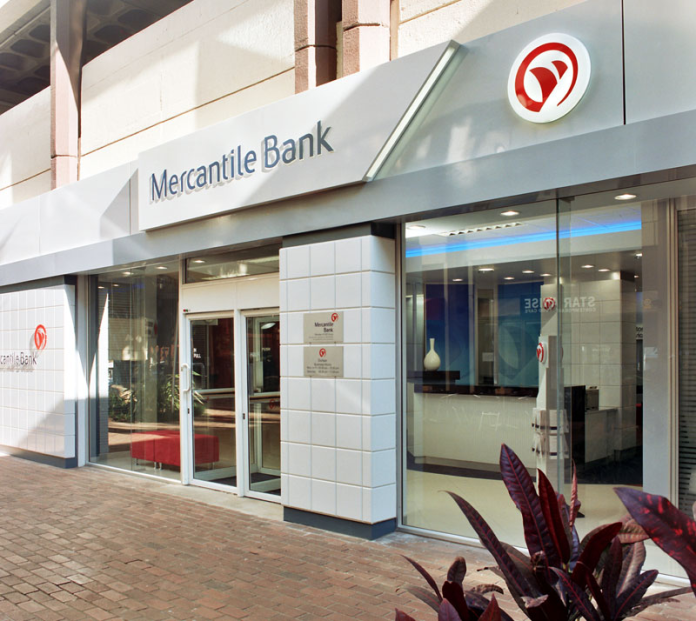
BoU revokes license of Mercantile Credit Bank Limited

The Deputy Governor of Bank of Uganda, Michael Atingi-Ego has revealed that the Central Bank has revoked Mercantile Credit Bank Limited’s license and ordered it to wind up its affairs.

“In exercise of its powers under Sections 99 and 17 (b) & (f) of the Financial Institutions Act, 2004, as amended, the Bank of Uganda (BoU) has, effective today, June 18, 2024, placed Mercantile Credit Bank Limited under liquidation, revoked its license, and made an order for the winding up of its affairs,” Atingi-Ego stated.

Atingi-Ego said that this action is necessary because the Bank of Uganda has determined that the continuation of Mercantile Credit Bank Limited’s activities is detrimental to the interests of its depositors due to the institution’s failure to resolve its significant undercapitalization, poor corporate governance, and insolvency.

He added that the Bank of Uganda and the Deposit Protection Fund of Uganda (DPF) will shortly inform all depositors of the arrangements that will be put in place to enable them to access the insured portion of their deposit(s).

“The uninsured portion of the deposits will be handled in accordance with Section 105 of the Financial Institutions Act 2004, as Amended,” he noted.

All creditors have been requested to submit their claims to the Office of the Director, Financial Stability, Bank of Uganda, within 30 days from the date of this statement.

“All borrowers of Mercantile Credit Bank Limited are directed to continue servicing their loans by making payments at the Bank of Uganda offices and its branches as shall be advised,” he guided.

Atingi-Ego also cautioned that any person possessing the property of Mercantile Credit Bank Limited should deliver it to the Director, Financial Stability, Bank of Uganda.

Mercantile Credit Bank Limited (MCBL) was incorporated in Uganda on December 1981 and only commenced operations in July 1986.

The Deputy Governor of Bank of Uganda, Michael Atingi-Ego has revealed that the Central Bank has revoked Mercantile Credit Bank Limited’s license and ordered it to wind up its affairs.

“In exercise of its powers under Sections 99 and 17 (b) & (f) of the Financial Institutions Act, 2004, as amended, the Bank of Uganda (BoU) has, effective today, June 18, 2024, placed Mercantile Credit Bank Limited under liquidation, revoked its license, and made an order for the winding up of its affairs,” Atingi-Ego stated.

Atingi-Ego said that this action is necessary because the Bank of Uganda has determined that the continuation of Mercantile Credit Bank Limited’s activities is detrimental to the interests of its depositors due to the institution’s failure to resolve its significant undercapitalization, poor corporate governance, and insolvency.

He added that the Bank of Uganda and the Deposit Protection Fund of Uganda (DPF) will shortly inform all depositors of the arrangements that will be put in place to enable them to access the insured portion of their deposit(s).

“The uninsured portion of the deposits will be handled in accordance with Section 105 of the Financial Institutions Act 2004, as Amended,” he noted.

All creditors have been requested to submit their claims to the Office of the Director, Financial Stability, Bank of Uganda, within 30 days from the date of this statement.

“All borrowers of Mercantile Credit Bank Limited are directed to continue servicing their loans by making payments at the Bank of Uganda offices and its branches as shall be advised,” he guided.

Atingi-Ego also cautioned that any person possessing the property of Mercantile Credit Bank Limited should deliver it to the Director, Financial Stability, Bank of Uganda.

Mercantile Credit Bank Limited (MCBL) was incorporated in Uganda in December 1981 and only commenced operations in July 1986.

Stories Continues after ad

FlexiPay, IFAD and Upesi partner to help Ugandans send and receive money from broad

Mr Anthony Kituuka.

FlexiPay, Stanbic Bank’s digital payment platform, has partnered with International Fund for Agricultural Development (IFAD) and Upesi Money Transfer, a regional payments company, to enable FlexiPay users to send, receive money from abroad with ease.

Josephine Nakato Kasacca, Lead Customer Experience & Operations for FlexiPay said the new partnership reflects the Bank’s commitment to support and enable customers to complete borderless financial transactions in a convenient, secure, quick, and affordable manner.

She said effective June 14, 2024 customers can use FlexiPay to send money to over 20 countries. However, plans are to increase this number to 70 by the end of the year.

“In line with our purpose; Uganda is our home, we drive her growth, we believe that by helping as many people as possible meet their financial needs with innovative services, goes a long way in driving economic growth. FlexiPay is ideal platform for both sending and receiving payments and let me emphasize again, very affordable! I want to take this opportunity to call upon all of you to use it because there are dozens of unmatched benefits one cannot find on other similar platforms,” she said.

Some of the foreign countries Ugandans can receive money from include; Kenya, United Arab Emirates, United Kingdom, Qatar, Oman, United States, South Africa, France, Canada, Israel, South Korea, India, Germany, Ireland, Netherlands, Kuwait, Bahrain, ARE, Australia, Poland among others.

She disclosed that FlexiPay is very safe to use, because it uses mobile applications and systems based on advanced encryption and other security measures to protect the sensitive financial information and transactions of all users.

Julius Okwana, the Upesi Money Transfer Country Manager expressed excitement about the possibilities that the partnership will realize. He said their company is committed to providing innovative solutions that simplify financial transactions.

He said coupled with FlexiPay’s rapidly increasing uptake in Uganda and Upesi’s extensive regional and global network, the partnership promises to make cross-border money transfers faster and more convenient without making unnecessary visits to banking halls.

“With the increasing demand for cross-border transactions in Uganda, this partnership between FlexiPay and Upesi is poised to revolutionize the way people send and receive money internationally. It is expected to drive financial inclusion and promote economic growth in the region.” Okwana said.

He assured users that all transactions are secured and protected from potential cyber threats.

As of 2023, there are estimated to be around two million Ugandans living, and working abroad. There are also a good number of Ugandans here, who are doing plenty of business with foreign companies. 

The recent World Bank report indicates that the total amount of money remittances received in Uganda on an annual basis is approximately $1.43 billion, about 5.32 trillion Ugandan Shillings.

According to David Berno, the International Fund for Agricultural Development (IFAD) Head Remittance and Inclusive, remittances play a crucial role in reducing poverty and enhancing food security in developing countries.

He said, “We are excited to be affiliated to this campaign because money remittances enable families to meet their basic needs, such as food, shelter, and education, and can also contribute to local economic growth through increased consumption and investment. Therefore, by supporting money remittances, IFAD aims to promote financial inclusion, empower smallholder farmers and rural entrepreneurs, and ultimately contribute to sustainable development and poverty reduction.”

Stories Continues after ad

UPDF shortlists aspiring candidates to join the army

UPDF recruits undergoing training.

Following a successful exercise of submission of applications by candidates aspiring to join the Uganda Peoples’ Defence Forces (UPDF), the recruitment committee has shortlisted the successful candidates.

Colonel Deo Akiiki, UPDF deputy public information office announced that they are delighted to announce that the lists of those shortlisted are ready for viewing on line and at the offices of the RCCs and RDCs across the regions.

“The lists are accessible on the official website of the UPDF at: https://www.updf.go.ug/careers/,” Akiiki said.

He added, “The candidates are also reminded that the recruitment exercise will begin on the 1st day of July 2024 and end on the 14th day of July 2024 at different recruitment centres as earlier published.”

He further noted that the ministry and indeed the UPDF family wish all the candidates success.

This year, UPDF targets to recruit 9,627 regular forces into Infantry forces with an age bracket of 18- 22 years and must have sat S.4 (UCE) in the year 2020 – 2023 and exceled well in English and Mathematics.

Stories Continues after ad

Museveni, city traders to meet over EFRIS

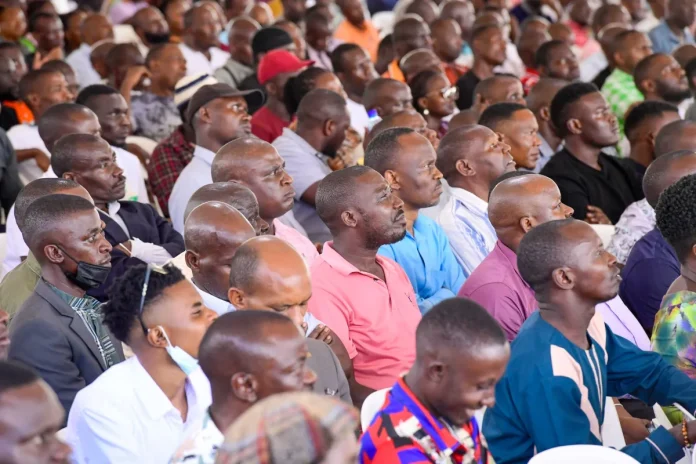
Traders listening to President Museveni during the first meeting at Kololo.

President Yoweri Museveni is this Thursday expected to meet city traders under the umbrella bodies of the Kampala City Traders Association (KACITA), Uganda Cargo Consolidators, and Kampala Rice Traders on the implementation of Electronic Fiscal Receipting and Invoicing Solution (EFRIS).

The meeting is aimed at assessing the processes implementing EFRIS. City traders decried over taxations and penalties arising from failure to remit VAT and the Chinese invasion of the local markets.

The business community protested the system, closing shops in Kikuubo and downtown, claiming double taxation and lack of information about the system. They stated that the system is costly in terms of implementation since it requires devices like computers or smartphones and a gadget for printing receipts.

They contend that high import values (old ones) are making it hard for traders to clear their goods and that the high cost of living means that most of the essential goods are becoming unaffordable to the common man.

 URA started implementing EFRIS in 2021 to address tax administration challenges relating to business transactions and the issuance of receipts. The system helps URA assess the right taxes using accurate and authentically generated information. It also enables businesses to thrive with improved record-keeping and monitored stock and sales, among others.

The implementation of EFRIS will ensure not just equity in tax collection, especially VAT, but also transparency. The system is expected to double total VAT collections from Shs3.5 trillion to about Shs7 trillion.

Tanzania and Rwanda adopted EFRIS over 10 years ago. These countries collect 33% and 30%, respectively, of their total tax revenue through VAT. Uganda is currently collecting about 15% VAT of its total tax revenue, and this amounts to Shs3.5 trillion.

Stories Continues after ad

USE: Vote of confidence in MTN Uganda as it meets 20% public float requirement

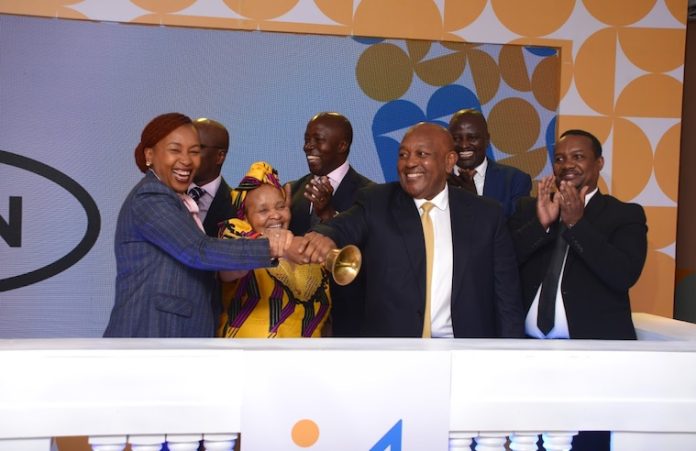
MTN-Uganda CEO, Mulinge and Board Chairman, Charles Mbire share a light moment after announcing dividends.

MTN Uganda has attained a public float of 20 percent at the Uganda Securities Exchange (USE) and the giant telecom company in the country is now fully compliant with the minimum public float requirement set out in rule 32 (7) of the USE rules, 2021,

The purchase of all the shares, according to officials, is a vote of confidence in MTN Uganda but also amplifies investor confidence in Uganda’s equity market and by extension boosts the market capitalisation of the stock exchange, given the strongest subscription rate of 230 percent.

In 2021, MTN listed 20 percent of its shares on the USE with a 12.97 percent public float from the Initial Public Offering (IPO) and the company provided an undertaking to the USE that the remaining 7.03 percent would be completed by December 5, 2024.

The latest development comes after the company’s completion of its secondary market offer for the purchase of shares which ran from May 27, 2024, to June 10, 2024.

During the announcement of results from this secondary market offer for the purchase of shares at the MTN headquarters in Kampala, USE Chief Executive Officer Paul Bwiso revealed that they approved the company to be voluntarily suspended for two weeks from the USE to give Ugandans an opportunity to participate, look at the fundamentals of the company, the incentives shares that were provided and the dividends that were part of this offering from which they saw a lot of positive results in terms of participation. 

“MTN’s market capitalisation is Shs3.8 trillion out of the total local market capitalisation of Shs11.8 trillion. That gives MTN a 32.3 percent contribution to the local market capitalisation and this growth has been signified in the trading turnover we have seen at the exchange from IPO,” he said.

In the same vein Grace Semakula from SBG Securities, the lead sponsoring broker on behalf of MTN Uganda noted that in total, 157,4807,373 shares were offered by MTN to the market and the preliminary results indicate a subscription rate of 230 percent making it the strongest subscription they have received from issuance in the local market. This performance translates into an over-subscription of 130 percent, he said.

“We have received several applications from both existing and new investors and the company’s shareholder base has grown to over 20,000. With strong retail participation in this offer, we have seen an average retail participation of Shs13.4 million invested per average retail applicant,” said Semakula.

On his part, MTN Uganda chairman Charles Mbire commended the success of the recently concluded secondary market offer which he said in addition to being oversubscribed, has resulted in approximately 19,600 Ugandan investors owning a stake in the company that employs many Ugandans, on top of paying taxes.

“We are proud to have helped facilitate the broadest possible shareholder base in Uganda, with regional participation and in so doing, further developing the equity capital markets in this country.”

For her part, MTN Uganda Chief Executive Officer, Sylvia Mulinge said that the company’s old investors on the register as of June 12, 2024, and the new investors who participated in the secondary offer are eligible for the next dividend payment worth Shs143 billion translating to Shs6.4 per share which she said will be paid by June 25, 2024. This will bring the total dividend the company has paid to its shareholders since the IPO in December 2021 to Shs864 billion.

This is a very big boost for MTN-Ugandaif you add the achievement of paying Shs1.1 trillion for the year 2023.

Stories Continues after ad

Corruption: Court commits three embattled MPs for trials

MPs Mutembule and Namujju at Court.

Embattled Lwengo district woman MP, Cissy Namujju and Bunyole East county MP Yusuf Mutembuli have been committed to High Court for trial.

Their committal followed the conclusion of investigations into the matter. Meanwhile, their counterpart Busiki County MP Paul Akamba didn’t show for court proceedings. 

Akamba was released last Friday granted Shs13 million after spending two days at Luzira prison.  

According to his lawyers led by Bugiri Municipality Asuman Basalirwa, Akamba has not been acesed following his re-arrest.

The three were nabbed on June 10, 2024 after they had been summoned to record statements about corruption-related allegations. The group was quizzed and later detained at Kira Police Divisional Headquarters, where they spent two nights. 

They were later arraigned before the Anti-Corruption Court Chief Magistrate Joan Aciro and charged with corruption and influence peddling.

The prosecution alleges that while at Hotel African on May 13, 2024, the three solicited a bribe from the executive director of the Uganda Human Rights Commission, Mariam Wangadya, to enhance the commission’s 2024/25 budget. The group would take 20% of the enhanced budget.

The trio pleaded not guilty and subsequently remanded to Luzira Prison.

Their arrest followed President Yoweri Museveni’s remarks revealing that there is a racket of people in the ministry of finance and parliament taking bribes to approve the budgets of various government agencies.

“I have been getting good information about corrupt actors not only among public servants but also among political actors. With some evidence, we shall crush these traitors.” Museveni said.

“I have been hearing, but now I have proof. I have been hearing from the Ministry of Finance; they arrange for accounting officers of ministries to come to parliament. Working with some people there to provide certain funds, provided you take a share, I didn’t believe it, but now I have proof,” Museveni said.

Stories Continues after ad

EACOP encounters obstacles as financiers delay loan disbursement

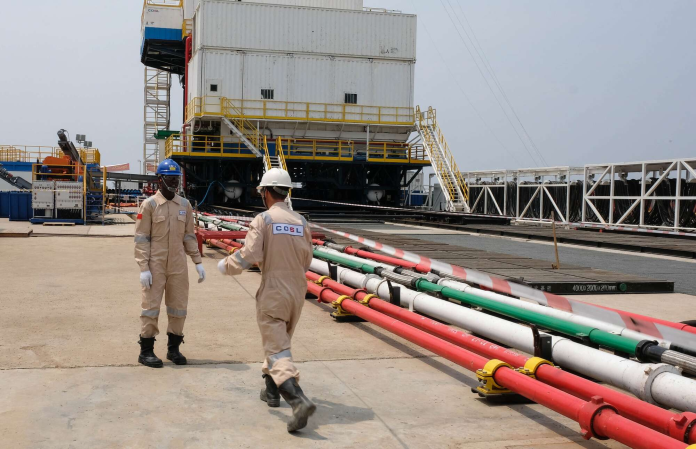
The East African Crude Oil Pipeline (EACOP) project has encountered a significant obstacle as Chinese financiers, Exim Bank and Sinosure, have failed to disburse the agreed-upon loans, totalling $3 billion.

This delay has resulted in a substantial financing gap, putting the project’s timeline and viability at risk.

“The delay in securing the Chinese loans has put us in a difficult position,” said a senior official at the Uganda National Oil Company (UNOC). “We are working tirelessly to finalize the agreements, but the delay has already impacted the project’s progress.”

Despite a year of negotiations, the loan agreements remain un finalized, leaving the project’s shareholders, including TotalEnergies, UNOC, Tanzania Petroleum Development Corporation, and CNOOC, in a precarious situation. The project’s physical works, currently at 33% completion, are now under threat due to the lack of funds.

“This project is crucial for the region’s economic growth, and we cannot afford to delay it further,” said a spokesperson for TotalEnergies. “We urge the Chinese financiers to expedite the loan disbursement to avoid any further setbacks.”

UNOC has stepped in to mitigate the crisis, injecting $35.38 million into the project this month. However, this amount is merely a fraction of the required funds, highlighting the urgency of the situation.

“We are doing everything possible to keep the project on track, but we need the Chinese loans to materialize soon,” said the UNOC official.

The EACOP project, a 1,443-kilometer pipeline aimed at transporting crude oil from Uganda’s Lake Albert to Tanzania’s port of Tanga, is a critical infrastructure project for the region. The delay in securing the Chinese loans has raised concerns about the project’s future and the potential impact on the regional economy.

As the project faces this critical juncture, the delay in securing the Chinese loans has put the spotlight on the challenges of international financing for large-scale infrastructure projects in Africa.

“This incident highlights the risks and uncertainties associated with relying on international financing for critical projects,” said Dr. Elsie Sifa, an energy expert at the African Energy Institute. “Africa needs to develop its own financing mechanisms to reduce dependence on external funding.”

Stories Continues after ad

Filmmakers urged to seek mentorship and prioritise collaboration

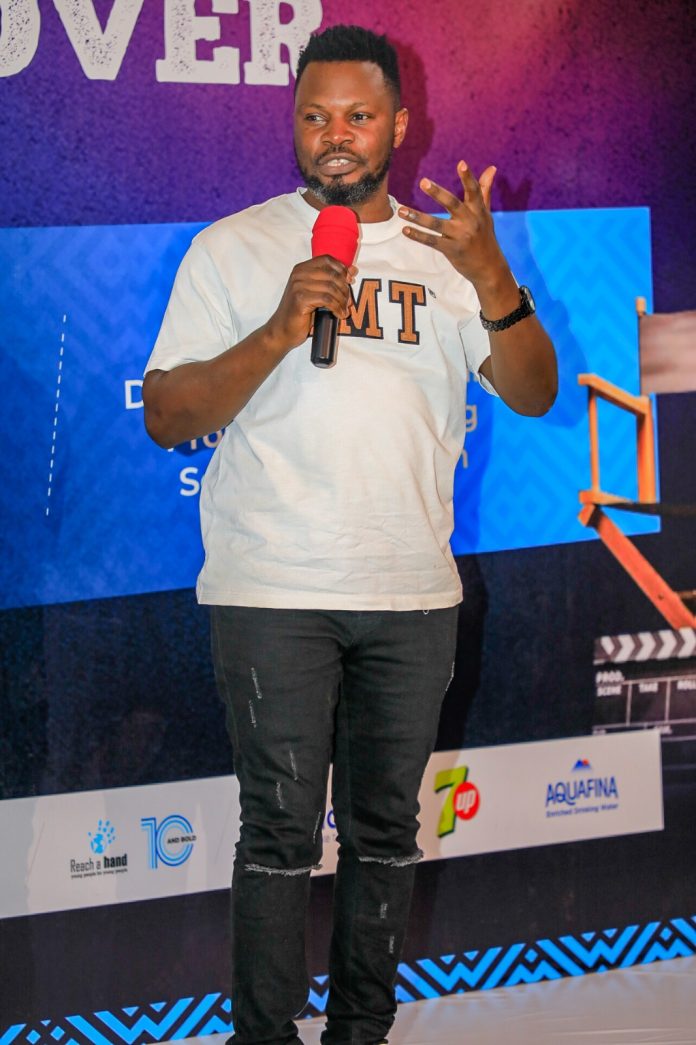
While addressing filmmakers at MoTIV on Friday, Richard Mulindwa – a multi-award-winning film producer, writer, and director called for mentorship among young actors, directors, and producers as the lack of it hinders the quality of the productions they embark on.

“We are losing a lot of talent because of inexperienced directors in Uganda. Some people know how to write scripts but will wake up one day and decide to direct without understanding even the basics of directing. As a result, many actors will end up staying at the same level because a director’s job is to push actors and get them out of their comfort zone so that they can improve their skill and delivery,” he said.

The filmmakers gathered at MoTIV for the first of MoTIV’s Creative Fridays Sauti Plus Takeovers – an initiative of MoTIV, the SautiPlus Media Hub, and Reach A Hand Uganda and a platform for creatives in the film industry to connect, learn, collaborate, and network under the theme: “Navigating creative film production”.

The platform is an opportunity for creatives to showcase their work while engaging with their vibrant communities and featured talks from Mulindwa (Production and Directing); Stella Nantumbwe (Acting); Rehema Nanfuka (Screenwriting) and; Tony Kastimo (Sound Production for Film).

Rehema Nanfuka – a film, theatre, and TV actress, director, and filmmaker known for her roles in Veronica’s Wish, The Girl in the Yellow Jumper, and Queen of Katwe, said, “When creating stories, do not go the common route. Try to use a different unexpected route such that you can stand out from the rest. And when it comes to pitching your scripts, create a writers’ room because pitching as a group takes you further while pitching alone is less impactful. There’s more magic in multiple people pitching an idea.”

Humphrey Nabimanya, an Executive Producer and the founder of Reach A Hand Uganda and SautiPlus Media Hub emphasised the importance of sharing knowledge, connecting, and networking as a way of investing in and building the local film industry.

He added, “Let’s not create films because of awards but because we want to create a sustainable impact in Uganda’s film and creative industry. As SautiPlus, our vision is to build a streaming platform and proper warehouse studios in addition to creating more spaces for filmmakers to learn, dialogue, and work together to take our industry to global standards.”

SautiPlus Media Hub is a full-service communications agency and production house that is behind productions like Sabotage (2024), When You Become Me (2023), and the Kyaddala TV series (2019-). In March 2023, they were officially licensed by the Uganda Communications Commission to exhibit and distribute audio and visual film and video works in Uganda as a national distributor and exhibitor.

Stories Continues after ad

Why Museveni believes oil revenue will reduce Uganda’s external debt

President Museveni.

President Yoweri Museveni has revealed that Uganda will earn US$2 billion per annum once oil production starts in 2025 and the revenue devoted to infrastructure and science development.

Museveni said investing $2 billion in the two sectors will significantly relieve the government of external borrowing and external debt.

Museveni made these assurances after the Minister of Finance Matia Kasaija delivered the 2024/2025 budget to the House at a sitting chaired by Speaker Anita Among at Kololo Independence Grounds on Thursday, June 13, 2024.

According to the Ministry of Finance, Planning and Economic Development Uganda’s debt burden stands at Shs93.38 trillion as of December 2023. Out of this, Shs55.37 was external debt which the President said should cease.

“If the NRM will be in charge, we shall use the oil money for strategic items such as infrastructure and science development; this business of borrowing should stop,” Museveni emphasised.

Museveni said that the government will invest the revenues from oil in infrastructure such as the Standard Gauge Railway which will enhance Uganda’s potential to create wealth and reduce borrowing.

In the 2024/2025 financial year, the government has allocated over Shs920 billion for the oil and gas sector to realise the ‘first oil’.

 Kasaija said this is possible with the progress made in the construction of East African Crude Oil pipeline (EACOP) project where 500km of pipeline have been delivered in Tanzania.

Kasaija added that in the new financial year, the government will focus on developing an EACOP hub in Tanga and continuous construction of the pipeline.

In addition to the oil sector, tourism, mechanised agriculture and minerals development were highlighted as key drivers to catapult the size of the economy to $500 billion in the next one and a half decades.

“We are lucky we have the rains but sometimes we get less rains and get into food crises. We must have complementary agricultural arrangements, such that when rains do not come, there is a standby irrigation system,” the President said.

Some of the army representatives in Parliament salute as the anthems are played

Speaker Among on her part urged members to avoid any inducements and called on accounting officers to report cases of extortion.

“We have urged accounting officers to share with the leadership of the legislature any incidences of influence peddling. However, we have not received any such information. We urge accounting officers to maintain open channels of communication with the leadership of the legislature in pursuit of greater transparency and accountability,” Among said.

She called on legislators to walk in accordance with the code of conduct prescribed for them and uphold integrity of the rule of law.

Stories Continues after ad