Stanbic Bank
Stanbic Bank
18.3 C
Kampala
Stanbic Bank
Stanbic Bank
Home Blog Page 2283

Don’t drag Gov’t into kingdom issues, Museveni tells Bakonzo

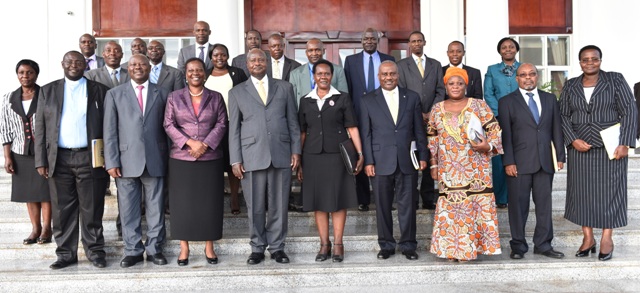
PRESIDENT M7 POSES FOR A GROUP PHOTO WITH THE DELIGATION FROM BUNDIBUGYO AT ENTEBBE STATE HOUSE


PRESIDENT M7 POSES FOR A GROUP PHOTO WITH THE DELIGATION FROM BUNDIBUGYO AT ENTEBBE STATE HOUSE

President Yoweri Museveni has called on the leaders of the Rwenzururu Kingdom in Kasese and Obundhingiya in Bundibugyo to stop dragging the NRM government into kingdom matters.

Mr Museveni also asked the leaders to separate Obusinga issues from administrative units and told them to give time to the government to internalize the matters surrounding requests for Bugendera to be given a district status.

The President was meeting delegations from the two cultural institutions at State House Entebbe, led by Wilson Mutabazi Mukirane and Fulgensio Bamwitirebye of Kasese and Bundibugyo, respectively.

“Rwenzori sub-region is an area whose people actively participated in the protracted people’s struggle. There are three kings who are officially known. The fourth one is not yet recognized. Observe the national Constitution,” he said.

On the issue of land, the President warned that they cannot stop any Ugandan from owning property in any part of the country, and said that Omukama Oyo Kabamba Iguru of Tooro has got the right to visit and access his personal property in Kasese district.

He further warned them against involving Kings in matters of other people’s pieces of land

President Museveni was unhappy to note that many youth in that sub-region who attacked the army were killed. He revealed that the Government granted amnesty to those that survived that conflict but added that the people who killed the Basongora civilian families, would not be forgiven. He stressed that the law would take its course against those who killed civilians.

He said that the NRM Government’s role is to develop infrastructure such as roads and maintain peace and security.

The leader of the Bundibugyo delegation, Mr Bamwitirebye, assured the President that Bamba and Bakonzo communities were currently living in harmony. He thanked the President for government’s support of Shs 200million towards the construction of their palace and for the continued peace and security in the Rwenzori region and the entire country.

During the meeting, the President also took the opportunity to welcome Mr Taban Christopher Kibanzanga and Mr Gideon Mugisa to the National Resistance Movement (NRM).

The two leaders took an oath of allegiance to the NRM before the President and the leaders of Bukonzo and Bwamba.


Stories Continues after ad

Meet Henry Kirumaganyi aka Henry Tigan as he narrates his musical journey

Henry TiganWhat schools did you attend?

I went to St.Steven Nursery School, Luzira Primary School and Nkumba Primary School in Entebbe, Africana Whiteland for olevel, lubiri high school for A level and in 2005 I joined Kyambogo University for a Bachelors in Adult and Community Education (BACE)

How old are you?

22/11/1984 is my date of birth

When did you join music?

I started singing way back in primary school, where I participated in Music, Dance and Drama competitions, won trophies for my respective classes and houses mostly the one of original compositions.

You went silent (musically) what really happened?

I will select the best. I just decided to give it a break because I felt like wasn’t ready to release any new tracks though I have been recording many of them and from those I am going to select the best.

Are you back in the industry?

I have never quit the industry as I said before because my music is played almost every day; it is just that for so long I have not released any new tracks but Uganda should be warned because I am about to put the nation at stake.

What is that special thing about Henry Tigan?

My music sounds fresh each and every time it’s played plus the positivity message makes my music special. Because I went silent for so long but still my audience didn’t die so I believe I can still make it.

Tigan

When did you release your first track?

I released it in 2005 its called Emilanga.

What are you preparing to prove wrong the people who doubt your stay in the music industry?

Obvisiouly, when I start releasing my new vibes they will have nothing to say because I know I can raise up again. So they should be warned.

Which songs put you on map?

Abogezi and Lwaki onninza put me on map.

Are you married?

No

What do you do apart from music?

I have an organization, the Civilian Barracks; we carry out community reach outs, sensitization and creating awareness among people accordingly. It is a youth organization and by the end of this year we are starting on our farming project.

Do you have a Manager?

Currently, I don’t have a Manager.

What should your fans expect from you this time?

My fans should expect the best of the best.

Which kind of music do you do?

Reggae, though I blend it with Zouk to suit the Ugandan market.

How many songs do have?

So many collabos among these are Pretty Gal featuring Mighty Mystique,  My Country featuring Marlion Usher, Aneganye Bobi Wine, Entallo featuring Born Ugandans amongs others.

I have three albums and so many singles.

Stories Continues after ad

Brig Tumukunde promoted and retired from army

Lt Gen (rtd) Henry Tumukunde
Brig Henry Tumukunde

Brig Henry Tumukunde has been promoted to the rank of Lt Gen and retired from the army.

The army spokesperson, Lt Col Paddy Ankunda confirmed: “Yes, Brig Tumukunde is now a Lt Gen and retired from the army,” he said.
Brig Tumukunde who has been not deployed for the last ten years, jumps the rank of major General in the shocking promotion by president Museveni after he fell out with the regime in 2005.
He was later arrested, charged with spreading harmful propaganda and sentenced to serious caution.
Sources say he has reconciled with the regime and is headed for bigger positions in security agencies.
He joined the army in 1982 after finishing Makerere University where he was involved in the anti-Obote government activities.
Stories Continues after ad

Rwanda to host 2016 Military Games

Rwanda is to host the East African Community Military games and Cultural Event next year.
The development follows recommendations made by the partner states Chiefs of Defence Forces (CDFs), who met in Kampala during the just-concluded Ninth Edition of EAC military games staged at Namboole National Stadium, on the outskirts of Kampala city.
The closing ceremony of the 11-day gala was presided over by Uganda’s Minister of State for Defence General Jeje Odong, who noted that the military games were a product of the 1998 Memorandum of Understanding (MoU) on Defence Matters, signed by Uganda, Kenya and Tanzania, the three original but seemingly distrustful members of the then EAC. The MoU was revised in 2001.
“There is no doubt that today the military in our region have made remarkable and exemplary progress in the integration of their operations and if all other sectors could borrow a leaf from the defence sector, we would realize the EAC dreams that we all cherish sooner than later,” Gen Odong said.
 
EAC Secretary General Amb Dr Richard Sezibera said he was inspired by the participants’ commitment towards the greater EAC integration.
 “Their aspirations are for an East Africa that, first and foremost, continues to be peaceful, secure and stable and whose overriding agenda is to raise productivity and savings; and attract foreign investments in order to create wealth and improve the living standards of the people”.
 
The Secretary General commended the Armed Forces for promoting the use of Kiswahili, the lingua franca for the East Africa Community and also for adopting a Regional Counter Terrorism Strategy as adopted by the EAC Council of Ministers, and sharing of Intelligence among themselves.
 
He noted that so far all the Partner States, except one, had ratified the Protocol on Cooperation on Defence and urged that Partner State to expedite the ratification process.
 
He also commended the sector for  agreeing to use Defence Technical Facilities offered for joint utilization by the Partner States namely; Muzinda Engineering Unit in the Republic of Burundi; Defence Technical College (DEFTEC) and the Defence Mobile Field Kitchen (DMFK) in the Republic of Kenya; the Kinyinya Asphalt and Concrete Plant in the Republic of Rwanda; Tanzania Automobile Technical Centre (TATC) Workshop facilities in the United Republic of Tanzania; and Uganda Mechanical Engineering College (UMEC) in the Republic of Uganda.
 
Uganda’s Chief of Defence Forces, General Katumba Wamala, who spoke on behalf of the other CDFs, said the EAC Military Games and Cultural Event was a unifying factor in the regional integration and development process.
General Wamala hailed the EAC Council of Ministers, the Sectoral Committee on Cooperation in Defence and the EAC Secretariat for the support they have continued to give to the defence sector including permission to host the games and cultural event.
 
He commended the performance of the contingents and wondered why the Military was not producing country and international champions in the various disciplines.
 
The East African Community Military Games and Cultural Event is an annual rotating event that started in 2005 when the first edition was held in Kampala, Uganda. Other editions of the games have been held in Nairobi, Kenya (2006), in Zanzibar, Tanzania (2007) and in Kampala (June 2008).
Stories Continues after ad

NRM should emulate us – FDC

The National Resistance Movement (NRM) party aspirants for various positions will begin picking nomination forms between July 14 and 31.

The Forum for Democratic Change (FDC) has ‘advised’ the ruling National Resistance Movement (NRM) to learn from it on how to carry out free and fair elections.

Addressing the press at the party head offices in Kampala today, DRC spokesman Ibrahim Ssemujju Nganda noted that the party flag bearer campaigns are moving on well and so will the elections.

He disclosed that his party asked the NRM and other political parties to attend the flag bearer elections exercise so that they can ‘learn’ from the FDC.

“We invited the NRM so that they learn that people within the same party can compete and shake hands; we invited political parties so that they can emulate us,” Nganda, who is also the Kyadondo East MP, said.

It was not possible to reach NRM spokesperson Mary Karooro Okurut for comment, but the FDC spokesperson said that the ‘successful national campaigns’ by Col Dr Kizza Besigye and Maj Gen Mugisha Muntu, the party flag bearer candidates show that the party is strong and united.

“Apart from persuading delegates to elect them, they have also marketed the party and engaged supporters,” Ssemujju Nganda said, adding: ‘the intention is not to only build FDC but offer lessons. We congratulate ourselves on the achievement.”

He stressed that the party faces challenges but that they will overcome them and have better elections. “We will capitalize on our weaknesses to make this exercise better; we will deal with them.”

In other developments, the FDC has released a register of 1043 delegates who will vote at the delegates’ conference to be held on September 3. On the same day the delegates will also elect the 17 members of the party’s National Executive Committee (NEC).

Meanwhile, the FDC Electoral Commissioner has said the flag bearer elections process is progressing well.

Handing the election registers to Wilberforce Kyambadde, the team leader of ‘Besigye camp’ and James Kalija, the ‘Team Muntu’ leader, Mr Dan Mugarura said the exercise shows that the party is transparent.

“The registers approved by party Electoral Commission were handed to both teams; both teams agreed so that we share responsibility and these are the authentic documents we will use for the election,” said Mr Mugarura.

The Forum for Democratic Change is set to hold elections on September 3 to choose who will contest for presidency in 2016 against several contestants including incumbent President Yoweri Kaguta Museveni.

Stories Continues after ad

International community needs to revisit the South Sudan conflict

Barely a day after South Sudan President Salva Kiir Mayardit appended his signature to a peace deal with the rebel faction of the Sudan Peoples Liberation Movement in Opposition (SPLM-IO), fighting has again reportedly erupted in several areas of Malakal in the Upper Nile region and in the oil-rich Unity State.

Much as this development is deplorable and deserves condemnation, the renewed fighting will not come as a surprise to many of the stakeholders including the US, which had warned Kiir against reservations he held while he dilly-dallied signing the pact that seemed to have had several ‘concessions’ favouring Riek Machar’s SPLM-IO. Indeed, the UN also seemed hard-pressed to believe that the signing was sustainable and a precursor to lasting peace in the world’s newest state, prompting a Fridaywarning to the belligerent parties, of an arms embargo should they fail to adhere to the terms of the peace pact.

That notwithstanding, it is important to note that the South Sudan conflict is a ‘high stakes game’ that encompasses several actors with different interests, that not even the threat of sanctions can deter the warring groups from attacking each other even as the ink on the peace pact has not seen the light of day.

So, against such a background, there is need for the international community to comprehensively revisit the nature of conflict in South Sudan so that an applicable solution can be put in place.

But while pursuing the revised definition, one factor that should be given due attention is ethnicity, as this seems to be one of major underlying problems that is curtailing meaningful dialogue between Kiir and Machar.

Indeed, the two major antagonists, who seemingly represent the Dinka and Luo Nuer interests, are apparently distrustful of each other and seem poised for a ‘supremacy battle’, with either tribesmen egging on their own to maintain or take the reins of government, respectively.

Against such a background, new methods of conflict resolution become an imperative.


Stories Continues after ad

New EALA Counsel takes oath

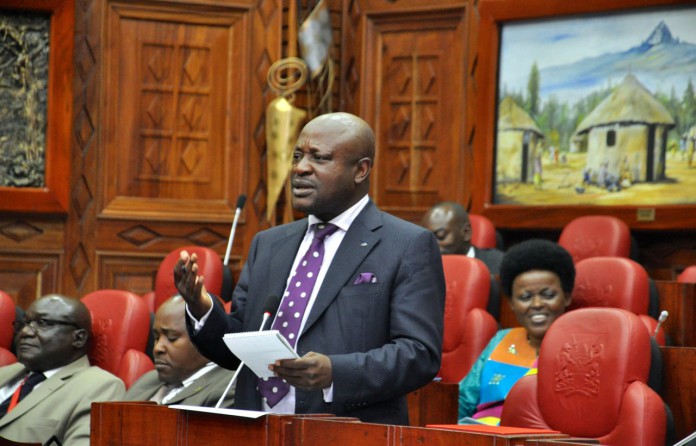
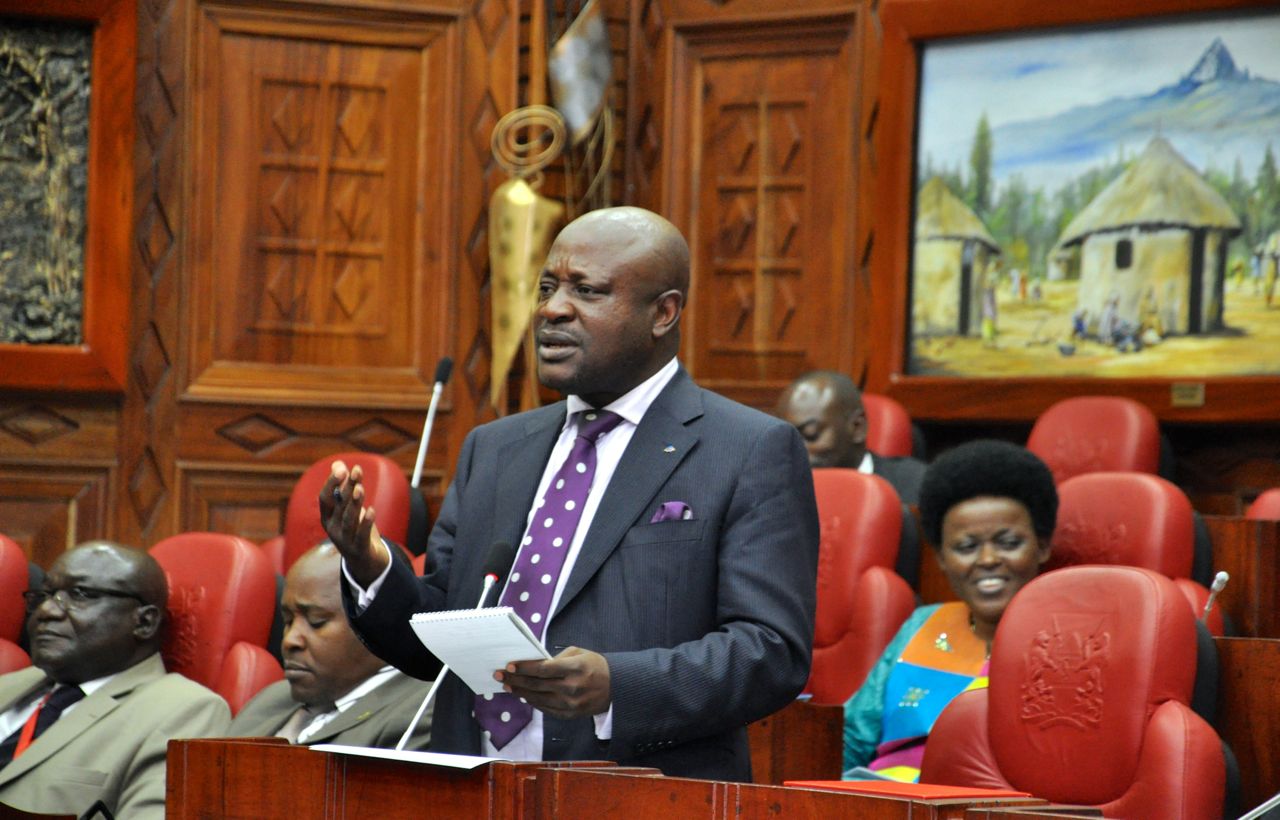
Dr Anthony Luyirika Kafumbe has been sworn-in as the new East African Legislative Assembly (EALA) Counsel.
Dr Kafumbe’s Oath of Allegiance was administered by the EALA Clerk before the Speaker Dan Fred Kidega at a session in Kampala on August 27.
Hon Dr Kafumbe, who now becomes an ex-officio EALA member, was ushered into the House by Emmanuel Nengo and Dora Byamukama, and took the oath in accordance with Rule 5 of the Rules of Procedure of the Assembly. He was appointed Counsel to the Community (CTC) by the Council of ministers 32ndsitting in Arusha in August this year, and replaces Wilbert Kaahwa, who retired last year.
Dr Kafumbe’s duties include offering legal advice to the EAC, attending and advising Council of Ministers and representing the Community at the East African Court of Justice (EACJ).
Prior to his appointment, Dr Kafumbe, who holds a doctorate from the University of Glasgow, Scotland (2006), was the Principal Legal Officer of the Community, having joined the EAC in July 2008. 
He also holds Masters of Laws from the University of Pretoria, South Africa (2000); a Masters of Business Administration from ESAMI, Arusha, Tanzania (2003); has lectured at Makerere University and also worked as a Senior State Attorney, Ministry of Justice of Uganda.
Stories Continues after ad

Uganda lauded on national IDs

The East African Legislative Assembly has praised the Uganda government for introducing the ‘third generation’ national identity cards.

Through a resolution moved by Ugandan legislator Susan Nakawuki on August 27, the EALA members noted the Uganda had complied with Article 8 of the Common Market Protocol and they urged other partner states to expedite their card issuing finalisation processes.

In the resolution the Republic of Rwanda, which had introduced machine readable ID cards way before the entry of the Common Market Protocol and the United Republic of Tanzania which had also commenced on the exercise of issuing the cards, were also lauded.

“The ID card is to facilitate delivery of national development based on reliable and verifiable data, enable Governments plan properly and provide easy access to social facilities and services like the Health systems. 

It also facilitates school capitation grants based on verifiable identities and data at local level, facilitates transparent and trustworthy business transactions, reduces level of crime in Community and improves security”, part of the Resolution reads.

 All EAC Partner States have embarked on the process of issuing 3rd Generation identity cards including the Republic of Kenya which pioneered national ID systems and is now embarking on the upgrade from 2nd Generation to 3rd Generation IDs.

 During debate, Ms Hasa Mossi called for accuracy in data management. 

“We can achieve this aim when coming up with the third generation cards”, she said.

Abdullah Mwinyi (Tanzania) said getting right data was fundamental in improving the livelihoods of East Africans.  

“It is not just simply measuring, but reliable data can catalyse change”, Hon Mwinyi said.

Ms Valerie Nyirahabineza (Rwanda) said while commenting on the Common Market Protocol, observed the slow pace of implementation. 

“This Resolution is important as it calls on all Partner States to move with the Protocol.  We urge the Council of Ministers to urge Partner States to fervently implement the provisions of the Protocol,” Hon Nyirahabineza said.

Dora Byamukama (Uganda) lauded the Partner States that have Identity cards and said a time should come when there is total free movement of persons.

Stories Continues after ad

Maj Mutale, Lukwago face police summons over militia

Police is set to summon Senior Presidential Advisor on Political Affairs Major Roland Kakooza Mutale and Kampala Lord Mayor Erias Lukwago over the militia groups they formed.

Addressing journalists at the police headquarters this morning, police spokesperson Fred Enanga said that what the two were doing is in breach of the Uganda Constitution and the cop insisted that the mandate to recruit and train such groups is the preserve of certain government departments.

“The Constitution doesn’t allow this; we are monitoring them and who ever associates with them. Constitutionally, the mandate to form such a group or train it is given to an arms government organization,” Mr Enanga said adding: “The police have made arrangements to summon the two and any other person who associates with them.”

According to the promoters, the self styled civilian guards are being trained to monitor the 2016 elections, with both Maj Mutale and Lukwago claiming this will deter the rigging of votes accruing to their respective candidates.

Mutale is currently training militias whose mission, he says, is to ‘eliminate’ anyone who stands in Museveni’s way ahead of the 2016 general elections.

Similarly, Lukwago under his pressure group called Truth and Justice formed the TJ Solida Crew, which he says, is ‘to act as a shield but not the sword to protect the interests of the public’.

Previously, Maj Mutale was infamously linked to the Kalangala Action Plan (KAP), a paramilitary outfit formed in 2001. In 2007, he was also associated with the ‘Kiboko Squad, a ‘vigilante’ group which tried to suppress the riots against the sale of Mabira Forest.

The issue of Maj Mutale’s training of a ‘vigilante’ group has caused a stir in some official circles, with his colleague, one-star General Brigadier Kasirye Ggwanga, threatening to take on the elderly Maj Mutale in the jungles of Luwero. Other personalities who have spoken against Maj Mutale’s trainees include information minister Maj Gen Jim Muhwezi, a two-star General and veteran of the Bush War, and Colonel Shaban Bantariza, another Bush War veteran and current Deputy Director of the Media Centre.

Stories Continues after ad

Kenya athletes’ exploits at the Worlds excite EALA members

David Rudisha, the 800 metres sprint ‘King’ is back after leading  a number of athletes including another comeback Vivian ‘Pocket Rocket’ Cheruiyot in bagging medals as Kenya made news at the World Athletics Championships, putting the East African nation back on the athletics world map.
 As Kenya’s athletes continued firing from all cylinders, their famous victories also caught the attention of members of the East African Legislative Assembly sitting in Kampala, Uganda, prompting a Motion for Resolution to support the East African athletes from Kenya at the just-concluded World Athletics Championships in Beijing, China. 
 
The Resolution appreciated that Kenya had taken the lead in the Beijing games having amassed a total of 11 medals: six gold, three silver and two bronze.
The Resolution further urged the EAC Council of Ministers to implore partner states to provide more funding and establish the state of art facilities to enable EAC athletes enhance their skills and global dominance.
Article 19 of the Treaty for the Establishment of the EAC which obliges Partner States to promote close co-operation amongst themselves in culture and sports with respect to promotion and enhancement of diverse sports activities. 
EALA also resolved that EAC Partner States should protect sports personalities especially the females who are prone to different forms of abuse.
 
“Our East Africans of Kenyan origin need to be commended for their exemplary performance to uplift the name of Kenya in particular and the EAC region in general in World Athletics Championship,” Martin Ngoga of Rwanda, said.
 Hon Ngoga said it was necessary for the EAC to collectively take pride when one partner state excels. 
There is some excitement this year out of the games. Each medal Kenyans win is out of their sweat”, Hon Ngoga said and added: “We need to recognize the prowess and mention that they are inspiring the young persons.”
 Dr James Ndahiro (Rwanda) termed the Resolution timely and that it was further in line with the enactment of the Culture and Creative Industries Bill, 2015 passed by the Assembly at the Sitting.
Leonce Ndarubagiye (Burundi) said athletes were indeed the pride of Africa, while Mumbi Ngaru said sports was key and mentioned that integration was on-going through sports.  “The EAC Military Games are on-going here in Kampala, Uganda this week and it is in order that I applaud all participants,” she said last week.
 Susan Nakawuki (Uganda) noted that She-Cranes (Uganda) had also performed well in the Netball World Cup as were a number of athletes from Republic of Uganda. She called on the EAC Partner States to establish rigorous infrastructure to effect anti-doping measures in the industry.
 
Mike Sebalu (Uganda) said it was time for the EAC to associate with the celebrities and icons of the region and in that way create awareness, while Sarah Bonaya (Kenya) said the rest of the partner states could learn from the successes of Kenya which has invested heavily in athletics and sports.
 
Abdullah Mwinyi rooted for grassroots’ support.  “It is of critical importance as we broaden base of talent and opportunities at all levels. 
The EAC can think about a further competition. I commend them for organizing debates.  Let us have athletics for example also done,” Hon Mwinyi said.  
 
He lauded Kenyan Julius Yego, the gold winner of Javelin who threw 92.72 metres, setting a new continental and national record.  The Gold winner picked up interest from YouTube videos.   “This is a devastating example of technology allied with determination,” he said.  
 
With the Resolution, the Speaker of EALA, Rt. Hon Daniel F. Kidega adjourned the Assembly Sine die (Indefinitely).
 
At the Kampala Session, EALA passed at total of six Reports, one Bill, three Resolutions and deferred another Bill.  The Assembly also administered the Oath to the incoming Counsel to the Community as an ex-officio of EALA.
Stories Continues after ad