Stanbic Bank
Stanbic Bank
21.8 C
Kampala
Stanbic Bank
Stanbic Bank
Home Blog Page 2288

Mbabazi, Archbishop Lwanga, Mutebile in deal over Namugongo shrines

Mbabazi and Lwanga during the fundraising drive by President Museveni.


Mbabazi and Lwanga during the fundraising drive by President Museveni.

Kampala-The former Prime Minister Amama Mbabazi and the Kampala Archbishop Cyprian Lwanga have formed a company to redevelop the Namugongo Catholic shrines which will also be a religious tourist center.

Mbabazi’s daughter, Nina Mbabazi, Kampala businessman Charles Mbiire and Archbishop Lwanga are signatories to the Company’s account opened in Centenary Bank.

Here is part of the 50 shareholders.

“In an extra ordinary meeting held at the Company’s  registered offices on the 4th Day of February, 2014 the following resolution was duly proposed and passed: That RT Hon. Amama Mbabazi of C/P Po Box 14125, Kampala, Uganda be and is appointed chairman of the company with immediate effect,” the documents read.

Uganda Martrys Shrines Redevelopment Limited is a company limited by guarantee and about 55 members who are referred in the company documents as subscribers are shareholders.


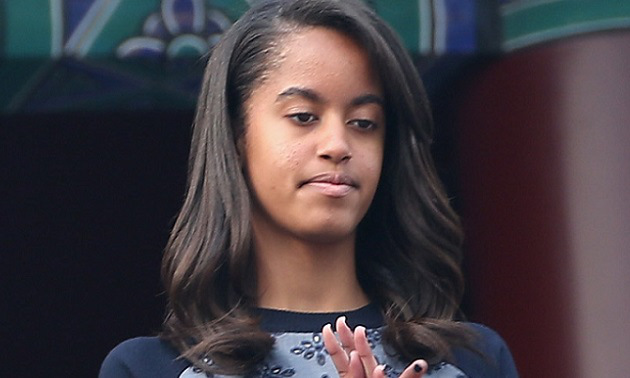
Nina Mbabazi

Nina Mbabazi

Among the 55 subscribers are; Emmy Katabazi, Bank of Uganda Governor, Tumusiime Mutebile, UPDF chief of Construction, Brig Sabiti Mutebile who is a brother Tumsiime Mutebile, Mbabazi’s other daughter, Rachel Mbabazi and Makerere University’s Prof. Barnabas Nawangwe.

Mbabazi’s lawyer Severino Twinobusingye is the Company secretary. a number of catholic priests are also subscribers.

It not clear whether the money being collected now for renovation is being put his account.

IMG-20150822-WA0000


Stories Continues after ad

Kenya’s withdrawal from electricity deal a boon for Uganda

Recent media reports indicate that Kenya has reduced its import of electricity from Uganda by 50 per cent. By any standards, this should be welcome news for Ugandans, many of who have suffered from persistent power outages, while our neighbours enjoyed the industrious proceeds of our energy sector.

Uganda has been exporting approximately 26.5 million kilowatts to Kenya, earning hundreds of millions from our neighbor to the East, which imported that electricity to boost local industries and supply to its rural areas.

Due to Uganda’s geographical set up, it has a comparative advantage over its neighbours to produce power but for a long time now the country has had to grapple with the issue of power deficits, in the process this has affected the industrialization viewpoint of government, to ensure we gain a middle income country status by 2030.

Now that Kenya has set the stage for us to utilize our power, stakeholders here should start looking at how to redistribute this new-found asset to better the lives of all Ugandans. As a starting point the power ‘saved’ from the Kenya deal cancellation can be used to electrify the bigger part of Eastern Uganda, where there is great potential for fruit juice industries.

Also, the power can help boost the country’s rural electrification project by making more homes access the electricity from the national grid.

This will in turn pave the way for a reduction of the electricity tariffs, which are still high, making the industrialisation drive an expensive affair for most manufacturers.

Stories Continues after ad

600,000 South Sudanese flee conflict

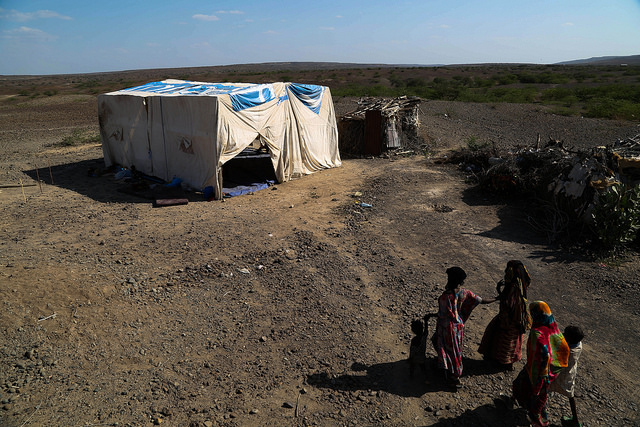
The number of South Sudanese seeking refuge following the aborted peace deal signing last Monday has risen to 619,386 by August 19, an increase of 60,386 refugees in June this year.

According to the United Nations Office for the Coordination of Humanitarian Affairs (UNOCHA), the largest host of South Sudanese refugees in the region is Ethiopia with 221,376 followed by Sudan with 191,253, Uganda with 160, 300 and Kenya with 46,457 refugees.

The conflict in South Sudan pitting soldiers loyal to President salva Kiir Mayardit and his nemesis Riek Machar Teny broke out in December 2013 and since then tens of thousands have been killed, while over two million have been displaced, including 1.6 million inside South Sudan.

The volatile situation led to the intervention of the international community, with the Intergovernmental Authority on Development (IGAD) brokering several peace deals, the latest being the one which collapsed in Addis Ababa, Ethiopia on August 17 after General Kiir demanded for time to assess the ‘final peace agreement’.

‘The humanitarian situation in South Sudan continued to deteriorate with no significant progress on political efforts to resolve the conflict,’ a UNOCHA report states.

Stories Continues after ad

Burundi designated a non-UN family duty station

The United Nations has designated strife-riven Burundi a non-UN family duty station.

The move comes three months after a number of UN staff and their families were evacuated from the restive central African state following the declaration by President Pierre Nkurunziza in April that he would seek another term in office after serving for 10 years.

Nkurunziza, who was sworn-in on August 20, had earlier on been declared winner of the presidential poll of July 21 by the Burundian Electoral Commission, for a controversial third term. But the UN Electoral Observation Mission in Burundi (MENUB) and other stakeholders said the obtaining environment in the country was not conducive for credible elections.

Since his‘re-election’ following the controversial polls, Burundi has been thrown in a circle of violence that has seen the assassination of two senior military officials: General Adolphe Nshimirimana, a close advisor to President Nkurunziza and retired Colonel Jean Bikomagu, a former head of the army on August 2 and August 15, respectively.

Meanwhile, according to the United Nations Office for the Coordination of Humanitarian Affairs (UNOCHA) report for July-August, on August 17 the UN Secretary General Ban Ki Moon urged the people of Burundi to settle their differences amicably and pledged UN support towards the peace and stability efforts, while earlier on August 16 the African Union had warned of “the potential of further escalation, with catastrophic consequences both for the country itself and for the region as a whole.”

Similarly, the Office of the UN High Commissioner for Human Rights had on August 14 August stated that the Burundi crisis was “spiraling out of control”, an observation shared by UNOCHA.

In a related development the United Nations High Commissioner for Refugees (UNHCR) is expecting the number of refugees to rise to 320.000 by the end of September, prompting 22 humanitarian agencies to seek for an additional funding of US$100 million in ‘support of life saving assistance’.

Stories Continues after ad

Report suggests ‘joint procurement’ for militaries in Africa

Militaries in Africa have been advised to consider ‘joint procurement’ (at certain levels) in a bid to overcome the financial and administrative challenges that impede their readiness.

According to the report: Ready to Serve: Financing African Militaries and Securing Readiness, released August 21 by Think Security Africa (TSA), there is a likely change in the funding priorities of military operations in Africa due to ‘increased budgetary uncertainty’ and a ‘sharp drop in commodity prices.’

The TSA report cites nine key changes in Africa’s defence environment and also indicates that 18 per cent of the African armies are ‘impacted by existential crises and 35 per cent are undertaking operations beyond normal peacetime activity.’

“The key findings of the report, which uses infographics and maps as visual aids, is that new funding priorities and approaches to resourcing African militaries are required. This is to ensure that African militaries retain and develop the capacity to guarantee national defence,” The report by Africa Press Organisation (APO) states in part.

According to the TSA founder Adunola Abiola, African militaries and donors are likely to change funding priorities to enhance the sustainability of operations ‘if the rise in military operations in Africa continues, alongside rising budgetary uncertainties’.

“In addition to this, militaries will have to cooperate more closely on the administrative and operational levels, and defence contractors will likely have to amend the way they market and supply, “Abiola says. The TSA report comes in the wake of several militaries across Africa participating in peacekeeping and support operations across the black spots on the continent, with the tacit approval of the African Union.

For instance, in East Africa Uganda, Kenya and Burundi are troop-contributing countries to war-ravaged Somalia, while Rwanda and Tanzania has over the years deployed peacekeepers in the Darfur region of Sudan and in the Democratic Republic of Congo (DRC), respectively.

Stories Continues after ad

UN agency says Kasese likely to be hit by El Niño

Ugandan women and children walk past submerged homes in an area flooded by heavy rains in Soroti, Uganda, Sept. 18 2007.

Over the past few years river Nyamwamba in Kasese has persistently burst its banks, causing deaths, displacement of persons and severe damage to property in the affected areas.

And this year several disaster prone areas in east Africa including Kasese district of Uganda are expected to be hit diseases like cholera as a result of flooding caused by El Niño.

According to the July – August report by the United Nations Office for Coordination of Humanitarian Affairs (UNOCHA), the El Nino, which now has the high probability of occurrence of 90 per cent, ill most likely be the worst in 30 years and will hit parts of Tanzania, Kenya, Rwanda, Burundi, Somalia and other parts of Uganda. The UN agency also indicates that the El Niño will affect the food security situation and other attendant social malaises in the East Africa and Horn regions.

In 2002 and 2009 the East Africa and Horn regions experienced El Nino and UNOCHA, quoting FESW NET, says this time the above-normal rains will continue through October 2015 and into 2016.

“Parts of Uganda, Tanzania, Rwanda, Burundi, Somalia and Kenya are expected to experience severe flooding while other parts of the region will experience drought conditions. Prolonged severe flooding may lead to outbreaks of Rift Valley Fever and other tropical water-borne diseases,” the UN release states in part. Already, according to UNOCHA, there are reported cases of cholera especially in the coastal areas of Somalia, Kenya and Tanzania.

“Other notable areas include major counties of Kenya, Kasese District in Uganda, South Sudan internally displaced persons’ sites and the Burundi refugees in Nyarugusi and Kigoma Districts transit centres,” the release states and calls for urgent preparedness in livestock vaccination and, water and sanitation interventions in the flood-prone areas.

“Preparedness measures and early action are required to mitigate the impacts of the drier-than-normal conditions and flooding in affected areas, “ the release states and says other social malaises include infrastructure damage, cutting off access to communities, crop damages in the field and post-harvest losses.

Stories Continues after ad

Over 400,000 Somalis to be repatriated from Kenya

Four hundred and thirty five thousand Somali refugees are to be voluntarily repatriated from Kenya over the next five years.

According to a July-August report by the United Nations Office for the Coordination of Humanitarian Affairs (UNOCHA) in East Africa, the decision was concretised during a July 29 meeting of stakeholders, operating under the auspices of the Tripartite Commission for the Voluntary Repatriation of Somali Refugees from Kenya.

‘The repatriation of Somali refugees from Kenya entered a new stage during the reporting period. At a meeting on 29 July, the Tripartite Commission for the Voluntary Repatriation of Somali Refugees from Kenya, comprising the Government of the Republic of Kenya, the Government of the Federal Republic of Somalia, and UNHCR agreed on concrete operational modalities to scale up the safe, dignified and voluntary repatriation of Somali refugees from Kenya’ the UNOCHA release states in part.

The repatriation of Somali refuges comes in the wake of persistent terror attacks carried out by suspected Al Shabaab, a Somali terrorist group that reportedly has links with other Somali nationals living in Kenya as citizens, illegal immigrants and refugees.

And, according to the three parties indicate that under the Joint Strategy and Operational Plan, this year will see 10.000 Somali refugees repatriated from Kenya and reintegrated in the Somali community and already 116 refugees were on August 5 flown from Dadaab to Mogadishu in two planes. The other repatriates will return home as follows: 100,000 in 2016; 150,000 in 2017; 130,000 in 2018 and 35,000 in 2019 and will be reintegrated in nine areas such as Mogadishu, Afgoye, Jowhar, WanlaWeyn and Belet Weyn.

Others include Luuq, Baidoa and Kismayo, the areas which were used to pioneer the pilot phase from December 2014 and June this year.

Stories Continues after ad

World Championships 2015: Mo Farah eyes historic double gold

Mo Farah


Mo Farah
Mo Farah


Double-Olympic champion Mo Farah is relishing the prospect of achieving an unprecedented 5,000 and 10,000m double at consecutive World Championships.

The 32-year-old, who also won both events at London 2012, achieved world 5,000m gold in 2011 before the world double in Moscow two years later.

“No-one has done it and it would be amazing to make history,” he said.

“To win both from Moscow to here would be incredible. It’s not going to be easy but it can happen.”

Mo Farah’s major gold medals

Two Olympic: (5,000 & 10,000m at London 2012)
Three World Championship: (5,000m in 2011; 5,000 & 10,000m in 2013)
Five European: (5,000 & 10,000m in 2010; 5,000m in 2012; 5,000 & 10,000m in 2014)

Farah makes his first bid for gold on Saturday when he competes in the 10,000m final.

The 5,000m heats take place on Wednesday before the final on the penultimate day of competition on Saturday, 29 August.

Farah has endured a difficult year following allegations from a BBC investigation linking his coach Alberto Salazar with doping.

There is no suggestion that Farah had broken any rules and Salazar has denied the claims.

In June Farah spoke of his anger at how his name was “being dragged through the mud”.

“It was hard but you just have to do what you do best and for me that is to run,” he added. “You’ve got to be happy in training and in life to run well and I am. I’m in a good place.”

Farah returned to the track with victory in the 5,000m at the Diamond League in Lausanne in July.

Stories Continues after ad

Islamic State ‘deputy’ killed in air strike, US says

The White House describes Hayali as the second-in-command to IS leader Abu Bakr al-Baghdadi (above).

A deputy leader of Islamic State (IS), Fadhil Ahmad al-Hayali, has been killed in a US military strike in northern Iraq, the White House says.

Hayali, also known as Hajji Mutazz, is described by US officials as the second in command of the group.

They said he was killed in an attack on his car in Mosul on Tuesday, and that his death would damage IS operations.

A number of IS leaders have been taken out by US-led air coalition strikes in both Iraq and Syria in recent months.

‘Wide influence’

Hayali was a primary coordinator for moving large amounts of weapons, explosives, vehicles and people between Iraq and Syria, the US National Security Council’s Ned Price said in a statement.

In Iraq, Hayali was “instrumental in planning operations over the past two years, including the IS offensive in Mosul in June 2014”, Mr Price said.

He is described as “the senior deputy” to IS leader Abu Bakr al-Baghdadi, who was reportedly seriously injured in another air strike by the US-led coalition in March this year.

“Hayali’s death will adversely impact IS’s operations given that his influence spanned IS’s finance, media, operations, and logistics,” Mr Price added.

A second IS member who coordinated media, known as Abu Abdullah, was killed in the same air strike as Hayali.

It comes several months after Iraqi defence officials declared another “IS second-in-command”, Abdul Rahman Mustafa Mohammed, dead in an air strike in northern Iraq.

Mohammed, also known as Abu Alaa al-Afari, was killed inside a mosque hit by a strike in Tal Afar in May, they reported.

At the time, there were unconfirmed reports Afari had taken temporary charge of IS operations amid reports IS leader Baghdadi had become incapacitated.

In June this year, the US reported that more than 10,000 IS fighters had been killedsince the international coalition began its campaign against the group last summer.


Stories Continues after ad

Uganda AU soldiers charged over Somali wedding attack

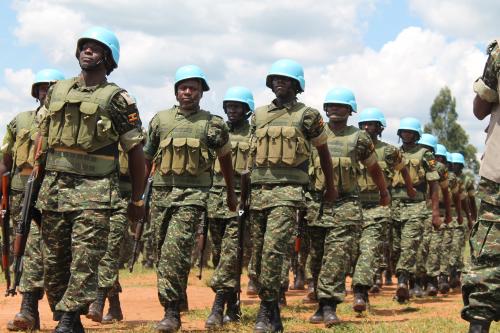
African Union troops have been operating in Somalia since 2007.

Three Ugandan soldiers have been charged over the killing last month of a group of civilians in Somalia, an African Union (AU) official has said.

Maman Sidikou, the head of the AU in Somalia, apologised to the families of the seven people killed in the attack.

The AU had previously denied that the incident took place.

According to the campaign group Human Rights Watch, AU troops from Uganda began shooting at men at a wedding party after coming under fire.

Witnesses said that the troops entered several houses in Merca, 70km (45 miles) south of the capital Mogadishu, after a grenade attack on their convoy.

Mr Sidikou admitted on Friday that seven civilians had been killed.

“We have established that, on that occasion, seven civilians died following an incident involving our troops,” he said in a statement.

“I would like, on behalf of the African Union, to offer my sincere apology for these deaths. We regret these deaths,” he added.

The three AU soldiers have now been indicted and are waiting to be arraigned, according to the statement.

“I have instituted a board of inquiry composed of military, civilian and police officers who are not from the contingent concerned in order to ensure impartiality,” Mr Sidikou said.

Witnesses described the incident to Human Rights Watch.

“At one house, where the Moalim Iidey family was celebrating a wedding, the soldiers separated the men from the women and shot the six adult men – four brothers, their father, and an uncle,” HRW said in a statement.

“Four died immediately, one brother hid under a bed after being shot but later died, and the father died during the night after the soldiers allegedly refused to allow the family to take him to the hospital,” it said.

HRW says witnesses also allege that 11 civilians were killed by AU troops on 21 July in Merca.

None of the survivors of the two alleged incidents spoken to by Human Rights Watch have yet been interviewed by AU investigators, the rights group said.

AU troops have been in the Somalia since 2007 helping various UN-backed governments fight the al-Shabab militant group.

“Our soldiers are operating in a very complex environment,” Mr Sidikou said in the AU statement.

“We will continue to appeal to our host communities to facilitate the work of our troops in the fight against al Shabab.”


Stories Continues after ad