Stanbic Bank
Stanbic Bank
26.5 C
Kampala
Stanbic Bank
Stanbic Bank
Home Blog Page 2289

Dangote expands ‘cement empire’ to Tanzania

PRESIDENT Jakaya Kikwete and his Nigerian counterpart, Muhammadu
Buhari have described business mogul, Aliko Dangote, as Africa’s
economic stimulant whose investments have improved economic stability
and standard of living in Africa.
The two leaders were speaking on the occasion of the commissioning of
Dangote Cement’s multi-million dollar new cement plant in Mtwara on
Saturday and ground-breaking of the 26 hectare -jetty which attracted
top shots from Nigeria, Tanzania and the neighbouring countries of
Rwanda, Burundi, the Democratic Republic of Congo and Mozambique.
President Kikwete said there was no better way of rejuvenating and
sustaining nation’s economy if not through investment which create
jobs and trade opportunities.
He described the 3m mtpa cement plant as the largest cement plant in
the Eastern and Central Africa, noting that the investment is a huge
one that would have a huge impact on bilateral relation between
Tanzania and Nigeria. “It will go a long way in transforming our
happily existing diplomatic and political relations into investment
and trade arena”, he noted.
Dr Kikwete pointed that the timing of the commissioning of the cement
plant was auspicious, coming at a time when the demand for cement is
on the upsurge and increasing both locally and regionally.
“It is logical that there is a sound relationship between economic
growth and booming of the construction sector whereby cement is a
critical input. Tanzania is one of the countries where such
relationship can easily be traced.”
To drive home his point that Tanzania is a good destination for
investment, Kikwete said Tanzania has registered an average growth of
7 per cent which makes her one of the top 10 fastest growing economies
in Africa and that as part of this growth, the construction sector has
grown 7 per cent of the GDP in 2005/2006 to 12.5 per cent of the GDP
in 2014/2015.
He disclosed that cement prices have been increasing as one moves
further away from the cities because of the shortages in supply as
opposed to increasing demands and that Dangote Cement is coming to
fill the gap.
On his own part, President Mohammadu Buhari, who was represented by
the Kaduna State governor, Mallam Nasir El-Rufai, said Dangote is a
key role player in the economic development of Africa and this his
investment model is in tandem with the unfolding economic policy of
his government.
He said Dangote, Africa’s richest man, is teaching Africa nations on
the need to adopt an economic integration policy which will encourage
Africans to invest in their continent rather than waiting endlessly
for the elusive foreigners to come and help invest and develop Africa.
Buhari thanked the government and people of Tanzania for providing the
enabling environment that makes business to thrive even to
non-indigenes.
The Minister for Transport, Samuel Sitta, who represented the Prime
Minister, said investment remained a critical input in developing
economy, saying it was for this reason that the government has been
working closely with Tanzanian Investment Centre (TIC).
Presently, Sitta explained, the government was implementing some
reforms that ensure investments run smoothly adding that, the reforms
especially in tax, public sector, financial sector, innovations in
rural finance, telecommunications and infrastructure as well as
revamped legislative frameworks, have produced an enabling environment
that has further provided a platform for future growth.
“We hope to see more foreign investors take advantage of these
opportunities and invest in other sectors that will have multiplier
effects on the Tanzanian economy,” he said.
He described the commissioning and the ground breaking as significant
milestone in the task of economic development of Tanzania. Speaking
earlier, the president of Dangote Group, Aliko Dangote said the key
factor that drives investments in an economy is the presence of an
investor-friendly business climate and noted that indeed, Tanzania is
one of the most attractive investment destinations in Africa. This he
stated was attested to by the substantial amount of foreign direct
investments (FDI) that flows into the country, annually.
The latest commissioned cement plant is part of the ongoing African
expansion drive of the Pan-African conglomerate. Earlier the company
has opened its plants in Cameroon, Zambia and Ethiopia. The
commissioning of the Senegal and South Africa plants would follow suit
according to the company’s president.

Stories Continues after ad
EU to deny aid to African countries over migrants

The European Union will not offer aid to African countries that refuse take back economic migrants, part of who have flocked European cities in search of asylum in recent months. According to details of a leaked document allegedly obtained by the
London Times, the EU plans to deport as many as 400,000 migrants, whose refugee status claims have been rejected, back to their home countries within weeks.

The document, whose authenticity has not been confirmed yet, also indicates that under the plan the EU would ‘withdraw’ trade deals and visa arrangements from African countries refusing to take back the economic migrants.
The document also calls on EU members to become more active in pursuing deportations, and to take greater care to identify and deport illegal migrants. “Increased return rates should act as a deterrent to irregular migration,” the leaked report said, according to Breaking News Israel.

“Member states must systematically issue return decisions, take all necessary steps to enforce them and provide adequate resources,
necessary for identifying and returning illegally staying third-country nationals,” it added. The leaked report stressed: “EU member nations that fail to enforce internationally agreed refugee rule by deporting ‘irregular migrants’ would face legal action from the European Commission,” the London Times said. Proposals in the document also include detaining thousands of failed asylum seekers to stop them from absconding to avoid deportation.

It is however, not clear if refugees from war-torn countries like Syria and Afghanistan would be included in the initial batch of
migrants who would be returned to their home countries. The document did state that the goal of the new policy is ‘to end the
migrant flow altogether, rather than deal with the causes’, and EU home office ministers will discuss the draft plans at a summit in
Luxembourg this week, according to the Times. Meanwhile, under the ‘Action Plan on Return’, the EU’s border agency
Frontex will establish a new unit to assist with deportations. “While member states are primarily responsible for carrying out returns, the immediate creation of a dedicated return office within Frontex should enable it to scale up its support to facilitate, organise and fund return operations,” the document states in part.

Stories Continues after ad
Uganda, Tanzania sign crude oil pipeline MOU

Uganda has entered into a memorandum of understanding with the Tanzanian government, detailing the principles of the crude oil export pipeline from Hoima to the port of Tanga.

The MoU was on Monday signed by the Uganda, Tanzania, the Tanzanian Petroleum Development Corporation and Total E&P Uganda, and provides for other participants to join in the process of assessing and developing this route option.
Uganda is currently undertaking a process to identify and assess the comparative merits of three pipeline routing options, two via Kenya to Mombasa and Lamu, and one via Tanzania to Tanga, in respect of the export of crude oil from Uganda to the international market.

The Permanent Secretary of Uganda’s Ministry of Energy and Mineral Development Dr Fred Kabagambe-Kaliisa, said the MoU would enable the parties to work together to fine tune studies and field work on the Tanga route in order to further appraise the merits of a crude export pipeline option through Tanzania.
“If we can be able to get least cost pipeline route to the East African Coast, our crude oil will be exported cheaply,’’ said Dr Kaliisa.

He observed the need to carryout due diligence, which he said, will inform Ugandans about the end-user tariffs. “As a country, we are
evaluating the routes with the idea that we have the least cost route because we would like to ensure that our crude oil has value,” he said.

In a press release, Bashir Hangi, the Communications Officer of Uganda’s Ministry of Energy and Mineral Development, said the there is need to identify a route that will result in the lowest unit transportation cost. Mr Hangi also disclosed that Government had signed an MoU with oil companies licensed in the country, for the commercialization of the oil and gas resources.

The Acting Permanent Secretary of Tanzania’s Ministry of Energy and Minerals Mr Ngosi Mwihava, said the crude oil export pipeline was the best mode of transportation especially considering the resources Uganda has in place. He also reiterated the need for due diligence. “This infrastructure will stand the test of time in our regional cooperation; the due diligence is a valid exercise because you have to justify the route you are going to consider to justify the least cost option,” Mr Mwihava said.

Meanwhile Mr Adewale Fayemi, the General Manager Total E & P Uganda, described the MoU as a milestone in achieving the least cost option to transport Uganda’s crude oil to the Indian Ocean coast. “We look forward to fine tune the process,” he said adding that Total E&P is committed to working with all the partners involved. Mr James Mataragio, the Managing Director TPDC, said the undertaking if executed, will create opportunities for the people of Tanzania. “This project is going to open new investment opportunities, and create jobs for citizens of both countries. We have that experience required to build and manage pipelines. I want to assure Ugandans that they have got all the support from TPDC and Government of United Republic of Tanzania,” Mr Mataragio, said.

Stories Continues after ad
MPs in Turkey for oxygen manufacturing options

Regional referral hospitals in Uganda are set to manufacture oxygen to meet their medical needs.
Apart from Mulago Hospital, the other regional referral hospitals like Gulu, Arua, Mbarara, Mbale, Jinja and Kabale and other general hospitals, Health Centre IVs and other lower level health facilities are faced with the challenge of having a constant supply of oxygen.
“It is only Mulago Hospital that has an oxygen manufacturing plant and tubing systems that can serve every bed. This is lacking in other regional referral hospitals,” the Chairperson of the Parliamentary Committee on Health Dr Medard Bitekyerezo told officials of ReaniMed Healthcare Systems, in Istanbul, Turkey, last week.
According to Dr Bitekyerezo, Parliament’s Committee of Health is concerned about the cost and availability of medical oxygen in the country and that the purpose of the benchmarking trip to Turkey was to survey options of securing reliable and affordable sources of supply of oxygen for medical use in Uganda. Dr Bitekyerezo explained that the idea is to replicate the oxygen manufacturing systems seen in Turkey with the hope of meeting the demand for oxygen by patients in government and private hospitals, and observed that Turkey has the technology to manufacture and install oxygen-processing plants in every hospital at relatively cheaper costs.
 
The Minister of State for Health, Dr Chris Baryomunsi, who is also with the delegation said that the Ministry, working with Parliament and other stakeholders, is trying to see how they can build the capacity of Uganda’s healthcare system so that it can function better.
“Medical gas systems, particularly oxygen, are extremely important in the efficient delivery of health services,” Dr Baryomunsi noted, adding: “one of the weaknesses in Uganda’s systems is that health facilities are unable to provide oxygen and yet it is a resource that is needed in emergency cases.”
He noted that lack of oxygen partly contributes to deaths, which could have been otherwise prevented, and revealed that the Ministry plans to invite the experts to install technologies that will improve the country’s health systems.
Other MPs on the delegation include Dr Patrick Mutono and Betty Aol Ocan.
Stories Continues after ad
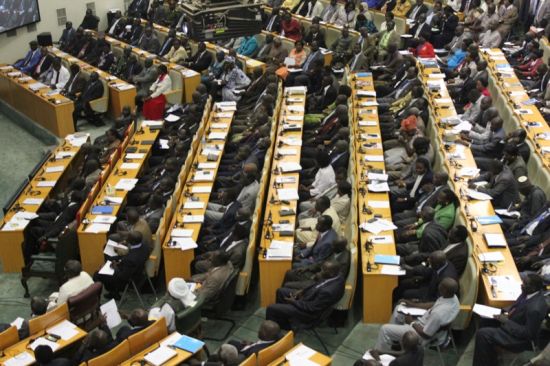
Congo to host continental airlines meet

The Republic of Congo will host this year’s summit of the African Airlines Association (AFRAA) from November 8 to 15, 2015.
According to a release, the summit to be held under the theme ‘Open Skies: Growth through competition and collaboration’, is being organised by the national airline of the Republic of Congo, the Equatorial Congo Airlines (ECAir), and under the patronage of President Denis Sassou Nguesso.
Started in 1964, AFRAA brings together 45 members and in Brazzaville ECAir Managing Director Fatima Beyina-Moussa is expected to be joined by Kenya Airways Managing Director Mbuvi Ngunze; Ethiopian Airlines president and Managing Director Tewolde Gebremariam; Egypt Air president and Managing Director Fathi Sherif; Air Burkina Managing Director Abderahmane Berthe, Astral Aviation Managing Director Sanjeev Gahdia, and Tassili Airlines Managing Director Khellil Faical.
The Summit will also bring together about 400 other delegates including aircraft and engine manufacturers, consultants, and high technology service providers, as well as representatives of governments and airports.
‘During this event, participants explore the challenges of the aeronautical industry and debate on which measures to implement in order to improve air transport growth across the continent.’ a release by Africa Press Organisation (APO) states in part.
According to the release, hosts Congo have rebuilt eight airports in the last ten years, with the country’s national carrier, the 4-year old ECAir reaching the one million passenger mark in August last year.
‘The Summit’s Brazzaville location will attract the attention of the world industry towards the Congolese capital’s extraordinary opportunities, particularly with regard to the Maya-Maya Airport. Furthermore, commercial and tourism ties will be strengthened throughout the continent and with new and traditional markets outside of Africa including: Dubai, China, Europe,’ the release adds.
Stories Continues after ad
Corruption scares off competitive companies

Endemic corruption has negatively impacted on the operations of companies that seek to invest in markets including East Africa. According to Daniel Heal, Senior Managing Director East Africa at Control Risks, a global business consultancy, several companies are losing out on opportunities because of the vice where billions of dollars are lost annually.
“Too many businesses are still losing out on good opportunities to corrupt competitors, or choosing not to take a risk on an investment or entering a new market in the first place for fear of encountering corrupt practices,” Mr Heal, who was commenting on an annual survey on corruption, said.

The survey by Control Risks involved 824 companies globally, and Mr Heal says that companies have to carry out due diligence to ascertain the nature of market.

“Another concern is an overreliance on compliance. Often when organisations have comprehensive compliance processes in place, business leaders treat them as a safety net and don’t police ruthlessly enough internally. More than half of the businesses we surveyed hadn’t conducted a corruption-related investigation in two years. Given the size and complexity of most organisations this would suggest there is a danger of a false sense of security in compliance departments,” he added.

In a related development, 34% of respondents from Africa reported losing out on deals to corrupt competitors, with  30% saying they have decided not to conduct business in specific countries because of the perceived risk of corruption.
Further, 41% of the global respondents reported that the risk of corruption was the primary reason they pulled out of a deal on which they had already spent time and money – even 55% of African respondents
But the picture is improving. Companies from countries with tight enforcement report fewer losses than before from corrupt competitors. In 2006, 44% of US companies said they had lost out to corrupt competitors, compared with only 24% in 2015. These figures are echoed for Germany and the UK. 81% of respondents agree that international anti-corruption laws “improve the business environment for everyone”.
‘Control Risks’ survey reveals companies are now more willing to challenge when faced with suspected corruption. 39% of companies said they would complain to a contract awarder if they felt they had lost out due to corruption (70% in South Africa), compared to just 8% of respondents in 2006. In 2006, only 6.5% of respondents said they would appeal to law-enforcement authorities, compared with 19% of global respondents in 2015, with 24% of respondents (60% in South Africa) now saying they would try to gather evidence for legal action’ a release states in part.

Meanwhile, companies feel that international anti-corruption legislation is improving the business environment. Most respondents felt these laws made it easier for good companies to operate in high-risk markets (55%) and serve as a deterrent for corrupt competitors (63%). This was particularly true of companies in developing markets. 79% of Mexicans agree or strongly agree, as well as 68% of Indonesians, 64% of Brazilians and 53% of Nigerians. In the US 54% say tough laws make it easier to operate in high risk markets, while 42% disagree.

However, despite these positive developments, Control Risks’ survey suggests companies still need to do more. Third party risk is still relatively unrecognised. Just 58% of global respondents have procedures in place for due diligence assessments of third parties and only 43% have third-party audit rights.

The survey also suggests companies are not setting the right incentives to deter corruption. Respondents cited the fear of negative consequences as the penalty used most commonly to deter corrupt behaviour.

Stories Continues after ad

Three billion subscribers protected in Africa, M.East

The world’s leading digital security company, Gemalto, has secured over three billion phonebook contacts for 22 mobile operators in Africa and the Middle East.
Through its LinqUs Cloud Backup solution, Gemalto now says the subscriber base has doubled over the last two years, with 40 million subscribers no longer having to worry about losing contacts, should their phone be lost or stolen.

“Our cloud backup solutions are number one in the region,” Eric Claudel, the Gemalto President for Africa & Middle East said and added: “The combination of a field proven solution with our extensive experience in managing platforms on behalf of customers ensures that we can readily replicate and share best practice and expertise. With 9 out of 10 of our clients in the region opting for the Gemalto-operated-service solution, it is clear we are increasingly recognized as a strategic partner that can support particularly dynamic business development plans.”

Gemalto employs 14,000 people working in 24 research and software development centers located in 46 countries.
Stories Continues after ad
Museveni receives UNRA commission of inquiry report

President Yoweri Museveni has received the Uganda National Roads Authority Commission of inquiry interim report highlighting several anomalies on a number of road constructions across the country according to presidential press secretary Ms.Linda Nabusayi.

The report was handed to the president by the commission headed by Justice Catherine Bamugemereire during a meeting at state Entebbe which was attended by Minister of works Eng.John Byabagambi, Attorney General Fred Ruhindi and UNRA ED Ms.Allen Kagina.

12074598_1048864331811601_4363015668706978704_n

On June 8th this year, the president established the 9 man commission of inquiry led by Justice Catherine Bamugemereire to probe corruption, mismanagement and abuse of office at UNRA .

The commission was expected to produce a comprehensive report within three months,initially ,the commission was required to submit their report to the appointing authority for action by September 8th however the president extended this period by three months.


Stories Continues after ad
FULL LIST! Abryanz Style and Fashion Awards 2015 nominees

Now in their third year, the Abyranz Style and Fashion Awards seek to recognise and reward individuals that are at the forefront of expressing themselves through fashion. The awards will be held on December 12th at the Kampala Serena Hotel.

red1

Final list of the nominees 2015

  1. Male Continental style & fashion influencer.
    David Tlale (South Africa)
    Rio the stylist (Tanzania)
    Jerry swanky (Nigeria)
  2. Female Continental style & fashion influencer.
    Bonang Matheba (South Africa)
    Sylvia Owori (Uganda)
    Milen Magase (Tanzania)
  3. East Africa’s most stylish couple.
    Zari and diamond(Tanzania)
    Bugeme William & Linah Sanga(Tanzania)
    Vanessa Mdee & Juma Jux(Tanzania)
    Sandra Teta and derrick Sano(Rwanda)
    Nick Mutuma and Bridgette(Kenya)
    Ali Kiba and Jokate Mwegelo.(Tanzania)

4.Special Recognition in Fashion.
Aamito Stacie Queen. (Uganda)

5.Most fashionable music video.
Juicy juicy by radio & weasel
Beera awo by king Saha
Kalibatanya by Juliana kanyomozi
Do you remember? By Ekky
Ndi Mukodo Cindy feat. Navio
Lelo tompona Leila Kayondo feat. Radio
Sili Zari by Sheebah Karungi

  1. Stylist of the year.
    Chuck salvator
    Kim swagga
    Fiona kirabo
    Tazibone Solomon
    PoshbyKC
    GadafI Chuni collection

7.Best dressed male media personality of the year.
Douglas Lwanga(NTV)
Tazibone Solomon(NTV)
Denzel mwiyereretsi(URBAN TV)
Edwin musiime(URBAN TV)
Shovon Malcom(URBAN TV)
Andrew Mwenda(NTV )

  1. Best dressed female media personality of the year.
    Flavia Tumusiime(NTV )
    Sheila Gashumba(NTV )
    Faridah Nakazibwe(NTV )
    Malaika nyanzi(URBAN TV)
    Shalom kalule(SANYU FM)
    Phiona kirabo(BUKEDDE TV)
    Flavia Namulindwa(BUKEDDE TV)
    Bettina tianah(NTV )
  2. Best dressed male corporate personality/businessman
    Ham kiggundu kimpi
    Joel kamadi-(NTV )
    Dennis Kakonge – Airtel
    Mutabazi Godffrey
    Mapura – Mtn
  3. Best dressed female corporate personality/businesswoman
    Tracy Kakuru (Pepsi)
    Sheilah Bahimuka (airtel)
    Jennifer Musisi – (KCCA)
    Winnie lalani – (Roofings)
    Yogi Birigwa – (SOUTH AFRICAN AIRWAYS)
    Naava suzan – (Brand Vision)
    Annete Nakiyaga – (UBL)
  4. Fashion brand of the year.
    Emperio Milano
    Bold
    Le’placard
    ARAPAPA
    PURPLE RAYN
    Joe Malaika clothing
    Kaymu
  5. East African model of the year
    Females.

    Jane Wairimu (Kenya)
    Patricia Akello (Uganda)
    Victoria martin (Tanzania)
    Harieth Paul (Tanzania)
    Macrida Joseph(Tanzania)
    Gloria Baraza (Kenya)
    Happy Umurerwa (Rwanda)
    Males.
    Dax Hannz
    Abel kipaso(Tanzania)
    Ken Fredrick (Kenya)
    Danny David (Tanzania)
    Ramah Shafik kizito(Uganda)
    Moses moshions (Rwanda)
    Joe kisila (Kenya)
    Lota mollel (Tanzania)
  6. Most stylish Male Ugandan in the Diaspora
    Sammer time(UK)
    Ddumba Adams(SOUTH AFRICA)
    Jay Platnumz(SWEDEN)
    Ryan Chris(
    Katsha(SOUTH AFRICA)
    Martin kiganda(
    ALECOOL(UK)
    Isaac buyondo
  7. Most stylish Female Ugandan in the Diaspora
    Doreen faith(UK)
    Monic unique(UK)
    Nusurah kaseruzi(UK)
    Nadia mbiire
    Patricia Ssewungu(UK)
  8. Male Fashionista of the year
    Ricky Edwards Mugyenyi
    Shaminator
    Akram kasule
    Bugeme Williams
  9. Female Fashionista of the year.
    Cate Ayellah
    Rashidah Mwiza
    Aron Hilson
    Yasha Keys
    Mwaj Alecoolclothing Kampala
    Judith heard
    17. Lifetime Style & Fashion Icon Achievement Award.
    Princess Elizabeth Bagaya
  10. Most stylish Male Celebrity
    Kim swagga
    Exodus
    Maurice Kirya
    Kenzo
    Gravity Omutujju
    Nince Henry.

19 Most stylish Female Celebrity
Irene Namubiru
Judith Heard
Juliana Kanyomozi
Leila Kayondo
Desire Luzinda
Sheeba Karungi

20.Best Dressed Male Guest
21 Best Dressed Female Guest

  1. East African fashion designer of the year
    Beverni oguk (Kenya)
    Ras kasozi(Uganda)
    Latif Madoi(Uganda)
    Martin kadinda(Tanzania)
    Sheria ngowi (Tanzania)
    Moses turahirwa(Rwanda)
    Jamil walji(Kenya)
  2. Fashion designer of the year
    Ras Kasozi
    Raphael kasule
    Latif Madoi
    Sylvia Owori
  3. Upcoming fashion designer of the year
    Anita beryl
    Susanne Tusiime
    Juliana Okori
    Tonny Bulenzi
    House of Zirian
    Doreen Fayth
  4. Outstanding Male Model Uganda
    Adam Gashe
    Mushema Housen
    John Iwueke
    Aloysius Sserwanga
    Ramah Kizito
  5. Outstanding female model Uganda
    Vaquisha Eyapu
    Vivian Mutesi
    Anna Kwagala
    Ramona Fouziah
    Mutara Brenda
    Bridget Sanyu
  6. Upcoming male model of the year
    Ivan Mbabazi
    Nsimbe Robert
    Lubowa Meddie
    Daron Dark Child
    Allan Kimererwa
  7. Upcoming female model of the year.
    Esther Jones
    Loraine Barusha
    Alicia nassolo
    Sandrah liz
  8. Makeup artistes 2015
    Mona faces
    Zipper Atafo
    Nahya shero
    Beat by Bridgette
    Fayth Presh
    Peter Russell
    Pamela Musimenta
  9. Best fashion writer/blogger of the year
    Jacob Evans
    Samson baranga
    Mugume canary
    Its mayabee
    Karen kana (chocolaty prints)
    Stella nasuuna
    Cate ayellah
  10. Lifestyle fashion photographer of the year
    Flickr shots
    Blush media
    KaLungi kabuye
    Tado photography
    Giulio molfese
    I love studio
    Access films
  11. Best fashion supporting brand/personality
    Mirinda
    Ciroc
    Rwanda air
    Photo4fashion
    Judith heard
    Mariam Sheebe
    Darling
  12. Best fashion contributor in the Diaspora.
    Doreen faith (UK)
    Alecool clothing (UK)
    Suzan Mutesi (Australia)
    Jacqueline Matovu (UK)
    Hk collections (UK)
  13. Best model management
    Joram model management
    Extreme casting
    Crystal models
    Independent models UG
  14. Best hair stylist/hair dressers
    Lax beauty parlor
    Spectra saloon.
    Trends saloon
    Lords and ladies
    Sulas saloon
  15. Best dressed Male politician
    Mike mukula
    Mukasa Mbidde
    Balyeku Moses
    Kibuule Ronald
    Frank tumwebaze
  16. East Africa’s most stylish male artiste.
    Diamond Platinum (Tanzania)
    Ali Kiba (Tanzania)
    Eddy kenzo (Uganda)
    Sauti sol (Kenya)
  17. East Africa’s most stylish female artiste.
    Stella Mwangi (Kenya)
    Vanessa mdee (Tanzania)
    Sheeba karungi (Uganda)
    Knowles (Rwanda)
    Victoria kimani (Kenya)
Stories Continues after ad
Blatter, Platini suspended

Sepp Blatter was close to tears as he urged the staff to "stay strong"

FIFA President Sepp Blatter has been suspended alongside Michel
Platini, the UEFA boss.
Both men, who were suspended for 90 days, are facing investigation by
FIFA’s independent ethics committee over the payment made to Platini
reportedly for work as Blatter’s technical advisor between 1999 and
2002.
The former FIFA boss, who is also suspected of signing a contract that
was ‘unfavourable to Fifa’ and making a ‘disloyal payment’ of US 1.5
million Platini, has temporarily been replaced by Issa Hayatou, the
Confederation of Africa Football (CAF) boss.
FIFA has come under severe criticism following reports of bribery,
with 14 of its officials being investigated by the Federal Bureau of
Investigations (FBI) and the Swiss authorities.
Recently, FIFA Secretary General Jerome Valcke was suspended, while
Austin ‘Jack’ Warner, a former FIFA Vice President and President of
CONCACAF was banned from participating in football affairs for life.
Meanwhile, the International Olympic Committee boss Thomas Bach has
also weighed in on the scandal, and asked football’s governing body to
enhance the processes of accountability and good governance.
“They must do two things immediately: they must accelerate and deepen
the reform process in order to comply with accountability,
transparency and all the principles of good governance, as expressed
in our reform programme, Olympic Agenda 2020.
They should also be open for a credible external presidential
candidate of high integrity, to accomplish the necessary reforms and
bring back stability and credibility to FIFA,” Bach’s statement reads
in part.

Stories Continues after ad