Stanbic Bank
Stanbic Bank
24 C
Kampala
Stanbic Bank
Stanbic Bank
Home Blog Page 2289

Uganda sportspersons should be accorded the necessary support

World marathon champion Stephen Kiprotich is in Beijing, China, to defend his title, in a race that has some of the best names in the Marathon.

The names of former marathon champion Geoffrey Emmanuel Mutai, former world record holder Wilson Kipsang and Dennis Kipruto Kimetto, that diminutive ‘new kid on the Kenyan block’ with the all-time best in 2.02.57 in the marathon should all be cause for Kiprotich to up his ante this time round, and add yet another world title, something that will thrust him further up in the record books of athletics.

There is no doubt Kiprotich is the most celebrated Ugandan athlete and sportsman in recent times, and much as his conquering feat at the 2012 Olympic and 2013 Worlds has been recognized, we as Ugandans need to cheer him when he takes to the 42 kilometre route.

Uganda seems to be taking steps to announce its presence in the sporting world, and it is worth mention that world and Olympic champion Kiprotich is taking to the Worlds, just a week after an inspiring performance by the She Cranes at the Netball World Cup in Sydney, Australia.

Indeed, such inspiring stories may be few-in-between but they need to be bolstered by action, with the respective government officials drawing plans of how the country’s athletes should be further encouraged to become world-beaters.

Needless to mention therefore, it is disheartening when we see our sportsmen and women struggle to solicit for funds to enable them participate in competitions, yet millions are dished out to people who should otherwise make good use of their hands to eke a living. All this points to a misdirection of priorities but not all is lost and the government can still redeem its image by paying some more attention to sports.

That said, one of those Ugandans who has exhibited extraordinary character and needs recognition is the Speaker of Parliament Rebecca Kadaga, who even reportedly offered personal money to cater for the immediate needs of some Ugandan sportswomen who were stranded in South Africa; it is such ‘simple’ gestures like Kadaga’s that have kept Uganda’s sporting spirits alive!

And Kiprotich is one such spirit who needs our prayers.

Stories Continues after ad

DHL launches user-friendly customer device in Africa

Multi-billion dollar company, the DHL Express has launched 400 TC55 scanners in South Africa, Nigeria, Kenya and Mauritius, the supply chain operator’s four largest markets in Sub-Saharan Africa.

According to an August 20 release, the pocket-sized, all-touch computers capitalize on the latest technological advancements and ensure customers on the continent benefit from increased visibility and an enhanced experience.

Further deployment of the units that operate on an Android platform and have built-in location services and GPS navigation capabilities will be made to the top 20 DHL markets across the region in the coming months, the release by Africa Press Orgnaisation (APO) adds.

Oliver Facey, Vice President of Operations for DHL Express Sub-Saharan Africa, urged supply chain operators to invest in transportation management systems and solutions to improve the quality, speed and precision of service.  He said that these improvements will not only enhance customer experience, but also reduce operating costs and give operators a competitive advantage.

“We operate across 51 markets in Sub-Saharan Africa, servicing over 40,000 customers; therefore delivery efficiency is key for us. As a network business, we need to ensure that our shipment data is captured accurately and in real-time. Our growth plans and improvements are driven by the voice of our customer, and in challenging and competitive global environments, they need us to provide accurate and real-time information to ensure that they maintain their competitive edge and speed to market,” Facey said adding that the rise of e-commerce and increased competition are driving the demand for real-time supply chain visibility.

“The new technology increases the speed at which we can process shipments at both customer locations and DHL facilities and also empowers our frontline employees with access to real-time shipment information which will assist them with workload management. Unlike consumer-grade counterparts, these devices have integrated data-capture capabilities, and are also built to endure the wear and tear of industrial environments,” added Facey.

Benefits for DHL Sub-Saharan Africa customers include real-time shipment visibility, enhanced electronic proof of delivery, and on-time billing.

“We want to simplify the lives of our customers and ensure that we remain the provider of choice for international express. Our relentless focus on new capabilities ensures that we are well positioned to support our customers’ business,” DHL’s Facey said.

DHL Express is a multi-billion global supply chain operator that operates in over 200 countries, with about 325.000 employees.

Dubbed ‘the logistics company for the world’ DHL made in excess of 56 billion Euros in 2014.

Stories Continues after ad

Peace Day Anthem to premiere in Kigali

The first-ever Peace Day Anthem will premiere at the Peace One Day Youth Celebration in Kigali, Rwanda on September 21, 2015.

The anthem, written by musician Zwai Bala and produced by Coke Studio Africa, is hoped to inspire a generation of young people to celebrate Peace Day as a catalyst for sustainable peace in the region. The anthem, played in front of thousands of young people and beamed live on the Rwanda Broadcasting Agency (RBA), will be performed by top artistes of the African music industry Ice Prince (Nigeria), Dama Do Bling (Mozambique), Maurice Kirya (Uganda), Alikiba (Tanzania) and Wangechi (Kenya), who will be joined by leading dance groups Krest Crew and Jabba Junior and artistes Innoss’B, Urban Boyz and Knowless.

The Peace One Day Youth Celebration 2015, which is part of Peace One Day’s wider campaign in the region made possible by the Howard G. Buffett Foundation, is being organised in partnership with the Rwandan National Unity and Reconciliation Commission (NURC) and supported by the Rwandan Ministry of Youth and ICT and the Ministry of Sports and Culture. The event will highlight how peace can be nurtured through music, dance, and sport, and will feature young people from the region who will share their inspirational personal experiences of peace.

“I am thrilled to be marking this Peace Day with the first-ever Peace Day Anthem being performed on stage in Kigali thanks to Coca-Cola and it being broadcast live into Rwanda and the world on the Rwanda Broadcasting Agency network,” said Peace One Day founder Jeremy Gilley.

Gilley added: “I’m extremely grateful to RBA for enabling Peace One Day to empower young people from not only Rwanda and the wider Great Lakes region of Africa but also globally to become the driving force behind the vision of a united and sustainable world, using Peace Day 21 September as a focus for their actions for peace.”

The Peace Day Anthem will be available on iTunes from September 21, 2015, with all proceeds going to the non-profit organisation Peace One Day to support its mission to reach three billion people with the message of Peace Day by 2016.

A non-profit organization, Peace One Day was founded in 1999 by filmmaker Jeremy Gilley and today, it is reported that over 1 billion people have been exposed to peace day messages, with another 10 million reportedly behaving more peacefully after getting involved in the activities of the day.


Stories Continues after ad

Museveni advises on Kyabazinga wrangles

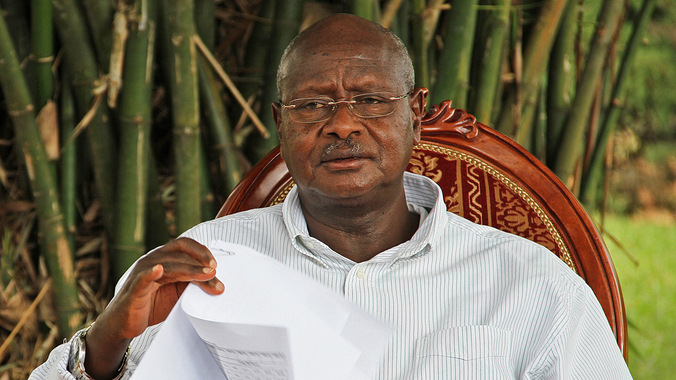
President Yoweri Museveni has advised the people of Busoga to stop dragging the central government into issues of the Kyabazinga, saying that is the duty of the chiefs and the people of Busoga.

The President, who was recently speaking during the Centenary celebrations for St. Luke Archdeaconry at Kaliro Town Council said that when the National Resistance Movement came to power in 1986, they thought it wise to reinstate the traditional and cultural institutions that had been abolished by the UPC government in 1967.

He said to ensure that there is harmony in those institutions in all parts of Uganda; through article 246 of the 1995 Constitution, it was agreed that traditional institutions be reinstated by people ‘who so wish’.

The President emphasized that the Busoga traditional leadership wrangles are not a political matter to be solved politically by the Central Government.

“In Ankole where I come from, the kings there are my relatives but the people there opposed the reinstatement of the traditional institution and we have no king up to today. There is nothing much the Central Government can do. In Busoga you wanted to have your Kyabazinga and we advised you to follow the law which you made under the leadership of the late Kyabazinga Wako Muloki. But you failed to do that two times and later went to court,” he said.

The President said later 10 chiefs of Busoga agreed on a new arrangement, put it in writing, signed it and handed it to the Central Government which was the reason he attended the coronation in Bugembe.

The President advised the Basoga who are not satisfied with the new arrangement to petition the courts of law other than politicizing and inciting people.

The President later paid a courtesy call on Prince Columbus Wambuzi of Bulamogi at his palace in Kaliro and appealed to him to advise his followers to use constitutional and legal means to solve issues related to cultural leadership in Busoga and not to politicize the matter.


Meanwhile, President Museveni has blamed the non functional secretariat of the National Resistance Movement for the failure to sensitize the population on the roles of the different government institutions and structures and those of other institutions in the country.

Responding to reports that it was the rich and elite who are benefiting from government’s operation wealth creation program, the President urged the people to make good use of the existing elected local government structures to stop the injustices.

“Petition your democratically elected leaders at grass root to solve these problems. Don’t wait for me who will come after two or three years when a lot has been wasted. What is the use of having these structures if they can’t help you solve problems? I’m however happy that the government has done her part and delivered the agricultural seeds and breeding stock. The problem is distribution but as long as NRM is still in charge, a lot more will be delivered,” he said.

Mr. Museveni said that government was on the right track in service delivery and urged the people to do their part to overcome household poverty by engaging commercial, modern agro production.

He said that since the land in the region is fragmented, it is important to engage in high yielding agricultural projects that can be done on small acreage such as coffee and fruit farming, poultry, piggery, zero grazing and also produce some food to ensure food security.

The President contributed 60 million shillings towards the fundraising drive for the completion of St. Luke archdeaconry – Kaliro. He also commissioned new 20 classroom blocks and a library block at Kamuli High School. The education facilities were constructed by the Uganda government with support from the World Bank.

Stories Continues after ad

By-pass police booths removed, road users scared

Initially, the Kampala Northern By-pass was to be a four lane road funded by the European Union, the Uganda Government and the European Development Bank. However, due to unknown circumstances, only two lanes were constructed for a start, leaving a reserve for the other two lanes on either side of the road, a long stretch from Bweyogere to Busega. Unattended to, thugs took advantage and unleashed terror on the by-pass users, stealing cars, raping women and murdering people, among other crimes.

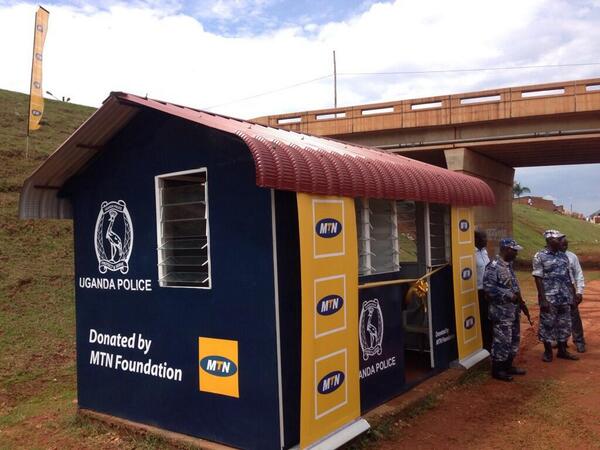
Then, in a bid to curb crime police swung into action, and  built temporary police booths in the reserve that were stationed approximately two kilometers away from each other.

Success was registered as the crimes reduced due to police presence.

However, the Uganda National Roads Authority (UNRA) has now embarked on the construction of the two other lanes, meaning all the temporary police booths on the reserve have to be removed, ostensibly leaving no permanent police presence along the by-pass.

This development has scared the residents of Kiwatule Zone and other people who use the by-pass, who say criminals may take advantage of the removal of the police booths to strike once again.

Samson Kakande, a boda boda cyclist operating along the route expressed concern, saying their motorcycles may not be safe.

“Boda boda thieves on this road had disappeared, we are now working without fear of being hit by a hammer or iron bar because of police presence, but I am afraid it may start again,” Mr Kakande said

But in an interview with Eagle Online, police spokesperson Fred Enanga said the removal of the temporary police booths will not affect their operations in the area.

“The structures are simply to be moved upwards out of the road reserves but within the same locality along the road,” Mr Enanga said adding: “The communities need us and we shall continue serving them with our static visibility.”

Mr Enanga also said police will explore alternative measures in collaboration with UNRA and other respective agencies to ensure security in the area.

“We have police posts and stations along the road and we are going to use these as an alternative; we shall transfer our officers to these posts,” he added.

Stories Continues after ad

Senegal’s top court rejects appeal to free ex-president’s son

Karim Wade.
Karim Wade.
Karim Wade.

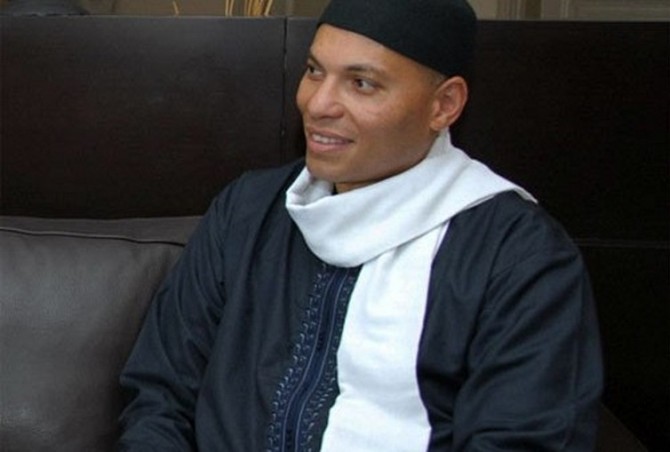
Senegal’s highest court rejected on Thursday an appeal by the son of former president Abdoulaye Wade against a six-year prison term for corruption, a setback to his hopes of contesting the next presidential election.

Karim Wade was jailed in March for “illicit enrichment” during his father’s 2000-2012 government and ordered to pay 138 billion CFA francs ($235 million) by a special court set up to fight graft in the West African state.

Wade, who has branded the prosecution a political witch hunt, was named by his father’s Senegalese Democratic Party (PDS) as its presidential candidate just before the March verdict. He denies any wrongdoing.

Senegal’s next presidential election could come as early as 2017 if President Macky Sall wins approval in a referendum due next year to reduce the term to five years from seven.

“The court analyzed the details of the appeal and rejected all of them,” said Aly Fall, a lawyer representing the Senegalese state.

Outside the court, a small group of supporters shouted “Free Karim Wade”. Mame Dior Diop, coordinator for Karim’s candidacy for the next presidential election, said his supporters would wage a political campaign for his release.

“We have enough shown restraint in this case. It’s high time we showed what we are capable of,” he said.

Wade simultaneously ran several ministries during his father’s government, earning him the nickname “the minister for heaven and earth”.

Sall was swept to power in 2012 amid popular protests against Abdoulaye Wade’s attempts to win a third term in office despite a two-term constitutional limit in a country regarded as West Africa’s most stable democracy. Sall pledged to end what he said was rampant corruption under Wade’s rule.

Diplomats, however, have expressed concern about the format of the special court that convicted Wade, which required him to prove his innocence rather than vice versa.

A U.N. Working Group on Arbitrary Detention in May expressed concern over Wade’s lengthy detention before trial and over “irregularities” in the process.

Defense lawyer Baboucar Cisse said the decision came as no surprise and the Supreme Court had ignored the legal arguments put forward by his team.

“Today’s decision strips the legal system of any credibility,” he said. “What happened is not the rule of law.”


Stories Continues after ad

Pierre Nkurunziza sworn in for third term

President Pierre Nkurunziza at his swearing in last year
The ceremony, expected next week, took many by surprise.

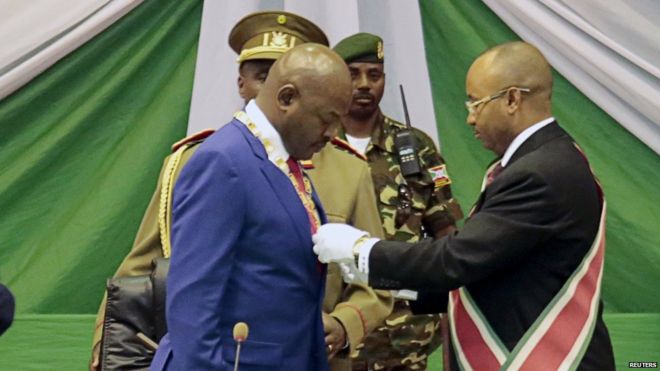
Burundi’s President Pierre Nkurunziza has been sworn in for a controversial third term in office.

The BBC’s Prime Ndikumagenge in Burundi says the ceremony came as a surprise, as Mr Nkurunziza had been expected to be sworn in next week.

At least 100 people have died in protests since Mr Nkurunziza announced in April he would run for a third term.

The government accuses the opposition, which says the third term is illegal, of causing the violence.

In his inauguration speech, Mr Nkurunziza promised to end the violence within two months.

No foreign head of state attended the inauguration.

Burundi’s government says a number of countries apologised for not sending their delegates, because of the change of date.

BBC Africa correspondent Alastair Leithead says that by being sworn in a week ahead of schedule, the president sidestepped the opposition, headed off predicted protests and gave any heads of state who didn’t want to come, a good excuse for not turning up.

The African Union, European Union and the US State Department have all expressed concerns that July’s election was not free and fair.

The UN observer mission said the election was not free and credible and was held “in an environment of profound mistrust” between political rivals.

The African Union did not send observers – the first time it has taken such a stance against a member state.

Who is Pierre Nkurunziza?

  • Born in 1964
  • Rebel leader-turned president
  • Born-again Christian
  • Former sports teacher
  • Cycles and plays football
  • Married with five children
  • Father killed in ethnic violence in 1972


Stories Continues after ad

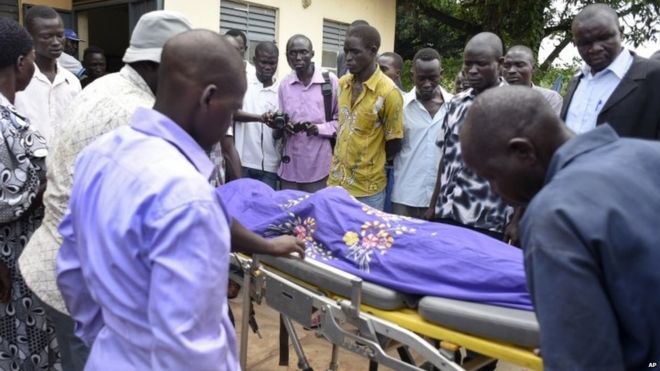
South Sudan journalist Peter Moi shot dead

Peter Julius Moi was killed on the outskirts of Juba on Wednesday evening.

Gunmen have killed South Sudan reporter Peter Julius Moi by shooting him twice in the back in the capital, Juba, his family said after identifying his body.

He is the seventh journalist to be killed this year in South Sudan, where a civil war is ongoing.

His killing comes days after President Salva Kiir threatened to kill reporters “working against the country”.

A presidential spokesman said the words were taken out of context and police were investigating Mr Moi’s death.

Ateny Wek Ateny said a statement would be issued to clarify President Kiir’s remarks, made at the airport in Juba before he went to Ethiopia for peace talks to end the civil war.

Mr Moi worked for South Sudan’s Corporate Weekly newspaper and was killed at about 20:00 local time (17:00 GMT) on Wednesday night by unidentified gunmen on the outskirts of Juba.

Juba-based journalist Jason Patinkin told the BBC’s Focus on Africa radio programme that the killing of Mr Moi was a very worrying development for the journalist community in South Sudan, which has seen a steady decline in press freedom since the outbreak of the civil war in December 2013.

The Committee to Protect Journalists (CPJ) says security agents shut down two privately owned newspapers earlier this month as well as a media group that produced a popular radio series.

The media freedom lobby group has also been critical of Mr Kiir’s comments, which local journalists believe were connected to media criticism of the protracted peace negotiations.

“The leader of any country threatening to kill journalists is extremely dangerous and utterly unacceptable,” the CPJ’s Tom Rhodes said in a statement.

Mr Kiir has also been under fire from diplomats for failing to sign a peace deal on Monday.

The US state department has said he has now promised to sign after “a couple more days of consultation”.

But the US has submitted draft proposals for a UN arms embargo on South Sudan.

Nearly two million people have been left homeless since conflict broke out in the world’s newest state in 2013.

Fighting erupted after Mr Kiir accused rebel leader Riek Machar, his former deputy, of plotting a coup.

Mr Machar signed the accord in Ethiopia’s capital, Addis Ababa, on Monday – the deadline set by mediators.

South Sudan’s elusive peace

  • At least seven ceasefires agreed and broken since conflict started in December 2013
  • Nearly one in five South Sudanese displaced by the current conflict, from a total population of 12 million
  • Former rebel leader Salva Kiir became president of South Sudan, the world’s newest state, when it gained independence in 2011
  • South Sudan has been at war for 42 of past 60 years


Stories Continues after ad

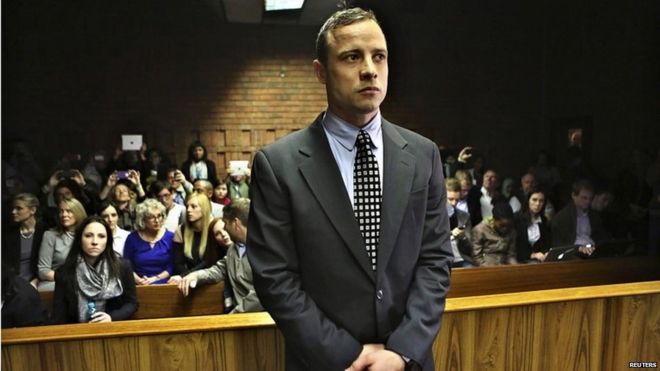
Oscar Pistorius’ early release blocked by minister

Pistorius' early release on Friday has been put on hold.


Pistorius' early release on Friday has been put on hold.
Pistorius’ early release on Friday has been put on hold.


South Africa’s justice minister has blocked the early release of athlete Oscar Pistorius from prison on Friday.

He said the decision by the parole board to free the athlete after serving 10 months of his five-year sentence was premature and without legal basis.

It could now take months for the board to review its decision, legal sources told the BBC.

Pistorius was convicted of manslaughter last year after shooting dead his girlfriend Reeva Steenkamp.

The Olympic athlete insists he mistook her for an intruder.

He was due to be transferred from prison to house arrest on Friday, when he was expected to stay at his uncle’s three-story mansion in the capital, Pretoria.

Under South African law, Pistorius is eligible for release under “correctional supervision”, having served a sixth of his sentence.

One of his relatives, who did not want to be named, told Reuters news agency they were “shocked and disappointed” at the news.

In a statement, South Africa’s Justice Minister Michael Masutha said the decision to free the athlete was taken prematurely.

“One sixth of a five year sentence is 10 months and at the time the decision was made Mr Pistorius had served only over six months of his sentence,” the statement said.

Thursday would have been Ms Steenkamp’s 32nd birthday.

Her parents held a small ceremony for her close friends and supporters in her hometown of Port Elizabeth, throwing roses into the sea in her memory.

Analysis: Milton Nkosi; BBC News; Johannesburg:

The decision by Mr Masutha to put Oscar Pistorius’ early release on hold has come as a complete shock, not just to the Pistorius family but to many people who follow legal issues here.

According to the prison department, the double amputee was going to be released on Friday because this is South African law – all offenders convicted under the same law as Pistorius can be considered for correctional supervision once they have served at least one-sixth of their sentence.

In other words it was not the prison’s independent view to release the Paralympian but part of South African legal procedure.

Many believe that this will merely cause a slight delay to his early release.

But the intervention by Mr Masutha, who is a lawyer, could have implications for many other cases which are less prominent.

The decision was taken after a petition to the minister by the Progressive Women’s Movement of South Africa, which includes the African National Congress Women’s League, part of the governing party. It had described the athlete’s early release as “outrageous” and “an insult” to victims of abuse.

It seems as though his last-minute intervention was the result of this political pressure.

Oscar Pistorius – in 60 seconds

The making and unmaking of Oscar Pistorius

This week, prosecutors filed court papers calling for the athlete’s conviction to be converted to murder, which carries a minimum sentence of 15 years. His defence team has a month to file its response.

During sentencing, Judge Thokozile Masipa said the state had failed to prove Pistorius’ intent to kill when he fired.

The double amputee shot and killed Ms Steenkamp through a locked bathroom door at his Pretoria home, believing she was an intruder, he told his trial.

Pistorius was born without the fibulas in both of his legs, and had surgery to amputate both below the knee while still a baby.

He went on to become one of South Africa’s best-known sports stars, and was the first amputee to compete against able-bodied athletes, at the 2012 London Olympics.


Stories Continues after ad

NRM ‘poor youth’ defect to Museveni

Some members of the controversial NRM Poor Youth have renounced association with the former Prime Minister John Patrick Amama Mbabazi and joined President Yoweri Museveni’s camp.

While addressing journalists  at Silver Springs hotel in Bugolobi, Twaha Jjengo, the group’s National Treasurer, said they have deserted Mbabazi’s camp because he is no longer in the National Resistance Movement (NRM) party.

“We have been Mbabazi’s supporters but since he decided to run in the presidential elections as an Independent, we have decided to join President Yower Kaguta Museveni because he is the NRM candidate,” Jjengo said.

The youth also accuse Mbabazi of ‘disappointing us at the last moment by refusing to participate in the part’s internal process’.

Denis Kato, the group’s Coordinator for Nakawa Division said as youth leaders they had abandoned Mbabazi who is running as an Independent because they are aspiring for positions on the NRM ticket.

“Remember we always told you the media that the moment Mbabazi ceases to be an NRM member then we shall cease to be his supporters and this is what has exactly happened today,” Kato said.

However, there was chaos at the beginning of the meeting which was held before the press conference was held.

On arrival at the venue the youth became rowdy saying they do not want the presence of the media. They dispersed while chanting pro-Mbabazi slogans, leaving only the organizers and journalists in the room.

It took the intervention of the Mr Willy Okello, a Security Coordinator in the office the NRM Chairman to convince the leaders of the ‘poor youth’ to come back for the meeting.

When they agreed to come back they then decided to lock out journalists only to recall the media after the meeting had been concluded.

Meanwhile, as the meeting progressed, Steven Kalungi, one of the NRM poor youths, stormed out claiming his colleagues had been compromised. “All those people who are putting on Museveni’s T-shirts have been given 1.5 million as agreed in the meeting and I can’t be party to that,” Kalungi charged. “For us we are still Amama Mbabazi’s supporters and we shall always be,” Kalungi added.

But his seemed to be a lone voice because as the journalists were called inside the meeting room the youth seemed to have had a change of mind and were now chanting pro-Museveni slogans.

But contacted for comment on the developments, the NRM Poor Youth’s National Coordinator Richard Kirekyankuba said those who claim they crossed had done so as individuals.

“For us as NRM Poor Youth, we are still supporters of Amama Mbabazi and whatever has taken place at Silver Springs is non of our concern and we shall still go ahead with our programs,” Kirekyankuba, who did not attend the meeting at Silver Springs Hotel, said.

Meanwhile, those who attended the meeting denied receiving money or any form of inducement, saying that it was their conviction that they join President Museveni.

“We have worked for Mbabazi for so long and there is no way we can be bought by one and a half million shillings and besides, Mbabazi has declared that money is not his problem,” Godfrey Muhimbwa, one of the group’s leaders, said.

They also said the group’s name has henceforth changed from NRM Poor Youth to NRM Poor Youth for Museveni, and warned any group against masquerading under their banner.

“There will be no more demonstrations in town in the names of the NRM Poor Youth apart from mobilizing support for President Museveni,” they chorused.

In the NRM the road to the 2016 presidential elections has been laced with barbs after the February 14 2014 motion moved in Kyankwanzi by Northern Youth MP Evelyn Anite, seeking the endorsement of Museveni as the ‘sole candidate’ for the NRM.

Since then Museveni, the NRM Chairman and his erstwhile Prime Minister Amama Mbabazi have been engaged in a ‘silent battle’ to win over party supporters including the ‘poor youth’, but Mbabazi seems to have lost the internal struggle, opting to stand as an Independent in the 2016 elections, after failing to get the NRM party endorsement.

Stories Continues after ad