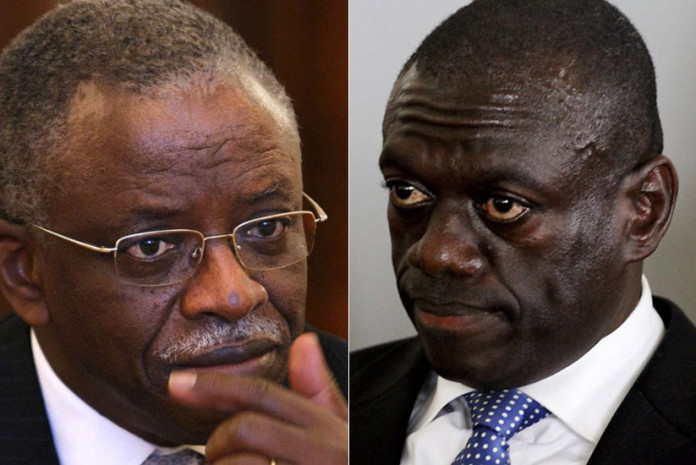
Stanbic Bank
Stanbic Bank
19.2 C
Kampala
Stanbic Bank
Stanbic Bank
Home Blog Page 2299

NRM elections highly successful – Ofwono Opondo

Opondo


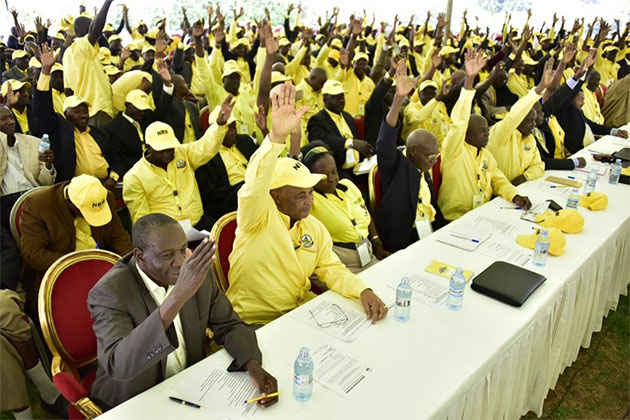
The National Resistance Movement (NRM) deputy spokesperson has said that the ongoing parliamentary and LCV party primaries have registered a success rate of about 80 percent.
Opondo
Opondo

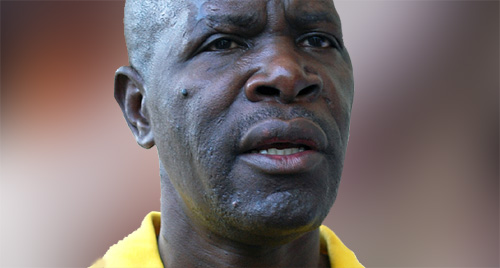
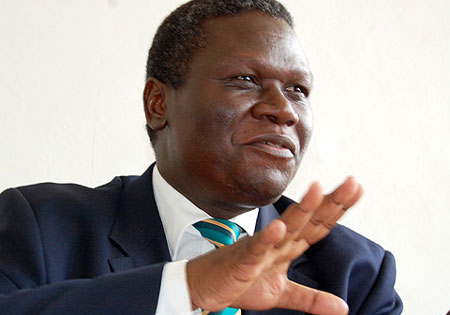
Addressing journalists today in Kampala, Ofwono Opondo contended that although the exercise ‘has faced some glitches’, it is still a success since elections in most districts is running smoothly.

“It’s going to be 70-80 percent successful, we count ourselves successful,” Ofwono Opondo said at the party headquarters on Kyadondo Road.

He added that of the 112 districts in Uganda, only 5 had so far proved problematic, with the challenges mostly logistical problems and violence related issues.

He however warned those planning to cause violence in the elections, saying the party was working alongside police to ensure the exercise is smooth.

“The NRM and police are working together; police has deployed countrywide to suppress any acts of violence in the elections and we believe police will take strong action (against errant members). We believe police can call sister agencies to ensure that law and order is maintained,” Ofwono Opondo, who also doubles as the Media Centre boss, said.


He also confessed that the party had received complaints where candidates’ names were misspelt, while some protested against having the wrong portrait photos attached to their names. Of those affected was Busiki County Member of Parliament Wilson Asuspasa Isiko Mpongo, who refused to vote after his name was misspelt on the ballot paper.

“The NRM EC agreed with the candidates that if their names are misspelt, they can accept and continue the voting or cancel,” Opondo said, adding: “Some candidates became stubborn and refused and the NRM EC agreed that the election dates be deferred to tomorrow.”  Further, Ofwono Opondo disclosed that elections in Wakiso district were stopped after the incumbent district Woman Member of Parliament Rose Seninde complained that the ballot paper showed she had an opponent yet she was declared unopposed.

Ofwono Opondo also acknowledged that wrong ballot boxes were delivered to some districts, and that the NRM EC was making arrangements to send the right logistics to the affected areas.

“Some wrong ballot papers were delivered in Katakwi yet they were destined for Amuria; we are making arrangements to transport the ballot papers and the elections will be held tomorrow,” Opondo said.

The NRM spokesperson further said that party supporters in Nyabushozi County of Kiruhuura district and those in Mbale Municipality will not hold elections, following the death of the respective nominated candidates.

Internal party laws call for fresh nominations after one of the candidates dies before elections commence, he said but did not communicate the date on when the primaries in the two areas will be held.

Early this month Mbale Municipality contestant, former State Minister for Trade and Industry James Mutende Shinyabulo passed on after being nominated, while Nyabushozi MP hopeful Micheal Nyamunguri Kanarura died in a road accident last week.

Meanwhile,  elections in Ssembabule, Buyende,  Kanungu, Ntungamo and Mbarara, among several other areas, have been stopped following outbreak of violence.

Other areas that have witnessed skirmishes include Kamuli, Makerere Zone 3 in Kawempe and Iganga.

In a related development, the Woman MP aspirant for Lwengo Sarah Nkonge and Bukoto Midwest MP Isaac Ssejjoba were allegedly found breaching the electoral law.

 

Stories Continues after ad

TDA still focused on single candidate – Mao

DP President Norbert Mao


Embattled opposition coalition, The Democratic Alliance is yet to drop the idea to field a single candidate to take on incumbent Yoweri Museveni in next year’s presidential elections.

Addressing journalists early today, the Democratic Party president Mr. Norbert Mao, who spoke on behalf of the Alliance, said that different meetings are being held by stakeholders to ensure the TDA emerges victorious in the polls.

“We have not yet given up on choosing a joint presidential candidate for the opposition as TDA,” Mr. Mao reiterated, adding that there ‘was light at the end of the tunnel.’

In one of the said meetings, various opposition gurus including former premier Amama Mbabazi, Forum for Democratic Change (FDC) flag bearer Col Dr Warren Kizza Besigye and ‘former’ Uganda Peoples Congress president Ambassador Olara Ottunnu earlier this month met with Kenyan opposition leader Raila Odinga to seek advice and chart a way forward.

However, while addressing Ugandans during the Independence Day celebrations in Gulu, the Kenyan Vice President William Ruto took a swipe at the Ugandan opposition, saying the meetings will not yield fruit since the Ugandans consulted the ‘losers’ in Kenya.

But Mao scoffed at Ruto’s words, insisting the meeting in Kenya was a success and that Raila Odinga had advised the Ugandan opposition to take time in reaching a consensus on the joint presidential candidate.

“This is the direction which the coalition is taking,” Mr Mao said, before questioning Mr Ruto’s moral authority to make such comments.

“Those comments were uncalled for from His Excellency William Ruto, but when we get to power, we shall forgive him,” Mao added.

Meanwhile, earlier this week Dr Besigye and Mr Mbabazi held another meeting in London in preparation for the general elections.

According to Mao, the London meeting was chaired by former United Nations Secretary General Kofi Annan, in the presence of former Uganda People’s Congress party leader Ambassador Olara Otunnu.

And Mao said Mr Annan was the right choice because of the reputation of his Kofi Annan Foundation that played a big role in solving the conflicts between Kenya’s Mwai Kibaki and Raila Odinga.

However, insider details of this meeting have not been announced, with both Mbabazi and Dr Besigye saying they will brief their ‘respective political structures’.

“We shall get a full briefing about this meeting on Thursday when the TDA summit sits for a meeting as we look to scan the political horizon,” Mr. Mao said.

The Democratic Alliance is an opposition coalition that was formed by various opposition political parties in a bid to end the 29 year reign of President Museveni and his NRM government.

However, to date efforts to front a single opposition candidate against Museveni is still a mirage, with the two favourite contenders, Amama Mbabazi and Kizza Besigye failing to personally agree on who should be the TDA flag bearer.

Stories Continues after ad

Nigeria telecom giant MTN fined a record $5.2bn


MTN-2

Telecom giant MTN Nigeria has been fined a record $5.2bn by Nigeria’s Communications Commission (NCC).

MTN was fined for non-compliance with a deadline set by the NCC to disconnect all non-registered sim cards.

The move follows accusations by mobile phone users that the regulator had failed to bring operators to account for poor services to subscribers.

MTN Nigeria says it is studying the letter sent to it by the regulator and will respond soon.

MTN is one of the largest phone providers in Nigeria.

A senior official of the company told the BBC it was in talks with the regulator over the fine and hoped to resolve the matter.

BBC Abuja editor Bashir Sa’ad Abdullahi says some Nigerians say they want the regulator to address poor network signals provided by telecoms companies in the country.

They want more sanctions on firms to encourage them to improve signals and the quality of service in the country, he says.

Statistics from the NCC indicates that Nigeria, a country with an estimated population of more than 170 million, has almost 150 million mobile phones.


Stories Continues after ad

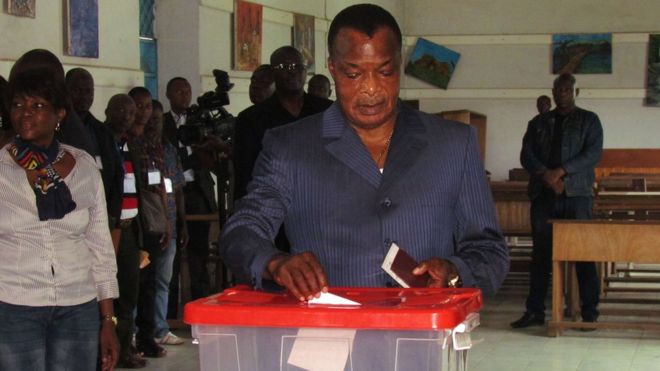
Congo voters approve Denis Sassou Nguesso’s third-term bid

Denis Sassou Nguesso is one of Africa's longest-serving rulers.


Denis Sassou Nguesso is one of Africa's longest-serving rulers.
Denis Sassou Nguesso is one of Africa’s longest-serving rulers.


More than 90% of voters in Congo-Brazzaville’s controversial referendum have approved constitutional changes to allow President Denis Sassou Nguesso to run for a third term, results show.

Under the current constitution, the president has been unable to seek re-election because he is over the age of 70 and has already served two terms.

The opposition say turnout was low and the vote should be annulled.

However, official results put the turnout in Sunday’s referendum at 72%.

More than 1.2 million people voted in favour of the change, while nearly 102,000 rejected it, the electoral commission said.

     Africa Live: BBC news updates

The opposition called for a boycott of the poll and one of its leaders described the official results as a “fraud”.

“From what we could see on the day of the vote, the announcement that turnout was more than 72% is extremely scandalous,” Clement Mierassa told the AFP news agency.

President Sassou Nguesso, 71, is one of Africa’s longest-serving rulers, first coming to power in 1979 and ruling until 1992 when he lost elections. He returned as president in 1997 after a brief civil war and has since won two elections.

He is now coming to the end of his second seven-year term.

Tens of thousands of people took part in a peaceful demonstration against the referendum in September.

Four people died last week, when security forces dispersed angry protesters in the capital, Brazzaville, and the economic hub of Pointe-Noire.

The election is due to take place in 2016.


Africa’s longest-serving leaders:

36 years: Teodoro Obiang Nguema Mbasogo – Equatorial Guinea, took power in a coup in August 1979

36 years: Jose Eduardo dos Santos – Angola, took over after death of the country’s first president in September 1979

35 years: Robert Mugabe – Zimbabwe, won the country’s independence elections in April 1980

32 years: Paul Biya – Cameroon, took over after resignation of the country’s first president in November 1982

31 years: Denis Sassou Nguesso – Congo, installed by the military in October 1979, out of power from August 1992-October 1997

29 years: Yoweri Museveni – Uganda, became president after his rebel group took power in January 1986

Stories Continues after ad

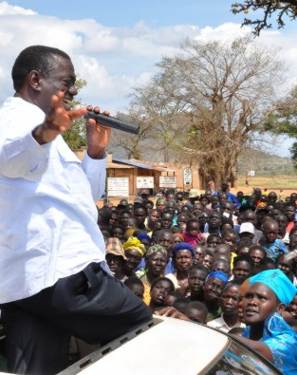
Besigye nomination set for November 4

????????????????????????????????????


Forum for Democratic Change (FDC) has confirmed that Rtd Col. Dr. Kizza Besigye will be nominated on November 4.

Addressing the press today at the party headquarters in Kampala, the FDC Deputy Electoral Commissioner, Mr Michael Kabaziguruka said the party had settled for Nov 4 after the Independent Electoral Commission failed to avail them Nov 3, a date he says, they had booked. “The peoples’ president will be nominated on November 4 at 11am at Namboole stadium,” he said.

He lashed out at the IEC, saying it had short-changed them and instead cleared President Yoweri Museveni to be nominated on November 3.

“The EC said they hadn’t received our letter and said it was Museveni who had to be nominated on November 3,” Kabaziguruka said adding that after the nomination of Dr Besigye, he would hold his first campaign rally at Nakivubo Stadium.

Meanwhile, the FDC is in the process of holding party primaries for the party flag bearers in the 2016 elections. According to Mr Kabiziguruka, members who wish to run on the party ticket will be chosen by a team of senior party members.

“We are in the process of organizing primaries, we emphasize consensus over primary elections,” said Kabaziguruka.

He stressed that the party would send a teams of top party leaders to all the regions in the country to scrutinize all members who wish to run on the FDC ticket.

“These teams are tasked with the responsibility to fairly mediate consensus among members, when that fails, then we will go for primaries,” he noted.

Tongue-in-cheek, Kabaziguruka urged disgruntled members of the ruling National Resistance Movement ‘who feel cheated in the party primaries’ to cross to FDC.

“We call upon all NRM members who feel that the exercise has been unfair to come home, we are ready to receive them,” he said.

Commenting on a letter from London, written on a The Democratic Alliance (TDA) headed paper and sent to Kampala with signatures of FDC flag bearer Dr Besigye and his opposition rival Mr John Patrick Amama Mbabazi, Kabaziguruka said both parties had sought to strengthen their individual capacities in a joint effort to end Mr Museveni’s rule.

“Its not because we want to front one candidate, we shouldn’t fight each other, we should focus all our effort on Museveni by making sure we work together independently for a common goal,” he said. ‘Under the auspices of the Kofi Annan Foundation, we have held a two-day meeting in London, UK to continue the discussions previously held in Nairobi, Kenya. We have made substantial progress in preparation for the 2016 general elections in Uganda. We will subsequently report to our respective political structures so as to complete the arrangements guaranteeing our success in the presidential elections,’ the release issued in Kampala under The Democratic Alliance (TDA) states.

Both Mbabazi and Dr Besigye contested for the flag bearer position of the TDA, a loose political pressure group. However, the two were later to go separate ways, with Dr Besigye, the flag bearer of the opposition FDC announcing he would run for presidency under his party’s banner.

Stories Continues after ad

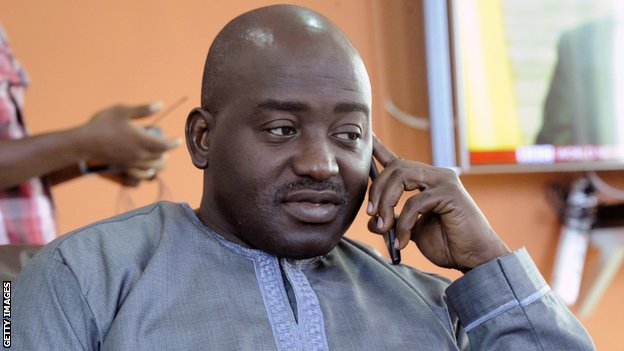
Bility formally submits his bid for the Fifa presidency

Musa Bility


Musa Bility
Musa Bility

Liberia FA president Musa Bility says his campaign team have successfully submitted his candidacy to Fifa to stand in February’s presidential elections.

The 48-year-old’s campaign manager, Edwin Snowe, met with Fifa’s acting Secretary General Marcus Kattner on Monday morning at the world governing body’s headquarters in Zurich.

Bility has received the backing of the five member associations necessary to stand, which have been passed on to Fifa’s Electoral Committee.

“I am a very happy man,” Bility told BBC Sport from his base in Liberia.

Bility is only the second African to formally stand for the Fifa presidency, after reigning Confederation of African Football president Issa Hayatou – currently the acting Fifa president given Sepp Blatter’s suspension – tried and failed in the 2002 elections.

“If we are to change football, then we have to make sure that those have been running Fifa for the last 20-25 years have nothing to do with it,” Bility added.

“Musa’s candidacy has been officially received by Fifa,” Snowe told BBC Sport from Fifa’s office in Switzerland.

Two other African men have also confirmed their intentions to stand.

On Saturday, South Africa’s Tokyo Sexwale announced his bid to run, but it is unclear whether he has the backing of the five nominations needed.

That is also the situation with former Nigeria international Segun Odegbami who made his intentions known last month.

Musa Bility joins Prince Ali Bin al-Hussein of Jordan, former Trinidad and Tobago international David Nakhid, one-time Fifa deputy secretary general Jerome Champagne and Michel Platini in registering for February’s elections.

The candidacy for Uefa chief Platini is unclear since he is currently serving a 90-day suspension by Fifa’s Ethics Committee, which the Frenchman is appealing.

All presidential candidates will have to pass integrity checks, carried out by the Electoral Committee, before being allowed to take part in the election set for 26 February.

Presidential hopefuls have until midnight on Monday to submit their candidacies for approval.

Stories Continues after ad

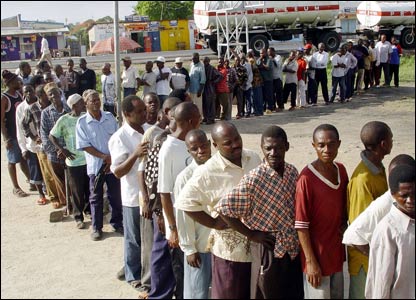
Tanzania set to release preliminary results


The National Electoral Commission of Tanzania is set to announce preliminary results of the presidential elections held yesterday.

According to media reports, the announcement by commission officials has raised the political tempo in the large East African country, renowned for holding credible elections that permit for peaceful transfer of power.

This time round, the two front runners are Dr John Pombe Magufuli of the ruling Chama Cha Mapinduzi (CCM) and Edward Lowassa of the Chama Cha Demokrasia na Maendeleo (CHADEMA) and UKAWA, a loose opposition group bringing together six other political parties.

Meanwhile, by press time the National Electoral Commission of Tanzania had said the winner of the October 25 polls would be known three days after the elections.

Elections in Tanzania, held every five years, have produced three presidents since founding leader Mwalimu Julius Kambarage stood down as president in 1985, after serving at the helm of government for 25 years.

His successors Ali Hassan Mwinyi, Benjamin Mkapa and Jakaya Kikwete have all served two five-year terms, as enshrined in the country’s Constitution.

Stories Continues after ad

Mbabazi, Besigye in London meet


Opposition presidential aspirants John Patrick Amama Mbabazi and Dr Warren Kizza Besigye have met in the United Kingdom to further their chances of uniting to oust the ruling National Resistance Movement (NRM) party and its leader Yoweri Museveni.

According to a an October 26 release signed by the two aspirants, the London meet held under the auspices of the Kofi Annan Foundation, is a continuation of the discussions previously held in Nairobi, prompted by former Kenyan Prime Minister Raila Amollo Odinga.

‘Under the auspices of the Kofi Anna Foundation, we have held a two-day meeting in London, UK to continue the discussions previously held in Nairobi, Kenya. We have made substantial progress in preparation for the 2016 general elections in Uganda. We will subsequently report to our respective political structyures so asd to complete the arrangements guaranteeing our success in the presidential elections,’ the release issued in Kampala under The Democratic Alliance (TDA) states.

Both Mbabazi and Dr Besigye contested for the flag bearer position of the TDA, a loose political pressure group. However, the two were later to go separate ways, with Dr Besigye, the flag bearer of the opposition Forum for Democratic Change (FDC) announcing he would stand under his party’s banner.

Similarly, Mbabazi also indicated he would run for presidency as an Independent, something observers say prompted the intervention of Kenayan opposition ideologue Raila Odinga to intercede and try to forge a way for both men to work together.

It should be noted that Odinga is no stranger to opposition politics and together with colleagues he once championed a cause for regime change in Kenya, leading to the 2002 ouster of then long-serving Kenyan President Daniel Toroitich Arap Moi, who had led his political party, the Kenya African National Union (KANU) for 24 years.

Under the subsequent Rainbow government formed with Mwai Kibaki as leader, Odinga was to become a Minister but later unsuccessfully challenged his boss in the 2007 presidential elections, under the then opposition political party, the Orange Democratic Movement (ODM).

Unrelenting, Mr Odinga was to return for elections again in 2013 under the Coalition for Reform and Democracy (CORD), this time contesting against Uhuru Kenyatta, the current President of Kenya.

Stories Continues after ad

NRM postpones parliamentary primaries

The National Resistance Movement (NRM) party aspirants for various positions will begin picking nomination forms between July 14 and 31.


The National Resistance Movement (NRM) has changed the date for its parliamentary and LCV primaries to tomorrow, October 26.

The primaries were slated for today but the NRM Electoral Commission deputy chairperson John Arimpa Kigyagi issued a release on Sunday, indicating the change.

‘The National Resistance Movement, Electoral Commission announces the postponement of the party primary elections which were slated for tomorrow, Monday the 26th of October, 2015 to Tuesday the 27th of October, 2015 throughout the country. We regret any inconveniences caused,’ the release states.

The postponement comes in the wake of reports that the party election material had not been delivered to all polling stations, and also that some aspirants had already set in motion tactics to rig the votes in some areas.

However, the NRM Electoral Commission boss Dr Tanga Odoi has warned those planning to engage in any polling malpractices, saying they would be dealt with.

He also named the electoral hotspots among them Lwemiyaga County in Ssembabule, and Kibuku, Lwengo, Bundibugyo and Bukedea districts.

Stories Continues after ad

Where are the women for presidency?


Going by the current political events, it’s now clear that Uganda will go to the 2016 polls without a woman presidential candidate. This raises doubts about women emancipation and its impetus to enable them participate in the politics of the land.

Uganda used the gender based electoral quotas to allow women join parliament quickly and somewhat used the slot as a training ground for the women to compete with men for political representation.

The 8th Parliament had 31% female representation and in the 9th Parliament the number slightly increased to 34.4% women MPs. It is however, important to note that the increase was as a result of the creation of new districts and not because of advancement in gender equality.

In 2006 the women who competed with men for parliamentary seats fell from 16 to 11 in 2011 and today, of the 129 women MPs, 112 represent districts as a result of affirmative action.

Meanwhile, Uganda has had only one LCV Chairperson (Ms Josephine Kasya – Kanungu district) since the inception of local councils, possibly a stark indicator that women are yet to break the barriers of competing with men for political positions.

In 2013, Ugandans thought it was about time to produce a woman president. The public started speculating about Parliamentary Speaker Rebecca Kadaga and the first Lady Janet Museveni as the influential women who could take on men in 2016.

Now the 2016 elections are beckoning and the women are a no show for the high office. They are running back into districts to compete for the women seats and not even in the open constituencies.

They seem to have failed to break the ties, but some people argue that women like Kadaga have outgrown the district woman slots and should aspire for the presidency.

Could the women’s ‘fears’ have been as result of the flawed affirmative action in Uganda where we have had an increase in women representatives at all levels but their numbers have not helped the people they represent and themselves?

The women in the Ninth Parliament have not fully agitated for issues to do with gender parity and they are instead seen appeasing  the political parties they subscribe to. The actions of women in the 9th Parliament gives credence toGeraldine Ferraros’ (The first woman to be nominated as Vice President of the United States) comment that, We’ve chosen the path to equality, don’t let them turn us around.” The women in the 9th parliament have been turned around!

The essentialist argument that women are similar and will always act and behave in support of a feminist Agenda is wrong. And there is clear evidence in the case of Uganda.  The women did not support and vote for Miria Obote and Beti Kamya in 2006 and 2011 respectively when they attempted to run for presidency yet women are the majority and most committed voters in Uganda.

In 2006 Miria Obote got 57,047 votes (0.83%) while in 2011 Beti Kamya got 52,782 votes (0.66%); and the two have since withered off the political radar.

However for Kamya, in an attempt to stay relevant in the politics of Uganda, has clawed back to contest for the Lubaga North constituency seat.

That said, the big question remains: Is the Uganda society not ready to accept a woman president or the women are not ‘mature enough’ to compete with the men?

Ms Madina Bakar is a Lecturer at IUIU, Kampala Campus

madiinabakar@gmail.com  

Stories Continues after ad