Stanbic Bank
Stanbic Bank
18.9 C
Kampala
Stanbic Bank
Stanbic Bank
Home Blog Page 2317

Kayihura commends Tanzania on Mukula’s extradition

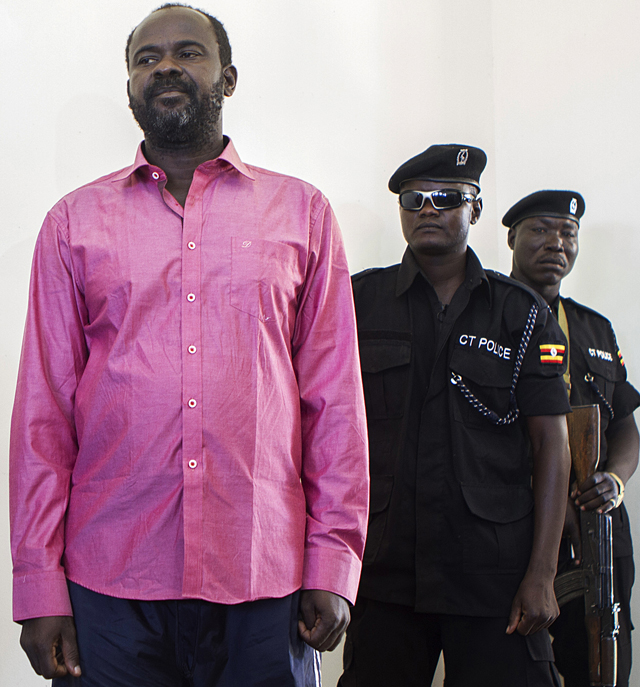
Ugandan Allied Democratic Front (ADF) rebel leader Jamil Mukulu is arraigned on July 12, 2015 before the media in Jinja. The 51 year old, suspected rebel has been a wanted man in Uganda for a range of crimes including terrorism and murder.


Ugandan Allied Democratic Front (ADF) rebel leader Jamil Mukulu is arraigned on July 12, 2015 before the media in Jinja. The 51 year old, suspected rebel has been a wanted man in Uganda for a range of crimes including terrorism and murder. Uganda accuses the rebel group of links to Somalia’s Al-Shabaab and Al-Qaeda. The ADF rebels launched an insurgency against President Yoweri Museveni in the early 1990s and later established bases in Congo. The rebel group is accused of murdering hundreds of people in a string of massacres in Uganda and the neighbouring Democratic Republic of Congo (DRC). AFP PHOTO/ ISAAC KASAMANI

The Inspector General of Police (IGP) Gen. Kale Kayihura has thanked Tanzania for working closely with the Uganda government in extraditing Allied Defense Forces (ADF) leader Amos David Mazengo populary known as Jamil Mukulu.  The IGP made these remarks on Sunday while parading the ADF commander to journalists at the Criminal Investigations Department (CID) in Jinja.

The police boss noted that the extradition of Mukulu was made possible because Uganda and Tanzania security and other organisations worked closely. He acknowledged that the process was not an easy task but was eventually finalized. “I pay tribute to the government and people of Tanzania for their brotherly effort to fight criminality,” said Kayihura.

Gen Kayihura noted that both governments worked closely in proving a prima facie case against Jamil Mukulu.  “The judge was convinced that the cases were extrajudicial and ruled that he be expedited,” he expressed.

The IGP noted that the recent murder of John Steven Onen which Jamil Mukulu and Dr. Asuman where involved and where defendants have proved a prima facie case. He said, “Murder is an extrajudicial offence and we proved to the judge that he was involved.” He said Dr. Kiyingi would be caught and be charged.” You can run but eventually the law will catch up with you,” he warned.

Gen. Kayihura further observed that other cases including the murder of Muslim clerics, and police officers will be included in the evidence. He went ahead and said Mukulu would face charges for the 1998 attacks on Kichwamba Technical School that left 60 students dead, the 1999 taxi park bombings and the  various killings in Eastern Uganda. “We shall add all these incidents to the charges,” confirmed the IGP.

He said that although there’s overwhelming evidence against Mukula, he still remains a suspect and he will be granted a free and fair trial. Kayihura noted that the 2010 Kyadondo bombings suspects are being given a fair trial by the courts.  “TZ was convinced that courts here can give a fair trial,” he remarked.

The IGP called upon all countries to desist from harboring criminals, declaring that the government is committed to cooperating in every aspect to make sure that Uganda is not a haven for terrorists. He warned all those intending to disrupt peace basing from other countries to stop because they will be caught.

Kayihura termed the arrest and extradition of Mukulu   as a ‘big success for the people of Uganda and a big blow to the ADF and to those behind terrorism and other crimes.’ “This is the Osama Bin Laden of Uganda. This should be a moment of happiness for everyone.” He declared.

Jamilu Mukulu the ADF leader was arrested in March in Tanzania as he tried securing travel documents for his children. At the time of arrest, he was using James Amos Mazenjo. The Interpol had listed him on its ‘Red Notice’ and the United Nations had declared him a wanted man. His extradition was processed and on June, 26 a Tanzanian Court agreed that he had to be sent back to Uganda to face various charges levied against him. The date for his appearance in Court to answer to the charges hasn’t been set.


Stories Continues after ad

Museveni pledges Shs300m to Catholic Church in Kyenjojo

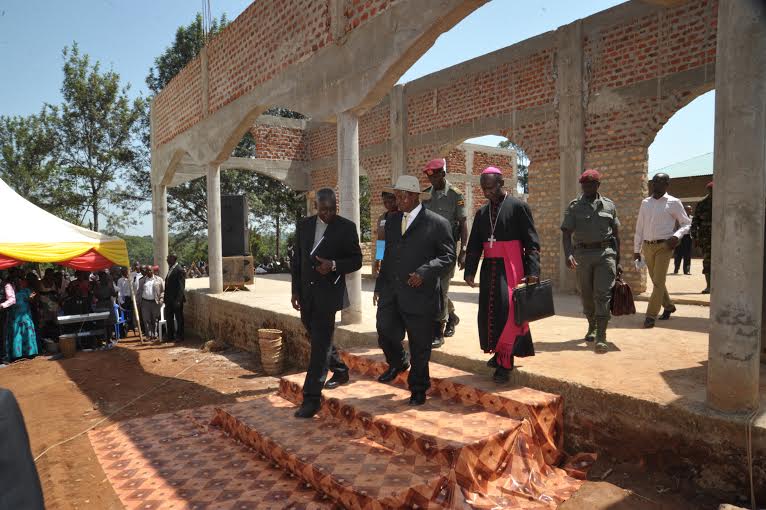
President Museveni is taken on a tour of the incomplete Church by Most Rev. Robert Muhiirwa, Bishop of Fortportal and Parish Priest of Katoosa Catholic Church Rev.Fr. Moses Mutangirizi.


President Museveni is taken on a tour of the incomplete Church by Most Rev. Robert Muhiirwa, Bishop of Fortportal and Parish Priest of Katoosa Catholic Church Rev.Fr. Moses Mutangirizi.
President Museveni is taken on a tour of the incomplete Church by
Most Rev. Robert Muhiirwa, Bishop of Fortportal and Parish Priest of
Katoosa Catholic Church Rev.Fr. Moses Mutangirizi.


President Yoweri Museveni has hailed the Catholic Church in Uganda and other religious institutions for adhering and contributing to the government’s call to eradicate poverty through commercial agro production and using their proximity to the population to contribute to the poverty eradication agenda.

Mr Museveni made the remarks during a fundraising function for Katoosa Catholic Church in Kyenjojo town council. The function which took place yesterday was aimed at raising Shs400 million towards the completion of the church that is estimated to cost Shs1billion on completion.

While addressing hundreds of people who graced the occasion, the President said that he was impressed with the report from Katoosa Catholic Church that they are engaged in a number of agricultural activities that generate income to the Parish and urged other religious institution to emulate their example.

He called upon all religious organizations to use their proximity to the population and sensitize the masses to overcome poverty through commercial agro production to improve food security and house hold incomes.

The President also said that it was justifiable to have a big and worthwhile church at Katoosa Parish the birth place of St. Adolf Ludigo Tibeyarirwa one of the Uganda martyrs who was burnt to death by Kabaka Mwanga at Namugongo shrines. He noted that the church was important as a worshiping place but also as a tourist attraction due to the importance of the martyrs in the life of Christians in Uganda.

The President pledged Shs300 million towards the fundraising drive also used the occasion to inform the population that government long secured funds from the World Bank for the tarmacking of the Kigumba-Masindi-Hoima-Kagadi-Kyenjojo road but said the delay on the road works was caused by parliamentary committee on National economy that failed to clear the funds which were to be used jointly to include the construction of the Petroleum Institute due to disputes. He said as soon as this is settled the road works will immediately start.

The President appealed to the people of Tooro to embrace their unity in diversity, shun tribalism and live in harmony as they work to develop Tooro and Uganda as a whole.

“Tooro Kingdom is a home of many tribes Batooro, Banyoro, Banyankore, Bakiga and many others so please kindly live together in harmony and no one should divide you” the President said.

The Parish Priest Rev. Fr. Moses Mutangirizi hailed the Presidents Operation wealth creation campaign and said it is a gospel that has changed lives.

“I make this statement without fear and with pride based on my knowledge of the core decency of your leadership as President. You always want people to work hard, act responsibly, be able to get into the middle class and stay in the middle class, he said.

Rev. Fr. Mutangirizi has changed lives at the grassroots and has been named ‘The Museveni Gospel of household incomes.’

“As a matter of fact, I have personally adopted your message in the eradication of poverty and have taken it upon myself to be your disciple in that gospel,” he said.

The State Minister for Finance Aston Kajara commended the President and the government for financing and building of Nyamango technical institute that is in its final stages. He appealed for the elevation of Kyenjojo town to municipality status.

Tooro Kingdom Prime minister Mr. Bernard Tungako commended the central government for the support they have rendered to Tooro Kingdom and the Omukama of Tooro in particular. He also praised government for promoting religious tolerance in the country that has greatly contributed to harmony in the country.

The President auctioned two cows that fetched ten million shillings, while his Presidential Portrait that was auctioned by the Church raised Shs5million. The portrait of the Omukama of Tooro was bought by Princess Elizabeth Bagaya at Shs12.2million who donated it to Brig. Muhoozi a friend of the Omukama.


Stories Continues after ad

Rugby Cranes promoted to Tier 1A

Uganda Rugby Cranes has qualified.


Uganda Rugby Cranes has qualified.

Rugby Africa Cup 1B

Results

Uganda 59 Botswana 10 (Uganda promoted to 1A)

Madagascar 33 Mauritius 24

Ivory Coast 22 Senegal 19

MICHAEL Okorach scored three tries and Scot Olouch added two as the Rugby Cranes overpowered the Botswana Vultures 59-10 Saturday at Kyadondo to win the Rugby Africa Cup 1B and gain qualification to tier 1A.

In a game that coincided with the fifth anniversary of the July 11 terrorist bombings at Kyadondo, the Cranes paid homage to the victims with a relentless performance that included nine tries and eight conversions.


A delegation led by all six captains of the participating teams laid a wreath at the Kyadondo memorial of the victims of the attack before the start of the tournament’s final game, which required Uganda to win by any margin to return to tier 1A.

Madagascar had won their earlier encounter with Mauritius 33-24, taking a three-point lead in the standings ahead of Uganda. But buoyed on by a capacity crowd, the Cranes wasted little time in regain control of their destiny, with Okorach breaking the deadlock with a fifth-minute try that was converted by Ivan Makmot for the first of five conversions.

The floodgates opened. The Cranes played downhill from then, with Ronald Musajja, Justin Kimono, Lawrence Sebuliba and David Kiwalabye all getting a try. James Ijongant made to conversions, the last coming in the 74th minute with party already underway.

“We would like to thank everyone for supporting us,” Cranes captain Brian Odongo said postmatch. “We are back where we belong”.


Stories Continues after ad

KCCA shuts down food section of Shoprite Lugogo

KCCA revealed a heavy infestation of cockroaches on the food items in the butchery, bakery and deli sections

Kampala Capital City Authority (KCCA) has closed the bakery, food and butchery sections of Shoprite Lugogo over noncompliance with Public Health Regulations, which require among others, that food supplies to the public should be fit for human consumption.

An inspection of the facility by KCCA revealed a heavy infestation of cockroaches on the food items in the butchery, bakery and deli sections; in addition to several other public health nuisances. Evidently, this posed an imminent danger to the public.

The closure followed several reminders by KCCA which were ignored by the management of Shoprite Lugogo.

The facility shall remain closed until the Management of Shoprite Lugogo fully implement necessary measures such as to ensure they meet the required Food Handling and Public Health Standards as stipulated in the Public Health Act and the Regulations made there under.

KCCA does says that they will continue with routine inspection of all food handling facilities in the city to ensure safety.

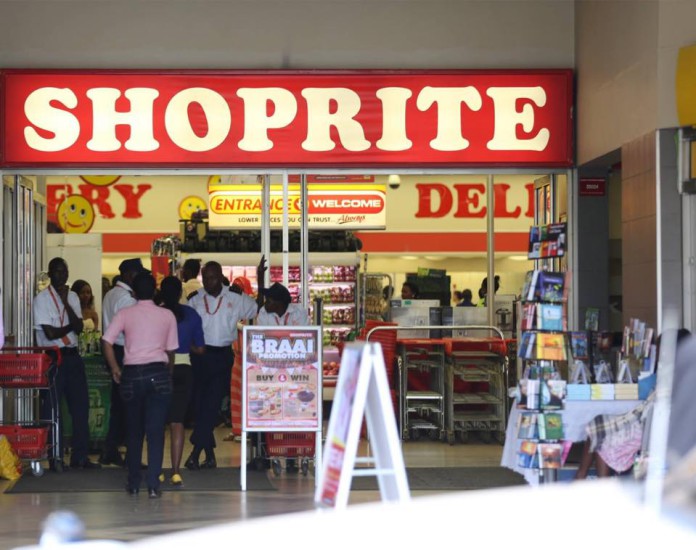
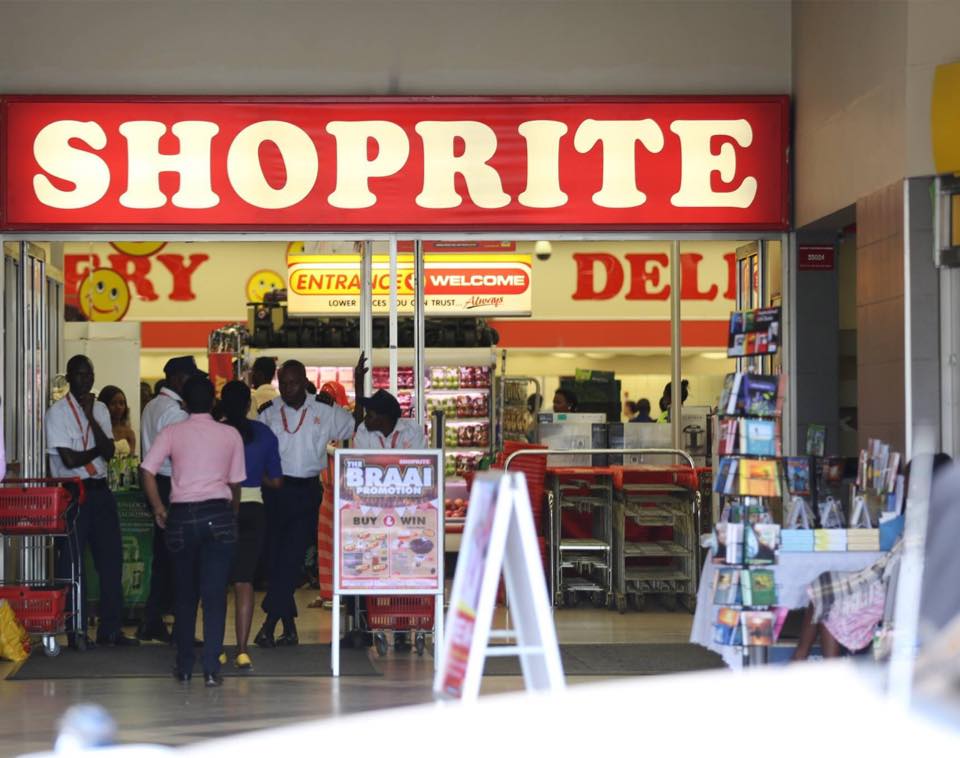
Below are some of the photos from the dirty food section of Shoprite Lugogo;

shoprite 3

shoprite 1

shoprite 2


Stories Continues after ad

What you should know about insomnia

Do you struggle to sleep at night or wake up in the middle of the night and lie awake anxiously watching the clock? Then it is possible that you are suffering from a condition called insomnia.

Insomnia is a common problem that takes a toll on one’s energy, mood, health and ability to function during day. It is also manifested in situations like sleepiness during the day, general tiredness, irritability, waking up early in the morning and problems with concentration or memory.

According to Dr. Peter Muwereza of AAR services, insomnia is categorized as primary and secondary. The first not being directly related to another health problem and the later occurring due to another health problem like heartburn, asthma depression or subsistence abuse. “It can also be classified according to duration; acute lasting a short time like a once week chronic occurring several times for a long time and transient which persists for a week,” says Dr. Muwereza.

Dr. Muwereza also explains that the condition is caused by a disturbance in the circadia rhythm of the body which naturally controls sleep. This is caused by significant life stress as may be caused by; job loss or demotion, death of loved one, divorce among other problems,  emotional or physical discomfort, and environmental factors like noise, light and extreme temperatures that interfere with sleep. It may also be caused by conditions like overworking, overdrinking, depression, financial problems, among others.

He also adds that immediate causes of insomnia are non conducive sleep environment, late night working hours, using smart phones and I-pads and computers in bed, sleeping during day, heart burn, fear, anxiety, emotional tension and irregular sleeping times at night. It can also be caused by alcohol and drug abuse, repeated use of sleep drugs, diet pills and withdrawal from anti-anxiety drugs.

Dr Arike JK Amooti of Gulu referral hospital explains that although insomnia is the most common sleep complaint, it is not a single sleep disorder. It is more accurate to think of insomnia as a symptom of another problem, which differs from person to person. It could be something as simple as drinking too much caffeine during the day or a more complex issue like an underlying medical condition or feeling overloaded with responsibilities.

According to Dr. Dickson Manyanja of Mayo clinic, says sleep is as important to your health as a healthy diet and regular exercise. Whatever your reason for sleep loss, insomnia can affect you both mentally and physically. “People with insomnia report a lower quality of life compared with people who are sleeping well,” he says.

He adds that other effects of insomnia may include; lower performance on the job or at school, slowed reaction time while driving and higher risk of accidents, psychiatric, problems, such as depression or an anxiety disorder, overweight or obesity, Irritability, increased risk and severity of long-term diseases or conditions, such as high blood pressure, heart disease and diabetesand Substance abuse.

The good news is that most cases of insomnia can be cured with changes one can make on his or her  own without relying on sleep specialists or turning to prescription or over-the-counter sleeping pills. However in cases of the chronic condition it is advisable to visit a medical expert. The first step in treating Insomnia is to find out whether the problem is being caused by an underlying medical condition.

According to Dr. Arike, treatment for chronic insomnia includes first treating any underlying conditions or health problems that are causing the insomnia. “If insomnia continues, the health care provider may suggest behavioral therapy and adoption of behavioral approaches which help to change behaviors that may worsen insomnia and to learn new behaviors to promote sleep,” he explains.

He advises that there are psychological and behavioral techniques that can be helpful for treating insomnia. Relaxation training, stimulus control, sleep restriction, and cognitive behavioral therapy are some examples. Some of these techniques can be self-taught, while for others it’s better to enlist the help of a therapist or sleep specialist.

Dr. Arike also advises insomnia victims to also adopt techniques like sleeping in a quiet cool bedroom, using the bedroom fro sleep only, sticking to a regular sleeping schedule, avoiding naps, avoiding alcoholic , caffeine and nicotinic  substances and stressful events like quarrels before sleep.

He says for medical treatment there are many different types of sleep aids for insomnia, including over-the-counter (non-prescription) and prescription medications. “Determining which medication may be right for you depending on one’s insomnia symptoms and many different health factors and that is why it’s important to consult with a doctor before taking a sleep aid,” he stresses.

Dr. Arike also explains that the major classes of prescription insomnia medications include; benzodiazepine hypnotics, non-benzodiazepine hypnotics, and melatonin receptor agonists.

There are alternative medicines that may help certain people sleep. It is important to know that these products are not required to pass through the same safety tests as medications, so their side effects and effectiveness are as well not understood.


Stories Continues after ad

Let UN agencies step up ‘presence’ in the lives of refugees

It has been reported that eighty five refugees have died in Sango Bay in Rakai district, over the past two years.

Most of these refugees, who fled from Tanzania fearing persecution, usually die of diseases that can be managed like Malaria, Dysentery, Typhoid and diarrhea.

Needless to mention, there are almost similar statistics from other refugee camps in the country, where the refugees are faced with the same challenges.

But because the resource purse of Uganda is still small, oftentimes the country finds itself in dilemma, unable to be of much help to these hapless people who are fleeing from injustices elsewhere.

Uganda could simply be Africa’s most receptive country when it comes to the issue of hosting refugees and has over the years been ‘home-away-from-home’ for several Rwandans, Barundi, South Sudanese, Somalis, Congolese and, in the not so distant past, even Kenyans.

That noted however, it is important to note that refugees flee their countries of origin, trying to find a place where they deem it safer than where they left in the first place. On arrival, most of them first seek for the basic needs like food and shelter. And, as time progresses and they realize that they are not about to go home they start seeking for education for their children, a piece of land to grow some food and work to enable them have some little money in the pocket. Of course some of those needs can be met through cooperation with the host communities. But, as earlier noted, Uganda as a country can only do so much to make the refugees get a semblance of comfort; it is a poor country that also faces huge challenges mostly in the provision of healthcare and education, sectors that are otherwise critical to the wellbeing of the refugees.

And that is where the amplified interventions of the respective UN agencies like the World Health Organisation (WHO), the World Food Programme (WFP) and the United Nations Children’s Educational Fund (Unicef) become necessary, because these people also need to live a ‘normal’ life.

Stories Continues after ad

Media activists, practitioners discuss ‘self-regulation’

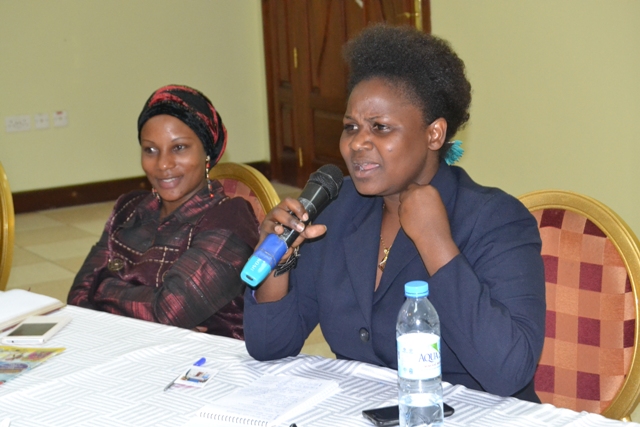
Executive Director Lynn Najjemba
The dialogues were meant to start a conversation on the idea of Self-Regulation

Media personnel in Uganda have been holding regional consultative dialogues to identify professional challenges they face, with emphasis laid on conditions that lead to self-regulation.

Conducted under the theme ‘The Media We Want’, the month-long dialogues engaged journalists from Northern Uganda (Acholi and Lango sub-regions), West Nile and Karamoja region, Eastern Uganda (Busoga, Bugisu and Teso) and Western, South Western and Mid-South in South Buganda, Ankole, Kigezi, Rwenzori and Bunyoro.
The dialogues are a brainchild of the Parliamentary Forum on the Media (UPFM) chaired by Butambala District Woman MP Mariam Nalubega, which worked in partnership with Panos Eastern Africa (PEA), the Uganda Journalists Association and Uganda Parliamentary Press Association, on this project.  
In Kampala the dialogue was held July 8 at the Imperial Royale Hotel and according to PEA acting Executive Director Lynn Najjemba, it attracted over 150 media practitioners from different media organisations and other stakeholder institutions like Makerere and Mukono universities.
“What dominated the Kampala dialogue were calls to journalists to attach value to themselves as individuals by ‘going back to school and acquiring the requisite qualifications. This is after we found that majority of people working as journalists especially in upcountry media houses mainly radio, do not have qualifications in journalism at all,” a release by Ms Najjemba, states in part.
Ms Najjemba said the dialogues discussed a number of media and journalism issues with major emphasis on the key issues that continue to impede growth of the journalism profession and the media sector in Uganda.
‘The dialogues were meant to start a conversation on the idea of Self-Regulation with the big question being ‘’Can Media in Uganda in its current state take charge of its own affairs,’ the release adds.
According to Ms Najjemba, those practicing journalism and found wanting were urged to update the media-related qualifications.
 
Stories Continues after ad

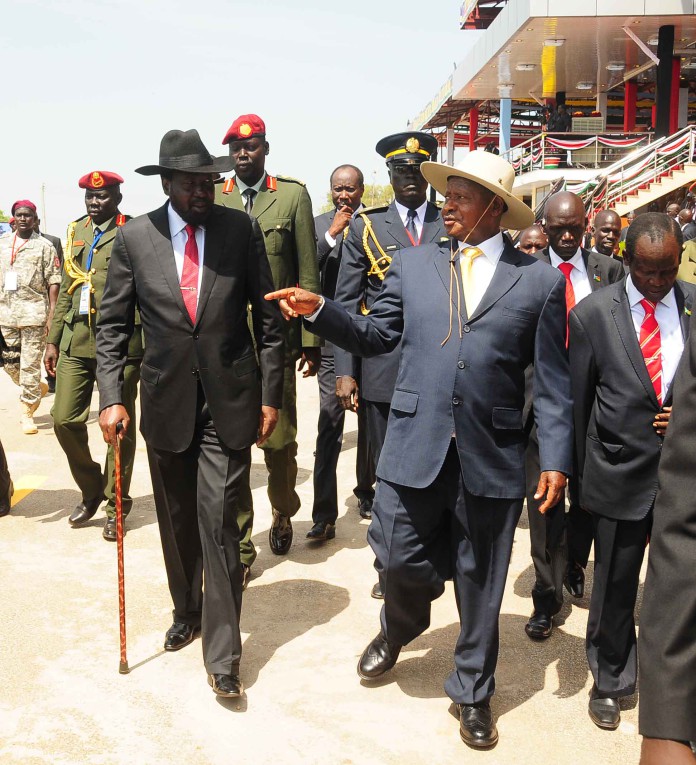
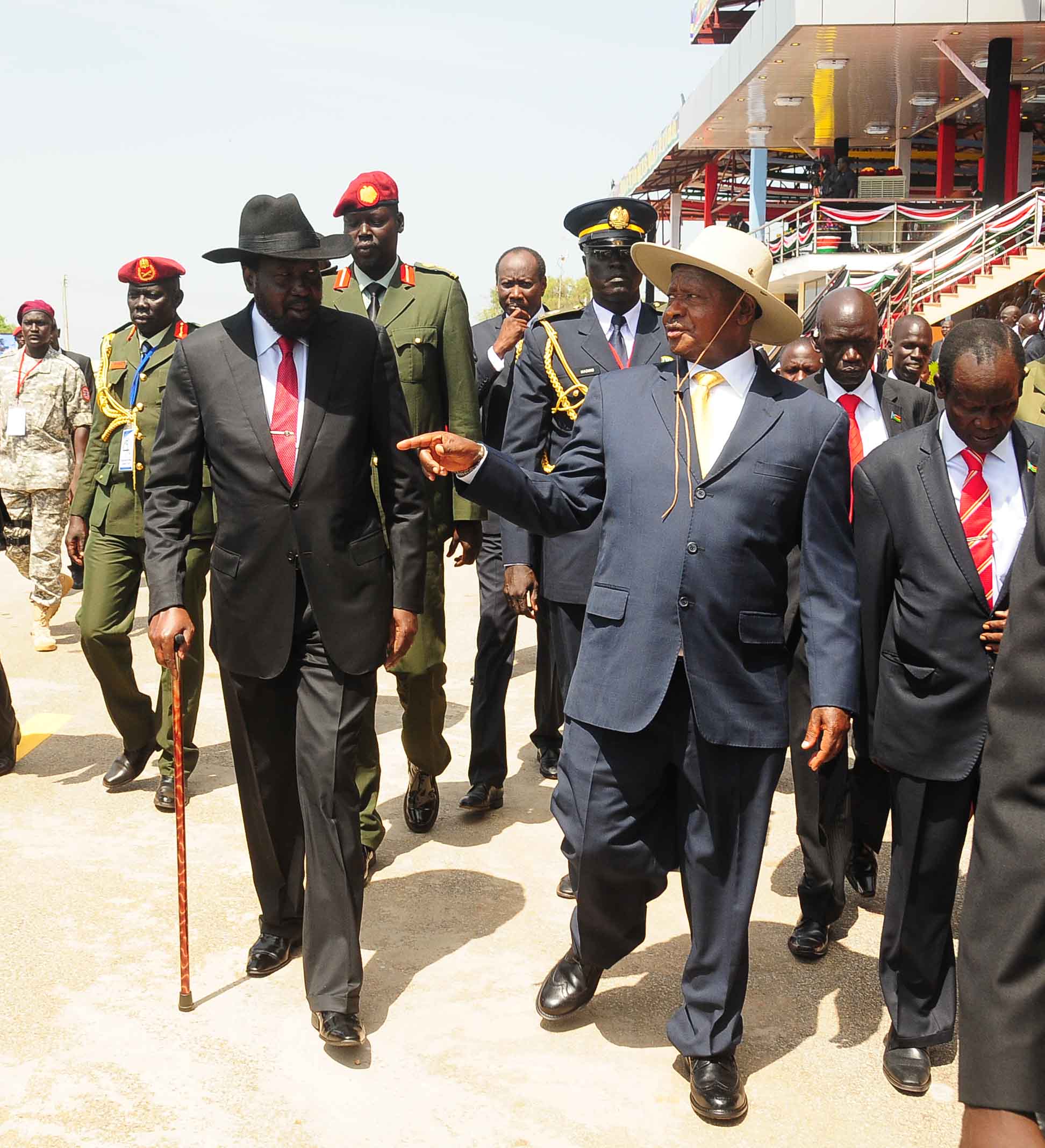
Museveni urges unity in South Sudan

President Museveni used the occasion to call for peace and unity among the African people

President Yoweri Museveni has urged the people of South Sudan to unite and work together for the benefit of all and for the nation to be able to attain national development, warning that tribalism and sectarianism are wrong ideologies that lead to suffering.

“South Sudan and Africa in general have suffered unnecessarily on account of wrong ideologies, this has caused a lot of damage to the people of Africa,” he said, adding that the ideology of tribalism and sectarianism is a wrong idea.

The President who was accompanied by the First Lady Janet Museveni was today speaking at the 4th independence anniversary celebration of the Republic of South Sudan at a colorful ceremony that took place at Dr. John Garanga memorial ground in Juba.

The ceremony was held under the theme, “Peace and Unity for the better South Sudan”.

While congratulating the people of South Sudan on their 4th anniversary on what he described as deliverance from slavery, President Museveni pointed at outsiders such as imperialists who had wrong ideas adding that when they came to Africa, they caused the continent a lot of problems. He said that Africans should know that imperialists also used internal weaknesses to divide Africa.

Addressing thousands of people who turned up for the celebrations, President Museveni used the occasion to call for peace and unity among the African people and reaffirmed his solidarity with the people of South Sudan saying that “as it was in the past, it is now and it shall be in future” attracting ululation from the crowd.

On his part president Salva Kiir Mayardit commended President Museveni and the Ugandan government for the solidarity and standing with the people of South Sudan.

He retaliated the need for peace and reconciliation for the benefit of all the people of South Sudan

Stories Continues after ad

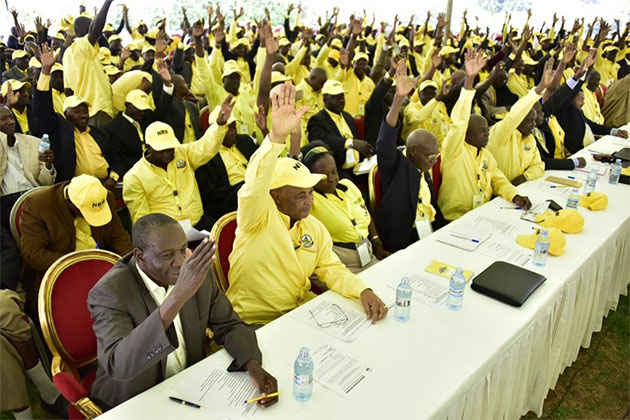
NRM aspirants to pick forms next week

The National Resistance Movement (NRM) party aspirants for various positions will begin picking nomination forms between July 14 and 31.

The National Resistance Movement (NRM) party aspirants for various positions will begin picking nomination forms between July 14 and 31.

Tanga Odoi, the NRM Electoral Commission chairman made the disclosure yesterday, while addressing a press conference at the party headquarters on Plot 10 Kyadondo Road.
According to Mr Odoi, the NRM has introduced fees for all candidates who wish to hold office in the party, with those vying for chairmanship parting with Shs10 million. Similarly, those vying for party flag bearer for President of Uganda will also have to pay Shs10 million, while anyone who wishes to become the NRM Vice Chairperson will pay 5 million shillings, irrespective of their gender.

The National Vice Chairpersons for regions and five eminent persons nominated by the party chairman to the Central Executive Committee (CEC) will each pay 2.5 million shillings.
Any NRM member who wishes to contest for Lord Mayorship will pay 1.5 million shillings, while City division mayoral candidates under NRM will pay 1 million shillings.
Candidates for the LC 5 positions will pay 1 million shillings; those vying for Lord Councillorship will pay 200, 000 shillings each while the NRM District Chairpersons will pay 200, 000 shillings.
According to Odoi, the money will help instill a sense of responsibility and commitment to authority.
On twitter the NRM Deputy Spokesperson Ofwono Opondo disclosed that the party had opened an account with Centenary Bank A/C no.2910500001 under National Resistance Movement Electoral Commission, where aspirants are required to deposit their fees.

Stories Continues after ad

Bank of Uganda intervenes to save Shilling

CALLED FOR EFFECTIVE CHECKS ON MONEY LAUNDERING IN EAC: BoU Governor Prof Emmanuel Tumusiime Mutebile.
However, the bank distanced itself from controls that can determine the exchange rate.

Following the unabated fall of value by the shilling against the dollar, the Bank of Uganda has come in to intervene and save the shilling.

In a statement signed by the BOU Director of Communications, Ms.Christine Alupo, the central bank intervened on the sale side of the interbank foreign exchange market.

Accordin to Ms Alupo, the Bank sold US dollars to the market in order to smoothen out excessive volatility in the movement of the exchange rate.

‘The intervention is intended to remove the spikes in the movement of the shilling against the dollar that have been observed lately in order to complement the intervention, the BOU has tightened shilling liquidity in the interbank market,’ the statement reads in part.

However, the bank distanced itself from controls that can determine the exchange rate.

‘The Uganda shilling exchange rate remains market determined and the bank does not target the level or direction of the exchange rate,’ the statement indicates.

Recently, the dollar hit the 3500 mark for the first time, disrupting business in the city as most traders yesterday locked their shops in protest; many claim that they pay rent in dollars which becomes inconveniening when the dollar fluctuates.

Stories Continues after ad