The newly-constituted National Executive Committee (NEC) of the Forum for Democratic Change is meeting today to among other issues discuss the party’s membership to The Democratic Alliance.
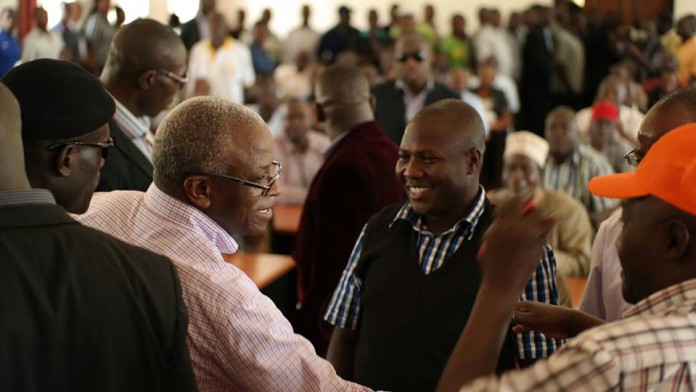
The Leader of Opposition in Parliament Wafula Oguttu, who stood in for the FDC spokesperson Semmujju Nganda, said that the meeting, where the party’s 17 newly elected executive committee members were also sworn in, is very important because it would help them discuss the TDA issues.
“We are going to agree how to move forward in the elections and decide when to pick TDA forms,” Mr Wafula Oguttu said adding: “TDA has a process, we are going to sit and discuss as a committee; we shall rally behind what has been decided by NEC.”
Wafula Oguttu noted that although there were ‘some disagreements’ at the delegates conference held at Namboole Stadium last week, the party had moved on. “Every time we are improving on our delegates conference; we learn from our mistakes,” Wafula Oguttu said and added: “There are differences but they make us united, we came out strong.”
With the deadline for returning TDA nomination forms looming, FDC needs to sort the internal differences in time so that it is able to forward a candidate who will be supported by all party members.
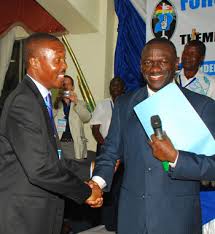
Meanwhile, Dan Mugarura, the FDC electoral commission chief noted that with the swearing in of the new 17 executive members, the NEC was now fully constituted and would make decisions for the party.
“We are subscribing to TDA while others finished, we wanted to have a full NEC to make resolutions on TDA,” Mr Mugarura said and commended the new NEC members for their service to the FDC.
Speaking at the same function the FDC flag bearer for the 2016 presidential elections Dr. Kizza Besigye, also commended the newly-sworn in members and committed himself to ensuring party cohesion.
“My task is just beginning; we are setting the stage and when ready, we will unveil the curtains,” Dr Besigye said and pledged to work closely with his rival for party flag bearer Major General Mugisha Muntu.
Last week Gen Muntu lost the flag bearer candidacy to Dr Besigye by a wide margin, prompting speculation of a split between members of the two rival camps. However, Gen Muntu has already conceded defeat and also urged his supporters to support Dr Besigye’s presidential bid.
Former Prime Minister John Patrick Amama Mbabazi is in Mbale for consultative meetings ahead of his 2016 presidential bid.
Mbabazi, who is addressing delegates from the Elgon region at the Mbale-based Protea Hotel, will later proceed to the Cricket Grounds to address a rally.
Mbabazi was set to start his consultative meetings in Mbale in July but was stopped and arrested by Andrew Felix Kaweesi, the then Director of Operations in the Uganda Police Force.
But this time round, in a letter dated September 1, 2015, the Inspector General of Police General Kale Kayihura cleared Mbabazi to carry on with his consultative meetings, but directed the former Premier to comply with the Public Order and Management Act (POMA).
“You furnish the respective District Police Commanders with evidence to use premises by owners and managers,” reads the letter in part.
Meanwhile, sources in Mbale indicate that unlike the July 9 incident when Mbabazi was stopped from travelling to Mbale, this time there is no massive deployment by security agencies.
The source further said that this time the turn-up of supporters is low, possibly because parents are taking their children back to school ‘so they cannot ignore such a responsibility to attend a campaign rally’.
The source also hinted at the National Resistance Movement (NRM), grassroots primaries, saying they could have affected the turn-up for Mbabazi’s rally.
Empty Mbale cricket ground where Jpam is supposed to hold a rally.
On June 16 this year Mbabazi, a former NRM Secretary General, declared he would contest for presidency and chairmanship of the party. However, unfolding events made it impossible for him to secure a party ticket, forcing him to run as an Independent candidate, subject to endorsement by his supporters in about two-thirds of the districts in Uganda.
Meanwhile, it is not known yet how the delegates attending Mbabazi’s consultation were selected since no known election of his officials has taken place.
By filing time, efforts to talk to a member of Mbabazi’s team for details about the selection of delegates were futile.
In a bid to support football and other related sports like most Ugandans have done in the past, from when football was broadcast both on television and radio in the eighties, many Ugandans have followed the ‘attractive and entertaining’ game played by Europeans, leaving our country and club football to go into oblivion.
As a patriotic African and a young journalist in Uganda, this to me raises a big concern as to whether we Africans should support European clubs like Manchester United, Arsenal, Real Madrid and Barcelona, among others.
In a research carried out in 2010 in Uganda, Man-U and Arsenal had four million fans out of a population of 35 million compared to our own local clubs SC Villa and Kampala Capital City Authority [KCCA ] which had one million; something very embarrassing!
So, for professional purposes I tried to find out why and how this was happening in Uganda. Later, I discovered the reasons and I would like to share them with the readers.
In their minds, many Africans find their football attractive and entertaining; European football changes their lives through betting and Ugandan football is corrupt, tribal and less attractive. To me, these reasons are somehow reasonable but not satisfactory.
In the 70s when Ugandan football both at national and club level was at its peak, with Uganda reaching the African Cup of Nations finals against Ghana in 1979 that we eventually lost 2-0 in Accra with the likes of Phillip Omondi, Polly Ouma, Tom Lwanga, the country was on the sports world map.
Then, back home, clubs like KCCA, Simba and SC Villa were dominating the CECAFA region, tussling out with other regional giants like Gor Mahia and AFC Leopards of Kenya; Young Africans and Simba of Tanzania; El Merriekh and Al Hilal of Sudan. During that time in Amin’s regime, it is believed that sports was supported by the government unlike today where the sports fraternity claws for support.
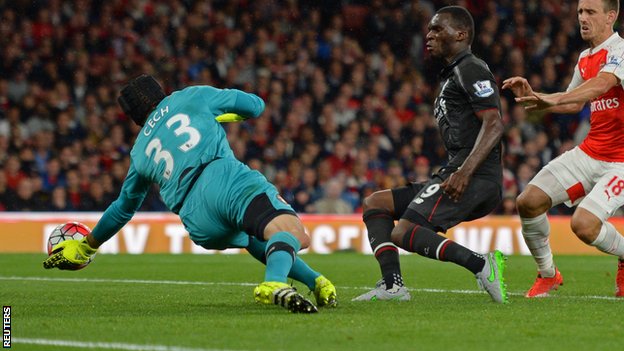
All said, it brings me back to the question of which European clubs an African should support; my opinion would be that Africans support clubs that in turn ‘support us’ in different ways like having African players on their payroll.
These players bring joy and revenue home, thereby improving the livelihoods of many in Africa, their ancestral continent.
These clubs include Chelsea, Swansea, Manchester City, Westham United, Lyon, Marseille, Lille, Red Bull Salzburg and CSKA Moscow and have helped players like the Toure brothers, the Ayew brothers, Song, John Obi Mikel, Ibrahim Ssekagya, Mwesigwa, Drogba and Baba Rahma among others.
These, unlike ‘the mighty Man-U’ and Arsenal, have for the past four years not had an African player in their ranks but still command a big fan base in Africa!
This begs the question, which clubs should Africans supports?
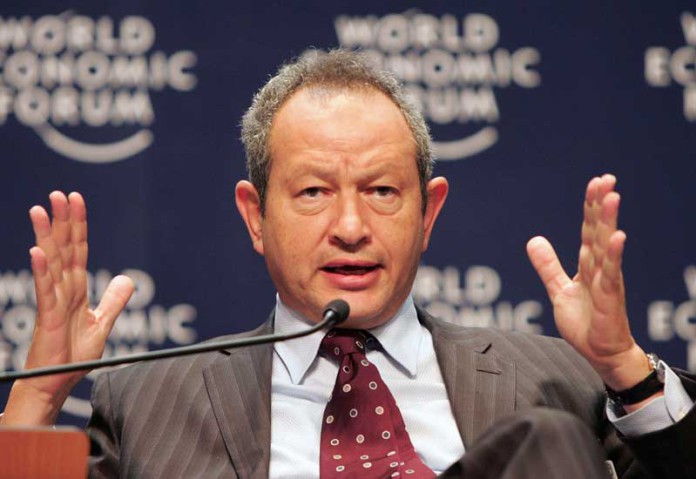
Naguib Sawiris, who is believed to be worth $2.9billion, announced his idea on Twitter this week.
“Greece or Italy sell me an island, I’ll call its independence and host the migrants and provide jobs for them building their new country.” adding: “Crazy idea… Maybe but at least temporary until they can return to their countries??!!” “Of course it’s feasible. You have dozens of islands which are deserted and could accommodate hundreds of thousands of refugees,” Sawaris tweeted.
The billionaire’s ‘offer’ comes in the wake of grisly photos of a Syrian child, three-year old Aylan Kurdi, who lost his life at sea while his family was trying to cross from Turkey to Greece. The mother and brothers also died in the fateful journey, while the father, a survivor of the tragedy has since returned to Syria, counting his losses.
Sawiris’ comments also come after a week of harrowing events, which have forced the world to acknowledge the scale of the refugee crisis taking place in Europe, and the billionaire estimates an island off Greece of Italy to host the immigrant refugees could cost between $10-$100million.
He however, reservations about investment in infrastructure and also admitted the plan has other challenges, including whether Greece or Italy could be persuaded to sell an island, as well as arranging jurisdiction and customs regulations.
But he insisted refugees who came to it would be treated as ‘human beings’, complaining: “The way they are being treated now, they are being treated like cattle.”
“No sane person with integrity would look at the news and decide not to take action,” he was quoted as saying.
Sawiris cited the 32,000 strong El Gouna, a resort town he developed on the Red Sea in Egypt, as an example of a “desert land that he turned habitable.”
While opposition parties in Uganda are still squabbling over the modalities of choosing a joint candidate for the 2016 presidential elections, their counterparts in Kenya have already picked the flag bearers for the 2017 presidential elections.
Speaking to the media recently, opposition stalwart Mr Moses Wetang’ula said his party Ford Kenya had already endorsed him as its flag bearer, while Mr Raila Odinga and Stephen Musyoka have been endorsed by the Orange Democratic Movement (ODM) and the Wiper Democratic Party as flag bearers, respectively.
“Each constituent party has already picked its candidate, Ford Kenya has picked me, Wiper Democratic Party has agreed on Kalonzo Musyoka and ODM has former Prime Minister Raila Odinga,” Senator Wetang’ula was quoted as saying.
Mr Wetang’ula made the remarks ahead of a two-day midterm review meeting currently underway in Great Rift Valley Lodge and Resort in Naivasha, aimed at evaluating the progress made by the opposition since the March 2013 elections.
However, despite the issue of opposition flag bearer not being on the agenda. speculation is rife it will take centre stage.
‘Although the issue of how or when to pick the coalition’s flag bearer was not listed as part of the agenda for the two-day meeting that started yesterday, most of the participants said they would want it discussed,’ the Daily Nation states, adding that members ‘would be rooting for an open and transparent process in picking the coalition’s torch bearer’.
“We want a process that will see all the principals compete for the coalition’s ticket in a democratic manner,” Kiminini MP Chris Wamalwa, was quoted as saying.
The East Africa region is ensconced in a cycle of elections, with the Tanzania elections set for October this year, followed by Uganda’s election slated for February next year.
Earlier in July Burundi held a controversial election in which Pierre Nkurunziza was returned was returned as president, while Kenya and Rwanda will go to the polls in 2017.
Interestingly, despite being two years away, the election processes in Rwanda have elicited enormous anxiety, because of the expiry of President Paul Kagame’s constitutional two-seven year mandate, which ends in 2017.
Already, there are indicators he may stay on, after several individual petitions and nation-wide ‘consultations’ carried out by the Members of Parliament, established that majority of Rwandans want the Constitution amended to allow Kagame run for a third term.
In Tanzania, one of the region’s most stable countries, the ruling Chama Cha Mapinduzi (CCM) has come under intense pressure after opposition parties coalesced under former Prime Minister Edward Lowassa to challenge CCM flag bearer John Magufuli, in what is considered the ‘toughest’ election in the country’s history.
The International Olympic Committee has announced a £1.3m emergency fund will be made available to national Olympic committees in order to help refugees.
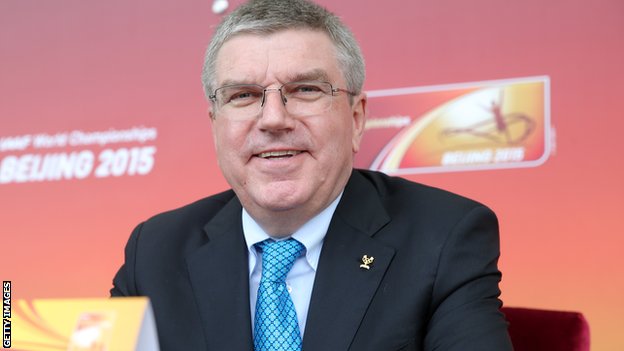
“We have all been touched by the terrible news and the heartbreaking stories in the past few days,” said IOC president Thomas Bach.
“We made a decision that we needed to make this fund available immediately.”
National Olympic committees will be asked to submit programmes to benefit from the fund, which is made up of £650,000 from the IOC and £650,000 from the Olympic Solidarity Commission.
British sport has also reacted to the crisis, with supporters’ groups for Aston Villa and Swindon Town among those who have said they will hold up ‘Refugees Welcome’ banners at their next home matches.
Scottish champions Celtic have also offered their support. A share of proceeds from events surrounding the upcoming 30th anniversary of former manager Jock Stein’s death will be donated to the refugees’ cause.
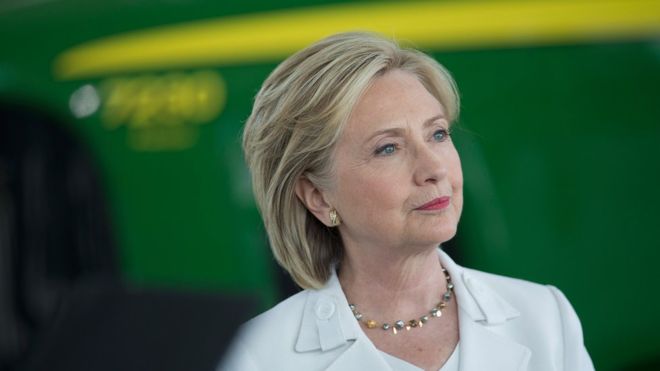
Hillary Clinton has said she wished she had made a “different choice” and not used a private email account while serving as US secretary of state.
“I’m sorry this has been confusing,” she told the cable news channel MSNBC.
Her use of private email has generated a barrage of criticism as Mrs Clinton runs for the Democratic presidential nomination for the 2016 election.
Critics say that her set-up was not secure, contrary to government policy, and meant to shield her from oversight.
Political analysts – including fellow Democrats – have said the Clinton campaign has stumbled in its response to the controversy and Mrs Clinton had not seemed contrite – at times even making jokes about the email issue.
A more sombre Mrs Clinton took full responsibility in Friday’s interview, saying she didn’t “stop and think” about how use of a private email account would be perceived.
It has been a major issue in the presidential race. Polls show an increasing number of voters view her as “untrustworthy” due in part to the questions surrounding her email use.
Under US federal law, officials’ correspondence is considered to be US government property.
Government employees are encouraged to use official email accounts although some top officials have used personal accounts in the past.
In March, Mrs Clinton said she and her lawyers made the decision over what would be considered work-related email when the state department asked for records from former secretaries of state.
The emails deemed work-related were about half of the 60,000 emails she sent in total during her time in office. The emails she deemed personal were deleted, Mrs Clinton said.
Since then, the state department has been releasing the emails to the public in batches about once a month.
Early this week Al Shabaab militants attacked a Uganda Peoples Defence Forces (UPDF) camp in Janaale in Somalia, killing twelve peacekeepers serving under Amisom.
The people of Somalia are our brothers and sisters who, unfortunately, have not known peace for the last two decades since 1991, when president Mohammed Said Barre was overthrown.
Needless to mention, his ouster threw the country in turmoil, with fragmented groups fighting each other over remarkably petty tribal differences that could otherwise be resolved through dialogue.
But that was never to be and in the ensuing escalation of volatility, there emerged terror groups like the Al Shabaab, which have over the past few years distinguished themselves as a heartless group, wreaking havoc in Uganda, Kenya and Somalia, in the process killing thousands of innocent people.
Indeed, they have made the region unstable, affecting the social and economic well-being of the citizens of the countries where they carry out their heinous acts.
But we should not let them celebrate and that is the reason we should laud the Chief of Defence Forces (CDF) General Katumba Wamala for his quick response to the calamity that befell the 12 members of the Ugandan contingent.
The fact the Gen Wamala has been with the peacekeepers since the fateful day should serve to reassure them that their work is appreciated.
That said, Somalia needs to be helped out of its current predicament so that its citizens can regain their dignity and rejoin the community of nations. And, as neighbours, it is our duty to ensure that lasting peace and harmony are attained and embraced by all the Somalis.
That is why those who want to disrupt their new semblance to peace in the country should be treated with utmost contempt and fought to the hilt. Fair enough, that is what the 12 peacekeepers were doing at the time they met their death.
The Group of African Ministers of Finance and Governors of African Central Banks, affiliated with the IMF and the World Bank, has reaffirmed their support for new funding initiatives.
According to a communiqué issued at the end of the two-day summit in Luanda, Angola, the African Caucus also proposed that the World Bank should support six regional transformative projects in the sectors of energy and agriculture, as well as a number of innovative solutions to reduce frequent funding gaps.
Embedded in a document dubbed the ‘Luanda Declaration’, members of the Africa Caucus noted that countries that depend on oil for their export and tax revenues face unique challenges and remain highly vulnerable to the impact of various external disturbances.
The Group also called for financial contributions from the BWIs to the Africa50 initiative of the African Development Bank (ADB) in order to meet the challenges associated with initiating infrastructure projects.
The document reveals that the illicit flow of funds associated with aggressive tax avoidance, the repatriation of profits and debt repayments are tragically depriving [African] countries of hundreds of millions of dollars every year.
Joseph Tucker of the International Monetary Fund, who presented the Luanda Declaration at the close of the African Caucus, said the Bretton Woods Institutions (BWIs) can support the challenges of financing for sustainable development, combating tax avoidance, eliminating the illicit flow of funds and strengthening Africa’s voice and representation in relation to the BWIs.
‘They are aware that the prospect of increasingly volatile financial markets means that it will be difficult to find resources to finance sustainable development goals (SDGs),’ a release by the Africa Press Organisation (APO), states in part.
The current Chairman of the African Group of Finance Ministers and Central Bank Governors affiliated with the International Monetary Fund and the World Bank is the Angolan Minister of Finance; its first Vice-Chair is the Minister of Finance of Benin. The position of Secretary of the organisation is held by the Egyptian Minister of Finance.
At the next meeting of the IMF and the World Bank scheduled for the 13-17 October 2015 in Lima, Peru, the Chair of the African Caucus will pass to Benin.
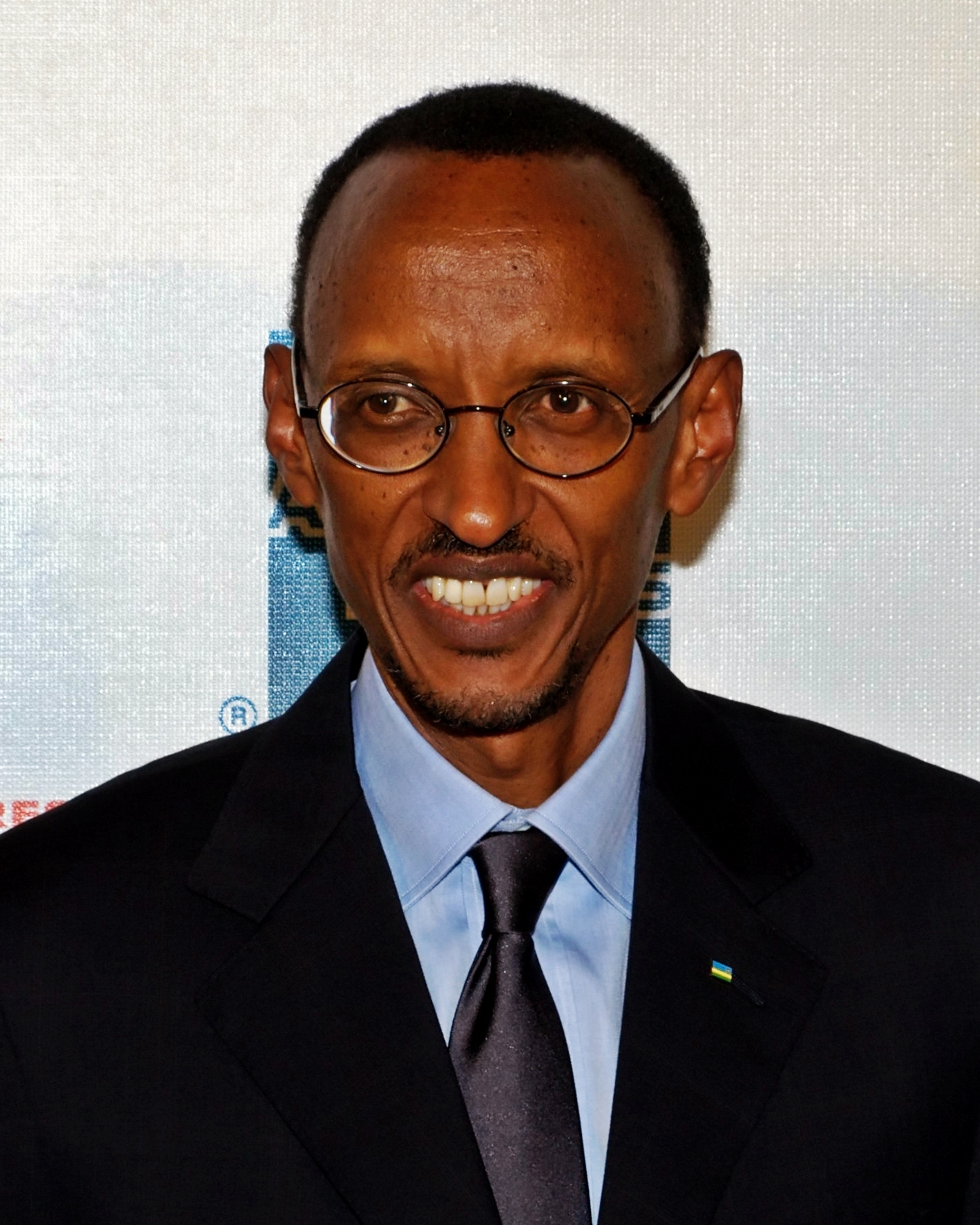
Like President Yoweri Museveni, Paul Rutagambwa Kagame also needs little introduction; is the President of Rwanda. And like Museveni, Kagame also went to Ntare School. He was one of the ‘Original 27’ fighters who attacked Kabamba on February 6, 1981. On capturing power in 1986, then Senior Officer Kagame became the Deputy Director of Military Intelligence, serving under the SO Mugisha Muntu. In 1990, after the death of Major General Fred Gisa Rwigyema, then Major Kagame returned from a military course at the Command and General Staff College, Fort Leavenworth in the US to take command of the Rwanda Patriotic Front/Army (RPF/A), a military-politico organization formed by Rwandan refugees in Uganda.
In 1994 the RPF/A took power in Rwanda, then Major General Kagame became Vice President and Minister for Defence, positions he held till 2000, when he was made President and Commander-in-Chief after the ouster of Pasteur Bizimungu, the first post-1994 president.
Kagame was first elected president by adult suffrage in 2003 and currently, Kagame is serving his second seven-year term as President and it is likely the Parliament will amend the Constitution to allow him serve further.
Familiy: Born to Deogratias and Asteria Rutagambwa in Gitarama, Rwanda in 1957, 58-year old Kagame is married to Jeanette Nyiramongi Kagame and together they have four children.
Lieutenant General Ivan Koreta
An officer and gentleman, Ivan Koreta is one of the most distinguished soldiers of the National Resistance Army (NRA) and its successor the Uganda People Defence Forces (UPDF).
Born in 1964, Koreta joined the Front for National Salvation (Fronasa) as a teenager and participated in the overthrow of Aimn in 1979. By the time the NRA captured Kampala Koreta was a Senior Officer and, in 1987 while awarding ranks he was made Lieutenant Colonel. A highly disciplined officer, Koreta served in various command and administrative roles, becoming the first-ever Ugandan army officer to lead a UN peacekeeping mission, when he led troops to Liberia in the 1990s. He has also served as the Director General of the Internal Security Organisation (ISO) between 1998 and 2001; Commandant of the Senior Staff College at Kimaka in 2004; Chairman of the General Court Martial (C/GCM) in 2006 and Deputy Chief of Defence Forces (D/CDF) between 2005 and 2013. He is currently Ambassador-designate.
Major General James Kazini Bunanukye
Major General James Kazini Bunanukye was born in 1957, and reportedly joined the army during Idi Amin’s regime in the late 1970s. After the 1979 war, he reportedly joined the Uganda National Rescue Front (UNRF), a rebel group headed by General Moses Ali, the current Third Deputy Prime Minister.
In 1984, Kazini left the UNRF and joined the National Resistance Army (NRA), where he started off as a ‘foot soldier’. He however, rose through the ranks and by 1987 was commissioned Captain. Two years later he was promoted to Major and posted to the Military Police in Makindye as Commander. Again, after another two years Kazini was promoted to Lieutenant Colonel and posted to Masaka Mechanised Regiment as Commander.
In 1996 Kazini was promoted to Colonel and posted to the Division 4 in Gulu as Commander, and in 1998 he was deployed to Kasese to oversee the operations against the Allied Democratic Forces (ADF) rebels.
In 1999 Kazini was promoted to Brigadier and was appointed Chief of Staff of the UPDF. He was also named Commander of Operation Safe Haven in the Democratic Republic of Congo and in 2000 Kazini was recalled from the Congo. In 2001, he was promoted to Major General and appointed Army Commander, serving in that post till 2003, when he was fired. Later that year he was committed to the General Court Martial to face charges of ‘creation of ghost soldiers’ and in 2008 the GCM under Lieutenant General Ivan Koreta sentenced him to three years in jail for causing a financial loss of Shs60 million.
After that he went into oblivion only for news to filter in on the morning of November 10 2009 that he had been killed at the home of his girlfriend Lydia Draru, who lived in the Kampala suburb of Namuwongo. At the time of his death James Kazini was 52 years old.
Lieutenant General Henry Tumukunde (RO111)
Born in 1955, Henry Tumukunde is a highly regarded military officer who joined the National Resistance Army after completing education at Makerere University, where as a student he was involved in ant-government politics. After the bush war in 1986, then JOII Tumukunde was posted to the United Kingdom as Military Attaché. He has served in various command and administrative posts in the army and Intelligence, and has at different times headed the Chieftaincy of Military Intelligence (CMI) and the Internal Security Organisation (ISO).
In 1994 Tumukunde, a lawyer, was a Constituent Assembly Delegate (CAD) representing then Rubaabo County, and later in 1996 he was named one of the 10 Members of Parliament representing the Army. In 2003 Tumukunde was later to disagree with the establishment, after he opposed the removal of term limits.
Lieutenant General Henry Tumukunde
About a year later he disagreed with his bosses in the army, after he was accused of abuse of office and spreading harmful propaganda. He resigned from Parliament in May 2005 and was later arrested and incarcerated for close to two years at the Officers Mess in Kololo, an upscale suburb of Kampala City. He was released in 2007 but continued attending Court Martial hearings up to April 18, 2013, when he cleared of the charge of spreading harmful propaganda after a grueling eight-year trial. He was however, found guilty on the charge of military misconduct and was subsequently sentenced to a severe reprimand.
Recently, in a surprising move President Yoweri Museveni promoted Tumukunde to the rank of Lieutenant General and retired him from the UPDF.
Major General Joram Mugume
One of those Uganda Peoples Defence Forces (UPDF) officers who get rare mention, Major General Joram Mugume was a Senior Officer by the capture of Kampala in 1986, and was one of only three Colonels at the commissioning of ranks in 1987. He has served as Deputy Army Commander, Senior Presidential Advisor on Defence and is currently the chairman of the UPDF Land Board.
Major General Matayo Kyaligonza (RO0034)
A military officer and diplomat, Matayo Kyaligonza was probably one of the most feared officers in the then NRA, having carried out several deadly exploits during the bush war. He was a Member of the NRA High Command and on capturing power in 1986 Kyaligonza was one of the Senior Officers who later became Brigadier alongside Tadeo Kanyakole (RIP), David Sejusa aka Tinyefuza and Eriya Kategaya (RIP). On entering Kampala Kyaligonza commanded the 7th Battalion, which went on to liberate eastern Uganda.
In 1994 he was elected Constituent Assembly Delegate (CAD) for Buhaguzi County, and in 1996 he represented the same County in Parliament after he was promoted to Major General and retired from the UPDF.
Maj Gen Kyaligonza is currently Uganda’s Ambassador to Burundi and also serves as the National Resistance Movement vice chairman for western region.
Major General Robert Rusoke
An officer and diplomat, Robert Rusoke was Joint Chief of Staff of the UPDF from 2005 to 2012. In August the same year he was appointed Uganda’s Ambassador to South Sudan.
Brigadier Charles Tusiime Rutarago
Little is said and known about Brigadier Charles Tusiime Rutarago but he is one of the ‘Original 27’ fighters who attacked Kabamba Military Training School on February 6 1981. At the capture of Kampala in 1986, Rutarago was a Junior Officer 1 (JOI) and worked with the Military Intelligence. He is currently the Head of the Royal Guards, a force in charge of protecting all cultural institutions in the country.
Brigadier Kasirye Ggwanga
To many, Samuel Fog Kasirye Ggwanga may not need introduction but sources say he joined the army during Idi Amin’s regime in 1972, after completing S4. By the time of Amin’s ouster in 1979, Kasirye Ggwanga was a Staff Sergeant and he was arrested and kept in Luzira Prisons for about two and a half years. After prison he joined the Uganda Freedom Movement (UFM) under Dr Andrew Kayiira, and later abandoned UFM for the freedom Democratic Movement (FEDEMU), which was headed by the late Captain George Nkwanga. Kasirye Ggwanga joined the National resistance Army in 1985, rising through the ranks to become a Brigadier. Currently, he is a Presidential Advisor on Security in the Buganda region.