Stanbic Bank
Stanbic Bank
28.7 C
Kampala
Stanbic Bank
Stanbic Bank
Home Blog Page 234

NIRA extends National ID renewal exercise to July

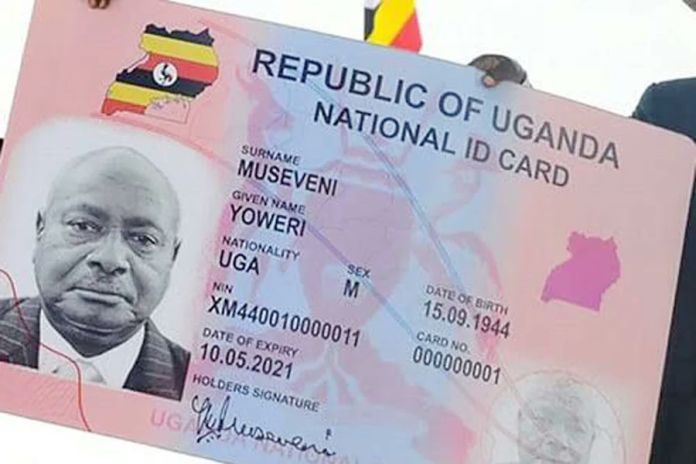
The Executive Director of the National Identification and Registration Authority (NIRA), Rosemary Kisembo, announced that the mass enrolment and renewal of national identity cards, initially set to commence on June 1, has been pushed to July at a yet-to-be-confirmed date.

“However, due to unforeseen delays in the procurement process, the exercise did not take off,” said Rosemary Kisembo. “Nevertheless, by the end of July 2024, the exercise will commence.”

According to her, the government is taking all necessary measures to ensure that IDs are renewed before the 2026 general elections.

“Aware of the Electoral Roadmap and the expiry of some cards beginning August 2024, the Government is taking all necessary measures to ensure that the delays do not affect service delivery and the roadmap,” she said, adding that consultations in that regard are underway.

She added, “In consultation with the Attorney General’s Chambers, measures are being put in place to ensure that the public suffers no disadvantage because of the delays.”

The first process of National ID registration started in 2014.

“In 2014, a similar exercise was successfully carried out in a period of four months. Therefore, the Ministry of Internal Affairs and the National Identification and Registration Authority would like to assure the public that the Government will deliver this exercise successfully within the stipulated timelines,” said Rosemary Kisembo.

However, Kisembo said that NIRA will continuously update the public on progress in this matter.

Stories Continues after ad

Over 150 legislators sign censure motion against the parliamentary commissioners

Embattled former LoP, Mathias Mpuuga.

At least 143 legislators have signed a censure motion against the Parliamentary Commissioners, Eagle Online has learnt.

“The number of signatures for those seeking to censure the four Commissioners of Parliament has risen from 143 to 152,” the mover of the motion, MP Theodore Ssekikubo said.

He noted that they are yet to realise the 177 required signatures and urged more MPs to sign the censure motion.

Last month, a section of legislators led by Lwemiyaga County MP Theodore Ssekikubo and Sarah Opendi embarked on collecting signatures to censure Parliamentary Commissioners. The commissioners are accused of allocating themselves Shs1.7 billion.

The Parliamentary Commission’s leaked resolutions from May 2022 implicated the former Leader of the Opposition (LoP), Mathias Mpuuga, commissioner Solomon Silwany, Prossy Akampurira, and Esther Afoyochan.

According to a leaked document, Mpuuga was awarded a one-off service payment of Shs500 million, while three commissioners from the National Resistance Movement each received Shs400 million. The biggest opposition party in Parliament, the National Unity Platform (NUP), resolved to recall Mpuuga as the Parliamentary Commissioner.

The party said that although he responded to the NEC’s request to show cause why he should not be recalled from the Parliamentary Commission, he did not provide any satisfactory explanation for engaging in this grave action, which goes against the mission, values, and objectives of the party. In particular, he did not make any attempt to respond to the specific accusations leveled against him.

The proposal allegedly has to go through the legal and parliamentary affairs committee before it is brought to the floor of parliament for discussion. Every individual who gets retirement benefits, be it the speaker, vice president, or others, has to have it discussed and passed by parliament.

According to Rule 95 of the Parliamentary Commissioner Rules of Procedure, a parliamentary commissioner may be removed from office on grounds of incompetence, misconduct, failure, or refusal without justifiable reason to execute the duties of the Office of Commissioner.

The rules indicated that a motion for a resolution for the removal of a Commissioner shall be initiated by a notice in writing to the Clerk, signed by not less than one-third of all the voting Members of Parliament, indicating their intention to move the motion for the removal.

A motion for resolution under this rule shall be placed on the order paper fourteen days from the date on which notice to remove the commissioner shall have been communicated to the clerk. A Parliamentary Commissioner shall later be removed upon the vote of at least half of all voting Members of Parliament.

Stories Continues after ad

Legislators decry constant drug stock outs at Mubende Referral Hospital  

Legislators have announced plans to probe circumstances under which drugs weighing 2322Kgs and valued at Shs121, 238,895 expired in the stores of Mubende Regional Referral Hospital, yet during that same time patients were sent away & ordered to buy medicines from the private clinics.

Gorreth Namugga, Vice Chairperson, Public Accounts Committee while meeting officials from Mubende Hospital, where they had been summoned to respond to queries raised in the December 2023 Auditor General Report noted that despite the health facility grappling with challenges of drug stock outs occasioned by late deliveries from National Medical Stores even some of the drugs delivered late got expired and ended up being destroyed.

“We are going to find out where the problem was, if these medicines were delivered to you with all factors constant and it was because of your negligence, of the failure to supervise your people that we had expired drugs, you will make good of the loss. This money will be paid by you. That is why you have to provide all information adequately. You must put your case clear. We are going to carry out more investigation with National Medical Stores (NMS) to find out where the problem was. If it was with Mubende hospital, you are going to pay for these drugs,” said Namugga.

“We pay taxes for purchase of drugs, they come to Mubende and you lock them in the stores, because the expiry is at times due to the failure to give these drugs to the users. So, you have to explain why you have expired drugs to the tune of 2322Kgs? The challenge with expired drugs is that we lose money throughout, you spend money buying them, and also spend money disposing them off, so after looking for money to buy the drugs, you also look for money to dispose off,” added Namugga.

Grania Nakazibwe (Mubende DWR) urged the Committee to probe the issue of delivery of drugs in Mubende saying the constant stock outs have affected access to health services noting, “The fact that NMS doesn’t deliver on time actually affects the kind of service which is delivered to the people and that is why actually, that is why we see so many private facilities mushrooming around regional referral hospitals and I believe this is the gap created by the delivery of medicines.”

Emmanuel Batibwe, Mubende Regional Referral Hospital, Director, informed the Committee that the facility has been experiencing challenges in maintaining adequate stocks of the different medicines in the hospital, mainly because of the shortfalls in the quantities versus orders made and the challenge is further compounded by the delays by NMS to deliver the requisitions made by the Facility.

He also attributed the huge volumes of expired drugs to the changes in the treatment line for HIV and Tuberculosis patients, who saw many health facilities abandon the older line of treatment.

“Overall, you find we have stock outs of many items and if they have been delivered, again they run out faster than you would have expected and that kind of scenario sees patients being requested to procure drugs outside the hospital. There were changes which occurred in some of our drug regimen and as result of that, we had expiry especially those treating HIV and Tuberculosis and if there are changes, you can’t use them nationally,” said Dr. Batibwe.

Stories Continues after ad

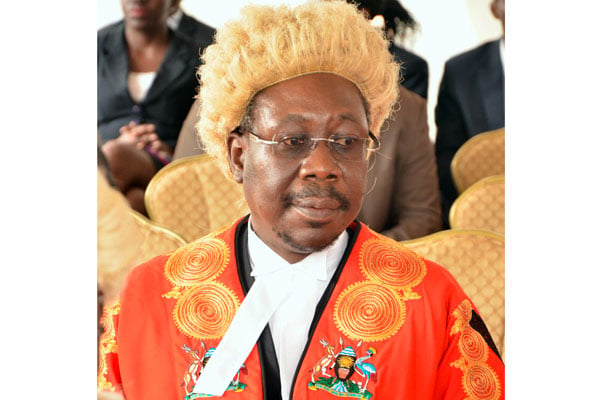
Justice Madrama appointed chairperson LDC management committee

Justice Madrama.

Justice Christopher Izama Madrama has been appointed chairperson of the management committee of the Uganda Law Development Center (LDC).

His appointment was confirmed by Justice Paul Kahaibale Mugamba, the outgoing chairman of the management committee of LDC.

The committee, which was named by the attorney general, Kiryowa Kiwanuka, will commence its work effective today.

Justice Christopher Izama Madrama is a Justice of the Supreme Court of Uganda. Over the years, he has served as a Justice of the Court of Appeal within various divisions of the High Court, including the Commercial and Execution Divisions. He has also authored several publications, including The Problem of HIV/AIDS: A Discourse on Laws, Marriage, and the Subordinate Status of Women in Uganda.

Conversily, the former president of the Uganda Law Society, Simon Peter Kinobe was named a member of the committee.

He will serve alongside Joanita Gertrude Bushara, an advocate of the High Court, the Notary Public and Commissioner for Oaths, and Adar John Patrick, an advocate of the High Court. 

The official members include: the principal, School of Law, Makerere University; the solicitor general, Ministry of Justice and Constitutional Affairs; and the Permanent Secretary, Ministry of Education and Sports.

The Management Committee is the governing body of the Law Development Center, charged with policy formulation and implementation and general strategic oversight of the Center.

Stories Continues after ad

AI Health Lab launched at Makerere University

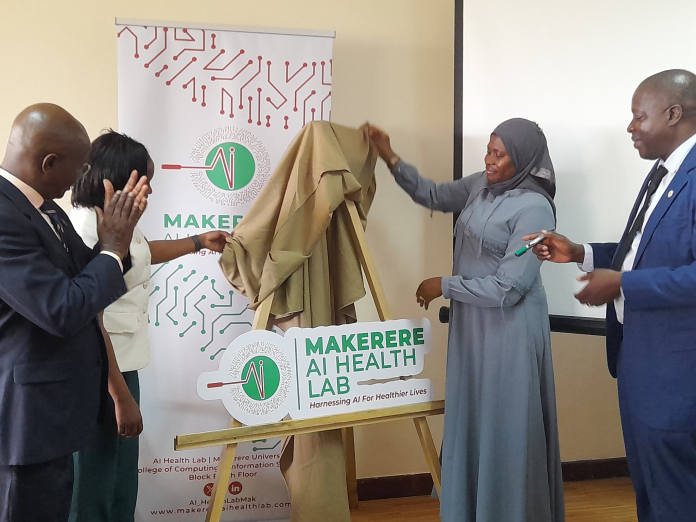
Permanent Secretary of the Ministry of ICT and National Guidance, Dr. Amina Zawedde during the launch.

The Government of Uganda, in collaboration with Makerere University, has inaugurated the Artificial Intelligence Health Lab.

This pioneering initiative aims to revolutionize healthcare delivery using artificial intelligence (AI), marking a crucial advancement for the nation. The lab is situated in Block B, College of Computing and Information Sciences.

Launching the lab on 30th May 2024, the Permanent Secretary of the Ministry of ICT and National Guidance, Dr. Amina Zawedde highlighted the importance of this development.

“Today marks a momentous occasion as we unveil the Artificial Intelligence Health Lab at Makerere University. This milestone signifies not just a step forward for the university but for our entire nation as we enter an era of innovation and advancement in healthcare through artificial intelligence,” she remarked.

Dr. Zawedde emphasized the transformative power of AI in healthcare, noting its potential to revolutionize diagnostics, treatment plans, and personalized care. She acknowledged the government’s ongoing efforts to integrate AI into healthcare through initiatives like telemedicine platforms, health data analytics, and AI-driven solutions in medical imaging and drug discovery.

However, she stressed the need for ethical and responsible AI deployment, addressing algorithmic biases, patient privacy, and equitable distribution of AI benefits.

“The Ministry of ICT & National Guidance is committed to supporting AI adoption in healthcare through policy guidance, financial support, capacity building, and infrastructure development,” Dr. Zawedde stated. She called for collaboration among government agencies, academia, healthcare providers, and technology partners to advance AI initiatives responsibly.

Dr. Aminah Zawedde, highlighted the importance of prioritizing locally developed solutions to better understand and effectively address national challenges. She outlined five key priorities for Uganda’s digital transition, focusing on infrastructure, accessibility, digital services, cybersecurity, data protection, privacy, digital skilling, and innovation.

Regarding infrastructure and connectivity, the government aims to expand coverage to 70% of the country within the next five years, with ongoing projects supported by the World Bank and China. This initiative targets essential institutions like schools, hospitals, administrative offices, and innovation hubs.

Ensuring accessibility of gadgets, particularly smartphones, is another critical focus area. Recognizing the importance of these devices for accessing digital technologies and apps, efforts are underway to lower costs through measures such as tax waivers and local manufacturing.

Additionally, the government is prioritizing the transition of services online to enhance efficiency, transparency, accountability, and ease of doing business. This move aligns with existing regulations and guidelines for digital transformation, with an emphasis on overcoming implementation challenges related to financial resources, capacity, and awareness creation.

Cybersecurity, data protection, and privacy are also paramount, with plans to develop trusted systems to safeguard digital infrastructure and user information. Furthermore, digital skilling initiatives aim to equip end-users and office management with the necessary skills for effective digital operations.

Finally, the government emphasizes innovation and entrepreneurship, celebrating community-driven solutions that are sustainable, acceptable, and impactful. This focus underscores the commitment to fostering a thriving ecosystem of innovation that addresses the needs of Ugandan society.

Dr. Myers Lugemwa from the National Malaria Control Program presented a compelling case for the integration of artificial intelligence (AI) tools in Uganda’s healthcare system. Addressing the current health challenges and the potential of AI, Dr. Lugemwa underscored the transformative impact these technologies could have on disease diagnosis and management.

“Globally, low-income countries face a higher burden of communicable diseases such as malaria, tuberculosis, and HIV/AIDS,” Dr. Lugemwa noted. “Despite a significant global decline in these diseases, they remain prevalent in countries like Uganda, where communicable diseases account for over 50% of morbidity and mortality.”

Malaria diagnostics primarily rely on tools like mRDTs, blood slide microscopy, and PCR tests, which are either expensive or not widely available. Similar challenges exist for other diseases such as cancer, tuberculosis, HIV/AIDS, and intestinal parasites, which are diagnosed through methods that may not be accessible at lower-level health centers.

Dr. Lugemwa highlighted the promise of Makerere University’s AI Health-Lab in addressing these diagnostic challenges. “AI tools could revolutionize the accuracy and accessibility of disease diagnosis,” he said. “From improving malaria diagnostics to streamlining cancer screening and diagnosis, AI has the potential to transform healthcare delivery in Uganda.”

Furthermore, Dr. Lugemwa discussed the role of AI in predicting disease patterns affected by climate change, such as malaria, and the importance of electronic health records (EHRs) in improving patient management and healthcare delivery.

“In summary, AI Health-Lab is poised to be a game-changer for Uganda’s healthcare system,” Dr. Lugemwa emphasized. “It aligns with Makerere University’s mission to ‘Build For the Future’ and addresses the Alma-Ata Declaration’s call for local tools that are readily available, accessible, affordable, and user-friendly. The integration of AI in healthcare is not just a technological advancement but a critical necessity for improving health outcomes in Uganda.” Lugema stressed.

Representing Makerere University’s Vice Chancellor, Prof. Edward Bbaale, Director of the Directorate of Graduate Research and Training, expressed pride in the university’s achievements. He underscored Makerere’s proactive steps in promoting AI, including establishing dedicated AI labs, integrating AI courses into the curriculum, and fostering partnerships.

 “The establishment of the AI Health Lab is the culmination of a vision that aligns with Makerere University’s mission to be a thought leader in research, innovation, and academic excellence,” Prof. Bbaale stated.

He highlighted the lab’s role in fostering interdisciplinary collaboration and innovation, with potential applications ranging from predictive models for disease outbreaks to personalized treatment plans.

Prof. Bbaale also lauded groundbreaking projects spearheaded by Makerere University’s College of Computing and Information Sciences. These include the AirQo project, which deploys low-cost air monitoring systems, and AI-based tools for agricultural disease tracking and medical diagnostics. Notably, the AI Lab, under Dr. Rose Nakasi’s leadership, secured a $1.5 million grant from Google for the Ocular project, automating diagnoses for Malaria, Tuberculosis, and Cervical Cancer.

To the students and researchers, Prof. Bbaale urged them to seize the opportunities presented by the AI Health Lab. “This lab is not just a facility; it is a beacon of possibilities. Engage deeply with the work, collaborate across disciplines, and be bold in your pursuit of solutions that can change the world,” he encouraged.

He also outlined the university’s commitment to moving the entire research value chain from conceptualization to commercialization, ensuring that research translates into products and services that benefit communities.

The launch of the AI Health Lab at Makerere University signifies a significant leap forward in Uganda’s healthcare sector. With continued support and collaboration, this initiative promises to harness the power of AI to improve health outcomes, making a tangible difference in the lives of many. As Dr. Zawedde concluded, “Let us embark on this journey with optimism and determination, knowing that our efforts today will shape the future of healthcare for generations to come.”Bbaale added

Stories Continues after ad

Equity Bank bags award for promoting financial education and inclusion 

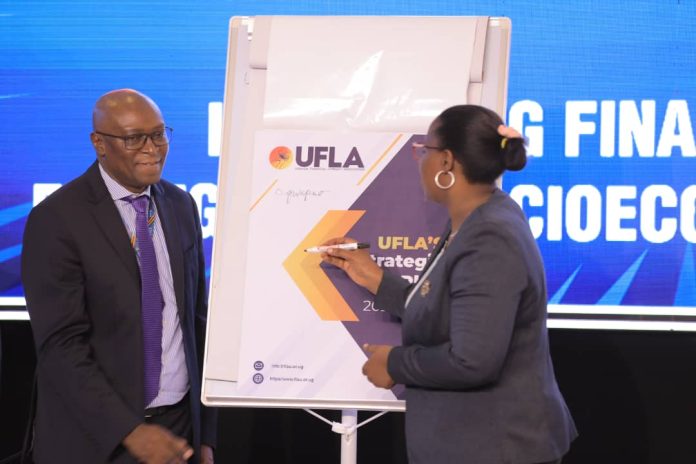
Executive-Director-Elizabeth-Mwerinde-signs-the-Financial-Literacy-Strategic-Plan-marking-its-official-launch.-Looking-on-is-Mr.-Ogwapus-Moses-Commissioner-Ministry-of-Finance.

Equity Bank Uganda has been recognised and awarded for promoting financial education and inclusion by the Uganda Financial Literacy Association (UFLA), an umbrella body which unites stakeholders in the financial literacy field. 

The recognition of Equity’s contribution to advancing the national financial literacy agenda was made at the UFLA first anniversary celebration at Kampala Serena Hotel. 

Speaking at the event, Equity Bank Executive Director Elizabeth Mwerinde Kasedde said the Bank has been, and (is) dedicated to offering integrated financial services that socially and economically empower consumers, businesses, and communities. 

“Equity Bank targets the unbanked, financially excluded such as women, youth and refugees, and so far, we have covered up to 67 percent rural and 32 percent urban. 

The bank has in the last two years trained 126,107 youth, women, and refugees in financial literacy and entrepreneurship education, of which 58 percent are female, 77 percent are youth and 30 percent are refugees.

According to Mwerinde, the impact of financial literacy and entrepreneurship education has been enormous.  “We have witnessed increased access to affordable unsecured credit. Up to Shs89 billion has been disbursed in the last three years including the #Covid-19 period. 

The bank has also created 99,000 jobs and expanded 6,420 Micro enterprises from micro-level (Capital size below Shs10 million) to small size (capital size above Shs10 million) and has improved longevity of the enterprises with up to 82% of the enterprises in operation for over 12 months.

Since the start of the Bank’s effort in promoting financial inclusion in 2019, 87% of the unbanked have reported improved livelihood and more individuals are joining village Sacco’s and associations “because there is more opportunity to access formal financial services cheaply,” said, Mwerinde.

“We are honored to receive this award. We believe that empowering individuals with financial knowledge is essential for fostering economic growth and improving livelihoods,” Mwerinde said on receiving the award. 

The recognition also reaffirms the bank’s commitment to ensuring that people have the opportunity to achieve financial independence and security. 

Equity’s Financial Literacy trainer Phillip Kiryowa was also honoured with the Financial Literacy Trainer Award. 

The event brought together key players and dignitaries in the financial sector, including the Bank of Uganda, the Ministry of Finance, Bank Executives, the Uganda Bankers Institute and members of UFLA.

The theme for the event, “Leveraging Financial Literacy for Uganda’s Social Economic Development,” aligns directly with Equity’s vision and mission to champion the socio-economic prosperity of the people of Africa. 

Stories Continues after ad

More than 60% of women contract infections during their menstrual periods -Family Medical Point

FMP May activity.

More than 60% of women contract infections during their menstrual periods, Eagle Online has learnt. The revelation was made by Dr. Enock Cedikol, the person in charge of Family Medical Point.

The contraction of infections such as UTIs is alluded to an unsafe or poor hygienic menstrual period where 80% of the ladies have no access to a sanitary pad. They reportedly end up folding clothes and other materials, which have exposed them to UTIs and other infections.

“Some girls use unclean towels and clothes during menstruation. So, it’s always good to always wash your hands before and after using the pads and strictly use the pads to up the hygiene during menstruation,” he said during the commemoration of Menstrual Hygiene Day at Entebbe Girls’ School Kigungu.

Dr. Cedikol said most of them cannot access expensive medication; they end up in clinics and are offered tablets that cannot help them. In most cases, they may need injectables.” he said.

Nabwire Polyne, the head of programs and communication at Family Medical Point, noted that menstrual hygiene is still a challenge. At times, we think that because sanitary pads are all over the market, but this is a hard to-reach area and many girls can’t afford them.

“We learned that they fold and use clothes, so we taught them how to make reusable pads so that they could go through their menstruation with dignity. Some of the girls don’t know how reusable sanitary pads and caps work or even exist.”

She noted that girls face different challenges, like sexual gender-based violence. As a fishing community, they get sexual advances from fishermen, and at times they do not know how to handle them.

“We don’t leave men out, but they do not have time to engage in these conversations. They feel like they do not need to hear it, which is a stigma that we want to break in the first place. There is a lot of stigma attached to menstruation whenever you mention it; they feel like that’s a woman’s problem; they are even embarrassed to talk about it,” she said.

She noted that girls are embarrassed to even go to male teachers over that matter. So, we involve them and include them.

“We had a session where we had a film show, indicating the dangers of engaging in sexual behaviour when they are still in school. For example, they are at risk of getting teenage pregnancies dropping out of school and getting STDs, which are rarely talked about. I could see the shock on their faces when they watched these movies. We want to encourage them to abstain from sex and stay in school,” she said.

Stories Continues after ad
Equity Bank and Church of Uganda Celebrate Successful Payment of Church House Loan

Equity Bank has pledged to continue its strong collaboration with the Church of Uganda and other religious groups for mutual benefit.

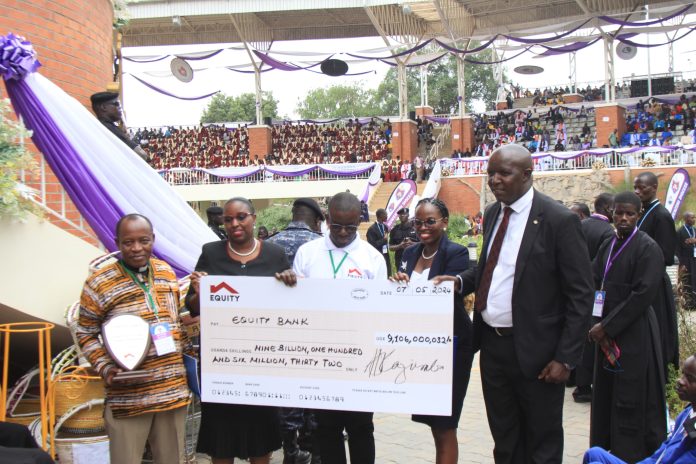
Speaking at the Uganda Martyrs celebrations in Namugongo on Monday, Equity Bank Executive Director Elizabeth Mwerinde Kasedde expressed gratitude for the Church’s support and affirmed the bank’s commitment to working with the Church at all levels.

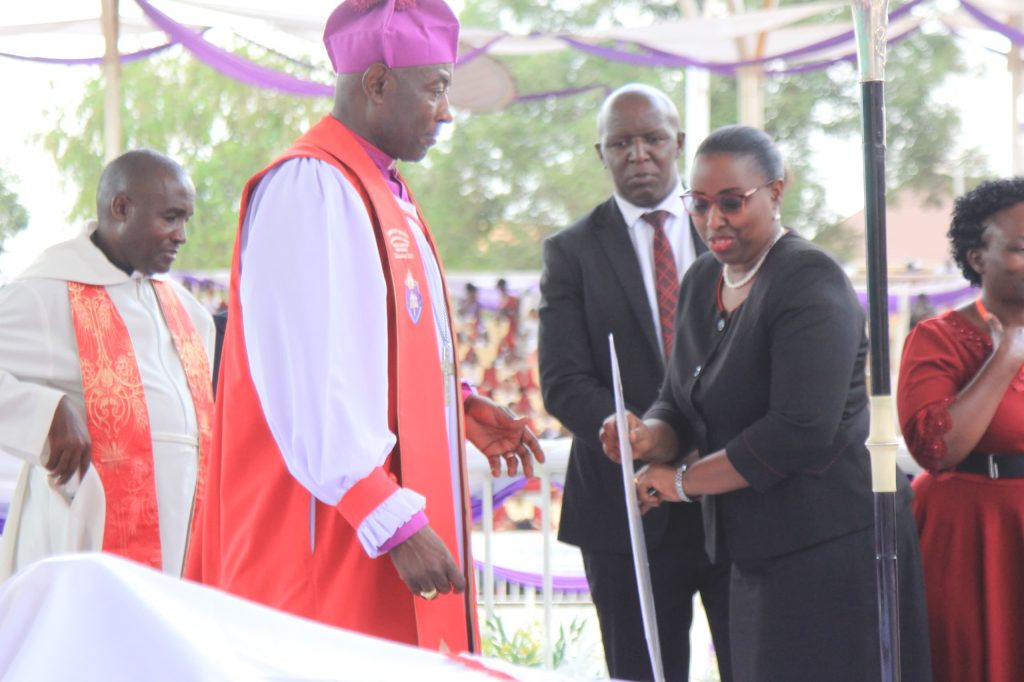
The Church of Uganda Archbishop, Dr. Stephen Kaziimba Mugalu, presented a symbolic cheque to mark the completion of the credit repayment advanced by the bank for the construction of Janani Luwum Church House. Archbishop Kaziimba praised the strong relationship with Equity Bank and encouraged Christians to embrace the bank’s products.

“I want to announce here that the Church House is now fully owned by the Church of Uganda. Thank you Equity Bank for supporting us, ”  said Archbishop Kaziimba.

Last month, Equity Bank donated UGX 30 million for the Martyrs Day celebrations and sponsored the inaugural national Uganda Martyrs Choir competition.

Equity Bank supported the Church of Uganda by providing a mortgage covering 70 percent of the construction costs for Janani Luwum Church House, with the Church contributing the remaining 30 percent. The Church borrowed USD 17 million from Equity Bank for the project, which became fully operational in 2015.

“ This was a dream that the church had cherished for close to 50 years.  I am glad that Equity Bank took the bold step to support the church realize this dream,” said Mwerinde.

Mwerinde invited other dioceses to adopt Equity Bank’s development model to improve their followers’ livelihoods. She emphasized the bank’s mission to empower communities economically and socially through financial services, helping individual Christians achieve their personal dreams.

“If we can realize a dream of $17 million (UGX65 billion) together, why can’t we help our followers and our members  in our parishes also realize their dreams?  Equity bank is here to help the church give dignity to its followers through extending financial services that economically and socially empower communities,” explained Mwerinde.

The Janani Luwum Church House project, originally planned in 1966, was only realized through the partnership with Equity Bank in 2015, contributing to the Church’s mission and clergy pensions.

Stories Continues after ad

Three dead in road crash at NUP Masaka procession

Three people have been counted dead and several injured in a fatal crash during the National Unity Platform leaders’ procession in Masaka.  

The Kampala Metropolitan deputy police spokesperson, Luke Owoyesigyire said that the accident occurred in Nsangi involving two vehicles; a Toyota Hiace and Toyota Noah and three motorcycles.

“The police at Nsangi are currently investigating a fatal road accident involving multiple vehicles and motorcycles. Toyota Hiace, registration number UBQ 691Q Toyota Noah, registration number UAT 157A

Motorcycles: UFY 983T, UGC 381C (BAJAJ BOXER), UEJ 361D (BAJAJ), and UFY 465Y (BAJAJ BOXER RED),” Owoyesigyire said.

He added that the accident resulted in the immediate death of the rider and passenger of motorcycle UFY 465Y at the scene and their bodies were transported to City Mortuary Mulago for postmortem examinations. Additionally, another victim who was initially rushed to Mulago has succumbed to their injuries, bringing the total number of deceased to three.

The police at Nsangi are actively working to identify the victims who have been taken to various hospitals and to assess their conditions.

He noted that preliminary investigations suggest that the accident was caused by the reckless driving of the Toyota Hiace, which was part of the Procession for the National Unity Platform (NUP) President en route to a rally in Masaka. The Hiace collided with the Toyota Noah and subsequently hit several motorcycles which were also Part the procession, resulting in the fatalities.

However, the drivers of the impounded vehicles fled the scene and are currently at large. Efforts to apprehend them are ongoing, and both vehicles have been secured at Nsangi Police Station.

“We urge the National Unity Platform to exercise greater caution while on the road to prevent such tragic incidents. Further details will be provided as the investigation progresses,” Owosigyire cautioned. 

Stories Continues after ad

PS Ggoobi says Uganda’s huge public debt won’t affect economic growth

Mr Ramathan Ggoobi.

The Ministry of Finance Permanent Secretary, Ramathan Ggoobi, has revealed that the government is doing its best to ensure that the huge public debt does not affect the country’s economic growth.

Speaking in an interview on Thursday, Mr Ggoobi, who is also the Secretary to the Treasury, said economic growth is key to sustaining debt.

“The fast way of sustaining debt is to make sure the economy grows. Some countries like Japan have debt bigger than their GDP,” he said.

“In Uganda, we are debating the debt being 40% of the GDP but I want to assure you that fiscal consolidation is on. Those that are in charge of the fiscal and monetary policy, we are coordinating to make sure that the debt doesn’t affect the economy,” he added.

Uganda’s public debt has risen to Shs96.1 trillion ($25.3 billion or 52 percent of GDP) as of June 2023, according to the Auditor General’s report released recently.

Of this Shs44.6 trillion is domestic while Shs52.8 trillion is from foreign sources. This amount excludes the Shs7 trillion worth of loans that was later approved by Parliament. Each of the 45 million Ugandans is now indebted to the tune of Shs2.5 million.

Rising public debt coupled with growing debt servicing costs, stagnating domestic tax revenues, and declining export revenues are putting Uganda in debt distress and at greater risk of debt crisis.

Uganda faces a critical financial challenge as interest payments on loans now consume a significant portion of the budget and domestic revenues. According to the December 2023 report from the Bank of Uganda, escalating debt servicing costs are straining tax revenue collection, with Shs32 out of every Shs100 collected going towards debt service

But Ggoobi on Thursday assured the country that the economy has recovered from the shocks that affected us since the Covid-19 pandemic time.

He said Uganda has withstood all these shocks including high inflation and interest rates, ebola etc and that the economy is projected to grow at 6% this FY 2023/24.

The PS noted that the size of the economy has expanded to about $53 billion, inflation is under control, export receipts have increased, more jobs have been created and foreign direct investments have grown impressively, adding that all this has happened because of good economic management.

According to Ggoobi, government interventions especially in financial inclusion initiatives (PDM, Emyooga, UDB money) etc, slowdown in inflation which has increased aggregate demand especially manufacturing and fast-moving goods, good weather which is driving agriculture and oil and gas sector investments which have brought in big money, including the East African Crude Oil Pipeline (EACOP)

The PSST said all the four shareholders in EACOP have contributed Equity and the government of Uganda has also put additional equity.  He said soon, the final investment decision (FDI) for the Oil Refinery will be announced.

The Bank of Uganda projects that external debt servicing will account for 35 percent of GDP in 2024/2025. However, this is not unique to Uganda.

According to a recent International Debt Report by the World Bank, “record debt levels coupled with high-interest rates have set many countries on a path to crisis”. The report further notes that “every quarter that interest rates stay high, results in developing countries becoming distressed – and facing the tough choice of servicing their debts or investing in public health, education or infrastructure”.

Stories Continues after ad