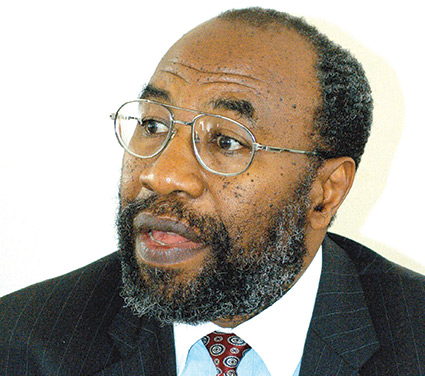
Prime Minister Dr Ruhakana Rugunda described the late Mathias Nsubuga as a patriot and a man of peace.
PM Rugunda to lead delegation.
Ten ministers and parliamentarians led by Prime Minister Dr Ruhakana Rugunda are set to engage the Ugandan Diaspora in the United Kingdom on among other issues, citizenship and investments.
According to a release, Rugunda will be the guest of honour at the September 12 Convention where the UK Diaspora wants government to primarily address the issue of delayed implementation of dual citizenship, barriers to investments and the ban against Ugandan holders of foreign passports owning mailo/freehold land in Uganda.
According to the Uganda Citizenship and Immigration Control (Amendment) Act, ‘all Ugandans who lost their citizenship by way of obtaining citizenship of another country country can now reacquire their former Ugandan citizenship…’
It adds: ‘A citizen of Uganda of eighteen years and above who voluntarily acquires citizenship of another country may retain the citizenship of Uganda subject to the Constitution (of Uganda), the Citizenship and Immigration Act, and any law enacted by Parliament.’
Meanwhile, the Ugandan Diaspora says it remits around $800million every year, making them strategic partners in national development.
Among the sectors the Ugandan Diaspora has earmarked for investment are infrastructure development, power & energy, health-care, agri-business, real estate and financial markets.
The delegation expected to grace the 5th Uganda Convention in London includes Premier Rugunda, Energy and Minerals minister Irene Muloni, Christine Aporu, Minister for Teso Affairs, Ernest Kiiza, Minister of State for Bunyoro Affairs, Cecilia Ogwal, the Oppositional Chief Whip and Wafula Oguttu, Leader of Opposition in Parliament. Others are Barbara Nekesa Oundo, Minister of state for Karamoja Affairs, Sarah Kataike Ndoboli, Minister of State for Luwero Triangle, Mathias Kasamba, Chairperson- Parliamentary Committee on Agriculture and Rebecca Amuge Otengo, Minister of State Northern Uganda Rehabilitation.
The chief guest at the Convention will be the Nnabagereka Sylvia Nagginda and other notable attendees include Lord Verjee, Lord Popat, Lord Sheikh, Baroness Sandy Verma, Nuradin Osman (AGCO)and Ian Harrison (UKTI).
‘This roundtable discussion will be a rare opportunity to put some of the challenges that stand in the way of full Diaspora engagement to the policy makers, who it is hoped will take the views expressed back to government for discussion and where possible implementation,’ the release states in part.
The group further says that the requirement for one to have US$100.000 before accessing incentives for investors has denied the country a chance of thousands of small business start-ups by members of the Diaspora.
‘This is an amount that is beyond most Diaspora Ugandans. Furthermore it is a policy that fails to take into account that small business can be and have been started for as little as a few thousands, even a few hundreds,’ the release states.
Mid next month Prime Minister Dr Ruhakana Rugunda will lead a high-profile delegation to attend the 5thUganda UK Diaspora Convention in London.
At the roundtable event, members of the Diaspora want to share some of their experiences in foreign lands and also to explore ways of how the government of Uganda can help them in various areas of human endeavor.
Some of the areas highlighted include among others the effecting of dual citizenship, incentives as a means of attracting them to invest back home and, the easing of methods of land acquisition.
It is pertinent to note that for about ten years now, the Ugandan Diaspora is one of the leading sources of foreign exchange, repatriating about US$800 million a year. Some of this money is sent to relatives as upkeep, while a huge chunk is set aside for investment, never mind that it is not structured. And, in the process some have lost huge sums to dubious relatives who misuse the remitted funds, thereby affecting the intended life patterns of several people in the ‘dependency chain’, like school-going children and the elderly.
Such discouraging developments notwithstanding however, among the areas the Diaspora have earmarked for investment include infrastructure development, power & energy, health-care, agri-business, real estate and financial markets, all areas that are critical to national development.
For a long time now, the government of Uganda has been incentivising foreign investors with tax holidays, some stretching to ten years.
That in itself has not a bad idea but the government should now muster the courage to try out yet another scheme to benefit those Ugandans abroad who want to invest back home.
In that regard, the choice of Dr Rugunda to lead the Uganda delegation is one that is laced with potent vision; the man is an accomplished listener and diplomat who pays attention to detail.
And since as Prime Minister he is the leader of government business, Ndugu Rugunda should be able to capture the momentous occasion to assuage the fears of our brothers and sisters in the Diaspora, with a view of implementing some of their desires to the benefit of both government and other citizens, both at home and in the Diaspora.
Who knows, he can also suggest that a fully-fledged ministry is set up specifically to address development initiatives of the Ugandan Diaspora.
President Uhuru Kenyatta inspect a guard of honour mounted by the Uganda People's Defence Forces (UPDF) on arrival for a special session of the Uganda Parliament in Kampala Uganda yesterday August 10, 2015.
President Uhuru Kenyatta inspect a guard of honour mounted by the Uganda People’s Defence Forces (UPDF) on arrival for a special session of the Uganda Parliament in Kampala Uganda yesterday August 10, 2015.
President Uhuru Kenyatta was faced with an awkward moment when Uganda People’s Defence Forces’ (UPDF) band played him a song praising a party he quit more than three years ago.
It is not disputable that President Kenyatta was once a stalwart in the Kenya African National Union (Kanu). It is also not in doubt he once chaired Kenya’s independence party after President Daniel Moi retired in 2002.
On Monday though, the UPDF played the song during a party of the rituals accorded to a visiting leader on a State visit.
But as the UPDF blew away the “Kanu Yajenga Nchi” on their trumpets, the body language of President Kenyatta indicated some kind of discomfort as he inspected the guard of honour.
The song, which loosely translates to “Kanu builds the nation” was popularised during the party’s era which many Kenyans associate with brutality and dictatorship.
UHURU HANDPICKED
The party was eventually vanquished from power by the National Rainbow Coalition (Narc); a grouping of Opposition parties, in 2002.
Incidentally, part of the reason the party was defeated was the manner in which President Kenyatta was handpicked by Mr Moi to be its candidate in 2002.
Disgruntled Kanu members then jumped ship and joined the Opposition to mount one of the greatest defeats for a ruling party in Africa.
At the time, Mr Kenyatta accepted the results and moved on, Mwai Kibaki became President and Kanu became associated with Kenya’s derelict past.
Mr Kenyatta would later ditch Kanu and formed The National Alliance (TNA), which swept to power in 2013 following a coalition arrangement with United Republic Party (URP) led by Mr William Ruto, Charity Ngilu’s Narc and Najib Balala’s Republican Congress Party.
One of the key pillars the coalition proclaimed in their manifesto was openness, a principle which had almost become alien during the Kanu years.
KOT REACTIONS
But as the Kanu song played, Kenyans on Twitter (KOT) turned the incident into a butt of jokes, some even questioned its significance.
Anne Kanina-Macharia (@Anna_Kanina) wrote: “Wah! We have started the week with a KANU song played in Uganda with President Kenyatta present”, while @JosephNdwiga wrote: “Why did the Uganda military band play KANU yajenga nchi? Any significance?”
Wilfred Mutuma (@williembig) weighed in: “The Uganda forces band just played “kanu yajenga nchi” tune before our president. They need be updated!!”
Thuranira Kaugiria (@doncorleon85) tweeted: “KANU yajenga nchi. Even Uganda knows that. Let me sit here and watch #KOT behave like it’s not true,” while Betty Waitherero (@bettywaitherero) said “If you don’t get that Ugandan joke band playing Kanu song. Anyway wacha tu.”
The song may have been played out of sheer innocence and maybe because its keys are easier to master. But it also offered a lesson that a politicians’ past is indelible.
President Uhuru Kenyatta was faced with an awkward moment when Uganda People’s Defence Forces’ (UPDF) band played him a song praising a party he quit more than three years ago.
It is not disputable that President Kenyatta was once a stalwart in the Kenya African National Union (Kanu). It is also not in doubt he once chaired Kenya’s independence party after President Daniel Moi retired in 2002.
On Monday though, the UPDF played the song during a party of the rituals accorded to a visiting leader on a State visit.
But as the UPDF blew away the “Kanu Yajenga Nchi” on their trumpets, the body language of President Kenyatta indicated some kind of discomfort as he inspected the guard of honour.
The song, which loosely translates to “Kanu builds the nation” was popularised during the party’s era which many Kenyans associate with brutality and dictatorship.
UHURU HANDPICKED
The party was eventually vanquished from power by the National Rainbow Coalition (Narc); a grouping of Opposition parties, in 2002.
Incidentally, part of the reason the party was defeated was the manner in which President Kenyatta was handpicked by Mr Moi to be its candidate in 2002.
Disgruntled Kanu members then jumped ship and joined the Opposition to mount one of the greatest defeats for a ruling party in Africa.
At the time, Mr Kenyatta accepted the results and moved on, Mwai Kibaki became President and Kanu became associated with Kenya’s derelict past.
Mr Kenyatta would later ditch Kanu and formed The National Alliance (TNA), which swept to power in 2013 following a coalition arrangement with United Republic Party (URP) led by Mr William Ruto, Charity Ngilu’s Narc and Najib Balala’s Republican Congress Party.
One of the key pillars the coalition proclaimed in their manifesto was openness, a principle which had almost become alien during the Kanu years.
KOT REACTIONS
But as the Kanu song played, Kenyans on Twitter (KOT) turned the incident into a butt of jokes, some even questioned its significance.
Anne Kanina-Macharia (@Anna_Kanina) wrote: “Wah! We have started the week with a KANU song played in Uganda with President Kenyatta present”, while @JosephNdwiga wrote: “Why did the Uganda military band play KANU yajenga nchi? Any significance?”
Wilfred Mutuma (@williembig) weighed in: “The Uganda forces band just played “kanu yajenga nchi” tune before our president. They need be updated!!”
Thuranira Kaugiria (@doncorleon85) tweeted: “KANU yajenga nchi. Even Uganda knows that. Let me sit here and watch #KOT behave like it’s not true,” while Betty Waitherero (@bettywaitherero) said “If you don’t get that Ugandan joke band playing Kanu song. Anyway wacha tu.”
The song may have been played out of sheer innocence and maybe because its keys are easier to master. But it also offered a lesson that a politicians’ past is indelible.
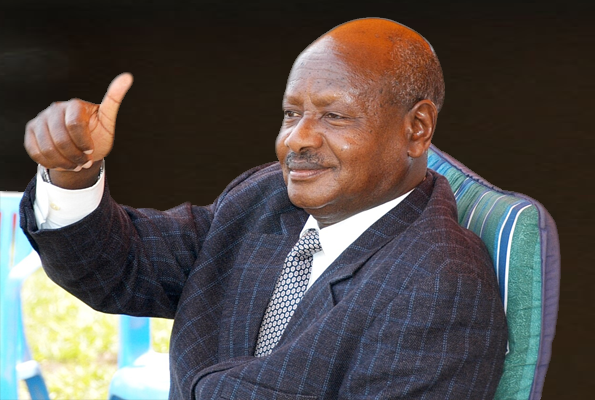
President Yoweri Museveni has said that the National Resistance Movement is still powerful and capable party and urged its members to stay united to achieve their goals.
Museveni who is also the National Chairman of the NRM said the party is more important than individuals.
The President was yesterday speaking at a meeting held with NRM councilors and opinion leaders from Kanungu district led by Canon Josephine Kasya at State House Entebbe. The group also presented their memorandum to the President.
The President said NRM does not believe in sectarianism but instead seeks to help all Ugandans transform and become prosperous through economic production.
Museveni noted that when the NRM government was busy fighting Joseph Kony, ADF, disarming the Karamojong, Dr. Kizza Besigye was doing nothing but making noise for the President to leave. He said what Ugandans need is better infrastructure like roads and electricity, peace and security, improved education and health.
The President told the People of Kanungu that the government has already secured money for the construction of Rukungiri- Ishasha road and the construction work will begin between September and October. He told them that all the areas in Kanungu district will be connected to electricity.
The President also warned them against practicing land fragmentation and asked them to undertake commercial farming.
The Kanungu delegation thanked President Museveni for the good leadership and for supporting them.
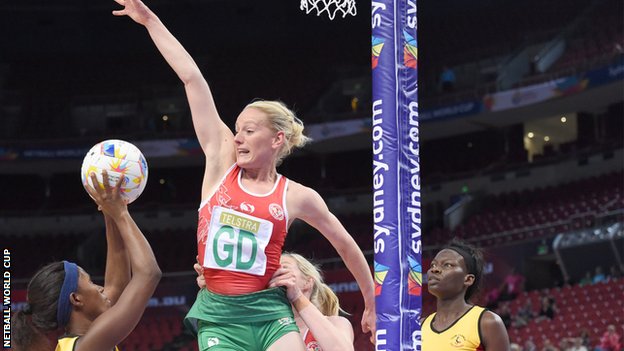
Wales produced a brilliant final quarter to edge Uganda 49-47 and finish top of Pool D with a 100% record at the Netball World Cup in Sydney.
Trish Wilcox’s side advance to a pool containing England, South Africa and holders Australia.
Wales were in front until the third quarter, when Uganda took a 39-35 lead.
But a faultless shooting display in the final period by Chelsea Lewis and Emma Thomas, who hit all 14 of her shots in the game, pushed Wales to victory.
Wales are back in action on Tuesday when they face South Africa at 03:20 BST.
Uganda also qualify as runners-up and in the next round will face New Zealand, Malawi and Jamaica, who beat Scotland 71-24 in Monday’s later game.
2015 Netball World Cup
Round two of the competition in Sydney starts on Tuesday, when the 16 nations split into four pools of four teams.
The first two pools are made up of the teams who finished in the top two of their preliminary-round groups, and a round-robin format will decide who progresses to the semi-finals.
The other two pools will filter into the play-offs for the placing matches.
Wales often found their mid-court passing disrupted by the good coverage of the Uganda players, but wing-attack Bethan Dyke and centre Kyra Jones – who sat out the third quarter – worked tirelessly to feed their shooters.
Captain Suzy Drane and vice-captain Rosie Pretorius needed treatment for leg problems during a hugely competitive match.
Wales – ranked eighth in the world – will hope the pair have suffered no lasting effects as they head into a difficult Pool F against world number one Australia, third-ranked England and South Africa, who are ranked fifth.
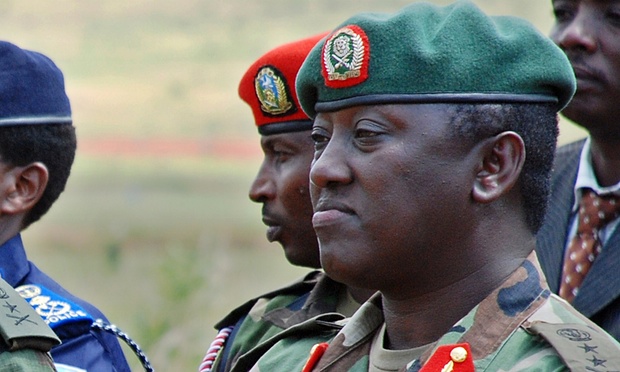
General Karenzi Karake was arrested on a warrant issued by Spain in June, angering Rwanda and African Union
A British court has dismissed an extradition case against Rwanda’s intelligence chief.
General Karenzi Karake was arrested on a warrant issued by Spain in June and released on bail. Following a hearing in London, a court official said: “The case has been discharged today.”
Under the Extradition Act, cases can be dismissed if “offences specified in the [arrest] warrant are not offences under the meaning of the [act],” the official said.
A Spanish judicial source had said Karake was accused of “crimes of terrorism” linked to the killing of nine Spanish citizens in Rwanda in the 1990s. But UK police said the 54-year-old had been arrested for alleged “war crimes against civilians”.
Rwanda reacted furiously to Karake’s arrest, with President Paul Kagame saying it showed “absolute arrogance and contempt”. The African Union called for Karake’s “unconditional and immediate” release.
Karake’s defence team included Cherie Blair, the wife of Tony Blair, who is an adviser on governance to Kagame.
The President of Kenya Uhuru Kenyatta on Saturday 8 arrived in Uganda for a three day state visit. He visited the Quality Chemical Industries, was hosted to a State Dinner by President Museveni and on Monday 10thaddressed the Parliament of Uganda.
At all these occasions President Kenyatta has been keen to emphasize the issue of regional cooperation for the purpose of economic integration. “We are safer and stronger when together, the boundaries that separate us were not created by us,” he is quoted in his statements at one of the events.
Kenyatta’s advice is critical for development and it would be good if the other East African leaders take it up with zeal in order to realize economic benefits for citizens in the region.
Indeed, the leaders should preach messages of unity amongst people in the member countries and in the process ensure shared prosperity through the EAC.
Economic projects like the standard gauge railway (SGR) will lead to the modernization of the railway, easily linking Kenya to Uganda and Rwanda and in effect reduce traffic on our roads.
Further, the SGR will also go a long way in enabling Uganda and Rwanda, which are landlocked countries, to easily export and import goods compared to the past.
Indeed, the SGR should be given the utmost priority and measures should be put in place to ensure such projects are not mishandled and are completed in time.
Also, curbing corruption should be high on the agenda since corruption retards economic development and prosperity; corruption concentrates public money in the hands of a few people!
It is also important that members of the East African Legislative Assembly (EALA) ensure that the community is strengthened.
The EALA legislators should make laws that help uplift the EAC and make sure that any such laws are implemented rather than introduced.
The issue of regional security must also be given critical attention because without security neighbors cannot interact.
And where differences may occur, measures should be put in place to quickly resolve any matter of contention amicably as this would go a long way in ensuring peace and security in the region.
That way president Kenyatta’s counsel on economic development in the EAC region won’t be in vain.
Moses Mapesa, is seeking financial support in order to undergo cancer of the bone marrow.
Moses Mapesa, is seeking financial support in order to undergo cancer of the bone marrow.
The former Uganda Wildlife Authority (UWA) Executive Director Moses Wafula Mapesa is on August 11, 2015 traveling to Mayo Clinic-Arizona, US to have preliminary tests and assessments carried out before he undergoes a bone-marrow transplant in October this year.
Mapesa needs a bone marrow transplant as a result of Myelodysplastic Syndromes (MDS), a disease he has suffered from for eight years now. This is a disease that affects the bone marrow, making it incapable of manufacturing blood. In due course, a patient might require blood transfusion after a week of even days.
The length between the intervals Mapesa got blood transfusions gradually became shorter and shorter. Doctors then advised that he gets a bone marrow transplant. Until recently he had to travel to Kampala after every seven days to get new blood transfused into his system.
According to Dr. Henry Ddungu, a Hematologist and consultant at the Uganda Cancer Institute-Mulago, MDS are a group of cancers from the bone marrow where there is a problem with maturation of cells.
Dr Ddungu said since a patient suffers damage to their stem cells, as a result, what comes out would be inadequate. Normal blood is made up of three cells, red and white blood cells, and platelets. Dr Ddungu says that these cells have to mature in the bone marrow before blood is released into the body.
In MDS, the problem is within the bone marrow at the roots, which are also known as stem cells. Here the bone marrow fails in cell making, in other words; the bone marrow cannot manufacture its own blood.
Dr Ddungu says MDS can be described as primary or secondary. “Primary MDS is where you cannot identify the cause, while secondary MDS follows injury to the bone marrow,” he said.
Types of the disease
According to Dr Ddungu, MDS is classified depending on severity. There is refractory anemia, a condition where there are few red blood cells in the blood and the patient then develops anemia. Here, the number of white blood cells and platelets is normal.
Refractory anemia with ring sideroblasts is the second classification; where there are too few red blood cells in the blood and the patient develops anemia. The red blood cells also have too much iron but the number of white blood cells and platelets is normal.
The third category is refractory anemia with excess blasts: There are too few red blood cells in the blood and the patient has anemia. Here most of the cells in the bone marrow are blasts or immature cells. Here a patient is moving to stages of acquiring leukemia. The other classification where a patient actually goes into acute leukemia is acute myelogenous leukemia.
Risk factors
Risk factors are those things that make one susceptible to suffering from the disease. However, Dr Ddungu, who is the most senior doctor in treating MDS at the cancer institute, said the occurrence of the disease is not necessarily tagged to the presence of a risk factor.
“The injuries to the bone marrow that could cause MDS are caused by some cancer treatment like chemotherapy, exposure to pesticides and solvents like Benzene, and old age. Primarily, MDS is a disease for the elderly,” Dr Ddungu said.
Signs and symptoms of MDS
Ddungu said the commonest sign of MDS is fatigue because of decreased levels of red blood cells. Red blood cells help to carry oxygen and food, without which the body is weakened.
Sometimes patients have recurrent infections because their white blood cells are affected.
Patients also bleed, including spontaneous bleeding from any part of the body; including the skin.
How is MDS diagnosed?
According to Sam Mwandha, a member of Mapesa’s family, they first discovered that he had a problem with his blood in 2008. Mapesa had gone to South Africa for an operation when the doctors realized he did not have enough platelets to clot the blood.
MDS is diagnosed by specialists called Hematologists, who examine one’s blood to look out for abnormalities that might point towards damage in the marrow.
Treatment of MDS
Dr. Ddungu said there is no definitive treatment for MDS and that patients basically depend on supportive care.
“Because cells are low, sometimes we stimulate the bone marrow to produce more cells. The boosters are called growth factors and the most common form of supportive care is the use of blood products or rather blood transfusion,” Dr Ddungu said.
After the preliminary tests scheduled for August 11, 2015, Mapesa will travel back to USA in October for the transplant procedure and then stay there for a period of three months to one year under observation.
Dr Robert Nabanyumya, another relative of Mapesa, said the doctors recommended a trial drug to reduce on the intervals between which he requires a new blood transfusion while they wait for August.
And Dr Ddungu said that a number of medicines have been tried out around the world, including 5-Azacitidine, a drug which was recently approved by the Food and Drug Administration (FDA), in the USA but has not yet been registered or availed in Uganda because it is too expensive.
“As of now, the only potential cure is a bone marrow transplant from a related donor otherwise called an allogeneic donor. This donor might not be a relative, but as long as you have the same genetic makeup, they can work,” Dr Ddungu said.
However, such a service is not yet available in Uganda and Dr Ddungu said the Uganda Cancer Institute is planning to have it as one of the services offered in future. “We are putting in place all the necessary infrastructure so in the near future we also can start small cell services,” he said.
Chances of treatment success
Chances of recovery are not 100%. According to Ddungu, survival depends on factors such as if the transplant is not rejected, the level of the patient’s complications and whether the centre from where the transplant is to be carried out has the potential to take care of the patient.
“Bone marrow transplant has better chances and is still seen as the only potential cure of MDS,” said Dr Ddungu.
History of patients in Uganda
According to Dr Ddungu, they do not have a registry as yet but he has treated over 10 patients in the last three years.
Prevention
Sadly, MDS cannot be prevented and has no vaccine.
However, Dr Ddungu said it can be detected early if a person goes for routine checkup. He said if a patient begins early treatment, the disease can be controlled.
“These are diseases that are not of public health concern but are really dangerous,” he says
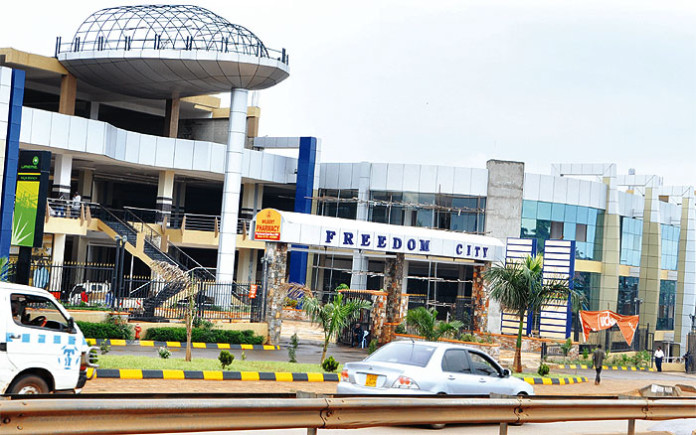
In May this year, tenants at Pioneer Mall went on strike as a result of increasing rent and charges for other services like water and electricity. The tenants claimed the increment was unfair, considering the dollar rate and poor services provided by the mall owners.
The media often runs such and many more stories of traders protesting hiking of rent by landlords, and people often wonder if there is a law to this effect. The answer is yes, and that law is called the Rent Restriction Act 1949 Cap: 231. However, according to Gerald Abila, the Managing Director of barefootlaw; a fee online legal service provider, this law is not actively in place to govern the relationship between tenants and landlords.
Section 2 (1) of this Acts provides that rent should not exceed a certain amount. It states that “no owner or lessee of a dwelling house or premises shall let or sublet that dwelling house or premises at a rent which exceeds the standard rent”.
“Ideally, there is supposed to be a committee set up to determine rent for a particular area. But because it is nonexistent in Uganda, that is why you can find an area like Ntinda having one tenant pay Shs. 500,000 and the other $1000,” Abila said. He added that for tenants to be protected, Parliament needs to come up with a new and valid law to this effect.
How can tenants protect themselves?
According to Abila, tenants should not enter premises without signing a tenancy agreement. It is advisable that one gets a lawyer to look through the agreement so that in case a disagreement arose, court can always refer to the tenancy contract.
However, if one cannot afford a lawyer’s services, they can write their own tenancy agreement. The agreement must include the name of both tenant and landlord, the village, parish, sub-county and district where they are both located.
The agreement should also include the rental agreement, i.e. amount to be paid, to whom, date of payment, duration of rent, expiry date and what the rent is being paid for (farming, office or work space or place of abode).
It is also important the agreement indicates how the rent will be paid i.e. if it to be paid in installments, or full, it should also indicate the date and amount for each installment, which should also be signed against by both the tenant and landlord/lady.
“In the absence of an agreement or an agreement without a rent restriction clause, if your Landlord/Lady increases the price inequitably, you either comply or look for another place to rent,” Abila advised.
The other way tenants can be cautious is by ensuring that the person they are entering the agreement with is the one authorized to carry out transactions for the premises. “This will help avoid situations of paying rent to impostors. Tenants ought to be really careful about who they pay their rent to,” Abila said.
In case of a dispute arising from rent, is advisable that it is settled amicably before considering other options. According to the law, Distress for Rent (Bailiffs) Act 1933 Cap: 76, a landlord has a lot more power over the tenant and usually the remedy for a tenant is to look for other premises.
“It is also important that before entering any premises, a tenant should visit the area and speak to other residents and find out about the area’s security. Also ask the landlord about the security measures put in place. Do not forget to also include that in the tenancy agreement,” Abila said.
The landlord
In case you have a dispute with a tenant, it is important that it is solved lawfully. Section 2 of the Distress for Rent (Bailiffs) Act 1933 Cap: 76, provides that “no person, other than a landlord in person, his or her attorney or the legal owner of a reversion, shall act as bailiff to levy any distress for rent unless he or she shall be authorized to act as bailiff by a certificate in writing under the hand of a certifying officer, and such certificate may be general or apply to a particular distress or distresses”.
This implies that it is illegal to break a tenants padlock and confiscate or sell his belongings to recover rent in case of failure to pay arrears, without a written order from a certifying officer who is the Chief Magistrate or Grade 1 Magistrate.
Forum for Democratic Youth League (FDCYL) is set to hold elections for new leaders in September, three months ahead of the expiry of their mandate in January.
Although the term for the current youth leaders expires in January next year, the party’s Electoral Commission and the FDCYL have agreed that elections be held on September 18.
Speaking to the press at the party headquarters in Kampala, the FDCYL spokesperson Mr. Meddy Mbentyo Junior said all party youth leaders agreed to cut short their terms to pave way for others to take over. “The move is aimed at giving others an opportunity to lead,” Mbentyo said.
He commended the outgoing youth cabinet for their selflessness. “The mindset change and spirit for someone to leave power and say let’s give someone a chance, that’s an achievement,” he noted.
Mbentyo also lauded the youth leaders for the achievements registered during their time in office. “We have won many guild seats and the FDC youths are united,” he added.
He called upon all FDC youth members to participate in the election exercise stressing that “FDC isn’t a one man party and all qualified members are free to contest.”
Picking of nomination forms ends on August 28 and grass root elections are expected to commence on September 18.
Meanwhile, the FDC youth leaders are going to hold a consultative delegates conference this month. The three day event will commence between August 16 and 18 will be held under the theme: “the Uganda we want, the role of the youths.”
According to Mr Mbentyo, they have invited FDC youth district chairpersons, vice chairpersons and over 20 representatives from institutions and universities.
He added that the times of the National Resistance Movement dominating youth leadership positions are over. “That’s intoxication by the NRM; we are now here. This is for all of us.”
The youths will also hold a procession on August 17 from Kireka to Railway Grounds in Bweyogerere where they will be addressed by senior FDC members.