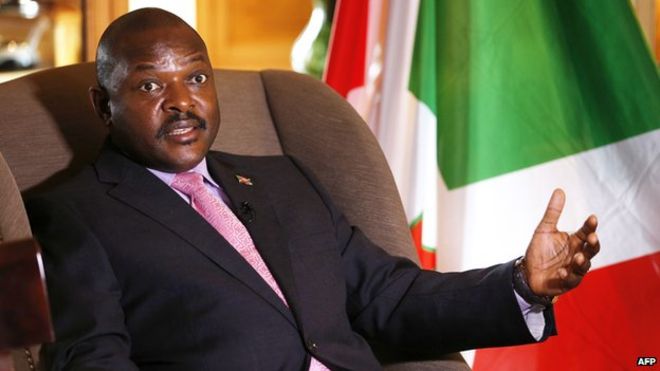
Burundi’s President Pierre Nkurunziza has warned against vengeance following the assassination of a senior general.
Burundi’s President Pierre Nkurunziza has warned against vengeance following the assassination of a senior general.
“Vengeance can wipe out an entire generation,” he said, in an address to the nation on Sunday, urging calm.
A presidential spokesman told the BBC it was too early to blame anyone for the killing of Gen Adolphe Nshimirimana in a rocket and gun attack on his car.
Mr Nkurunziza won a third term last month, amid deadly protests over his decision to run for office again.
Opponents argued this contravened the constitution and there was a failed coup attempt in May.
“Adolphe Nshimirimana was the regime’s number two, not officially, but unofficially. This assassination is a very serious blow to Burundi’s government,” International Crisis Group analyst Thierry Vircoulon told BBC Afrique.
The attackers reportedly targeted the general’s car with machine guns and rocket launchers in the Kamenge district of the capital Bujumbura.
Presidential spokesperson Gerve Abehayo rejected suggestions that the attack could have been carried out by elements within Burundi’s own security apparatus, after witnesses reported four men in military uniform spraying the general’s car with bullets.
Gen Adolphe Nshimirimana.
“The government is not losing support… the army remains strong and united… one general was killed, but this does not mean the whole military has been wiped out of this country,” he told the BBC’s Newsday programme.
President Nkurunziza has called for an investigation into the general’s killing to be concluded within a week.
The African Union, European Union and the US have all condemned the attack, with AU chairperson Nkosazana Dlamini Zuma describing it as a “barbaric act that is likely to further destabilise the country”.
Prominent Burundian journalist Esdras Ndikumana, who works for AFP news agency and Radio France Internationale (RFI), says he was detained by intelligence officers and badly beaten after trying to take photos at the scene of the attack.
More than 70 people have been killed since the unrest began in April, and 180,000 have fled the country, according to the UN refugee agency.
Mr Nkurunziza came to power in 2005, after 300,000 were killed in a 12-year conflict between ethnic Hutus and Tutsis.
Work has come to a standstill at all the seven public universities in the country following a strike over ‘little pay’ by the non-teaching staff.
Last Friday, through the Public Universities’’ Non- Teaching staff Executive Forum (PUNTSEF), the various groups resolved that all custodians of halls of residence should not open; Makerere security hand over to police and that registrars should not give out provisional admission forms to students seeking to join university.
Sources at Makerere University, the oldest university in the country, intimated to this reporter that the striking workers led by their chairperson Jackson Betihamah, wanted the strike to coincide with the opening of the first semester, in two weeks’ time.
And, when this reporter visited Makerere University today, all the offices, faculties including the Main and Senate buildings were locked. The Directorate of ICT has as well switched off the internet at the campus. Security at the university is being manned by the police as the university guards are absent.
Uganda has got seven public universities namely: Makerere, Busitema University, Gulu University, Kyambogo University, Mbarara University of Science and Technology, Muni University and Soroti University and all the non-teaching staff at the universities have laid down their tools.
“We, Makerere university non-teaching staff have resolved to lay down our tools with effect from 3rd August until government enhances our salaries. All staff have been advised not to report on duty until further notice. Whoever will be found working will be disciplined,” said Bruce Twesigye, PUNTSEF’s General Secretary.
According to Twesigye, President Museveni discriminated against the non-teaching staff when he promised a pay rise to all academic staff in public universities. Subsequently, in the 2015/16 budget the government allocated sh50b to cater for the increment and a professor will now earn Shs15 million.
“Much as the presidential pay rise pledge emphasized only academic staff, the non-teaching staff looks at it as unfair and instead thinks the president should have pledged to all public universities’ staff without segregating,” said Twesigye.
Twesigye also revealed that the non-teaching staff are demanding 39 billion, and that they have held numerous meetings with all the relevant stakeholders including the Prime Minister, the Minister of Education and with members of the parliamentary committee on public service to no avail, prompting them to lay down their tools.
Last Thursday, during a closed-door meeting chaired by Education minister Jessica Alupo, the workers vowed to go on strike after the Minister said government did not have the money to meet their demands.
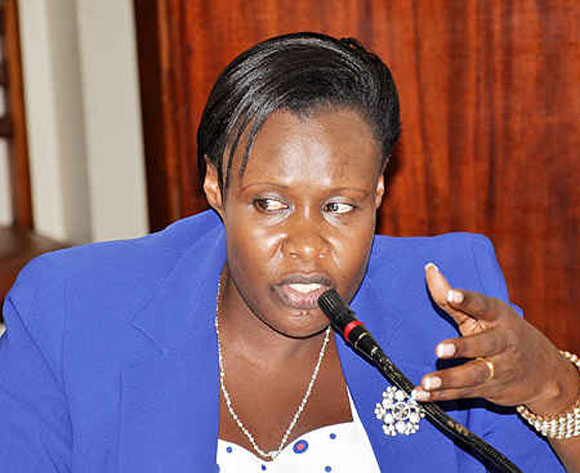
“We are aware that they are to lay down their tools but we are not able to enhance their salaries this financial year as requested because government has financial constraints and has to keep other public sectors running,” the minister said. After the meeting, PUNTSEF chairman Mr Betihamah said he was disappointed.
Earlier on in April members of PUNTSEF petitioned the Speaker of Parliament, arguing that the proposed enhancement will be in gross violation of the principle of equal opportunity and an act of open discrimination among the three categories of staff of the public universities in Uganda.
“We request that the proposed gradual enhancement of the salaries should cover all the categories of the workers in all public universities on pro-rata to enable us to avoid the pain staking and laborious industrial and court action by all public universities including the upcoming new ones like Muni and Soroti,” read the petition.
Linda Namaganda a cleaner, said that increasing the salary for one category of staff and leaving out others is “discriminatory, unfair, demotivating, destroys team work and will negatively affect the achievement of the institutions’ goals and objectives.”
Meanwhile, the students at the universities are reportedly in support of the striking staff, with Makerere University Guild President David Bala Bwiruka assuring the striking staff of support.
“Your cause is a struggle against injustice and for us as students’ guild we have sat and agreed that we will support you. When things become abnormal you also become abnormal. As guild presidents in all public universities, we are meeting next week Tuesday where we shall arrange to meet the Minister for Education and the IGP to chat a way forward, ”Bala said.
Bala also warned that with two weeks remaining for the semester to begin, the students might also take action.
The Makerere University Convocation also weighed in on the strike, saying they support efforts aimed at staff welfare.
“Makerere Convocation comprises all staff, students and the alumni therefore we shall support anything to do with the staff welfare .We want to assure you that we will not depart from that mandate and we are supporting you,” Deus Kamunyu Muhwezi, the Publicity Secretary of the Convocation said.
In a related development, a 10-man committee has been set up oversee and manage the strike at Makerere University. It comprises Bruce Twesigye, Yunus Musisi, Denis Mbabazi, Francis Angida, Wilberforce Bubolu, Joseph Musoke, Isaac Egesa, Nelson Akampulira, John Muhumuza and Justine Namuddu.
And for now it is not known how long the strike will last because the government insists there is no money.
Recently, while commissioning the Nyakahita- Kazo road, President Yoweri Museveni took a strong stance against vandals who steal road signs, and promised to deal with them decisively.
Over the last ten years the Government has invested billions of dollars in infrastructure development, with a huge chunk of this tax payers’ money going to the construction or upgrading of roads.
Further, when the road signs are stolen, replacing them becomes an uphill task because the process entails budgetary considerations, something that takes time to realize hence the aggravation of road risks.
Needless to mention, thousands of Ugandans have perished on our roads largely because the vital road signs that should act as a guide to drivers and other road users have been stolen by thugs.
But these criminals are not alone in the commission of crime; they have partners in the form of steel manufacturers, who buy the ‘raw material’ from the thugs.
Then we have the drunken drivers, who have also played a big role by knocking down different road signs.
All Ugandans benefit from having good roads, and it should be everybody’s responsibility to ensure they are protected.
The moral turpitude of Ugandans has waned and something ought to be done to stop any escalation. A few years ago, thugs had made a habit of vandalizing telephone lines to get their filthy hands on the pricey copper wires and fibre optic lines.
It took the Uganda Telecom, which came up with a whistle-blower initiative that also involved monetary rewards, to minimize the thefts.
So, as the Uganda National Roads Authority (UNRA) seeks to protect our roads from these uncouth vandals, it could also borrow a leaf from UTL.
Russian and Kenyan athletes have come under scrutiny following reports that eighteen of them have won medals under suspicious circumstances.
The Sunday Times and German broadcaster have got access to the results of 12,000 blood tests from 5,000 athletes between 2001 and 2012, and it is said that 80 per cent of the Russian athletes had suspicious tests, prompting the intervention of the World Anti-doping Association (Wada).
Wada will now investigate the claims in the Germany broadcast documentary “Doping-Top Secrets: The shadowy World Athletes”, which gives details of” extraordinary extent of cheating” by athletes at the world’s biggest events.
Wada president Sir Craig Reedie said that his organisation was disturbed by the allegations and will shake the foundation of clean athletes worldwide.
The files leaked by a whistle blower belong to the world athletics governing body, the International Association of Athletics Federation (IAAF).
IAAF said the data was obtained without their consent and that it reserved the right to take action.
Sunday Times and the German broadcaster used two of the world’s ‘leading anti-doping specialists’, scientists Robin Parisotto and Michael Ashen Den, to review the data.
Conferring to the specialists, the file exposes more than 800 athletes – one in seven of those named in the files – to have recorded blood tests described by one of the experts as “highly suggestive of drugging or at the very least abnormal”
Russia emerges as “the blood testing epicentre of the world” with more than 80% of the countries medals won by suspicious athletes, while Kenya had 18 medals won by suspicious athletes.
A third of medals (146, including 55 gold) in fortitude events at the Olympics and World Finals between 2001 and 2012 were obtained by players who have noted doubtful tests. It alleged none of these athletes have been stripped of their medals. The best UK athlete is among seven Britons with mistrustful blood scores.
Britain athletes – comprising of Olympic champion heptathlete Jessica Ennis-Hill – have lost out in main events to participants who were beneath suspicion. London 2012 Olympics had ten medals won by athletes who have suspicious test fallouts.
In particular finals, each athlete in the three medal positions had documented a suspicious blood test. Athletes such as Britain’s Mo Farah and Jamaican sprinter Usain Bolt recorded no abnormal results.
Competitors are gradually using blood transfusions and EPO micro-doses to boost the red cell count.
“Certainly not have I seen such terrifyingly strange set of blood values. So many participants appear to have doped with exemption, and it is critical that the IAAF appears to have vainly sat by and let this happen.” Parisotto said:
According to Ashen den, the files show that athletics is now in the same “diabolical position” as cycling during the Lance Armstrong era. He said it was “a shameful betrayal of IAAF’s primary duty to police their sport and to protect clean athletes”.
Over the past two decades Kenyan athletes have dominated the long distance races and the current doping concern has emerged just weeks ahead of the World Athletics Championships in Beijing, China later this month.
Uganda’s representatives to the Netball World Cup touched down in Sydney, Australia yesterday, teeming with enthusiasm.
The team was officially flagged off by President Yoweri Museveni at the National Council of Sports (NCS) grounds before they left the country on Saturday at noon.
President Museveni offered $1000 to each member of the 23 travelling members (12 players and 11 officials), and implored the players to perform well. “Go, make us proud” Museveni said.
The squad’s new head coach, Rashid Mubiru, who substituted Fred Mugerwa at the last minute after the Netball Federation made the shocking appointment, promised a great show.
“We have trained enormously. The players are materially and ardently solid to meet the world’s premium,” he said.
Team captain Peace Proscovia from Loughborough Lightening club in the United Kingdom lauded the president for the “upkeep.”
“We have trained, had many friendlies with numerous muscled men’s teams and with the motivation from the president ($23,000) for the team is purely a noble inspiration,” she said.
Uganda Netball Federation (UNF) president, Suzan Anek lauded the support and assistance accorded the team.
Grain farmers in East Africa will be able to sell their produce at competitive prices, following the launch of an online platform to ease marketing.
According to an EAC release, the platform dubbed G-Soko was developed by a Kenyan company, Virtual City in partnership with the Eastern Africa Grain Council (EAGC) and the Food Trade Eastern and Southern Africa Organization.
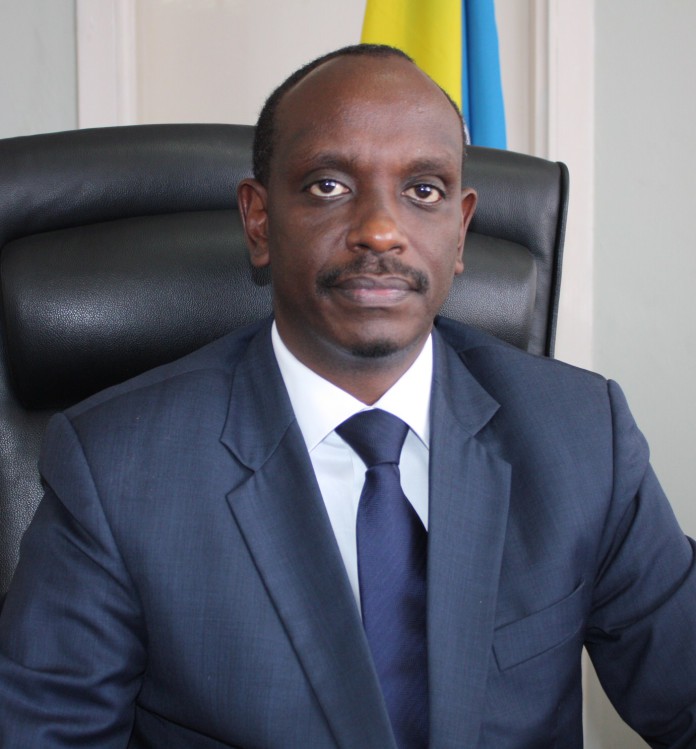
The Secretary General of the East African Community, Amb. Dr. Richard Sezibera commended EAGC for partnering with the Secretariat to implement the EAC Food Security Action Plan, which is the EAC strategy to achieve food security in the region.
Dr Sezibera, who was represented by the Director for Productive Sectors Mr. Jean Baptiste Havugimana, also hailed the EAGC for the online initiative.
“EAC continued support in automating agricultural crops trading systems and processes to reduce commercialisation cost and all related challenges and bridge the gap between farmers, traders and consumers for increased food security in the region,” The EAC SG was quoted as saying.
Speaking at the same occasion, the Executive Director of EAGC, Mr. Gerald Masila disclosed that G-Soko was part of a five-year trade enhancement and promotion programme in the region. He said linking rural food production zones in East Africa to urban consumption centres requires a well-functioning regional market and that by adhering to the system, farmers in the region will be able to access credit while waiting for prices to increase through pledging the electronic warehouse receipt with the banks and agro-dealers.
‘The farmers will also benefit from reduced post-harvest losses through access to professional storage, cleaning, drying and will benefit from improved prices discovery since many of them rely on farm-gate prices that deliver cash at lower prices,’ the release states.
The Director of Agriculture in the Ministry of Agriculture of the Republic of Kenya commended the initiative saying: “We have seen very positive changes in the breadth and depth of the EAC integration and this is encouraging as we all hope to reap the benefits of regional integration”.
The G-Soko is now operational in Uganda and Kenya, and arrangements are underway to extend the system to Tanzania and Rwanda before the Grains Farmers Summit scheduled to take place in Rwanda in early October 2015.
It always happens; men fighting over women or vice versa. The scene raises dust but it settles fast after the parties have been separated and told to part ways. But when a fight gets nasty and someone loses his/her life, then it is no longer a matter of parting ways, but one involving the police.
An eye witness who prefers anonymity but was at the Club says she saw it all:
“They first fought in the section of the Club ‘40+’ up to the washrooms. Then Ivan ran away for some time before returning with a piece of broken Heineken bottle which he used to cut Johnnie’s throat.
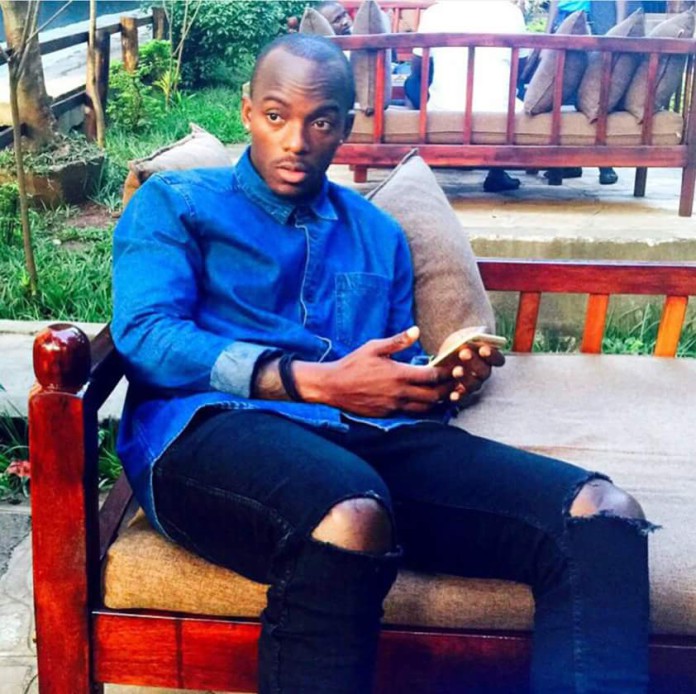
Ivan Kalyesubula and Nina Nyarwaka, the woman at the centre of the storm.
Johnnie’s intention wasn’t fighting Ivan but Nina (his ex-wife) so Ivan came to defend Nina, who is reportedly his current girlfriend.
Johnnie bled too much but the club bouncers and security personnel didn’t come to his rescue as they looked for Ivan.
It took almost one hour for the bouncers to come to his rescue and because of the crowded venue, it was difficult for Johnnie to be taken out quickly (of the club) since there was confusion, with others suggesting the injured man be given first aid.”
Who takes blame?
When the incident happened, the managers and bouncers tried to distract the attention of the party goers by increasing the volume of the music and stopping them from screaming.
In fact most people didn’t know what was happening until they saw Johnnie’s friends crying and screaming.
Getting the body out
The bouncers then dragged Johnnie’s body through the exit door…
The African Innovative Foundation (AIF) has rolled out its 2016 competition programme, calling on African innovators and entrepreneurs to register and slug it out for the US150, 000 on offer,to develop market-oriented solutions that support African-led development.
According to a release, each nominee for the competition dubbed the Innovation Prize for Africa (IPA), will get a US$5,000 voucher, to further develop their innovations.
The AIF was established in 2011, with the IPA editions organized in different cities across Africa.
Addis Ababa in Ethiopia hosted the 2012 edition; Cape Town, South Africa (2013); Abuja, Nigeria (2014), while the fourth edition was hosted by Shikrat, Morocco in 2015.
The IPA was launched in 2011, in conjunction with the United Nations Economic Commission for Africa (UNECA), and the IPA Director
said they were mobilizing to ensure that African innovations make it to the marketplace.
“It is all about Made in Africa now” Ms Mujawamariya was quoted as saying.
Now in its fifth year, IPA is the most celebrated innovation event on the African calendar, bringing together the best of African ingenuity in the rigours of science and technology, environment and energy, agri-business, health and well-being, the manufacturing and service industry, as well as the ICT sector.
Now in its fifth year running and a cash investment sum of $820 000, the IPA program has engaged, inspired and transformed more than 3000 movers and shakers across the continent, supporting more than 35 star innovators in 49 countries. The IPA achievements are illustrated by the fact that its social media community has grown rapidly in the last quarter by 100%, with over 14 000 followers, a total reach of 1.1 million people and a total engaged user rate of 32 000.
The target for IPA 2016 is to attract applications from all 54 countries in Africa and the highest participation of women and young people. Once again, the grand share prize of US$150 000 will be split between the most impressive winners that can convince the AIF team of expert judges why their innovation must win. AIF is looking for unique, cutting-edge innovations (US$100 000) that reflect positive social impact (US$25 000) and have the potential to be transformed into a sustainable, commercial success (US$25 000).
Thanks to increasing interest and buy-in from the African innovation pool, AIF will introduce further post-prize opportunities for 10 young Africans and 10 women whose innovations are addressing pressing challenges in Africa. Other incentives include training and pitching opportunities, association with the AIF brand, and local, regional and international media coverage, as well as networking opportunities with potential investors.
Jean-Claude Bastos de Morais, AIF Founding Board Member said: “I am very excited about the Made in Africa theme for the 5th edition of IPA. It is a powerful message that captures the spirit, ingenuity and sophistication of African innovation today. Africans are beginning to see the value and merit in investing in home-grown innovation, and we are fiercely proud of African-made products and solutions. For the IPA 2016, the AIF is calling for innovators across the continent to bring forward innovations that will feed the demand and supply needs of African markets, stimulate local enterprise, and put African innovation on the world map”.
President Yoweri Museveni handing over a key to the brand new Mitsubishi Pajero to the newly concecrated Bishop of West Ankole Diocese, Stephen Namanya during the ceremony at St. Emmanuel Cathedral Rushere. Sunday August 1st 2015.
President Yoweri Museveni has warned the people living in the cattle corridor to avoid livestock overstocking.
Museveni, who was speaking during the consecration and installment of Rt. Rev. Stephen Namanya, said overstocking has led to overgrazing which has greatly degraded the land thereby affecting agricultural productivity.
President Museveni, accompanied by his wife Janet Kataha Museveni said that although people in Kiruhura and the neighboring districts in the cattle corridor abandoned their traditional nomadic life style, worked on their farms and improved on the breeds of the cattle, they had not changed their old habit of overstocking that has greatly degraded land. He was however happy at the development that the region has registered under the National Resistance Movement.
“This area was very undeveloped and remotely inhabited by pastoralists, but it makes me happy when I see the development taking place. I praise the Lord because he has done wonders in this region,” he said.
The President urged the population to safeguard themselves from HIV/Aids reminding them that the disease exists and has no known cure. He however said it can be avoided by exercising sexual discipline and avoiding promiscuity. He urged the Church to pattern with government in the fight against HIV/Aids.
“I am told the HIV prevalence rate in this area is 7.1 percent much higher than the national prevalence rate of 6.4 percent. That means you need to do more than what you are doing. We have been telling you about this disease for the last 30 years but you wonder why there is an increase in new infections when people know how the disease is contracted,” he said.
The President donated a vehicle to the newly enthroned bishop and wished him well as he performs his duties.
The Rt. Rev. Namanya is the second bishop of the diocese of North Ankole and was installed at St. Emmanuel Cathedral, Rushere in Kiruhura district, on August 2.
Bishop Namanya replaces the Bishop John Muhanguzi, the first and founding Bishop of North Ankole diocese, who retired.
And, speaking at the same ceremony the Archbishop of the Church of Uganda Most Rev. Stanley Ntagali thanked the President for fundraising for the Church House and other Church of Uganda projects and particularly for the 400 million shilling contribution Mr Museveni made during the recent fundraising at State House Entebbe.
He welcomed Bishop Stephen Namanya to the House of Bishops and congratulated his predecessor Bishop John Muhanguzi for his exemplary service to the church and for retiring honorably.
Bishop Stephen Namanya thanked the Church of Uganda House of Bishops for trusting him and electing him the second bishop of North Ankole Diocese. He commended his predecessor Bishop John Muhanguzi for being a good leader and for laying a firm foundation on which those who come after him will build.
He also lauded President Museveni and his wife Janet for promoting development in Uganda and prayed that country goes through the upcoming elections peacefully.
President Yoweri Museveni has warned thugs who steal road signs, saying they will be arrested for putting Ugandans’ lives at risk.
The President said that road signs such as reflectors, road guards, warning signs among others are crucial for security of both the roads and the road users and must be protected by all.
According to reports, stealing of vital road and warning signs especially along highways has resulted into tragic accidents.
The President was yesterday speaking shortly after commissioning the 68km Nyakahita-Kazo Road which was constructed at a cost of Shs 140billion. The road is part of the NRM manifesto commitments.
The President said government provides Shs3000bn for roads each year and pledged that more roads are going to be worked on.
Construction for the Nyakahita – Kazo road was funded by the Africa Development Bank and the Government of Uganda. It was constructed by China Communications Construction Company of China and supervised by UNRA project management team.
The UNRA Executive Director Allen Kagina said the national roads network is currently 21,000km out of which 4000km are paved (Tarmac). She said within the next five years, the paved roads network will increase to 6000km. She urged communities to take full advantage of the improved condition of the roads to increase production and improve incomes.
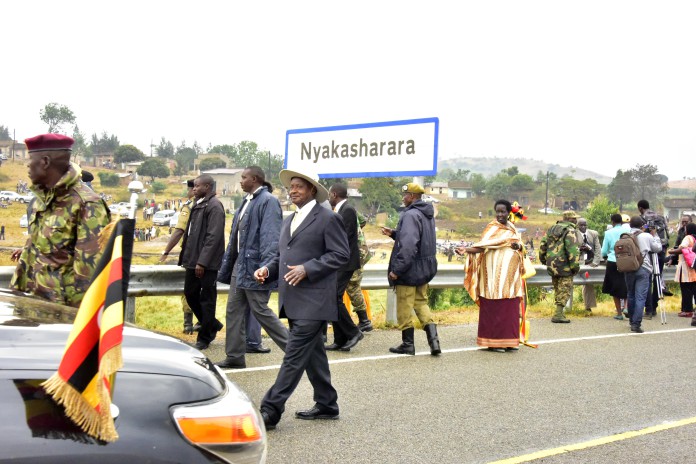
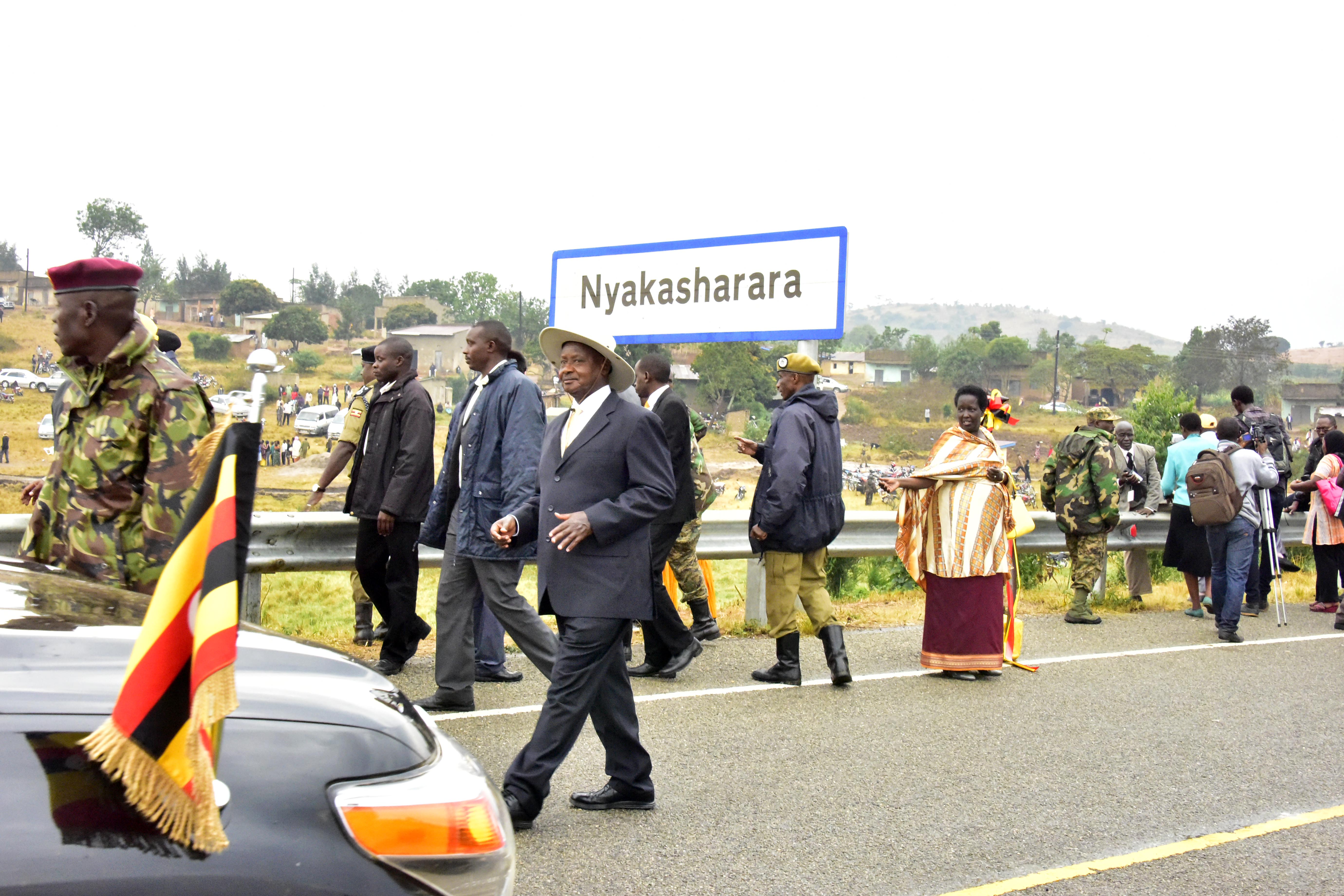
Later the President presided over the passing out of over 8000 crime preventers at Nyakasharara grounds in Kiruhura district.
While addressing the crime preventers, the President stressed the need for such groups saying that they are very important to beef up security. He cautioned them to be disciplined and hard working and urged them to start up income generating projects such as poultry, fish, and coffee growing among others to improve their incomes.
He said for Uganda to achieve the current achievements including infrastructure development such as electricity and roads, the NRM government had to prioritize and be able to save the money to invest. He said that is why government deferred civil servants’ demands for salary increment.
The Inspector General of Police Gen. Kale Kayihura commended the President for his support to the Police Force saying that it has helped them execute their mandate of keeping law and order.
He said that the community policing programme has done a lot in uniting Ugandans and scoffed at those who criticize it saying that even in developed countries, with advanced technology, they still use crime preventers.