I speak my MIND. If you hate me that it’s okay for me but I will not side with ICC until the Maker calls me. It’s time we come to a unanimous conclusion that ICC was a judicial mistake and disaster which existed from the inception.
The truth is it is at its degradation, decline and the ultimate fall from grace which is so synonymous to those who sit on the ivory tower of this court. Misplaced, delusional and inept, they keep on boxing shadows and chasing non-existent mirages. This another mirage project to earn the green backs.
If their recent intention to enact a Law that gags Social Media users through Cyber Law is a manifestation of a small intellect getting smaller, how low can this court sink?
From being a respectable international court, it ought to be, it has vitiated and become a third-rate conduit for manipulation by sinister organizations and entities like the Open Society Foundation.
It’s such a shame that ICC, a body that should be an embodiment of liberty and international justice has conferred upon itself the illegitimate duty to muzzle free speech.
However, be as it may, for ICC these are just the last straws of the failed court trying to clutch on in a bid to muster some relevance. It’s crystal clear that since its formation, the Court has not been able to prosecute any serious case under its jurisdiction and deliver justice to the victims that run to it for justice.
Instead, the Court has been over the years used by USA and France to intimidate, discriminate and recolonize the poor Third World countries, a majority of which are in Africa. Look at the African cases all FAKED to destroy our continent.
It’s an overstretched imagination and illusion of thought to expect that The Hague based Court will investigate and prosecute any hacking crimes that violate existing international law and bring culprits to book, that’s a no mean fete for the clueless investigators at ICC.
The idea of this Law being championed by the ICC Prosecutor Karim Khan is nothing but another pretext for the Court to crackdown on its critics with frivolous evidence that is neither here nor there.
Therefore, as I have said before, Africa has no business being in this STUPID court called ICC. Let Africa QUIT the ICC and rebuild its own court that was established.
The ICC should focus more on what is on its plate currently and stop dashing for that which it cannot even chew. The law is being made to curtail RUSSIA and those countries U.S.A. fears most.
MUBENDE-September 20, 2023 – Farmers have been urged to work in groups and cooperatives and establish modern storage facilities as a measure to solve quality gaps that have affected Uganda’s grain exports in recent times.
In 2018 Kenya rejected over 600,000 tonnes of maize from Uganda after it was suspected to contain aflatoxins, causing huge losses to grain exporters and several players across the value chain. The same happened mid-this year as South Sudan rejected to let in Uganda’s maize.
The call for farmers to have modern storage facilities comes at a time when Uganda’s grains market size is expected to grow from $4.27 billion in 2023 to $5.22 billion, reports Mordor Intelligence, a global research company.
Grains grown in Uganda include maize, millet, sorghum, rice, and wheat. They play a prominent role in increasing the income of smallholder farmers and the national economy. The growing demand for grains increased regional exports to East Africa, and favorable government policies supporting grain production are some factors driving the market growth.
“Poor storage is one of the reasons why despite Uganda being a big grain producer, grain earnings remain low and its farmers continue to swim in poverty,” said Ivan Asiimwe, a board member of the Uganda Warehouse Receipt System Authority (UWRSA), the body regulates that regulates and promotes the warehouse receipt system through partnership with other entities.
Under the Warehouse Receipt System, farmers are able to store their produce in a gazetted warehouse where they are issued with receipts that they can present to banks as collateral but also the farmers can use the receipts to get market for their produce.
Asiimwe stressed the need to support private warehouse operators who provide storage facilities to grassroots farmers who cannot afford decent storage facilities and continue to suffer losses arising out of poor storage of their produce.
“These [storage facilities] can help farmers to maintain the quality of their produce until the market is found,” he said.
According to the Ministry of Agriculture, Animal Industry and Fisheries (MAAIF) Ugandan farmers lose above 30 per cent of their produce due to poor post-harvest handling, which limits their chances to earn more income.
Tadeo Nsubuga, another board member of the UWRSA highlighted the importance of such storage facilities in helping farmers aggregate their produce, especially maize. He said storage facilities ensure the quality standards demanded by the market.
Nsubuga said there is a need to improve the entire grain value chain, where the use of pesticides is carefully applied, which calls for training of the grain handlers.
Nsubuga and other officials made the remark recently while touring Aponye Warehouse Facility in Mubende district. The warehouse which has a licence to handle grain storage was built by Aponye Limited, a company owned by the late businessman Apollo Nyegamehe, aka Aponye.
Deborah Kyarasiime, the Managing Director of the UWRSA said the visit was meant to assess the readiness of the grain warehousing facility to support the farmers in the wider Mubende region which is one of the grain-growing hubs in the country.
“As regulators, we are interested in promoting the development of infrastructure that supports better agricultural commodity storage, value addition, and structured commodities trading system,” she said.
“This is also in line with government’s goal of encouraging private warehouse operators to support its efforts of improving post-harvest handling, especially in the grains sector,” she said.
The UWRSA team delivered post-harvest handling supportive items including tarpaulins and fumigation tools to the warehouse operators.
The Warehouse Receipt System was established in Uganda in 2006 by the Ministry of Trade, Industry and Cooperatives. It is governed and regulated through the Warehouse Receipt System Act of 2006.
Police officers have been urged to embrace cyber security to safeguard both personal and institutional data.
The call was made by the Senior Superintendent of Police (SSP) Haguma Jimmy, the Acting Commissioner of Police Electronic Counter Measures (ECM), under the ICT directorate, who emphasized the critical role of implementing measures to fortify and improve the cyber security posture of the Force.
SSP Haguma Jimmy said, “If any one of us falls victim to cyber threats, the entire institution is equally exposed to that risk. This was drawn from the adage “A Chain is as strong as its weakest link” We are all susceptible at any given time, which is why regular checkups, updates, and the use of robust passwords are indispensable.”
During the training, officers were equipped with strategies to shield themselves from digital compromise, cyber offenses, and social engineering tactics. They also received guidance on ethical practices, netiquettes, and managing their electronic devices effectively, which includes scheduling breaks, considering noise-canceling devices, and rewarding themselves for task-focused work.
An increasing number of officers are benefiting from these cyber security tips to bolster their duty and personal security. Notably, officers from the Counter Terrorism and Criminal Investigation Directorate, which are pivotal in investigations and intelligence gathering, are among those receiving training.
The one-week sensitization program is reaching police officers across various directorates and is set to expand nationwide, beginning with Kampala Metropolitan. Those already equipped hail from the Directorate of Forensic Services and Interpol and International Relations.
The Parliamentary Commissioner, Esther Afoyochan has on behalf of the Speaker, Anita Among received bi-annual reports of the Inspectorate of Government (IG).
The reports cover the period, January-June 2022, July-December 2022 and January-June 2023.
This is in fulfillment of Article 231 (1) of the Constitution which mandates the IGG to submit to Parliament at least once every six months, a report on the performance of its functions and make recommendations for the efficient performance of public institutions.
Afoyochan, who is also Zombo District Woman representative received the reports from the IGG, Beti Kamya at a function that took place on Wednesday, 20 September 2023.
In her remarks delivered by Afoyochan, the Speaker commended the IGG for the timely submission of reports.
“Reports of this nature are integral for effective legislative oversight as they contain vital information on the operational performance and financial status of the entities under the purview of the various parliamentary committees,” she said.
She added, “The effectiveness of legislative oversight is directly proportional to the quantum and appropriateness of available information.”
The Speaker also commended the 11th Parliament for being steadfast in ensuring the timely consideration of annual and bi-annual reports from the various public-sector entities.
Pursuant to Article 231 (3) of the 1995 Constitution, the Speaker will cause the reports to be laid in the House at the very next Sitting of the House after the current recess.
Thereafter, the reports will be referred to the Parliamentary Committee on Legal and Parliamentary Affairs for scrutiny.
Kamya said the inspectorate is geared towards mobilising and empowering citizens to create a positive mindset in the fight against corruption.
She said the inspectorate will continue to up efforts in monitoring and inspecting projects, investigating, prosecuting, and recovering proceeds of corruption.
This, she said, will be efficiently achieved through the digitalization of their monitoring, reporting and investigation systems.
“The IGG management has taken a bold decision to embrace digitalization. We are on a steady course of migration from analog to digitalization in the fight against corruption and we hope, in the next two years, the IGG will be about 90 per cent digitized,” Kamya said.
In the last three reporting periods, the IGG has registered a total of 3,504 complaints and concluded 1,528 corruption investigations, leading to a recovery of Shs7.99 billion out of the recommended Shs38.7 billion.
The IGG also prosecuted a total of 92 people, with 43 convictions.
The inspectorate attributed the declining number of investigations into corruption to restructuring processes and internal transfer of staff who were learning new roles.
However, the increase in recoveries was attributed to the emphasis on recovery of stolen assets and establishment of the IG Compliance Division which follows up on the implementation of the IG recommendations.
Uganda Revenue Authority (URA) and the National Revenue Authority of South Sudan (NRA) have signed a Memorandum of Understanding (MoU) to facilitate cooperation and collaboration between the two entities in the discharge of their respective statutory obligations.
According to the MoU, URA and NRA will provide each other with assistance in digital transformation programs like RECTS, tax enforcement planning, information sharing, training, and benchmarks, among other things.
Speaking at the signing ceremony, Simon Juach Deng, Ambassador of South Sudan to Uganda, said the MoU is formalizing the relationship that already exists between the two countries.
“Uganda is one of the neighbors that we are doing a lot of business with, and we have a lot to learn from them, more so from URA because they are ahead of us in revenue mobilization,” he said.
John Musinguzi Commissioner General of URA who highlighted the collaborations that have happened between the two countries and thanked the NRA for the support accorded to the URA in cross-border trade.
“Thank you for supporting our joint efforts that have seen our countries create a conducive environment for fair and complaint business and as well fight vices like smuggling,” noted Musinguzi.
Athian Ding, the Commissioner General of the NRA, reassured the URA of their cooperation in the fight against the vice and said tighter border controls would be affected to mitigate it.
Early this year, URA and NRA signed a bilateral agreement where they resolved to implement joint border patrols and surveillance operations along the borderline with the aim of fighting smuggling, a vice that continues to eat into the revenues of both countries.
While South Sudan is one of Uganda’s largest trading partners in the region, trade between the two countries is marred by challenges including insecurity, smuggling, and strikes by truck drivers, among others.
Through agreements like this, both countries are able to forge ways around the challenges to ensure seamless flow of goods, which will ultimately grow their revenues.
Standard Chartered recently announced the rollout of enhanced global parental leave benefits that will also benefit its employees in Uganda, effective September 2023.
The Bank will standardise the amount of parental leave it offers, providing parents the option of undertaking more equitable caregiving responsibilities for their children.
With the enhanced benefits, employees can access a minimum of 20 weeks of paid parental leave, irrespective of gender, relationship status or how a child comes to permanently join an employee’s family.
The enhanced benefits have been designed to support working parents. This is part of the Bank’s commitment to fostering an inclusive culture, where employees are supported in balancing their personal lives with building successful careers.
Tanuj Kapilashrami, Group Head, Human Resources, Standard Chartered, said: “We continuously look at how we can introduce progressive benefits that drive inclusion, improve the employee experience, and help colleagues achieve their potential.
“We believe benefits such as this help address globally prevalent societal norms around traditional roles, improve workforce participation and provide options to those who want to take up shared childcare responsibilities. This will positively impact families’ financial well-being and create a more inclusive workplace that supports each individual’s unique family planning choices,”
“We hope that our actions inspire other employers across industries around the world to take similar actions. If we take a stand together, we can build a movement that creates a more inclusive society.”
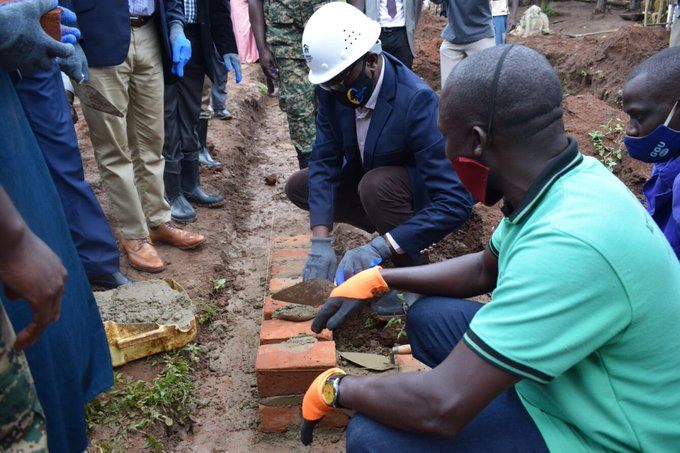
Habitat for Humanity moves to support the impoverished people living in informal settlements, Eagle Online has learnt. The revelation was made by Robert Otim, the National Director of Habitat for Humanity Uganda.
Uganda is facing a housing deficit that continues to grow. Statistics by Habitat for Humanity and government and National planning Authority indicate that every year we need at least about 200,000 units to be constructed to address the housing deficit, unfortunately we can only build 60,000 homes.
Speaking during a media dialogue, Otim said Uganda is one of the countries across the world that received the award to launch a Global advocacy campaign for affordable housing. The campaign is aimed at addressing three aspects within the informal settlements which include security of land tenure, hygiene and sanitation and others.
“We are aware of the complexities and the challenges that relate to land tenure and displacement evictions that are very rampant within our country. This campaign seeks to review some of the guidelines and policies particularly to support the less privileged communities that live in informal settlements,” Otim said.
As Habitat for Humanity having served in this country for the last 40 years and having built over 40,000 homes impacting over 240,000 people. We want to ensure that we scale up our efforts, especially in informal settlements, the other aspects.
The campaign is considering inclusive participation. This campaign seeks to uplift the voices of the less privileged people living in informal settlements. That their voices can be heard and participate in engagements that support developments within their settlements.
The other aspect is on the basic Services, Hygiene and sanitation, access to clean water in informal settlements. We are appealing to Partners who work within the informal settlements to work together and enable communities to live and thrive decently.
“We already recognize some Partners like the Catholic Relief Services, National Water and Sewerage Corporation and Uganda water and sanitation that have shown interest to work with Habitat for Humanity,” he said.
Habitat’s Paul Mayende, said the biggest problem is that we don’t see people; we see crime, drugs, and others. The moment we stop seeing that, we shall take action.
“Everyone who comes into the urban center is not going to sleep on the street or in a bus, they are going to require a house to sleep in but the houses are very expensive. So, we can work with the government to see that the houses that are being established are moderately affordable,” he said.
He we are closely working with the ministry of lands and Real Estate agents to see what opportunities we can put together as far as technology is concerned to make sure that affordable housing is achieved in this country.
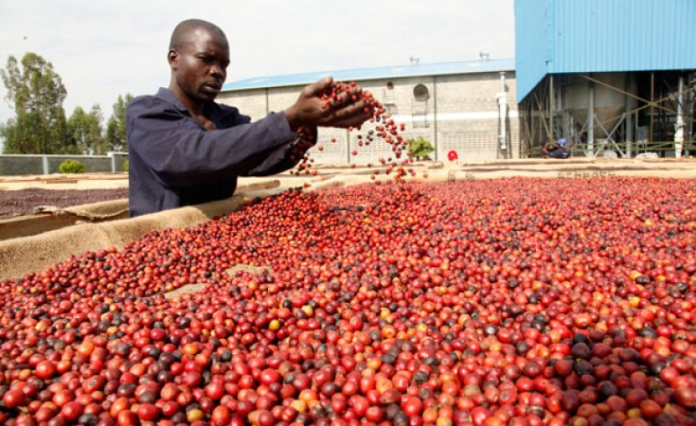
Uganda exported 743,517 60-kilo bags of coffee in August 2023, the highest ever in the country’s history. This has earned Uganda $121.64 million (Shs455.37 billion).
According to Uganda Coffee Development Authority (UCDA) monthly report for August 2023, the exports comprised 689,261 bags of Robusta valued at $111.41 million and 54,256 bags of Arabica valued at $10.22 million.
This was an increase of 48.19% and 70.73% in quantity and value respectively compared to the same month last year.
By comparing the quantity of coffee exported by type in the same month of last Coffee Year (August 2022), Robusta increased by 50.95% and 84.76% in quantity and value respectively, while Arabica exports increased by 20.29% in quantity but a 6.61% reduction in value.
According to UCDA, the monthly coffee exports performance was higher than the previous year which was seen in Robusta exports and was partly on account of a good crop harvest in South-Western region and the prevailing good prices on the global scene which prompted exporters to release their stocks.
Coffee exports for 12 months (September 2022-August 2023) totaled 6.08 million bags worth $ 918.76 million compared to 5.94 million bags worth $ 872.00 million the previous year (September 2021-August 2023). This represents an increase of 5% and 2% increase in quantity and value respectively.
The average export price was US$ 2.73 per kilo, 2 US cents higher than in July 2023 (US $ 2.71/kilo). It was 36 US cents higher than in August 2022 (US $ 2.37/kilo).
Robusta exports accounted for 93% of total exports, higher than 91% in July 2023.
The average Robusta price was US$ 2.69 per kilo, 6 cents higher than US$ 2.63 per kilo the previous month.
The highest price was for Screen 14 sold at US $ 2.96 per kilo, and it was followed by Organic Robusta sold at US$ 2.95 per kilo.
Washed Robusta was sold at US$ 2.84 per dollars, 3 cents higher than conventional Screen 18.
The share of Sustainable/washed coffee to total Robusta exports was 0.54% compared to 0.63% in July 2023.
The report says Arabica fetched an average price of US$ 3.14 per kilo compared to 3.50 per kilo last month, US cents 25 lower than US$ 3.75 per kilo realized in July 2023.
The highest price was Bugisu A+ sold at US$ 5.37 per kilo. It was followed by Bugisu CPB sold at US$ 4.74 per kilo. Drugar was sold at US$ 3.35 per kilo, 14 cents lower than 3.49 per kilo last month. This price was US cents 46 from Bugisu AA. Drugar exports were 48% of total Arabica exports compared to 58% the previous month. The share of sustainable Arabica exports to total Arabica exports was 6.64% compared to only 1.24% in July 2023.
According to a UCDA report, Ugacof (U) Ltd had the highest market share of 14.45% compared to 14.35% in July 2023. It was followed by Olam Uganda Ltd 11.32% (9.33%); Ideal Quality Commodities Ltd 9.66% (7.78%); Kyagalanyi Coffee Ltd 9.17% (7.11%), Touton Uganda Limited 7.01% (6.90%); Kawacom (U)Ltd 5.88% (6.33%); Ibero (U)Ltd 5.06% (4.27%); Louis Dreyfus Company (U) Ltd 5.04% (7.55%); JBER Coffee Ltd 4.65% (4.34%); and Grain Pulse Limited 3.43% (2.65%).
Italy maintained the highest market share with 30.27% compared to 37.68% last month. It was followed by Sudan 22.11% (18.37%), Germany 11.00% (10.96%), India 9.59% (7.51%) and Algeria 4.86% (1.42%). *The figures in brackets represent percentage market share held in July 2023. The first 10 major destinations of Uganda coffee took a market share of 90.35% compared to 90.64% last month.
Coffee exports to Africa amounted to 225,141 bags, a market share of 30% compared to 157,752 bags (24%) the previous month. African countries that imported Uganda coffee included Sudan, Morocco, Algeria, South Africa, Egypt, and Kenya. Europe remained the main destination for Uganda’s coffees with a 53% imports share, lower than 61% in July 2023.
The top 10 buyers held a market share of 66% of total exports, higher than 62% the previous month. Sucafina led with a market share of 15.00% compared to 14.51% in July 2023. It was followed by Olam International 11.63% (9.69%); Touton SA 7.33% (7.05%); Hafco Trading 5.23% (3.36%); Ecom Agro Industrialist 5.22% (6.80%) Bernhard Rothfos 5.19% (4.22%); Volcafe 4.60%; (3.09%) Louis Dreyfus 4.59% (7.43%) Aldwami Company 3.91%, (2.01%); Altasheel Import & Export Enterprises 3.58% (3.03%).
World coffee production for 2023/24 is forecast to increase by 4.3 million bags from the previous year to 174.3 million due primarily to higher output from Brazil and Vietnam. Global consumption is forecast at 170.2 million, with the largest gains in the European Union, the United States of America and Brazil. World coffee bean exports are forecast to increase by 5.8 million bags to reach 122.2 million bags higher than 116.4 million, fueled by strong shipments from Brazil. Ending stocks are expected to be 31.8 million. (United States Department of Agriculture, Coffee: World Markets and Trade report-June 2023).
During the month of August 2023, farm gate prices ranged from Shs3,800-4,500/= per kilo of Kiboko (Robusta dry cherries); Shs7,700-8,300/= for FAQ (Fair Average Quality); Shs9,000- 10,000/= for Arabica parchment; and Shs8,000- 8,500/= per kilo for Drugar from Kasese. Robusta Kiboko averaged Shs4,150 per kilo; FAQ Shs8,000 per kilo same as the previous month, Arabica parchment Shs9,500 per kilo lower than 10,250 per kilo last month and Drugar Shs8,250/= per kilo lower than 9,250/= per kilo last month.
According to UCDA, coffee exports are projected to be 600,000 bags. The main harvesting season in Greater Masaka and South-Western regions is at the tail end and exporters will draw down on their stocks to fulfil contractual obligations with buyers. They are also preparing for the main harvest south of the equator which is soon starting especially in Mt. Elgon region.
The National Social Security Fund (NSSF) has examined the successes and challenges the Fund experienced during the previous Financial Year, 2022/23. Key to note is that the Fund’s revenue witnessed a notable growth of 15%, surging from Shs1.9 trillion to Shs2.2 trillion by the close of the Financial Year ended June 30, 2023. Dividend income exhibited substantial growth, expanding from Shs84 billion to Shs139 trillion. Furthermore, the income generated from the Fund’s real estate projects experienced a modest uptick, moving from Shs13.4 billion to Shs14 billion, accompanied by She16 billion in other income.
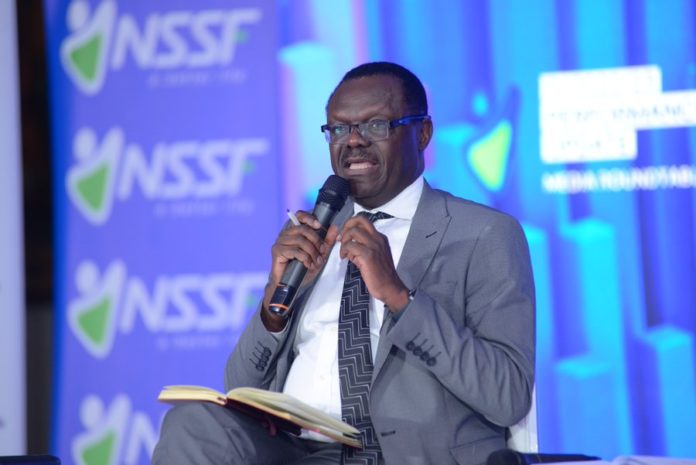
Speaking to the media today, Ayota Patrick, the Fund’s Managing Director said that the investment environment in Uganda and the region had been generally challenging in the Financial Year 2022/23. He mentioned that, despite inflation being under control, the decrease in the value of the stock markets in Kenya and Uganda, the strengthening of the Uganda Shilling against the regional currencies, and the decrease in long-term bond interest rates had all contributed to a depressed market.
The Fund’s investment portfolio mix is predominantly skewed towards fixed income, which is in line with the overall modest risk profile. As of June 30, 2023, the following was the investment mix. Equities at 12.5%, Real Estate at 9.01% and Fixed Income at 78.48%.
Ayota said, “The stock markets witnessed a decline in prices, with the following notable decreases: Uganda Securities Exchange Local Index: A decline of 11.47%. Nairobi Stock Exchange All Share Index: A significant drop of 14.04%. Tanzania Stock Exchange Share Index: A decrease of 4.02%. Rwanda Stock Exchange Share Index: A modest decline of 2.27%.”
Exchange rate volatility was observed as the Ugandan Shilling displayed strength against various portfolio currencies:
The Uganda Shilling appreciated significantly, notably against the Kenyan Shilling (KES), appreciating by 22.2%. Conversely, it depreciated by 16.4% against the Rwandan Franc (RWF). It also exhibited a 5.2% depreciation against the Tanzanian Shilling (TZS). Against the US Dollar (USD), the Uganda Shilling experienced a more modest depreciation of 2.6%.
Based on the performance indicators outlined, the Fund experienced a slight decline in Interest Rates: As the Fund primarily allocates its investments to long-term bonds, this decrease in interest rates had a direct effect on our investment portfolio.
The Fund also experienced diminished Stock Market Values: The devaluation of East African stock markets had a notable impact on the valuation of the Fund’s equity investments.
The Fund also noted Ugandan Shilling Appreciation against Portfolio Currencies, Especially the Kenyan Shilling: This currency appreciation influenced the value of the Fund’s investments denominated in Kenyan Shillings.
In 2015, the Fund developed the 2015-2025 Strategic Plan as course to achieve our Strategic Objectives by 2025, and even earlier in some instances:
Growth of the Fund – Assets under Management: The Fund’s Assets under Management (AUM) increased from Shs17.26 trillion in Financial Year 2021/22 to Shs18.56 trillion in Financial Year 2023/24. This growth was driven by:
Member contributions increased from Shs1.49 trillion in Financial Year 2021/22 to Shs1.72 trillion in Financial Year 2022/23
Total Realized Income earned increased by 15% from Shs1.9 trillion in the Financial Year 2022/22 to Shs2.2 trillion in the Financial Year 2022/23
The cost-to-income ratio improved from 11.7% in the Financial Year 2021/22 to 9.4% in the Financial Year 2022/23
Cost Management – the Fund’s cost of administration reduced from 1.18% of total assets to 1.02%. We created more value for members using less money compared to last Financial Year
Rate of Compliance slightly improves from 55% in Financial Year 2021/22 to 57% in Financial Year 2022/23
“With the current asset base, we project that the strategic goal of growing the Assets under Management of shs20 Trillion by 2025 will be achieved by June 30, 2024, one year ahead of schedule,” Ayota said.
ii. Innovation for Process Efficiency, in 2015, the Fund set a strategic goal to pay more people in less time – on average in 24 hours.
“In Financial Year 2022/23, the turnaround time declined slightly from 12 days to 13 days. Benefits paid to qualifying members increased from Shs1.19 trillion in the Financial Year 2021/22 to Shs1.202 trillion in the Financial Year 2022/23. The number of qualifying members was over 46,000,” Ayota said.
He added, “Although we are behind this target, we are confident that once we achieve 100% stabilization of the new Pension Administration System (PAS), and members’ uptake of self-service channels improves, we will move closer to achieving this objective.”
iii. Customer Satisfaction, in 2015, the Fund set a strategic goal to increase customer satisfaction to 95% by 2025.
In the Financial Year 2022/23, customer satisfaction remained flat at 86% compared to the previous Financial Year.
iv. For Staff Satisfaction, in 2015, the Fund set a strategic goal to increase our staff satisfaction to 95% by 2025. In the Financial Year 2022/23, staff satisfaction declined to 86% compared to 93% in the previous Financial Year.
Thus, the performance on customer and staff satisfaction reflects the challenges the Fund went through in the 2nd half of the year. However, they are confident that given the continuity and stability going forward, these strategic objectives are within reach.
Ayota further noted, “Ten (10) years ago, we committed to pay NSSF members a real return – at least 2 percentage points above the 10-year rate of inflation. We have consistently delivered on the promise and will continue to do so. I am therefore extremely confident that the Fund will pay a competitive interest rate for the Financial Year 2022/23.”
However, the Minister of Finance, Planning and Economic Development will declare a new rate at the forthcoming 11th Annual Members Meeting that will take place on September 26, 2023.
“While our performance remains strong and the Fund is a profitable institution, and in some years, we will experience some volatility, our strategic focus is on the long-term sustainability of the Fund,” Ayota promised.
“Our new “Vision 2035” is the bedrock of our long-term strategic focus– where we want to grow the Fund to Shs50 trillion, cover at least 50% of the working population, and achieve 95% and both customer satisfaction and staff engagement,” Ayota asserted.
10% interest rate
EagleOnline has established that due to bad economic hardships experienced in the last financial year, the fund is struggling to raise above last year’s 9.6% interest rate. However, internal sources within say the fund was torn between paying much lesser than last year’s or increase it to 10% so as not to demoralize the savers.
The Territorial Police in Busoga North and Greater Bushenyi have dismissed two of their own officers and charged them to court on charges related to attempted murder and threatening violence.
In the first incident recorded in Kaliro District, eastern Uganda, the policeman identified as D/C Bwire Moses Mangeni, 27, was charged with discreditable conduct and attempted murder after he allegedly attempted to kill Police Constable Kutosi Tyson in an incident which occurred last Tuesday, September 12, 2023, around 11 pm.
According to SCP Enanga, it is alleged that “the suspected on the fateful day had requested for keys to the police motorcycle from the victim officer so as to travel to his home village in Busia district but was denied the motorcycle which was the only transport at Namugongo Police Post in Kaliro.”
Enanga said that this angered the suspect and picked a hoe and hacked PC Kutosi inflicting injuries on him.
“Immediately after, he picked a gun with 30 rounds and fired all the bullets. Several bullet holes were found in the room of the OC post,” Enanga revealed.
Following efforts by fellow officers, the suspect was arrested as he handed over the gun with an empty magazine at Kaliro NTC.
“He appeared in court on the 15.09.2025, on charges of attempted murder. The victim PC Kutosi was rushed to Musana HC for treatment,” said Enanga.
In the second incident registered in Sheema District (Greater Bushenyi), police also charged CPL Ambrose Katumwehe, a 57-year-old, police officer attached to Kanekye Police Post, Kashozi division, with threatening violence, against Nakyanzi caroline, a barmaid in Kanekye trading centre on the same day, Tuesday, 12, September, 2023 at around 11 pm.
“The suspect, while in a drunken state, and armed with a gun, threatened to fire bullets at the victim’s door if she failed to open it. Shortly after, he fired 3 bullets at her door, which prompted an alarm. The suspect returned to his post and was arrested by the DPC and team. The fun was recovered, cartridges and exhibited. He was charged with Attempted Murder and threatening violence,” said Enanga.
Police condemned the acts of violence and attempted murder, reiterating that force as an institution continues to hold officers who commit acts of violence, accountable.
“We stand for rule of law and will not tolerate such acts of impunity, within our rank and file,” Enanga noted.