Stanbic Bank
Stanbic Bank
18.9 C
Kampala
Stanbic Bank
Stanbic Bank
Home Blog Page 354

Yara East Africa, Agro Dealers Celebrate digital connectivity in Eastern Uganda

Yara East Africa and agro dealers in Eastern Uganda have celebrated digital connectivity through Yara Connect.
According to the Organization for Economic Cooperation and Development (OECD), technological change has been the key driving force behind increasing agricultural productivity and fostering agriculture development in all OECD countries. Agriculture is becoming more integrated into the agri-food chain and the global market, with growing impacts from environmental, food safety, quality, and animal welfare regulations.
This is in line with Yara’s Global ambition to grow a nature positive food future, the agri sector is now confronted with new challenges, including meeting the rising demands for food, international competitiveness, and producing high-quality agricultural products.
Through Yara’s research and development, fertilizers such an MiCROP have been designed to suit specific crop and soil needs, as well as training stakeholders across the distribution channel on the correct application and handling of the products.
Aligned with Yara’s dedication to promoting a world free from hunger and protecting the planet, the company continues its pursuit of sustainable value growth through climate-friendly crop nutrition, zero-emission energy and digital solutions.
During the event, participants were introduced to smart farming practices and digital tools designed to optimize productivity, sustainability, and profitability. Yara East Africa reinforced its mission to create a food future that is in harmony with nature, adding value to customers, shareholders, and society while fostering a more sustainable food value chain.
William Nge’no, Country Manager, Yara Kenya & Uganda, emphasized the company’s commitment to empowering stakeholders across the agricultural ecosystem with innovative agricultural solutions. Through Yara’s connected platforms, farmers gain access to cutting-edge information, high-quality inputs, customized services, and sustainable markets. This empowerment drives higher yields, better quality produce, and efficient use of resources and knowledge systems.
” We celebrate with our partners and clients who have entrusted us over the years, and we remain confident in the transformative impact we can achieve collaboratively within Uganda’s agricultural sector,” Nge’no stated. “At Yara, our social impact initiatives position us as a catalyst for digital inclusion and empowerment in farming. Our aim is to facilitate economic opportunities for women and youth in agriculture, accelerate growth for Micro, Small, and Medium businesses within our communities, and continue contributing to food security.”
Yara East Africa remains committed to its global mission of responsibly feeding the world and protecting the planet. The company’s focus on sustainable agriculture and digital solutions reaffirms its dedication to creating a resilient and prosperous agricultural future for Eastern Uganda and beyond.
The event drew participation from over 100 attendees, with distinguished retailers recognized for their invaluable contributions to the industry, walking away with prizes including motorbikes, phones, and other exciting goodies.
Sarah Nafuna Proprietor, Home of Farmers, one of the distributors and winners of the goodies, expressed her gratitude, saying, “Thank you, Yara, for fulfilling your promises. When I heard about the initiative on the platform, I had my doubts, but I’m elated to be among the winners. You’ve eased our transportation as we deliver products to rural farmers. We also appreciate the knowledge sharing, enabling us to guide farmers in utilizing your products effectively.”

Stories Continues after ad

Housing Finance BankĀ JoinsĀ PostBankĀ and Pride Microfinance in Enabling Seamless Disbursement of PDM Funds with Wendi Digital Wallet

Housing Finance Bank joined PostBank and Pride Microfinance Limited to unveil a partnership with Airtel Money Uganda that will facilitate seamless disbursement of Parish Development Model (PDM) funds by the Government of Uganda through the Wendi mobile wallet platform. This partnership guarantees convenient access to funds for intended beneficiaries across Uganda through Airtel Money’s extensive agency network at minimal to no cost.

With 53% of the population embracing mobile money services while only 10% have access to traditional banking, this collaboration resolves the need for heightened financial inclusion. It holds the potential to bridge critical gaps and amplify the Government of Uganda’s efforts in achieving its development objectives. 

The partnership launch was presided over by the Rt. Hon. Prime Minister Nabbanja Robinah, represented by Hon. Kabuye Kyofatogabye, Minister of State for Kampala Capital City and Metropolitan Affairs in the presence of the Kakumiro district leadership and PDM Savings and Credit Cooperative Organizations (SACCOs) leaders at Kakumiro District headquarters. 

Wendi, powered by PostBank, is an electronic payments platform meticulously tailored to bridge the gap between unbanked Ugandan communities and essential financial services. It offers a comprehensive suite of features, including group savings and funds management, digital money transactions, transfers, deposits, and withdrawals. The platform’s development comes after several complaints by beneficiaries on bank charges and other risks involved during the disbursement process. Through Wendi, PDM beneficiaries can now access their funds through the Airtel money network without going through the bank processes as a result. 

Mr. Julius Kakeeto, Chief Executive Officer of PostBank, expressed gratitude to Airtel Money Uganda for embarking on this transformative journey. He emphasized Wendi’s convenience to the PDM disbursement process, stating, “With Wendi, subscribers will receive funds directly to their phones, eliminating the need for a bank account and the associated time and cost of manual disbursements.ā€

Mr. Micheal Mugabi, Managing Director of Housing Finance Bank, echoed the sentiment of collaboration and emphasized the Bank’s commitment to uplifting all Ugandans. He said, “Our mandate is to drive home ownership and financial independence. And that’s why the Bank has devoted significant resources to promote the Wendi mobile wallet solution that enables financial services to reach the majority of Ugandans who currently do not have a bank account.”

Mr. Japhet Aritho, Managing Director of Airtel Money Uganda, affirmed the company’s dedication to Uganda’s financial inclusion agenda, stating, “We aim to address the digital inclusion divide by extending services closer to the people. Airtel Uganda’s vast network of over 200,000 agent points eliminates the need for beneficiaries to travel long distances for accessing or repaying PDM funds.”

Mr. Edward Nkangi, Executive Director of Pride Microfinance Limited, emphasized the transformative impact of the Wendi App. He highlighted, “With Wendi, we do not need to open a branch in Kakumiro as the PDM funds can now seamlessly reach each Ugandan without visiting a bank. We thank the Government for the Parish Development Model in enabling funds to reach every Ugandan.”

In closing, Hon. Kabuye Kyofatogabyethe Minister of State for Kampala Capital City and Metropolitan Affairs, commended PostBank and Airtel Money Uganda on their good timing with the launch of Wendi. He said, “Wendi is a much-needed intervention in support of the government’s Parish Development Program as it allows for easy and convenient access to funds via mobile technology.” 

The Minister of State for Kampala Capital City and Metropolitan Affairs also encouraged beneficiaries of PDM and the public to take advantage of the opportunities that come with Wendi by downloading and using the App from Google Play Store and App Store and onboarding via a *229# USSD code.

Wendi offers a wide range of mobile transactions, including paying for utility bills such as Umeme, URA, NWSC, TV subscriptions, school fees, goods, and other services. Customers will also enjoy easy access courtesy of over 3000 Wendi agents stationed countrywide

Stories Continues after ad

Gov’t to revise national budget over World Bank suspension on financing

The State Minister for Finance, Henry Musasizi, has revealed that the Government plans to review the 2023/2024 national budget following the World Bank’s decision to halt the financing of some Ugandan projects over the Anti-Homosexuality Bill.
The Minister, who was appearing before the parliamentary committee on finance on Thursday, August 10, 2023, said that the World Bank decision is likely to affect the emoluments of some public servants.
“We took a firm decision, and we agreed that we would face the consequences. We shall be coming soon. I want to prepare your minds that very soon we are going to revise the budget downwards, and we shall be coming to you for support. Even the emoluments are going to be affected given the preliminary results we are seeing. We shall be coming in one week or so to tell you the consequences and ask for your approval on how we shall move forward with the current challenges,” Musasizi said.
The chairperson of the parliamentary finance committee, Amos Kankunda, however, said that Parliament does not regret the decision it took to pass into law the Anti-Homosexuality Act 2023, saying the committee will offer leadership to Uganda on how to survive the financing ban imposed by the World Bank.
“I know you are aware that, as a country, we have been slapped with the stopping of funding from the World Bank, given the position we took as a country, which we don’t regret for the passing of the Anti-Homosexuality Law, and indeed, we are on the right trajectory. We will find ways of surviving, and as a committee, this is our responsibility since we handle mainly the supply side of the budget, to make sure we work with the Ministry to mobilise sufficient funds and work within our means to make sure the country moves on,” Kankunda said.

Stories Continues after ad
Deputy Speaker Tayebwa mourns fallen Bishop Emeritus George Tibesigwa

The Deputy Speaker of Parliament Thomas Tayebwa has mourned the fallen Bishop Emeritus of Ankole Diocese, George Tibwesigwa who passed on yesterday evening at Mayanja Memorial Hospital, Mbarara.


Thomas Tayebwa referred to him as a hardworking man of God and strong pillar of faith in the Ankole region.
ā€œIn Bishop George Tibesigwa, the faithful in Ankole have lost a strong pillar of faith. The Emeritus Bishop preached faith, hard work. Love for one another and unity. Ankole as a region will miss him dearly,ā€ Tayebwa mourned.


He added, ā€œMy condolences go out to his family, and all the faithful. And May His Soul Rest in Eternal Peace.ā€
Bishop George Tibesigwa at 87 years old has been a wise and compassionate leader, a loving friend, and a dedicated servant of God with true inspiration to many people in the Ankole region.
Bishop George William Tibesigwa also served as the Senior Presidential Advisor on Religious Affairs in southwestern Uganda.
Tibesigwa retired from service in 2010 after clocking the recommended canonical age of service in the Church of Uganda.
He was replaced by the current Bishop Rt. Rev Fred Sheldon Mwesigwa, who was enthroned on 18th July 2010.
Tibesigwa graduated with a Doctor of Ministry from the Asian Centre for Theological Studies and Mission/United University of ASIA, and a Master of Divinity University College of Emmanuel and St. Chad.


He also held a Bachelor of Arts (Sociology and Psychology) University of Saskatchewan, a Bachelor of Theology University College of Emmanuel and St. Chad.
Archbishop of the Church of Uganda, Rt Rev Dr Samuel Kaziimba Mugalu hailed Dr Tibesigwa for his service towards the church describing him as a diligent servant of God who will be greatly missed.


ā€œI am saddened by the passing of my brother Bishop George Tibeesigwa, who went to be with the Lord.. He served diligently as the Provincial Secretary of COU and as the 4th Bishop of the Ankole Diocese,ā€ the Archbishop said in a brief statement.
He revealed that the burial details will follow soon.

Stories Continues after ad

Butabika Hospital cautions parliament of legalizing cannabis and khat

The Director of Butabika National Referral Hospital, Dr. Juliet Nakku has urged Members of Parliament to ignore the economic pressures, and ban the production and sale of cannabis and khat.
Nakku said that their consumption contributes greatly to mental health cases and poses social and economic pressures to government and families.
ā€œData from Butabika Hospital in 2022 showed that for the Financial Year 2021/2021, 25 per cent of young adults were admitted for alcohol and substance use problems. Of these 44.7 per cent had alcohol use problems, one third had cannabis use problems and 2.1 per cent were using stimulants including Khat,ā€ said Nakku.
She argued that cannabis use ranks second to alcohol use among patients receiving rehabilitation at Butabika Hospital and it is associated with slow improvement and relapses.
Nakku made this appeal while appearing before the Committee on Health with the Minister for Health, Dr. Jane Ruth Aceng.  Officials from the National Drugs Authority (NDA) were also in attendance.
The Committee on Health is receiving from stakeholders on the Narcotic Drugs and Psychotropic Substances (Control) Bill, 2023.
Nakku said that people using the two drugs suffer severe mental illness such as depression, psychosis and often end up committing suicide. Minister Aceng re-echoed Nakku’s call saying countries that have legalised the two drugs for medical use have reaped undesirable consequences.
ā€œIn Thailand, cannabis was legalised in 2022; within seven months of legalisation for medical purposes, there was a significant increase in non-medicinal use from 4.3 per cent to 25 per cent,ā€ Aceng said adding that, ’there was an insignificant increase of one per cent for medical use amidst an increase in cannabis associated disorders and suicide’.
She rejected the argument by khat and cannabis growers in Uganda, who claim that the production and sale of the drugs have a significant economic impact, and asked MPs to study the economies of African countries where such drugs are legalised.
ā€œLook at their economies and see whether they are growing; we had better protect our people before we go into something we do not knowā€ said Aceng.
Aceng added that the new law clarifies on the ownership of rehabilitation centres for people with drug use problems, saying the earlier proposal to have the centres under the Ministry of Internal Affairs disregards that the centres offer both medical and psychosocial support which is mandate of the Health Ministry.

Stories Continues after ad

PostBank And Airtel Partner to Disburse PDM Funds With Mobile Wallet WendiĀ 

PostBank and Airtel Mobile Commerce Uganda Limited (AMCUL) in collaboration with Housing Finance and Pride Microfinance, have announced their partnership to support the seamless disbursement of PDM (Parish Development Model) funds by the government through a wallet dubbed Wendi.

Wendi is a digital payments platform powered by PostBank that strategically pivots on group savings and funds management, digital money savings, transfers, deposits, and withdrawals, to drive financial inclusion within unbanked Ugandan communities.

Airtel Money offers a wide range of e-commerce and financial services including mobile payments, microloans, savings, international money transfers and health insurance services

53% of the Ugandan population is using mobile money services while only 10% of our population is banked. As a bank that has financial inclusion at the core of its operational goals, investing in partnerships and digital financial services helps PostBank and partners bridge the gap between banked and unbanked Ugandans. The Wendi App will give access to close to 74% of Ugandans who live in rural areas to financial services and support them to participate in the Uganda government’s development agenda.

Accessible for download from Google Play Store and onboarding via a *229# USSD code, Wendi offers a wide range of mobile transactions, including paying for utility bills such as Umeme, URA, NWSC, TV subscriptions, school fees, goods, and services among others. Customers will also enjoy easy access courtesy of over 3,000 Wendi agents, many of them Airtel Money agents already, that will be stationed countrywide.

Speaking at the event in Kakumiro, the Managing Director of PostBank, Julius Kakeeto expressed his gratitude to the management of Airtel Money as well as Housing Finance Bank and Pride Microfinance for partnering with the bank on the journey of digital transformation. He also highlighted the convenience that Wendi brings to the PDM disbursement process.

ā€œWendi is empowering the SACCOs to manage their funds, and very importantly, for money to reach the intended beneficiaries without the need to come to the banking halls and also fill in tedious paperwork,ā€ Kakeeto said.

He further expressed PostBank’s commitment to bringing Ugandans into the money economy, stating that, ā€œOut of 2,540 PDM SACCOs with accounts in PostBank, PBU has already digitized 1,298 SACCOs and is planning to complete digitizing all of them by the end of this month. So far, the experience has been positive, with beneficiaries of around 205 PDM SACCOs receiving funds from the comfort of their homes, gardens, etc. They are able to do this because of strong partners like Airtelā€

Also speaking at the partnership’s launch was Airtel Uganda’s MD who reaffirmed Airtel’s commitment to Uganda’s financial inclusion agenda. ā€œWith a partner like PostBank and support from the Government, we shall continue to develop partnerships that will support our agenda for growing financial inclusion. A digital economy that works for the manyā€ he said.

Speaking at the event, the State Minister for Kampala and Metropolitan Affairs, Kabuye Kyofatogabye who was representing Prime Minister Nabbanja commended PostBank and all its partners for the wonderful idea and for stepping in to support the government drive financial inclusion.

ā€œWe have eliminated all the paperwork involved in opening bank accounts and brought the bank to your farm with Wendi. All it takes is to dial *229# if you don’t have a smartphone to receive your money,ā€ he said.

Hon. Kabuye Kyofatogabye also encouraged beneficiaries of PDM to take advantage of the opportunity to make life simpler by installing and utilizing Wendi.

Stories Continues after ad

Uganda can survive without World Bank loans- Museveni

President Museveni has assured the citizens that Uganda can develop with or without World Bank funding after the latter suspended new public financing to Uganda over its passing of the Anti-Homosexuality Act, 2023.

The World Bank suspended the financing claiming that Uganda’s Anti-Homosexuality Act fundamentally contradicts the World Bank Group’s values.

ā€œWe believe our vision to eradicate poverty on a livable planet can only succeed if it includes everyone irrespective of race, gender, or sexuality. This law undermines those efforts. Inclusion and non-discrimination sit at the heart of our work around the world,ā€ read part of the World Bank’s letter.

According to the President, no one can coerce Uganda into abandoning its principles.

ā€œLast night, an official from the World Bank rang me to alert me about the statement from that Bank regarding the suspension of any new requests from Uganda for loans,ā€ he wrote on Wednesday evening.

ā€œI want to inform everybody, starting with Ugandans, that Uganda will develop with or without loans. It is, therefore, unfortunate that the World Bank and other actors dare to coerce us into abandoning our faith, culture, principles and sovereignty, using money. They really under-estimate all Africans,ā€ he added.

On Tuesday, the World Bank announced that Uganda’s Anti-Homosexuality Act was against its values of equality and protection of sexual minorities, hence could not continue supporting Uganda with loans.

But Museveni said nobody should put Uganda under any form of pressure since it’s a sovereign state.

ā€œWe do not need pressure from anybody to know how to solve problems in our society. They are our problems,ā€ he said.

ā€œWe are continuing to talk with the World Bank so that both they and we avoid this diversion if possible,ā€ he added.

Museveni further reassured that the economy itself is becoming self-sustaining through oil exploration, agriculture, industries, and the burgeoning services sector.

ā€œMoreover, our first oil will start flowing by 2025; that will be an additional source of state revenues and also financial flows into the economy. With discipline, patriotism and combating corruption, we shall thrive because our agriculture is there, our industries are growing and our services sector is expanding.ā€
On May 26, President Museveni signed into law the Anti-Homosexuality Bill, attracting backlash from the West and cheers from religious leaders.

The Anti-Homosexuality law introduces strict penalties including death for aggravated homosexuality, as well as imprisonment of up to 20 years for acts of homosexuality, promoting, child grooming and promotion of the vice.

Stories Continues after ad

Museveni calls for coffee value addition at G-25 Africa Coffee Summit

President Museveni and other African leaders at the coffee conference.

President Yoweri Kaguta Museveni has reiterated his call to add value to Ugandan and African prestigious coffee at large to enable the producers to get a fair share of the global market.

Museveni made the remarks yesterday while officiating at the opening of the three-day second G-25 Africa Coffee Summit, held at Speke Resort Munyonyo under the theme: ā€œTransforming the African Coffee Sector through value additionā€, the summit attracted hundreds of stakeholders from top coffee producing and exporting countries in Africa.

ā€œIn the last 60 years, I have been involved in the struggle against this modern slavery for Africa ─ the curse of producing raw-materials for cleverer people in the world to add value to those raw-materials and get much more value from them. A kg of bean coffee of good quality may go for $2.5 per kg. The same quantity of coffee roasted, ground and packaged may go for $40. This is where there is massive hemorrhage of money from the global South to the global North. It is not only the loss of money per kg. It is also the loss of jobs. If you take the whole spectrum of raw-materials from agriculture, minerals, forest products, etc., the loss to Africa is massive,ā€ President Museveni said.

H.E Museveni explained that Uganda has managed to build an Independent and self-sustaining (with both vertical and horizontal integration) economy with registered success in some sectors such as the dairy, fisheries, textiles, sugar, leather among others. However, in many sectors including that of coffee, the country is still losing a lot of money and jobs, on account of exporting unprocessed raw materials abroad.

ā€œThe biggest opposition to our plan of building an integrated national economy has been, mainly, internal, from some elements of the political and bureaucratic classes who perform the role of the comprador bourgeoisie ─ agents of foreign interests, Mao Tse Tung talked about in China. Unlike the national bourgeoisie who build our economy, the comprador bourgeoisie (raw-materials exporters, importers of foreign products that can be made here, commission agents), bleed our economy. The national bourgeoisie (manufacturers, hotel owners, tourism operators, professional service providers such as doctors who treat people here instead of patients going out for treatment, internal distributors of our products such as food), build our economy,ā€ he stressed.

President Museveni advised that as raw material producing countries, they need to conduct internal struggles in their respective countries to add value to these raw-materials, including coffee ─ so that they earn more from their sweat and create more jobs for their youth instead of dying in the Mediterranean going to Europe.

He further noted that they also need to sensitize their partners in the countries that have been buying their raw-materials at semi-slave prices, that their economics is defective.

ā€œWhat will the USA or Europe or Asia lose if Africa sells added value coffee to them instead of the raw-material form and earns more money? What if the value addition is done to the other raw-materials ─ copper, gold, iron-ore, lithium, etc.? Money to Africa will mean higher purchasing power for Africa. The Africans, who now lack electricity, will be able to afford to pay for electricity. Where will the turbines come from? Will they not come for Europe, USA, Russia, China, or from other partners? How can greed obscure rationality to such an extent? Global affluence will benefit everybody. Down with Imperialism, down with parasitism, long live the win-win strategy,ā€ President Museveni emphasized.

The President of the Federal Democratic Republic of Ethiopia, H.E Sahle-Work Zewde expressed optimism that the summit will provide an opportunity to keep and accelerate the momentum of the coffee sector in Africa.

ā€œI’m here because we also believe in collective action for us to occupy our rightful place in the global market,ā€ H.E Zewde said.

She however, expressed concern that despite being one of the most traded commodities globally, and consumed by people from all corners of the world, coffee didn’t receive the proper attention it deserves compared to even some less traded commodities.

The President attributed the setback to the weak bargaining power of the producers and lack of strong organizations committed to work on behalf and for the benefit of the producers and exporters.

ā€œFilling this gap should be the aim and priority of the Inter- African Coffee Organization. I believe this 2nd G-25 Africa Coffee summit will encourage such a mandate. The food farmers sweat to produce the best quality coffee to the international market but it’s the traders who decide the international coffee price in the absence of the producers or the rightful representation. The very producers are price takers and remain at the receiving end throughout the market chain. We all must work to end this market unfairness together,ā€ H.E Zewde stated.

ā€œWith just simple value addition, it’s possible to increase the benefit of smallholder farmers and enable them to get a fair share of their efforts. It is important to promote African coffee in the global market. Ethiopia is not just the origin of Arabica coffee as Uganda for Robusta, it’s the largest, best quality, organic Arabica coffee producer and exporter in Africa and the world.ā€

At the same event, the African coffee producing countries signed a Kampala Declaration. The Minister of Agriculture, Animal Industry and Fisheries, Frank Tumwebaze signed on behalf of Uganda whereas other coffee producing countries were represented by Dr. Girma Amente, the Chairman of the Inter- Africa Coffee Organization and Minister of Agriculture of Ethiopia.

The declaration will support among others; research in coffee value addition to enable innovation and development of new products, generate new knowledge on best practices, improved technologies and studies on varieties resilient to harsher climatic conditions, pests and diseases; investment in value addition of coffee and its products and promote domestic coffee consumption; Vocational training in coffee for the youth and women for job creation; and Enhance access to finance for coffee value addition projects through the AU/AfCFTA framework and Institutions which include the African Development Bank, African Export– Import Bank (Afrexim Bank) and African Coffee Facility Fund.

Stories Continues after ad
The difference between 5G, 4G and Fiber

Men laying internet cables. Copyright: Tom Saater

Connectivity has inevitably become a basic need across all spheres of life today. In the fast-paced world of technology, staying connected and having reliable internet access is crucial for both individuals and businesses alike. The advent of 5G technology has brought forth promises of faster speeds, lower latency, and enhanced connectivity. Simply put, 5G is the fifth generation of wireless technology that enables faster and more reliable data transmission over cellular networks.

The big question on many people’s minds right now is; how does 5G fare against the well-established Fiber and 4G technologies in terms of reliability and cost? In this blog, Yasin Ramadan, MTN Uganda’s senior manager for network planning and engineering relays a comparative analysis to highlighting the strengths and weaknesses of each technology. 

Reliability

5G: 5G technology offers significant improvements in reliability compared to 4G. Its low latency that is less than 1milisecond and higher data transmission rates of over 1GB per second provide a more stable connection, especially in densely populated areas. However, 5G’s reliability may be influenced by factors such as signal interference from buildings and obstacles. Due to its higher capacity, 5G can handle more than 1 million connected devices per square kilometer without compromising performance.  

Fiber: Fiber-optic internet is widely regarded as the most reliable internet connection available. Since it uses light signals through optical cables, it is less susceptible to signal interference and external factors. Fiber offers symmetrical upload and download speeds, making it ideal for applications that require consistent, stable connections, such as video conferencing and cloud-based services. It is important to note though that the deployment of fiber requires either trenching or use of overhead lines which will require right of way acquisition, road crossing approvals, and the like which would translate in cost, delay to provide service and sometimes complete failure to get the deployment done.

4G: 4G LTE technology has been a reliable option for mobile connectivity for years. While it provides decent reliability for most day-to-day tasks, its performance may vary based on network congestion and signal strength, making it less consistent compared to fiber and 5G.

 Verdict: Fiber takes the lead in terms of reliability, providing a consistent and stable connection. 5G follows closely behind, with its low latency and fast speeds, while 4G lags in terms of consistent performance.

Cost 

5G: As 5G technology is still relatively new, its implementation costs are higher, especially for network infrastructure. Initially, 5G-compatible devices might also come with a premium price tag. However, as 5G becomes more widespread and competition increases, costs are expected to become more competitive. 

Fiber: Fiber internet can be cost-effective in the long run due to its lower maintenance requirements and higher efficiency. The initial installation cost of fiber infrastructure can be higher, but the benefits of faster and more reliable connections can outweigh the cost.

4G: 4G technology is widely available and relatively affordable for consumers. However, data plans for mobile 4G usage can become costly, especially for heavy data users.

Verdict: 4G is the most cost-effective option for mobile connectivity, but for fixed internet connections, fiber offers excellent value in the long run. 5G’s cost-effectiveness will improve with time as the technology matures and becomes more widely adopted. 

In conclusion, each technology, 5G, Fiber, and 4G, has its advantages and disadvantages when it comes to reliability and cost. 5G brings faster speeds and lower latency, making it ideal for high-bandwidth applications, but its reliability might be influenced by signal interference. Fiber-optic internet offers unparalleled reliability but may come with higher initial installation costs. 4G provides mobile connectivity at an affordable price, but its reliability can fluctuate based on network congestion.

Ultimately, the best choice depends on individual needs and priorities. Businesses requiring consistent and high-speed connections may opt for fiber or 5G, while consumers seeking affordable mobile connectivity may prefer 4G. As technology continues to evolve, we can expect all three options to improve and to continue to exist, providing better and more accessible internet connectivity for everyone.

Stories Continues after ad
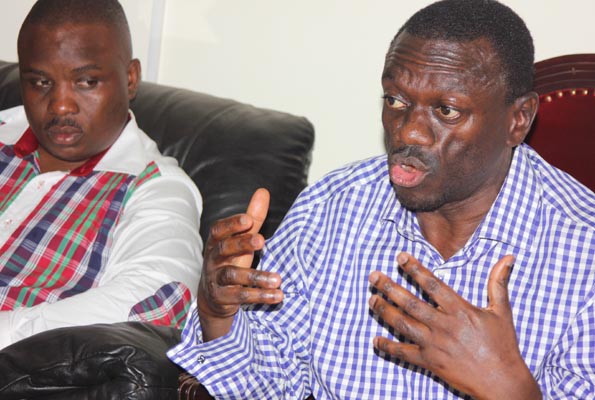
FDC Saga: Amuriat calls for investigation on Lukwago, Ssemujju misconduct

The Forum for Democratic Change (FDC) President Patrick Oboi Amuriat has directed the Chairperson of the Party’s disciplinary committee, James Otto to investigate the misconduct of Elias Lukwago-Ag. Deputy President, Ibrahim Ssemuju Nganda- Secretary for Information & Publicity and other members.

ā€œI proceed under article 28(3)(b) (u) and acting in consultation with the party Working Committee to request you to convene meetings of the Committee on Discipline to hear and disposed cases of hostility towards the party, failure to execute and absconding from duty on the following members.ā€ reads part of the letter.

The other members to be investigated include Kennedy Okello-Ag. Deputy Secretary for Presidency, Dr. George Okello Ekwaro – Ag Deputy Secretary for Mobilization, Mr. Samuel Makheka W’Mugenyi – Ag. Deputy for International and Regional Affairs , Mr. Amon Ayesigomwe Rubarema-secretary for Works & Transport and Mubarak Munyagwa-Ag. Secretary for MobIlization.

ā€œIn the meantime and moving under the above-mentioned constitutional provision, I will be making appointments on acting basis to offices held by the above-mentioned members,ā€ Amuriat added in a letter.

Amuriat added that with the exception of Ibrahim Ssemuju Nganda and Mr. Amon Ayesigome who were elected by the National Delegates Conference, all the above members were appointed by him on acting basis.

In the past few weeks the above-mentioned individuals and Dr Kiiza Besigye (former party President) have been accusing Amuriat and his group of accepting dirty money from unknown sources to fund the party’s 2021 General Elections.

OnĀ Tuesday, Party Secretary General. Nathan Nandala Mafabi replaced Party Chief Whip Semujju Nganda with Yusuf Nsibambi.

Stories Continues after ad