The Uganda National Bureau of Standards (UNBS) through its operations against substandard tyres in the country has impounded over 500 substandard pneumatic tyres worth 150 million shillings from traders in downtown Kampala, in line with the Bureauās mandate of enforcing standards in protection of public health and safety, and that of the environment, from dangerous substandard products.
According to the UNBS Surveillance Officer who led the operation, Mr. Denis Odur, the operation follows recent public outcry and complaints about substandard tyres on the market as well as the increased accidents attributed to tyre failure in the recent past.
āWe have discovered that a number of tyres are defective and some are poorly stored which compromises the quality of the tyres. When such tyres are used on motor vehicles, they can result into accidents for motorists,ā he said.
Other poor practices in handling tyres include poor packaging, transportation and storage during importation and distribution, which lead to degeneration in quality of tyres posing a risk to the health and safety of the public and the environment.
UNBS thus developed standards to regulate the quality of tyres on the market and urges all manufacturers, importers, distributors, transporters, wholesalers and retailers of pneumatic tyres to ensure that their products meet the standards.
UNBS further cautions the traders against retreading pneumatic tyres for passenger trucks, stacking them inside one another during importation and transportation, re-grooving old and expired tyres and reselling them to unsuspecting customers, storing tyres directly on the floor and under direct light from skylights, windows, doors and other openings among others.
UNBS encourages traders of pneumatic tyres to store them in a covered place to prevent exposure to direct light from skylights. Any openings should be kept closed so that light entering the warehouse is reduced to the minimum as possible.
In case the warehouse where tyres are stored cannot be darkened for some reason, the storage piles of tyres should be carefully covered with some reasonably heavy woven fabric for complete protection against light, air current, dirt or water.
Stack them on a suitable clean base in an as stress-free condition as possible
No more than 25 motorcycle tyres; no more than 15 light truck tyres; no more than 20 car tyres; and no more than 10 truck and bus tyres shall be stacked one atop another
All the tyres in a stack shall be turned and re-piled at least once every 90 days.
During re-piling, the bottom most tyres shall be placed at the top and the top most tyres at the bottom.
Lacing of tyres in piles shall not be allowed. Tyres shall be free from water or excessive moisture before stacking.
All manufacturers and importers of pneumatic tyres or any other person retreading pneumatic tyres shall apply to UNBS for registration and approval and demonstrate capacity to provide quality tyres that meet requirements of relevant Uganda standards
In the case of importers/exporters, undergo Pre-Export Verification of Conformity to Standards (PVoC) process during importation.
In the recent past, West Africa has become a hotbed of Coups and Counter- Coups. The constant jostling for power in mostly Francophone West African countries has thrown the continent into a miasma of precariousness and eminent instability.
The most recent regime change in Niger closely resembles those in neighboring Mali and Burkina Faso in 2021 and 2022 respectively where members of the military seized power on similar pretexts.
Those twoās new leaders werenāt Western puppets like their predecessors but firm believers in multipolarity, which resulted in them standing up to France and comprehensively expanding strategic ties with Russia.
Africa needs to properly understand the potentially game-changing significance of the Niger coup in the context of a New Cold War era. To peek briefly into this, Russia is accelerating multipolar processes in Africa through Wagnerās āDemocratic Securityā operations, with Mali and the CAR functioning as the associated cores in their respective regions.
Meanwhile, France and the US oppose these developments, which is why theyāre jointly waging proxy wars against Russia in the region. So, Africa is being used as a base for a new Cold War.
It’s apparent that these two fears that Chad will follow in corresponding neighborās footsteps, despite not experiencing a coup as proven by the moves that its interim government began to make over the past year to strengthen its sovereignty.
This had left Niger as the last reliable bastion of Western influence in this broad swath of Africa, and yet its traditional role can no longer be taken for granted if the current junta emulates the Malian and Burkinabe precedents.
It’s a matter of fact that this Niger is indispensably important to France, since 62.6% of France’s electricity is generated from nuclear power, of which at least one-third of was fueled by Nigerien uranium.
These statistics mean that this West African countryās prime export accounted for roughly 20% of all French electricity in 2022, which is expected to increase even further due to more uranium deals and Parisā commitment to the āGreen alAgendaā.
Furthermore, France recently set up a regional āPartnership HQā in Niger after its forces were expelled from Mali and Burkina Faso, which reinforced its long-standing role there.
Over the past half-decade, Italy and Germany deployed troops to Niger too to help them stem illegal immigration to the EU, while the US built a major drone base on the pretext of fighting terrorism.
Despite all these, Niger had remained one of the poorest places on earth, and sporadic terrorist attacks have been picking up pace over the past years.
This context resembles the situations in pre-coup Mali and Burkina Faso, thus extending credence to the explanation put forth by the Nigerien military for its latest coup regarding their desire to reverse the deteriorating socio-economic and security situations.
To that end, the regionās newest junta might emulate its two western neighbors by cracking down on foreign media and āNGOā meddling, kicking out French (and possibly all other foreign) troops, and requesting Russiaās āDemocratic Securityā assistance through Wagner Marcenaries.
Unlike Mali and Burkina Faso, however, Niger has strategic natural resources that it could consider nationalizing in order to immediately obtain the wealth required to improve its largely impoverished populace.
Any such moves in that direction would be likely be regarded by France as a potential national security threat and may not auger well with France and its Western allies.
It might be too early to tell now whether the Nigerien junta is multipolar like its neighbors or if itāll be co-opted by the West to function as a new face for their neo-imperialist system there, however it would be a game-changer in the New Cold Warās African front, if this group took a page from its Malian and Burkinabe counterparts.
In that event, the West would have lost its last stronghold in this broader region of Sahel, which would unprecedentedly accelerate Africaās rise as an independent pole in the emerging Multipolar World Order, which could essentially enable Africa to seek new allies like Russia, China and the Middle East.
God bless Africa
The writer is Pan African, a Political Scientist & International Relations Expert with bias in Conflict Resolution based in London United Kingdom. He is a member of Royal African Society an author, and media owner. He defends Africa.
Twenty (20) people have been confirmed dead after the boat capsized on Lake Victoria in the wee hours on 2nd August 2023.
SSP Onyango Patrick, PRO Kampala Metropolitan confirmed the incident and said the number of people on board is allegedly to be 34.
āThe incident happened at 5am. So far 20, people have been confirmed dead, and nine (9) rescued,ā Onyango revealed.
Onyango added that the boat was also carrying bags of charcoal, fresh foods, silver fish among others.
However, the cause of the accident is attributed to overloading and bad weather.
He said the rescue efforts are underway with teams from Police Marines, UPDF Fisheries Protection Unit and local community on the waters trying to locate the missing people.
He appeal to members of the public who travel on waters to always wear life jackets and not to overload their vessels
Prime Minister Robinah Nabanja who was the Chief Guest is joined by top EC commissioners at the launch that took place at Africana Hotel.
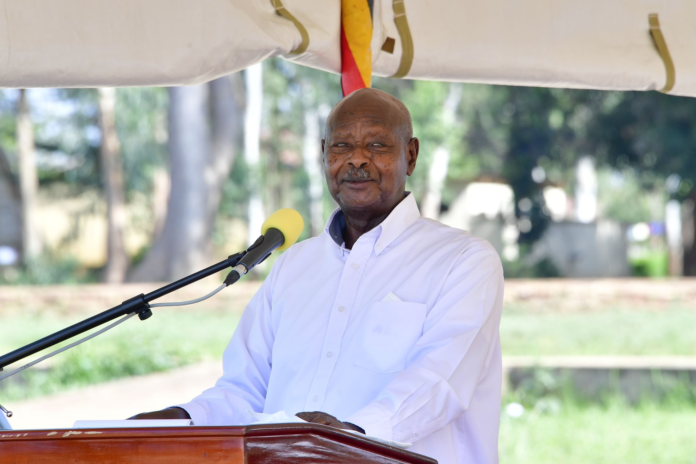
The Chairperson of the Electoral Commission, Justice Byabakama Mugenyi Simon has today launched the Electoral Commission Strategic Plan 2022/2023-2026/2027 and Roadmap for the 2025/2026 General Elections at Hotel Africana.
The objective of this Strategic Plan and Roadmap is to provide clear communication of priority areas in the Election Cycle with the aim of improving operational efficiency and stakeholder awareness and participation, by seeking to build on the positive reforms and innovations introduced in the last general elections.
Speaking at the event, Justice Byabakama echoed on the 2020/2021 General Elections, which were organized under extraordinary circumstances owing to the #Covid-19 pandemic and applauded the members of the Commission, the Management team, and the entire EC fraternity for the commitment showed while planning and carrying out Commission assignments, which were characteristically very demanding.
āThese elections were unique because the risks associated with the pandemic required us to conduct electoral activities under reduced and limited timeframes and modified guidelines. Furthermore, there was an increase in cost to provide for #Covid-19 safety measures at all electoral activity areas, public mobilization, sensitization, and enforcement, as well as safety materials at all electoral centers. The Commission appreciates the Government for providing the funding that enabled us to deliver the elections within the Constitutional timelines,ā Byabakama said.
The Electoral Commission is established under Article 60 of the 1995 Constitution of the Republic of Uganda. Under Article 61 of the same Constitution the Commission is mandated to, among others, ensure that regular, free, and fair elections and referenda are held.
In so doing, the Commission is required to conduct the various activities within specified timelines as stipulated in the Constitution and other Electoral Laws.
Byabakama clarified that under Article 61 (2), the Commission must conduct general elections for Presidential, Parliamentary, and Local Government Council elections within the first thirty (30) days of the last one hundred and twenty-two (122) days before the expiration of the term of the President, Parliament or Local Government Councils as the case may be.
He added that the Commission must, therefore, set particular timelines for purposes of proper planning, management, and organization of elections and it is in this spirit that the Commission is launching the Strategic Plan and Roadmap we are here to witness.
āSince our establishment by the Constitution, the Commission has organized and conducted six (6) general elections (1996, 2001, 2006, 2011, 2016, and 2021) as well as two referenda on political systems (2000 and 2005), and several Parliamentary and Local Government Councils elections and by-elections,ā he said.
āThe Strategic Plan we are launching today is a result of extensive research and stakeholder consultation. Following the conclusion of the 2020/2021 General Elections, the Commission conducted Post-Election Evaluation workshops across the Country with various key stakeholders in the electoral process. The stakeholders gave us their own honest assessments on how the electoral process and the conduct of the 2020/2021 General Elections were done,ā Byabakama noted
The Commission further conducted its own self-assessment by engaging the own staff to give their opinions on the conduct of the last General Elections and subsequent by-elections. The recommendations from various election observer reports were keenly studied, as well as the recommendations from Court decisions and all this was done to improve the election management.
Some of the strengths identified during these evaluations include: Government commitment to fund the electoral process; an enabling legal framework; an experienced and knowledgeable workforce; Good working relationship between the members of the Commission and Staff; forward planning through project approach and roadmap for electoral activities; and, Availability and use of technology.
The Commission also identified the following challenges: Delayed enactment/amendment of electoral laws; Continuous creation of administrative units which brings about an increase in costs; Inadequate training of temporary election officials as a result of limited funds; inadequate voter education because of insufficient funds.
Justice Byabakama said that these evaluations and self-assessments were in line with the practice of the Commission, and it is from this background that the Commission has been able to introduce new innovations and improvements in election management. To us, every election provides lessons for the next one.
The Plan and Roadmap also aim at enhancing organizational and staff capacity planning.
He further noted that organizing and conducting Presidential, Parliamentary, and Local Government Councils Elections is a huge and expensive exercise, particularly when it is funded in one year. The Strategic Plan is, therefore, designed to enable phased funding of key election activities, which will reduce funding pressure on the Government and facilitate the Commission to conduct the elections in a smooth manner.
The detailed objectives of this Strategic Plan are to:
a) Enhance inclusive citizen participation in the electoral process;
b) Strengthen stakeholder collaboration and engagement in the electoral process;
c) Deliver regular free and fair elections and referenda;
d) Improve timely, gender and equity responsive and accurate information sharing, public trust, and confidence in the electoral process; and,
e) Strengthen the institutional capacity of the Electoral Commission.
The Commission has also extracted a detailed Road Map to the 2025/2026 General Elections from the above goals.
The Roadmap will enable the various stakeholders in the electoral process to achieve the following:
a) Improvement in the planning for participation and implementation of electoral activities;
b) Improvement in co-ordination of electoral activities;
c) Timely implementation of scheduled electoral activities; and,
d) Transparency in the implementation of electoral programs and activities.
The Roadmap is clearly a reminder to all stakeholders in the electoral process to start planning to ensure a smooth democratic process.
He said that to achieve the above, the Commission appeals to the Government, particularly Cabinet and the Legislature, to ensure timely amendment and/or enactment of the relevant electoral laws. This is critical because any amendment in electoral laws will have to take into consideration, the electoral roadmap, the procurement timeframes in accordance with PPDA requirements, and the impact on the overall elections planning and budget.
The Commission further appealed to the Government to consider and approve the creation of new administrative units in a timely manner, so that the electoral program and budget are not destabilized. When this is not done, the impact on our preparations, particularly on the demarcation of electoral areas, re-organization of polling stations and voter education is enormous.
āPrime Minister, you will note that the projected cost for the 2025/2026 General elections has significantly gone up compared to the 2020/2021 General elections. The factors for the significant increase and the cost drivers are indicated and include the projected increase in the voter population and hence a number of polling stations; an increase in the number of elective offices and number of candidates nominated for elections; an increase in the number of Administrative Units; as well as continuous improvements/reforms in the electoral process, among others,ā Byabakama revealed.
He added, āAs we launch the Strategic Plan and Roadmap, we also recognize that there are key pending national-level electoral activities, namely, Administrative Units (LC 1 and LC 2) and Women Councils and Committees Elections. The Commission urges the Government to provide the required funds so that the above elections are held before key General Elections activities start, to avoid stampeding the Roadmap.ā
Byabakama cautioned political parties and organizations, that the release of this Strategic Plan and Roadmap is not meant to thrust the Country into a frenzy of campaign-related activities for aspiring individuals, Political parties, and organizations. While Consultations are provided for in the law, campaigns must follow a program approved and regulated by the Commission.
āI urge Political Parties and Organizations to use the Plan and Roadmap to make adequate preparations for successful participation in the elections. I further urge the political parties to pursue peaceful co-existence before, during, and after the electoral process,ā he said.
He cautioned citizens of Uganda, in general, that they also have a role to play in ensuring the successful implementation of this Plan and Roadmap and urged them to work with the Electoral Commission and ensure a smooth implementation of the Roadmap, and the preservation of the peace and stability they are currently enjoying.
He further appealed to the Government to continue providing adequate funding in a timely manner to enable the Commission to undertake its constitutional obligations and the Parliament to enact laws or amendments to electoral laws in time so as not to destabilize the Roadmap.
State Minister for Health, Margaret Muhanga together with WHO, KOICA official and a local politician handover medical supplies to Busoga.
Ministry of Health today has received from the World Health Organization and the Korea International Cooperation Agency a package of medical equipment designed to improve reproductive, maternal, and newborn, child, and adolescent health (RMNCAH) service delivery in five districts of the Busoga sub-region.
With funding from KOICA through WHO, the medical equipment worth 1.5 million United States Dollars is intended to equip 30 health facilities in the targeted districts of Bugiri, Buyende, Kamuli, Iganga, and Mayuge. The equipment includes 30 solar lighting systems, 30 solar vaccine refrigerators and water pack freezers, 90 stove top sterilizers, 90 resuscitators for adult, child, and neonatal sets, 90 normal delivery sets, 90 digital baby scales, 90 infant weighing scales, 90 Delivery Beds, 90 Wheelchairs, 90 Examination Beds and 90 Oxygen Concentrators.
āI welcome the support of the Government of the Republic of Korea and the people of Korea, KOICA, and WHO in procuring this essential medical equipment, as they will strengthen our effort to end preventable maternal, newborn, child, and adolescent deaths in the country,ā said Hon. Margaret Muhanga, Uganda’s Minister of State for Health in charge of Primary Health Care.
Echoing the same appreciation, Dr Yonas Tegegn Woldemariam, the WHO Representative to Uganda said that āthe provision of these medical supplies is in line with our vision to improve the countryās health system to meet the needs of its population.ā He expressed gratitude for the partnership with the Republic of Korea, KOICA, and the Ugandan government as he underlined WHO’s commitment to supporting Uganda’s health system.
His Excellency, Park Sung-Soo, the Korean Ambassador in Uganda, reiterated his governmentās commitment to supporting Ugandaās health sector noting that āthrough KOICA, the Government of Korea is committed to contributing to the achievement of the Ministry of Healthās vision of ending preventable maternal new-born, child, and adolescent deaths by improving the health infrastructure, supporting capacity building of health workers and enhancing school health.ā
The consignment of medical equipment being handed over today has been procured under the project – Health System Strengthening for Improving RMNCAH service delivery. The project has been implemented since 2020 in five districts of the Busoga sub-region including Bugiri, Buyende, Iganga, Kamuli, and Mayuge.
Under this project, WHO and KOICA procured seven ambulances that have improved the referrals of patients. Working with the Ministry of Health, they have also built the capacities of over 1500 health workers to provide quality reproductive, maternal, neonatal, child, and adolescent health services.
Moving forward, the Government of Korea through KOICA and WHO will embark on the refurbishment of 30 health facilities by renovating some sections, improving water harvesting systems, and installing motorized boreholes.
Kabaka Ronald Muwenda Mutebi has made a reshuffle in the Buganda cabinet; Charles Peter Mayiga has retained his position as the Kingdomās Prime minister (Katikkiro).
In the same reshuffle, Twaha Kaawaase remains the first deputy premier and the minister for administration and ICT in Buganda while Robert Waggwa Nsibirwa is the second deputy premier and also minister for finance in the Mengo government.
Patrick Luwaga Mugumbule has also retained his position as the speaker of the Lukiiko, the Buganda parliament with Ahmed Lwasa as his deputy whereas Christopher Bwanika has also retained his position as the Buganda Attorney General.
Noah Kiyimba, David F.K Mpanga, and Joseph Kawuki have retained their positions as the ministers for cabinet, lands and properties, and local government respectively.
Cotilda Nakate Kikomeko who has been serving as the chairperson of Buganda Kingdom Education Committee is now the minister in charge of social services and office of the Nnabagereka to replace Dr. Prosperous Nankindu Kavuma.
Mariam Nkalubo has maintained her position as the minister for self-help, environment, water and gender, the same as Israel Kazibwe and Robert Sserwanga as the ministers for information and mobilization and youths and sports.
Cotilda Nakate Kikomeko and Anthony Wamala have joined the Buganda cabinetĀ as the minister in charge of social services and office of the NnabagerekaĀ and heritage, palaces, tombs , tourism and security.
Anthony Wamala is the principal for Buganda Royal Institute of Business and Technical Education in Mengo, an institute owned by Buganda.
He is credited for having helped the institute grow into one of the best vocational institutions in the country.
Henry Ssekabembe Kiberu who has been the minister for youth, sports and recreation as well as Dr. Prosperous Nankindu Kavuma who has been in charge of social services have dropped from cabinet.
David Kyewalabye Male who has been the minister for culture, tourism and palaces has not returned to the Buganda cabinet after asking to retire from service.
The Kabaka has also created a new ministry in charge of mobilization and it falls under the Kabakaās spokesperson.
The changes have seen Noah Kiyimba gets another responsibility to add onto what he previously had and will now be the minister in charge of cabinet, lukiiko(parliament) and protocol and other affairs in the office of the Katikkiro whereas Joseph Kawuki who has been the state minister for local government has been elevated to a full minister in the same docket.
Hajji Amisi Kakomo who has been the state minister for agriculture, markets and cooperatives is now elevated to a full minister in the same docket which has been elevated to a ministry away from the ministry of lands where it previously fell under.
National Information Technology Authority (NITA) Uganda has reduced the cost of internet provision through the National Backbone Infrastructure (NBI) project from $70 (Shs 254,167) to $35 (Shs 127,083) for each Megabit per Second (Mbps). The revelation was made by Dr. Hatwib Mugasa, the Executive Director of NITA-Uganda.
In the financial year 2006/2007, the Government of Uganda through the Ministry of ICT secured funding towards the implementation of the National Data Transmission Backbone Infrastructure and e-Government Infrastructure (NBI/EGI) Project. The project aimed at providing connectivity to Government Ministries and Departments in the country. Since then, NITA-Uganda has connected 1,466 government offices, extended connectivity to 53 Districts and 10 border posts.
According to Dr. Mugasa, from the FY 2017/2018 has maintained a steady rate of $70 for each Mbps of Internet following a competitive market analysis against the average market rate which is currently at $ 84 (Shs 305,001). āIn a bid to deepen e-services usage and absorption while lowering government expenditure, we have reduced the cost of internet provision through the NBI from $70 to $35 for each Mbps,ā he said. He stated that NITA-Uganda is committed to further low bandwidth costs, deepen digitization, and accelerate e-services usage while at the same time lowering government expenditure through shared IT services like Internet and centralized hosting. āWe have been working hard to consistently lower the cost of internet bandwidth in Uganda especially for Government institutions since they provide onward services to ordinary citizens and the private sector. We are happy that we have maintained our long-term plans to lower bandwidth prices,ā he said.
Police in Kampala have charged to court, one Menya Moses a suspect in connection with a road rage related murder, which occurred on July 15, 2023 at around 12.30pm in Kironde Zone, Kabowa, Lubaga division.
Fred Enanga, Police Spokesperson said that a one Reagan Ssentongo alias Abtex, while travelling with other mourners for burial in a taxi, got involved in a minor accident with a boda-boda rider, called Wasswa, who was transporting a female passenger before an argument ensued between the boda-boda rider, and the taxi driver, who was joined by the occupants in the taxi.
āShortly after, Ssentongo, (a taxi passenger), came out of the taxi, and aggressively pushed Wasswa, the boda-boda rider, who hit his head on the road, and collapsed. This prompted one Teopista, the boda-boda passenger, to raise an alarm, where she claimed the rider had died.ā
āSeveral responders and angry residents from the Kisenyi metal yard started chasing Reagan Ssentongo, who fled from the scene. They found when he had been arrested by PC Baluku, whom they overpowered, and grabbed the suspect, Ssentongo. They took him to Kisenyi metal yard LCI offices while beating him. The suspect who sustained critical injuries was eventually handed over to police of Ndeeba and rushed to Mulago Hospital where he was admitted. He unfortunately succumbed to the injuries on 23.07.2023 at Kirudu Hospital, where he was undergoing treatment,ā he added.
His relatives retrieved the body and marched in protest in Kisenyi, before dumping the body at the railway line. The body was removed by police and transported to Mulago City Mortuary, for post mortem.
Enanga strongly condemned such blatant acts of impunity and lawlessness that cost the life of a citizen. The suspect behaved aggressively and there is no justification for his behaviour, which devastated the family of the deceased.
āWe hope this case serves as a reminder of the dangers of road rage. And how those who behave in ways that endangers the lives of other motorists on the road, shall always be arrested and prosecuted to the full extent of the law,ā Enanga urged.
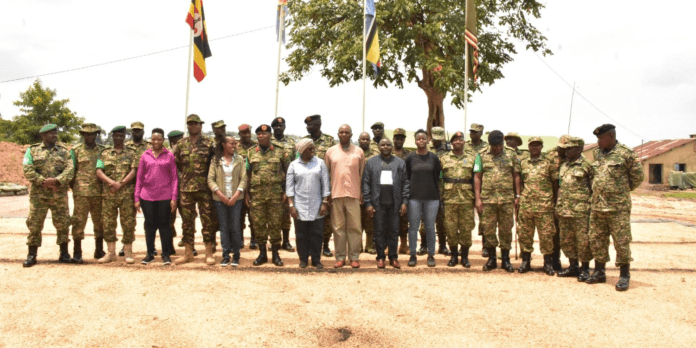
The Explosive Ordnance Disposal (EOD) Team under the Field Engineering Unit of the Uganda Peoples’ Defence Forces Contingent serving under the East African Community Regional Force has safely disposed 18 pieces of assorted unexploded ordinances ranging from rocket propelled grenade (RPG) bombs, main battle tank bombs, anti-tank bombs, 82 millimeter recoilless bombs, bomb fuses, hand grenade and assorted live ammunition of assault rifle weapons from several plantations, fields and bushes within the villages of Mabenga.
The Commanding Officer of the 9th battalion, Lieutenant Colonel Samuel Mawanda Lubega said that since the UPDF Contingent occupied the general areas of Mabenga, peace and calmness has been restored and as a result, the civilians have gone back to cultivate their fields but are faced with a challenge of unexploded ordinances left behind as a result of previous wars.
Lt. Col. Lubega said UPDF Contingent has the obligation of protecting the wanainchi against the dangers of the unexploded ordinances adding that some of the bombs were still functional and pose a great danger to human lives and animals if tampered with.
The UPDF EOD Field Engineering Commander Major Julius Aine said that the community heeded to their advice about the management of the explosives and advised the community to be vigilant and careful when dealing with unknown materials because the bombs are deadly and can cause death once they explode.
Farmers from Mabenga lauded the UPDF EACRF Contingent for the efforts towards removing the ordinances. They called upon EACRF and partners to come to their rescue and rid the general areas of North Kivu because their lives depend on agriculture and animal husbandry.
Mabenga is 37 kilometers from Rutshuru-Kiwanja town center. It is one of the food producing areas of North Kivu where food and cash crops ranging from maize, soya, beans, cassava and sorghum are produced to sustain the population of not only Rutshuru territory but North Kivu and beyond.
Officials from Mulago Specialised Women and Neonatal Hospital have been tasked to explain why they were issued with letters of credit from Bank of Uganda worth Shs4.07 billion despite the closure of the financial year.
While interfacing with the officials on Monday July 31, 2023, Members of Parliament on the Public Accounts Committee (Central Government) wondered why the letters of credit were issued on July 22, 2022 after the closure of the 2021/2022 Financial Year.
The officials led by the Executive Director, Dr. Evelyn Nabunya appeared before the committee to respond to audit queries raised by the Auditor General.
According to the Auditor General, the letters of credit were issued for the procurement of specialised medical equipment (Shs3.4 billion), an ambulance (Shs390 million) and a pick-up vehicle (Shs208.9 million).
Xavier Kyooma (NRM, Ibanda County North) observed that the money budgeted for vehicles were released but not all the vehicles were bought in the year under question.
āIf money has been budgeted for and it is not spent, it is supposed to be sent back to the Consolidated Fund. Why did you have to get these letters of credit if you had not spent the money by the end of the financial year?ā Kyooma asked.
Mubiru Muhammad, the Principal Hospital Administrator said the letters of credit were issued since the procurement process was ongoing by the time the financial year closed.
āThe procurement process for these items had not been completed by the yearend and at the time of the audit. The money for these purchases was transferred to the Bank of Uganda to be paid when the items were delivered,ā Mubiru said.
Nabunya said that there were procurement delays for the vehicles, due to changes in specifications required by the hospital.
āWe initially planned for an ambulance that had a small capacity but we discovered that it would not meet the specialised service needs offered by the hospital. We then applied for new approval of an ambulance that was of a higher capacity,ā she said.
Nabunya added that funds were not enough to purchase the vehicles in the year under audit due to increased prices attributed to #Covid-19.