Stanbic Bank
Stanbic Bank
28.7 C
Kampala
Stanbic Bank
Stanbic Bank
Home Blog Page 373

Nabakooba launches campaign to support people living in informal settlements in Uganda

Slum settlement in Kampala that are occupied by urban poverty.

KAMPALA-The Minister for Lands and Urban Development and Habitat for Humanity have launched a five-year campaign dubbed Home Equals. The campaign is seeking policy changes at the local, national and global levels to increase access to adequate housing for people living in informal settlements.

As part of the Home Equals campaign, Habitat for Humanity Uganda is advocating for increased collaboration with settlers of informal settlements, accessible quality basic essential services and improved land governance and leadership by local government land committees.

About 60% of Uganda’s urban population, or 6,840,000 people total, live in informal settlements, according to Uganda Bureau of Statistics, UBOS 2021 and UN-HABITAT.

“Informal settlements are becoming the most urbanizing areas of our cities. Their residents are playing an incredibly important role as they find employment and housing solutions for themselves,” Robert Otim, the National Director of Habitat for Humanity Uganda said.

“With the right collaboration, partnerships and policies; their efforts can accelerate development and open the door to a better future for many more people who deserve an opportunity to live in a safe, secure home,” he said.

“When I look at a home, it doesn’t matter where it is as long as it can meet the requirements and as long as it can address the social and emotional feelings for the person,” Nabakooba said.

She said it is in a home that we build our self-esteem among the family and communities. As a government we have put up a lot of focus on the home as the best starting point for all our interventions. Government has put up programs such as Parish development models to address the socio economic well-being of the people who live in households.

A pilot study for this Campaign undertaken within selected zones of Kampala Central, Kawempe and Nakawa divisions indicates that access to essential basic services such as clean water and safe sanitation facilities is a great challenge. This is worsened by the limited engagement of the communities to better their living environment, as most of them are tenants.

Previous studies on water provision and resilience within informal settlements in African cities for instance indicate that up to 71% of settlers in informal settlements access water from a public tap, spending up to 10% of their income on water.

At the global level, Habitat for Humanity is calling on G7 member states to recognize equitable access to housing as a critical lever for development progress and commit to addressing housing needs in informal settlements as a way to advance international development priorities in areas such as economic growth, health and education.

The economic and human development gains from improving housing at a massive scale in informal settlements would be substantial, according to a report released recently in support of the Home Equals campaign. The first-of-its-kind report from Habitat for Humanity and its research partner, the International Institute for Environment and Development, or IIED, modeled the benefits that would be realized – in terms of economic growth, income, health, and education from those housing improvements.

The report found that GDP and income per capita would increase by as much as 10.5% in some countries and that roughly 730,000 lives could be saved each year globally more than the number of deaths that would be prevented annually by eradicating malaria. As many as 41.6 million additional children would be enrolled in school, according to the modeling. That’s one out of every six out-of-school children in the world.

“This report adds to the evidence that ensuring people living in informal settlements have access to adequate housing isn’t just the right thing to do, it’s the smart thing to do,” said Jonathan Reckford, president and CEO of Habitat for Humanity International. “Through the Home Equals campaign, we and our partners are committed to taking action so that, when it comes to the places we call home, the more than 1 billion people living in informal settlements are truly treated as equals.”

Stories Continues after ad

FDC withdraws from Bukedea by-election over democratic fraud and sham

Patrick Oboi Amuriat, FDC President.

Forum for Democratic Change (FDC) party has with immediate effect withdrawn from the ongoing Bukedea by-election terming it ‘democratic fraud and sham’.

“The events that are taking place on this June 14, voting day in Bukedea district LC5 by-election have left us deeply troubled. We consider this to be yet another case of electoral fraud witnessed in Uganda under the NRM not different from earlier ones only that the scale in this case is unprecedented in the history of elections in our country,” Patrick Oboi Amuriat, FDC President said.

He added, “Upon arrival of our agents at the polling stations at 6:00 am, we were disheartened to discover that the ballot boxes had already been tampered with. Shockingly, all the ballots had been pre-ticked, and the ballot boxes were already filled to the brim in most polling stations.”

He noted that this fraud continued in all the remaining polling stations mainly aided by the police and army.

“Our intelligence sources point to the fact that the majority of these fraudulent ballot boxes were pre-ticked from several schools around Bukedea and the Central Police Station on the night of June 13, 2023,” Amuriat revealed.

The party unequivocally condemns the use of the police and military in propagating these malpractices and the intimidation, torture and imprisonment of members of the media in their line of duty while covering this election.

“This by-election can only be characterized as yet another sham, devoid of transparency and legitimacy. We firmly refuse to participate in a process that lacks integrity and does not represent the will of the people of Bukedea,” he said. Adding, “Therefore, through this communication, we declare our official withdrawal from this sham ‘election.’ We have instructed all our polling agents, polling supervisors, and foot soldiers to withdraw immediately. We will not lend credibility or legitimacy to a process that is tainted by fraudulent practices.”

Amuriat said that FDC will now focus on determining the appropriate course of action in response to this gross violation of democratic principles and liberties of Ugandan and remain committed to upholding the rights of the Ugandan people and fighting for a fair, transparent, and inclusive electoral system.

“We call upon all Ugandans who value democracy to stand with us in denouncing this fraudulent by-election and demanding accountability for those responsible. The future of our country depends on our collective commitment to justice, democratic values and civil liberties,” he urged.

Stories Continues after ad

Gen Kyanda lauds Nigerian Armed Forces for continued security co-operation with Uganda

Gen. Kyanda and Maj. Gen Ali Bamidele who led the Nigerian team. Photo-Eagle Online.

UPDF Joint Chief of Staff, Major General Leopold Kyanda, on behalf of the Chief of Defence Forces, General Wilson Mbasu Mbadi, has lauded the government of Nigeria and Nigerian Armed Forces for the continued friendship and bilateral co-operation with Uganda and specifically the Ministry of Defence/UPDF on matters of defence and security.

He made the remarks to a delegation of officers from the Army War College Nigeria, Course 7/203, on a Geo-Strategic Study Tour in Uganda which engaged with the strategic leadership of the Uganda Peoples’ Defence Forces at the Ministry of Defence and Veteran Affairs Headquarters, Mbuya on Tuesday 13.

The study tour is under a theme; Protection of Critical National Assets and Infrastructure for National defence.

“This tour presents a valuable opportunity to share experiences and seek solutions to the global security challenges. This is because the globe and Africa in particular are shaped by its geo-strategic location, natural resources and competing foreign interests which have socio-economic, political and security connotations that call for new approaches, strategies and partnership to deal with common security challenges,” said Maj. Gen Kyanda.

Maj. Gen Kyanda commended the Nigerian Government and Army War College for embracing and supporting initiatives of bilateral, regional and international levels aimed at finding sustainable solutions to crosscutting security issues that affect peace and stability. He reaffirmed UPDF’s commitment to supporting all initiatives and protocols aimed at combating the existing security threats. He encouraged them to keep on networking sharing and exchanging relevant information that may guide strategic military decisions in order to ensure sustainable peace, stability and social economic transformation.

The Deputy Chief of Military Intelligence Brig. Abdul Rugumayo said that the Uganda and Nigeria enjoy a long history, which predates colonial times. The two countries are multilingual with multi-ethnicities, with a history of civil wars and instability. He also noted that the first Chief Justice of independent Uganda Sir Udo Udoma (1963-69) was a Nigerian.

Speaking at the same function, the Chief Political Commissar (CPC) Maj Gen Henry Matsiko reaffirmed Uganda’s commitment to Africa’s integration which will lead to economic and later political integration. He said that Africa had four broader original groups; the Bantu/Kwa, the Nilotic-Luo in the Sahel African region, the Afro-Asiatic/Hamitic group and the Khoisan group as he called for the uniting of Africa.

“For us to remain relevant, definitely the answer is not to remain the way we are. Integration is not a matter of luxury but a matter of survival. Separate as independent states we are all vulnerable to people that have already harnessed the entire space. Our ideological disposition is that our future is in integration. Uganda is convinced that the only guarantee for strategic security, prosperity through bigger markets and a stronger voice in the world affairs of our people only lies in integration,” Maj. Gen Matsiko.

The head of the visiting Delegation and Commandant of the Army War College Nigeria, Maj. Gen Bamidele Ali that there is need for Nigeria to borrow a leaf from Uganda and UPDF in particular for Nigeria to ensure it protects its assets like oil, gas and population. He called upon both countries to engage more in terms of military co-operation and exchange of students.

“History has it that Uganda is one of the most stable countries in Africa and we admire the approaches that you use to achieve this. You do not allow traitors to come to you rather, you move and check traitors before they come to you,” said Maj Gen Alabi.

Stories Continues after ad

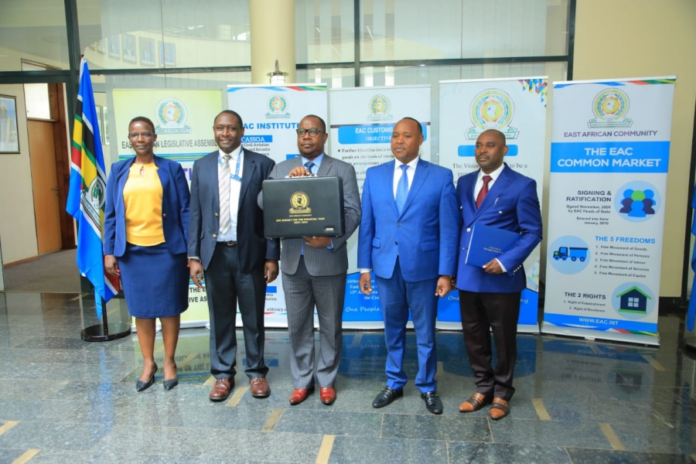
EAC bolsters regional cooperation with a $103.84m budget for 2023-24

The East African Community (EAC) has raised its spending plan for the 2023/24 financial year to $103.84 million from $91.58 million last year, an 11 percent increase. The budget allocations focus on sectors such as education, science, health, and judiciary, with an emphasis on economic growth and climate change resilience.

The regional group aims to raise around half of the funds from the contributions of the seven-member nations, with the balance coming from development partners, according to the budget presented on Tuesday by the minister of Burundi and head of the EAC Council of Ministers, Ezechiel Nibigira.

“Out of this amount, $59,033,010 (57 percent) will be contributed equally by partner states or raised as other internal revenues, while $44,809,870 (43 percent) will be sourced from development partners,” Nibigira disclosed to the East African Legislative Assembly (Eala) sitting in Arusha.

The budget projections, according to the minister, were submitted in the midst of several global shocks, including the Russian invasion of Ukraine, challenging global economic conditions, the lingering impacts of COVID-19, and the implications of climate change, all of which continue to have an influence on the economies of the EAC.

 “Despite these challenges, economic growth in the region improved to 4.8 percent in 2022 from 3.5 percent in 2021. The strong growth in the region was supported by the good performance of the industry, services, construction, mining, and manufacturing sectors,” Nibigira noted.

“Global economic growth is expected to remain weak, mainly due to anti-inflationary measures and geopolitical risks,” he added.

Nibigira predicted that the EAC economies will have a bright future, thanks to excellent growth in the services sector and rising public and private investments.

“However, downside risks remain, attributed to weaker global growth, tight financial conditions and climate change risks,” he said.

The Inter-University Council for East Africa will receive 12% of the funding, with the EAC Secretariat receiving 49%, followed by Eala at 17% and Eala.

The Lake Victoria Fisheries Organization will receive 3%, the East African Court of Justice will receive 4%, and the Lake Victoria Basin Commission will receive 8%.

The East African Science and Technology Commission and the East African Health Research Commission each received 2% from the EAC, while the East African Kiswahili Commission and the East African Competition Authority each received 1%.

Stories Continues after ad

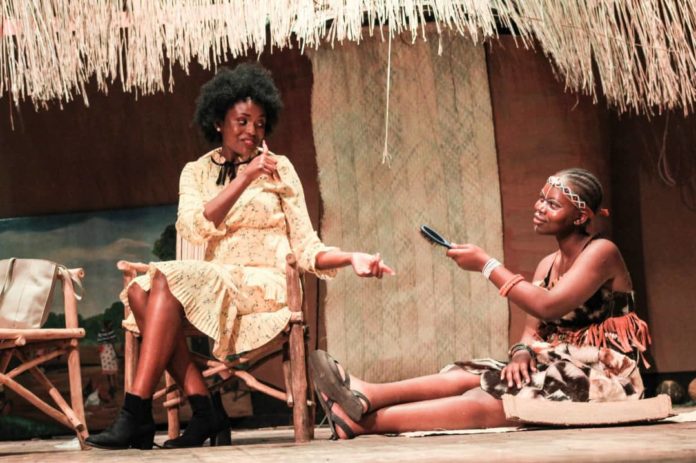
‘Echoes of Lawino’ Leaves Audience Awestruck at The National Theatre

The literary play “Echoes of Lawino” took center stage at The National Theatre from June 9 to June 11, 2023, leaving the audience captivated and moved as the performers flawlessly brought to life the characters vividly described in the timeless poems of “Song of Lawino” and “Song of Ocol.”

Penned by the literary guru Okot p’Bitek, these poems chronicle the poignant lamentations of a traditional African woman whose husband, upon embracing education and Western civilization, undergoes a profound transformation. 

He abandons their cherished African way of life, culture, and traditions and takes pride in marrying a new wife who epitomizes the ideals of Western society.

The genesis of this theatrical opus stems from the visionary aspirations of its producer, Peter Ojok Okello, who envisions a city that thrives with holistic progress while cherishing and preserving African cultural norms and values. With “Echoes of Lawino,” Okello sought to showcase the beauty and depth of African culture while exploring the contrasts and impacts of Western influences.

The three-day run of the play was a remarkable success, with each performance focused on drawing spirited comparisons between African cultures and Western norms. 

Divided into sessions, the play delved into various cultural and political themes, highlighting the differences between Lawino and her co-wife in physical appearance, kitchen power, attire, and their ability to cater to their husband’s needs, among other aspects.

Throughout the play, the audience was treated to mesmerizing interludes of cultural music and spellbinding dance routines, seamlessly intertwining the sessions.

These interludes added depth and emotion to the performances, enriching the overall experience for spectators.

“Echoes of Lawino” illuminated the veils of political and religious hypocrisy, underscored the stark disparities between cultural traditions, and shed light on the impact of civilization on African heritage. 

Above all, it implored Africans to embrace the positive elements of Western culture while preserving their traditions.

Alex Kitaka, the director of the play, emphasized the importance of celebrating literary luminaries such as Okot p’Bitek and reigniting appreciation for their work.

He passionately advocated for the preservation of African customs, languages, and traditions while selectively assimilating beneficial aspects of Western culture to contribute to Africa’s holistic development and advancement.

The show garnered attention from prominent literary scholars, artists, and politicians, with notable figures such as Nobert Mao in attendance. 

Their presence highlighted the significance of “Echoes of Lawino” in sparking discussions about African identity, cultural preservation, and the evolution of society.

“We embarked on this endeavor to reimagine celebratory opus of Okot p’Bitek and celebrating his remarkable stature as a preeminent scholar of literature in our nation and across Africa.

Furthermore, our mission was to serve as a poignant reminder to Africans that amidst the encroachment of Western culture, our distinct customs, language, and traditions remain steadfast.

We firmly believe in the potential to selectively draw upon philosophies and ideas from Western culture that can propel our collective progress and upliftment as African people,” expressed Kitaka.

“Echoes of Lawino” at The National Theatre succeeded in captivating audiences, reigniting cultural pride, and stimulating important conversations about the fusion of African and Western influences. 

The production serves as a testament to the enduring power of literature and the significance of preserving Africa’s rich cultural heritage in an ever-changing world.

Stories Continues after ad

BoU maintains lending rate at 10% amidst decline in inflation

Dr Michael Atingi-Ego, Deputy Governor BoU. Photo-Eagle Online.

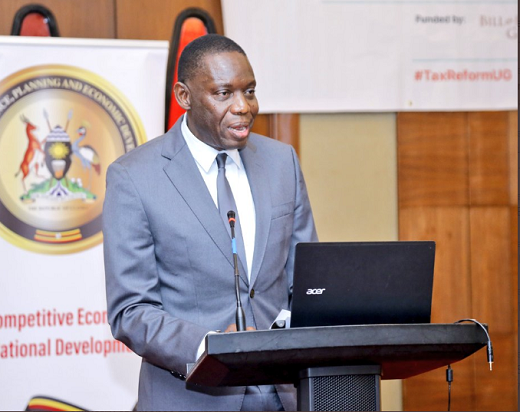
KAMPALA-Bank of Uganda (BoU) has maintained the Central Bank Rate (CBR) for the month of June 2023 at 10 percent even as the economy experiences a decline in inflation.

Bank of Uganda Governor Dr Michael Atingi-Ego on Tuesday explained that the Monetary Policy Committee has decided not to reduce the cost of credit through the CBR as there are still risks to the inflation rate which could reverse the trend.

“Despite the improvement in the near-term inflation outlook relative to the assessment at the MPC meeting of April 2023, the current inflation projections remain sensitive to elevated risks,” he announced at a press conference.

“The MPC recognized that significant risks persist in the economy, and that the current monetary policy stance remains appropriate to consolidate the gains made and restore price stability while supporting economic growth,” he added.

The CBR is an indicator of the cost of money to commercial banks, on which the bank may base their lending rates, hence determining the flow of money into the economy.

BoU started raising the CBR last year to tame inflation which later hit the 10 percent mark, with items like food, fuel, and building materials leading in price increments.

Last month, the Uganda Bureau of Statistics reported that the annual headline inflation had dropped from 8 percent in April to 6.2 percent at the end of May.

However, Dr. Atingi-Ego said that while they hope inflation will continue going down if agricultural output, better weather, lower global commodity prices, and lower economic performance, it is possible for the opposite to happen.

Dr. Adam Mugume, the Executive Director of Research, explained that the uncertainty of where the conflict in Eastern Europe will end as well as the lending rates by the global lenders are major causes of concern on the outlook of inflation.

These factors are also expected to have an impact on economic growth according to the Committee.

Inflation in Uganda was part of the global situation that followed the high demand for goods and services after economies reopened from the #Covid-19 pandemic, and this was worsened by the Russia-Ukraine war which further disrupted supplies around the world.

Uganda was mainly affected by the high cost of fuel, and wheat cooking oil before poor agricultural output made it worse.

Dr. Atingi-Ego said they expect the economy to grow at between 6 and 6.5 percent next financial year, compared to the estimated 5.3 percent for the year ending June 2023, before accelerating to 7 percent in the subsequent years.

This growth is expected for increased government expenditure, increased investment in the oil and energy sectors, expected recovery in manufacturing and construction, and higher export commodity prices.

However, he said this also still has risks it is facing and that there is high uncertainty about economic growth due to factors like low global growth, geopolitical tensions, and dwindling sources of external finances, among others.

Stories Continues after ad

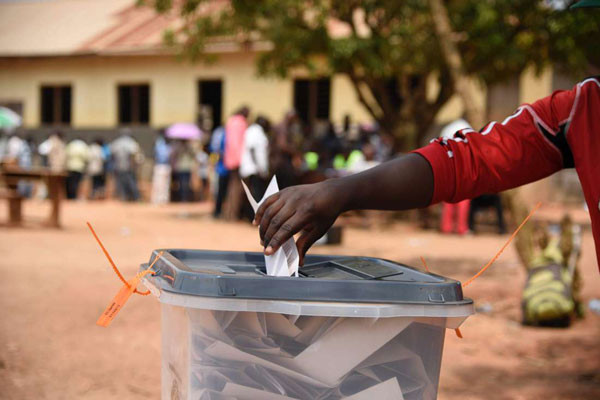
Bukedea LC5 By-election set for tomorrow

BUKEDEA-The Bukedea LC5 By-election is set for tomorrow June 14. The District Chairperson seat fell vacant following the death of the former Chairperson, Moses Olemukan on December 17,2022.

A total of six candidates from different political parties are in the race to occupy the Bukedea LC5 position.

The candidates include; Mary Akol (NRM), Pius Edekeny Independent, Lokwiisk Tychicus Ebukalin an Independent, and Sam Oita Odeke on the Forum for Democratic Change (FDC) party ticket.

Other candidates in the race include, National Unity Platform’s Paul Okiria, Salim Okwii (UPC on the Uganda Peoples’ Congress (UPC) as well as David Stephen Omagor (independent).

The NRM vice chairperson for Eastern Uganda Captain Mike Mukula, the party Secretary General, Richard Todwong, and the Electoral Commission chairperson, Tanga Odoi are among the several NRM leaders that have camped in Bukedea district to rally support for the party flag bearer ahead of the election.

The team is vote hunting for the NRM Flag bearer, Akol Mary on the last day of the campaigns urging the voters to choose her since she is the best choice candidate for the seat.

NUP’s deputy spokesperson, Alex Waiswa Mufumbiro rallied that the party hopes to use the election to take the revolutionary message to the people of Oyam and Lango Sub-region.

“Comrade Okello has been very actively engaged with the cause, and we believe he has the conviction and courage to take on the mantle. He currently serves as a District Councilor in Oyam Town- council under NUP,” he said.

Stories Continues after ad

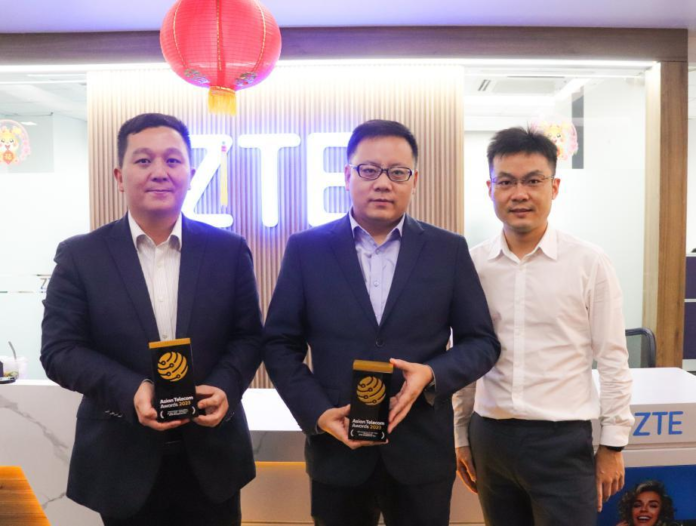
ZTE secures two major awards at the Asian Telecom Awards 2023

ZTE secures two major awards at the Asian Telecom Awards 2023

  • > ZTE won the “Technology Innovation of the Year – Philippines” award for its partnership with Converge ICT Solutions Inc. ZTE introduced the first residential XGS-PON services in the Philippines through Converge
  • > ZTE secured the “HR Initiative of the Year – Philippines” award  with its outstanding FLIP program

13 June 2023

Manila Philippines – ZTE Corporation (0763.HK / 000063.SZ), a global leading provider of information and communication technology solutions, has been honored with two prestigious awards at the Asian Telecom Awards 2023. ZTE received the “Technology Innovation of the Year – Philippines” and “HR Initiative of the Year – Philippines” awards. These accolades acknowledge ZTE’s outstanding accomplishments and initiatives among Asia’s top telecommunications companies.

The Asia Telecom Awards commend the endeavors of telecommunications companies across Asia in delivering the top-notch products and services in a challenging market. ZTE distinguished itself from the competition by utilizing ZTE XGS-PON for network expansion and implementing the Filipino Localization Improvement Program (FLIP). FLIP focuses on enhancing the skills of local engineers and driving localization efforts, demonstrating ZTE’s commitment to empowering the Filipino telecommunications industry.”

ZTE bagged the Technology Innovation of the Year – Philippines award for its partnership with Converge ICT Solutions Inc., the country’s fastest growing fiber internet provider.  ZTE introduced the first residential XGS-PON services in the Philippines through Converge, enabling an industry-first average speed of 8 Gbps. This brings a first-world country experience for the Converge’s clientele, catering to bandwidth-hungry applications, more users, and an increased number of devices.

“ZTE Philippines will continue to be the country’s partner in bringing forth second-to-none technology innovations, remaining faithful to our commitment towards driving the digital economy,” said Zhang Chaohao, CMO of ZTE Philippines.

Meanwhile, ZTE also claimed the HR Initiative of the Year – Philippines award for its FLIP program, a meticulously  planned talent management strategy aimed at recruiting, and nurturing digital talents in the industry. Additionally, ZTE has entered into a strategic cooperation Memorandum of Understanding (MOU) with two of the Philippines’ premier universities, the University of Santo Tomas (UST) and the Polytechnic University of the Philippines, as part of an Industry-Academe Linkage Program (IALP). This collaboration strengthens industry-academe partnerships and fosters mutual growth.

“All these initiatives and partnerships initiated by ZTE Philippines steer the company towards a successful direction, as well as contribute to the country’s economic development as a whole given the exceptional talent that ZTE plans to attract, develop and retain,” said Jin Zhichao, CTO of ZTE Philippines.

“Being a company that believes in the quality of the Filipino workforce, we look forward to attracting and nurturing even more outstanding talents from the Philippines,” concluded Liu Feng, HR Director of ZTE Philippines.

Stories Continues after ad

Housing Finance Bank Joins GIZ to Kick-start Program to Foster Smart Cities Solutions in Uganda

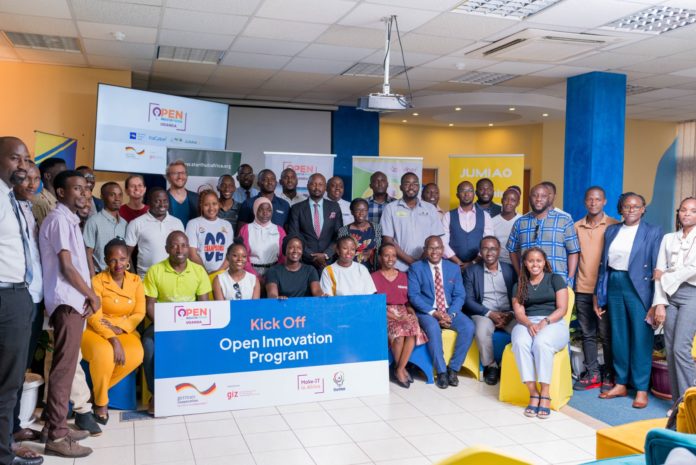
Last week, Housing Finance Bank hosted the official kick-off event of the Open Innovation Program at its headquarters in Kololo.The Program, an initiative commissioned by Make-IT in Africa, a project by Deutsche Gesellschaft für Internationale Zusammenarbeit (GIZ) GmbH, on behalf of the German Federal Ministry for Economic Cooperation and Development (BMZ), aims at advancing innovation that promotes smart cities and bridges the gap between private and public sector needs by allowing early-stage innovators and entrepreneurs to take their technology-driven solutions to the next level. Housing Finance Bank, alongside their partners StartHub Africa, KaCyber, NITA Uganda, and Jumia Uganda, will support the 15 tech startups in co-creating innovative solutions in the field of smart cities.

The Open Innovation Program is designed to build capacity for startups, refine smart city innovations, establish long-term partnerships, and empower startups through personalized venture development and business modelling.

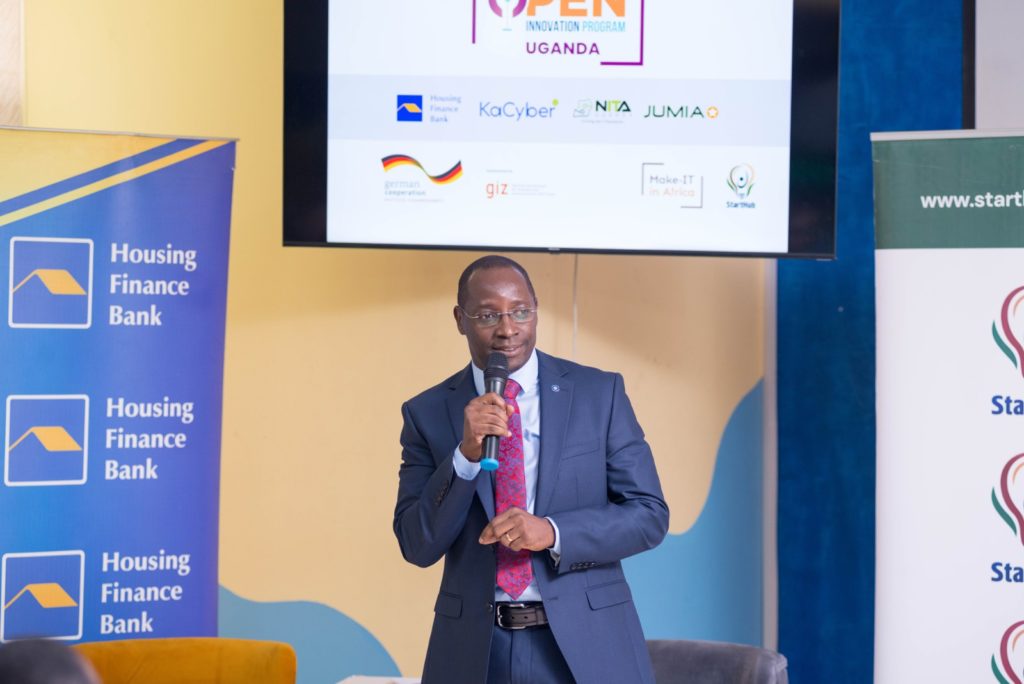
Micheal Opira - HFB COO
Micheal Opira – HFB COO

During the kick-off event, Mr. Micheal Opira, Chief Operating Officer of Housing Finance Bank, emphasized the pivotal role of technology in creating sustainable real estate and smart cities. He stated, “Alongside a host of partners, we are excited to kick off the Open Innovation Program, an initiative that empowers entrepreneurs to develop transformative tech-solutions that will revolutionize cities, enhance the quality of life, and contribute to sustainable development of our country.”

The program will foster digital solutions that enhance housing affordability, accessibility as well as support businesses to reach and engage consumers and improve citizens’ access to public services. Participants in the program will gain access to a comprehensive range of resources, including partnerships with esteemed organizations, coaching and mentorship, learning workshops, investor meetings, and a supportive community of entrepreneurs. These opportunities will empower the startups to refine their ideas, scale their businesses, and make a lasting impact on the future of smart cities.

Housing Finance Bank remains committed to driving innovation and sustainability in the real estate sector. Through collaborations with startups and key industry stakeholders, the bank aims to pursue its purpose of enabling sustainable home ownership and financial independence for the people of Uganda.

Stories Continues after ad

DPP drops charges against Rwenzururu King, Charles Wesley Mumbere

The Director of Public Prosecutions (DPP) Jane Frances Abodo has dropped all charges against the Omusinga Charles Wesley Mumbere of Rwenzururu, and 217 others.
According to Jaqueline OKui, the spokesperson ODPP, the charges have been dropped, the suspects applied for amnesty and the applications were filed at the ODPP for consideration.


“Upon considering them, she found that they qualify for amnesty,” she said.
Mumbere was nabbed on November 27, 2016 after the army invaded the kingdom, killing over 150 people. His premier Thembo Kitsumbire would later on 15 December 2016 be arrested alongside 202 kingdom pages.


The group was produced before Jinja high court, Eva Luswata and charged with murder, treason and aggravated robbery.
In January 2017, Mumbere was granted a non-cash bond of Shs 100 million. His sureties will also sign a non-cash bond of Shs 100 million each.  Court restricted his movements to the districts of Kampala, Wakiso and Jinja during the period of his trial.
Subsequently, on March 16, 2017, court, Eva Luswata released Kitsumbire was released non-cash bond of Shs 75 million while his sureties were bonded 100 million Shillings each.


In December 2016, a group of Members of Parliament from the Rwenzori sub-region petitioned ICC, requesting for investigations into the infamous Kasese killings. Over 100 civilians are alleged to have been killed during the assault and scores left injured.
In 2019, Kasese leaders, including the former leader of opposition (LOP) in parliament Winnie Kiiza, threatened to reconsider the dragging of president Museveni, Maj. Gen peter Elwelu and Assistant Inspector General of Police Asuman Mugenyi to International criminal Court (ICC) over the attack of Rwenzururu kingdom.


In December 2022 six Rwenzururu kingdom Royal guards were released on bail. The six were released by the International Crimes Division of the High Judge Alice Komuhangi Kaukha on grounds that they are of advanced age and look frail and sickly having spent over six years on remand at Jinja Main prison. They were part of 49 royal guards who were arrested together with King Mumbere.

Stories Continues after ad