Stanbic Bank
Stanbic Bank
18.2 C
Kampala
Stanbic Bank
Stanbic Bank
Home Blog Page 380

MoneyGO – The Secure, Fast, and Convenient Kenyan Betting Payment Option

Are you looking for a secure, fast, and convenient way to deposit and withdraw funds from your betting accounts in Kenya? Look no further than MoneyGO – the payment option offered by many Kenyan betting sites. This payment method is designed to make it easier for bettors to get started placing bets on their favorite sports teams or games with just a few simple steps. With MoneyGO, you can enjoy the convenience of depositing and withdrawing funds quickly and securely at any time. In this article, we’ll look at the advantages of using this payment option as well as how to get started with MoneyGO.

Advantages of Using MoneyGO for Betting in Kenya

MoneyGO is a convenient and secure payment option offered by many Kenyan betting sites, allowing bettors to easily fund their accounts, whether on desktop or mobile applications. A lot of betting sites have that option nowadays, but the best one in the current market is 1xBet’s mobile application and website. With MoneyGO, punters have the freedom to manage their funds at any time of day without waiting or having to use multiple payment methods.

One of the key advantages of using MoneyGO for betting in Kenya is the speed with which transactions are completed. Since payments are processed through the MoneyGO network, your funds will be available immediately after you make your transaction – making it an ideal choice for anyone in a hurry.

Additionally, MoneyGO provides high levels of security for both deposits and withdrawals. All payments are encrypted and stored safely on their secure servers, which means that your personal information remains protected from hackers and data thieves. Furthermore, all funds deposited into betting accounts using MoneyGO are safeguarded by their fraud protection tools, so you can rest assured that your money is safe.

Finally, MoneyGO offers low fees when compared to other payment methods on the market. Deposits and withdrawals made through this payment method come with no extra charges attached, meaning more money in your pocket when placing bets online.

In short, if you’re looking for a secure and fast way to deposit or withdraw from your Kenyan betting account – MoneyGO is an excellent choice!

Steps to Get Started with MoneyGO

Getting started with MoneyGO is quick and easy. All you need to do is create an account on the MoneyGO website, which takes only a few minutes. Once your account is activated, you will have access to the MoneyGO Dashboard, where you can manage your funds and track transactions.

From the dashboard, you will then be able to deposit funds into your betting accounts by selecting one of the supported payment methods – such as Visa, Mastercard, or M-Pesa – before confirming the transaction. Similarly, when it comes time to withdraw funds from your betting accounts back into your MoneyGO wallet, you can quickly process these requests with just a few clicks.

MoneyGO also offers exceptional customer support should you encounter any problems when managing your funds or placing bets on betting sites in Kenya. Their team is available 24/7 via email or live chat so that any queries can be addressed quickly and professionally.

For added convenience, MoneyGO also provides its users with up-to-date information about current promotions or bonuses available at different sports betting sites in Kenya. This means that bettors can stay ahead of the game and take advantage of any special offers that might help them reach their betting goals faster.

In conclusion, using MoneyGO as a payment method for Kenyan betting sites offers several advantages for punters looking to start placing bets on their favorite sports teams or games. From fast transaction speeds to low fees and added security measures – all backed by dedicated customer support – opting for this payment option allows bettors to enjoy a secure and convenient way to manage their funds online.

How to Deposit Funds into Your Account with MoneyGO

Depositing funds into your betting accounts with MoneyGO is simple and straightforward. All you need to do is go to the MoneyGO Dashboard and select one of the supported payment methods – such as Visa, Mastercard, or M-Pesa – before confirming your transaction. The money will be transferred safely and securely within minutes, allowing you to start placing bets right away.

It is important to note that all deposits made through MoneyGO are fully protected by 128-bit SSL encryption, which prevents any data from being accessed by third parties. Furthermore, MoneyGO provides its users with fraud protection tools that help safeguard their funds in case of an attempted scam or unauthorized withdrawal.

When depositing funds into your account through MoneyGO, there is no minimum deposit amount required – meaning you can transfer as much or as little money as you like. However, it’s important to note that some sites may impose a maximum limit on the total amount of money that can be deposited from your account in one day.

One of the biggest advantages of using MoneyGO for betting in Kenya is the low fees associated with deposits and withdrawals. All transactions are free of charge, so you won’t have to worry about any additional costs eating away at your winnings when placing bets online.

Overall, depositing funds into your betting accounts with MoneyGO is quick and easy – giving bettors a secure and convenient way to manage their funds online. Plus, with low fees and added security measures – all backed by dedicated customer support – opting for this payment option allows punters to enjoy a hassle-free experience when making deposits or withdrawals.

Stories Continues after ad

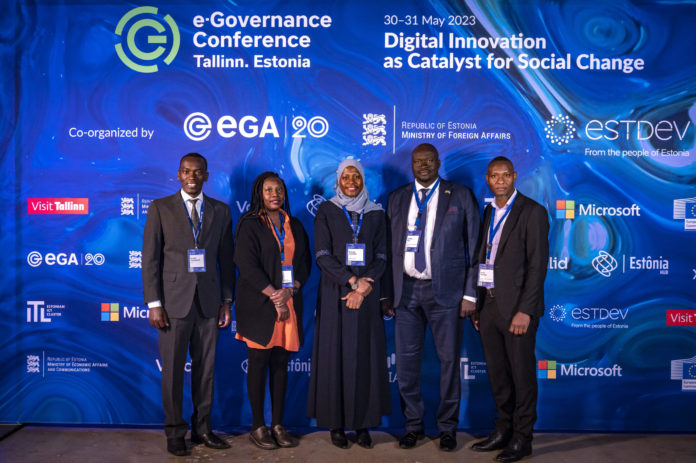
Ministry of ICT’s Dr. Aminah Zawedde ignites Global Enthusiasm: Unveils Recipe for Equitable Development

Ronald Tumuhairwe PPDA, Flavia Opio, Hon. Feta Geofrey MP Ayivu East Constituency Arua City, Amos Mpungu

Tallinn, Estonia – In a captivating keynote address at a prestigious global eGovernment Conference, Dr. Aminah Zawedde, Permanent Secretary Ministry of ICT and National Guidance, mesmerized the audience with a visionary discourse on how cooperation between governments, the private sector, civil society, and academia can foster innovation in the public sector, while advocating for digital innovation as a catalyst for social and economic transformation.

The eGovernment Conference is a top-tier global conference focused on exploring the potential of cooperation between governments, the private sector, civil society, and academia in fostering innovation within the public sector.

Amidst an atmosphere of anticipation and excitement, Dr. Zawedde passionately advocated for digital innovation as a catalyst for profound social and economic transformation in Uganda. With unwavering conviction, she highlighted that true digitization could only be achieved by working collectively to develop and implement innovative e-governance policies that prioritize sustainability and inclusivity.

During the enthralling address, Dr. Aminah emphasized that the responsibility for Uganda’s development did not solely rest on the shoulders of the Government. Rather, it necessitated the active participation and collaboration of the private sector, development partners, and academia. By uniting these stakeholders, the Ministry of ICT and National Guidance aims to leverage its highly skilled ICT labor force and create a favorable environment for investment and growth.

Dr. Aminah’s speech left the audience inspired and motivated, as she unveiled a vision where Uganda emerges as a beacon of digital transformation and progressive Governance across Africa. Her profound declaration resonated throughout the event, echoing the sentiment that the nation stood ready and eager to welcome global partners, investors, and innovators.

Drawing from the vibrant landscape of Uganda’s burgeoning digital ecosystem, Dr. Zawedde illuminated the extraordinary potential for meaningful digital transformation. By embracing digital innovation, the country aspired to bridge the gap between urban and rural areas, enhance service delivery, and empower its citizens with technology-driven solutions.

As the event drew to a close, Dr. Aminah’s resounding message reverberated through the hearts and minds of attendees. Her impassioned plea for cooperation among governments, the private sector, civil society, and academia underscored the transformative power that lies within collective action.

With the Dr. Aminah’s call to action still reverberating, Uganda unveiled itself as an enticing destination for global investment and collaboration. The nation’s highly skilled ICT labor force, combined with its commitment to fostering innovation, positioned it as a compelling prospect for those seeking to make a sustainable impact in Africa.

As the event concluded, the resolute invitation remained clear: Uganda, with its fervor for progress and dedication to cooperation, eagerly welcomed the global audience to come and invest in a nation poised to lead the way in digital transformation and inclusive change.

Stories Continues after ad

Medipal hospital closed over Shs1.8b rent

Patients that had sought for treatment at Medipal International Hospital were thrown into panic when management of the building that houses that medical facility decided to close it over accumulated rent arrears.

Tembo Steels Uganda Ltd through Securex private security company closed Hospital.

The proprietors of the building are demanding more than Shs1.8 billion outstanding rent since mid-2022. Securex security guards have reportedly left one entry and exit point for both patients and medics at the facility.

“Our client has given us strict instructions. He has instructed these security people,” landlord’s lawyers said before they had a short meeting inside the health facility.

The hospital is reportedly having no clients as many would be patients haven’t flocked the medical facility for treatment.

Stories Continues after ad

Mwenda, MP Fox Odoi petition court over Anti-Homosexuality Act

Fox Odoi and Andrew Mwenda among others have gone to Constitutional Court.

KAMPALA-Veteran Journalist Andrew Mwenda, MP Fox Odoi and nine other activists have petitioned the Constitutional Court challenging the just signed Anti-Homosexuality Act 2023.

Yesterday President Yoweri Museveni passed an Anti-Homosexuality bill into law. The law protects traditional families through prohibition of sexual relationships between people of the same sex, strengthening that country’s capacity to deal with emerging threats to the traditional family, protecting the cherished culture of Uganda and protecting children and youth who are vulnerable to sexual abuse.

Other petitioners include; Dr. Busingye Kabumba, a lecturer of Law at Makerere University; Dr. Frank Mugisha, the Coordinator of Sexual Minorities Uganda-SMUG; Solome Nakaweesi Kimbugwe; Eric Ndawula;  Richard Smith Luthimbo, the Executive Director of Uganda Key Populations Consortium-UKPC; Kasha Jacqueline Nabagesera, former Executive Director of Freedom and Roam Uganda-FARUG, Williams Apako, the Executive Director of Tranz Network Uganda and Adrian Juuko, the Executive Director Human Rights Awareness and Promotion Forum –HPRAF who is also a lead lawyer.

The petitioners claimed that the act was passed without meaningful public participation. During the hearings of the committee, and during the time when the bill was under discussion, no single LGBTI person was invited to appear before the committee yet the law affects them directly.

“During the second and third reading of the bill on March 21 2023 and May 2, 2023, the speaker Anita Among’s conduct showed bias yet she is supposed to be impartial while handling parliamentary sessions. The bill is blatantly unconstitutional,” Juuko said.

The petitioners contended that section 11(1) and 2(b) of the Anti-Homosexuality Act 2023 by criminalizing the publication, communication or distribution of any material that promotes or encourages homosexuality is in contravention of the principle of legality, freedoms of speech and expression, freedoms of thought, conscience and belief including academic freedom, the right to impart and access and receive information.

Further that section 12 of the Act by prohibiting and disqualifying persons convicted of an offence of homosexuality from employment is in contravention with the right to practice one’s profession or carry on lawful trade, right to equality and Nondiscrimination.

They therefore want the court to quash the entire act and issue an injunction stopping its implementation.

The Uganda Anti-Homosexuality Act, 2014 was passed by Parliament on December 20, 2013 with life in prison substituted for the death penalty. Whereas it was signed into law by President Yoweri Museveni on February 24, 2014, the Constitutional Court on August 1,2014 annulled the law citing that it was passed without the required quorum in the House.

Stories Continues after ad

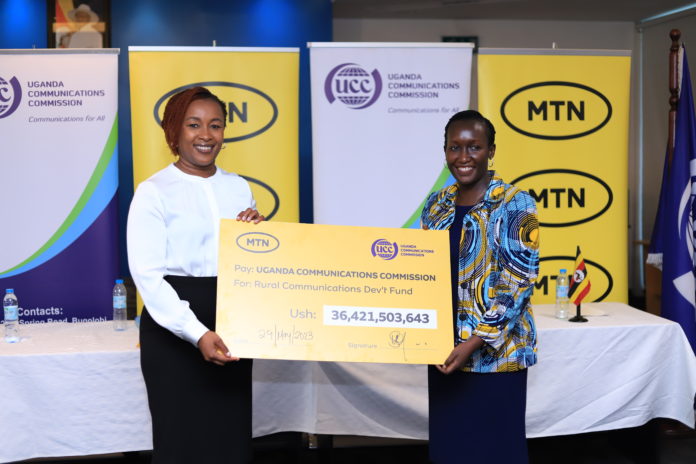
MTN pays Shs36b statutory levy to UCC Fund

MTN Uganda Chief Executive Officer, Sylvia Mulinge and UCC ED Eng.Irene Kaggwa.

KAMPALA-MTN Uganda has paid Shs36 billion statutory levy to Uganda Communications Universal Service and Access Fund.

All licensed telecom operator’s telecom in the country are required to pay a statutory 2 percent levy on their annual gross revenues to the Fund administered by Uganda Communications Commission.

Established in 2003, the Fund then known as the Rural Communications Development Fund (RCDF) addresses issues of connectivity, access, affordability and equity of ICT services to the population.

MTN Uganda Chief Executive Officer, Sylvia Mulinge, said “We at MTN Uganda are glad that we are contributing to the Universal Service and Access Fund that will not only help deepen digital services but also boost various sectors of the economy like education, agriculture and health among others,”

“We believe that our support towards this Fund will also help us achieve our ambition of ensuring that everyone enjoys the benefits of a modern connected life.”

According to the Uganda Communications Commission (UCC) Q2 2022 market performance report, the total number of connected mobile phone devices increased from 35 million in April to 36.1 million in June 2022.

The total number of broadband connections stood at 23.7 million subscriptions as digital financial services had a total of 40.7 million during the same period.

UCC Executive Director, Eng. Irene Kaggwa, applauded MTN stating that the contribution will go a long way in ensuring that the country achieves digital inclusion as envisioned in the Digital Vision 2040.

She said Uganda Communications Universal Service and Access Fund has over the years enabled the government to set up computer labs in about 1300 secondary schools and given out about 4,000 mobile phones devices to the vulnerable households. 

Stories Continues after ad

Amnesty International: The singing of Anti-Homosexuality Bill is dark day for LGBTI community

KAMPALA-Amnesty International has said that the signing of Anti-Homosexuality Bill 2023 is a grave assault on human rights and the Constitution of Uganda.

Yesterday, President Yoweri Museveni signed Anti-Homosexuality Bill 2023 into an Act following his decision to return it to parliament for scrutiny.

The Bill aims at among others protecting traditional families by prohibiting sexual relationships between people of the same sex, strengthening that country’s capacity to deal with emerging threats to the traditional family, protecting the cherished culture of Uganda and protecting children and youth who are vulnerable to sexual abuse.

Flavia Mwangovya, Amnesty International’s Deputy Regional Director said the signing of the bill was a desperately dark day for LGBTI rights and for Uganda. The signing of this deeply repressive law is a grave assault on human rights and the Constitution of Uganda and the regional and international human rights instruments to which Uganda is a party.

She said the Anti-Homosexuality Bill, 2023 will do nothing other than enshrine discrimination, hatred and prejudice against LGBTI Ugandans and their allies into law. It’s unconscionable that they risk losing their lives, their freedom, their privacy, their freedom of expression and their ability to live free from discrimination.

“Amnesty International has repeatedly called for this egregious legislation to be scrapped. As we wait for the Bill to come into force. Amnesty International urges the international community to urgently put pressure on the Ugandan government to protect the rights of LGBTI persons in the country. We stand in solidarity with Ugandan LGBTI communities, and all Ugandans affected by this hateful legislation.” she said.

On March 12, 2023, the Ugandan Parliament passed the Anti-Homosexuality Bill, with 387 out of 389 MPs voting in favour. On 21 April 2023, Uganda’s President, Yoweri Museveni refused to sign into law the Anti-Homosexuality Bill, 2023, sending it back to Parliament in Uganda for reconsideration of several clauses. On May 2, 341 MPs voted for the amended bill and sent it back to President Museveni who assented to it earlier today.

Stories Continues after ad

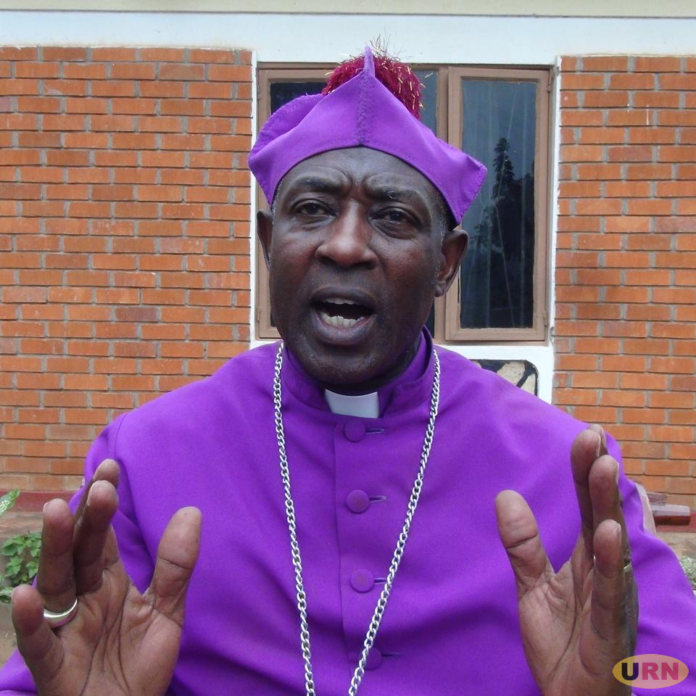
Church of Uganda commends Museveni for signing Anti-Homosexuality Bill

Rt. Rev. Bishop Stephen Kazimba Mugalu

Archbishop of Church of Uganda Most Rev. Dr. Stephen Samuel Kaziimba Mugalu has commended President Yoweri Museveni for assenting to Anti-Homosexuality Bill 2023.

Yesterday Museveni signed the bill into law. The law is aimed at protecting traditional families by prohibiting sexual relationships between people of the same sex, strengthening that country’s capacity to deal with emerging threats to the traditional family, protecting the cherished culture of Uganda and protecting children and youth who are vulnerable to sexual abuse.

“The Anti-Homosexuality Act 2023 is good and we are grateful to the President for assenting to it. But, it will not solve all of our problems. We must also examine our own hearts and repent of sexual greed,” he said.

Adding “We are grateful the current Act affirms the merits of the existing provisions in the current penal code and build on existing laws by offering greater protection of children through strong anti-grooming measures, strong restrictions on promotion, and protection of children by not allowing those convicted under the act to be employed in organizations that work directly with children. We also appreciate that the Act protects people from false allegations,” he said.

He said the Church of Uganda supports life and, in principle, does not support the death penalty. As grievous as aggravated defilement and aggravated homosexuality are, we do not support the death penalty for those crimes and continue to recommend life imprisonment instead.

 “Homosexuality is currently a challenge in Uganda because it is being forced on us by outside, foreign actors against our will, against our culture, and against our religious beliefs. They disguise themselves as human rights activists but are corrupting real human rights by adding LGBTQ to their agenda,” he said.

Kaziimba said LGBTQ relationships should not be promoted in school curricula, cartoons, human rights workshops or any other forum as normative. There is no moral equivalence between LGBTQ relationships and lifelong, heterosexual, monogamous marriage. 

The Bible teaches, and scientific studies have shown, that children flourish when they are raised by both their mother and father, and with the presence, involvement, and support of their extended family. This is the African way; this is the Biblical way; and this is the way shown to us through natural law. 

Stories Continues after ad

US revokes Speaker Anita Among’s Visa over Anti-homosexuality law

Speaker Anita Among

The United States of America has revoked Ugandan speaker of Parliament Anita Among’s visa over issues of anti-homosexuality law.

This development comes against the backdrop of Anita Among’s revelation on Monday, May 29, 2023, that President Museveni had assented to the Anti-Homosexuality Bill 2023 which was passed by Parliament on March 21, seeking to prohibit same-sex sexual relations.

Bugiri Municipality legislator and mover of the Anti-Homosexuality Bill Asuman Basalirwa said that Anita Among has been banned from traveling to the United States of America until further notice after her VISA was canceled following her involvement in the anti-homosexuality bill and that it was confirmed by email.

“The Speaker’s visa to America has been cancelled. This has been confirmed in an email from the American Embassy,” he said.

Reading the email from the American Embassy, Basalirwa said: “Dear Madam Speaker, the United States Government has revoked your current visa based on information that became available after your last issuance. As of May 12, 2023, you do not possess a valid travel visa to the US, though you are welcome to apply again. Please forward your passport to the Embassy through the Minister of Finance so that we can make necessary modifications to your visa.”

Basalirwa, however, criticised the US government for single-picking who to punish because of the law.

“I have no problem with the way a country manages its affairs. If, in their wisdom and democracy, they don’t want us in their country, it is their right. I don’t want anyone to complain about cancelling people’s visas. My only problem with these people is single-picking who to punish. This law was signed by the president. May I invite the UK, Canada, and the US to cancel the visas of the President and all MPs that passed it?” Basalirwa noted.

Stories Continues after ad

Uganda’s education response plan to benefit over 600,000 refugee learners

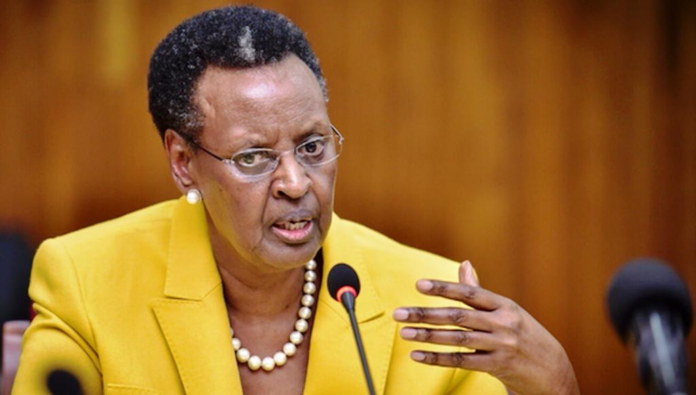
Janet Museveni, Minister of Education and Sports.

Uganda has launched an education response plan (ERP) aimed at skilling all school-going children in the various refugee settlement areas in the country as well as host communities.

Janet Museveni, Minister of Education and Sports, who launched the second phase of the project late Wednesday, said it will benefit about 674,895 learners per year.

“Our vision is to significantly enhance learning outcomes and skills training for children and youth in refugee-hosting areas,” the minister said.

She added, “I commend the resilience of our host communities in their steadfast support. Together, we can ensure equitable access to quality education for all.”

According to Mrs Museveni, the first education program launched in 2018-2021 saw remarkable progress, “with the gross enrolment ratio of refugees in primary and secondary schools rising substantially.” The enrollment of refugee learners in primary schools, for instance, grew from 58.2 percent in 2018 to 88.5 percent in 2021.

Munir Safieldin, the United Nations Children’s Fund country representative, commended Uganda for hosting refugees and planning for them holistically.

“We are pleased to see some improvements in their learning achievements during Phase I of the ERP and are confident that the second phase of the ERP will carry more positive news,” Safieldin said.

According to the UN, Uganda hosts about 1.5 million refugees, mostly from South Sudan, and also from the Democratic Republic of the Congo and Burundi.

Stories Continues after ad

Byanyima, Global Fund speaks about Museveni’s decision to sign Anti- Homosexuality Bill

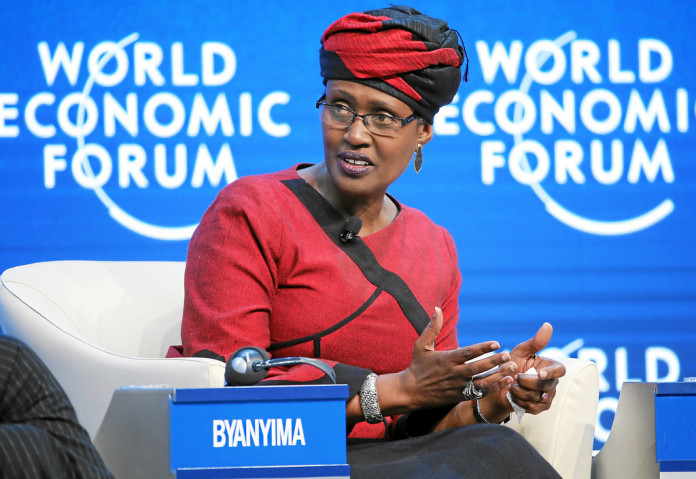
UN-AIDS boss Winnie Byanyima.

The Executive Director of Global Fund Peter Sands, Executive Director of UNAIDS Winnie Byanyima, and U.S. Global AIDS Coordinator Ambassador John Nkengasong have reacted to President Yoweri Museveni’s decision to sign the Anti- Homosexuality Bill into law.

They claimed that Museveni has been a leader in the fight to end AIDS. Progress had been made thanks to the implementation of large-scale prevention, diagnosis, treatment and care programs, all provided on the principle of access to health care for all who need it, without stigma or discrimination.

“This approach has saved lives. The strong health systems built to support the AIDS response serve the entire population of Uganda. This was evident as community health workers and health systems developed for the AIDS response played a key role in tackling COVID-19 and other disease threats. Maintaining this is vital: Failures in the HIV public health response will have system-wide impacts that could negatively affect everyone,” they said in a joint Statement.

They said we know that we will be able to overcome this public health threat when we ensure that 95 per cent of people living with HIV know their status, 95 percent of them are on treatment, and 95 percent of those on treatment have achieved viral suppression.

Furthermore, they say Uganda had by 2021, 89 percent of people living with HIV in Uganda knew their status, more than 92 percent of people who knew their HIV status were receiving antiretroviral therapy, and 95 percent of those on treatment were virally suppressed.  Uganda is well on track to achieve the UNAIDS HIV treatment targets if progress can be maintained.

“Uganda’s progress on its HIV response is now in grave jeopardy. The Anti-Homosexuality Act 2023 will obstruct health education and the outreach that can help end AIDS as a public health threat. The stigma and discrimination associated with the passage of the Act has already led to reduced access to prevention as well as treatment services. Trust, confidentiality, and stigma-free engagement are essential for anyone seeking health care.” they said.

Uganda has repeatedly demonstrated leadership and commitment to ending AIDS – and has achieved great success – by leaving no one behind. Together as one, we call for the Act to be reconsidered so that Uganda may continue on its path to ensure equitable access to health services and end AIDS as a public health threat by 2030. 

Stories Continues after ad