Stanbic Bank
Stanbic Bank
26.7 C
Kampala
Stanbic Bank
Stanbic Bank
Home Blog Page 387

Catholic, Anglican Churches get Shs30m ahead of Martyrs Day Celebrations

Catholic and Anglican Churches have received Shs30 Million donation ahead of Martyrs Day celebrations. The day is held to commemorate 23 Anglican martyrs and 22 Catholic martyrs who were killed on the orders of Kabaka Mwanga between November 1985 and January 1887.
This year marks 59 years since the Uganda Martyrs were canonized and elevated to sainthood by Pope Paul VI on October 18, 1964.


The donation was made by MTN Uganda. The telecom company donated Shs20 million to the Jinja Catholic Diocese and Shs 10 million to the Church of Uganda, to support their preparations for this year’s Martyrs Day celebrations.
The Shs30 million donations to the Catholic Church and Church of Uganda will go towards the preparations of the Martyrs’ day celebrations at Namugongo.


Speaking in Jinja, the Head Commercial Eastern Region, Njagala Allan hailed the Catholic Church for its steadfast commitment and resilience towards spiritually nurturing the community amidst the numerous challenges they face today.
Bishop of Jinja Diocese Rt Rev Charles Martin Wamiika expressed gratitude to MTN for its continued support of the Catholic Church and all religious sects in general. He said, “We are grateful to MTN Uganda for their contribution towards the preparation of the Martyrs Day celebrations. This donation will go a long way in making the day a success and in ensuring that we continue to keep the spirit of the Uganda Martyrs alive.”


In addition to the financial donations the MTN donated 250 Reflective jackets to ensure that the pilgrims are visible and 100 boxes of bottled water to the pilgrims to ensure that they stay hydrated during the long and arduous journey.
Rt. Rev Kosea Odongo, Bishop of Soroti diocese, who represented the Bishop Samuel Egesa, Chairperson Cluster, also expressed his gratitude to MTN Uganda for their generous donation. “We are thankful to MTN Uganda for their donation towards the preparation of the Martyrs Day celebrations. This support is a testament to the long-standing relationship between MTN Uganda and the Church of Uganda, and we are grateful for their continued support.”

Stories Continues after ad

Emirates Group announces 2022-23 financial results

The Emirates Group has released its 2022-23 Annual Report, recording its highest profits ever on the back of strong demand across its businesses.

The year has seen Emirates achieve new record profits – a complete turnaround from its loss position last year.

Both Emirates and dnata ground handling and flight catering saw significant revenue increases in 2022-23 as the Group expanded its air transport and travel-related operations following the removal of nearly all pandemic-related restrictions around the world.

Viewed overall, for the financial year ended 31 March 2023, the Emirates Group posted a record profit of AED 10.9 billion (US$ 3.0 billion).

This compares with an AED 3.8 billion (US$ 1.0 billion) loss for last year. The turnaround is largely attributed to the aggressive demand for core services across the Group’s operations.

Emirates passenger operations
Emirates’ total passenger and cargo capacity increased by 32% to 48.2 billion ATKMs in 2022-23, as the airline continued to reinstate passenger services across its network in line with the lifting of pandemic-related flight and travel restrictions.

In addition to launching services to Tel Aviv, Emirates relaunched flights to six destinations and increased operations to 62 cities across its network throughout the year to serve strong customer demand.

By 31 March 2023, the Emirates network comprised 150 destinations across six continents, including 9 cities served by its freighter fleet only.

Emirates also deployed its flagship A380 aircraft to even more cities during the year, bringing its A380 network to 43 destinations as of 31 March 2023.

Enabling its customers to access even more destinations, Emirates signed agreements with new codeshare partners in 2022-23 most notably with United Airlines and Air Canada.
Emirates also reinforced its strategic partnerships with Qantas and flydubai and added new interline and codeshare partners: Airlink, AEGEAN, ITA Airways, Air Tanzania, Bamboo Airways, Batik Air, Philippine Airlines, Royal Air Maroc and Sky Express.

Emirates received two new 777 freighter aircraft during the financial year. It also phased out 4 older aircraft comprising of 2 A380, 1 Boeing 777-300ERs and 1 Freighter. Its total fleet count at the end of March was 260 units, with a youthful average fleet age of 9.1 years.

Emirates’ order book stands at 200 aircraft, including 5 additional Boeing 777-300ER freighter orders announced during 2022-23.

Emirates carried 43.6 million passengers (up 123%) in 2022-23, with seat capacity up by 78%. The airline reports a Passenger Seat Factor of 79.5%, compared with last year’s passenger seat factor of 58.6%.

It experiences a 7% increase in passenger yield to 37.5 fils (10.2 US cents) per Revenue Passenger Kilometre (RPKM), due to a change in cabin and route mix, fares and currency.

Emirates continued to invest in delivering ever better customer experiences. During the year, it launched its full Premium Economy experience to hugely positive customer feedback, brought into service the first 6 of its newly retrofitted A380s with completely refreshed cabin interiors.

It also announced a US$ 350 million investment in new generation inflight entertainment systems for its A350 fleet.

Emirates SkyCargo delivered a solid performance, contributing 16% of the airline’s revenue despite a reduction in available capacity as aircraft that were temporarily converted into “mini freighters” during the pandemic returned to full passenger service.

During the year, the cargo division signed commercial MoUs with United Airlines and Air Canada to expand its network reach and capacity for customers.

An Emirates SkyCargo aircraft unloads emergency aid supplies in Pakistan
Photo Credit: Emirates Sky Cargo
Emirates Sky Cargo also deployed its expertise and capacity to transport relief goods to Pakistan, Turkey and Syria in partnership with Dubai’s International Humanitarian City.

With steady air freight demand throughout the year, Emirates’ cargo division reported a solid revenue of AED 17.2 billion (US$ 4.7 billion). This was a 21% decline over last year’s exceptional performance caused by the pandemic.

Tonnage carried declined by 14% to 1.8 million tonnes, due to the reduction in available freighter capacity for the entire year with the reinstatement of more passenger services.

At the end of 2022-23, Emirates’ SkyCargo’s total freighter fleet stood at 11 Boeing 777 Fs.

Dubai National Air Travel Agency (dnata) is an Emirati airport services provider which provides aircraft ground handling, cargo, travel, and flight catering services across five continents

Recovery from the pandemic was felt across almost all dnata businesses, and in 2022-23 dnata increased its profit by 201% to AED 331 million (US$ 90 million).

With growing flight and travel activity across the world, dnata’s total revenue increased by 74% to AED 14.9 billion (US$ 4.1 billion). dnata’s international businesses account for 72% of its revenue, an increase of 10%pts from the previous year.

Revenue from dnata’s Airport Operations, including ground and cargo handling increased to AED 7.2 billion (US$ 2.0 billion).

The number of aircraft turns handled by dnata globally grew by 35% to 712,383, cargo handled declined by 8% to 2.7 million tonnes, reflecting the increased flight activity across markets as the last pandemic restrictions lifted and dnata’s customers reinstated services.

Commenting on the Group’s 2022-23 turnaround performance, HH Sheikh Ahmed bin Saeed Al Maktoum, Chairman and Chief Executive, Emirates airline and Group said, “We had anticipated the strong return of travel, and as the last travel restrictions lifted and triggered a tide of demand, we were ready to expand our operations quickly and safely to serve our customers.”

He added, “As a result, we have delivered a record financial performance and cash balance for our financial year 2022-23.”

“This reflects the strength of our proven business model, our careful forward planning, the hard work of all our employees, and our solid partnerships across the aviation and travel ecosystem,” he concluded.

Stories Continues after ad

Benin, Côte d’Ivoire to premier AfDB’s African Green Bank facilities

The African Development Bank is set to roll out the first green finance facilities in two public financial institutions in Benin and Côte d’Ivoire as part of its ground-breaking African Green Bank initiative.

The host institutions are La Caisse des Dépôts et Consignations du Bénin (CDC Benin) and the Ivorian National Investment Bank (BNI).
As Africa’s premier development finance institution, the African Development Bank does not only provide fiscal resources to its regional member countries; it also galvanizes global support in promoting resilient, green, and sustainable growth.
It launched the African Green Bank Initiative in November last year to support the implementation of African countries’ Nationally Determined Contributions (NDCs).

African countries still face significant challenges in financing their climate transition. While investment needs resulting from NDCs are estimated at $2.8 trillion by 2030, funds invested on the continent still represent a limited share of global green finance flows, and the share covered by the private sector remains limited.

The African Green Bank initiative was conceived as part of measures to facilitate access to global finance from the current 3% to 10% annually by 2030.
The Initiative followed an assessment by the African Development Bank and the Climate Investment Funds in six African countries; Benin, Ghana, Mozambique, Tunisia, Uganda, and Zambia.

The assessment revealed that green banks have significant potential for attracting new sources of catalytic funds when supporting low-carbon, climate-resilient development through blending capital and mobilizing local private investment for green investments in Africa.
Bank vice president for Energy, Power, Climate and Green Growth, Kevin Kariuki, noted: “The African Green Bank Initiative is a powerful tool for reducing financing costs and mobilizing private sector investments in climate action in Africa.”

The Initiative would bolster the capacity of local financial institutions to build a robust pipeline of bankable green projects while de-risking investments and entrenching long-term investor confidence toward climate-resilient and low-carbon projects in Africa.
According to African Development Bank Vice President for Private Sector, Infrastructure and Industrialization, Solomon Quaynor, “this technical assistance will enhance local financial institutions’ climate governance, green projects’ origination and monitoring which is therefore key to attract private capital by entrenching long-term investor confidence.”
Audrey-Cynthia Yamadjako, the Initiative’s coordinator, said some $1.6 million had already been secured to create the first two facilities. She said green finance facilities, newly created or hosted in existing financial institutions, are “the solution to bring private finance at scale in climate action.”

Climate Investment Funds, a major global climate finance mechanism, Canada Climate Action Africa, the Green Bank Network, and the European asset management firm, Amundi support the initiative.
Amundi backs the Initiative through technical assistance activities, including training green facilities’ management and investment teams. Amundi will also mobilize its investment vehicles dedicated to sustainable development in emerging markets and developing economies to support green facilities’ capitalization and thus participate in developing green investments across the continent.

Stories Continues after ad

Police backtracks on killer officer, charges and dismisses Stephen Muromba

Police have backtracked on its officer who shot and killed Uttam Bhandari Saremal, the Director of TFS Financial Services.
According to police spokesperson, Fred Enanga, the actions of its officer Ivan Wabwire were deliberate, planned and premeditated. Prior to the murder the suspect while in civilian clothes met with Bhandari, to establish his loan status and further discuss plans on how to trade it off, for a salary loan at Stanbic Bank, William Street Branch.


Enanga said the suspect acquired an initial loan from TFS Financial Services on August 5, 2020 of Shs million with an interest of Shs 320,000 after 12 months. On May 5, 2021, he acquired a second loan of Shs 1 million but defaulted on the loan. He was not convinced by the outstanding loan quotation.


The following day of May 12, 2023, the suspect in his full uniform, picked an SMG Rifle with 4 magazines that had been left in the room by PC Stephen Muromba, left his beat at CPS and went straight to meet the Director TFS Financial Services. While at their offices at Raja Chambers along Parliament Avenue, he signed in the visitor’s book, and went straight to meet Uttam Bhandari.
He maintained a standing position with his hand on the gun, had a short verbal exchange with the Director, and immediately after fired several shots at the victim.  He then moved out briefly and returned to the scene to pick his loan documents. He fired more bullets at the victim, when he found him still holding his breath, and killed him.  His target was the victim and no one else. Out of 12 bullets that were fired, nine of them fatally wounded the victim


“After the deadly shooting the suspect confidently moved out, jumped on a boda boda that dropped him at CPS Kampala. He returned the gun and asked a colleague to watch over it and disappeared,”he said.
The officer escaped to his village at Bwalila, Bumango Parish, Masinya subcounty, in Busia district. He was arrested on May 14, 2023 at Uganda customs, while trying to cross into Kenya.


“The suspect was sound and in very good shape and was transferred to Kampala Metropolitan Police Headquarters, where he was examined by a medical doctor who established him to be normal and sound. Upon interrogation, the officer had no remorse and admitted to having murdered the victim, for allegedly cheating him,” he said.


Enanga said the tragic murder could have been avoided if the owner of the killer weapon, PC Stephen Muromba, had not left it unattended in their shared room. As our force policy on use of firearms demands, he should have returned the gun to the Armory, before moving out of the station. He instead, without lawful permission sneaked out of the station to attend to a personal matter, which is an outright case of gross indiscipline and negligence.


He said Murombo was charged and dismissed from the force. He will further appear in the criminal court on charges of neglect of duty. The victim paid the price for his negligence with his life. His immediate supervisors also face disciplinary sanctions, for poor supervision taken to criminal court for negligence.

Stories Continues after ad

President Museveni rallies to end cattle raids in Acholi sub-region

President Yoweri Kaguta Museveni has assured the people of Acholi sub-region of the government’s commitment to end cattle raids perpetrated by Karamojong cattle rustlers.

“I want to assure all of you that this problem will be solved because most of the issues you have raised, I know their potential and limitations,” the President stressed.

President Museveni who is in the Northern Region of the country to assess and find solutions to the cattle raids by the Karamojong cattle raiders made the assurance today at a meeting with leaders from Acholi sub-region whom he invited to Baralegi State Lodge, Okwang sub-county in Otuke district.

Leaders invited included Members of Parliament from Acholi sub-region, Cultural Leaders led by the Paramount Chief Rwot David Onen Acana II, religious leaders, RDCs and RCCs, LC 5 Chairpersons, other political leaders as well as opinion and historical leaders.

President Museveni in response to one of the contributors from Adilang, who pointed out that the security agencies were not following seriously the raiders once reported, clarified that the person following is always at a disadvantage as the raider can at his will decide to ambush persons who are following them.

He further noted that the same can also happen to the Local Defence Units (LDUs) who could experience a similar problem.

The President added that even at the time of fighting the Lord Resistance Army (LRA) led by Joseph Kony, this presented a challenge as the rebels could decide to ambush anyone following them.

“We were only able to defeat Kony when we introduced gunships because we could pass the ambushes and would engage them accordingly. You calm down, I am here, and this problem will be solved,” the President said.

President Museveni also echoed the comment by one of the elders Mr. Okwera who pointed out that the problem had existed since 1954 and was exacerbated in 1979 following the overthrow of Idi Amin regime where the Karamojong seized the opportunity to loot all types of guns from the Armory of Moroto Army Barracks.

The President said no government after that was able to retrieve guns from the Karamojong except the National Resistance Movement (NRM) that embarked on the disarmament exercise and removed over 40,000 guns from the Karamojong.

“The Army of Obote when it was overthrown had only 8, 000 soldiers and that of Amin had only 20,000 soldiers but you hear now we were able to remove 41,000 guns from the Karamojong,” he said.

The President said the peace in the region only came into existence following the removal of guns from the Karamojong. He also noted that cattle rustling was an old problem that resurfaced because of some weaknesses on the part of the security agencies that failed to properly package ways of dealing with the issue.

He however assured the nation that the problem will be solved again and pledged to visit the area again in June to update them on the progress of dealing with the cattle rustling issue.

“I promise to come back in June then you people will either say I am a person of ‘Goba’ (Lies) or I will say you people of little faith as Jesus used to tell his disciples,” the President said.

President Museveni had earlier briefed the gathering of the areas that were identified as loopholes in tackling the cattle raids.

He cited the delayed response to reported cases of cattle theft by the army and the police and not using communication gadgets like cell phones.

His Excellency also told them of the recommendations made in an earlier meeting with senior security officers.
Other recommendations included the heightened use of Police canines, overhead aircrafts to track down the cattle rustlers both during the day and at night and also branding of the animals by their locations.

The President added that other methods to fight cattle rustling included; being in close contact with the wananchi, making frequent visits to them to ascertain their security situation as well as to get reports from the people whom he hailed so much for providing valuable information required to help in curbing the vice.

Stories Continues after ad

Housing Finance Bank contributes Shs150m towards NSSF Kampala Hills Run 2023 edition

The National Social Security Fund (NSSF) in partnership with Housing Finance Bank has unveiled the 2023 edition of the NSSF Kampala Hills Run after a two-year hiatus, mainly due to #Covid-19. It will take place on Sunday, July 2, 2023 at Kololo Independence Grounds.

Housing Finance Bank as the official partner has contributed Shs150 million for the run.

The Fund’s flagship charity run is aimed at mobilizing funds to improve learning conditions in public primary schools through refurbishment, sanitation, and provision of digital labs.

Speaking at the event today, Patrick Ayota, NSSF Acting Managing Director, said that over the years, the Fund has endeavored to be a responsible corporate citizen, by supporting underprivileged communities. Adding, “We do this by focusing our interventions on four themes – Health, Education, Youth, and the Underprivileged groups, as provided for in our Corporate Social Responsibility Policy.”

“Our interventions have contributed to solving some of the challenges sections of our communities’ face and inspired other corporate institutions to contribute, either in partnership with the Fund or on their own,” Ayota said.

He added, “I am therefore excited to announce our next major intervention in the Education Sector, through the NSSF Kampala Hills Run, our flagship Charity Run to mobilise funds to improve public schools through refurbishment, improvement of sanitation and provision of digital labs.”

It will traverse selected hills of Kampala, covering 21kilometer. The Uganda Athletics Federation, who is the Fund’s technical partner for the Run, will map the route and undertake all necessary verification to ensure that it is safe for our runners.

“This year, the Fund hopes to raise Shs1 billion to support its interventions in at least 10 public primary schools across the country.

Ayota called upon all well-meaning Ugandans to join them in this noble cause as individuals, groups, or corporate institutions to inspire the next doctor, teacher, pilot, lawyer, or minister.

“I am also glad to report that funds raised in the past editions were used to refurbish 60 classroom blocks and improve sanitation in 13 primary schools in Kampala under our partner KCCA, Soroti, Kisoro, and Otuke districts, benefitting over 15,000 pupils every school day. These interventions have led to a 12% increase in student enrollment at the beneficiary schools, and a 10% reduction in dropouts in the beneficiary schools,” he excitedly revealed.

Stories Continues after ad
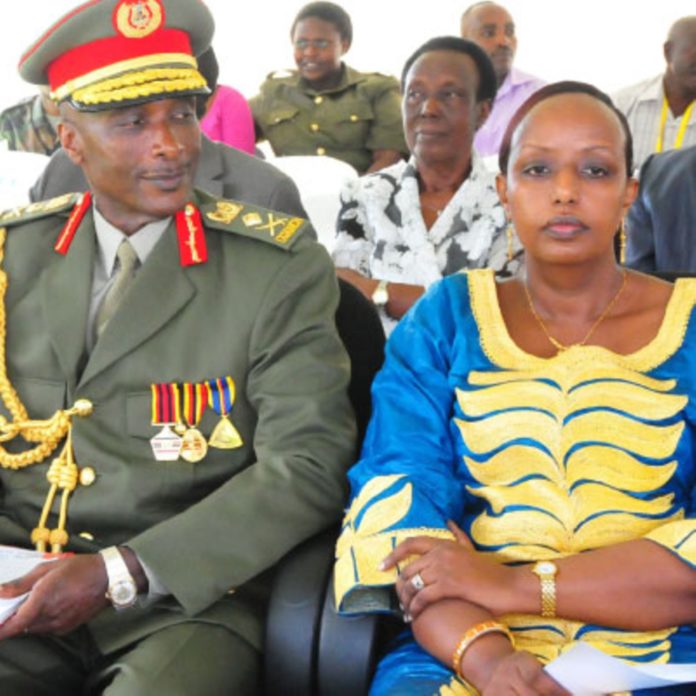
Kale Kayihura, 10 other Generals to retire in July

Gen.Kayihura and wife at the past piping ceremony in Mbuya.

The former powerful Inspector General of Police Edward Kalekezi Kayihura aka Kale Kayihura is set to be retired from army in July.

According to documents seen by Eagle Online, the four-star army general will retire with 10 other generals from Uganda Peoples Defence Forces (UPDF).

Those that are due for retirement are generals, senior officers, junior officers whose pending retirement with batch 13 was shown against their names including dates of retirement.

Gen. Kayihura whose army number is RO/00513 is currently battling with charges in the military court for failing to protect war materials between 2010 and 2018 by issuing arms to unauthorized persons. However, his closeness with First son and Senior Presidential Advisor on Special Operations Gen. Kainerugaba Muhoozi could save him from case at court martial

Another notable soldier to retire is Lt. Col. Juma Serown Seiko. Seiko has been a long serving Aide de Camp (ADC) of Gen Salim Saleh.

The army leadership plans to retire 261 generals, senior officers and junior officers in July. The list has 23 Colonels, 16 Lieutenant Colonels, 79 Majors and 64 Captions on the list to be discharged from service in July with the lowest rank being that of Lieutenant.

Lt. Gen. james Nakibua Lakara RO/01567 will be second highest ranking officer after Kayihura to retire at the same event and the two will be retired at Ministry of Defence headquarters in Mbuya.

Others senior generals

Major Generals

RO/00074 Maj. Gen Samuel Wasswa Mutesasira

RO/01461 Maj. Gen Arocha Joseph

RO/02000 Maj. Gen David K Wakaaro

Brigadier Generals

RO/01380 Brig. Gen Augustine Atwooki Kamanyire

RO/01435 Brig. Steven Oluka

RO/02855 Brig. Frank Kyambadde

RO/02909 Brig. Gen Emmanuel Kwehangana

RO/ 07173 Brig. Wilson Muhabuzi

RO/07698 Brig. Gen Ham Atwooki Kaija

Stories Continues after ad

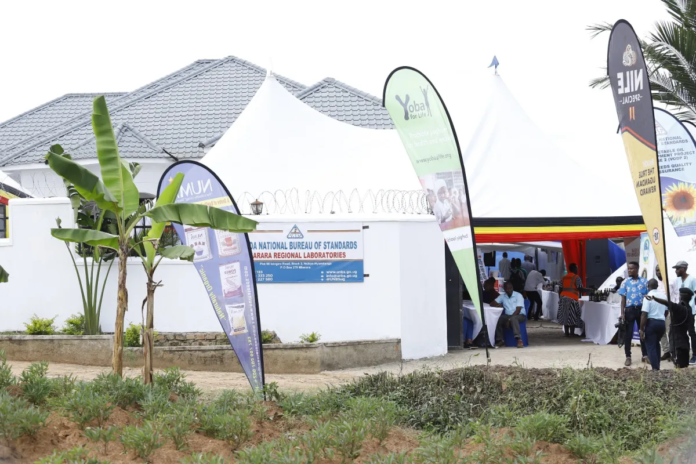
UNBS commissions laboratory in Mbarara to uplift food safety standards in western Uganda

The Uganda National Bureau of Standards (UNBS) has commissioned a state of the art food and safety laboratory in Mbarara City.

The first of its kind facility in the region, the lab will handle all technical aspects of acquiring certification.

Speaking at the launch, the UNBS Executive Director, Mr. David Livingstone Ebiru, said since lab testing is one of the key components of conformity assessment, standards compliance and quality assurance, it is important that UNBS decentralises its laboratories to take services nearer to the people.

“Initially all businesses were seeking UNBS certification from the head office in Kampala. However, UNBS has decentralised testing services to Northern region, Eastern region and now Western region in order to reduce the cost of doing business,” Ebiru said.

“We have started with labs in Gulu, Mbale and now Mbarara. Next in line is the Rwenzori region; Hoima to support oil and gas; then West Nile; Arua because of the volume of cross border trade that happens in this region,” he added.

The Laboratory Equipment worth USD 4,455,283 was donated by Trade Mark Africa funded by the Danish Government.

“We want to appreciate the government of Denmark through TradeMark Africa who invests in quality infrastructure. We thank you for the support in enabling the decentralisation of UNBS Testing services to different parts of Uganda,” Ebiru said.

Danish Ambassador to Uganda Signe Winding Albjerg said the decentralisation of lab services is always paying off.

“Following the previous UNBS Labs launched in Mbale and Gulu, we have seen a reduction in turnaround time of testing products. We have seen increased consumer protection due to an increase in the number of products tested in the labs and increased cross border trade of the tested products,” Ambassador Albjerg said.

“I call upon the business community to take advantage of the western region labs to further grow their businesses for their local market and the international market,” she added.

The lab is located along Isingiro Road, Block 2, Nsikye-Nyamitanga.

The area LC1 Chairperson, Mr. Kabagambe Ignatius, urged UNBS to curb sub-standard goods in the Western region by sensitising manufacturers that UNBS is not against them but it exists to help boost their businesses.

Stories Continues after ad

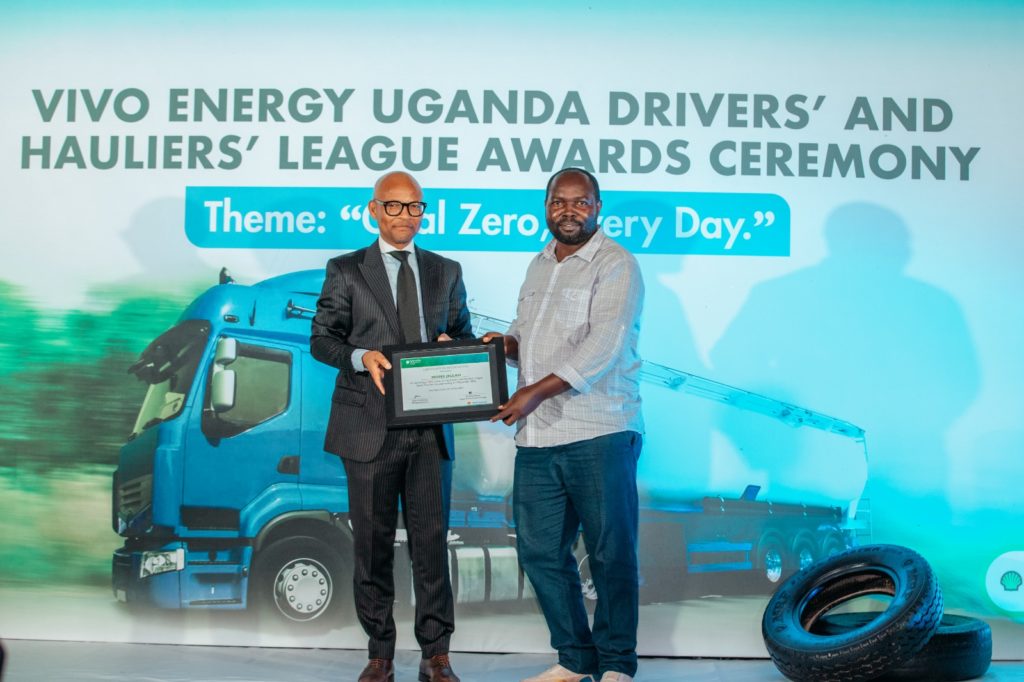
Vivo Energy Uganda honours its commercial truck drivers for road safety excellence

Vivo Energy Uganda, the distributor and marketer of Shell-branded fuels and lubricants in Uganda, has today awarded over 400 of its high performing truck drivers and six (06) transporter companies at its annual Drivers’ and Haulier’s League award ceremony held in Kampala, under the theme: “Goal Zero, Every day.”

The Drivers’ and Hauliers’ League awards, now running for more than 20 years in Uganda, is a structured process for measuring the performance of the drivers’ road safety behaviour and compliance. The drivers’ performance is scored every month, with quarterly awards that culminate in an annual recognition. The drivers are categorised into classes A, B and C, depending on how they perform.

The award ceremony is an opportunity for Vivo Energy Uganda to recognise and motivate the drivers’ commitment to health and safety on the road and is also a celebration of the safety record upheld by the transporter companies annually. Road transport accounts for most of the importation of fuel products. The drivers demonstrated outstanding professionalism as they delivered Shell fuels without any road transport incident in the year 2022.

According to the Vivo Energy Uganda Managing Director, Johan Grobbelaar, “The Drivers League programme seeks to ensure that our drivers observe high professional conduct and operate the highest road safety standards. In so doing, our products are safely delivered to the country and to our customers. This is in line with the objective of UN Decade of Action for Road Safety which is to prevent at least 50 percent of road traffic deaths and injuries by 2030.”

“The League also aims to reinforce our target of Goal Zero, which is our continuous commitment to run our business without causing any harm to people, assets and the environment. We thank the government for the continuous support and our transport companies for adherence to the best road safety practices to ensure that we meet our Goal Zero ambition,” he added.

The overall best driver, Mr. Moses Jellah, works with AOB Transport Company Limited. Jellah scored 100 percent for his hard work, operational excellence and adherence to the company’s road transport safety protocols. He did not register any traffic violations or accidents during the year.

The other drivers awarded were Fred Kayanja from Uganda Transport Agencies Limited, Ssegawa Nathaniel Rogers Ssegawa (Fuels driver) and Joseph Ssenyonga (Lubricants driver) from Fred Sebyala Transport, Ronald Wanyonyi (Fuels driver) from SIBED Transport Company, Ibrahim Mohammed Ali from Dakawou Transporters Limited and Anthony Kamande Ngugi from Multiple Hauliers East Africa Limited. Over 400 other drivers were also recognized for exemplary performance and achieved the Class A category.

Speaking at the ceremony, representing the Guest of Honour, Hon. Gen. Edward Katumba Wamala the Minister of Works and Transport, Mr Karim Kibuuka – Principal vehicle Inspector hailed Vivo Energy Uganda for its role in championing road safety in its operations and the community through its campaigns such as ‘Tweddeko’ Every Life Matters. He urged all stakeholders in the transport industry to benchmark the best practices to avoid accidents and save lives.

“The high rate of road crashes in Uganda is mainly attributed to human error followed by the poor state of motor vehicles. The government has, through various initiatives, continued to advise all motorists to observe the basic road safety rules while on the road. Adherence to these basic tips shall enable us to reduce further the road crashes experienced currently,” he advised.

Stories Continues after ad
Only 30% of Ugandans were poor in 2019/2020-World Bank report

Slum settlement in Kampala that are occupied by urban poverty.

There was little progress in poverty reduction in Uganda during much of the decade leading up to 2019/20. Numerous shocks not only reduced economic growth, they also hampered the ability of households to increase their income, says a new World Bank poverty assessment report, Strengthening Resilience to Accelerate Poverty Reduction in Uganda.

According to the report, released today in Kampala, about 30% of Ugandans were poor in 2019/20, a percentage only slightly lower than 31% in 2012/13. The poverty rate used in the World Bank study is based on revisions made to the poverty line by the Uganda Bureau of Statistics in 2021.

Joseph Enyimu, Acting Commissioner in the Ministry of Finance, Planning and Economic Development, has described these revisions as expanding the scope of Uganda’s poverty measurements to cater for the cost-of-living in the country within the context of modernizing societal aspirations and rising standards of living.

Shocks have disproportionately affected Uganda’s poor and rural residents, according to the report, with 40% of rural and 30% of urban households experiencing at least one since 2013. About 90% of farmers report that climate conditions have grown worse for agriculture over the last decade.

Given the limited amount of social assistance available in Uganda and the low resilience of households, “the poor were more likely to use detrimental coping strategies, such as reducing food consumption, which could have negative consequences for their human capital in the long run,” said Mukami Kariuki, the World Bank’s Country Manager in Uganda. “As a result, at least 50% of Ugandans remain vulnerable to the risk of falling back into poverty in next two years.”

“Productive economic opportunities outside agriculture build resilience but these were not easily accessible to the poor,” said Nistha Sinha, a World Bank Senior Economist and one the report’s two lead authors. Strategies that are known to increase people’s incomes—such as the transition from subsistence agriculture to non-farm activities and migration from rural to urban areas—proceeded at a faster pace among the wealthier and more educated but were not readily accessible to the poor. #Covid-19 slowed down this structural change and pushed many people back into subsistence agriculture.

“Education, health, and access to basic services are crucial for building resilience and for equipping a fast-growing population with the opportunities and skills needed to earn higher incomes,” said Aziz Atamanov, World Bank Senior Economist and the other lead author.

The report demonstrates that access among children to such basics as electricity, education, sanitation, water, and health remains far from universal. The #Covid-19 pandemic stalled the progress Uganda had been making in improving human capital growth, particularly in education.

The study also examined telecommunication services, an increasingly important factor in people’s lives and in income-earning prospects. Closing the digital infrastructure gap stimulates economic growth and is especially relevant given Uganda’s large population of youth. Yet the sector is held back by limited competition, which gets in the way of making digital services more affordable for existing users and discourages take-up by new users, who are typically less well-off.

The report calls for a two-pronged approach to poverty reduction. The first part of the approach is to raise productivity and income-earning opportunities by investing in the development of human capital. Targeting lagging regions and the country’s most vulnerable groups, reducing barriers and costs to non-farm opportunities, and increasing competition in the telecommunications sector are all seen as vital to this. The second part is to strengthen household resilience both by addressing deficiencies left in human capital and by expanding safety nets for both Ugandans and refugees to lessen their vulnerability at household level. Ideally, social protection programs should also be accompanied by policies to promote the sort of non-traditional insurance and savings schemes that could prove viable in the large informal sector in Uganda.

Stories Continues after ad