Stanbic Bank
Stanbic Bank
25.1 C
Kampala
Stanbic Bank
Stanbic Bank
Home Blog Page 401

Uganda to impose unit trust contributions in new tax law 

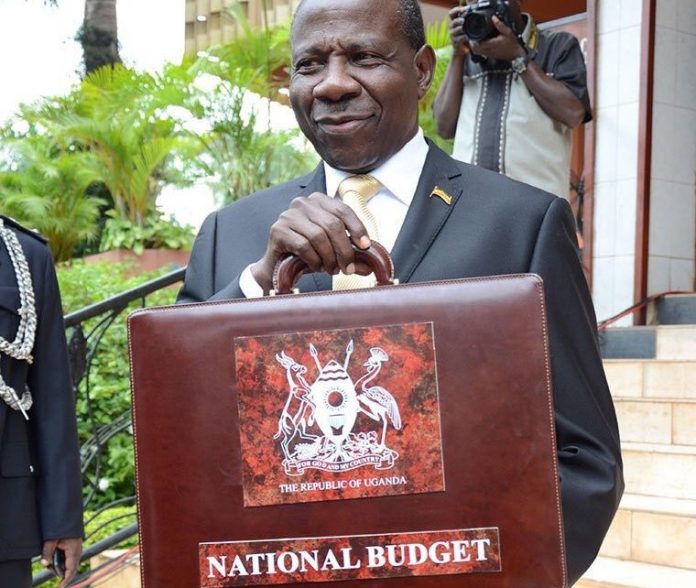
Finance Minister, Matia Kasaija.

The Uganda government plans to impose a 15% withholding tax rate on Unit Trust contributions or Collective Investment Schemes, according to a new income tax law.

The Income Tax Amendment Bill 2023 recently tabled by the Finance Minister before Parliament, the government seeks to introduce 5% and 15% tax rates on the profit earned by members from their contributions to the scheme effective July 1 2023 if the bill is passed into law.

The government says the 5% tax rate will be applied to scheme members with total contributions not exceeding Shs100 million while those with contributions above Shs100 million will be subjected to a 15% tax rate.

According to the proposal, the income tax will be applied by way of withholding tax by the Unit Trusts on the profit amounts credited to the members’ accounts.

Until recently, members of unit trusts have been receiving their incomes tax-free after Uganda Revenue Authority faced an initial resistance when it attempted to start taxing the members’ incomes. This was because there was no clear policy on what to tax and how much to tax.

This proposed amendment is now intended to iron out the ambiguities in the law and make the taxation of the interest income and its administration clearer.

The proposal has, however, drawn criticism from several stakeholders who say the move will discourage investment in unit trusts.

One of them is PriceWaterHouseCoopers who say this proposal sends shock waves in unit trust investment. They said it will discourage investment in unit trusts in the country which is still very low.

 The Capital Markets Authority (CMA), a country’s statutory body responsible for regulating and promoting the development of capital markets in Uganda, also says the tax is a contradiction and that it’s a barrier to savings.

“The introduction of a withholding tax on income earned by investors in Unit Trusts to the contrary is a disincentive for savings,” CMA wrote in a statement.

“It is our understanding that Section 21(1) (t) of the ITA exempts the income of a Collective Investment Scheme from tax to the extent of distribution of the income. The purpose of this exemption is to encourage savings which are still at a relatively low base in Uganda.

“It has further come to the CMA’s attention that there are differences in interpretation of the Income Tax Act within the CIS industry which has led to variances in treatment of Withholding Tax on payment of investors’ interest by the CIS operators,” they added.

 An accumulation of evidence suggests that Uganda may be caught up in a public debt safety trap in which a favorable debt position based largely on Debt Sustainability Analysis results falsely signals that the country has more fiscal headroom to borrow, especially when debt is still below the set national or international limit.

Tax experts say the government is trying to come up with ways to plug a hole in the annual budget deficit after donors cut aid over accusations of corruption and human rights violations.

Already, URA has said it plans to collect Shs29.3 trillion in the 2023/24 financial year. However, it remains to be seen whether they will hit the target given the current low economic growth characterized by high inflation and low private sector investment in the country.

Stories Continues after ad

Gen. Mbadi, Gen. Songesha meet to review operations Shujaa

The Chief of Defence Forces-CDF of the Uganda Peoples’ Defence Forces Gen. Wilson Mbadi and Chief of General Staff of the Armed Forces of the Democratic Republic of Congo –FARDC Lieutenant General Christian Tshiwewe Songesha have met to review operations Shujaa.

In November 2021, UPDF and UPDF launched operations in Shujaa. The operation aimed at flashing out the Allied Democratic Force (ADF) in the Eastern DRC. In October last year, DRC renewed UPDF’s contract maintaining its presence IN Felix Tshekedi’s country.

The joint forces captured over 100 ADF terrorists, killed and injured scores of them.

“We have been in this operation since November 2021 and we periodically do reviews to see the progress in order to totally annihilate the ADF together with our comrades of the FARDC,” said Gen Mbadi.

Speaking on behalf of General Christian Songesha, the Governor of North Kivu Lieutenant General Constant Ndima Kongba applauded President Yoweri Kaguta Museveni and Felix Tshisekedi Tshilombo for sanctioning the joint operation of totally uprooting the terrorist movement of ADF which was a huge threat to both countries.

“We joined the forces of FARDC and UPDF in order to uproot this threat in order to bring peace to the people of Uganda and the Democratic Republic of Congo. We as the military, we are determined to finish the mission that was assigned to us by the two Heads of State,” said Gen Ndima.

Stories Continues after ad

Makerere University EC disqualifies NUP candidate from guild presidential race

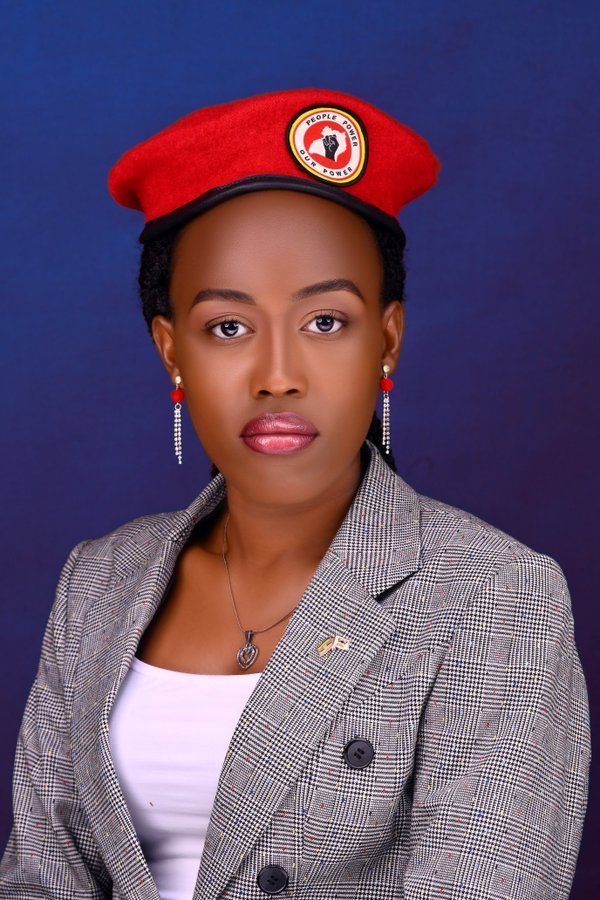
Margaret Nattabi, NUP candidate

Margaret Nattabi, National Unity Platform Official Candidate has been disqualified by the Makerere University Guild Electoral Commission from the forthcoming 89th University guild presidential elections on allegations of involvement in a political debate that turned violent, injuring a student in the process.

Margaret Nattabi was disqualified alongside Suleiman Namwoza (Independent NUP leaning candidate) for allegedly organizing a Guild Kimeza on the night of April 5, 2023 at Mitchell Hall on the night of April 5, 2023, an exercise which was banned from the university.

The political debate is said to have later turned violent leaving one student identified as Robert Sserunjogi injured in the process. Sserunjogi is said to have been among the participants in the Kimeza campaign.

In a letter dated April 06, 2023, Levi Tshilumba, the Chairperson of the 89th Guild Elections said the two candidates have since been disqualified as their actions are contrary to the University’s Guild Statute, Section 10 which calls for a violent free election process.

“This is to inform the Makerere University students’ body that Guild President aspirants Nattabi Margaret (Complex hall) and Namwoza Sulaiman (Mitchell Hall) have been disqualified from the 89th Guild Presidential race,” Tshilumba stated.

“The participation of Nattabi and Namwoza in this event is contrary to Makerere University Guild Statute 2022, Section 10, which stipulates that student elections shall be virtual unless otherwise determined by the University Council,” he added.

However, sources at the venue revealed to this publication that NUP’s Nattabi was not even at the venue where the scuffle happened and that the Dean of Students first met both Nattabi and Namwoza and tried to forge a way forward that seemed non-violent.

The dismissal of the two leading candidates according to sources that preferred anonymity said the dismissal of Nattabi and Namwoza is part of the plot by the University Administration to determine who sits on the University Council, the highest decision-making organ of the University.

Nattabi when contacted for a comment on the matter said the University had always wanted to block her from participating and winning the election and “Now, they are fulfilling what they long wanted.”

Nattabi added that the University is just fighting her on the base of the political party (NUP) yet other candidates are holding the Kimeeza in their halls of residence.

In 2022, Makerere University Council banned physical guild elections at the institution following the death of a student in a scuffle during campaigns for guild elections.

The NUP Principal, Robert Kyagulanyi Ssentamu aka Bobi Wine said this is an affront to the sacred concept of academic freedom and the constitutional rights to speech and association that any academic institution must guard with its very existence.

“Academic freedom requires that students should be able to express themselves freely without fear of repression. Only then can institutions of higher learning achieve their purpose as guardians of reason and inquiry. It reinforces the protection our Constitution guarantees for any citizen to freely express their opinions and associate with any group of their choice,” Kyagulanyi said.

He added that throughout history, those freedoms have been a constant sword against tyranny, injustice & oppression. To them, Uganda owes its independence and so does Makerere’s existence.

“It’s a shame that the University’s myopic leaders are now sacrificing at the altar of political expediency the very freedoms that secured them their current jobs in the first place! If they have any shame, they should reconsider the decision as it sets a terrible precedent,” Kyagulanyi expressed adding, “Comrade Nattabi and other similarly affected candidates should be left to participate in the guild race without being persecuted for their political affiliations.”

Stories Continues after ad

BAT Uganda on spot for smuggling illicit cigarettes, evading billions in tax

The British American Tobacco (BAT) Uganda and BAT Kenya have taken advantage of the loopholes in tobacco control governance systems and control the illicit trade of tobacco products to dump illicit cigarettes into the country, an investigative undercover report has revealed.

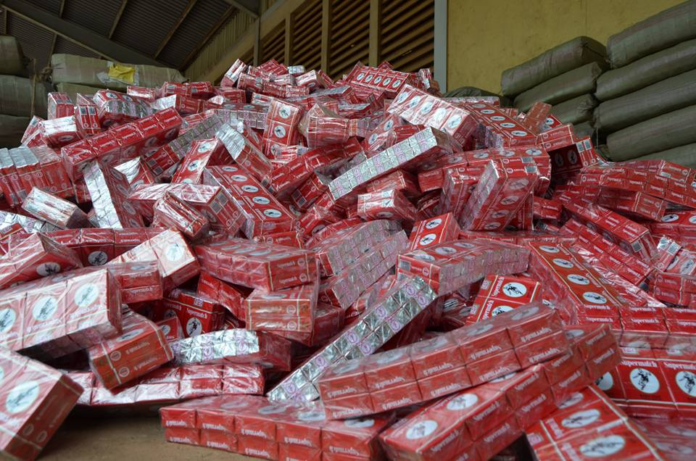
A spot check market survey has since established that several cigarette packets clearly labelled with digital export tax stamps for Rwanda, Tanzania and the Democratic Republic of Congo have been dumped into the Ugandan Market.

Ironically, last year, BAT Uganda launched a study, which found that 23% of cigarettes sold in Uganda were illicit, indicating unfair competition to established tobacco dealers and loss of revenue to the government.

The findings based on BAT Uganda’s approved study were carried out in the second half of 2021 by Kantar and indicated that there was a 54.5% increase in illicit trade in cigarettes into the country compared to September 2020 when the number stood at 15.4%.

The term illicit, according to BAT, refers to any cigarette pack, which based on its physical features, appears to be non-compliant with applicable legal requirements for sale in the country.

30 different packets of the Dunhill Switch had been specifically manufactured for the DRC market and also Dunhill Sweet for the Rwanda market and Tanzania respectively and were being sold in different bars, shops including Petrol stations such as ORYX and streets in Kampala ranging from sh25, 000-sh80, and 000 depending on the Location or venue.

The cigarettes had clearly been smuggled and were untaxed and unregulated.

Last year, Uganda Revenue Authority noted that trade in illicit cigarette trade could have cost the government of Uganda a total loss of about sh30b in revenue.

BAT in its 2022 performance results, said they had recorded a 6% revenue growth, to Sh99.5b.

BAT Uganda Managing Director, Mathu Kiunjuri said: “Whilst our business remains resilient, we reiterate our concern regarding the escalating prevalence of the illicit trade in tobacco products.”

It should be noted that on the 16th March 2023 BAT sponsored a Public-Private Sector Dialogue on Illicit Trade which was held at Kampala Serena Hotel, Kyoga Room.

In line with the Anti-Tobacco Control Act, such public engagements are not supposed to be sponsored by Tobacco Companies but BAT has continued to enjoy a front seat and showing the public that it is fighting Illicit Trade and yet the Government continues to lose revenue through BAT Brands being smuggled into the Country.

At the end of 2022, the illicit trade incidence in illicit tax-evaded cigarettes stood at approx. 29%, up from 24% in 2021 despite the efforts in place to curb it.” He added: “We acknowledge and appreciate efforts by the Government to fight illicit trade, including seizure of illicit cigarettes by the Uganda Revenue Authority, especially at the border towns in the North and Eastern parts of the country.

Some of the illicit cigarettes that are secretly smuggled and on sale in Uganda

While launching the Kantar report on June 28, 2022 BAT Board Chairperson, Elly Karuhanga, said that the biggest concern to the tobacco industry relates to tax-evaded cigarettes bearing fake stamps or no tax stamps at all.

“These products also do not bear the prescribed graphic health warnings on their packaging, in contravention with the Tobacco Control Regulation, 2019,” he said.

Karuhanga said the study reveals that more than half of illicit cigarettes (51%) on the market appear to be manufactured in Uganda based on the park markings with the rest being smuggled into the country from other countries and yet our investigations prove that what BAT said is true only that much of the products falling in that category are their high-end brands.

The same cigarettes being sold on the Ugandan market and imported from BAT sister company BAT Kenya were illicit and did not have the marks, no health warnings, packaging or labeling requirements which a requirement was set by the Ministry of Health and were readily available to several youths endangering their lives. They also didn’t have the necessary digital tax stamps of Uganda.

 These illicit products were untaxed and unregulated, and according to a report by the World Health Organization (WHO) affordability and accessibility to such cigarettes lead to increased use, this downward spiral into poverty and illness because of money spent on tobacco, and additional money spent on treating its ill-health effects, has dire health and economic consequences.

WHO in its 2022 report says that Tobacco use kills nearly 6 million people every year, including the 600 000 who are killed by the effects of exposure to second-hand smoke. Tobacco use is one of the main risk factors for a number of non-communicable diseases, including cancer, lung diseases and cardiovascular diseases.

Negative health impacts are associated with the use of all types of tobacco, including cigarettes, water pipes and smokeless tobacco.

The adverse health effects of tobacco use are also experienced by non-smokers exposed to secondhand smoke. Long-term exposure to second-hand smoke increases the risk of lung cancer, coronary heart disease and respiratory problems.

The investigation has revealed that cigarettes were being smuggled into the country disguised as legitimate brands such as Sportsman which is a serious customs offence and could attract penalties and jail sentence if found guilty in line with the East African Community Customs Management Act section 203, 207,208 and 210 respectively.

Illicit tobacco trade protocol to the WHO Framework Convention on Tobacco Control is the first international legal instrument that provides countries with guidance on political, technical and international collaboration, needed to eliminate the illicit trade in tobacco products.

Eliminating the illicit trade of tobacco products, will increase tobacco product prices, lower consumption, reduce premature deaths, and increase government revenues. Ratification, acceptance, approval or accession to the Protocol to Eliminate Illicit Trade in Tobacco Products is the starting point.

The Uganda Revenue Authority on March 5, 2023 launched an operation targeting BAT products and this website still waits to see what action will be done on all those behind.

It should be noted that Tax evasion is a Board room policy and from research BAT has been a subject of various Tax Evasion Investigations cases and Uganda should be on a watch out,

It is alleged that for every carton imported into the country from Kenya, some Dunhill Bombers are hidden. This will be the work of Customs to subject risk management and verify 100% on such consignments.

The investigations showed various places and made purchases of the Illicit Brands and the following are established sources of BAT brands as detailed: Cask bar kololo, Plot 8 lounge Kololo, Levers bar Kololo, Lavent Najera, Old Timers Ntinda, Total Ntinda, Oryx Nalya, Total Kyaliwajara, Nexus Najera, Chambers Ntinda, Shell kiwatule, Oryx kiwatule, Xhub Najera, Oryx Lugogo bypass.

WHO recommended actions for eliminating the illicit trade in tobacco products, is to commit to, and become Party to the Protocol to Eliminate Illicit Trade in Tobacco Products. Ratifying, accepting, approving or acceding to the Protocol, is the starting point to saving lives lost to tobacco.

When contacted for a comment, BAT MD Mathu Kiunjuri said he was not in Uganda and the company will issue a statement at an appropriate time.

Stories Continues after ad

KARAMOJA IRON SHEET: Minister Kitutu remanded to Luzira prison

Anti- Anti-Corruption Court has remanded Karamoja Affairs Minister Mary Goretti Kitutu to Luzira prison.


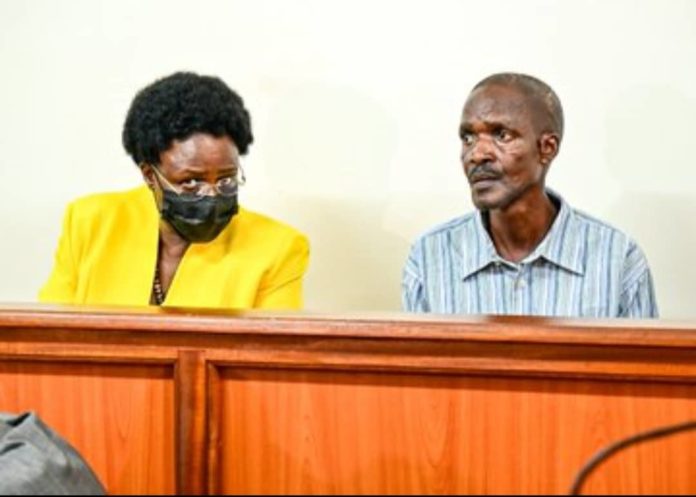
Kitutu, her brother Michael Kitutu Naboya and Secretary Joshua Abaho were earlier today charged with six counts which include loss of public property, corruption, receiving stolen property and conspiracy to defraud. Abaho was however not present in court.
The two denied all the charges. “I have heard and understand the charge; it is not true and I am not guilty,” she pleaded. Through her lawyers led by Michael Wamasebu, Gitutu applied for bail.


Kitutu contended that she suffers from a heart disease with left ventricle stiffness, advanced age 61, fixed resident of Bunga, mother and grandmother of seven, willingness to tender in her diplomatic passport among other as grounds.
Magistrate Joan Aciro ruled that their applications will be determined on 1 April 12,2023 and remanded her to Luzira prison.
She had presented four sureties who include her husband Michael Kitutu; , Simon Mulongo former MP and diplomat at the AU; Seith Wambede, MP Mbale City and Dr Joel Wandabwa, a plastic surgeon.


Prosecution avers that between June 2022 and January 2023 at the Office of the Prime Minister stores in Namanve, the three caused a loss of public property in the form of 9000 iron sheets by diverting them from the intended purpose of benefiting the Karamoja community empowerment programme to their own benefit knowing that such acts would result into loss of public property.


It is further alleged that the minister alongside her secretary between June 2022 and January 2023 caused the loss of 5,500 iron sheets meant for Karamoja.
The prosecution also states that Naboya Kitutu between similar months at Situmi village, Namisindwa district received 100 iron sheets marked ‘OPM Uganda’ having reason to believe the same to have been feloniously obtained.

Stories Continues after ad
Ministry of Gender under spotlight for malnourished ‘juvenile prisoners’

Ministry of Gender, Labour and Social Development is under spotlight for malnourished juvenile prisoners.

A leaked picture of three juvenile that has been doing rounds on social media show two juvenile prisoners who seem to be suffering from under feeding or mistreatment in juvenile detention centres around the country.

Officially Ugandan Prisons doesn’t hold juveniles. Children in conflict with the law are principally the responsibility of the Ministry of Gender, Labor and Social Development.

Juvenile justice, which concerns children in conflict with the existing laws is about the specific ways of working with children who are alleged to have committed offences, including their apprehension, the procedures involved in investigating and charging them with any offences committed, decisions about whether to.

Uganda has juvenile detention centres/ remand homes in Mbale, Naguru Fort Portal and Gulu.

Stories Continues after ad
BoU maintains April Central Bank Rate at 10%

Bank of Uganda Monetary Policy Committee (MPC) has maintained the Central Bank Rate (CBR) for the month of April 2023 at 10%.

Michael Atingi-Ego, the BoU Deputy Governor, said this is to continue the sustained economic recovery that is marked by a drop-in inflation.

The March 2023 data from the Uganda Bureau of Statistics indicated that annual headline and core inflation dropped to 9.0% and 7.6% in March 2023 from 9.2% and 7.8% in February 2023, respectively.

“In the MPC’s current assessment, absent new shocks, inflation will continue decelerating and converge to the 5% target by the end of 2023. The factors favouring the continued decline of inflation are lower energy prices, improved global supply chains, lower food crop prices due to favourable weather, the existing spare capacity in the economy, and the exchange rate stability owing to tight monetary and fiscal policies,” Dr Ego said at a press conference on Thursday, 06 April 2023.

The Deputy Governor also explained that whereas the tight monetary policy has enabled the economy to recover, there are still internal and external risks.

“The MPC assesses that the near-term risks to the inflation outlook remain elevated, with considerable uncertainty surrounding the economic outlook,” he said.

“Economic growth remains on a recovery path, averaging 6.8% in the first two quarters of the Financial Year (FY) 2022/23, supported by a stronger recovery in services and agriculture output,” he said.

Dr Ego said, however, the quarterly economic growth for Q2 FY2022/23 dropped to 4.4% from 9.2% for Q1 FY 2022/23, due to a decline in industrial output and a moderation in services output growth.

 “Moreover, growth in economic activity, measured by high-frequency indicators, points to a moderation in recent months. The Composite hides of Economic Activity (CIEA) grew by 0.9 percent in the three months to February 2023, lower than 1.2% in the quarter to November 2022. The moderation in growth partly reflects the tight monetary and fiscal policies, as the increase in domestic interest rates and tight credit standards by banks affected the growth in private sector credit,” he explained.

Bank of Uganda projects economic growth in the 5.5 – 6.0% range for FY2022/23, remaining below its long-term trend until FY2025/26 partly because of the tight domestic and external financial conditions.

“Moreover, growing external financing needs are expected to put pressure on the shilling. With lower export-to-import prices and slower growth in export volumes, the current account balance is forecast to deteriorate to a deficit of 7.4% of GDP for the next three years, keeping some drag on economic growth,” the Deputy Governor said.

Stories Continues after ad

Appeals Court grants NSSF Shs25.3b refund from URA

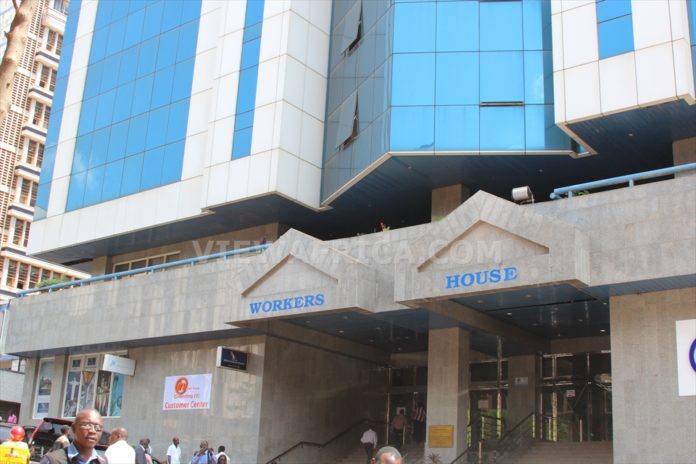
NSSF Workers House in Kampala

Court of Appeal has dismissed an application by URA opposing the refund of over Shs25 billion to the Fund following the judgment of the High Court which overturned the decision of the Tax Appeals Tribunal and a tax assessment against the Fund of Shs45 billion.

URA had initially issued a tax assessment of Shs84 billion and the Fund was required to pay 30 percent of the tax assessed before the dispute was heard by the Tax Appeals Tribunal. The High Court overturned the assessment which meant that URA was required to refund the 30 percent with accrued interest. URA has never refunded the money.

Justice Oscar Kihika in his ruling delivered on March 24,2023 dismissed the application on grounds that URA failed to prove that its substantive appeal against an earlier decision of the High Court has a likelihood of success.

“The Applicant (URA) is in the process of obtaining leave to appeal, having filed a Notice of Appeal. However, having failed to establish whether or not the intended appeal has a likelihood of success, this Court is of the view that the balance of convenience does favour the Respondent (NSSF) which has a judgment in its hands. I find, therefore, that the Applicant has failed to establish that the Appeal will be  rendered nugatory if an order for stay of execution is not issued,” Justice Kihika ruled.

He also found that there was no evidence of irreparable damage that URA could suffer in the event that a stay of execution was not granted, in response to the tax body’s submissions. On the contrary, NSSF stood to suffer substantial loss since they have been in court since 2014 and since obtaining judgment in its favour, URA had without sufficient cause, held onto the 30 percent that was paid in 2014. 

NSSF Ag. Managing Director Patrick Ayota welcomed the court’s decision saying that the funds will be invested to earn a return for the members.

“This ruling gives us more confidence as we pursue the substantive case through the courts that our decision will be vindicated,” he said.

In 2013 URA conducted a Tax audit on the Fund and assessed taxes on NSSF interest paid to members. However, this was a departure from URA’s earlier position contained in November 1, 2011, letter, which had advised NSSF that the interest paid to members is allowed as a deductible expense for income tax purposes.

The Fund objected and filed a case in the high court against URA. Through an arbitration process, the assessment was reduced from  Shs84 billion to Shs42 billion but the parties failed to agree on the tax treatment of interest the Fund declares and pays to members annually.

The dispute on the tax treatment of Interest case was transferred to the tax appeals tribunal which ruled against the Fund upholding the assessment of Shs42 billion in March 2020. 

Dissatisfied with the decision of the tribunal, the Fund appealed to the commercial division of the High Court, arguing that whereas the Tribunal decided that members’ savings are not a debt obligation as they are excluded from the definition, which is provided in the Income tax act definition, this was erroneous because the income tax act does not state so. 

The Fund also argued that the tribunal treated interest paid to members as a dividend which is contrary to the definition of dividends in the Income Tax Act and that the financial impact of the tribunal ruling would effectively impair its ability to preserve the value of members’ savings.

In November 2020, the High court agreed with the Fund. In his ruling, Justice Boniface Wamala set aside the tax tribunal ruling that interest paid by the Fund is a deductible expense for income tax purposes.

Stories Continues after ad

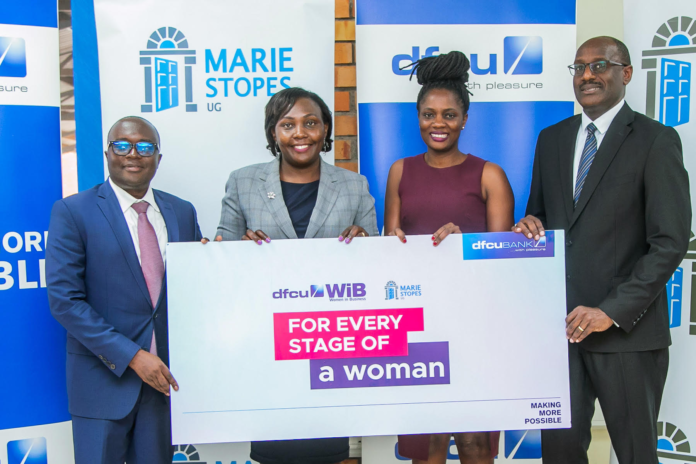
Marie Stopes, Dfcu partner to offer specialised healthcare services to female customers

Marie Stopes Uganda (MSU) and Dfcu Women in Business Program have announced a joint campaign that will allow the Bank’s female customers to get access to free and specialised healthcare services for a period of one month, starting March 3, 2023. The campaign will run under the name, ‘Every Stage of Woman.’

Under the campaign, Marie Stopes Uganda will offer free gynecology and antenatal consultations, free screening services which include body mass index, blood pressure and breast examinations. Dfcu’s customers will also get access to subsidized pap smear tests and family planning services.

Through ‘Every Stage of Woman’, Dfcu bank seeks to create an environment where women who use its financial solutions can easily access wellness tests that will help them know the status of their health and make informed lifestyle choices. 

‘‘Empowering women is a core contributor to socio-economic transformation, and as Dfcu bank we strive to create an environment that allows for all-round wellness and empowerment,’’ said Ruth Asasira, the Manager, Women in Business and Special programs at Dfcu bank Uganda.

Speaking at the launch of the event, MSU’s Deputy Country Director, Dr. Peter Ddungu stated that Marie Stopes Uganda is committed to prioritising women’s health and wellness throughout Uganda.

“Women, in their quest to juggle multiple roles, often fail to prioritise their own health by neglecting regular check-ups and preventive care. Marie Stopes will continue to provide holistic solutions to promote accessibility and awareness about women’s healthcare – including sexual and reproductive health. Women’s health is a great contributor to successful business outcomes in women-led enterprises and we are delighted to partner with Dfcu bank on our For Every Stage of Woman campaign,’’ he said.

Robert Wanok, Dfcu bank’s Ag. Chief Commercial Officer &, Head Personal and Business Banking reiterated Dfcu’s commitment to empowering the members of the communities in which it does business.

“At Dfcu bank, we recognise the vital role women play in our society, and we understand the challenges faced by women everywhere, including poor health. We, therefore, encourage our female customers to prioritize their well-being by taking advantage of the free and subsidized healthcare services offered at Marie Stopes Hospital & Maternity and various centres.”

“This partnership is a testament to our commitment to Making More Possible in our communities, and we applaud Marie Stopes Uganda for their dedication to improving women’s quality of life and for working with us in pursuit of the same” Wanok added. 

The campaign will run for a period of one month, starting on 31st March.

All women who bank with Dfcu are encouraged to visit any nearby Marie Stopes Centre and hospital with their National ID and Dfcu Visa Card to access these services.

Stories Continues after ad

Road crash fatalities increase to 78% in Kampala

The number of road crash fatalities in Kampala has increased to 78%, the just released annual road safety report indicates. The shooting numbers are attributed to speeding, unsafe overtaking, violating traffic lights, sudden turning, and tailgating and other factors.

Produced with support from Bloomberg Philanthropies, the report shows that fatalities in Kampala increased from 236 in 2020 to 419 in 2021.

Speaking at the launch of the report, Lord Mayor Erias Lukwago report findings should inform continuous interventions to reduce road crash-related deaths and injuries in the city and guide the activities of road safety stakeholders to deliver on their mandates. The goal is to halve road traffic deaths and injuries in Kampala by 2030.

According to the World Health Organization, road traffic crashes kill nearly 1.3 million people and injure up to 50 million worldwide. More than 90% of these deaths occur in low-income and middle-income countries, which have less than half of the world’s vehicles, and unfortunately, these deaths are preventable.

The Lord Mayor also highlighted the need to re-establish the National Road Safety Council as a lead agency in order to secure funding and develop effective strategies to tackle the issue.

The report identified excessive speed as a significant risk factor, with almost half of speeding vehicles in Kampala clocking speeds more than 5 km/h above the posted limit.

The report recommended the adoption of global standards of 30 km/h for local and collector roads, along with stricter enforcement of speed limits.

The report also highlighted low seat-belt usage in the city, with overall seat-belt use at only 41%. Adult passenger seat-belt use was at 19%, while rear-seat passengers’ seat-belt use was at 2%, and child restraint use was almost non-existent at only 1%.

The report’s authors called for increased public awareness campaigns and strict law enforcement to promote seat belt and child restraint use.

Bonny Balugaba from Makerere University School of Public Health underscores the need for increased public awareness campaigns and strict law enforcement to promote seat belt and child restraint use.

“The combination of outcomes data and road user observation data provides a comprehensive understanding of road safety in Kampala, providing an opportunity to implement effective interventions and monitor their impact.” Balugaba said.

The report revealed that the highest number of deaths and serious injuries in 2021 occurred among those aged 20 to 29 years, with almost half of the reported deaths (49.9%) occurring on Saturdays, Sundays, and Mondays.

The report also identified the highest-risk intersections and fatal corridors in the city, including Kalerwe roundabout (Northern Bypass), Nakulabye intersection (Balintuma and Hoima Road), and Entebbe Road.

The Bloomberg Philanthropies Initiative for Global Road Safety, which supports road safety activities and coordinates with governmental and non-governmental stakeholders, emphasized the need for high-quality monitoring and evaluation mechanisms to continually assess progress in reducing road crashes and fatalities.

Stories Continues after ad