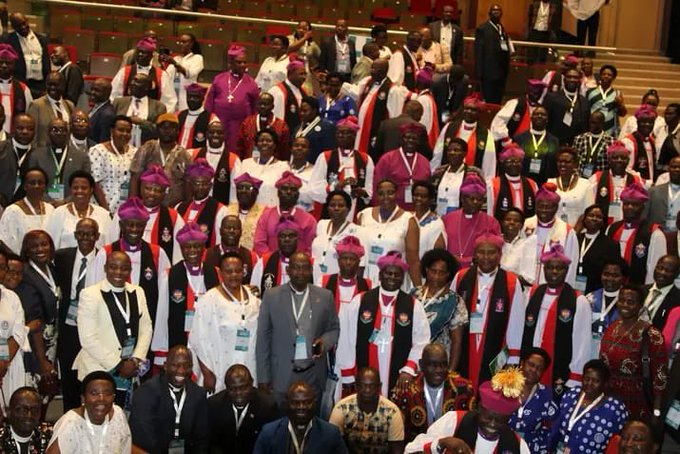
The fourth Global Anglican Future Conference (GAFCON) has resolved to prioritise youth and children’s affairs and equipping them in the next ten years.
Members of GAFCON met this week in Rwanda. The meeting brought together 1,302 delegates from 52 countries, including 315 bishops, 456 other clergy and 531 laity.
“We will devote ourselves to raising up the next generation of leaders in Gafcon through Bible-based theological education that will equip them to be Christ-centred and servant-hearted,” GAFCON resolved.
Despite the majority vote by the General Synod of the Church of England in February 2023 to welcome proposals by the bishops to enable same-sex couples to receive God’s blessing, believers said it grieves the Holy Spirit.
In order to pursue these priorities and to grow the work of the GAFCON movement, leaders endorsed the establishment of a foundation endowment and encouraged the GAFCON provinces to become financially self-sufficient, not only to advance mission but also to avoid being vulnerable to economic manipulation.
“Public statements by the Archbishop of Canterbury and other leaders of the Church of England in support of same-sex blessings are a betrayal of their ordination and consecration vows to banish error and to uphold and defend the truth taught in Scripture. Since the Lord does not bless same-sex unions, it is pastorally deceptive and blasphemous to craft prayers that invoke blessing in the name of the Father, Son and Holy Spirit,” GAFCON resolved.
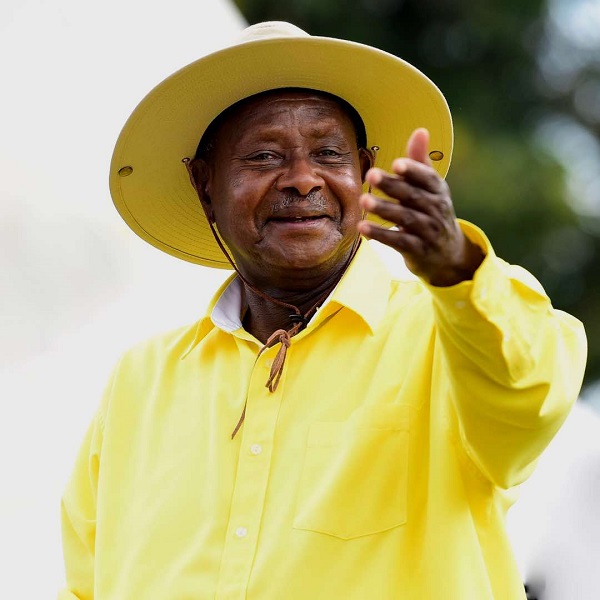
President Yoweri Kaguta Museveni on Thursday, 20 congratulated the members of parliament for their stand on homosexuality and agreed to assent to the Anti-Homosexuality Bill, 2023 into law during the interaction with members of NRM Parliamentary caucus at Kololo Independence grounds
“It is good that you rejected the pressure from the imperialists. Those imperialists have been messing up the world for 600 years causing so much damage,” the President said, adding that most of the problems and the instability in many African countries are caused by imperialists trying to impose what is not meant for Africa.
This was during an interaction with members of the NRM Parliamentary caucus at Kololo Independence grounds on Thursday about the Anti-Homosexuality Bill 2023 sent to him for signing into law.
“Therefore, I congratulate you for making that stand and also the bishops, the religious people and the citizens,” H.E Museveni added.
The President who is also the National Chairman of the ruling National Resistance Movement (NRM) was however informed by Attorney General Kiryowa Kiwanuka that the bill passed by parliament in its current form criminalizes even those who voluntarily come out to have practised homosexuality and need to be helped. He proposed a provision for amnesty for those who will have come out to be helped not to punish them to allow others not to fear to come out.
“This country has issued an amnesty for people who have carried out criminal activities of treasonous nature against this country. A similar provision would be provided in this law to ensure that a person who comes out on his own is not criminalized. In that regard I would like to beg the members of parliament and implore them to allow Your Excellency to return this bill so that we can address that matter,” the Attorney General said.
This, according to the President, was his main concern.
“The issue I raised is a matter of subsistence. I agree with the bill but my original problem is the physiologically disoriented person. What you are saying is that the law doesn’t recognise him as long as he does not act. But how do you provide for him to come out?” H.E Museveni said, asking members of parliament to make some corrections especially not to frighten someone who needs rehabilitation to come out.
The President promised to meet the legal affairs committee of parliament, the sponsor of the motion Hon Asuman Basalirwa and other interested parties next week to finalize the bill.
“Since we have agreed now, I’m going to return that bill, and you quickly deal with those issues and we sign it,”
However, the President reminded NRM MPs of the need to be patriots when fighting what he termed as imperialists. He reminded them that in the 1980’s they fought to liberate Uganda with no pay until recently.
“That’s how we can fight. We’re dangerous because we can fight for no or low pay,” the President said, calling upon members of Parliament to brace themselves for the likely consequences including cutting the wage bill which is about 8 trillion shillings to cater for sectors like health where promoters of Homosexuality are threatening to cut their aid to Uganda.
“One of the things they’re threatening is to kill our 1.2 million people who have been surviving on PEPFAR funds to buy drugs for HIV/AIDS so that we don’t buy the drugs for our people and they die,” the President noted after information that the bill for AIDS medicine is 260 million dollars.
“This is a simple matter which we can fight but parasites can’t fight. If you fear to sacrifice you cannot fight. For you to fight I want to first cure you of parasitism. Europe is lost and they also want us to be lost. Those who want an easy life will end up being prostitutes,” the President emphasized.
H.E. the President told MPS that up to now he has failed to agree with the view of those promoting homosexuality as an alternative way of life.
There was a heated yet healthy exchange between the President and members of Parliament on whether to make amendments to the bill or pass it in its current form where legislators assured the President of their full support concerning implementing the bill once signed into law.
The Woman Member of Parliament for Busia Auma Hellen Wandera told the President that homosexuals once rehabilitated can change, giving an example of her female colleagues who were homosexuals but changed and are happily married with families.
Ndorwa East MP David Bahati informed the President and members that the law he sponsored in 2001 and the current one both criminalize the acts of homosexuality and their promotion, saying that children recruited unknowingly should be rehabilitated to become better citizens.
Vice President Jessica Alupo also called upon members of parliament to support the President and Parliament to make a few changes to the bill so that it is passed when everybody is content.
“What is clear here is that no one of us here supports homosexuality and nobody has intentions to support it,” the Vice President said.
Hon Bright Rwamirama called upon the President to be firm and sign the bill to protect the country from immoral acts.
“Homosexuality is not sickness. The bill is before you and there’s no contradiction at all. Those people trying to convince you otherwise want to water it down,” Minister Rwamirama said.
On the other note, the Chairman of the NRM caucus also Government Chief Whip Hamson Obua informed the president that his office has received reports with concerns from a section of MPs hailing from Lango and Acholi, Sebei and from some districts in Karamoja about cattle rustling, asking the president to find a decisive solution to this vice.
President Museveni assured the affected communities that the problem is solvable and he has already met Army commanders to find solutions to the vice, causing insecurity in Northern Uganda.
“We have all the assets to solve that problem and there’s no need to worry. It’s not such a big issue. It’s a problem of command and will be sorted out. I will have to spend some time in that area so that I supervise that work myself,” the president said.
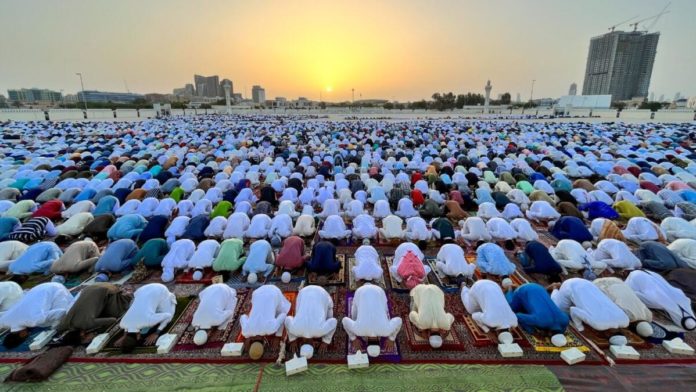
Muslims worldwide will tomorrow, April 21, celebrate Eid al-Fitr which marks the end of long fasting of Ramadan.
Lunar months are either 29 or 30 days long and Muslims typically wait until the night before Eid to confirm its date. Astronomical reports have confirmed crescent moon around the world and it is 2.4% lit from Mecca and generally much higher and brighter in the post-sunset sky while it was about 4% from the West coast of the US.
The Government of Uganda has also declared Friday as a public holiday to mark this year’s Eid-el-Fitr, a religious festival for all Muslims.
This was disclosed in an official announcement by the Permanent Secretary, Ministry of Public Service, Ms Catherine Bitarakwate dated Thursday, April 20, 2023.
“The Honorable Minister of Public Service informed the general public that tomorrow April 21, 2023 is Eid al Fitr and will be observed as a Public Holiday throughout Uganda pursuant to the Public Holiday Acts, 1965,” Ms Bitarakwate’s announcement read.
State Minister for Defense and Veteran Affairs, Jacob Oboth Oboth has been taken to Criminal Investigations Directorate at Kibuli, Kampala for questioning over the ongoing misuse of iron sheets meant for vulnerable communities in Karamoja sub region.
Oboth Oboth who is the Member of Parliament for West Budama Central had donated 137 iron sheets towards the roofing of the catechist’s house at St. Andrews Church of Uganda. However, these iron sheets were later picked last Thursday by his bodyguards from the church stores where they had been kept.
Oboth becomes the fourth minister to be charged in the widening scandal following ministers; Amos Lugoloobi (Planning), Agnes Nandutu (State minister for Karamoja Affairs) and Mary Goretti Kitutu (Karamoja Affairs) who have since been charged before the Anti-Corruption Court in Kololo over the mismanagement of the Karamoja relief items.
Doctor Yona Baguma has been appointed the new Director General of the National Agricultural Research Organisation (NARO) replacing Dr Ambrose Agona who retires this week from the position.
The Minister for Agriculture, Animal Industry and Fisheries Hon Frank Tumwebaze confirmed the appointment in a Thursday tweet and said Dr Baguma takes over the reins at NARO immediately.
“Glad to announce to the agricultural research community, & all stakeholders of the Ministry of Agriculture, that in accordance with the NARO law, I have appointed Dr Yona Baguma as new DG NARO to replace Dr Ambrose Agona who retires on April 21, 2023,” Tumwebaze noted.
Tumwebaze thanked outgoing DG, Agona for his efforts in leading the agricultural research agenda. He also thanked the organisation for conducting a transparent recruitment exercise.
“I wish to thank Dr. Ambrose Agona for his efforts in leading our agricultural research agenda. NARO continues to develop highly resilient seed varieties that sustain our production. I thank the council of NARO for conducting a transparent recruitment process.” the minister remarked.
NARO is an agency under the Ministry of Agriculture with the mandate to coordinate and oversee all aspects of public funded agricultural research in Uganda.
Dr Yona Baguma holds a BSc Agric (Mak) MSc Agric (Mak), PhD Molecular Cell Biology (Swedish University of Agricultural Sciences), with over 33 years of experience, 25 years practicing research science, 8 years of research management, 67 journal publications, 10 books, 19 corporate documents among others.
Prior to his appointment, Dr Baguma has been serving as the Deputy Director General of NARO in an acting position.
According to his profile on the Global Cassava Partnership for the 21st Century (GCP21) website, Dr Baguma is described as a Molecular Biologist who, since his appointment in 1988, has tirelessly worked on cassava research and made significant contributions towards food security and increased income through the restoration of cassava production, development of natural resource use, and disease (CMD and CBSD) management practices.
He has designed and implemented research on highly nutritious cassava with enhanced beta-carotene and starch in Uganda as a contribution towards improved human health and income for the poor.
Until his elevation, he has been involved in research on drought-resilient cassava to mitigate the effects of climate change and to adapt cassava to new agronomic and economic conditions, and development of double haploids in cassava to usher in a new approach to cassava breeding for desired traits.
In addition to cassava research, Dr Baguma has been a key team player in developing and implementing biosafety regulatory guidelines and systems in Uganda and beyond.
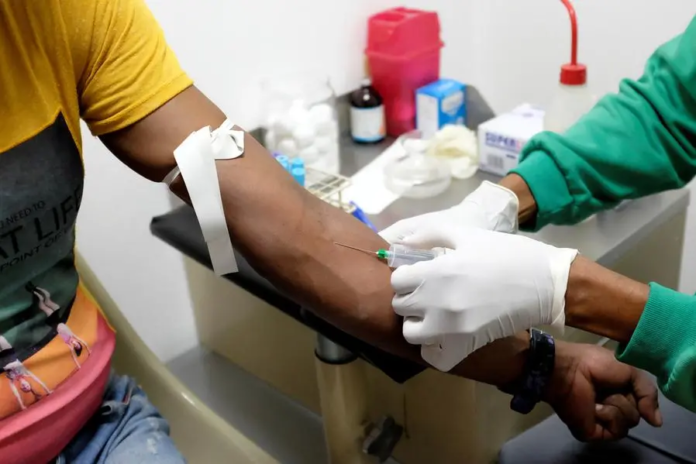
Efforts are under way to move towards injectable treatment for HIV/AIDS which will relieve patients of the burden of taking drugs daily.
This was revealed by the Executive Director of the Infectious Disease Institute (IDI), Dr. Andrew Kambugu during a press briefing on Wednesday April 19, 2023.
Kambugu said researchers from IDI, Joint Clinical Research Centre (JCRC) are on course with the invention and that preliminary results are promising.
“Researchers from IDI, JCRC and other entities are doing work to see that we move to an injection every two months. The results are not yet out but they are promising; we would like you to know that there is work going on to make the lives of our friends easier,” said Kambugu.
He noted that injectable treatment had proved in the USA arguing that there is no reason why it should fail in Uganda.
“Initial work on injectable treatment in areas like the USA showed that it is as good as oral treatment. The studies that have been done in Uganda are to confirm that such treatment can work in our setting,” he said.
The press briefing was organized by the Committee on HIV/AIDS and Related Matters in preparation for the Parliament HIV/AIDS Advocacy Week slated for 25-27 April, 2023.
The Committee Chairperson, Sarah Netalisire said her committee was responding to a presidential directive for all stakeholders to scale up dissemination of HIV messages.
“The committee has organized this event to support the government’s efforts for a rejuvenated HIV/AIDs awareness campaign and advocacy using MPs, staff, press and the different stakeholders,” Netalisire said.
She observed that much of the donor and government funding goes to HIV treatment leaving a skeleton budget for prevention.
“We want to drum harder and inform Ugandans that when you live positively and adhere to treatment, you will live longer and reduce the 326 people who die weekly due to HIV related cases,” Netalisire said.
She highlighted the statistical progress made in the fight to end HIV/AIDS by 2030, noting the 37 per cent decline in annual AIDS related deaths as cited in the Ministry of Health Report of 2021.
The Head of HIV Prevention at Uganda AIDS Commission, Dr. Daniel Byamukama called on Parliament to consider reviewing policies and laws that are a deterrent to the HIV/AIDS fight.
He cited policies that criminalize HIV transmission and people who inject drugs as those that need review.
“If you criminalize HIV/AIDS transmission, it is tricky. It is not easy to prove; there is a worry that one would rather not bother to know their HIV status for fear of being indicted,” said Byamukama.
Dr. Stephen Watiti representing Persons Living with HIV Network asked Parliament to use the advocacy week and give a message of hope to those who are not yet on treatment due to the shame associated with the disease.
“I appeal to MPs during this time to put out messages of hope to people living with HIV/AIDS. The stigma associated with this disease makes them feel ashamed to even seek treatment; we would love to see this bottleneck removed,” Watiti said.
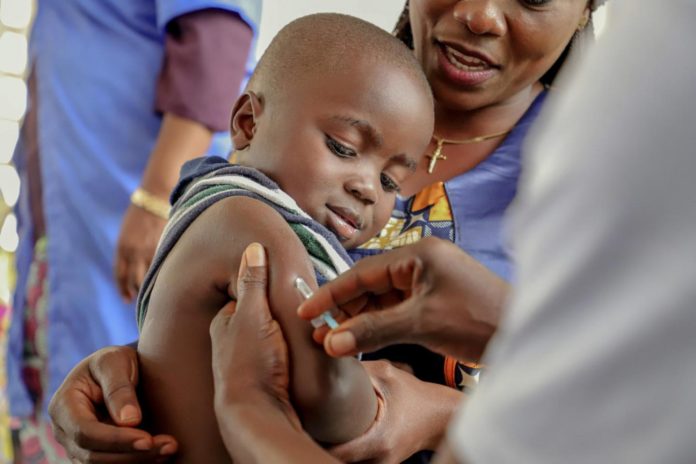
An estimated 33 million children will need to be vaccinated in Africa between 2023 and 2025 to put the continent back on track to achieve the 2030 global immunization goals that include reducing morbidity and mortality from vaccine-preventable diseases, an analysis by World Health Organization (WHO) finds.
The unprecedented impact of the COVID-19 pandemic on routine immunization services has driven up the number of zero-dose and under-immunized children, rising by 16% between 2019 and 2021 and pushing the cumulative total (2019–2021) to around 33 million, which represents nearly half the global figure, according to estimates by WHO and UNICEF.
“The pandemic has seriously set back the region’s vaccination efforts and left millions of children vulnerable to vaccine-preventable diseases that can cause serious illness and even death,” said Dr Matshidiso Moeti, WHO Regional Director for Africa. “As countries strive to emerge from the long shadow of COVID-19, we cannot afford to lose further ground. Every effort must be made to ensure every child has access to essential vaccines.”
Without renewed political will and intensified efforts by governments, it is estimated that vaccination coverage in Africa will not return to pre-pandemic levels until 2027. This year, African Vaccination Week and World Immunization Week, from 24–30 April, is being marked under the theme “The Big Catch-Up”. This is a global push by WHO and partners to intensify efforts to reach children who missed vaccinations, as well as to restore and strengthen routine immunization programmes.
The “Big Catch-Up” campaign builds on efforts to advance countries towards the goals of Immunization Agenda 2030, a strategy endorsed during the WHO World Health Assembly in 2020. It seeks to reduce mortality and morbidity from vaccine-preventable diseases, ensure equitable access to vaccines and strengthen immunization within primary health care. To urgently scale up coverage and protect children, WHO and partners are supporting 10 priority African countries which are among the top 20 countries globally with the highest numbers of zero-dose children to carry out catch-up routine vaccination campaigns.
“African governments and healthcare workers made heroic efforts during an unprecedented public health emergency, vaccinating more people than ever before in history. But the ripples of this emergency response effort are still being felt. At the Vaccine Alliance we are intensifying our efforts to support countries to make up lost ground,” said Aurelia Nguyen, Chief Programme and Strategy Officer for Gavi, the Vaccine Alliance. “Our Alliance is committed to working with countries and communities alike to support efforts to catch up and restore immunization, focusing on responding to the unique needs of each child – and particularly those in hard-to-reach areas and fragile and conflict settings.”
At a high-level event during the African Union Summit in February 2023, African heads of state endorsed a declaration aimed at revamping and scaling up routine immunization across the continent. The declaration also called for urgent measures to address persistent bottlenecks in vaccine and health care delivery systems.
In a bid to recover from the pandemic’s disruptive wake, countries have made efforts to restore health services. Decreased vaccination levels have led to a surge in outbreaks of vaccine preventable diseases such as measles, meningitis, diphtheria, polio and yellow fever.
Despite the disruptions, at least one third of African countries have sustained the target coverage of 90% or higher for the third dose of the diphtheria-tetanus-pertussis vaccine, and the third dose of the polio vaccine, over the past three years. However, only three countries have sustained this coverage for the second dose of the measles and yellow fever vaccines during the same period.
The region has also continued to step up the polio response. More than 30 million children were vaccinated against polio in Malawi, Mozambique, Tanzania, Zambia and Zimbabwe in 2022, following wild poliovirus type 1 cases being reported in Malawi and Mozambique.
“The ambition to ensure that every child has access to essential vaccines by 2030 is still within our reach if we act now,” said Dr Moeti. “It is time for us to renew our commitment to this ambition and work together to restore and strengthen essential vaccination services to save the lives of millions of children.”
The Anti-Corruption Court has released Minister of State for Finance, Planning and Economic Development Amos Lugoloobi after spending three days at Luzira prison.
Appearing before Senior Principal Magistrate Grade One, Abert Asiimwe, Lugoloobi who is facing two accounts of dealing with suspect property contrary to Section 21 (a) of the Anti-Corruption Act was granted Shs 10 Million cash bail as his sureties were bonded Shs 100 Million noncash.
Court also directed him to deposit the original Land title of him and his diplomatic passport and ordered that he should not leave the country without permission from court. “I am persuaded that the applicant may not interfere with the investigations and I therefore find no reason to deny him bail. The suspect should therefore desist from any temptation to interfere with the investigations and failure to do so will lead to cancellation of his bail,” he ruled.
Lugoloobi was nabbed last week over allegations related to the mismanagement of iron sheets which were meant for the impoverished people in Karamoja. He reportedly used the 400 iron sheets to roof animal shade at his farm in Bbaale. He is the third minister to be charged over the iron sheets with the first being the minister for Karamoja Mary Goreti Kitutu. Prosecution avers that between the 14th day of July 2022 and 28th February 2023 at the office of the Prime Minister’s stores in Namanve in Mukono district, He dealt with government property- 400 pre painted iron sheets marked Office of the Prime Minister having reason to believe that they were acquired as a result of loss of public property. The minister however pleaded not guilty to the two counts.
Through his lawyers, Lugoloobi applied for bail. Lugolobi contented that he is suffering from hypertension, Diabetes, and is fresh from a heart surgery which was conducted last year. During his arrest, he had just arrived from Agha Khan Hospital. Presenting seven sureties who included Namutumba District woman MP Naigaga Mariam; Kiboga County MP Kefa Kiwanuka; Joseph Muvawala, Executive Director of National Planning Authority; Paul Mugamba, Lugoloobi’s best; Kalangwa Moses the Chairman of NRM Kayunga district and Martin Ssekajja, his application was granted.
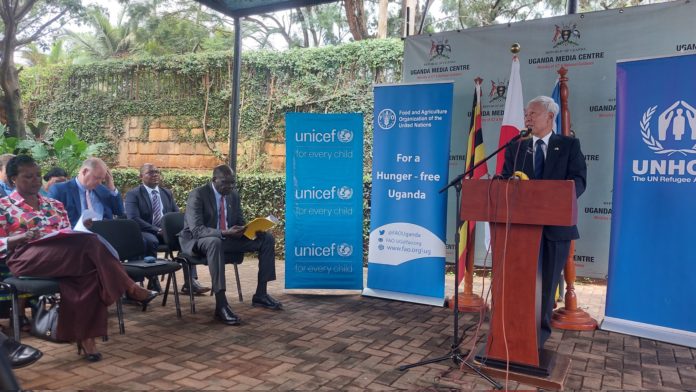
The Government of Japan has committed US$ 7.9 million (29.4 Billion) to support refugees and host communities as well as vulnerable populations in the Karamoja sub-region. Post-COVID-19, refugees, host communities and the people of Karamoja have been some of the groups hardest-hit by hunger and food insecurity.
The support has been channeled through the United Nations and International Organizations: the United Nations High Commissioner for Refugees (UNHCR), the United Nations World Food Programme (WFP), the United Nations Children’s Fund (UNICEF), the United Nations Entity for the Gender Equality and the empowerment of Women (UN Women), and the United Nations Food and Agriculture Organization (FAO).
“Japan recognizes that the humanitarian situation in refugee-hosting areas and vulnerable communities affected by current global situations such as climate change are devastating. Therefore, 2023’s contribution has been made with a specific focus on mitigating the impacts of food and nutrition insecurity, gender equality including protection of women from sexual and gender based violence to the vulnerable population, including refugees, host community members, women and children in Uganda. The Government of Japan will continue to support Ugandan people by acknowledging Uganda’s refugee policy and needs for humanitarian–development support as well as creating strong and powerful partnership,” said Ambassador Fukuzawa.
Hilary Onek, the Minister of Relief, Disaster Preparedness and Refugees said, “on behalf of the Government of Uganda I would like to take this opportunity to thank the Government of Japan through the Ambassador of Japan in Uganda for the generosity exhibited towards supporting the refugee community this year again. This year, support for the Karamoja sub-region is also covered. We are grateful for Japan’s cooperation in creating a resilient society, despite being affected by a variety of current global situations and climate change. We look forward to a year of close cooperation and collaboration with Japan in terms of the launch of STA2 as well as the Global Refugee Forum in December to enhance Uganda’s open door policy.”
Susan Ngongi Namondo, the UN Resident Coordinator, said, “the UN family in Uganda appreciates the government and people of Japan for this important contribution to the efforts in support of refugees and their host communities in Uganda. Japan’s commitment to a resilience-based approach by providing focus on vulnerable people in need of food and nutrition assistance in Karamoja is laudable.”
Uganda is the largest refugee hosting country in Africa with more than 1.5 million refugees and majority of the refugees in Uganda originate from South Sudan, the Democratic Republic of Congo and Somalia. Refugees and asylum seekers are entitled to work, have freedom of movement and can access social services.
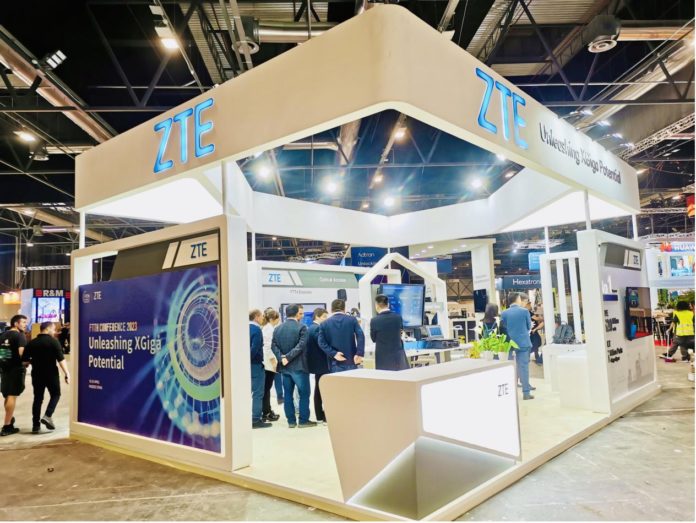
Madrid, Spain – ZTE Corporation (0763.HK / 000063.SZ), a global leading provider of information and communication technology solutions has successfully participated in the FTTH Conference 2023 in Madrid, Spain. The conference brought together decision-makers, thought leaders, corporate executives, and investors from the optical communication field, including representatives from telecom operators and equipment vendors around the world. The attendees shared their experiences and insights in FTTH network deployment and explored the future of FTTH in the 5G era. ZTE takes the lead in 10G PON in terms of global market share, and has ranked No. 1 for 10G PON shipments globally in Q4 2022, according to the latest research by Dell’Oro Group.
At the conference, ZTE showcased its 50G PON&10G GPON&GPON three-mode Combo PON solution, which features an independent wavelength stacking mechanism to support three generations of PON technologies (GPON, 10G PON, and 50G PON). Meanwhile, the solution shares the same ODN and the same platform, solves the problems such as high construction costs, large room space occupation in central offices, complex optical fiber cabling, and difficult O&M during the evolution from GPON to 10G GPON and then to 50G PON, and helps operators rapidly and flexibly provision high-bandwidth services, thereby simplifying network construction and reducing deployment costs. It inherits and develops the Combo PON concept and is an innovative solution in the smooth evolution from GPON to 50G PON.
To meet the demands of ODN constructions in Europe, ZTE has demonstrated its Light ODN solution, which reflects the concept of pre-termination, no-splicing, plug-and-play with tangible objects, and visible ODN. This solution reduces the labor cost of lightweight construction by 30% and improves the construction efficiency by 50%, effectively solving the problems of high labor cost and engineering difficulty in constructing optical fibers. It also makes the ODN network visible and manageable, and significantly lowers OpEx.
To tackle the issue of poor Wi-Fi signal coverage inside the home and frequent customer complaints, ZTE has presented its innovative connected home solution, which includes 10G PON, Wi-Fi 7, Mesh Wi-Fi&FTTR, and SCP management platform. ZTE considers connectivity as the foundation of home networks by delivering increased bandwidth and enhanced coverage to provide the ultimate whole-home gigabit-plus experience.
ZTE also showcased its end-to-end all-optical solution that helps operators evolve their optical networks towards 200G/400G. For 200G Access OTN, ZTE provides the 5-in-1 device with the largest switching capacity of 2.8T for 4G/5G/FBB/enterprise/edge DC scenarios. For 400G Metro OTN, ZTE delivers a real 400G solution that allows the leading fiber capacity of 96T by C6T+L6T spectrum width. For 400G Backbone OTN, ZTE has achieved a 2,808km transmission distance in the commercial network and verified an extreme 5,616km transmission distance with 400G QPSK.
In addition, ZTE presented its all-scenario and high-performance end-to-end CLOUD IP solution, based on which ZTE’s Metro routers have provided services for 1.5 billion people around the world and assisted operators in tapping into network potential and exploring new applications with 400GE interfaces, end-to-end SRv6 programmability and intelligent delivery.
End users demand more than high bandwidth – they also demand a superior experience. To satisfy this demand, ZTE has presented a big video solution during the conference to help operators improve their video service capability and operational efficiency. ZTE’s diversified multimedia terminals feature better connection, eco-system and user experiences, assisting operators to succeed in video services.
As operators transform their networks into (Cable-DSL-FTTH) networks, ZTE provides a full-system multi-connection DVB Zapper-Hybrid-IPTV/OTT-Combo STB solution to meet operators’ different requirements for service transformation.
Also, ATV and RDK STBs are equipped to enrich video content and ecology, and integrate ATVs, Netflix, Amazon prime video and Disney+. Since 2021, ZTE has ranked No. 1 in the number of newly activated ATV users.
ZTE’s innovative terminals, with full interaction (voice and touch screen) and 8K STBs, provide a more convenient and intelligent video experience. The Company is the industry’s first to enter into the smart home field, achieving value-added innovation.
ZTE ranks No. 1 for both PON CPE and DSL CPE shipments in 2022 globally, according to the latest report Broadband Access & Home Networking Quarterly Report Q4 2022 by Dell’Oro Group.
With its products and services deployed in more than 160 countries, ZTE will further pursue technological innovation. Together with industry partners, the Company is committed to satisfying the core requirements of operators and end users by providing best-in-class broadband connectivity.