Stanbic Bank
Stanbic Bank
25.1 C
Kampala
Stanbic Bank
Stanbic Bank
Home Blog Page 421

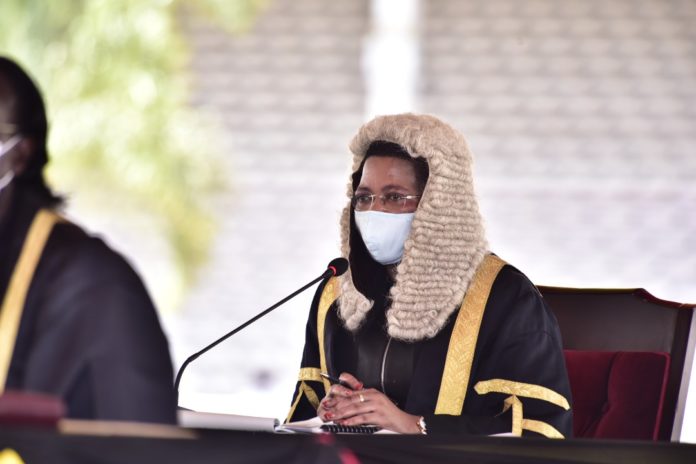
Speaker Among summons MPs to discuss the Anti-Homosexuality Bill

Speaker Among

Speaker of Parliament Anita Among has summoned MPS to discuss the Anti-Homosexuality Bill, tomorrow.

“I want to ask religious leaders to this time round be there to see who is who. We will not allow an aspect of saying there was an aspect of quorum; we are going to vote by show of hands. You are either for homosexuality or against it. We want to see the kind of leaders we have for this country,” she said during prayers at parliament.

The bill comes at a time when there are widespread cases of same-sex relationships in the community and major traditional schools.

The Uganda Anti-Homosexuality Act, 2014 was passed by Parliament on December 20,2013 with life in prison substituted for the death penalty. Whereas it was signed into law by President Yoweri Museveni on February 24, 2014, the Constitutional Court on 1 August 2014 annulled the law citing that it was passed without the required quorum in the House.

In February Archbishop of the Church Of Uganda, The Most Rev. Dr. Stephen Samuel Kaziimba Mugalu warned students against the well-funded gay organizations offering to recruit them into homosexuality.

Dr. Kaziimba said while responding to the General Synod of the Church of England which on February 9, 2022, passed resolutions to allow clergy to preside at Blessings of Same-sex Unions and have approved supplemental prayers and liturgies for such occasions.

“Children are back in schools; beware of the well-funded Gay organizations that are recruiting our children into homosexuality. It is not only in Kampala but all over the country. They target our poverty and promise youth money,” he said.

“The youth, if someone invites you to a function and offers you a big transport refund, those are probably bad people. Say “No” to it. If you have already been exploited or abused by such groups, please go to your Bishop for prayer, support, and guidance. You will be received with love and compassion,” he said.

He urged Headteachers to be vigilant about and make a thorough research about the organizations which intend to fund school activities,

“If an organization is bringing money and resources to your school, or inviting your students to a function, do your research. Make sure you know who they really are. We cannot serve God and mammon. We cannot serve God and money. Do not lose your soul because you think you will gain the whole world through the money they offer you. Do not think you can take the money, but do not fall into their trap. It’s a lie; you are being exploited with that money,” he said.

He said the Church of England claims that it has not changed its doctrine of marriage, namely that marriage is a lifelong union between one man and one woman. On the other hand, they are giving clergy permission to preside at services of Blessing for same-sex unions, especially for gay couples who are already considered ‘married’ by the British government.

Dr Kaziimba said first, from the first page of the Bible in the book of Genesis to the last page of the Bible in the book of Revelation, it is clear that God’s design for human flourishing is that we are part of a family, a family that is defined as one man and one woman united in holy matrimony for life and, God willing, a union that produces children. God’s Word has said that the only context for sexual relationships is in the marriage of one man and one woman.

“We all know the story of the Uganda Martyrs, who refused to engage in homosexual sex with their leaders. They stood firm in their Christian faith and were martyred for it. We cannot betray them or our Lord Jesus Christ. We will not betray the Word of God or His ways,” he said.

The suicidal path for the Church of England began in the Anglican Communion in 2003 when The Episcopal Church in America consecrated a gay man as a Bishop.

The Church of England, together with the Episcopal Church in America, the Anglican Church of Canada, and the Church in Wales, the Scottish Episcopal Church, the Episcopal Anglican Church of Brazil, and other Provinces are reported to have walked away to support homosexuality.

Stories Continues after ad

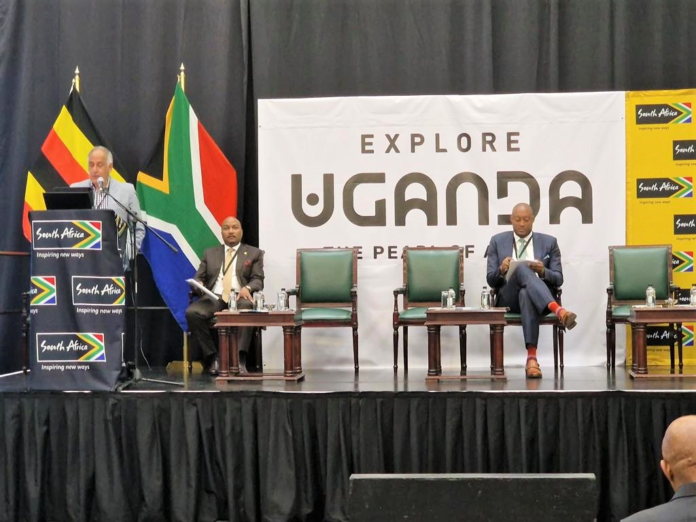
Uganda- South Africa Trade Summit kicks off in Pretoria

The Uganda-South Africa Trade Tourism and Investment Summit kicked off today in South Africa’s capital, Pretoria under the theme “Boosting Trade and Investment Relations between South Africa and Uganda”.  

The summit which ends on Wednesday is expected to attract 300 delegates, both private and public, who include the business community, heads of government agencies, policymakers among others, organizers led by Private Sector Foundation Uganda (PSFU) and the Uganda Investment Authority (UIA).

The organizers say that the summit will provide a platform for the private sector, government and business regulatory agencies to exchange views, ideas, and information on how to facilitate investment and also identify existing business and investment opportunities for Uganda.

Areas of discussion at the summit include Tourism, Trade and Investment, Finance, Insurance, Professional Service, Manufacturing, Mining, Energy Resources, Agro-processing, ICT, Power Generation, education, and Infrastructure development among others.

The summit was organized by the Uganda High Commission to South Africa, in partnership with Private Sector Foundation Uganda, Ministry of Foreign Affairs, Trade and Cooperatives, will be graced by the heads of state of the two countries, President Yoweri Museveni and President Cyril Ramaphosa.

South Africa is one of Uganda’s fastest-growing sources of Foreign Direct Investment and is leading in telecommunication, banking, energy and many others. Uganda, on the other hand, exports pharmaceuticals products, coffee, Vanilla, Flowers, and vegetables.

 The South Africa – Uganda, Trade Investment and Tourism summit is part of the government’s intentional initiatives to increase its export quota in the regional and international markets.

Stories Continues after ad

Gov’t schools dominate Stanbic National Entrepreneurship Contest

VICTORIOUS: Stanbic Board Chairman Japheth Katto (2nd right), Director Education KCCA, Juliet Namuddu (right) and Cathy Adengo, Stanbic Bank’s Head of CSR and Communications (left) pose for a group photo with Mary Hill High School representatives, the winners of the 2017 Stanbic National Schools Championship.

A hundred schools, including 40 maiden participants, have been selected countrywide to compete in the 8th edition of the Stanbic National Entrepreneurship Championship with government-owned entities dominating entries, taking 57 slots.

Over60,000 students are expected to partake in the business ideas challenge under the theme of powering innovation for job creation; winners in four categories will be announced later this year.

Schools in central Uganda dominated the entries with an impressive 25 slots, 21 for Eastern Uganda, while 18, and 17 slots went to Western and Northern Uganda respectively. These will see their students pitch business ideas under the “Start-up category.”

The Stanbic National Schools Championship is a four-category competition including students, (Startup Challenge); schools with existing businesses BizGrow Challenge); alumni (AlumGrow Challenge) and teachers (TeachGrow Challenge).

The annual challenge, now in its eighth year, is aimed at empowering and equipping the participants into a generation of innovative job creators with knowledge and life skills such as managing personal finances, entrepreneurship, and business management.

Cathy Adengo, Stanbic Uganda Head of Sustainability said, “to sustainably drive Uganda’s growth, we must invest in a reliable pipeline of innovative entrepreneurs to build a new generation of businesses and create high-quality jobs for the millions of young Ugandans completing school every year; this work requires everyone’s contribution and Stanbic Uganda is doing its bit through this entrepreneurship challenge.”

Diana Ondoga, Stanbic Bank’s Corporate Social Investment Manager, “we are particularly pleased to see forty new schools join the competition for the very first time, this goes to show the growth in interest over the last seven years; another highlight is the dominance of government-owned schools who have taken 57 of the 100 slots available we can’t wait to see the level of innovation they show in their respective pitches.”

Elve Nshuti, 22-year-old alumni of the programme said, “My life has since been transformed by this competition and I am thankful to Stanbic Bank and all the collaborators behind this initiative. My tech company I-Tech Africa is thriving, and I have gained more exposure equitably to customers through the championship. I’ve learned to be responsible and empowered, valuing collaboration over division and long-term gain over short-term gain because this is how my future will be bright.”

Since its inception in 2015, the NSC has registered growth each year from 32 schools participating in the inaugural year to over 100 (since 2020) with over 600 student business ideas generated.

At least 200 businesses have since been born from the ideas submitted nearly 100 are actively running student-led enterprises and have received capital grants from the championship investor-relations initiatives that help link bankable ideas to finance.

Participating students will have to compete in several qualifying rounds, including attending a boot camp after which a winner is identified at a grand finale in September.

Stories Continues after ad

Frail and ailing MP Malende returns home

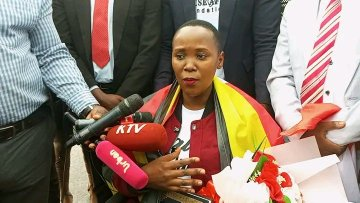
The Kampala woman MP Shamim Malende has been discharged from Agha Khan Hospital where she was admitted in November last year.

Malende who showed up in a wheelchair was welcomed by her relatives and friends. Malende was admitted to Rubaga hospital after she reportedly suffered a seizure at her home while at her Kawempe residence on November 13, 2022. At the Aga Khan Hospital in Nairobi, Kenya underwent abdominal surgery

“I want to thank the almighty God for this opportunity; he has given me a second chance to live. We have lost comrades like Counsel Anthony Wameli. I used to work closely with him as NUP lawyer even before we went to the 2021 elections,” she said

She said she is better and promised to continue with her legal services to National Unity Platform-NUP MPs Allan Ssewanyana and Muhammad Ssegirinya who are facing terrorism and murder charges, and other party members in detention.

Prior to admission, Malende was at the forefront of demanding justice for the detained supporters of the NUP party and spent most of her time in court.

Stories Continues after ad

Mozambique targets 720 000 people in cholera vaccination drive

WARNING: Cholera is a contagious disease that spreads so fast

Mozambique has kicked off a cholera vaccination campaign targeting around 720 000 people in eight districts as the country steps up control measures against an outbreak in which 5260 cases and 37 deaths have been recorded to date since September 2022.

People aged one year and older will be vaccinated in the five-day campaign, which started just 10 days after the country took delivery of vaccine doses. Alongside the vaccination campaign, health authorities are also reinforcing disease surveillance, prevention and control measures, treatment as well as raising public awareness to curb the spread of the disease and end the outbreak.

 “The vaccination campaign will be crucial in stemming the spread of cholera and help save lives,” said Dr Severin von Xylander, World Health Organization (WHO) Representative in Mozambique. “We are also working with the health authorities to bolster key outbreak response measures and have deployed staff in the three most affected provinces to support the provincial health authorities to detect, prevent and halt cholera this outbreak.”

WHO has also disbursed US$ 856 000 to support the response in Mozambique and provided medical supplies and medicines. Mozambique recorded a sharp increase in cases since mid-December 2022. Cholera has so far been reported in five of the country’s 11 provinces. The northern Niassa, Sofala and Tete provinces are the worst affected.

During the vaccination campaign vaccinators will use a mixed approach of vaccinating patients in health centres, through mobile teams and by door-to-door visits. Oral cholera vaccines will be used in conjunction with improvements in water and sanitation to control cholera outbreaks and for prevention in areas known to be high risk for the disease.

 “We celebrate the launch of this vital immunization campaign alongside the Government of Mozambique and our Alliance partners.” said Thabani Maphosa, Managing Director, Country Programmes Delivery at Gavi, the Vaccine Alliance. “The recent rise in disease outbreaks and the risks they present demonstrate the importance of our work in funding the Global Oral Cholera Vaccine Stockpile, cholera response campaigns and access to outbreak response vaccines for diseases such as cholera, measles, yellow fever and polio.” 

Despite a global shortage of cholera vaccines and increased demand due to a rise in outbreaks globally, WHO and its partners, including Gavi, the Vaccine Alliance and the Africa Centres for Disease Control and have been able to supply vaccines to countries most affected by cholera in the southern Africa. Mozambique received around 720 000 doses of the oral cholera vaccine.

The strain on the availability of vaccines prompted the International Coordinating Group (ICG) on Vaccine Provision to temporarily suspend the standard two-dose vaccination regimen in cholera outbreak response campaigns, using instead a single-dose approach. The ICG is an initiative which aims to manage emergency supplies of vaccines and is a partnership of the International Federation of the Red Cross and Red Crescent Societies, Médecins sans Frontières United Nations Children’s Fund and WHO.

Cholera is an acute, extremely virulent infection that can spread rapidly and cause dehydration resulting in high morbidity and mortality. However, the disease is easily treatable. Most people can be treated successfully through prompt administration of oral rehydration solution or intravenous fluids.

The disease is endemic in Mozambique and, together with other diarrhoeal diseases, is a major cause of infant death. There are yearly outbreaks in the country’s northern provinces.

Cholera transmission is closely linked with poor sanitation and inadequate access to safe drinking water. Extreme climatic events such as droughts and floods are worsening the cholera risks. In Mozambique, floods due to the current rainy season have affected over 39 000 people, claimed nine lives and caused extensive damage to infrastructure, including roads, bridges, health centres and 76 000 homes.

Stories Continues after ad

DFCU on the spot over tax evasions

Dfcu Limited, a development finance institution is on the spot over tax evasions and avoidances.

The company owns different properties which include; Dfcu Towers on Plot 1, Mackinnon Road, Nakasero, Kampala; Plot 36 Jinja Road, Mukono; Dfcu Financial Centre Block 111, Plot 3737, Namanve and Plot 7, Luthuli Lane, Bugolobi.

Eagle Online has learnt that Dfcu limited has not been remitting taxes for Dfcu Towers. The building is situated on the outer core of the Kampala Central Business district, the facility is rented in terms of Square meters.

It has established that a square meter (sqm) at Dfcu towers goes for $1600 per month; a Service Charge of $4 00 per sqm per month; Car parking fees of $3500 per slot per month. The rates above are quoted exclusive of VAT.

Its clients include; AF Mpanga Advocates paying $11,243 per month, Dfcu Bank, Unilever Uganda Ltd, the Kingdom of Netherlands Embassy which occupies the sixth floor and others. Embassy reportedly pays $11,700 per month and paid for five years.

This publication also learned that tenants pay a nonrefundable fee of $ 22,487 and are required to pay a minimum of five months and later three months but they are free to pay more than six months.

The tax compliance audit which was conducted from 2014 to 2020 revealed Dfcu limited under declared its rent income by Shs8.4 billion. The management of the Dfcu and URA held several meetings to deliberate on that issue however; the tax body insisted that they have to pay over face other consequences.

Eagle Online also established that URA was willing to decrease the Ddefaulted and demanded rental tax from Shs6.4 billion Shs3.5 billion but Dfcu defied at ran to Tax Appeal Tribunal. The company has since been ordered to pay 30% of the assessed amount of money before the hearing of the matter.

The under-declared rental income has been increasing from Shs955 million in 2014, Shs356 million in 2015, Shs172 million in 2016, Shs1 billion in 2017, Shs1.5 billion in 2018, Shs1.53 billion in 2019, and Shs280 million in 2020.

Mulengera News reported that George Ochom, the General Manager of Dfcu Ltd claimed that URA made a wrong decision because their auditors misclassified service charges.  

He said some of the tenants like the Embassy got a huge discount but URA officials declined on grounds that the company failed to table evidence. He claimed that Shs3.5 billion was incurred as interest for repayment of the loan which was used to put up the building.  

Stories Continues after ad

Enos Kitto Kagodo consecrated new Mukono Diocese Bishop

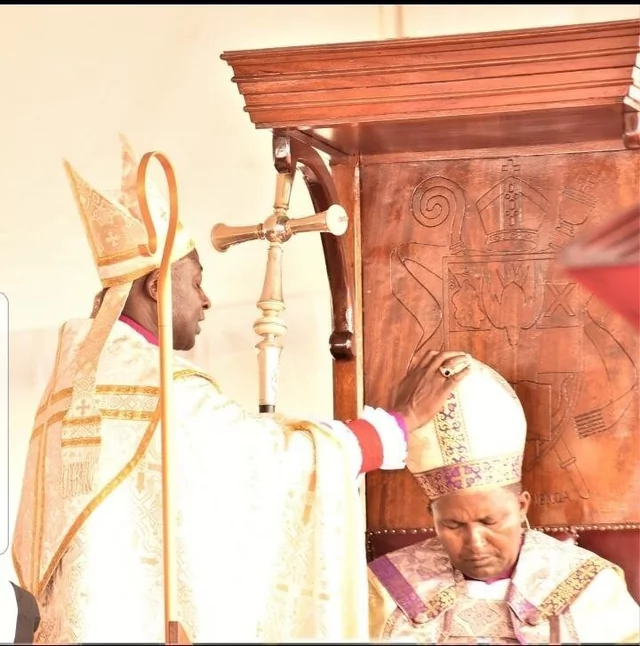
Rev. Samuel Kaziimba praying for Rev. Kitto Kadogo

Rev. Can. Enos Kitto Kagodo was on Sunday, 26 consecrated the new Mukono Diocese Bishop, replacing Bishop James William Ssebaggala, who retired after twelve years upon attaining the mandatory age.

Kagodo, who is now the 5th Bishop of Mukono Diocese, was the provost of St Philip and St Andrew’s Cathedral which are located in Mukono Municipality.

During the consecration ceremony, the Archbishop of the Church of Uganda, Rev. Stephen Samuel Kaziimba Mugalu, congratulated the new Bishop and also thanked Ssebaggala for his service in the diocese.

“I congratulate my dear brother, Rt. Rev. Enos Kitto Kagodo upon his consecration and enthronement as the 5th Bishop of Mukono Diocese replacing Bishop James Ssebaggala who has ended his 12 years active Episcopal ministry. Mukono is my Diocese and it’s where I will retire from,” he said.

He added: “I appreciate Bishop James and Mama Tezra Ssebaggala for their ministry and the many projects they initiated and completed such as Diocesan Offices, Mission Hall, equipping of leaders among others. I have appointed him the Board Chairman, Household and Community Transformation.”

The event was attended by the Vice-President, Jessica Alupo, who represented President Museveni and offered him a new car to help in service delivery.

 “I am extremely grateful to President Museveni for his continued support and government’s partnership with the Church of Uganda in improving the livelihoods of the people. I thank the Vice-President for delivering his donation of a vehicle to assist the Bishop in his work,” Kaziimba applauded.

Rev. Kagodo was born on December 13,1968 in Nakisunga sub-county in Mukono District.

He earned a Master of Divinity degree and a Bachelor in Health Administration from Uganda Christian University, after receiving diplomas and certificates in the same fields.

Rev. Kagodo has been the Provost of St. Philip’s and Andrew’s Cathedral in Mukono. Prior to this position, he served as a parish priest, Archdeacon, and Diocesan Health Coordinator.

He was ordained a deacon on June 9, 2002 in Mukono Diocese and then made a priest on December 12, 2004.

He has served on school management committees as well as various Diocesan Boards in the course of his ministry.

Rev. Kagodo is married to Catherine Namuddu and God has blessed them with seven biological children and many spiritual children.

Stories Continues after ad

Stanbic Business Incubator prioritizes women-led business ventures

Owners of 500 business enterprises are set to benefit from a three-week training program provided by the Stanbic Business Incubator Limited (SBIL), with funding from the German Federal Ministry for Economic Cooperation and Development (BMZ) and the Norwegian Agency for Development Cooperation (Norad), through Deutsche GIZ (GIZ)’s Employment and Skills for Development in Africa (E4D) Programme.

Speaking at the training launch, at the SBIL premises in Kololo, SBIL Chief Executive, Tony Otoa said the training will be delivered with a key focus on three core areas namely; access to markets, access to finance and business operational skilling necessary for start-ups’ management and growth.

“Priority has been given to female-owned enterprises. However, to qualify for the training, these businesses had to prove that they had been in existence for more than two years, have at least five employees and are operating within Kampala, Mukono and Wakiso”, he elaborated.

SBIL initially developed the Enterprise Development Program (EDP) in 2018 supporting 190 SMEs in Kampala, to focus on identifying and building the capacity of enterprises that could potentially penetrate and actively participate in Uganda’s natural resource sector. In 2019, E4D began supporting the Incubator’s growth and expansion to support 300 Ugandan Small and Medium Enterprises (SMEs) to become more competitive and attain sustainable growth while also creating jobs in Gulu and Mbarara districts. In 2021, E4D launched a new project to further upscale and expand the Incubator’s reach across the country to cover at least 20 districts through four branches.

The E4D Uganda programme Team Lead Donald Agaba, said E4D will continue to promote local employment through capacity development in partnership with the Incubator. He discussed the needs of MSMEs in Uganda and their critical role as a backbone of the economy and, a massive provider of jobs. He went on to mention that this current partnership has created at least 1,377 jobs as of December 2022 according to early tracer study results.

“Key sectors of focus include agribusiness, food and beverages, trade, consumer goods and supplies, green businesses, tourism, hospitality and catering services,” Agaba said.

“Others include; construction, fabrication and civil works, transport and logistics, health, professional services, power, and infrastructure,” Agaba said.

Stories Continues after ad

Museveni urges UK, Europe to utilize Uganda’s rich agricultural potential

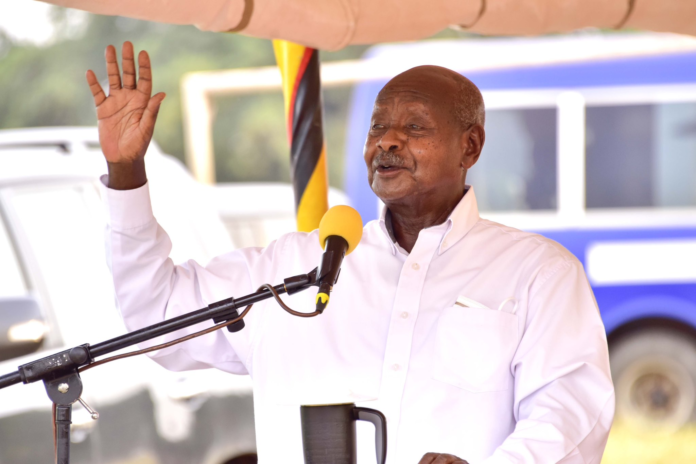
President Museveni has urged the United Kingdom (UK) and other European countries to take advantage of Uganda’s rich agricultural potential and import more from this East African country.

Speaking to a delegation of international journalists in Gulu city over the weekend, Museveni said the UK and other European countries are missing opportunities to import fresh produce from Uganda.

Citing Uganda’s high-quality fertile soils and a favorable climate for growing fruits and vegetables and a range of tropical fruits, Museveni said Uganda has a huge potential and if harnessed, could produce enough fresh produce.

The produce could be sold to Uganda’s domestic market, to its East African neighbors, to the UK and to third-party markets such as China, US and Russia, Museveni said.

The UK is currently going through a shortage of some fruits and vegetables and this has prompted rationing at most major supermarkets. Reports there indicate that the shortages could last until May because UK main growers were not harvesting tomatoes, peppers and eggplants at this time of year, as is usually the case, due to the high energy costs.

Hass avocados are one product with lucrative export potential. Until now, Ugandan avocado production has focused on local green-skin varieties, but 2023 will bring the country’s first commercial harvest of Hass – the variety with the greatest export potential thanks to its longer shelf life, fast tree maturity, and high yields.

Museveni’s comments follow the news in November 2022 that Britain plans to remove tariffs and quotas on almost all imports from Uganda by the end of 2023.

Uganda and other ‘least-developed countries’ (LDCs) are part of the EU’s Everything but Arms deal, which allows the country to export all products except arms to the EU duty-free and quota-free.

Post-Brexit, the UK ceased to be part of the deal but is reportedly in the process of signing a similar agreement with the Ugandan government.

When it comes to fresh produce specifically, trade will also benefit from the construction of new cold storage facilities at Entebbe International Airport near Kampala – for perishable export cargo such as fresh fruits and flowers.

Museveni claimed that the current vegetable shortages in Britain could have been at least partially avoided if better trade links had been established between the UK and Uganda for fresh produce. And he stressed that there are untapped opportunities for Uganda to trade more with members of the Commonwealth.

However, his comments on Britain’s fresh produce shortages do not appear to take into account the logistical challenges and price constraints involved in exporting perishable produce to the UK from a land-locked country with no seaports or direct air links to Britain.

When asked why Uganda has been slower to embrace export opportunities in fresh produce than its neighbor Kenya, Museveni said European culture and economic systems were more prominent in Kenya during and after colonization because more Europeans were allowed to settle in the country.

Uganda, by contrast, has been slower to enter what Museveni called “the global system of money”, having remained a “pre-capitalist” society “until very recently”.

One thing Museveni is keen for Uganda to avoid in future trade with Europe is what he called “the slave role” of African countries only exporting raw materials and being shut out from value addition at source.

“We cannot be producers of raw materials only and be precluded from value addition to our own products; it is not acceptable,” he said.

Post-Covid, the Ugandan government is focused on boosting exports across a wide range of industries in a bid to drive economic growth and recover the 300,000 jobs that are estimated to have been lost during pandemic lockdowns.

The target industries include fresh produce, as well as coffee, sugar, grains, poultry, beef and others.

Uganda’s Presidential Advisory Committee on Exports and Industrial Development (PACEID) was set up in 2022 to advise Museveni “on ways to address strategic and operational bottlenecks that impede Uganda from fully harnessing its industrial and export potential”.

The body wants to help Uganda double its total exports from the current total of $6.6bn to $12bn by 2027. And the fruit and vegetable sector is where PACEID is targeting some of the fastest growth, with ambitions to boost exports by 60 per cent.

If achieved, this would take Uganda’s fresh produce exports from $45 million to $196 million by 2027. But PACEID has identified several issues that Uganda must overcome to succeed on the international stage.

These include the country’s fluctuating prices, lack of investment, low-quality inputs (such as seeds, pesticides and other chemicals), weak grower cooperatives, and poor economies of scale.

Nevertheless, Museveni stressed that Uganda’s climate is an important advantage. The country has high-quality fertile soils and a favorable climate for growing fruits and vegetables, not least avocados and a range of tropical fruits. This is thanks to the country’s long daylight hours, consistent rainfall patterns, and wide range of elevation – from 5,109 meters at the country’s highest point to 621 meters at its lowest.

Stories Continues after ad

International Media Workshop for Journalists Discuss Institutional Peace

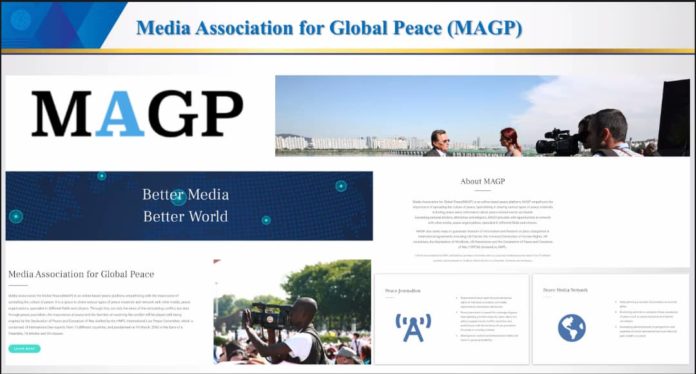
Amid the ongoing natural and human crisis in the global community including the earthquake in Turkey and Syria and the Russia-Ukraine war, the 1st ‘HWPL International Workshop on Peace Journalism’ was held online on the 18th of February with about 150 participants from about 30 countries. Under the theme “A Road to Institutional Peace for Sustainable Development”, the workshop aimed to enhance peace journalism and international media networks.

The event was organized by Heavenly Culture, World Peace, Restoration of Light (HWPL) with support from 28 media worldwide. HWPL, a South Korea-based international peace NGO affiliated with the UN ECOSOC and the UN DGC, has carried out global peace movements for world peace and cessation of war since its foundation in 2013.

The workshop included the celebration of a publication of “Peace Journalism Studies” which was collaborated by HWPL and international journalists with their expertise and perspective on peace. The topics of the “Peace Journalism Studies” ranged from analyzing conflict situations and peacebuilding efforts with a country case to the role of civil society in bringing social changes through advocacy of peace.

Dr. Salim Khan, director of News & Views Network (NVN) from India said “Journalists should play important role in spreading the message of love and justice. I expect that this HWPL online event on journalism will bring fresh ideas with regards to the role of media in peacebuilding and raise awareness facilitating the advocacy of peace in the society.” from his congratulatory address,

Mr. Robert Maseka, founder of Rob Youth Foundation from Namibia delivered ”We need to make sure that we promote a global media network that will promote democracy, human rights, and good governance. Through collaboration we are able to give the right information, we can communicate and unite the world.”

After 2 guest speakers’ congratulatory addresses, 3 journalists gave presentations who contributed to the publication of “Peace Journalism Studies.”

Ms. Frieda Sila Kana, the journalist of Digital Media Venture in Papua New Guinea, delivered conflict and violence in Papua New Guinea, saying “Sorcery and Witchcraft Accusations Related Violence is an emerging trend of violence and enemy of peace (in Papua New Guinea). The actions of inflicting pain causing death is barbaric, intense and inhumane that it cannot be ignored.”

Mr. Ihor Shevyrov, the publicity ambassador of HWPL and a journalist from Ukraine,   emphasized, “International peace should be built not only by the UN, but also by every country. Democracy, openness and freedom of civil society, the level of protection of the rights and freedoms of every person, as well as peace education and a culture of peace are decisive for building sustainable peace in any country. All these principles are clearly defined in the 10 articles of the founding DPCW Peace Declaration. United Nations needs new peace convention on DPCW.”

Declaration of Peace and Cessation of War(DPCW) is an international peace law drafted by the HWPL International Law Peace Committee, which is comprised of international law experts from 15 different countries. Consisting of 10 articles and 38 clauses, the DPCW, embodies the principles and measures for preventing and resolving conflicts and sustaining a peaceful global society.

Ian Seo, general director of public relations department of HWPL said, “Peace as an institution from people having a mind of peace and various organizations collectively supporting peace and taking actions gradually becomes habits, customs, norms, ideas, laws, and ultimately a culture of peace. The HWPL International Workshop on Peace Journalism: A Road to Institutional Peace for Sustainable Development is appealing to all of you to take the role of media as a messenger of peace to develop it as an identity of individuals and as a global culture.”

In response to the need for strengthening the peace network of the world’s media, HWPL plans to publish Peace Journalism Studies and hold events regularly where journalists can discuss and share opinions to enhance peace journalism.

The full version of “Peace Journalism Studies” can be downloaded on the website: Peace Journalism Studies (https://c11.kr/19wr2).

Stories Continues after ad