Stanbic Bank
Stanbic Bank
24.6 C
Kampala
Stanbic Bank
Stanbic Bank
Home Blog Page 421

Legal and Parliamentary Affairs committee recommend passing of Anti-Homosexuality Bill

Asuman Basalirwa, mover of the bill.

The Legal and Parliamentary Affairs committee has recommended the passing of Anti-Homosexuality Bill.

Last month, Speaker of Parliament Anita Among tasked Bugiri Municipality MP Asuman Basalirwa to reintroduce the Anti-Homosexuality Bill. The Bill comes at a time when there are widespread cases of same-sex relationships in the community and major traditional schools.

Earlier this month, Bugiri Municipality MP Asuman Basalirwa tabled the Anti-Homosexuality Bill after obtaining a certificate of financial implications.  The bill was however, referred to the legal and Parliamentary Affairs committee for scrutiny.

The committee interacted with various people who included the religious leaders, human right activities.  

During the plenary, MPs seconded the Anti-Homosexuality Bill 2023 for the second reading. Following the second reading Robinah Rwakoojo, the chairperson of committee presented the report which recommended the passing of the bill.

Fox Odoi who presented the minority report argued that the Bill seeks to criminalize people simply based on appearance even though they may not have violated any laws. It also infringes on the right to privacy and non-discrimination.

He said the Bill was misconceived and serves no purpose and therefore a duplication of the Penal Code, criminalizes individuals basing on appearance and others.

“The Anti-Homosexuality Bill 2023 was introduced during a time when anti-homosexual sentiments have been wiped up across the country and is not based on any evidence to show that incidents of homosexuality have increased,” he said.

The bill aims at among others protecting traditional families by prohibiting sexual relationships between people of the same sex, strengthening that country’s capacity to deal with emerging threats to the traditional family, protecting the cherished culture of Uganda and protecting children and youth who are vulnerable to sexual abuse.

By time of filing this story, the August House was in the final stages of voting on the bill.

It also seeks to criminalize same-sex relationships with a liability of imprisonment of two to 10 years for homosexuality, aggravated homosexuality, attempted homosexuality, aiding and abetting homosexuality, conspiracy to commit homosexuality and other related practices.

The Uganda Anti-Homosexuality Act, 2014 was passed by Parliament on December 20, 2013 with life in prison substituted for the death penalty. Whereas it was signed into law by President Yoweri Museveni on February 14, 2014, the Constitutional Court on August 1,2014 annulled the law citing that it was passed without the required quorum in the House.

Stories Continues after ad

Stanbic Properties Report sees 4% surge in office space demand

The second half of the year 2022 registered a 4% surge in demand for office space in Kampala City, the newly released real estate market report indicates.

Stanbic Properties Limited (SPL) Chief Executive Spencer Sabiiti said that the Kampala office market leasing activity for Grade A and B witnessed a solid recovery in the second half of 2022 compared to the same period the previous year with approximately 12,000 m². 

Class A properties represent the highest quality buildings with higher income tenants while class B properties are a step lower from class A properties—in terms of quality.  

The report indicates changes in price, demand, and related variables for residential, retail, office, rental, hospitality spaces in different parts of Kampala Metropolitan areas for the last six months of 2022 compared to the same period a year before.

Sabiiti further said that the space taken up was a combination of expansionary or consolidation-led and pent-up demand leasing as occupiers began to realign their business strategies after a lengthy hiatus post #Covid-19.

The report notes a balance between personal and company preferences continuing to be tested with the advent of a new trend of hybrid workplace strategies featuring a mix of on-site and remote working with more focus on employee wellbeing.

The report found that rent for Grade C declined by 12.5% from $8/m²/month registered in December 2021 while those for Grade A and B quality space remained stable in the second half of 2022—recorded at $15 and $11/ m²/month respectively.

“Going forward, we anticipate office rents particularly for Grade A to remain on an upward trajectory in the next 12 months on the back of tight vacancy, robust demand and limited new supply for rent,” Sabiiti said.

Over-saturation of Kampala’s office market has spurred the emergence of a nascent office market for Wakiso and Mukono, particularly on the upper floors of mixed-use buildings along the arterial routes.

However, the bulk of office supply in these nodes is suitable for small and medium enterprises, start-ups and single-person occupiers.

The weighted median rents for decent office space in buildings located along arterial routes out of Kampala stagnated at Shs25,000/m² /month as of December 2022 except for Mukono Municipality which registered a 12.5% annual increase, up from Shs20,000/ m²/month recorded for the same period in 2021.”

Retail rental outlook

The Kampala retail market generally showed rising cost of living continuing to be the key challenge faced by most retailers in the period under review. This is evidenced by a 10.6% year-on-year increase in headline inflation recorded in November 2022 compared to 2.6% registered in November 2021 according to the Uganda Bureau of Statistics surveys.

In addition, the second half of 2022 witnessed a sense of normalcy return in Kampala’s prime retail malls and ‘business as usual’ is the attitude adopted by most retailers owing to a number of new openings registered.

Prime locations on the ground and first floors continued to be keenly sought after as retailers took advantage of tenant-favoured markets to secure more accommodative rents.

Furthermore, the shift to online consumption during the #Covid-19 pandemic has come at the expense of physical retail.

“We witnessed landlords and retailers in prime malls experimenting with diverse tactics to lure consumers back to brick-and-mortar retail stores,” Sabiiti said adding, “some of the tactics included supplementary promotional events, thematic retail stores and extended display areas.”

The report adds that rents have shown little or no noticeable movements since 2021 with the highest rents stagnating between $22 to 27/m²/month for prime retail space on the lower floors and between $12 to 16/m²/month for large space occupiers on similar floors.

Going forward, the report anticipates a cautious expansion approach by retailers and developers as demand is expected to be relatively lethargic in the first half of 2023, with a recovery likely to pick up from the second half of 2023 onwards.

The report also anticipates an upsurge in the development of strip mall retail space, measuring up to 5,000 m² since they are easy to manage, typically requiring smaller shop sizes and lower upfront costs.  

Beyond Kampala, the Wakiso and Mukono retail market weighted median retail rents decreased by 2.1% year on year from Shs48,600 /m2/ month on the ground floor in December 2021 to Shs47,580 /m2/ month recorded in December 2022. This is mainly attributed to the spillover effects of the high cost of living that wiped out the disposable incomes of predominantly middle-class consumers. The biggest price movements were registered in Entebbe and Kira municipalities at -10%.

Residential property market

According to the report, Kampala Residential Market Year-on-year rents for stand-alone houses stagnated in Kampala’s upscale residential suburbs of Kololo, Naguru, Nakasero and Bugolobi – were registered at a median price of $3,500 per month.

The second half of 2022 saw an overall 5% annual reduction in rents for both 2 and 3-bedroom apartments in the high-end residential areas of Bugolobi, Nakasero, Kololo and Naguru with weighted median rents recorded at $1,900 and $2,375/month for 2 and 3-bedroom apartments respectively as of December 2022.

This was mainly attributed to a demand and supply disequilibrium with supply outstripping demand as the previous pipeline stock of apartments was completed.

Beyond Kampala, the report says, the middle-class settlements of Wakiso and Mukono registered annual weighted rental growth of 10% and 6% for 2 and 3-bedroom apartments per month respectively as of December 2022.

This can partly be attributed to the scaling up of ongoing government road infrastructure projects in these locations which has in turn opened these suburbs to residential developments.

Industrial and hospitality property market

In the Kampala Metropolitan Industrial market, the SPL research team observed a partial crossover between retail property and warehousing properties in the second half of 2022. This is emphasized by the fact the new warehouses have the possibility to be used differently.

On the other hand, the team is projecting approximately 550 star-rated keys to be added onto the Kampala Metropolitan hospitality market in the next 12 months.

Additionally, they (the SPL team) registered a 13% weighted average increase in average daily rates (ADR) from $115 per night registered in December 2021 to $130 per night recorded in December 2022 for star-rated hotels, resulting in a revenue per room (RevPAR) rate of $75 as of December 2022.

This agrees with the Uganda Bureau of Statistics producer price indices report of July-September 2022 that revealed that persistent annual price movements in accommodation services were registered at 9% compared to the same period in 2021.

The key drivers were mainly spillover effects of government incentives aimed at stimulating recovery of the tourism sector, particularly capitalization from the Uganda Development Bank (UDB) in the form of soft loans with flexible terms.

Primary research revealed that the emergence of the Ebola virus Sudan variant in the second half of 2022 clouded the full recovery of the hospitality sector to pre-pandemic levels, with approximately 19% of tourists postponing their accommodation bookings or cancelling their planned travels to Uganda and thus, dampening the recovery pace.

That said, the studied area recorded an 18% annual increase in occupancy from 40% registered in December 2021 to 58% recorded in December 2022.

Stories Continues after ad
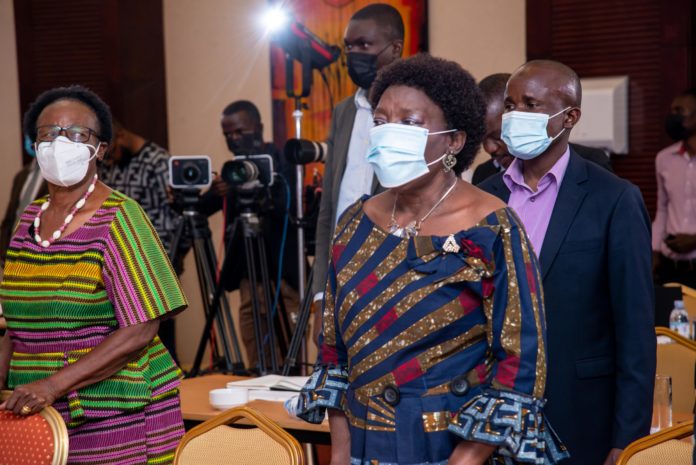
 Blick Family launches Blick Mulberry Wine

Blick Family, the renowned sports family on Monday, 20 announced the launch of Blick Mulberry Wine.

Blick Mulberry Wine, produced by Mpatta Agro Tourism Limited, is spear-headed by Arthur Blick Sr, a brother to former Uganda Investment Authority boss Dr. Maggie Blick Kigozi.

Venturing into winemaking came naturally for Blick Sr who is an Agricultural Officer by profession having attended Bukalasa Agricultural College and said that the wine is natural with no additives.

“The ingredients added to the wine to make it the best option for everyone are all grown at the farm in Mukono including the lemons from which we extract acids. This means that it is a completely natural wine made with no artificial additives,” he explained.

In his speech, Blick Sr also shed some light on the production capacity and marketing strategy for the wine.

“With the help of my family, we set up a factory and we produce between 200 and 600 litres of wine every day. At the factory, we have about 45,000 litres of wine react for marketing.

“The purpose of this launch was to make people get to know about Blick Wine like the normal [marketing] people do. We hope to also take it outside of the country in Kenya, Sudan,” he said.

Mulberry is the first of its kind in the Ugandan Market despite the other players who are venturing into more than just grape wine with hibiscus and tamarind as the most common.

Blick Wine features three easy-to-sip varieties, Red, Sweet Red Mulberry and Semisweet White Mulberry.

 “I want to thank Makerere University, the department of Food Science, they gave us support at several levels from the business plan to the technology,” Dr Kigozi said. “This is family business at its best. It’s important for Ugandan families to look at continuing to work with the family,” she added.

Blick Mulberry Wine, founded in 2019 in Mukono Mpatta Kisinsi by Arthur Blick Senior, is a Ugandan-based company offering naturally made wine from freshly Farm grown Mulberries. For a long period, the wine has been tested and shared among friends and family as well as a variety of people whose feedback has been very helpful in making the official launch come true.

Now that the baby steps have been achieved, the Brand decided to launch the wines and the main depot at Blick House (Rubaga Road) in a bid to officially penetrate the market.

Stories Continues after ad

Parliament declares one week to commemorate Speaker Jacob Oulanyah’s life

RIP: Jacob Oulanyah

Parliament has declared one week to commemorate the demise of the late Speaker Jacob Oulanyah. The revelation was made by the speaker of parliament Anita Among.

“This week, we commemorate the demise of our late Rt. Hon. Speaker Jacob Oulanyah. We recover from the agony of the untimely death that happened and we celebrate his enduring legacy,” She said during the plenary.

Late Oulanyah died of multiple organ failure on March 20, 2022 in Seattle, USA. He was laid to rest on April 8, 2022.

Yesterday, the family, friends, and leaders gathered at All Saints Cathedral in Kampala to remember Oulanyah. The memorial service was attended by the Deputy Speaker of Parliament Thomas Tayebwa, Chief Justice Alfonse Owiny-Dollo and Members and staff of Parliament.

The service led by Dr. Hannington Mutebi, the Assistant Bishop of Kampala Diocese duly started at 3:00 pm as indicated in the order of service, an attribute of timekeeping that the deceased strictly observed.

Mutebi said Oulanyah participated in every detail of the church activity and was a Christian who loved God and supported the church.

The Speaker of Parliament Anita Among in her speech read by Tayebwa said that even with the short life he lived, Oulanyah left behind a legacy of immeasurable bounds.

“As a country, the late Oulanyah stood tall like a colossus; he represented the current and future of our national leadership. Many of our leaders and young people looked up to him for inspiration, advice, and guidance on good leadership,” Among said.

She added that Oulanyah left a big impact in Parliament by greatly influencing the way of doing business, especially in areas of timekeeping and processing of bills and motions.

“The late Oulanyah believed in honesty and speaking frankly about national issues. Today, we have a parliament in which those values are cherished and practiced by most of its members and staff. As Parliament of Uganda, we will continue to work towards accomplishing the agenda that Oulanyah set out to achieve during his term of office,” Among said.

Stories Continues after ad

EA Consul Generals resolve to follow up on stranded nationals in UAE- Amb. Mayega

Uganda’s Consul General in Dubai, Ambassador Henry Mayega has revealed that East African Consul Generals to Dubai and the Northern Emirates have resolved to jointly follow up on stranded and jailed nationals in the United Arab Emirates-UAE.

The resolutions were made during the quarterly meeting of East African Consul Generals to Dubai and the Northern Emirates at Kenya’s Consulate in Dubai.

According to The Observer, last year, UAE deported over 1000 Ugandans over expired visas, accumulated fines and lack of travel documents. This publication established that several nationals from East African Nations are still held up in various centers in Dubai and other places.

“The ambassadors resolved to celebrate the East African Community Day on November 30, 2023. The Day’s events will feature; exhibitions, celebrating Swahili as a unifying factor in the EAC and using it as a gateway to the Arab world since Swahili borrows heavily by 40% from the Arabic language,” he said.

During the meeting, they deliberated to jointly follow up on the preparations for 2023 UN Climate Change Conference that will take place from November 30, to December 12, 2023 in Dubai, United Arab Emirates (UAE) and work closely with EAC countries’ liaison offices that do not have consulate representation in Dubai and the Northern Emirates like the DRC in order to deepen the EAC cooperation.

“We agreed to seek for inclusion and participation of all EAC countries in the Global Village event currently going on in Dubai as an entry point to that event that has put together the global business community that is taking part in the GV festivities,” he said.

Stories Continues after ad

LOP Mpuuga urges Chinese investors to protect, preserve Uganda’s environment

The Leader of the Opposition in Parliament (LOP), Mathias Mpuuga, has urged the Chinese Ambassador to Uganda, Zhang Lizhong, to prevail over Chinese investors not to degrade Uganda’s environment but work towards its protection and preservation.

This was during an interaction between the LOP Chinese Ambassador, who paid a courtesy call on him at his office at Parliament.

Mpuuga said that the Chinese government needs to pick interest in reports of environmental degradation by Chinese investors, adding that while Chinese investments in the country are welcome, activities that degrade the environment are likely to negatively affect their projects.

“Sustainability of the projects depends on how well we protect Uganda’s environment. This being a small country but with a huge population, sooner than later, feeding our people will become difficult unless we preserve our environment,” Mpuuga told the ambassador.

The LOP further asked his guest to act upon reports of alleged mistreatment of Ugandans working with Chinese companies in various parts of the country.

“You need to encourage them to treat Ugandans with dignity. Ugandans need these jobs, but they should be handled as people, treated well, and respect their rights at employment,” Mpuuga said.

Shadow Ministers, Yusuf Nsibambi (Works and Transport), Francis Katabaazi (East African Community Affairs), Francis Mwijukye (Trade and Industry), and Joyce Bagala (Information and Anti-Corruption), who were in Mpuuga’s company voiced their concerns about the human rights situation in some of the Chinese companies mentioning among others, poor working conditions, sexual harassment of the female workers, and eviction of locals from their lands without adequate compensation.

The MPs further wondered why some infrastructural projects such as roads are poorly done and sometimes take long to get completed.

In response, Zhang Lizhong said that while the embassy endeavors to encourage Chinese investors to respect local laws and customs, it finds challenges in reaching the privately-owned companies.

“The embassy has maintained close contact with these companies, especially the state-owned companies [and some] private investors. We may not cover all of them because there are so many small investors that we may not be aware of but we try to reach out to them to help them to solve problems, and to guide them,” Lizhong said.

The meeting, the first between a Chinese diplomat and an Opposition leader, was requested by the Chinese embassy, was intended to exchange views on strengthening exchanges and cooperation between the legislative bodies of both Uganda and China.

Stories Continues after ad

Uganda Cranes, fans to share Shs55m bonuses in the 2023 Africa Cup of Nations qualifiers

Uganda Cranes and fans are set to receive cash incentives if they win their upcoming matches against Tanzania in the 2023 Africa Cup of Nations qualifiers.

The Uganda Cranes will play their home game against the Taifa Stars of Tanzania at the Suez Canal Authority Stadium on March 24, at 5pm local time, before travelling to Dar es Salaam for the return leg on March 28, 7pm. This implies that if the team wins both matches, they will walk away with bonuses of Shs55 million shillings while they shall get half of the money if they win one game.

“If the Uganda Cranes win the game, all players that participated in the game will be rewarded Shs1.5 million each with an additional Shs5 million to be shared by the support staff,” Chief Marketing Officer of MTN Uganda, Somdev Sen said.

MTN Uganda will reward the most engaged Uganda Cranes fans with Shs100,000 each, based on their social media interactions and online content using the hashtag.

“We are very grateful for MTN’s continuous support towards Ugandan football. This kind gesture from MTN is very welcome. It motivates our players to give their best on the field,” said the Chief Executive Officer of FUFA, Edgar Watson.

“We are excited about this team, which is the strongest team we can field in this upcoming match against Tanzania, and we promise to do our best to make our fans proud. We thank MTN for their commitment to developing football in Uganda.”

In January 2023, MTN Uganda announced Shs19 billion shillings sponsorship, over five years, towards the Federation of Uganda Football Association (FUFA) to support seven properties or programs of the federation, namely: the Uganda Cranes, the Crested Cranes, the FUFA Drum regional cup, the FUFA Juniors League, FUFA Super 8 tournament, the FUFA Super Cup, and the FUFA Annual Awards.

Stories Continues after ad

Former PS accuses Minister Musenero disappearing with #Covid-19 accountability files

Dr. Musenero

The former Permanent Secretary in the Ministry of Science David Obong has accused the minister of Science, Technology and Innovation Dr. Monica Musenero of disappearing with accountability files intended to help the Auditor General’s investigations into the expenditures.

Obong said while appearing before the Public Accounts Committee to respond to the Auditor General’s forensic investigation report into government expenditures on #Covid-19 funds.

In 2021, Uganda embarked on developing its vaccine. Under the Presidential Scientific Initiative on Epidemics (PRESIDE), a brainchild of President Yoweri Museveni led by Dr. Monica Musenero, then a Presidential Advisor on Epidemics, government set aside Shs31 billion for the development of the country’s first-ever #Covid-19 vaccine.

Dr. Musenero told Eagle Online that she couldn’t respond to the allegations by Obong as she was attending the meeting but promised to call back.

was in a meeting but would

Prof. Vinanda Natulya, a medical researcher and Chancellor Busitema University told the committee that an impression was created that the #Covid-19 vaccines but the process takes time.

“I alerted the President that he should not think that we shall get a vaccine before developed countries because they were already ahead. What was important was to establish a national capacity to respond because #Covid-19 is not the last outbreak we are going to get,” said Nantulya.

He said #Covid-19 will come in periodic attacks. It is important that we continue the work on the development of vaccines against #Covid-19 including vaccines against other variants which are going to emerge.   

The Assistant Director, Uganda Virus Research Institute Dr. Jennifer Serwanga said that development of the vaccine stalled due to complexities in accessing green monkey cells which are used to multiply the virus.  

“You cannot access many of these biological things because they do not come to this part of the world. It took six months for us to get the green monkey cells and we are the first ones in Africa to get them. We have stocks of them, we now have enough vile viruses,” she said.

She re-assured the legislators that Ugandan scientists have the capacity to develop vaccines but she urged the government to plan for expansion of vaccine development facilities and invest in equipment.

Stories Continues after ad

Africa burdened with largest global increase of oral diseases

Around 44% of the population in the African region suffer from oral diseases, and while the region has experienced the steepest rise globally in oral diseases over the last three decades, spending on treatment costs remains extremely low, a new report by World Health Organization (WHO) finds.

Oral health remains a low priority in many African countries, leading to inadequate financial and technical investment, which in turn undermines prevention and care services as well as oral health promotion. Around 70% of sub-Saharan Africa countries spent less than US$ 1 per person per year on treatment costs for oral health care in 2019, the latest year for which data is available.

Half of the countries in the region do not have oral health policy documents. In addition, the region’s oral health workforce is chronically lacking, with a ratio of just 3.3 dentists per 100 000 people recorded between 2014 and 2019, approximately one-tenth of the global ratio. Such shortcomings have only been further compounded by the impacts of the COVID-19 pandemic.

“Oral health is integral to general health and well-being, yet it has been neglected in the region for much too long, often with severe and lasting consequences,” said Dr Matshidiso Moeti, WHO Regional Director for Africa on World Oral Health Day marked on 20 March.

“While the most prevalent of noncommunicable diseases, oral health diseases are preventable and treatable. It’s crucial for countries to do more to increase access to affordable prevention and care services and ensure that people are equipped with the knowledge and skill on promoting oral health,” Dr Moeti said.

The Africa regional summary of the WHO global oral health status report released today serves as a reference for policymakers and a wide range of stakeholders. In addition, it guides the advocacy process toward better prioritization of oral health in the region to tackle this alarming oral health situation.

The African region has experienced an increase of more than 257 million in oral disease cases over the last 30 years, affecting people from early life to old age. The growing burden of oral diseases such as dental caries, gum diseases and tooth loss disproportionately impacts marginalized groups, reflecting wider inequalities in access to health services. An example is the persisting prevalence of noma, a disease that occurs in contexts of extreme poverty and is primarily found in sub-Saharan Africa. Noma destroys the mouth and face of mostly young children. If left untreated, it is fatal in 90% of cases.

Most oral health diseases can be prevented without medical assistance – through a healthy lifestyle, a well-balanced diet and good oral hygiene. In addition to oral diseases’ significant health burden, they also have a detrimental social and economic impact, restricting individuals’ participation in society and leading to productivity loss, as well as learning disruptions among school children.

In a bid to reinforce oral health promotion, oral disease prevention and control in Africa, WHO Member States adopted a historic resolution in 2021 that set out a bold vision for universal health coverage of oral health services by 2030. WHO has since developed a comprehensive Global Strategy on Oral Health, which was adopted by countries at the 2022 World Health Assembly.

In collaboration with different partners, the Organization has supported countries technically and financially in implementing regional and global oral health strategies, as well as building health worker capacity and strengthening integrated surveillance.

WHO has also supported 11 priority countries in developing, implementing and monitoring an integrated national noma control programme, financially supported by German NGO, Hilfsaktion Noma e.V. Additionally, more than 3600 primary care workers have been registered for a WHO online training course on noma since July 2022.

 “I urge countries to prioritize oral health as part of noncommunicable disease and universal health care agendas and increase political and financial commitment. This requires a paradigm shift from treatment-oriented oral health care into more prevention and promotion approaches to address oral health inequality,” said Dr Moeti.

Stories Continues after ad

UBOS staff undergoes training ahead of national population census

101 staff members of Uganda Bureau of Statistics (UBOS) have completed leadership training at National Leadership Institute (NALI) Kyankwanzi in preparation for the national population census scheduled for August this year.

Speaking during the pass out of 101 staff after one month training at NALI on Friday, the Executive Director of UBOS, Dr. Chris Mukiza, said their staff needed training in transformation leadership so as to be able to handle the field tasks during the enumeration exercise.

He said that a number of their staff are statisticians, Economists, information technology experts with very little understanding of leadership hence the need for training.

“I am sure they have understood the skills and also when they are in the field they need to have a self-defense mechanism so that they are not intimidated,” Dr Mukiza said.

While at the institute, the team was trained in leadership skills, patriotism, self defence skills, and geography of Uganda, attitude and social economic transformation, skills at arms, Kiswahili, drills and physical training among others.

UBOS plans to deploy 110,000 enumerators and that the recruitment exercise starts in June this year.

The Director (NALI) Brig Gen Charles Kisembo said that the team has been equipped with tools of knowledge to enable them to penetrate the essence of things to have the eyes and mind that see and perceive things beyond the ordinary.

Brig Gen Kisembo said that the knowledge they acquired will help them to build cohesion and ethics code at their work place, be patriotic and committed staff in execution of duty.

He urged the trainees to exercise the skills they acquired to do things differently saying that the country looks up to them as it walks towards the middle income status.

“Be resilient, committed and patriotic in service of your country, love one another, love Uganda and Africa and that is where prosperity and strategic security lies,” he said.

Stories Continues after ad