Stanbic Bank
Stanbic Bank
24.8 C
Kampala
Stanbic Bank
Stanbic Bank
Home Blog Page 426

Continued demand for dollars keeps the Shilling on a back footing

The currency was quite volatile during the week opening the session trading at the 3765/3775 levels and weakening to trade at lows of 3790/3800 before strengthening marginally to trade at the 3770/3780 levels.


Continued demand for dollars kept the unit on a back footing but healthy month-end inflows gave the currency some relief. Looking ahead as we head into the new month the currency is anticipated to trade within the 3720 – 3820 trading range and still expect some pockets of demand for dividends but also continued flows from NGOs, commodity exporters and other sectors.
Fairly liquid Money Markets during the week with overnight yields easing marginally to trade within the 9.00% -12.00% levels during the week. Bank of Uganda held a Treasury Bill auction on Wednesday and the 91-day, 182-day and 364-day tenors cleared at averages of 10.384%, 10.512% and 13.000% respectively. The next Monetary Policy Committee meeting is scheduled for 6th April 2023.


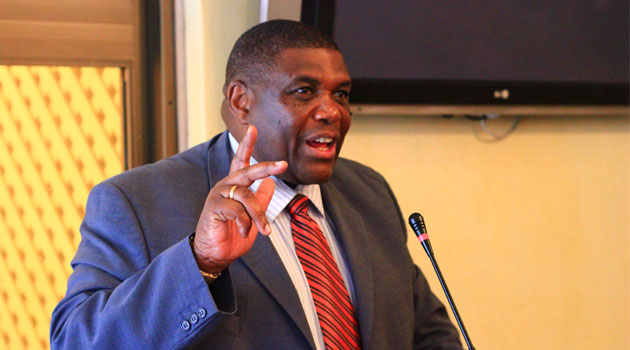
Catherine Kijjagulwe, Head of Trading at Absa Bank Uganda at last some two-way flow was seen in the Kenyan market during the week with some inflows from the tea sector and Central Bank, but continued demand from the energy and manufacturing sectors kept the unit weak. The unit traded within the 130.50 -140.50 levels. The Monetary Policy Committee raised the Central Bank rate by 75bps to 9.50% citing continued inflationary pressures.


“The dollar was volatile during Thursday’s session losing some ground as bond yields edged lower as the market awaits the US Inflation print and the Fed’s upcoming action with regard to Monetary Policy,” she said.


The Euro rode on the dollar’s weakness to touch highs of $1.0926 (Shs 4110) on Sunday, closing the day at $1.0906 (Shs 4103).
The Pound followed suit, touching highs of $1.2393 (Shs 4662) as concerns of a financial crisis subsided during the week.
She said Brent Crude traded at $78.69 (Shs 296,046) a barrel and West Texas Intermediate traded at $73.98 (Shs 278326) a barrel with a marginal rise in oil prices after a drop in US stockpiles to a 2-year low and a stop in oil exports from Iraq. The expectation is for China’s demand and sustained lower production from Russia in the long term to lead to a rise in oil prices.
Gold traded at $1974.33 (Shs 7.4 Million) an ounce.

Stories Continues after ad

A Brief Explanation of Shiba Inu Coin and Its Impact To Dogecoin

In the cryptocurrency world, there have been many coins that have tried to compete with bitcoin’s market share, but none have gained as much popularity as Dogecoin. It started as a joke on the internet, but it quickly grew into one of the most popular cryptocurrencies online.

Shiba Inu, the newest cryptocurrency on the market, has been called a “Dogecoin killer” ever since it started gaining traction among investors. This nickname is not only inaccurate, but it also misses the bigger picture of what makes Shiba Inu stand above the rest: its focus on ease of use and accessibility.

What is Shiba Inu Coin

Shiba Inu Coin (SIC) is a cryptocurrency used primarily on the Shiba Inu Blog, a website devoted to the Shiba Inu dog breed. It was created when Dogecoin was well-established and it was one of the first crypto coins to be made in the image of an animal. 

SHIB coin can also be used for trading pair with Tether or SHIB USDT along with other pairs such as ETH BTC, DOGE USDT and more.

It originally existed as a fork of Litecoin, and like Litecoin, it has a short block generation time—only 1 minute—which makes for faster transaction speeds than many other coins.

Shiba Inu Coin also uses Scrypt mining just like Litecoin and other popular coins rather than Bitcoins SHA-256 algorithm. It makes mining of Shibas much faster and more stable (not subject to huge spikes in hashing power). It also keeps the coin accessible to normal users who don’t have super-powerful computers like those needed to mine Bitcoins.

Why Shiba Inu Coin is Considered the Dogecoin Killer

One reason why people might think that Shiba Inu Coin is a Dogecoin killer is because it has established a fixed limit on the maximum number of coins that will ever exist. This number remains unchanged as long as the coin exists and there will not be any new coins created when it reaches this limit. 

This means that if you own one Shiba Inu Coin, you could hold onto it forever and never become part of a declining market with falling prices. If there are no new coins created, then there will be no additional supply in the market, which should help to maintain an increase in value over time.

A lot of people are calling Shibe the “Dogecoin Killer”. They say it’s faster and better than Dogecoin, because its new technology called “Techno” can handle more transactions per second than Dogecoin. They say this makes it cheaper to use for microtransactions like buying coffee or tipping someone on the internet for a funny picture or video they posted.

Shiba Inu is called Dogecoin killer because of its much-improved features which will make it a better alternative to Dogecoin.

  1. It will be more secure and reliable than Dogecoin.

Shiba Inu will use a new concept known as the ‘Blockchain 2.0’ to give the users a safe, secure and reliable platform to trade in.

  1. There can be multiple virtual currencies based on Shiba Inu’s Blockchain technology.

This means that if one currency fails or becomes obsolete, there will always be another one for the users to use.

  1. It will have a decentralized nature with no single point of failure and no centralized authority over it. This is also known as ‘decentralized currency’.

Why Is Shiba Inu Coin Better Than Dogecoin?

Shiba Inu is faster than Dogecoin, which means that you can send money more quickly. It’s also more secure and liquid, so if you want to trade your coin for another cryptocurrency, cash out into USD, it’s easier to do that on Shiba Inu than Dogecoin. And there are plenty of other exciting benefits too:

  • An active community of Shibas (that’s what people who love Shiba Inu call themselves)
  • A better ecosystem with all kinds of apps — wallets and exchanges — aimed at making sure Shibas are always safe and secure
  • A better price — the market cap is currently $0.000011 while Dogecoin is still struggling at $0

The Shiba Inu Ecosystem 

SHIB

The Shiba Inu Ecosystem is a platform that allows users to trade, buy and sell anything with the use of Shiba Inus. The ecosystem provides an online wallet service for storing your coins, as well as a mobile app for trading coins on the go. Users can also use their native token (SHIB) to purchase things like food or clothing.

Shiba Inu SHIB

Shiba Inu SHIB is the currency of the Shiba Inu Ecosystem. It can be used to buy and sell products, services, and digital assets in every market on the Internet.

LEASH

LEASH is a decentralized blockchain-based social media platform for Shiba Inu owners. It is an ecosystem that allows Shibas to be rewarded for their content, and allows users to make money by using the Leash token (Leash).

BONE

BONE is a platform for the collection, exchange and trading of dog bones.

This ecosystem serves as the primary means of collecting data on the population dynamics of Shiba Inus (and their owners). The system records every time a bone is collected or exchanged by its owner, which allows us to track how often people are giving away their bones so we can use them later for research purposes.

SHIBASWAP

Shiba Inu Swap is a decentralized exchange for Shiba Inu tokens. It allows users to trade shibas without intermediaries, and it’s also compatible with all ERC20 tokens.

The Shiba Inu swap has an easy-to-use interface that makes it convenient for anyone to trade their shibas without having to worry about learning how to use a complex trading platform. It supports both buy and sell orders as well as limit orders, stop losses and much more.

Shiba Inu Incubator

Shiba Inu Incubator is designed to help new projects launch on the Shiba Inu blockchain. It’s a decentralized incubator that offers funding and mentorship to help new projects get off the ground.

Shibosis

Shibosis is a website that provides shiba inu enthusiasts with everything they need to know about the breed. You can find news and information about the dog, as well as a marketplace for products related to them. The site also provides a forum for shiba owners to connect with each other and share their experiences with the breed.

Stories Continues after ad

BRAC celebrates 50th year anniversary in Uganda

BRAC, one of the largest development organisations of the world, celebrated its 50-year anniversary titled “50 Years of Igniting Hope from Bangladesh to the World” at Munyonyo Commonwealth Resort on 30 March 2023.

The event was organized by BRAC Uganda and BRAC Uganda Bank Ltd organised where prominent guests and dignitaries attended from different government institutions, non-governmental organisations, microfinance institutions, social enterprises and other notable organisations.

First Lady and Minister for Education Janet Kataaha Museveni, F attended as the Guest of Honour and Dr Michael Atingi- Ego, Deputy Governor of Bank of Uganda, attended as the Special Guest. Shameran Abed, the Executive Director of BRAC International, as well as other BRAC leaders from Uganda and around the world, were also present at the celebrations.

In her welcome address, Spera Atuhairwe, the Country Director of BRAC Uganda expressed her gratitude to the communities, stakeholders and partners that work with BRAC to create sustainable pathways out of poverty. She also reaffirmed BRAC Uganda’s commitment to achieving impact in Uganda, saying “In Uganda, we are committed to growing and deepening our presence to deliver impactful solutions for the people and communities we serve.”

Speaking at the event, the First Lady paid special tribute to BRAC’s founder, the late Sir Fazle Hasan Abed, for sharing his dream of empowering people and communities, In Bangladesh and beyond. She expressed her admiration for BRAC’s work and impact in Uganda saying “My hope and prayer is that their work in Uganda will rub off on our people so that they can learn to build, to empower themselves, to work with integrity and change the face of Uganda. Uganda will not change until Ugandans rise up and change it.”

Shameran Abed, the Executive Director of BRAC International, in his speech, thanked the First Lady for the invitation she extended to Sir Fazle to bring BRAC to Uganda. “Building on nearly two decades of experience with communities all across Uganda, we will deepen our work in the critical areas of financial inclusion, extreme poverty and early childhood development. Hon

“Janet Museveni, thank you for your invitation to my father to work in Uganda all those years ago, and for being such a strong supporter of BRAC. So much of what we are celebrating here today is owed to your vision of what this partnership could achieve.”

BRAC has been working in Uganda since 2006, marking this year its 17th year in the country.

Its microfinance, BRAC Uganda Bank Ltd (BUBL) is one of the largest providers of financial services in Uganda. BUBL’s mission is to provide a range of financial services to people living in poverty, especially women, to build sustainable livelihoods.

The NGO works with communities, providing holistic services including integrated, quality health care; early childhood development through play-based education; safe spaces for adolescent girls and young women to empower themselves; vocational education and training for skills and employability; emergency response and preparedness; and time-bound interventions to help families escape extreme poverty long- term.

The Deputy-Governor of the Bank of Uganda, Dr. Michael Atingi-Ego praised BRAC Uganda Bank’s contributions to financial inclusion in Uganda. He quoted the significant growth in the adult population with access to formal financial services – from 20% in 2011 to 66% in 2021. He reiterated the need for all stakeholders to contribute to making financial services in Uganda more accessible and more inclusive.

Nkosilathi Moyo, Chief Executive Officer of BRAC Uganda Bank Ltd, recognised BUBL’s achievement of having the largest network of banking services in Uganda, with 32 Credit

Institution locations and 130 satellite branches. He also reiterated BUBL’s commitment to reaching more underserved people, especially women, saying, “We have not come this far too just. By 2027, we hope to reach 250,000 borrowers, of whom 65% will be populations living in poverty and 90% populations living in rural areas.”

The celebrations ended with a touching and inspiring performance from girls in the Empowerment and Livelihood of Adolescents (ELA) clubs under BRAC’s Youth Empowerment Programme.

The organisation’s 50th anniversary is a celebration of solutions that are born and proven in the Global South, and the strength, ingenuity and courage of people who partner with BRAC to solve some of the world’s toughest challenges.

BRAC was born in a remote village in Bangladesh in 1972. Today, BRAC partners with over 100 million people living with inequality and poverty globally, through a community-led, integrated development model, combining social development, social enterprises and humanitarian response. BRAC first expanded its operations outside of Bangladesh in 2002 as BRAC International, and now directly implements and provides technical assistance to partner governments and civil society organisations in 16 countries across Asia and Africa.

Stories Continues after ad

Polly Namaye returns as deputy police spokesperson

Commissioner of Police (CP) Polly Namaye has returned as the Deputy Police Spokesperson.

Namaye, who had been dropped from the position in 2022 and replaced with Senior Superintendent of Police (SSP), Claire Nabakka, has worked with the United Nation Mission in Juba, South Sudan for the last 18 months.

While making the announcement this morning at police headquarters in Naguru, Police spokesperson Fred Enanga said that Namaye will be his deputy in charge of press-related matters.

Enangs added that SSP Claire Nabakka will handle the police’s Public Relations.

Namaye joined the police in 2007. Her basic police training, which involved academics, the law and internship, lasted until December 2008.

From January 2009 until April 2014, at the rank of Senior Superintendent of Police, she served as the regional police spokesperson for Mbarara Municipality.

In April 2014, she was transferred to the police head office in the Office of the Commissioner of Police. There, at the rank of Acting Assistant Commissioner of Police, she was appointed the Deputy-in-Command for the Press and Public Relations Office.

In 2016, Namaye was promoted to the rank of Assistant Commissioner of Police. She’s now a Commissioner of Police.

Stories Continues after ad

Fort Portal Hospital gets dispensers worth Shs29.4m

Fort Portal Regional Referral Hospital has received four drinking water dispensers worth Shs 29.4 million. The dispensers will increase access to safe drinking water for patients, caretakers and medical personnel while helping the facility save on costs related to drinking water.

The hospital serves 10 surrounding districts and receives over 800 patients daily who have to provide their own drinking water to take medication, with many resorting to drinking un-boiled water, which leads to several diseases.

Donated by Absa Bank, the water units will cater to 174 ill children and their caretakers under the children’s ward; 107 people under the maternity ward; 101 women in labour and post-natal care and 111 caretakers under the gynecology ward; 300 people under the Out-Patient Department – which is the busiest department and; an average of 170 people in the Emergency Unit.

Mumba Kalifungwa, Absa Bank Uganda’s Managing Director, said, “The world is already facing a water crisis, and it is doubly tragic that this crisis is trickling down and affecting those with great need within our health facilities. Through these dispensers, we are staying true to our commitment to being a force for good in the society we live and operate in for the good of the people of Fort Portal and the surrounding districts.”

According to the World Health Organisation, over two billion people globally live in water-stressed countries, which is expected to be exacerbated in some regions as a result of climate change and population growth.  Additionally, eight out of 10 people who lack even basic drinking water services live in rural areas, and about half of them live in the least developed countries (LDCs).

Dr Oscar Kaliisa Kyebambe, the Fort Portal Regional Referral Hospital deputy director, said, “Clean and safe drinking water is an absolute necessity for a healthy and thriving society, and as a health facility, the inadequate access to drinking water has been a cause of delays for in patients around receiving and positively responding to treatment.”

Stories Continues after ad

Dear Africa, we must fix African Union by ourselves

Writer of the article David Matsanga.

By David Matsanga

I write this note because of the dangers that are facing Africa. Africa is heading in a wrong direction towards collapse. Our African Union (AU) has been captured by external non-member states, who give us the agenda.

Our strength of unity has been diluted by the same external forces that pay both sides in Africa to create chaos and conflicts on the continent.

The dark forces pay opposition and the pay the same governments and leave Africa to boil.

It is certainly the stupidity of we African people ourselves who have allowed to be used by external dark forces. It is our refusal to think for ourselves or our refusal to take our own destiny in our hands. It our abject lack of self-belief!  

We as Africans are a confused lot. It is a sheer scale of pride and ego that has made us not say we are the problem. Look at the way we beg Western nations to do things for us yet we could do them without their support. We have not learnt lessons from China which was poor 40 years ago. Today it gives us loans!!!!

It is a fact that certainly, the systemic engineering is working on us so much so that we brutalize ourselves, we destroy one another, we find every chance to cheat ourselves, and go as far as killing one another. 

Look at the current spate of elections related noise that we see in Africa. Look at the damage caused by a foreign doctrine of having periodic election every 4 or 5 years and the type of damage we have caused to our countries.

I see the danger of Africa disintegrating if we don’t act now to change the trend by recapturing AU. How can anyone be expecting less of these of happening to us, when we are told from childhood that we are our own enemies?

My fellow Africans, if we are our own enemies then we shall continue to do the worse against one another because no one does anything positive towards his known enemy.  We therefore must change the course.

We must resist the temptations of George Soros methods of regime change that I see taking a wave in Africa.  The happening across the continent worry me and would worry any Pan African alive.

I believe that we can change the AUC for the best of generations to come not for the next elections. Sadly, we have not cooperated and felt proud to be with everyone on the surface of the earth except with ourselves.

My fellow Africans, we have revisited issues that were created by colonialists as future obstacles. Lesotho wants the map of Africa redrawn. How many African states will want the boundaries redrawn?

My fellow Africans deep in me, I have unquestionable conviction that it is not possible! No matter how deep the crack is, we are capable of fixing it. As Africans we need to fix this at one time.

My fellow Africans we must retake our AU to the original objectives. It has lost the compass bearing and the ship is sinking. The current leadership at AUC has no clue on what must be done to stop the ship from sinking.

The sharp conflicts in Libya, DRC, Somalia, Cameroon, Nigeria, the civil uprisings in several African countries after Elections or due to corruption allegations, the clamour   for redrawing boundaries, all add to my call for FIXING AFRICA  .

Stories Continues after ad

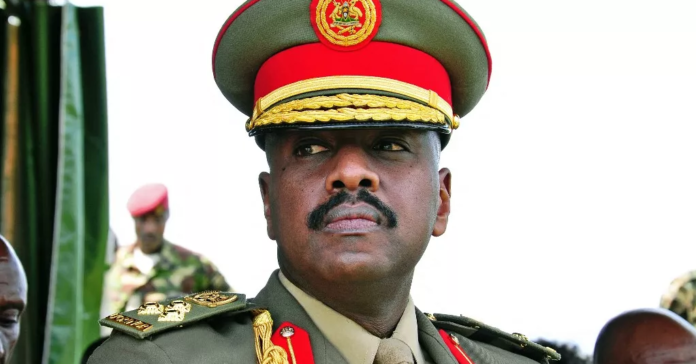
Gen. Muhoozi attacks Ministers over big conveys

Gen. Muhoozi Kainerugaba

Gen Kainerugaba Muhoozi, President Museveni’s Adviser on Special Operations, has attacked ministers over big convoys accusing them of causing lot of jam in Kampala.

Muhoozi posted on his twitter handle“They are all panicking in their big offices, big cars, convoys that cause traffic jams in Kampala. How can every Minister have a convoy?” Muhoozi tweeted.

Muhoozi added that it is only the president to have a convoy, not anyone else.

“Only Mzee, the President, should have a convoy. Only I, MK, can travel to Kisekka Market in my vehicle and be received with flowers,” he said.

In Uganda, all ministers are entitled to convoys for security purposes and given direct way on all roads.

He went further and warned the National Resistance Movement Secretary General, Richard Twodong for over yapping.

 “Oh! Twodong? He is shouting a lot these days? Is he scared that we might remove him from being Secretary General?” Muhoozi asked.

The attack on Twodong comes in at a time when he recently said that President Museveni is very young and is at the best age of being a president and that he now understands Uganda’s issues with wisdom, maturity and patience. Gen. Muhoozi, who is yearning for the presidential seat, could not swallow these utterances by the NRM Secretary General.

Muhoozi had earlier warned ICT Minister Dr. Chris Baryomunsi saying “I remember planning with my father to arrest this gentleman back in 2012 when he was a ‘rebel’ MP” Gen. Muhoozi reference to Baryomunsi was after he (Baryomunsi) had stated that he (Muhoozi) was not a member of NRM but rather a serving military officer”

Stories Continues after ad

UPDF is in Congo for Peacekeeping not battling the M-23 rebels, says Museveni

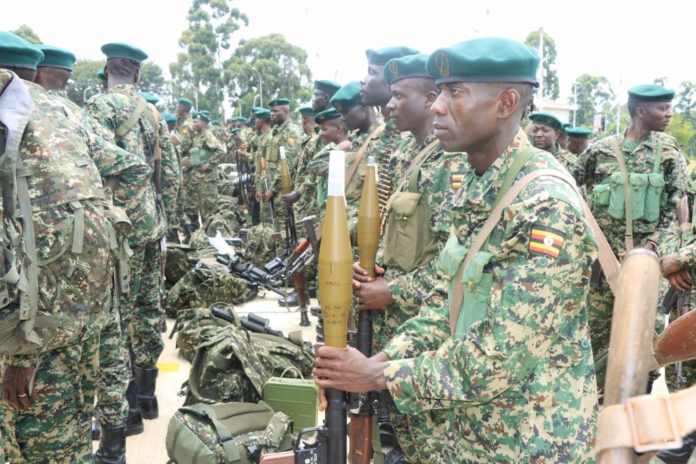
UPDF soldiers readies themselves for deployment in DRC.

President Museveni has clarified that the deployment of more Uganda Peoples Defense Forces (UPDDF) in Democratic Republic of Congo is to keep peace but not battling the M-23 rebels.

Museveni revealed this in a statement issued on Thursday that, “we are not going to battle or fight the M-23. The Congolese government and the M-23, have agreed to a peace plan. This involves cessation of hostilities (fighting), withdrawal of the M-23 from some of the specified areas they had captured to other areas that have been agreed upon.”  he said. 

There had been speculative speculated that the 1,000 troops had been deployed to DRC to fight the M-23 rebels.

The statement added that the DRC government has been involved in peace talks with the rebels. He noted that the two should continue as is to solve the problem and return peace to Eastern DRC.

“Our initial mission, therefore, is to occupy some of the positions that the M-23 has handed over to the East African Force as a neutral force, instead of the Congolese army which the M-23 see as enemies or armed opponents in their internal politics,” he said.

 He added that the troops will be in the Bunagana–Rutshuru area to act to act as a neutral force as the Congolese warrying parties get political solutions to the conflict.

The president said: “Unless we are attacked, we are not there to fight,”.

The Ugandan troops will be in Bunagana and Rutshuru, the areas where the M23 have been operating. Museveni also said the East African Regional Force would fight if non-state actors do not follow what has been follow peace agreement.

Stories Continues after ad

FINANCIAL YEAR RESULTS: Dfcu Group, Bank registers decline in operating income

Dfcu bank has registered a decline of Shs11.9 billion in operating income, the audited financial results for the year that ended on December 31, 2022.

The results indicate that the bank registered a loss of Shs4.8 billion in net interest income whereas the operating expenses grew from Shs179.6 billion to Shs299.4 billion in the last financial year.

“Credit loss expense on financial assets reduced from Shs148.5 billion to Shs88.1 billion. Profit before tax shot up from Shs10.4 billion to Shs34.8 billion,” the results indicate.

It further shows that profit after tax for the year   increased from Shs13.2 billion to Shs30.6 billion. In tandem, the group recorded a decline of Shs4.5 billion in net interest income in the financial year ending 2022.

The results also indicate that the group’s total operating income reduced by Shs11.5 billion from Shs368.6 billion in 2021 to Shs356.9 billion.

Further shows that the group’s operating expenses went up from Shs183.5 billion to Shs228.4 billion.

A statement from the board of directors of Dfcu Limited underpinned the company’s continued strategic and ongoing investments in technology to further strengthen its ability to serve changing customer needs.

“The company deployed enhancements to the core banking platform, online, mobile and agency banking channels to improve customer experience. The new digital capabilities have further improved operating efficiency, enabled new ways of working and ultimately reduced the cost to serve customers”, the board said.

The board said Dfcu continued to make a difference in the community with several initiatives in the areas of agriculture, women in business and financial inclusion, and showed greater importance to environmental, social, governance programs (ESG).

Through the agribusiness development centre, the company expanded its support to agribusinesses with capacity building, provision of credit and value chain financing.

Stories Continues after ad

Stanbic Bank unveils 8th edition of National Schools Championship

Stanbic Bank has unveiled the 8th edition of the National Schools Championship programme to further support Uganda’s economic resilience. For the last eight years the program has impacted 420,000 students across the country and expanded opportunities by empowering young people with employable and entrepreneurial skills.  

The annual challenge is aimed at nurturing participants into a generation of innovative job creators with knowledge and life skills such as managing personal finance, entrepreneurship, and business management.   Annually, 600 business ideas are mooted by the students and to date, 187 startups have been brought to life along with numerous growth stories from alumni and patron teachers as a direct result of the championship.

 The overall theme is ‘Empowering the job creators of tomorrow’, with the 2023 tagline ‘Powering Innovation for Job Creation’,  intended to encourage learners to develop innovative solutions to the challenges in their communities.   Stanbic Bank is the anchor subsidiary of Stanbic Uganda Holdings Limited which in turn is part of Standard Bank Group, the largest African banking group by assets.   Speaking during the official launch of the 2023 NSC at Crested Towers Emma Mugisha, the Stanbic Bank Executive Director said, “We cannot reach the United Nations Sustainable Development Goals without investing in youth skills. As Stanbic Bank, we are exceedingly proud of the Championship.

It is our flagship CSI initiative and we are also proud of our long partnership with the Ministry of Education and Sports, to empower young people to play their future roles in the economic development of this country.”   “Not only are they being equipped with life skills to be able to make responsible decisions; meet challenges head on; and set and achieve goals, they are also benefiting from training in financial literacy, business skills and entrepreneurship. At the same time they learn the importance of integrating environmental protection to ensure sustainable development,” she said.   Mugisha said, “Through the NSC, we are preparing these students for the future of work, whether that is in employment, self-employment or as an entrepreneur. We are giving them the vital push they need for them to take control of their future and be able to meaningfully contribute to their communities. This falls squarely in line with our mandate Uganda is our home, we drive her growth”   Mugisha also appreciated the partners that have been a part of the National Schools Championship over the years – The implementing partner, Investors Club, NBS, Roofings, Total, PWC and International University of East Africa (IUEA).  

Classroom competitions involving an initial 100 schools have already taken place to select the students who will move onto the next stage. In the first week of April these students will take part in the Business Innovations Ideas presentation stage. During the second half of 2023 over 60,000 students are expected to compete in the business ideas challenge.   The main categories are; Start-ups which involves new schools and innovative ideas (81 schools) and Biz Grow that judges businesses continuing in schools with 19 schools competing. The other categories are Alumni (AlumGrow Challenge) and teachers (TeachGrow Challenge).  

The Minister of Youth and Children Affairs, Sarah Mateke said, “The Ministry believes that to utilize young people’s potential as agents of change, requires involving and empowering them. From the very beginning we have been enthusiastic partners with Stanbic Bank in holding the annual National Schools Championship. By teaching our students to be job-creators and problem-solvers, this competition is helping to bridge the gap between educational institutions and the community to collaborate on finding solutions that strengthen community development.”  

She explained that the Ministry also believes that learning is not confined to the achievement of academic goals alone. It can and should be promoted in a range of other contexts both within and outside of the classroom as represented by the National Schools Championship. And that school competitions also help students to develop and demonstrate real-world skills, which can be relevant for almost any job.   “We therefore applaud Stanbic Bank for their continued sponsorship of this competition and declare this Season 8 officially open” Mateke said.

Stories Continues after ad