Stanbic Bank
Stanbic Bank
18.5 C
Kampala
Stanbic Bank
Stanbic Bank
Home Blog Page 444

Court set dates for hearing MPs Ssewanyana, Ssegirinya bail applications

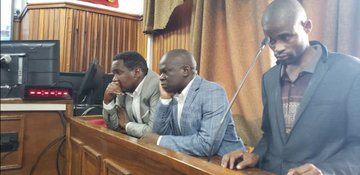
MPs Ssegirinya and Ssewanyana

The High Court in Masaka City has set dates for the hearing of MPs Allan Ssewanyana and Muhammad Ssegirinya’s bail applications.

Judge Lawrence Tweyanze set dates after prosecution led by Richard Birivumbuka informed the court that they were not ready for hearing of the bailing applications and asked for another date.

This prompted the trial judge to adjourn the matter to 13th, 14th and 15th February 2023 for hearing of the application.

Counsel Lukwago told court the one of the suspects Ssewanyana is ill and admitted to Mulago hospital. Court however directed the Uganda Prison service to accord him specialized treatment.

In October 2021, through their lawyers led by the Lord Mayor Erias Lukwago, Ssewanyana and Ssegirinya filed their applications seeking to be released on bail. They contended that they have been on remand for over Six months without trial and therefore they should be released on bail. Citing medical complications, the two said that they were mishandled before and during arrest and they want to access thorough treatment.

The two MPs and four other suspects have been in Jail for over a year on charges of terrorism contrary to sections 7 (1) and (2) (d) and (d) of the Anti-Terrorism Act 2002 in count one, aiding and abetting terrorism contrary to section 8 of the Anti-Terrorism Act 2002 in count two, murder contrary to sections 188 and 189 of the Penal code Act in Counts three, four, five and attempted murder contrary to section 204 (a) of the Penal code Act.

Prosecution states that the two legislators together with other allegedly killed Joseph Bwanika, a resident of Kisekka Village in Kisekka Sub County in Lwengo District.

It is further alleged that on August 23 at Ssettaala Village in Masaka City, the MPs and their co-accused persons killed Francis Mugerwa Kiiza aka Nswa, Sulaiman Kakooza and Tadeo Kiyimba .

The MPs are also accused of attempting to kill Ronald Ssebyoto, a resident of the same area. They are also accused of financing the killings in the Greater Masaka region.

Stories Continues after ad

Dollar weakens as money markets continue to face tight liquidity

The local unit opened the week trading at the 3670/3680 levels during Monday’s session as month-end inflows from NGOs and other sectors started to trickle into the market and ably cover the dollar demand requirements.

Catherine Kijjagulwe, Head of Trading at Absa Bank Uganda said the shilling is anticipated to trade within the 3650 – 3730 trading range in the short term with continued healthy month-end flows.

Money Markets continued to face tight liquidity conditions with overnight yields trading within the 11.00% – 12.50% range. Bank of Uganda will hold a UGX 480 billion 2-years and 10-year Treasury bond auction on Wednesday 25th January 2023.

She said the Kenya shilling is still under pressure with the continued dollar scarcity, yet there are outstanding demand tickets that need to be covered – especially for the energy sector. The unit is anticipated to trade within the 124.20 -129.50 range during the week.

The dollar was soft on Monday with bouts of weakness and strength during the day due to continued recession threats and also a likely slowed pace of interest rate hikes by the Fed affecting the currency.

The Euro touched highs of $1.0926 (Shs 4015) on Monday and closed the day at $1.0868 as markets continue to predict that the European Central Bank will continue to aggressively hike interest rates.

The Pound touched highs of $1.2447 (Shs 4574.36) on Monday and closed at $1.2373 (Shs 4547.17). As the market awaits the Fed and Bank of England rate decisions in February 2023.

Crude oil prices recovered slightly on prospects of recovery of demand from China in the next few months, however, concerns about a looming recession in the US also continue to weigh in. Brent crude traded at $88.02 (Shs 323,479) a barrel and West Texas Intermediate traded at $81.68 (Shs 300,179) a barrel. Gold traded at $1939.29 (Shs 7,127,028) an ounce.

Stories Continues after ad

Ssewanyana isn’t terminally ill as alleged – Prisons

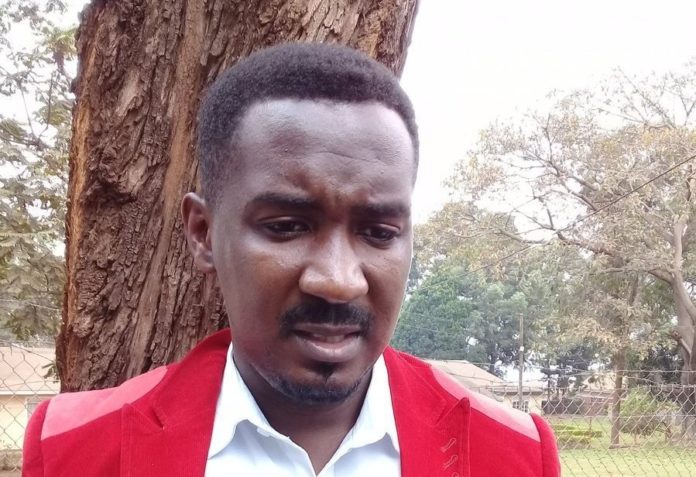
Makindye West MP Allan Ssewanyana

Prison Authorities have dismissed claims by Nakawa West Members of Parliament Joel Ssenyonyi that jailed Makindye West legislator Allan Ssewanyana was critically sick and bed ridden at Mulago Hospital.

Sources at prison say that although Ssewanyana is sick, he isn’t in critical condition as alleged.

Yesterday Ssenyonyi made the allegations claiming prison authorities had refused to transfer Ssewanyana to a better hospital.

However, Prison officials say Ssewanyana is better and will be appearing at Masaka High Court via Video conferencing.

“Just treat the allegations by Ssenyonyi as baseless and he is aimed at seeking publicity. Ssewanyana is okay and he will be appearing before court,” a source at Prisons said.

Ssewanyana was arrested in August 2021 with Kawempe North MP Muhammad Ssegirinya together with other suspects -some on remand and others still at large – and they have spent more than a year in jail for several charges including murder, attempted murder, aiding and abetting terrorism. They are also accused of financing the killings in the Greater Masaka region that left 26 people dead.

The International Crimes Division of the High Court set their bail application hearing for February.

Stories Continues after ad

A year later, BoU has no Governor

The Late BoU Governor Emmanuel Tumusiime-Mutebile

On January 23, 2023, it marked one year since the demise of the Governor of Bank of Uganda-BoU, Prof. Emmanuel Tumusiime-Mutebile. Mutebile died at Aga Khan Hospital where he was admitted over diabetes-related complications.

Since his death, President Yoweri Museveni has not appointed a substantial economist to take up the position of Governor.

The BoU has since been steered by Deputy Governor Michael Atingi-Ego, but his leadership has been criticized despite tremendous strides taken to revive the country’s economy which was hit by Covid-19. He is criticized for a steady increase of the CBR rate from 6.5 per cent to ten percent as businesses struggle to recover from the effects of Covid-19.

Interest rates stayed on an upward trajectory in the three months to November 2022 reflecting the tight financial conditions. Both Treasury yields and lending rates rose. The growth in private sector credit remained below historical averages owing to the tightening of monetary conditions. Total private sector credit growth averaged about 10.5 per cent, year-on-year, in the three months to October 2022.

Excluding the exchange rate changes and capitalized interest, private sector credit declined to 8.2 percent in the three months to October 2022 compared to the growth of 8.6 percent in the three months to July 2022. The growth in the Shilling loans, nonetheless, has increased to 12.2 percent from 9.6 percent over the same period.

As of November 2022, total public debt stock continues to increase from Shs 73.2 trillion trillion to Shs 79.7 trillion. The increase was due to a 5.2% increase in external debt and a 14.9% increase in domestic debt. External debt maintained the dominant share of 60.4% of the total public debt.

Despite criticisms, recently, Atingi revealed that inflationary pressures are losing momentum, driven mainly by the declining crude oil prices, easing supply-side challenges, a stable exchange rate on account of the prudent monetary policy actions by the Bank of Uganda (BoU), softening domestic demand, and diminishing base effects associated with higher prices of imported commodities.

“On a month-on-month basis, headline and core inflation was 0.1% and 0.2%, respectively, in December 2022, down from a peak of 1.5% and 1.2% in September 2022. On an annual basis, headline and core inflation was 10.2% and 8.4% in December 2022, down from 10.7% and 8.9% in October 2022,” Atingi said.

Food crop inflation remains elevated, edging up slightly in December 2022 to 29.4% from 27.8% in November 2022 because of the effects of the drought. Nonetheless, our assessment shows that food crop price increases are temporary and expected to fade in the coming months.

The exchange rate has however continued to be stable, gaining by 1.6% in the three months to December 2022, supported by the prudent monetary policy and the recent declines in the global crude oil prices, which somewhat eased the pressure on the deteriorating terms of trade, increased personal remittances, and foreign direct investment inflows to the oil sector.

Mutebile served as Governor and Chairman of the Board of Directors of the Bank of Uganda from 2001 till his demise in 2022.

A seasoned professional economist and reformer, he spearheaded the design and implementation of the Economic Reform Program that restored Uganda from the economic crises of the 1970s and 1980s to sound economic performance during his service as the Permanent Secretary/Secretary to the Treasury in the ministry responsible for finance, planning, and economic development.

He worked as a consultant for multilateral and regional organizations including the World Bank, International Monetary Fund, Organization for Economic Cooperation and Development, Macroeconomic and Financial Management Institute of East and Central Africa, UK Department for International Development, the North-South Institute in Canada, and for the governments of Rwanda, Kenya, Tanzania, Eritrea, and Nepal.

He was a member of the High-Level Panel of the UNDP for the production of the Human Development Report of the UNDP; the Management Group for overseeing the evaluation of the implementation of the Comprehensive Development Framework of the World Bank in 2001; and the High-Level Panel of Eminent Persons to advise the President of the African Development Bank on the strategic future of the African Development Bank in 2006.

He held Fellowships from the World Bank Institute and Rotary Foundation of Rotary International. He was educated at Makerere University, Durham University, and Oxford University.

He was an Honorary Professor of Makerere University, an Honorary Doctor of Philosophy of Nkumba University, a Companion of the Commonwealth Partnership for Technology Management (CPTM), and a Doctor of Laws (Honoris Causa) of Bishop Stuart University.

Makerere University honored him with the establishment of the Prof. Emmanuel Tumusiime-Mutebile Chair of Monetary Policy, Banking and Finance; and the Tumusiime-Mutebile Centre of Excellence.

Stories Continues after ad

AFEX opens market in Uganda, appoints CEO and presidents

AFEX, Africa’s leading commodities exchange and commodities market player, has announced its expansion into Uganda, seven months after it first entered the East African continent. Similar to Kenya and Nigeria, farmers in Uganda will benefit from AFEX’s revolutionary tech-enabled services for agricultural producers. In its first year of operations, AFEX Uganda aims to reach 10,000 farmers and aggregate 15,000 metric tons of commodities, while extending its aggregation, storage, and financial inclusion services to Ugandan farmers and processors.

Continuing its pan-African expansion plans, AFEX will be implementing its scalable model that combines advanced technology and infrastructure with a unique understanding of Africa’s food systems and local markets to replicate its successes in Nigeria and Kenya to Uganda. Working closely with local and international partners, the operation will focus on maize, sorghum, soybeans, barley, and coffee, with maize being the initial priority.

According to the International Trade Administration, Uganda is lacking the necessary infrastructure in storage, credit, and access to markets to sustain food production. To begin tackling these issues, AFEX Uganda has established warehouses in Bulambuli and Kapchorwa districts in Eastern Uganda, and in the Lira district of Northern Uganda.

Under the leadership of Abdul-Hafeez Odusanya, Managing Director, AFEX Uganda, AFEX will be introducing its range of solutions including its technology platform, WorkBench, to enable farmers to participate in market opportunities and scale their operations.

Starting with a network of over 1500 farmers, AFEX Uganda will be addressing problems like;

-Reducing post-harvest losses by providing storage facilities

-Providing access to loans for farmers to purchase quality farming inputs including agrochemicals, fertilizer, and seedlings

-Provision of advisory and extension services to tackle poor agricultural practices and post-harvest handling practices.

-Access to markets for smallholder farmers, with transparent price and high quality and traceable supply of food and feed grade commodities to processors

Abdul-Hafeez Odusanya, Managing Director, AFEX Uganda expressed excitement about the new opportunity:

 “I’m thrilled to be leading the next stage of growth for AFEX in East Africa and eager to see how Uganda’s success contributes to AFEX’s portfolio of innovative food system interventions. I’m confident AFEX Uganda will contribute massively to building an inclusive and efficient market system, giving Ugandan farmers the support and infrastructure they need to improve efficiency and access bigger markets,” he revealed.

Referred to as the Pearl of Africa, Uganda has one of the most dynamic commodities markets in Africa with a significant potential for growth, and a positive government interest in commercializing  agriculture through collaboration with private sector players. In the first quarter of 2022, agriculture accounted for 24% of the country’s GDP. In addition, the government has ratified the African Continental Free Trade Area (AFCTA) and the East African Community Customs Union which provides access to the international market.

Since inception, AFEX’s focus has been to establish a strong foothold across Africa, and AFEX Uganda is the latest in a series of planned expansion to 10 African countries over the next 5 years. In restructuring for the future and to provide efficiency and focus on the regions, AFEX has announced new appointments and internal promotions among its leadership.

Appointed in October 2022, Sanne Steemers is now President, Rest of Africa, overseeing the expansion across the continent; Akinyinka David Akintunde (previously Chief Operating Officer) has become President, AFEX Nigeria, responsible for all operations in the West African country; and CEO Ayodeji Balogun has been appointed Group CEO, heading all entities globally.

Speaking of her new responsibilities, Sanne Steemers said:”With twenty years’ experience working at the intersection of global supply chains, finance and agricultural commodities, I’m very excited to be joining AFEX as we expand into yet another market, and look forward to driving the expansion across the rest of Africa. In just a few years, AFEX has achieved exemplary success in Nigeria and Kenya; I’m looking forward to adapting these winning strategies, services and approach to service farmers, processors and partners in Uganda and beyond.”

Stories Continues after ad

Uganda Cup registers record number in regional preliminaries as Round of 64 draw is held

Uganda Cup trophy

The 2022/23 season of the Stanbic Bank Uganda Cup gets underway this month with a record 308 teams having competed in the Regional Preliminaries to determine which 33 teams joined the StarTimes Uganda Premier League and Big League sides in the Round of 64.

The 308 teams competing in the Regional Preliminaries is an increase from the 249 teams that competed in the previous season (2021/22) and the 159 teams that competed in the 2019/20 season.

Kampala Region had the highest number of teams in the Preliminary Round with 50 teams competing followed by West Nile Region that had 46 teams. Buganda Region had 41 teams while Northern and Eastern each had 40 teams competing. Kitara, Western and Eastern regions had 33, 30 and 28 teams respectively competing within their regions.

The growth in the number of team is testament to the transformation of the competition since the coming on board of Stanbic Bank as title sponsors in 2018 and Kansai Plascon as co-sponsors in 2021 which has seen the prize money for the competition grow from Shs90 million in 2018 to Shs120 million in 2019 to Shs166 million in 2021 and Shs179 million in 2022.

The Stanbic Bank Round of 64 took place on Tuesday morning with matches scheduled to be played between 28th January and 6th February 2023. This year’s final will be played at Akii Bua stadium in Lira.

The winner represents Uganda in the Caf Confederation Cup. BUL are the defending champions having defeated Vipers SC in the 48th edition last year.

Full Draw

KJT FC v KCCA FC

Elite FC v Arua Hill SC

Bunyaruguru United FC v Kaaro Karungi FC

Packwach Youngstars SC v Onduparaka FC

Nakapelimen FC v Soltilo Bright Stars FC

Mbale Heroes FC v Araka FC

Uganda Pentecostal University v URA FC

Water FC v Lugazi FC

Admin FC v Northern Gateway SC

Free Stars FC v Kitara FC

Kisugu United FC v Maroons FC

Gorilla Highlands SC v Kataka FC

Sparks SC v BUL FC

JLOS FC v Busoga United FC

Simba FC v Adjumani Town Council FC

Paidha Black Angels SC v Kyetume FC

Bukedea Central FC v Blacks Power FC

Bushenyi Veterans FC v UPDF FC

Junior Eagles FC v Soroti FC

Bujumbura FC v Vipers SC

Busei FC v Jinja North United FC

Budondo United FC v Calvary FC

SC Tawai v Mbarara City FC

Ntinda United FC v Ndejje University FC

Kigezi Homeboyz FC v Booma FC

Kiyinda Boys FC v Gaddafi FC

Kireka United FC v SC Villa

Apuutun FC v Police FC

Fort Portal Boda Boda FC v Wakiso Giants FC

Blue Star FC v Luweero United FC

Kajansi United FC v Express FC

Pajule Lions FC v NEC

Stories Continues after ad

Ezra Muhumuza appointed Executive Director of Uganda Manufacturers Association

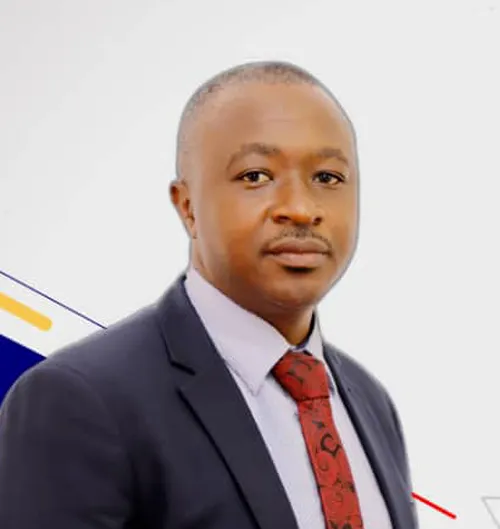
Dr. Ezra Muhumuza Rubanda

Dr. Ezra Muhumuza Rubanda has been appointed the new executive director of Uganda Manufacturers Association (UMA).

In a statement issued on Monday, 23 January 2023, UMA said , “His knowledge and experience in economic policy will be harnessed to promote the competitiveness of manufacturers within Uganda, regionally and internationally.”

He holds a PhD in Energy Economics, Master of Economic Policy Development and Science in Development Economics.

In response, Dr Muhumuza said: “I pledge total commitment to facilitating growth and competitiveness of our manufacturers in Uganda, regionally and globally.”

Dr. Muhumuza has served in various capacities under Office of the Prime Minister, Ministry of Finance, Planning and Economic Development (MoFPED) and the Uganda National Chamber of Commerce.

He succeeds Mr. Daniel Birungi who, after his five-year tenure embarked on furthering his studies abroad.

Uganda Manufacturers Association aims to bring together Ugandan industrialists and manufacturers in an attempt to guide the industrial actors in the country towards global competitiveness, on a sustainable basis.

Stories Continues after ad
Why did you close Cooperative Bank and where are its assets? – BoU tasked

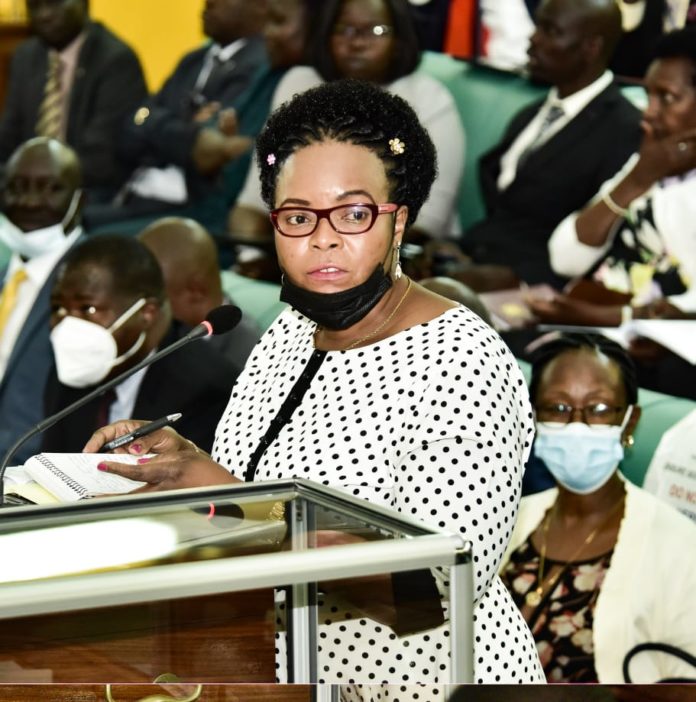
BoU Legal Counsel Ms Margaret Kasule whose accused of misleading on Crane Bank Limited legal status.

Bank of Uganda (BoU) has been tasked by the Solicitor General to explain the unclear circumstances surrounding Cooperative Bank Limited and its liquidation.

Cooperative Bank was closed in May 1999 by the BoU due to continued poor performance and non-compliance with regulatory capital adequacy requirements. It was one the six others closed between 1993 and 2016 by BoU majorly for being undercapitalised.

It was first registered in 1964 under the Cooperatives Act and according to records, it has never been liquidated or abolished. Following the tough economic times, its operations were disrupted and it virtually collapsed together with the Cooperative Movement, as privatization and economic liberalization took root.

In an attempt to revive the bank in 1997, it resulted into the formation of Uganda Cooperative Bank Ltd, a limited liability company, under the Companies Act. However, it lasted just two years and allegations of mismanagement and corruption led to its closure by the central bank in 1999.

A letter dated January 11, 2023 signed by JBR Suuza on behalf of the Solicitor General to BOU’s legal counsel Margaret Kasule reads “Which Cooperative bank did Bank of Uganda actually sell? If it is the latter, why were the assets of the former seized and sold instead?”

The letter also adds that it found it necessary to inquire “any other relevant information on the subject” pertaining to the winding up of the Cooperative bank.

BOU was given up to Monday January 23, 2023 to explain which of the two companies was closed.

This comes after the Minister of Trade, Industry and Cooperatives, Henry Mwebesa, sought legal opinion from the Solicitor General regarding the re-establishment of Uganda Cooperative bank.

Minister Mwebesa noted that the process of turning the Bank into a Company had not been completed by the time of closure neither had the “original” Cooperative bank been deregistered. He also demanded details of shareholders who borrowed money from the defunct Cooperative Bank.

In 2019, Ivan Asiimwe, the General Secretary of Uganda Cooperative Alliance Ltd, wrote to the Chairperson of the Committee on Commissions, Statutory Authorities and State Enterprises (COSASE), saying BoU was seemingly complicit or negligent in this whole process of transition as individual persons were allotted shares in the limited liability company instead of Unions and Societies.

He asked the committee to cause Bank of Uganda clarify on which bank was closed; “Is it the Cooperative Bank Ltd under the Cooperative Societies Act or the Cooperative Bank Ltd under the Company’s Act. And if the Cooperative Bank Ltd (the cooperative society) was not closed, why were its assets seized and sold during the liquidation of the Cooperative Bank Ltd (the company).”

Asiimwe also wanted Cooperatives to recover their investment and properties worth trillions of money that were lost during the liquidation process and compel the individual shareholders in the Company and/or Bank of Uganda to provide information regarding shareholding and how they came to own shares and the bank assets in their individual capacity.

Stories Continues after ad
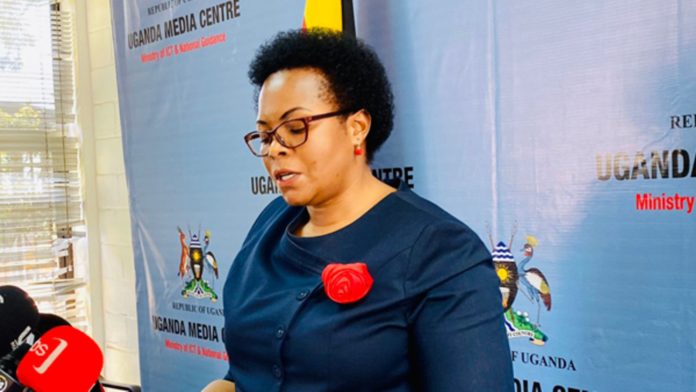
Parliament censures Minister Persis Namuganza

Minister of State for Housing, Persis Namuganza

Parliament has censured the State Minister for Lands Persis Namuganza. She was censured following a motion which was moved Agago North MP John Amos Okot.

According to the Deputy Speaker Thomas Tayebwa, 348 Members of Parliament voted in favour of the motion, while 5 voted against and 3 abstained.

Rule 109 of the Rules of Procedure require the Speaker to notify the President within 72 hours, and thereafter constitute a tribunal to thoroughly examine the motion, and also accord the minister a fair hearing in which she or her advocate can make her case.

Earlier the Select Committee finds prima facie evidence confirming that the conduct of Persis Namuganza Princess breached the standards of behavior and conduct expected of a Member of Parliament.

Earlier this month, Deputy Speaker Thomas Tayebwa named a seven-member select committee to scrutinise and identify prima facie evidence on the censure motion against Persis Namuganza, the State minister for Lands.

The Select Committee was chaired by Mwine Mpaka. Other members of the committee include Wilfred Niwagaba (Ndorwa East), Mpindi Bumali (PWD), Charles Bakkabulindi (Workers), Nancy Acora (Lamwo District), Betty Naluyima (Wakiso District) and Godfrey Ekanya (Tororo North).

The censure motion against Namuganza, follows after the latter’s handling of the controversial Nakawa-Naguru land giveaway.

The ad hoc committee in their report recommended that Namuganza steps aside for falsifying a presidential directive that saw the Uganda Land Commission allocate the said land to a section of investors.

Namuganza is reported to have said Parliament is powerless and unable to censure her in relation to her involvement in the Naguru-Nakawa land allocations.

The MPs launched the censure motion following Namuganza’s refusal to apologise to Speaker Anita Among and the MPs for her handling of the matter.

While presenting the select committee report, Mpaka said Namuganza failed in her duty to at all times conduct herself in a manner that will maintain and strengthen the public’s trust and confidence in the integrity of Parliament.

“Namuganza did not appear before the select committee for a fair hearing despite several attempts yet she was duly served with letters inviting her to appear before the committee. She ought to have used proper channels of challenging the composition of the Ad hoc Committee that investigated her involvement in the Nakawa-Naguru land allocation,” he said.

The select committee found that her conduct brought Parliament and its members into disrepute and breached the Code of Conduct of Procedure of Parliament.

Following the presentation of the report, Agago North MP John Amos Okot moved a motion to censure Namuganza. The motion was supported by Nathan Byanyima, Barnabas Tinkasimire and other legislators. The house is scheduled to vote against the motion.

Stories Continues after ad

Select Committee: Namuganza breached standards of behaviour

Minister of State for Housing, Persis Namuganza

The Select Committee finds prima facie evidence confirming that the conduct of Persis Namuganza Princess breached the standards of behavior and conduct expected of a Member of Parliament.

Earlier this month, Deputy Speaker Thomas Tayebwa named a seven-member select committee to scrutinise and identify prima facie evidence on the censure motion against Persis Namuganza, the State minister for Lands.

The Select Committee was chaired by Mwine Mpaka. Other members of the committee include Wilfred Niwagaba (Ndorwa East), Mpindi Bumali (PWD), Charles Bakkabulindi (Workers), Nancy Acora (Lamwo District), Betty Naluyima (Wakiso District) and Godfrey Ekanya (Tororo North).

The censure motion against Namuganza, follows after the latter’s handling of the controversial Nakawa-Naguru land giveaway.

The ad hoc committee in their report recommended that Namuganza steps aside for falsifying a presidential directive that saw the Uganda Land Commission allocate the said land to a section of investors.

Namuganza is reported to have said Parliament is powerless and unable to censure her in relation to her involvement in the Naguru-Nakawa land allocations.

The MPs launched the censure motion following Namuganza’s refusal to apologise to Speaker Anita Among and MPs for her handling of the matter.

While presenting the select committee report, Mpaka said Namuganza failed in her duty to at all times conduct herself in a manner which will maintain and strengthen the public’s trust and confidence in the integrity of Parliament.

“Namuganza did not appear before the select committee for a fair hearing despite several attempts yet she was duly served with letters inviting her to appear before the committee. She ought to have used proper channels of challenging the composition of the Ad hoc Committee that investigated her involvement in the Nakawa-Naguru land allocation,” he said.

The select committee found that her conduct brought Parliament and its members into disrepute and breached the Code of Conduct of Procedure of Parliament.

Following the presentation of the report, Agago North MP John Amos Okot moved a motion to censure Namuganza. The motion was supported by Nathan Byanyima, Barnabas Tinkasimire and other legislators. The house is scheduled to vote against the motion.

Stories Continues after ad