Stanbic Bank
Stanbic Bank
18.2 C
Kampala
Stanbic Bank
Stanbic Bank
Home Blog Page 446

Public universities collect below Shs 50 billion target

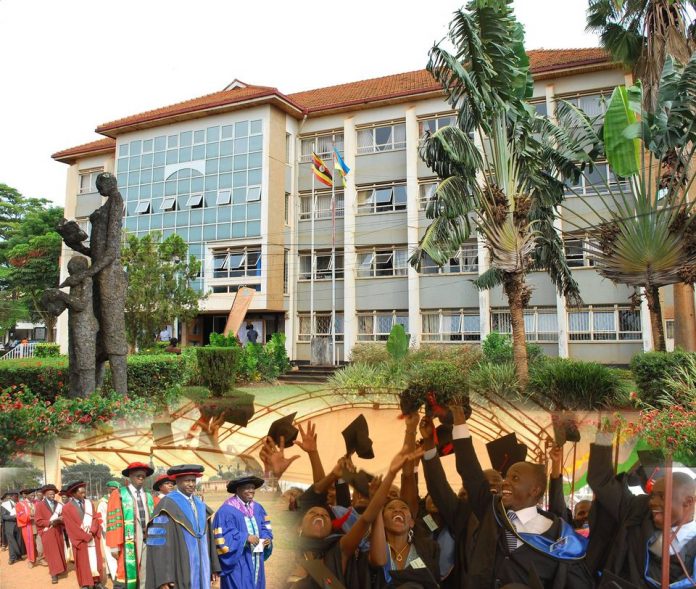
Kyambogo University main building.

Public universities failed to collect over Shs50 billion from students as school fees during the Financial Year 2020/2021. This detail is contained in the report of the Public Accounts Committee (PAC) (Central) on the education sector.
The committee report responds to the red flags raised by the Auditor General’s report for the financial year. Presented by the chairperson Medard Sseggona, the report shows how five public universities failed to collect Shs52.6 billion from students which affected the smooth running of the education centers.


This was attributed to disruptions caused by the COVID-19 pandemic which did not allow the institutions to collect fees and other payables, while many students were forced to drop out.
The committee in their recommendation urged the affected universities to institute measures to collect all outstanding receivables (fees) from the students and subsequently, inform parliament of the steps taken in collecting the fees in the next six months.


“The committee notes the challenges with which public universities and schools have had to operate during the COVID-19 pandemic. However, the increase in the receivables indicates a low recovery rate of outstanding student school fees, and there is a possibility of failing to recover all the amounts due,”  Sseggona said. He added that whereas COVID-19 has since been managed and the environment has changed to allow possible collection efforts, there is no evidence that universities are making progress.


The report of the Auditor General revealed that Makerere University Business School (MUBS) had accumulated receivables to the tune of Shs 21.7 billion, while Kyambogo University failed to collect Shs23.2 billion in school fees. Mbarara University Science and Technology (MUST) and Uganda Institute of Information and Communication Technology (UICT) failed to collect Shs 4.2 billion and Shs 384 million respectively, while Kabale University failed to collect Shs 3.1 billion.
The House expressed concerns over the recurring challenges facing the education sector that among others include long outstanding payables, mischarges, and off-budget financing.

Stories Continues after ad

How Technology Is Shaping the Sports Betting Industry in Uganda

So many spheres of life have been affected by technology and its developments. One sector that has also seen a significant transformation is sports betting. When it comes to Uganda, the betting industry is not that different from other markets, albeit it might not be as developed yet. However, it is well on its way there, as technology is shaping the gambling scene of this country and allowing it to go head-to-head against the leaders in the field. Here is what you should know.

Punters are not limited by location

First and foremost, thanks to technology, punters from Uganda are not limited by location when they want to make a bet on their favorite sport. They don’t have to go down to the local betting shop and wait in line to place a wager. There is now fast internet and affordable smartphones that allow players to place bets through an app or via a browser of their choice. For that, there is no need to leave their home. However, it also means that they can bet even when on the go–in line at the bank, on their lunch break, or on the bus ride to work.

There is more data to analyze

While there is always an element of luck when engaging in sports betting, gathering some data is always recommended. Individuals can easily improve their odds of winning by looking into the sports they’re interested in, whether it’s football or boxing. There is plenty of data on previous games and players’ statistics. People can also analyze trends and use machine learning to make smart predictions.

Real-time updates are more accessible

Just like getting records of previous events is made easier so is getting real-time updates. Bookmakers create websites that contain plenty of information, including live scores of all the matches that are being played that individuals can bet on. That means that punters can know the results at any time, no matter where they are. According to this, they can decide to adjust their bet or make a new one. Even if the operator doesn’t provide this information, many other sources on the internet do.

It’s easier to do research

It’s easier to research the teams and games, but it’s also easier to research different sportsbooks. For example, there are websites like betfromafrica.com that list various online bookmakers and their pros and cons. This way, punters in Uganda can see who has the necessary licenses, who offers a wide array of bonuses, who has a hefty welcome bonus, how a deposit can be made or winnings withdrawn, and so much more.

Progress can be tracked easily

Tracking one’s progress is also a good idea. Many people tend to have a betting journal or log where they write down every bet they’ve made and whether it was successful. They also note down how much money they put on the line and how much they earned. While this can be done in a physical notebook, it can also be done using technology. Whether it’s through an app or an extensive spreadsheet, it’s easier to store, track, and analyze every wager and use this knowledge to make better decisions in the future.

Tools for bankroll management are available

Speaking of tracking how much money was spent, people can also rely on technology for bankroll management. No one wants to spend more money than they can afford and, luckily, some tools can help prevent unpleasant situations. For example, certain tools let people set a limit on how much they can use for each game or how much they can afford to lose. There are also automated bets that don’t let individuals get too attached. If someone starts feeling overwhelmed, they can even use technology to step away from betting for a period until they get back on their feet.

Safety is upgraded

Finally, the fact that online operators are putting more effort into security should also not be ignored. As they are providing operators with their names, addresses, and bank account details, players want to be sure they are protected. That is why bookmakers in Uganda are starting to invest in SSL certificates, which provide a secure connection and reassure users that their personal and financial information will be safe. Secure websites should have a little padlock next to the URL bar.

There are many benefits of introducing technological developments into the sports betting scene. From improved security to tracking progress to making more educated predictions, the advantages abound.

Stories Continues after ad

UNBS pushes to eliminate fake engine oils from Ugandan market

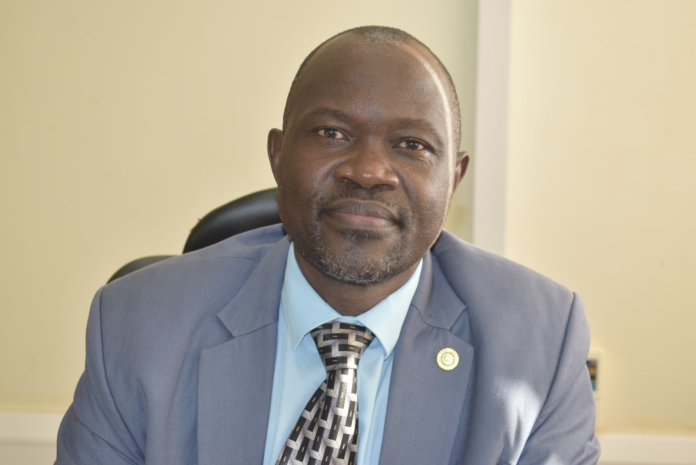
ON SUSPENSION: David Livingstone Ebiru, the Executive Director UNBS.

The Uganda National Bureau of Standards (UNBS) in partnership with petroleum products marketers and manufacturers has resumed the process of developing standards for engine oils.

This is aimed at ensuring that the oils currently on the market and those to be introduced in future meet the standards that are relevant to today’s technologies, consumer needs and environmental concerns.

Currently, Uganda uses the US 249 Standard. But experts and manufacturers say that the standard is obsolete and needs a review, which was halted last year. The suspension of the process followed the launch of the revision of the East African Standard for Engine Oil (EAS 159:2022) because the regional standard takes precedence over the national standards.

Currently, the available EA Standard (EAS 159:2000) is outdated and does not take into account modern automotive technologies and is therefore under review “to provide minimum requirements relevant to changing technological developments and consumer expectations.”

David Livingstone Ebiru, the Executive Director at UNBS, says that the idea to review the Uganda standard was mooted after a clash between importers of lubricants and officials clashed as the latter were enforcing regulations at the border. 

The EAC is also in the process of harmonizing the standards in the region, including the engine oil standards to ensure smooth trade. Ebiru says that UNBS has to get the new standards in place before the EAC process to harmonize the regional standards is completed so that aspects of the national standards are taken care of in the harmonized standard.

Engine oil quality requirements are guided by independent specialist institutions or automobile bodies like American Petroleum Institute-API, European Automobile Manufacturers Association-ACEA, Japanese Automotive Standards Organization-JASO and International Lubricant Specification Advisory Committee- ILSA specifications, or Manufacturers’ approvals.

This helps the manufacturers to ensure that what is put on the market is the proper type of oil. However, with the changing technology and environmental issues, as well as public health demands, there is a need to ensure that new products are improved to match those demands.

“The new standards are being developed or renewed with environmental concerns in mind. The review is mainly aimed at setting minimum API classification requirements for diesel and petrol engine oils, recognition of different classification systems other than API, like ACEA and ISO, as well as including viscosity (thickness) grade requirements for multi-grade oil,” Ebiru assured

He added, “There will also be a provision to show proof that the formulation and additive package used conforms to the claimed API classification. The new standards will ensure the minimum emission expected when certain oil is used in a vehicle.”

Henry Richard Kimera of Consumer Centre (CONSENT), said the problem with Uganda is the need to make a profit without caring about the effects of their activities, blaming both motorists and dealers of oils.

While welcoming the move to have an operational or enforceable standard, Kimera said, “The same focus used to enforce the regulations on fuel standards at petrol stations should be applied when UNBS is enforcing the engine oils standards.”

 He specifically blamed the absence of regulation of motor oils for the low quality of air, especially in areas with high numbers of motor vehicles.

The dealers, including manufacturers, importers and distributors welcomed the move of the standards as long overdue. According to motoring standards, engine oils are continually updated to provide greater protection and fuel efficiency, accommodate engine design improvements, and so address the concern over the environmental impact of engine exhaust emissions.

When this is done, according to Andrew Othieno, Manager Standards, UNBS, the oils have the ability to protect engines from wear and heating while still delivering good fuel economy with low emissions.

“Improved oils need fewer cars servicing, therefore, reducing the amount of waste oil that would rather be circulated into the environment and in turn, the user meets lower maintenance costs,” Othieno said.

However, Anthony Ogalo, General Manager of the Association of Petroleum Marketing Professionals of Uganda, says the market is always distorted by importers of fake and substandard products and those that recycle used engine oil.

On the effect of using low-grade oils, the standards body says it leads to increased costs of vehicle maintenance and repairs because using obsolete service oils may cause increased engine wear, catalyst poisoning, and filtered particle blocking as well as increased piston deposits.

“Some obsolete oils can cause unsatisfactory performance causing damage to systems that result in the increased emissions of toxic substances that damage the environment,” Ogalo said.

Stories Continues after ad

How Minister Amongi’s NSSF letter has backfired on her group

PLEASE LEAVE NSSF ISSUES TO US: Fund board tells Minister Betty Amongi

The latest information on the ongoing National Social Security Fund controversy shows the strategists of Minister Betty Amongi were behind her leaked letter.

According to sources the letter was leaked with the hope that it would damage the reputation of the Managing Director Richard Byarugaba.

But it has instead increased the controversy and it continues to damage the image of NSSF and the over 600,000 members are enraged.

Minister Amongi has denied any knowledge about the letter but it has her signature and according to the sources at the Ministry of Gender Labour and Social Development, the letter was leaked with her consent.

“She was told that the letter would seal off the fate of the embattled MD Byarugaba but the public has interpreted it differently,” the source said. Amongi who isn’t stranger to controversy.

The leaked letter also gave details how the minister and her group had met the Coordinator of Operation Wealth Creation Gen Salim Saleh whose intention is not known. However, sources say she dragged in Gen.Saleh so as to have her candidate (Patrick Ayota) named Acting MD and in turn would be made a substantive MD. Sources further say Ayota upon being named acting MD hurriedly organised a transfer of Shs6 billion which Mr.Byarugaba and board had refused to advance her in pretense that should use it to mobilize more members into voluntary saving with the fund.

The meeting between Gen. Saleh and the Minister Amongi group has attracted bad publicity for President Yoweri Museveni’s brother who is being accused of meddling in the NSSF issues.

The source said they thought mentioning that they met the powerful Gen Saleh would give them a mileage but it has instead backfired because the four-star general is said to be unhappy with dragging his name in this controversy.

The Speaker Anita Among, has directed the Minister Amongi to present a statement on the current status of the National Social Security Fund (NSSF).

NSSF, whose portfolio stands at Shs17.9 trillion has recently been marred with allegations of corruption and mismanagement – including the renewal of the contract of its former Managing Director, Richard Byarugaba who attained the retirement age of 60.

Stories Continues after ad

Bijambiya criminals attack Prison Estates boss, rob gun as he is hospitalized

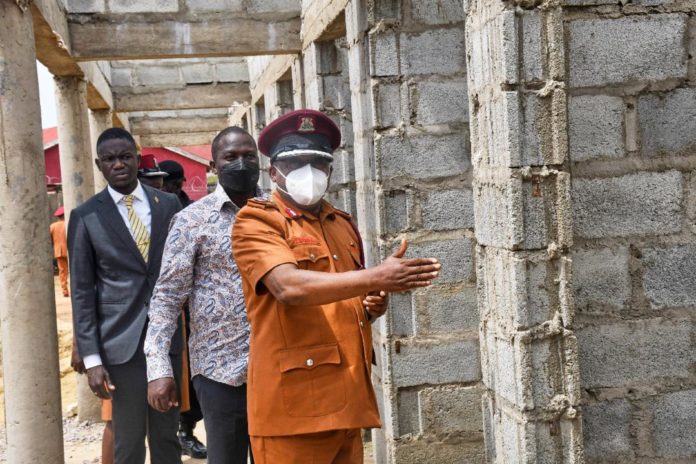
Commissioner Gervase Tumuhimbise showing houses under construction to NRM Secretary General Richard Twodong.

Gervase Tumuhimbise, the Commissioner of Prison in charge of Estate and Engineering is fighting for his life after Bijambiya criminals invaded his home attacking him, wife and daughter.

According to security sources, this happened on yesterday January 18, 2023 in the wee hours at his Katale residence in Kyengera Town Council.

Eagle Online understands that by the time of the attack, the prison boss who entitled to guards didn’t have any of his body guards at his residence. Security is all perturbed why such a top official couldn’t have security at his home.

“We are investigating why there was no security at his home and yet he is given 24 hours security detail? Imagine the officer had no guards at his residence because our initial investigations reveal that he last had guards around December 30” said a police officer tasked with investigating the matter.

According to police report, in the process of the attack, Mr. Tumuhimbise lost a gun, a star pistol No. UG PRI OO779208 236, Code 02287 with 25 ammunitions and his personal mobile telephone.

Stories Continues after ad

What does the suspension of labour agreement with Saudi Arabia mean for Uganda?

Migrant workers
In December 2022, the government of Uganda suspended a bilateral labour export agreement with Saudi Arabia over the continuous mistreatment and torture of Ugandan migrant workers.In 2017, the government of Uganda signed a five-year labor agreement with Saudi Arabia aimed at among others promoting the welfare and rights of Ugandan migrant workers.

The Observer reported that on December 23, the Permanent Secretary for the Ministry of Gender, Aggrey David Kibenge informed recruitment agencies and pre-departure orientation and training institutions that the agreement with Saudi Arabia had been suspended effective immediately pending re-negotiations of the agreement.“This is therefore to inform you that clearance and deployment of migrant workers, approval of job orders, and training of migrant workers under this agreement are suspended with immediate effect. Note, however, that this temporary suspension does not affect migrant workers whose travel had already been cleared by the ministry, prior to this date, and are in possession of signed contracts, travel tickets, and entry visas” read the letter in part.

Kibenge also said that the government is pursuing other efforts for the protection of Ugandan workers. In the pipeline is the recruitment of labour attaches to follow up on Ugandan laborers abroad, strengthen embassy offices and establish a call center in Uganda to which, complaints about the welfare of Ugandan workers can be reported for action.Remittance and Revenue that was the only bilateral labour agreement that Uganda had. As of June last year, there were 235 licensed private recruitment companies. Every two years, each company pays Shs 2 million in license fees. Annually, Government collects US $1.3 billion globally from labour export business the Middle East alone sends in $700m.The government collects $30 (Shs110,000) job order fees for each eternalized worker. That money is wired directly to the Uganda Revenue Authority accounts. From August 2021 to August 2022, the government collected over Shs 12 billion from Job orders.Ministry of Internal Affairs says they process 10,000 passports every month and the biggest percentage goes to individuals seeking to work in the Middle East.According to the ministry of Gender, Labor and Social Development, there are over 150,000 Ugandan migrant workers in Saudi Arabia. Most Ugandans are employed in the informal sector as housemaids, gardeners, cargo handlers and other jobs. Eagle Online learned that in 2021, Uganda externalized 89000 Ugandans of which 79000 went to Saudi Arabia. Of the Shs79000, 75000 were female. By June 2022 Uganda had externalized 50,000 nationals and a high percentage went to Saudi Arabia.Some of the proposals in the new agreement Ronnie Mukundane, spokesperson of the Uganda Association of External Recruitment Agencies (UAERA) told Eagle Online that Saudi Arabia was the only bilateral labour agreement that Uganda had and the delay or a decision not to renew it will render hundreds of people in labour export companies jobless since the 95% of the job orders come from Saudi Arabia.Currently, the government is negotiating with Saudi Arabia to have the contract renewed. The negotiations will begin on February 6, 2023, and the agreement is scheduled to be signed on February 23, 2023, in Kampala.

“Some of the issues pointed out in the new agreement, is the observation of human rights and salary enhancement. In the recent agreement, Ugandans were earning Riyal 900 (about Shs 900,000). We proposed an increment for our people to benefit. The discussions are ongoing and a figure will be decided,” he said.Eagle Online learned that UAERA an umbrella body that brings together all labour recruitment companies suggested an increment of 400 Riyals (Shs 392,256) however Migrant Workers Voice suggested 600 (Shs588,385) to make 1500 Riyals (Shs1,4 million).The delayed renewal of the agreement is expected to fuel human trafficking into Saudi Arabia. In 2016, there was a ban for one year however over 40,000 Ugandans went to Saudi Arabia illegally and there is no one responsible for them.Our efforts to get a comment from Minister for Gender Betty Amongi and Lawrence Egulu, the commissioner in charge of Employment Services at the Ministry of Gender, Labour, and Social Development (MGLSD) were futile. She could not pick up nor return our repeated calls.

Speaking to Eagle Online, Abdallar Kayonde the President of Migrant Workers Voice said migrant workers have been sidelined. If we don’t involve ourselves in the coming agreement, we shall be left out forever, because the government intends to renew the agreement and repeat the same terms.He said the government should improvise within the same agreement and plead to ensure that the workers’ presence is recognized.“We wrote to the ministry, asking officially to have an administration as Ugandan migrant workers, which includes the Ugandan returning migrant workers and those already in Saudi Arabia because without us being inside, we cannot actually talk about anything,” he said.Migrant Workers Voice suggests an audit into Ugandans living in Saudi Arabia. They also want Saudi Arabia to account for the people who were there before. Saudi Embassy in Uganda reports that there are 200,000 Ugandans who were given visas while the Ministry of Gender said there are 150,000 Ugandans working in Saudi Arabia and UAERA says there are 165,000.“Therefore we need to form our own database. We are tired of defending people we don’t know. They walk from all angles. We don’t know them and we can’t trace their details. Sometimes have the capacity to assist them but we find difficulty in supporting these people with the right powers,” Kayonde said.He said migrant workers report cases to the association, it ends up being diverted into compromise because once labour export companies realize it’s a serious case, they begin manipulating families and victims.“We must look at that and identify who was trafficked, and who was not and this will help to fight human trafficking. We are supposed to work together for us to bargain for ourselves. It is internationally recognized and recommended,” he said adding, “That is why we are seeking an official entry as a third arm of the tripartite arrangement. Before signing the agreement, the government should come back home and organize from home.

Any person, who would look good before the public leaves home dressed well, cannot begin dressing from the public. Similarly, anyone who will look naked from the public will leave home naked,” he said.He said whoever complains, they call it drama or tainting the image of Uganda. How does that come, into place? Migrant workers have been neglected and their voices have been scattered. Whatever comes in form of those misguided missiles ends up affecting the industry and workers themselves.He said several Ugandan migrant workers have died at work but nobody has compensated them. What incentives do safe labor migration through recruitment companies bring on to Ugandan workers? There is none. No such incentives.“Several workers have been extorted by recruitment firms and other officials in the Ministry of gender. Without addressing the injustices, they are trying to put channels of extortion, systemically. Recruiters represent the employee and the employer on the other side in Saudi Arabia. Workers’ issues must be separated from the recruiters’ issues. Recruiters have an interest of profit to protect and workers have an interest of rights to protect and salaries,” he said.“We are insisting that workers should be given an administration in this country, they should manage their issues such that they can get in a good position to better ask the questions concerning their fellows. We are not infringing on anyone. And we do not want to turn into traffickers, just like how some companies wanted us to turn into,” he said.He said people monitoring employees are traffickers. How do you ask them to monitor workers? You are in a position of arresting them, suspending their licenses for trafficking workers but assigning them roles. What kind of craziness is that?“We are not against this industry because it is the only option for the country to survive on its own. It should be organized, and facilitate embassies to monitor them. Embassies are less facilitated to do their works and compromised with the diplomatic powers,” he said.

He said anyone who comes their way will be exposed including all the officers in the ministry, who have an interest in the same business. Every time we question them, they cannot answer because the questions affect them.From 2019 to date, Uganda has registered 88 deaths of migrant workers, according to the Gender ministry. Of these, Saudi Arabia has the highest number at 69.  On work-related injuries, only seven have been registered since 2019 in Saudi Arabia (five) and Iraq (two). 

Page 8 of 13

Stories Continues after ad

Ugandans to benefit from ‘Reach for More Campaign

Ugandans to benefit from Dfcu  ‘Reach for More Campaign’. Under the campaign, the Bank is providing collateral-free loans (unsecured loans) of up to Shs 250 million to customers who take out personal loans, and an option of a repayment holiday of up to 75 days.

The Repayment Holiday option will allow customers to take a break from scheduled loan repayments during the campaign.The personal loan offer targets salaried and professionals earning a regular income. Customers who transfer their existing personal loans from elsewhere to dfcu Bank will be charged no arrangement fees. In addition, loan arrangement fees have been discounted to 1% for individual customers who take up new loans and 0.5% for those who top up their existing facilities at dfcu Bank between now and April 15,2023.With the Back-to-school season now well underway, the Bank has also unveiled a special package to support schools as they prepare to receive students for the new academic year. The offer dubbed “the school bridging overdraft’ allows school owners to access unsecured short-term facilities of up to 30% of their expected school fees collections, to take care of urgent working capital needs.

In addition, parents who pay their schools fees through dfcu Bank during this period will automatically enter a draw and have a chance to win up to Shs 500,000 to help cover outstanding back- to- school requirements.Robert Wanok, Head of Personal and Business Banking at Dfcu Bank, said the campaign has been launched to accelerate the dreams and aspirations of our customers during the new year. “The new year always represents new beginnings for most people. Renewed hope, dreams, ambitions, targets, that we want to see come to life. With “Reach for More” campaign, we are encouraging our customers not to lose sight of these dreams but instead partner with us to see them come true. We are staying true to our brand promise of ‘Making More Possible’ for all our customers,” he said.“The Bank is also offering mobiloans of up to Shs2 million accessible via our online banking platforms, in less than five minutes.

For parents, the mobiloans are a convenient way of sorting out urgent back-to-school requirements. Parents who pay school fees at any dfcu Branch, dfcu Agent or via dfcu internet banking will automatically enter a draw and stand a chance to win a cashback of up to Shs500,000,” Wanok added.Commenting on the campaign during the launch, Ronald Kasasa, the Head of Business Banking, reiterated dfcu support towards schools during this back-to-school period.“The beginning-of-term can be a tough period to run an institution within the education sector. Teachers’ salaries, food supplies, utility bills, educational materials, and any other day -to day essentials can put a strain on schools. Our school bridging overdraft allows school owners to access unsecured short-term facilities of up to 30% of their expected school fees collections, to take care of urgent working capital needs. The overdraft is payable in three months, which gives the school an opportunity to repay when the cash flows from tuition collections are steady and stable,” he said.The loans come with competitive interest rates, same day response ti

Page 8 of 13

Stories Continues after ad

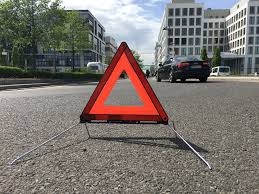
Over Shs184.1b to be generated from the sale of triangle reflectors

In December last year, Traffic police directed all drivers to get a pair of reflector triangles for use in case their vehicles break down, Eagle Online learned. 

The directive was announced by Faridah Nampiima, the Spokesperson of Traffic Police. She said failure to have the reflectors attracts an express fine of Shs 100,000 de.  She said police banned the use of tree branches with immediate effect.

The directive comes at a time when the police are cracking a whip on boda-boda riders who have no reflector jackets. Police say the move is aimed at minimizing cases of road carnage.

Traffic and Road Road Safety (Reflectors) Regulations, 2012 stipulates that all vehicles except a motorcycle shall carry on board at least two reflective emergency warning signs painted in red color. Any person who contravenes regulations commits an offense and is liable on conviction to a fine not exceeding twenty-five currency points or imprisonment not exceeding one year or both.

According to the 2020 Insurance Regulatory Authority report, Uganda is estimated to have a total of 2,302,021 cars. The number could have increased in the last two years. 

A quick sample at some of the shops dealing in car spare parts, a pair of reflector triangles costs between Shs 80,000 and Shs 100,000. This implies that the owners of the 2,302,021 cars will pay Shs 184.1 billion to get triangle reflectors.

In tandem, police will collect over Shs 230.2 billion when all the car owners default on the directive.

Interviewed for this story, Nampiima said this is not a new law; it has been there since the time memorial. “When you buy a new car, it comes with these reflectors so we only need drivers to comply with traffic laws to avoid road accidents,” she told Eagle Online.

Stories Continues after ad

FUFA unveils MTN as the official sponsor of Uganda Cranes

Federation of Uganda Football Association (FUFA) President Moses Magogo has unveiled MTN as the official sponsor of Uganda Cranes. The Shs 19 billion sponsorship will for five years.

Magogo hailed MTN for its unwavering support of the development of the game in Uganda.

“I thank MTN for this tremendous boost. This sponsorship package will go a long way in addressing the multiple challenges faced by the federation as well as pushing the country towards its ambition of qualifying for this year’s Africa Cup of Nations (AfCON) and 2026 FIFA World Cup among other targeted milestones,” Magogo said.

MTN Uganda Chief Executive Officer, Sylvia Mulinge said; “This sponsorship signals our commitment to continue developing football in Uganda and supporting the Cranes’ ambition of flying our country’s flag high, everywhere they go,” Mulinge said. “We’re bringing back the game to Ugandans, who are the most passionate fans of our football”

She said the sponsorship package will be used to support seven properties or programs of the federation, namely: the Uganda Cranes, the Crested Cranes, the FUFA Drum regional cup, the FUFA Juniors League, FUFA Super 8 tournament, the FUFA Super Cup, and the FUFA Annual Awards.

Key to note is that this new sponsorship deal also includes support for the Crested Cranes, which is the national women’s team. “This was a key focus for us while negotiating this partnership. It complements the effort of government and society in general in ensuring equal opportunities for all regardless of gender,” the MTN CEO said.

, Somdev Sen, the MTN Uganda Chief Marketing Officer (CMO) noted the company’s unwavering passion for Uganda’s football, over its years of operating in the country.

“MTN has enthusiastically supported Uganda’s football over the years. Together with FUFA and other stakeholders, we have registered so many wins and with them, great memories. It is therefore exciting to have this partnership and our game back with our passionate fans. We look forward to doing even more together,” he said.

Stories Continues after ad
Church of Uganda elects new Bishops for Mukono, North Kigezi, North Karamoja Dioceses

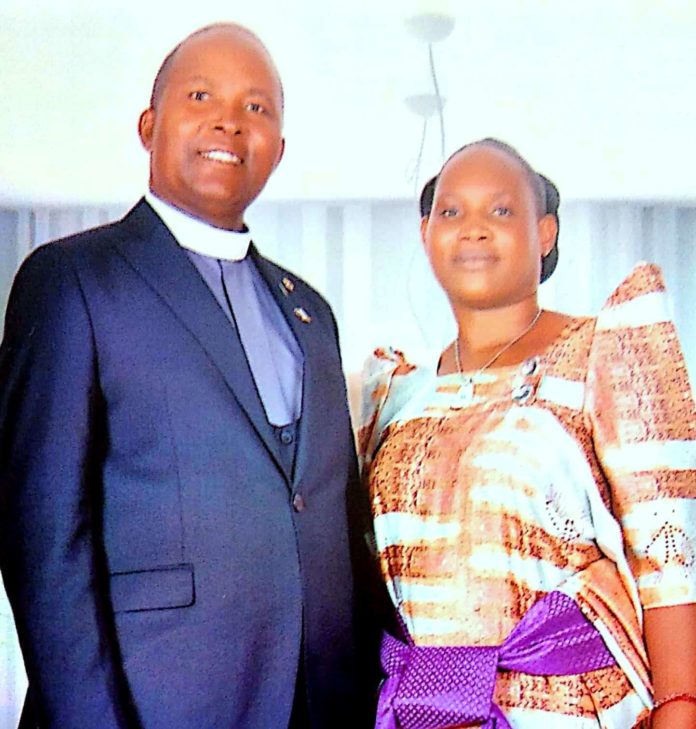
Rev. Canon Enos Kitto Kagodo with wife Catherine Namuddu

The Church of Uganda (CoU) has elected Rev. Canon Enos Kitto Kagodo, Rev. Onesimus Asiimwe and Rev. Canon Simon Akol Aisu as the next Bishops for Mukono, North Kigezi, and North Karamoja Dioceses respectively.

Rev. Canon Enos Kitto Kagodo has been elected the fifth Bishop of Mukono Diocese. He will be consecrated and enthroned as Bishop on February 26, 2023 at St. Philip’s and Andrew’s Cathedral, Mukono.

Rev. Enos was born on 13th December 1968 in Nakisunga Sub-country in Mukono District. He was born again on 14th October 1994. Rev.

He earned a Master of Divinity degree and a Bachelor in Health Administration from Uganda Christian University, after receiving diplomas and certificates in the same fields.

Rev. Enos is currently the Provost of St. Philip’s and Andrew’s Cathedral in Mukono. Prior to this position, he has served as a parish priest, Archdeacon, and Diocesan Health Coordinator.

He was ordained a deacon on June 9, 2002 in Mukono Diocese and then made a priest on December 12, 2004. He has served on school management committees as well as various Diocesan Boards in the course of his ministry.

Rev. Enos is married to Catherine Namuddu and God has blessed them with seven biological children and many spiritual children.

Rev. Onesimus Asiimwe elected 6th Bishop of North Kigezi Diocese

Rev. Onesimus Asiimwe

Rev. Onesimus Asiimwe has been elected the 6th Bishop of North Kigezi Diocese. He will be consecrated and enthroned as Bishop on March 12, 2023 at Emmanuel Cathedral, Kinyansano, Rukungiri.

Rev Onesimus was born on 24th April 1965 in Mparo, Rukiga District. He was born again on 8th January 1988.

Rev Onesimus earned a Master of Divinity from Uganda Christian University, a Bachelor of Education from Makerere University, and a Diploma in Education from the National Teachers College in Kabale.

He has attended numerous capacity building trainings locally, as well as internationally.

Rev. Onesimus is currently the Chaplain of St. Francis Chapel, Makerere University. Prior to this position, he served as the Provincial Youth and Students Coordinator where he helped develop the very influential PAYSCO (Provincial Annual Youth and Students Convention) programme.

He also served as the Chaplain to Archbishop Henry Luke Orombi, and Coordinator of the Provincial Healing, Deliverance, and Intercessory Prayer Ministry.

Rev. Onesimus is married to Florence and the Lord has blessed them with three children.

Rev. Canon Simon Akol Aisu elected 2nd Bishop of North Karamoja Diocese

Rev. Canon Simon Akol Aisu with wife Anna Aisu

Rev. Canon Simon Akol Aisu has been elected the second Bishop of North Karamoja Diocese. He will be consecrated and enthroned as Bishop on February 12, 2023 at Christ Church Cathedral, Kotido.

Canon Aisu was born on August 6, 1964 in Nabilatuk District, and was born again on 20th December 1981 at a youth conference in Nabilatuk.

Canon Aisu earned a Bachelor of Divinity degree from Uganda Christian University after receiving a diploma and certificates in the same fields.

He has also participated in a number of other capacity building training programmes.Canon Aisu is currently the Sub-Dean of Christ Church Cathedral in Kotido.

He has served in a number of positions in both Karamoja and North Karamoja Dioceses, including Archdeacon, Theological College Principal, Diocesan Secretary, and parish priest.

Canon Aisu is married to Anna Aisu.

Stories Continues after ad