Stanbic Bank
Stanbic Bank
18.8 C
Kampala
Stanbic Bank
Stanbic Bank
Home Blog Page 448

BBC News launches the 2023 Komla Dumor award in celebration of journalistic talent in Africa

The BBC has begun its search for the next winner of the BBC News Komla Dumor Award.

The award will be launched at an event in Dar es Salaam, Tanzania, and hosted by the BBC’s Salim Kikeke. The 2022 Komla Dumor award winner Dingindaba Jonah Buyoya, will host a discussion for the BBC World Service programme Focus on Africa, on the impact of climate change in Kenya and Tanzania.

Journalists are encouraged to apply for the prestigious prize, which seeks to promote and celebrate outstanding journalistic talent living and working in Africa, and reporting in English.

As part of the award, the winner will spend three months working in the BBC with news teams in London across television, radio and online. They will be given the opportunity to further develop their journalism skills through training, workshops and mentoring with leading BBC journalists. The successful candidate will also have the opportunity to travel to a country in Africa to report on a story that they generate and research, which will be broadcast to the BBC’s global audience.

Judges on this year’s panel include: Ferial Haffajee, Associate Editor for Daily Maverick and former Editor-in-chief of The Mail&Guardian and City Press, Juliet Njeri, Head of BBC Africa and Paul Danahar, Foreign Editor, BBC News.

Launched in 2015, the prize was created to honour the memory of the distinguished Ghanaian broadcaster Komla Dumor, who presented on BBC Africa and BBC World News. Known for championing robust, dynamic journalism and for his commitment to reporting African stories comprehensively and authentically, he made a significant impact on Africa and the rest of the world.

The BBC is committed to continuing Komla’s legacy through the award by empowering journalists from Africa to tell original and nuanced African stories to reach international audiences.

Previous BBC World News Komla Dumor Award winners are: Dingindaba Jonah Buyoya (2022), Victoria Rubadiri (2020), Solomon Serwanjja (2019), Waihiga Mwaura (2018), Amina Yuguda (2017), Didi Akinyelure (2016), Nancy Kacungira (2015).

During his placement, current award winner Dingindaba Jonah Buyoya travelled to the Seychelles to report on how the country’s ocean plants can help tackle climate change. Presently a TV host and reporter for Diamond Television in Zambia, the 25-year-old Zambian presenter was the youngest recipient of the Komla Dumor award, and the first winner from Southern Africa.

Dingindaba says: “Komla Dumor was an inspiration to me, so to win the award and take part in his legacy has been an honour. I encourage African journalists to apply for the awards, it’s an incredible way to learn and further develop skills needed to tell even more ground-breaking stories in Africa.”

Liliane Landor, Senior Controller of BBC News International Services and Director of the BBC World Service, says: “We are proud to launch the 2023 BBC News Komla Dumor Award. The award and our previous winners are a fitting testament to Komla’s dedication to telling African stories with depth and integrity. I am looking forward to welcoming this year’s winner and I strongly encourage journalists from across Africa to apply.”

Stories Continues after ad

Poor farmers don’t need handouts, actor Idris Elba tells world leaders

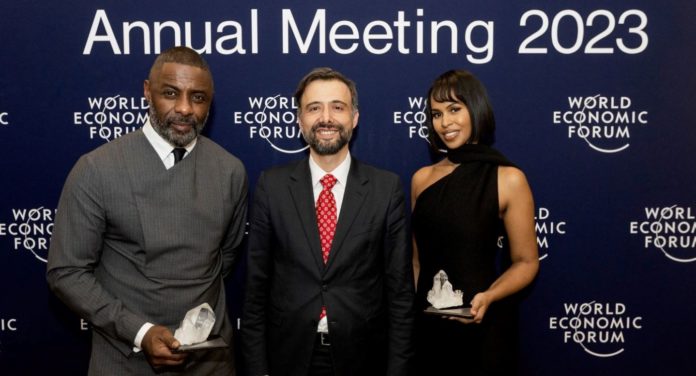
At Davos yesterday, actor Idris Elba and his wife Sabrina Dhowre Elba, both Goodwill Ambassadors for the United Nations’ International Fund for Agricultural Development (IFAD), received the 2023 Crystal Award for their leadership in championing and advocating on behalf of the millions of poor small-scale farmers across the globe who work each day to produce one-third of the world’s food and more than 70 percent of the food produced in Africa and Asia, and are essential to ensure global and local food security and thus social and political stability.

The Crystal Award at the World Economic Forum in Davos honours exceptional artists and cultural leaders whose important contributions to society have made a tangible impact on improving the state of the world.

Since they became UN Goodwill Ambassadors for IFAD in 2020, Idris Elba and Sabrina Dhowre Elba have been vocal proponents for greater investment in agriculture and rural development, particularly in Africa where severe weather events and conflicts have further impacted farmers’ ability to produce food for their families, communities and countries. Despite the important role these farmers play in ensuring global food security, 75 percent of world’s hungry and poorest people live in rural areas of developing countries.

 “The poor of the world are not just looking for aid and handouts, they are looking for investment – investment in people, in nature, in innovation,” said Idris Elba, making a strong plea in a room filled with many of the most powerful global leaders in government and industry. “With greater access to finance, markets, resources, technology and knowledge, we can unlock a different future.”

The actor’s plea was echoed by IFAD’s President, Alvaro Lario, who came to Davos “calling on governments, development partners and the private sector to step up now with long-term investments in small-scale agriculture. It is only by investing in how we grow, process, and distribute food, that our food systems can begin to meet the needs for a healthy global population and a healthy planet –now and in the future. “ 

 “Failure to invest massively will lead to increased hunger and poverty, which in turn could fuel social unrest, conflict and migration,” he added.

Today the world is experiencing an unprecedented food crisis triggered by high food, energy and fertilizers prices linked to the war in Ukraine and several climate shocks in 2022.

Prior to the crisis, hunger and poverty was already on the rise due to conflicts, climate change and the economic slowdown brought by the COVID-19 pandemic.

The Intergovernmental Panel on Climate Change (IPCC) is forecasting that extreme weather events will likely increase in frequency and magnitude in the years to come. Global and local food systems are at increased risk of disruption, with potential supply shortages and price hikes.

In her statement Sabrina Dhowre Elba emphasized the important role of the private sector. “Rural communities are filled with talented, youthful populations and enormous potential for new and vibrant markets. The private sector can play a massive role in supporting and sourcing from small farmers and in ensuring world leaders continue to invest in holistic ways to combat environmental degradation and rising hunger,” she said.

Despite global commitments to end hunger by 2030, donor support for agriculture has been stagnant at just 4 percent of total Overseas Development Assistance (ODA) for at least two decades.

In 2020, before onset of the COVID-19 pandemic, the Ceres2030 report estimated that current ODA for agriculture (approximately US$12 billion per year) would need to be increased by another US$14 billion, combined with increased low and middle-income countries investment of US$19 billion, to end hunger and help small-scale farmers out of poverty. With the Ukraine crisis, the fallout of the COVID-19 pandemic and climate change impacts, current funding needs are even higher.

About 3 billion people live in the rural areas of developing countries and they rely to a significant extent on small-scale farming for their food and livelihoods.

Stories Continues after ad

Pan-African anti-monopoly group warns Uganda’s telecom sector of dangers of monopoly  

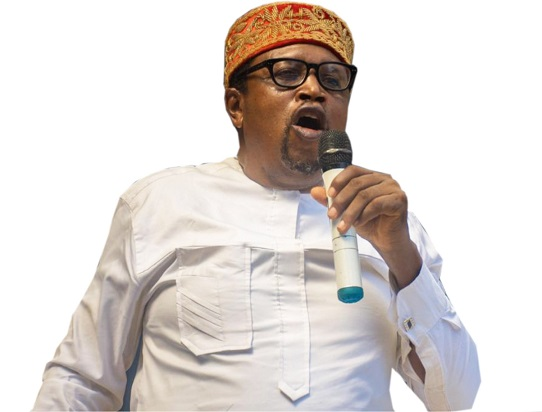
Dr. Omife I., AAM’s Continental Advisory Director

The Alliance Against Monopoly (AAM), a Pan-African anti-monopoly group has called upon regulators and lawmakers to nip in the bud, the “ugly monster of monopolies and duopolies that are slowly but surely choking the country’s ICT sector, stifling innovation and reversing the gains of the past two decades”.

Commenting about the recently released Uganda National IT Survey 2022 Report – a study by The National Information Technology Authority Uganda (NITA-U), that showed that the cost of access, was the single-largest inhibitor of internet connectivity for a majority of Ugandan businesses, households and individuals, Dr. Omife I., AAM’s Continental Advisory Director, said that it was incumbent upon legislators and regulators to move in fast and cut the monopolistic hydra, whose tentacles continue to block innovation and competition.

According to the NITA-U Report, household-level internet access is still severely limited, with 94% having no access at all across the country- with a wider urban-rural divide. 37% of households without access cited the cost of access being too high, while 48% cited the cost of the equipment being out of reach. Amongst businesses, while the study showed that 55% had internet access, only one in every three businesses had a business website. Of the 44.7% of businesses that said they did not have access to the internet, the high cost of internet service was cited as the top-most reason (63.6%), followed by the high cost of internet equipment (58%).

“The cost of internet access remains a major challenge and this calls for collaborative action across both government and the private sector,” the NITA-U study concluded.

The NITA-U study also comes on the heels of another study, The Surfshark 2022 Digital Quality of Life Index that showed that Uganda is home to the second-most expensive internet in the world, after Ivory Coast. Uganda was ranked 116th out of 117 nations surveyed. SurfShark, a Netherlands-based software company said on average, Ugandans must work an average of two weeks to afford the cheapest fixed broadband Internet bundle. The company, also said that countries with the most expensive internet also tended to be the least stable with Uganda being ranked 110th out of 117 countries in internet stability.

“The 4th Industrial Revolution is here and has been here for a decade. This technological revolution that is fundamentally altering the way we live, work, relate and do business with each has connectivity to the internet as its core. The countries that invest significantly in affordable, stable and quality internet access for its population especially the youths, educational institutions and its businesses will be strategically positioned to outpace their peers and emerge as the next powerhouses,” said Dr. Omife I. Omife, adding: “Unfortunately for Uganda, this opportunity could be squandered or may be slowed down by an emerging profit-first monopoly by a few players, who are making it difficult for businesses, schools and households to have access to life-changing affordable internet”.

“The internet, like other vital resources and infrastructure such as water, energy, healthcare, education and transport must be delicately protected, from the excesses of capitalism,” added Omife.

Dr. Omife said that it was incumbent upon the legislators and regulators to take a keen interest in the regulation of the communications sector- both the consumer-facing telecom operators and the below-the-line communications infrastructure providers both of whom greatly contribute to the end-user cost and experience.

“Over the last decade, market mergers in Uganda and the region have created a potentially dangerous ‘cartel’, made up of one dominant tower provider with 90% control of the market and two telecom providers with about 95% of market share. These wield so much power over the market, bordering on regulatory capture, that it has become difficult for any new players to penetrate the market and provide the much-needed innovation and competitive pricing,” Omife argues.

He also specifically called on legislators and regulators to scrutinise the deleterious merger plan between American Tower Corporation (ATC) and Eaton Towers being considered by the COMESA Competition Commission saying that the plan which grants ATC Uganda 90% control of the tower market, which he said is “killer grits of monopoly that will be detrimental to the overall interest of Uganda”.

“We would like to urge parliament and relevant agencies of government not to discard the numerous reports of infractions and breach of contracts by industry players as to do so will militate against the economic development of Uganda. Many people do not know, but tower services and their cost is critical influencers of end-user tariffs as they could constitute as high as 60% of the operating costs of especially startup and challengers MNOs, which have been in the past key drivers of competitive pricing by the larger telecoms. The monopoly that we are creating in ATC Uganda will in many ways destroy the market and create distortions that work against economic development and slow down Uganda’s growth,” he concluded.

Referring to recent court cases and complaints to the regulators in Uganda and the Comesa Competition Commission, Omife says there are documented cases of abusive and monopolistic cartel-like behaviours such as where the telcos providers are colluding to lock out other players in the business on either end.

“In one case, a tower provider and a telecom provider consented to a Right of First Refusal arrangement in which the telecom would not allow other tower builders to build towers for that telecom unless the tower company has been offered the opportunity first. Reciprocally, the tower companies are allowing the telecoms generous anchor-tenant benefits and pricing while ‘punishing’ other tenants on the same towers with crippling tariffs, which make it difficult for other non-anchor Mobile Network Operators to compete. It is not therefore by accident that most of the new MNOs in Uganda have all closed shop within the first three years of operation, while these too-big-to-handle players are reporting hundreds of billions in profit. Are we, therefore, surprised that Uganda is home to the world’s most second expensive internet?” observes Dr. Omife.

Dr. Omife, also goes on to applaud the Uganda Communications Commission, who recently, nullified these Rights of First Refusal, after a complaint by one of the aggrieved tower companies, but said, the regulators needed to be more proactive, rather than waiting for complaints from aggrieved parties.

“The truth is that these monopolies have become so powerful that most times even the aggrieved parties are afraid to complain or go to court for fear of retribution. Secondly, it could take 5 to 10 years for a court case to be resolved, and during this time, the complaining parties will have been squeezed out of the market, which is why it is important for legislators to regularly and proactively scan the market landscape to weed out the anti-competitive and monopolistic behaviours that are often cleverly disguised as anchor-tenant contracts, sale-and-leaseback and or build-to-suit tenants clauses or disparate pricing for ancillary services like power, binding long term contracts with difficult termination clauses,” AAM’s Dr. Omife further says.

“To avoid regulatory capture, it is also important that mechanisms be put in place to check and audit the regulatory landscape as well as a provision for a quick conflict resolution mechanism to address any market complaints,” Dr. Omife concluded.

Stories Continues after ad

Amb. Robert Rusoke asks Gov’t to build Chancery in Kigali

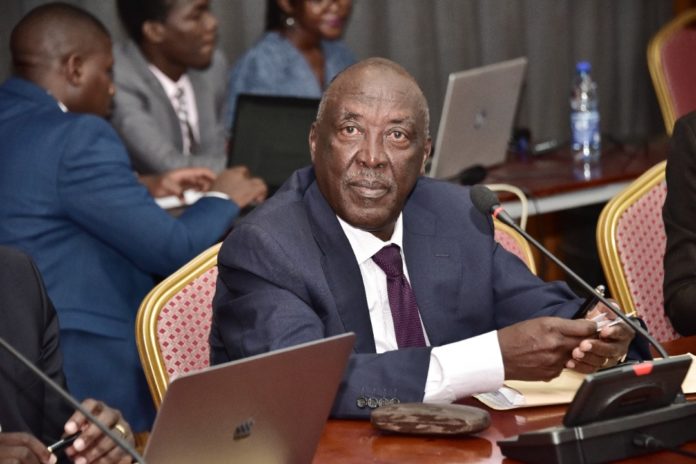
Uganda's High Commissioner to Kigali, Ambassador Robert Rusoke

Uganda’s High Commissioner to Kigali, Ambassador Robert Rusoke has called for construction of a chancery building in Kigali in bid to reduce on the cost of rent.

Rusoke made this request while appearing before the Foreign Affairs Committee on Monday, 16 January 2023 to respond to issues raised by the committee on the Budget Framework Paper.

He said that the embassy was notified by the landlord that rent would be increased from US$63,600 per annum to US$96,000, effective January 2022.

“The embassy does not have the funds to cater for the rental increments; the Mission requested for supplementary funding from Ministry of Finance but did not get a positive response,” Rusoke said.

Legislators on the committee chaired by Norah Bigirwa Nyendwoha raised concerns about the high cost of rent.

Kyadondo East MP Muwada Nkunyingi queried the nature of the tenancy agreement entered with the said landlord.

“I do not know if they signed a rental agreement for one month or two months; This agreement would not arise if they had a durable tenancy agreement,” Nkunyingi.

Nebbi Municipality Member of Parliament, Hashim Sulaiman tasked the High Commissioner to provide an update on the construction of the chancery building in Kigali.

Butebo County MP Patrick Mutono noted that the increase in rent of US$32,400 was too high and advocated for the High Commission in Rwanda to have its own property.

Ambassador Rusoke attributed the increase to the change of location to a more secure area.

While presenting the Mission’s report, the accounting officer Robert Tugume said limited access to operational funding has affected the effective execution of their activities.

He noted that programmes like tourism development as well as community mobilization and mindset change, have not been allocated funds for the new financial year.

“The Mission’s annual budget has suffered a shortfall of Shs399 million and this is going to affect the operations and planned activities in financial year 2023/2024,” said Tugume.

In a related development, Uganda’s High Commissioner to Kuala Lumpur, Ambassador Betty Bigombe said they have limited funds which has also affected its activities.

“There are many activities here but you cannot move to other countries or do some of those activities. You remain locked up at your office wondering what to do. It is embarrassing when some embassies ask why we are not involved in some activities,” Bigombe said.

The budget for Uganda’s High Commission in Kuala Lumpur stands at Shs3.378 billion compared to financial year 2022/2023 with Shs3.492, representing a shortfall of Shs115 million.

Stories Continues after ad

Prioritise Police budgetary needs, MPs task Minister

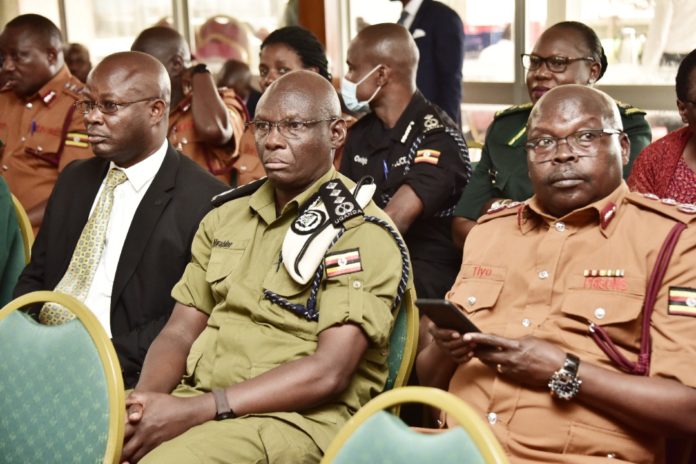
Lawmakers on the Committee of Defence and Internal Affairs have tasked the Ministry of Internal Affairs to prioritise the budgetary needs of the Uganda Police Force.

The Members of Parliament were receiving the 2023/2024 Financial Year Budget Frame Work paper of the ministry. The Minister of State for Internal Affairs, Gen. David Muhoozi appeared before the committee on Monday, 16 January 2023.

The police force requires Shs2 trillion for the next financial year but only Shs823 billion has been allocated.

Lwemiyaga County MP Theodore Ssekikubo questioned government’s commitment towards ensuring that the police force effectively carries out its mandate given the huge budget shortfall.

“We are not being honest; I think the minister is telling us that we do not need police. The population is increasing and yet the budget of the police force is reducing. This is a silent way of killing the force,” Ssekikubo said adding that, “we need to find a way forward. Passing the budget with insufficient funds for police is unacceptable”.

Mubende Municipality MP, Bashir Lubega called on his counterparts to support the Police force in their quest for sufficient budgetary allocations. “We need to correct this situation by being alive to the budget shortfalls in police. We need to stand our ground,” he said.

Kagoma North County MP Brandon Kintu urged all entities with a component of security to fund the police force since the budget is now programme based. “We should compel other entities to fund the police programmes under security,” said Kintu.

The Deputy Inspector General of Police, Godfrey Katsigazi appealed for prioritisation of recruitment of officers, saying that the citizens to police ratio is at 1-800 compared to the ideal 1-500.

“The equipment is limited especially patrol vehicles. These were last purchased seven years ago. We need the budget enhanced to ensure that crime is contained,” said Katsigazi.

He pointed out that budgetary constraints impact on service delivery, adding that it is critical that MPs realise that the police force operates under a thin budget.

The police undersecretary, Aggrey Wunyi stressed the need to allocate funds towards expansion of CCTV cameras.
“We require Shs187 billion for CCTV expansion but nothing has been provided. There is now a shift in crimes from urban areas to the semi-urban due to lack of CCTV cameras,” said Wunyi.

Minister Muhoozi however, said that despite the budgetary constraints, the general crime rate has reduced from 502 per 100,000 persons in 2020 to 255 per 100,000 persons in January 2022.

“Security agencies have been able to bust and destroy the Allied Democratic Forces cells and gang elements that have been attacking and killing security personnel,” said Muhoozi.

Stories Continues after ad

Court Martial sentences one for unlawful possession of military stores

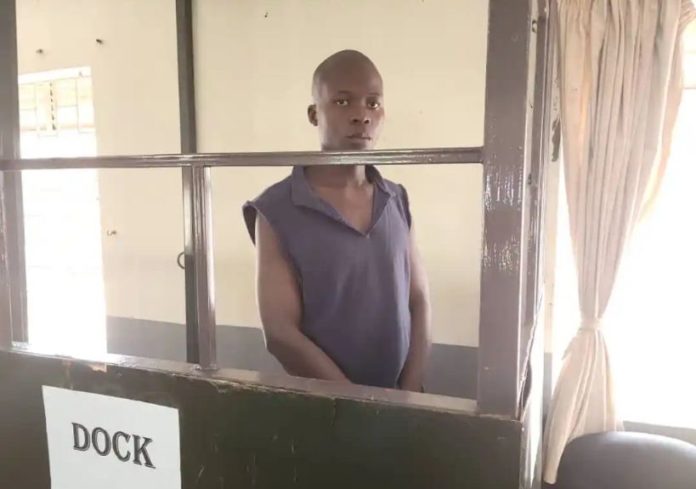
Musinguzi Denis, a male adult, aged 24 years, has been sentenced to three (03) years eleven (11) months and fourteen (14) days imprisonment to Kitalya government prison.

The Uganda Peoples’ Defence Forces (UPDF) General Court Martial sitting in Makindye, Kampala City, and chaired by Brig Gen Freeman Mugabe, has sentenced one and set free two people charged with unlawful possession of defense stores and unlawful possession of military clothing and ammunition, respectively.

Denis Musinguzi, a male adult, aged 24 years, has been sentenced to three years eleven months and fourteen days imprisonment to Kitalya government prison.

While reading the sentence, Brig Gen Freeman Mugabe said the accused was charged for the offence of unlawful possession of defence stores contrary to section 160(1) and (2) of the UPDF Act 2005 on the 14th day of November 2022 and pleaded guilty.  That brief facts about the case were read to the accused and he accepted them to be true.

Military stores means any goods of any description belonging to the Government which have been issued for use for military purposes.

On the past record, counsel for the state submitted that the convict is not a first-time offender because in July 2021, he was arrested and charged on Case N0. CRB/689 Entebbe main police station convicted and sentenced to caution. Counsel for the state further submitted that in October 2021, the convict and others were arrested and charged for unlawful possession of government stores and served seven months in Kigo government prison.

While in mitigation, Counsel for the convict submitted that the convict has been in lawful custody for four months and was now remorseful and therefore prayed for custodial sentence. After listening to both counsels for the state and the convict, court deliberated on the case and found out the following salient points; That the convict pleaded guilty, the convict was not a first-time offender, the convict was still young, the maximum sentence is life imprisonment.

Therefore, after deducting a period of five months and sixteen days spent on remand/lawful custody and a period of seven months for mitigating factors, Court sentenced him to three years, eleven months and fourteen days imprisonment to Kitalya government prison.

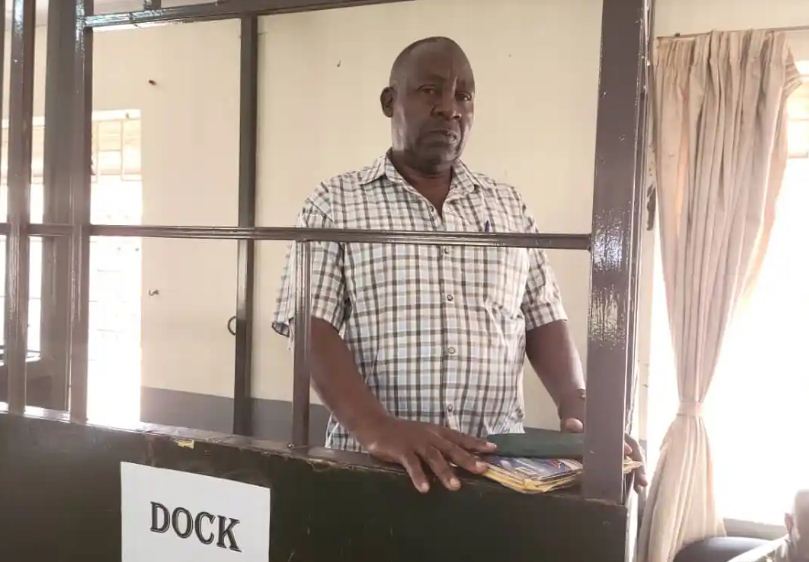
Court has also set free Lt (Rtd) Idris Musitwa, a Ugandan male adult, aged 64 years and resident of Kirokole Zone Kawempe Municipality, in Kampala District. He was charged with unlawful possession of ammunition and military clothing contrary to section 3(2) (a) of the fire arms act cap 299.

Lt (Rtd) Idris Musitwa has been set free

He was arrested on 7th August 2017, since then to date, his case has always been adjourned seeking to present witnesses. It was then agreed that since the area where the offense was committed is not far away from the court and still state couldn’t present a witness, the defence lawyer for the accused requested court to dismiss the case and set free his client.

This prompted the Chairman Brig Gen Freeman Mugabe to call for an adjournment of 10 minutes to deliberate on the case with his team. After the ten minutes adjournment, the Chairman announced that the accused Lt (Rtd) Idris Musitwa, court has decided to set him free and advised him to follow the normal court protocols before leaving.

Stories Continues after ad

URA, Gold dealers sign MoU on tax compliance

Uganda Revenue Authority (URA) has signed a Memorandum of Understanding (MoU) with the Gold Refiners, Exporters, and Dealers Association of Uganda (GREDAU) to streamline relations.

In the memorandum, it is agreed that the members will become tax compliant and pay existing tax arrears as far back as July 2021, share information on the export and import of gold, alert URA of any illegal gold dealers, cooperate with URA in the collection of taxes and advise on any entities that are suspected of engaging in smuggling, tax evasion, and other illicit activities in the gold industry.

The MoU further discloses that URA shall recognize the association as a legal entity, educate gold dealers on their tax obligations and ensure that there is tax compliance.

Commissioner General John Musinguzi welcomed the collaboration, saying there is need to manage Uganda’s gold industry with greater authority as it is being strained internationally despite it being a legal and efficient business.

“With this MoU in place, illicit gold trade will be eliminated in the country, more so, we seek to streamline this business and ensure that we pay our fair share of taxes so as to uplift the GDP-to-tax ratio from 13.7% to one that will favour national development,”John Matsiko Legal Counsel For Gredau said.

GREDAU is a registered Company by Guarantee that seeks to advance, promote and protect the import, export, refinery, commerce, and dealership of gold and other precious metals.

It comprises four members; Simba Gold refinery Limited, Metal Testing and Smelting Company Ltd, African Gold refinery ltd and Aurnish Trading ltd.

Stories Continues after ad
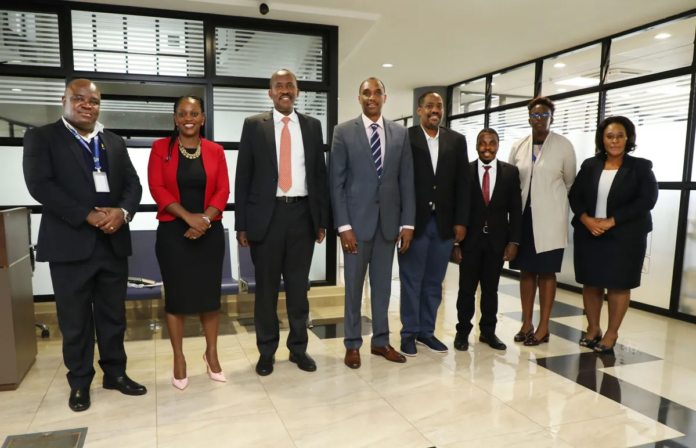
Museveni attends Abu Dhabi Sustainability Summit 2023

President Yoweri Museveni at the invitation of his host Sheikh Mohamed bin Zayed Al Nahyan, the President of UAE and ruler of Abu Dhabi attended the Abu Dhabi Sustainability Week (ADSW).

The sustainability week is a global initiative championed by the UAE to accelerate sustainable development and advance economic, social and environmental progress.

Now in its 15th year, ADSW continues to drive global debate around climate action. As the first major sustainability gathering of the year prior to COP28, it is leading the way towards a cleaner, greener future.

At the sidelines of the conference, President Museveni met and held discussions with his host Sheikh Mohamed bin Zayed Al Nahyan. The two leaders discussed maters of bilateral and mutual interest between the two countries.

Museveni on behalf of Ugandans extended condolences to the United Arab Emirates at the passing on of their former President Sheikh Khalifa.

He equally congratulated President Mohammed bin Zayed Al Nahyan Mohamed on being elected to the presidency of the United Arab Emirates

He expressed happiness at the increasing number of United Arab Emirates business people who are coming to Uganda and reiterated that Uganda’s investment potential and conducive   environment are excellent.

President Mohammed bin Zayed on his part welcomed President Museveni to the United Arab Emirates and commended the excellent bilateral relations between the two countries.

He further commended the President and the Ugandan government for according the UAE investors who come to Uganda for an excellent and peaceful environment to do business that is reported to be the best in the world.

He pledged to encourage more of UAE business people to make Uganda their investment destination.

Also, on the sidelines of the same conference President Museveni held bilateral talks with the President of Mozambique, H.E Filipe Nyusi. The two Presidents discussed matters of mutual interest between the two countries.

Stories Continues after ad
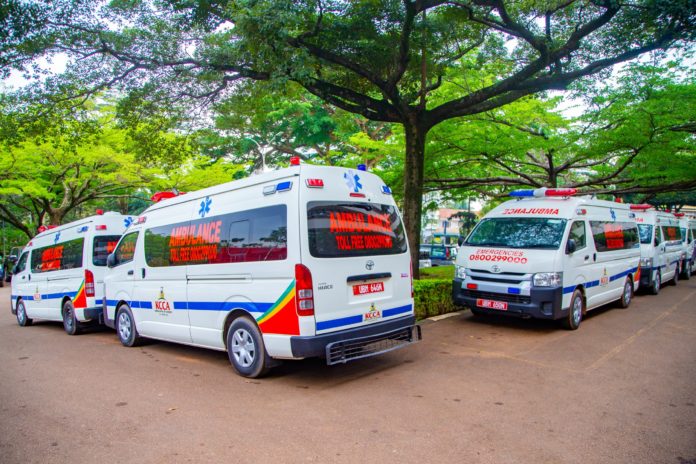
KCCA launches 7 city ambulances

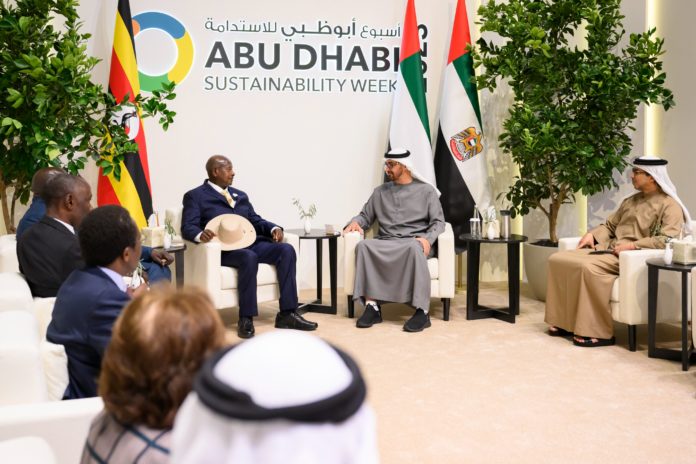
The Lord Mayor Erias Lukwago accompanied by the Deputy Lord Mayor, authority councilors and the Kampala Capital City Authority (KCCA) directors for Public Health Services and Environment on Monday launched the new state of the art ambulances at a function held at City Hall.

KCCA boosted its fleet with seven new ambulances, an addition to the exiting five bringing the total number of ambulances managed by the authority to twelve.

“This is a momentous occasion for us as we again register another milestone as we launch these ambulances, it’s a huge development having these high tech ambulances in our city,” Lukwago said.

Lukwago who handed over the ambulances to the division mayors, cautioned them to maintain these ambulances properly so that they serve the people of Kampala. He further called on the city residents to also utilize these ambulances.

Lukwago noted that however these ambulances are for the city, they may have to over stretch to areas out of Kampala. “We may not restrict our operations to the boundaries of Kampala because health issues know no boundaries” Lukwago said.

“The city needs over 70 ambulances to have a robust system, and Kampala Capital City Authority now has twelve meaning we still have a long way to go,” Lukwago noted.

He thanked both the technical and political wings for working tirelessly to make sure that a functional ambulance system is in place. Lukwago noted that this was the start.

The Director Public Health Services and Environment at KCCA Dr. Daniel Okello thanked the government of Uganda for the support towards realizing this goal.

“We have an emergency response call center at city hall where you can call and request an ambulance for any emergency, our ambulance and emergency services are available 24/7,” Okello said

“The ambulances have been labeled with a KCCA toll free number 0800299000, call the number in case of any emergency and our teams will respond immediately, the services are free of charge” Okello said

The seven ambulances were acquired using funds that the government gave to the KCCA Covid19 Taskforce in 2021as a supplementary budget for COVID19 activities.

The KCCA leadership prioritized the purchase of ambulances to ease the pressure on the KCCA medical teams’ response to emergencies in real time and to curb preventable deaths arising from gaps in emergency services.

The ambulances cost around Shs 1.6 billion and each ambulance at about Shs230 million. The ambulances are of two types namely B and C. 

The type B ambulances are equipped with diagnostic equipment, cardio-pulmonary support equipment, monitors and suction machine among others.

The type C is more of an intensive care unit ambulance that comes with advanced life support equipment, the first of its kind in our fleet at city hall.

All this is in line with the smart city campaign where People’s wellbeing is a core pillar.

Stories Continues after ad
Grandmother arrested for double murder of her grandchildren

Crime scene

Police in Kiruhura District have arrested a grandmother identified as Tumukuzire Mable, aged 59, for the alleged murder of her two grandchildren in revenge for mistreatment by her two sons, who are parents of the two victims.

According to the Police spokesperson Fred Enanga, on January 11, 2023 at around 3pm, while at Kenshunga 1 cell, in Kiruhura District, the suspect developed a serious misunderstanding with her two sons, Muramuzi Gastonia and Akatuhwera Onesmus, which prompted her to call her other son, Mwesigwa Justus, aged 29, a businessman of the same village and told him how his brothers wanted to fight her, before threatening to leave the home and never return.

Enanga said the son responded and reached home at around 2am, but did not find her mother and two grandchildren, namely; Gumisiriza Daton a 7 year old grandchild and son of Muramuzi Gastonia, and Akatuhwera Prosper a 2 year old male juvenile and son of Akatuhwera Onesmus, missing from home. When they called her to find her whereabouts, she insisted that they would never see her again.

“On the 12th of January 2023, at around 7am, a search led to the recovery of the first body of the deceased at Dege’s farm, located about 1.3kms away from the suspects home. The second body of the grandchild was recovered from Jolly’s dam, located 300 metres away from the suspects home. Upon recovery, it was established that the bodies of the victims had swollen stomachs, and with external injuries. The suspect claims she pushed the victims into the valley dams with the help of her husband, Katwiremunda Sarapio, where they drowned and died. A serious manhunt for the husband who is in hiding is ongoing,” Enanga said.

“In addition, it is alleged the suspect was not happy, with her son, Akatuhwera Onesmus, for marrying a woman with a child from an earlier marriage. And has always threatened her daughter-in-law to leave her home with her child. In this circumstance, the motivation was anger and revenge, which cost the lives of two innocent grandchildren. The suspect is to be charged with two counts of murder, as a serious manhunt for her husband continues.”

Enanga said the incident shows how children continue to be at great risk, even at the hands of persons, who are so close to them, like the grandparents to the victims.

Stories Continues after ad