Stanbic Bank
Stanbic Bank
27.4 C
Kampala
Stanbic Bank
Stanbic Bank
Home Blog Page 453

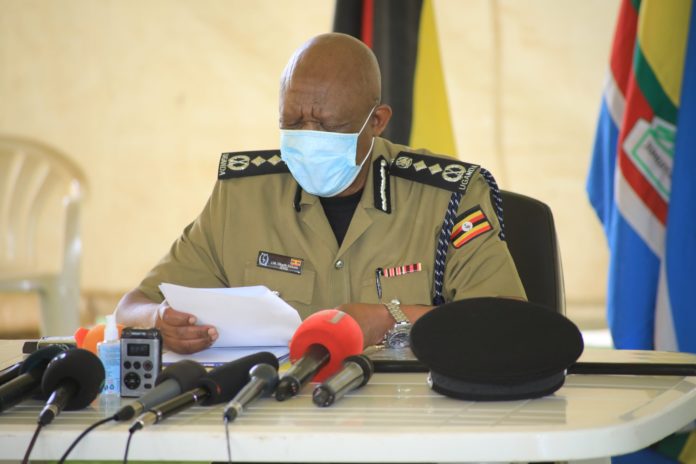
IGP Ochola promotes 19 police officers

IGP Okoth Ochola

The Inspector General of Police (IGP) Martin Okoth Ochola has promoted 19 subordinate officers, to various ranks of Inspector of Police (IP), Assistant Inspector of Police (AIP) Sergeant (SGT) and corporal (CPL).

According to the Deputy Uganda Police Spokesperson, ACP Claire Nabakka, “Those promoted to the rank of IP from AIP are two, SGT to AIP one, from CPL to SGT two and 14 from the rank of Constable to Corporal.”

“The key criteria were based on transparency, openness and objectivity to ensure fairness and equity of the process. These include among other factors the following; performance, current responsibility, leadership abilities, command abilities, time spent on rank, discipline, patriotism and integrity, length of service in the force, highest level of education, career courses attended, record of service, exemplary performance among others,” she said.

The promoted officers are;

AIP TO IP

1. MUHANYA RONALD

2. BETEGYERIZE APOLLO

SGT TO AIP

SGT OKIA ROBERT

CPL TO SGT

ANEBO CHRISTINE

MADADA MAGOMU

PC to CPL

1. MUHINDA RODNEY

2. GIDUDU HASSAN

3. TUMUSIIME ROBERT

4. TUGINEYO WYCIIF

5. AMUTUSIIMIRE BRIDGET

6. AHUMUZA TALENT

7. HIRYA JOEL

8. EMALU FELIX

9. AMUTUAIRE DIANA

10. IMEN BRENDA GIFT

11. KUSEMERERA CHARITY

12. OKIROR JOSEPH

13. AGABA ANDREW

14. AKANDWANAHO PETER

Stories Continues after ad

Rural agribusiness communities to benefit from Nexus Green Solar Powered Irrigation systems

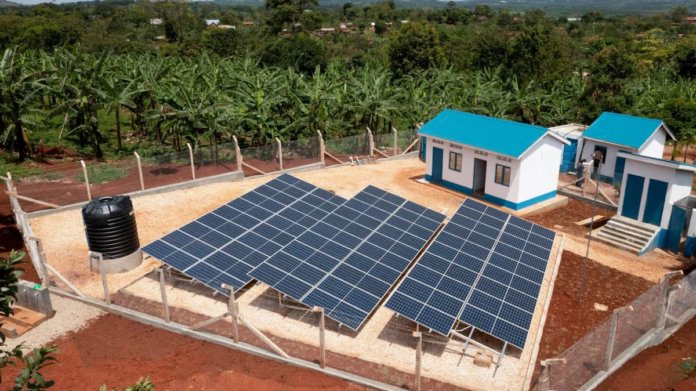
600 Ugandan rural agricultural communities in various parts of the country are set to benefit from an innovative solar-powered irrigation system designed by Nexus Green to reduce the cost of farming and curb the effects of climate change in Uganda. According to Mr. Rikki Verma, the CEO at Nexus Green, the Nexus Solar Irrigation Systems are also expected to revolutionize and professionalize Uganda’s agricultural sector by easing access to water for farmers and rural communities through affordable and premium solar products. “We are blanketing the country with over 600 sites of Solar irrigation systems to create wealth within the agriculture sector by introducing smart-agriculture practices and agribusiness development to move the small scale farmers from subsistence cultivation (majority at present) into modern commercial farming which would increase production, productivity and farm income,” Verma said while announcing the renewable energy solutions in Kampala.

 “With the increasingly unreliable rainfall patterns, the need for investment in irrigation and climate resilience has become of paramount importance, and the Government of Uganda recently ranked irrigation as the third most important infrastructural investment that will facilitate economic transformation of the country as envisaged under Vision 2040. This project produces a perfect response to tackle the adverse effects of climate change in the agricultural sector, by providing water to mainly water stressed communities in Uganda for domestic use, farm use – animal and smallholder crop farming. It will also support community training on sustainable agricultural practices, developing resilience to climate change, protection of environments near swamps and water bodies, enhancing food security, promoting proper sanitation and developing rural community livelihoods,” he added. Nexus Green was founded in October 2015 as a solar energy company that specializes in designing, supplying, manufacturing, and delivering affordable solar-powered solutions that reduce carbon emissions and provide cheaper and cleaner energy. 

According to Mr. Verma, Nexus Green is also introducing the latest state-of-the-art Solar Solutions which are also expected to greatly transform and significantly profit Uganda’s commercial and industry sector by easing access to renewable energy for companies and institutions through affordable and premium solar products.  “From a financial standpoint, it’s becoming very costly for businesses connected to the national electricity grid to run their operation because energy prices keep going up. “The obvious alternative route for a replacement is renewable energy. The grid and diesel generation are not reliable. Power cuts and the cost of fuel to keep operating the generators cost a lot. Using Solar with batteries is cheaper as there is no need to rely on the grid anymore,” Verma noted. “Power instabilities can have serious implications on food security and the social stability in the agricultural sector. Electricity is essential in modern farming practices, and load shedding disrupts farming operations. Solar energy provides a sustainable solution for such problems enabling farmers to have a continuous smooth running of all operations especially those in rural areas,” Verma added. 

According to the Uganda Bureau of Statistics, about 70% of Uganda’s working population is employed in agriculture. During the Financial Year 2021/22 agriculture accounted for 24.1% of Uganda’s GDP and 33% of export earnings, according to the ministry of finance, planning and economic development. Majority of Ugandans heavily depend on the agricultural sector for food and income. Solar-powered irrigation systems are therefore expected to lower the operational costs for both large and small-scale farmers in the long run and improve crop yields even during the dry seasons while at the same time reducing carbon emissions and greenhouse gases. Verma noted that Nexus Green is committed to working hand in hand with the Government of Uganda to realize increased adaptation of solar energy across the energy by introducing cutting-edge technology to allow villages and small towns to connect to energy using mini-grids. “The East African region presents enormous opportunities in the energy sector. We are excited to have our hub in Uganda which is land linked to so many countries,” he concluded.

Displaying 1 billion.odt. Page 1 of 2

Stories Continues after ad

Uproar as South African Tourism gives Tottenham Hotspur R1 billion sponsorship

Idea is an insult to workers and South African taxpayers in general – Cosatu

THANDISIZWE MGUDLWA

CAPE TOWN — South African stakeholders have attacked moves by the South African government, through the department of SA Tourism (SAT), which is the verge of sealing a deal worth almost R1 billion to sponsor one of England’s elite soccer clubs, Tottenham Hotspur.

Information about the proposed deal were first reported by the Daily Maverick.

Sources also reveal that the SA Tourism has proposed a three-year sponsorship deal worth £42.5 million (about R900m) with Tottenham Hotspur.

And in exchange for the investment, SA Tourism will receive kit branding, interview backdrop branding, match-day advertising, partnership announcements, training camps in SA, and free access to tickets and stadium hospitality.

This week, the Congress of South African Trade Unions (COSATU) said it was joining all properly adjusted South Africans to call on the South African government to scrap the proposed R1 billion football sponsorship of an English Premier League team by the South African Tourism and Department of Tourism. 

 Sizwe Pamla, Cosatu National Spokesperson said, this would amount to more than a third of the budget allocated to promote South Africa’s tourism sector.  This comes against the background of many small tourism operators struggling to recover from COVID-19 and hoping for some financial relief from the Department in vain.

“This is a misguided vanity project that will contribute nothing to fix the ailing tourism industry that has not only suffered from COVID-19 but is also sabotaged by electricity cuts and high crime levels.”

Moreover, the Federation is concerned by the number of wrong-headed and cartoonish ideas produced by government departments, and bizarrely even championed by their Ministers, on how to fix this ailing sector of the economy.

Cosatu also noted, this comes after the Department of Arts, Culture and Sports proposed a ludicrous and absurd plan to blow about R22 million on a 100-metre flag monument.

According to Cosatu, South Africa needs to organically create a tourist friendly environment and abandon these artificial and mechanical ideas. Throwing money that we do not have on a problem will only sink this country deeper into the abyss.

“It is a fact that South African government is becoming less and less able to meet its obligations through taxation and has resorted to dangerous levels of inflationary borrowing instead. Throwing borrowed money on these futile ideas while, at the same time, gutting state institutions through budget cuts is senseless.

The same government that wants to sponsor a rich European soccer team has imposed a vicious wage freeze on nurses, doctors, teachers, police officers and other hard working public servants since 2020. This has left these workers struggling with their wages eroded and repealed by inflation.”

Cosatu added that this puerile idea is an insult to workers and South African taxpayers in general.

“The Presidency, Treasury and the Department of Planning, Monitoring and Evaluation need to intervene, stop this wastage, and scrap this waste of taxpayers’ hard-earned money.  The President would do well to take such nonsensical and offensive episodes into account when he reviews the performance of his Ministers and applies his mind on the need for their continued stay in Cabinet. “

Meanwhile, News24 says it understands that the finalisation of the proposal has to be settled before the imminent Cabinet reshuffle by President Cyril Ramaphosa.

Stories Continues after ad

NSSF defends its performance and real estate investments

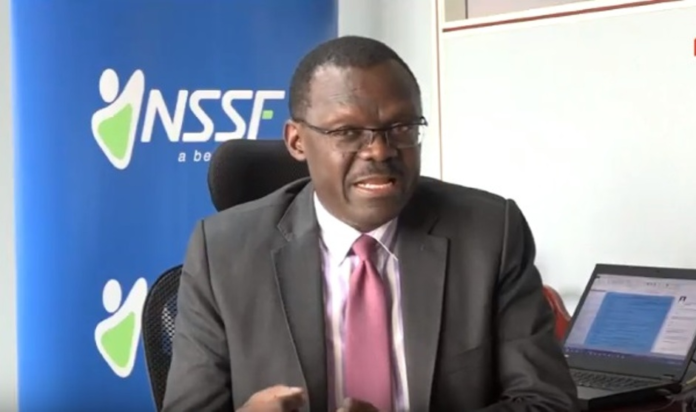
NSSF Deputy Managing Director, Patrick Ayota

The National Social Security Fund-NSSF has defended its performance over the last 10 years. Appearing before the Parliamentary Select Committee investigating NSSF and the appointment of the Managing Director and Deputy Managing Director.

The Committee is chaired by Mwine Mpaka, the Member of Parliament for Mbarara City South. Other members of the committee include Workers MP Charles Bakkabulindi, Mr. Karim Masaba (Industrial Division, Mbale City), Mr. Michael Kakembo (Entebbe Municipality), Ms. Fortunate Nantongo (Kyotera District Woman), Ms. Laura Kanushu (Persons with Disabilities), and Mr. Amos Kankunda (Rwampara County).

The NSSF Ag. Managing Director Mr. Patrick Ayota said that the Fund’s growth in asset base, contributions, benefits, and membership growth has been growing steadily over the last 10 years.

Ayota was appearing before the committee alongside the Fund’s senior management team to interface with the committee on Fund’s performance, governance, and stakeholder involvement in the Fund’s decision making among others.

“In 2010, the Fund was worth Shs 1.7 trillion in Assets under Management. As at end of FY 2021/22, the Fund was Shs 17.3 trillion in assets, a 10-fold growth. This is a growth of 10x. As of December 2022, the Fund’s assets stood at Shs 18.8 trillion,” Ayota said.

The NSSF Board, led by Dr. Peter Kimbowa had earlier in the day interfaced with the same committee.

Dr. Kimbowa was quizzed about the Shs 6 billion that the Minister of Gender, Labour& Social Development allegedly asked the Board Chairman in a letter to provide for in the Fund’s budget for the Financial Year 2022/23. He told the committee that the Minister’s letter was irregular.

On contributions, Ayota said the member contributions have steadily increased from annual collections of Shs 556 billion in 2012 to Shs 1.491 trillion in 2022.

On member recruitment, Ayota said that the current membership size stands at 1.3m with a historical annual growth rate of 140,000 more members, while the current employer base is 27,628 with a historical annual growth rate of 2,685 more employers.

Regarding real estate, Ayota clarified wrong information that the Fund’s real estate investments do not provide a return to members and are out of reach of the majority of NSSF savers.

He said that the Fund earns rental income and capital gains from its investments in real estate. He also said that the Fund’s Real Estate offering targets three groups of consumers.

These are the high-end income bracket catered for under the Citadel Place Project (sold out), Solana Lifestyle and Residences – Lubowa Housing Project; middle-income bracket – catered for under Kyanja Housing Project and Temangalo Housing Project, and affordable Housing income bracket – catered for under the Temangalo Affordable Housing Project.

Stories Continues after ad

NWSC, UPDEAL sign Shs6.9b contract to upgrade Awoja water treatment plant

National Water and sewerage cooperation–NWSC and UPDEAL Uganda Limited have signed Shs6.9 billion contract to upgrade Awoja water treatment plant.

The water treatment facilities at Awoja were upgraded in 2006 to a production capacity of 7.5 million litres per day with a 15-year design horizon.

Because of the hydraulic constrictions within the plant and conveyance systems, the areas can only produce up to 5 million litres per day. This has created a demand and supply gap which was recently made worse with the establishment of the Soroti Industrial Park.

Currently, the people of Soroti and Kaberamaido rely on a conventional water treatment plant and intake located at Awoja, in the Kyoga catchment.

According to Dr. Eng. Silver Mugisha, the two areas have a demand of about 8 million litres per day which the current production facilities cannot meet. In a bid to improve water supply services for Soroti and Kaberamaido and the surrounding areas, NWSC has committed funds towards the improvement of the water abstraction, treatment and conveyance infrastructure at Awoja.

He said the intervention encompasses upgrading of the Awoja treatment plant and intake from the current design capacity of 7.5m litres per day through the construction of an additional 2.5m litres per day production line and upgrading the raw and treated water pipelines to match the new plant throughout.

Under the project, the contractors will upgrade the intake and raw water pump house pipe intersections and electromechanical equipment at Awoja to increase the abstraction capacity to 11m litres per day, lay steel raw water pumping main and associated pipework fitting and civil works.

“The contractor will construct an additional 2.5M litres per day water treatment line at Awoja water treatment plant comprised of flucculator chamber, clarifiers, rapid sand filter, pump house and general water treatment plant site works,” he said.

He said the contractor will supply and installation of associated electromechanical equipment comprised of pumps, blower, surge vessels, standby generators and their associated electrical panels.

Under the signed contract, the contractor will lay a new 13.5km steel-treated water pumping main and associated pipe work fittings and civil works and a 6.5km distribution main.

The upgraded project will benefit the people of Odudui, Dakabela, Aloet, Arapai, Pioneer, camp Shwahil, Kichinjaji, Madera, central, Akisim, Moruapesur, Kengere, Nakatunya, Oderai Majengo, Pamba and senior quarters sub-counties.  

Ali Kisitu, the director of UPDEAL Uganda Limited applauded NWSC for considering local contractors and promised to deliver on time.

Stories Continues after ad

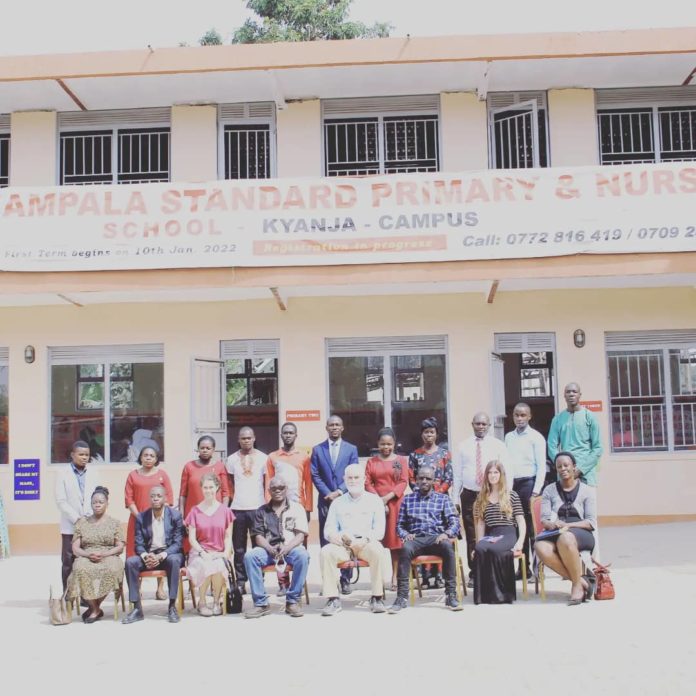
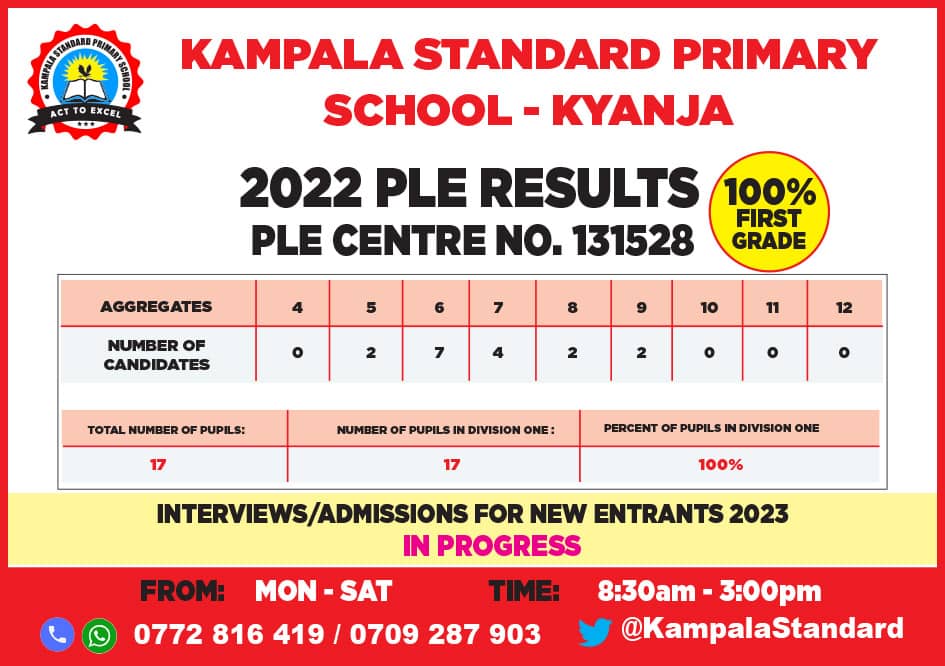
Secrets why Kyanja-based Kampala Standard Primary School emerged the best in 2022 PLE

Kyanja-based Kampala Standard Primary School topped all schools and had all the candidates who sat 2022 PLE came in first grade with a single digit aggregate. The best had 5 aggregates and last had 9 aggregates making it the only school where all the pupils scored less than 10 aggregates.

Today we shall reveal top secrets why Kampala Standard Primary School-Kyanja posted excellent results in its maiden year of sitting PLE exams.

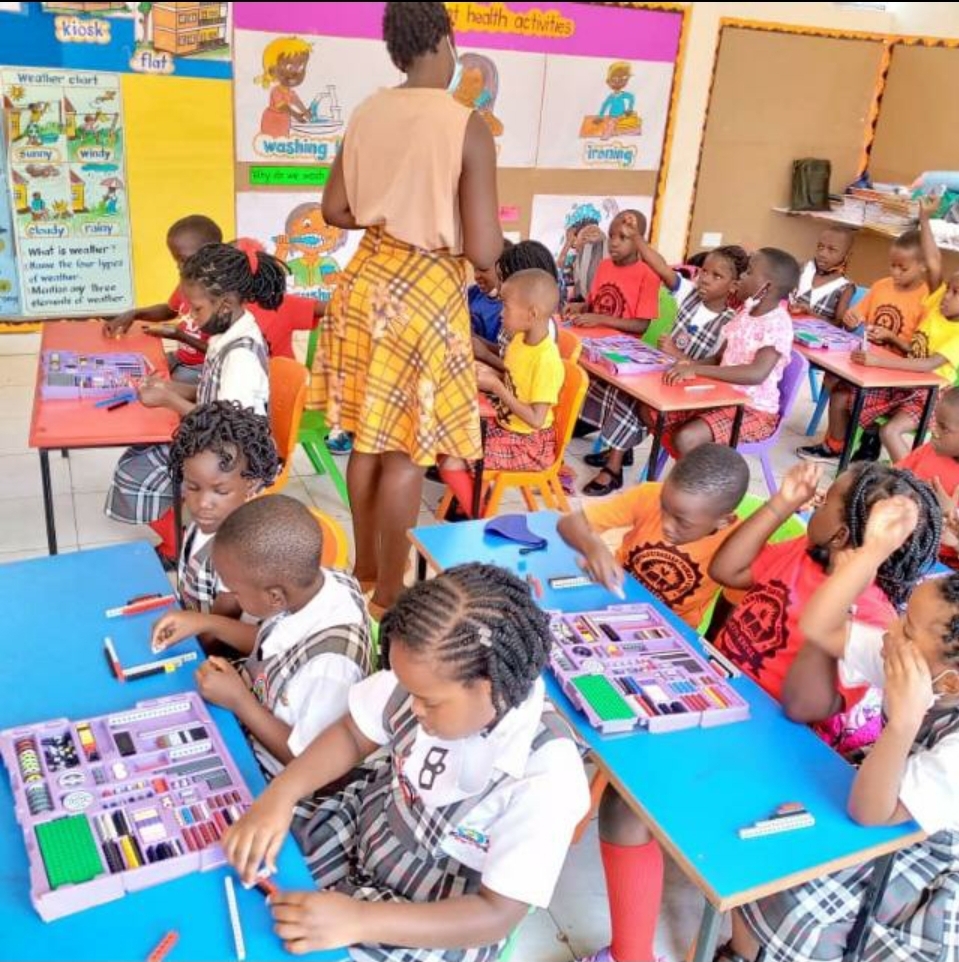
The Head Master Mr Simon Mugaaju, said KSP maintains a small number of pupils per class to enable the pupils concentrate better and excel. “This enables the teachers to concentrate on all the pupils and give the maximum attention,” said Mugaaju.

Besides academics, Mr Mugaaju said Kampala Standard Primary School-Kyanja has special programs for children in collaboration with UK and USA based schools and organisations, the programs include exchange visits between UK, USA and Ugandan teachers and pupils.

“KSP as Kampala Standard Primary School-Kyanja is popularly known has young Engineers program that helps to boost pupil’s critical thinking and lots of co-curricular activities that include swimming, scouting, sports, agriculture value addition among others,” he added.

While Kampala Standard Primary School-Kyanja teaches Uganda’s national curriculum, they blend it with international content in order to make it holistic for children to learn with ease.

Director Kampala Standard Primary School-Kyanja Dr Aggrey Kyobuguzi also posted on his twitter handle that in February 2023 a team from EDL and  little children of Jesus Christ based in Sacramento, California USA will visit Kampala Standard Primary School-Kyanja and Kentim School of Health sciences to interact with pupils, students and management while in August 2023 a soccer  team from Kentim Sports Academy and Kampala Standard Primary School-Kyanja will play a friendly match in football camp in London, UK.

Deputy HM academics Master Samson Katubeeho said, “All the above activities supplement teaching to ensure that pupils access holistic education and excel”.

Stories Continues after ad

LOP Mpuuga wants Parliament to investigate pension fund management

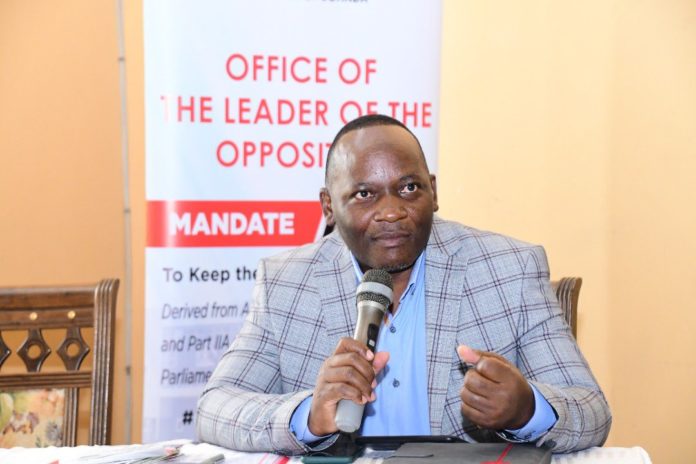
Leader of the Opposition in Parliament (LOP) Mathias Mpuuga

The Leader of the Opposition in Parliament (LOP), Hon Mathias Mpuuga, wants Parliament to institute an inquest into the management of the pensions fund for retired civil servants.

Meeting members of the Uganda Parliamentary Forum on Social Protection who called on him on Wednesday, 01 February 2023, Mpuuga said that it is important for Parliament to interest itself in the management of the budget allocations for the fund since cases of de¬layed pen¬sion payments or em¬bez-zle¬ment of pen¬sion funds are on the increase.

“What we handle in the budget is to show how much more the Government is going to commit, and it is not that whatever they commit goes instantly. So on which account is that money? How is it spent?” Mpuuga wondered further adding that the pension fund is one of the most abused public resources.

“There are complaints from different corners and it is shocking that pensioners take ages without getting their pension money,” the LOP said.

The meeting in the LOP’s boardroom at Parliament House was intended for the forum to share its position paper on social protection financing in the National Budget Framework Paper for the Financial Year 2023/2024 with the Opposition leadership in Parliament.

The forum’s chairperson, Hon. Flavia Kabahenda (NRM, Kyegegwa District Woman MP), said that they looked forward to the Opposition’s support for a parliamentary vote to task the finance ministry to revoke the blanket 80 per cent cut on subventions which has mostly affected social protection interventions.

Besides, the forum also calls for a policy shift in the management of support to people with disabilities and children in remand homes to allow for local procurement and avoid misuse of public funds through unrealistic procurement processes.

“Parliament should not be used by people seeking to fill their pockets,” Kabahenda said, adding, “The food for the remand homes [across the country] is bought in Kampala and then transported to [the various remand homes] but the fuel and per diem is more than the food they are carrying to those areas.”

The forum also wants Parliament to compel the government to reinstate the Shs 121 billion budget meant for the Social Assistance Grants for Empowerment (SAGE) to meet the demands including payment of arrears amounting to Shs 5.1 billion.

Stories Continues after ad

Uganda Cranes to host Afcon qualifiers abroad

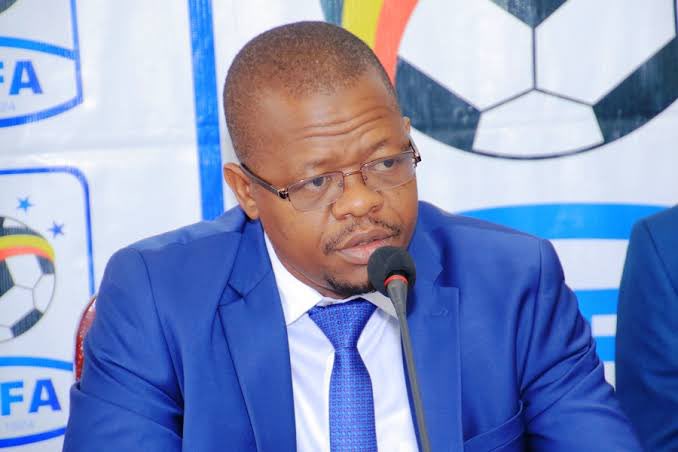
FUFA President Moses Magogo

FUFA President Moses Magogo has said Uganda currently has no stadium to host the Africa Cup of Nations (AFCON) and World Cup Qualifiers.

This means that the national team will have no option but to host the games from abroad.

“According to the latest stadium homologation by CAF, Uganda Cranes shall have no stadium in Uganda to host AFCON and World Cup Qualifiers,” Magogo tweeted.

“CAF has given us until the 10th of February to be able to submit a stadium that has been homologated by the administrative body. Between now and the deadline, I don’t think there are miracles that can be done for Namboole to be ready,” he said.

Cranes have been using the St. Mary’s Stadium in Kitende as the home ground for the AFCON and World Cup Qualifiers since Mandela National Stadium, Namboole in undergoing renovation.

Uganda will be taking on neighbors Tanzania in a double header in the AFCON 2023 Qualifiers in March.

“Unfortunately, all our immediate neighbors don’t have stadiums that qualify. Tanzania has one, but we are playing against them in the AFCON Qualifiers so we are looking at nations like Zambia, Malawi, and Egypt, among others,” Magogo said.

Uganda is in Group F with Tanzania, Algeria, and Niger.

The renovation of Mandela National Stadium is set to be completed in June 2023, according to the UPDF Engineering Brigade.

Stories Continues after ad

Minister Amongi’s Shs6bn request was irregular – NSSF Board

NSSF board chairperson, Peter Kimbowa (L) and the fund’s finance committee chair, Silver Mugisha, appearing before the committee

A Shs6 billion request by the Minister of Gender, Labour and Social Development, Betty Amongi, to facilitate activities to expand the National Social Security Fund (NSSF) was irregular, the NSSF board chairperson, Peter Kimbowa, has said.

He made the revelation while appearing before the select committee investigating allegations of mismanagement of NSSF on Wednesday February 1, 2023.

Kimbowa said that the board declined approval of the Shs6 billion because the fund’s governing body is not fully aware of the intended purpose of the requested funds.  

“The board requested management to come up with a comprehensive work plan and examine how the various activities are going to be resourced and we also examine the accountability matrix that will be attached to this project. This has not happened,” Kimbowa said.   

Kimbowa’s submission, however, contradicted a statement made by the minister during plenary sitting on 19 January 2023.

Mbale City MP Karim Masaba read the Parliament Hansard in which the minister said that the NSSF board had approved the request of the Shs6 billion and the work plan.

Committee chairperson, Mwine Mpaka, then asked Kimbowa if the minister’s statement to Parliament was not true.

“The Parliament Hansard is clear and I need you to answer either ‘yes’ or ‘no’ if the minister was lying to Parliament,” said Mwine Mpaka.

Kimbowa said that since there is no board resolution on the minister’s request, it is proof that it was not approved.

The chairperson of the fund’s finance committee, Silver Mugisha, explained that when the proposal was tabled before his committee, the NSSF management resolved to evaluate whether it aligns with the fund’s budget strategy.

“When we sent the budget for approval to the minister, the feedback was that it is approved but there was an idea that we allocate Shs6 billion for certain activities,” said Mugisha.

Workers’ MP, Charles Bakkabulindi, wondered how investment plans are initiated.

“Does the finance committee sit before the board or the board sits first. Who was sneaking the Shs6 billion for the final approval of the board? I want the board members to be mindful that we have all the figures and the papers,” Bakkabulindi said.

On 19 January 2023, the House resolved to institute a committee to inquire into the operations of NSSF following reports of corruption and mismanagement of the Shs17.9 trillion fund.

Stories Continues after ad

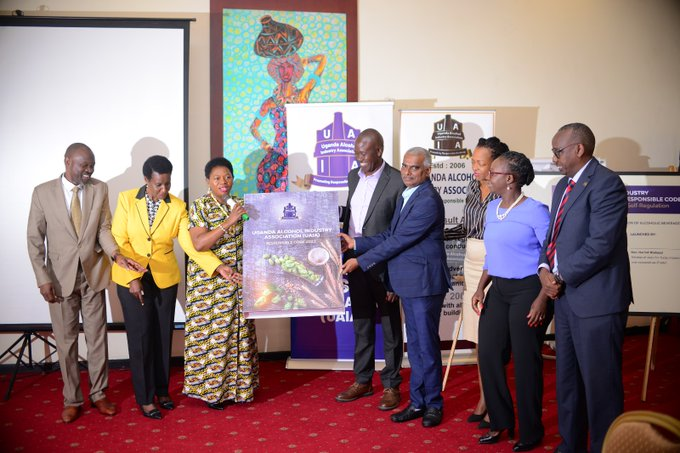
Non-compliant alcohol manufacturers to pay Shs10m fine

Non-compliant manufacturers are set to be fined Shs10 million, the newly launched alcoholic beverages Responsible Marketing Code indicates.

The code is intended to streamline production and promotion of responsible use of alcoholic beverages that are recognized by Uganda National Bureau of Standards (UNBS) and Uganda Revenue Authority (URA). This association has 40 members.

The alcohol industry generates over Shs800 billion in terms of taxes annually – almost 38.7% of the total taxes of this nation.

“The sector employs more than 60,000 but there are more in micro small and medium enterprises. If we could really use this chance to save this industry, it will directly give us a lot more employment than just given before. It is reducing the burden of employment and therefore it needs to be protected,” State Minister for Trade Harriet Ntabazi said.

“Currently, illicit alcohol accounts for 65% of the alcohol market in Uganda. It is neither registered, nor certified nor does it pay taxes. It is dangerous to the health of the consumers and undermines the economic development of the country,” Ntabazi added.

Ntabazi urged small and medium enterprises to step out and get incentives that are required for them to put a good facility in place including tax exemptions.

“I urge you manufactures to take every component of what it takes for certification, verification and conformity to avoid marriages break ups, school dropouts, abuses and others,” she said.

Speaking at the launch of the Code, Juliana Kagwa, the vice chairperson of Uganda Alcohol Industry Association (UAIA) said they intend to onboard more manufacturers in the foreseeable future and comply. “Where there are non-compliant members, the code has spelt out various penalties in conjunction with the government of Uganda.”

Under the code, alcohol manufactures want to tighten the grip on advertising of the misleading messages transmitted through traditional media, social media and other communication channels.

“We want to ensure that our advertising and promotion is reaching the right audience, of which in this code the right audience is anybody above 18 years of age. We have highlighted the perils of drunk driving and made a stand against road carnage within the same code,” she said.

She said there are penalties to do with intoxication, disorderly behavior, all of which the association doesn’t subscribe to. “We have highlighted as much as possible because not everything can be in one document. But all the anti-social behaviors we believe that would be perilous to the population of Uganda, and we have put down mitigations.”

The code recommends that all advertising goes through the Uganda Alcohol Industry Association, not so much for vetting but for advice and all the members signed up for that in a bid to keep themselves honest, that they are speaking to the right age group above or above 18 years of age.

David Livingstone Ebiru, the Executive Director UNBS said the Bureau’s focus is to promote voluntary compliance, self-regulation.

“So I am excited that if I see the sector coming up with a code of conduct, this is what we call industry standards. I want to congratulate you, the Association Executive, for helping us go into that direction to be able to support UNBS and other regulatory agencies to champion the culture of voluntary compliance or self-regulation, which is a big problem in our country,” he said.

“We always say that for manufacturers or producers to put goods on the market, they should have passed the test first. Culture must change that what is good for us, must be good for the work for the market and that goes with the Code of Practice and code of behavior in the various sectors.”

Former trade minister Amelia Kyambadde said; “We need to create awareness because people do not know that illicit alcohol is the cause of abuse, indiscipline, smuggling, and counterfeiting. All these challenges need to be addressed. So we need to formalize our small producers, private sector foundation you have a role to play in this.”

Stories Continues after ad