Stanbic Bank
Stanbic Bank
28.7 C
Kampala
Stanbic Bank
Stanbic Bank
Home Blog Page 484

Cane farmers make case for amended Sugar Act

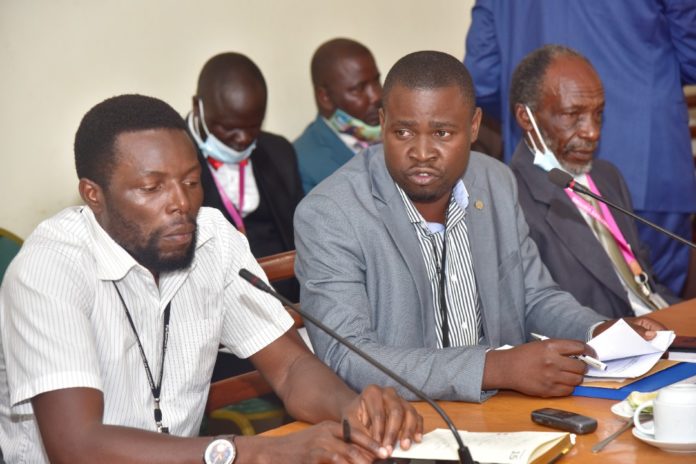
Sugarcane Out Growers interfacing with the parliament committee

Sugarcane out growers have demanded for expeditious amendment of the Sugar Act, 2020 to include a revised formula on determination of cane price.

A section of the farmers from Mukono and Kayunga districts say that exclusion of other cane products such as molasses, carbon dioxide, bagas and plywood, among others in the Act is to blame for the high sugar prices.

The farmers were interfacing with the committee on Wednesday, 16 November 2022, over high sugar prices.

They said that cane costs between Shs190 to Shs200 per kilogramme while the price of sugar ranges between Shs4,500 to Shs5,500 per kilogramme.

The Chairperson, Kayunga Sugarcane Out Growers Cooperative, Edward Mutebi, said that sugar millers agreed to use only sugar to cater for all the costs of production and yet they make profits from other cane products.

“The committee should look into this. Farmers should be able to earn what is commensurate with what the millers earn,” he said.

He added that the law should also be operationalised to regulate the sugar business so that farmers can realise their full potential.

“Millers are exploiting us due the lack of a guiding law. Government should get interested in sugar, just like is the case with coffee, tea and palm trees which are all recent crops,” said Mutebi.

Julius Katerevu, a representative of Mukono Sugarcane Out Growers Co-Operative Society Limited proposed introduction of a Sugar Cane Policy, with an authority to fully cater for sugarcane farmers.

“Government should protect the sugarcane farmers’ and transporters’ investment capital by, among others, setting a minimum price for fresh sugarcanes. Sugarcane price per tonne should be minimally Shs190,000 to recover capital invested,” said Katerevu.

He also accused government of protecting millers, at the expense of farmers, a move he claimed has frustrated cane farmers.

The Commissioner for Industry at the Ministry of Trade, Industry and Cooperatives, Denis Ainebyoona, who represented the trade minister, Mr. Francis Mwebesa, however, blamed the increase in sugar prices to the increased cost of sugarcane, which he said constitutes over 60 percent of the cost of sugar.

“To address this concern, I met with the sugar manufacturers recently and they assured me that they had enough stocks to meet the domestic demand. However, due to scarcity of sugarcane, manufacturers had earlier increased their factory prices from Shs180,000 to Shs215,000 for a 50 kilogramme bag,” said Ainebyoona.

He added that the ministry is carrying out consultations on the proposed amendments to the Sugar Act.

“After studying the law further, we realised that there will be need to introduce other cane products. We are working with the energy ministry to fast-track regulation of ethanol,” he said.

He also clarified that whilst there is no Board as stipulated in the Sugar Act, the ministry issues investors in the sugarcane industry letters of no objection to start up investments.

“The Act requires a full time Executive and there is no budget for that. The ministry is considering amending the law to have a Board without a full time Executive and extend its mandate beyond management of sugar farmers and millers,” said Ainebyoona.

Committee chairperson, Mr. Mwine Mpaka, however, said that absence of the Board casts doubt on the legality of the licences issued to investors.

“Why is there no board up to now? Issuance of licences should have been done by the Board,” said Mwine Mpaka.

He added that input of farmers should be considered in the formula to determine the price of cane.

“Farmers should suggest a formula that will work for them,” he said.

The Shadow Minister of Trade, Mr. Francis Mwijukye, wondered why the ministry has taken long to introduce amendments to address the plight of farmers.

“We need assurance that the minister is not giving us ‘hot air’ in regard to bringing amendments to the law. They have promised several interventions before but no action has been taken,” Mwijukye said.

Bukoto West MP Muhamad Ssentayi questioned government’s commitment towards solving challenges of the sugar cane out growers, saying that attention has been given to manufacturers.

“Why is the government not bothered with the challenges faced by farmers? The Commissioner told us that they met millers without farmers. Why did they meet only the millers?” Ssentayi asked.

Central Youth Member of Parliament, Mrs. Agnes Kirabo, proposed that the farmers should be managed under the agriculture ministry since the trade ministry is only focused on millers.

Stories Continues after ad

Denis Onyango hints on return to Uganda Cranes

Denis Onyango

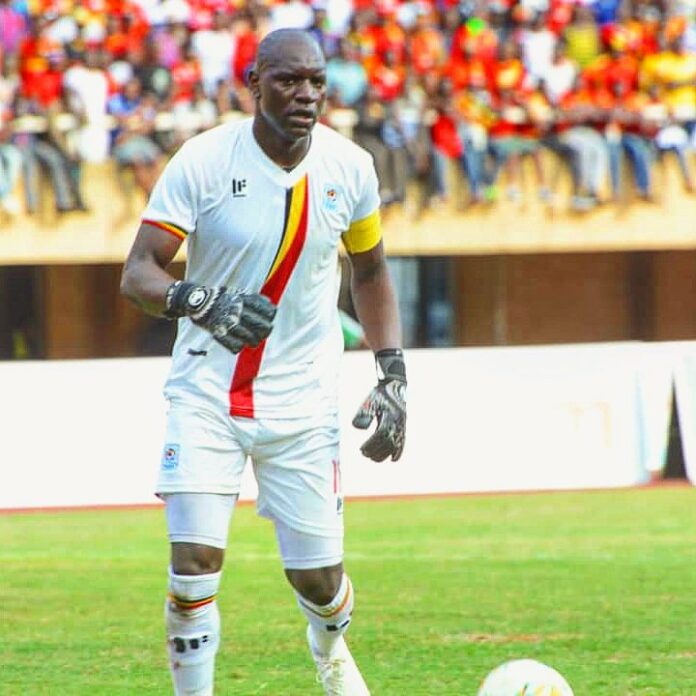
Former Uganda Cranes captain and goalkeeper, Denis Onyango has hinted on a possible return to the national team.

In a tweet from his official account, the Mamelodi Sundowns number one said; “Uganda Cranes, guess who’s back?!!..”

The 2016 Africa-based Player of the Year announced his retirement from international football on April 12, 2021.

Since the appointment of Milutin ‘Micho’ Sredojević as head coach in July 2021, there have been reports of persuading him to return to national team colours.

Onyango, 37, made his Cranes debut against Cape Verde in 2005 and retired with 79 caps for the national team.

He was named Cranes captain in April 2017 following the retirement of veteran striker Geoffrey Massa.

Stories Continues after ad

Hudu Hussein assumes office as Lwengo RDC

Tumwesigye John Bosco hands over to Hudu Hussein (right)

Former Resident District Commissioner (RDC) for Yumbe District, Hudu Hussein has assumed office as a new RDC of Lwengo District.

He has been in office as the Yumbe District RDC for about eight months having seen a massive reshuffle from being Kampala’s Resident City Commissioner (RCC) in March 2022.

He welcomed the reshuffle and applauded Tumwesigye John Bosco for the great work done in Lwengo.

“Now in Lwengo District. Thank you comrade Tumwesigye John Bosco for the good work done and a successful handover,” Hudu said.

Appreciating President Museveni, Hudu said, “Thank you H.E Kaguta Museveni for the opportunity to serve and monitor the implementation of Government Programs here.”

Hudu Hussein as RCC for Kampala is remembered for having ordered all street vendors and hawkers to vacate the Kampala streets in January 2022 in attempts to decongest the capital city. 

Stories Continues after ad

MPs quiz UNRA over Shs35 billion per kilometre for Expressway

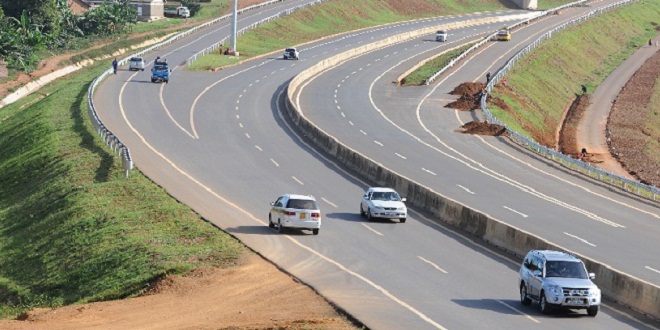
Entebbe Expressway

Parliament’s Committee on Public Accounts – Commissions, Statutory Authorities and State Enterprises (COSASE) has asked the Uganda National Roads Authority (UNRA) to explain the cost of the 51-kilometre Kampala-Entebbe Expressway.

In a probe over queries raised by the Auditor General, the committee noted that the Shs35 billion per kilometre cost of the tolled expressway looks exorbitant and the roads agency should explain.

“How do we justify this to a lay person other than me; if this one is costing Shs35.4 billion per kilometre is a bit high,” said committee chairperson, Mr. Joel Ssenyonyi.

The road cost US$476 million, approximated to be Shs1.8 trillion.

UNRA’s Head of Design, Eng. Patrick Muleme, defended the costing.

“The average cost per square kilometre of a bridge is high; UNRA carried out an independent audit for the cost based on the scope of what was to be done; looking at the bridges, UNRA was satisfied that the cost was reasonable,” he said.

Ssenyonyi then tasked UNRA to provide the document detailing the various study of the costing.

MPs also took issue with the management of collections from the road toll, managed by a contractor.

Eng. Joseph Otim, the Director of Road Maintenance at UNRA, placed collections at about Shs2.5 billion per month, Shs1 billion of which is set aside for maintenance and remuneration of the contractor’s staff.

The toll is collected by Egis Roads Operation S.A., a French company.

The committee demanded details of the maintenance, and took issue with the poor lighting of the road, making it a hotspot for accidents.

Kyaddondo County East MP Muwada Nkunyingi said motorists avoid the road at night due to the lighting issues, with UNRA Executive Director, Allen Kagina, committing that the contractor is in the advanced stages of lighting the expressway.

Chairperson Ssenyonyi asked about the progress of the loan repayment to China, which was the chief financier of the road.

“The collection from the toll is meant to repay the loan; if you give Shs1 billion for the contractor to do maintenance, how will the repayment be achieved?” he asked.

He also questioned how the Shs1 billion maintenance fee was arrived at.

The funds are placed on an escrow account, where the contractors draw the Shs1 billion every month, an issue that irked MP Richard Sebamala (DP, Bukoto Central County), who said that amounts to usurping Parliament’s powers to appropriate.

Kagina chipped in with an explanation.

“We can produce tomorrow [the details of the Shs1 billion maintenance fees]; the question of why the money was not going to the Consolidated Fund was really for the ease of payment for these [maintenance] services,” she said.

The probe continues Thursday, 17 November 2022.

Stories Continues after ad

Uganda to receive Ebola trial vaccines from WHO next week

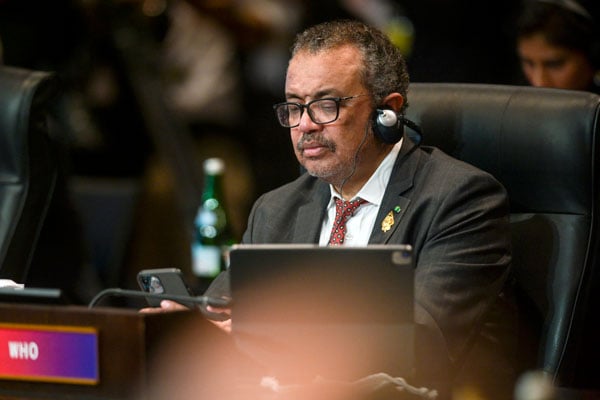
Tedros Adhanom Ghebreyesus, WHO- Director General

Three candidate vaccines against the strain of Ebola wreaking havoc in Uganda will be shipped into the country next week for trials, the World Health Organization (WHO) said Wednesday.

Since Uganda declared an Ebola outbreak on September 20, cases have spread across the country, including to the capital Kampala, and have claimed 55 lives, with 22 more believed to have died before their samples were tested.

Uganda has been struggling to rein in the outbreak caused by the Sudan strain of the virus, for which there is currently no vaccine. But UN health agency chief Tedros Adhanom Ghebreyesus told reporters that vaccine trials would soon begin.

Speaking from the G20 summit in Indonesia, Tedros said a WHO committee of external experts had evaluated candidate vaccines and determined “all three should be included in the planned trial in Uganda”.

The WHO and the Ugandan health ministry accepted the committee’s recommendation, he said, adding: “We expect the first doses of vaccine to be shipped to Uganda next week.”

The WHO hailed the “incredibly fast collaboration” to reach this point.

“Since the outbreak began, the government of Uganda, together with researchers, funders, companies, regulatory authorities and other experts have been working under a global effort coordinated by WHO to accelerate the development and deployment of vaccines for use in trials,” Tedros pointed out.

The candidates include a vaccine developed by Oxford University and the Jenner Institute in Britain, and another from the Sabin Vaccine Institute in the United States.

The third candidate came through the International AIDS Vaccine Initiative (IAVI), WHO said.

They will be used in a so-called ring vaccination trial, where all contacts of confirmed Ebola patients, and contacts of contacts are jabbed along with frontline and health workers.

“We have received written confirmation from the developers that sufficient vaccines and sufficient number of doses will be available for the clinical trial, and beyond if necessary,” Ana Maria Henao Restrepo, one of WHO’s heads of research and development, told reporters.

There is meanwhile concern that progress being made to slow the spread of Ebola even without the jabs could complicate the planned trials.

Such trials can only be run when there is fairly rapid transmission underway of Ebola, a haemorrhagic fever that spreads through close contact with bodily fluids and that is often deadly. 

“We have uncertainty… about the evolution of the outbreak,” Henao Restrepo said, acknowledging that it remained unclear “how many rings can be formed as part of the trial.”

But she stressed that all those involved were committed to pushing ahead with randomised trials in a bid to “generate robust evidence that will allow us to know if one or more of them has the efficacy we hope they have.”

Stories Continues after ad

Two UTC Kichwamba officials arrested, charged over abuse of office

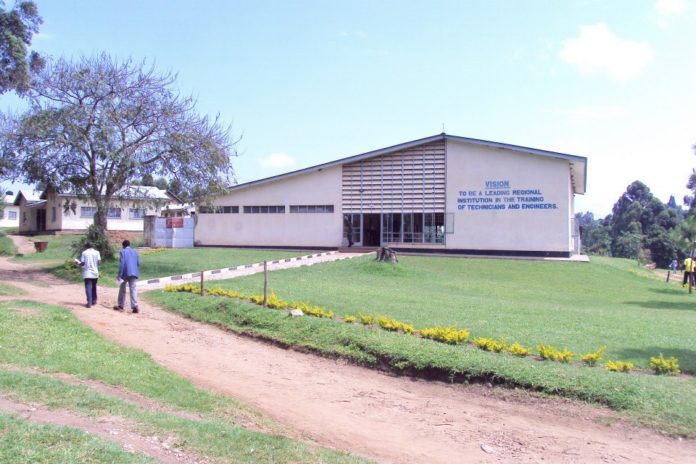
Uganda Technical College (UTC) Kichwamba

The Inspectorate of Government (IG) has arrested and charged two senior officials of Uganda Technical College (UTC) Kichwamba over abuse of office.

These include the Principal UTC Kichwamba Mr. Silver Mukwasiibwe, 58, and the Deputy Principal Mr. Joseph Nyakojo, 56.

The other official who was charged but not arrested is Mrs. Grace Tibanagwa, 58, UTC Kichwamba’s Accountant / Bursar.

Mr. Mukwasiibwe was charged with Abuse of Office contrary to Section 11 of the Anti-Corruption Act as amended.

Between July and October 2022, while performing his duties as Principal UTC Kichwamba in abuse of authority of his office irregularly procured goods and services worth Shs130,659,500 contrary to provisions in the Public Procurement and Disposal of Public Assets Act, thereby causing financial loss of Shs83,424,300 meant for various activities at the Institute, acts that were prejudicial to the interests of his employer.

Mr. Mukwasiibwe was also charged with diversion of Public Resources. While performing his duties as a Principal, UTC Kichwamba, he disposed of Shs79,825,705 to pay for various activities unrelated to those for which they were intended.

Mr. Mukwasiibwe and Mrs. Grace Tibanagwa between the months of July 2020 and June 2022 while employed as Principal and Accountant of UTC Kichwamba respectively, in the performance of their duties paid Shs 233,869,800 meant for different activities to different people for no work done with knowledge or reason to believe that their acts would cause Kichwamba Technical Institute financial loss and indeed caused financial of Shs233,869,800.

Mr. Nyakojo, Deputy Principal Academic Affairs, Research and Innovation of UTC Kichwamba between November 2021 and September 2022, stole Shs22,000,000 being the property of his employer, which he had access to by virtue of his office.

The accused are scheduled to appear before the Anti-Corruption Court today 17th November 2022 to take plea in the matter.

Stories Continues after ad

Law to strengthen operations of stock markets in offing

Keith Kalyegira CEO of CMA

Operations of stock markets are expected to be strengthened, once the proposed Capital Markets Authority (Amendment) Bill, 2022 is enacted.

Parliament, chaired by Speaker Anita Among granted Jinja South Division East MP Nathan Igeme leave to introduce the Private Member’s Bill during plenary sitting on Wednesday, 16 November 2022.

Igeme justified that the law will clearly provide for the functions of the Capital Markets Authority (CMA) and regulate the conduct of approved persons, as opposed to regulating products and activities which is the current practice.

“The CMA Act creates confusion in the mandate of the Authority by granting the power to make regulations, providing for fees to be charged for regulated activities in capital markets, yet the Act does not make provision for regulated activities but provides for approved and regulated persons,” Igeme said.

He added that the proposed law Incorporates objectives and principles of the International Organisation of Security Commissions (IOSCO) into the CMA.

“Uganda as a member of IOSCO has an obligation to incorporate the IOSCO objectives and principles of security regulation into its legal framework that governs the capital markets industry,” Igeme said.

The 2016 amendment, Igeme said, expanded CMA powers into prudential regulations which power are akin to the Bank of Uganda in the banking sector, without regard to IOSCO requirements to restrict such regulation by CMA.

The law also seeks to designate an approved stock exchange as the listing authority and to make provisions for a single entity to scrutinise, certify and approve prospectuses.

“The conduct of regulated entities has never been given a central focus in the regulation of securities markets,” Igeme said.  

Kazo County MP Dan Kimosho, who seconded the motion, said that the law is intended to attract many players in the capital markets by reducing restrictions in that sector.  

“Aware that many any other businesses are going down, this is one of the safest areas of investment and it would be in the interest of many Ugandans to get the opportunity to participate without restrictions,” said Kimosho.

Stories Continues after ad

Uganda urges ILO to avoid a one-size-fits-all approach to skilling

Betty Amongi

The Uganda Delegation, on behalf of African member states, has asked the International Labour Organisation (ILO) to avoid a one-size-fits-all approach for the successful implementation of its new strategy on skills and lifelong learning.

The Minister of Gender, Labour and  Social Development, Mrs. Betty Amongi, who led the Ugandan delegation delivered the call on behalf of the African member states at the 346th session of the ILO governing body held in Geneva between 30th October to 10th November 2022.

“Different countries are at different levels and have different approaches to skilling including lifelong learning. Therefore, as part of its preparations for implementing the strategy, the office should avail itself the opportunity of scoping the skilling typologies across the member states with the view of informing its design and targeting of the interventions,” Amongi said.

The Africa delegation further called upon ILO to support constituents in building capacity to develop job growth strategies in addition to the skilling strategies.

“Although skilling is very important it only addresses the supply-side challenge of making the labour force employable. Therefore, efforts to promote skilling should be complemented by employment-generating demand-side interventions,” Amongi said on behalf of the Africa group.

She said African member states acknowledge that skills and lifelong learning are critical for youth employability and the promotion of national development. The five pillars on which this strategy is anchored are in the opinion of the group appropriate for realising its objectives.

The strategy is a follow-up to the resolution concerning skills and lifelong learning adopted by the International Labour Conference at its 109th Session in 2021. The overall goal of the strategy is to enable the development of resilient systems based on social dialogue that provides inclusive access to high-quality skills development and lifelong learning opportunities for all, to promote human development, full, productive, and freely chosen employment, and decent work for all.

It is hinged on five pillars namely; policies, governance and financing for effective skills development and lifelong learning; strengthened skills-needs intelligence; and Innovative and flexible learning programmes and pathways.

Others are: inclusive skills programmes for diverse needs of labour markets, quality apprenticeships and work-based learning promoted for employability, productivity, and sustainable enterprises.

Stories Continues after ad

Marriage does not give a spouse an automatic half-share in matrimonial property – Court rules

Gavel

The Court of Appeal in Kampala on Tuesday, 15th November 2022 redefined the matrimonial property rights for spouses in Uganda. 

The judgement was delivered by three Justices of the Court; Elizabeth Musoke, Muzamiru Kibeedi and Christopher Gashirabake.

According to the ruling, sharing of property in divorce is more complicated than assuming 50 percent for each party depending on the impact of responsibilities in the course of marriage.

The judgement found its roots from a 2014 case in which the High Court directed one Joseph Ambayo Waigo to give his Ex-wife Jackline Aserua 50% of the property he owned, the three Justices declared that this should not be an automatic proceeding.

In the case, Justice Catherine Bamugemereire, who handled the matter at the time, ruled that Aserua was entitled to 50% of the property or its monetary value after the separation.

This prompted Ambayo to appeal against the judgement, a matter which the Court of Appeal pronounced itself on yesterday.

They ruled that a spouse is not liable to half the property unless there is proof that they have worked for it.

“The spousal contribution to the matrimonial property can be direct or indirect; monetary or non-monetary provided it enables the other spouse to either acquire or develop the property in question,” they ruled.

That each contribution is valuable and eligible for evaluation to determine the outcome of the share.

“There is no doubt that the non-monetary contribution of spouses is valuable and of great economic significance at the family and national or macro level. The non-monetary contribution usually consists of ‘unpaid care and domestic work’ rendered by a spouse during the marriage like caring for the children, elderly and the sick members of the family, household chores, cultivating food for the family subsistence et cetra,” the justices ruled.

However, instances where the recipient of the “unpaid care and domestic work” reciprocates or rewards the other spouse in monetary and/or non-monetary terms in the course of the marriage.

As in the case of the above mentioned couple, where Ambayo paid for Aserua to acquire a formal education. That the value of this education can be established by calculating its cost to the family.

“The cost of this venture can be evaluated in terms of the school fees and other money spent by the appellant towards tuition and other scholastic requirements of the respondent. This cost is usually easy to quantify. But the cost or value of the education venture can also be evaluated in terms of what the respondent was disabled from contributing towards the family good as she spent (or invested) her time, presence, and resources at school. This is what economists term as being the “opportunity cost” of the education venture.”

At the end of the court session, the Justices ruled that Aserua is entitled to 20% of the property they had before separation. The Chief Government Valuer was directed to ascertain the value of the entire property owned by the couple prior to the separation within three months from November 15 in which the man is to pay the 20% of the total sum valued within six months from the day of the ruling.

In their conclusion, the judges gave the following guidelines;

  • Marriage does not give a spouse an automatic half-share in the matrimonial property.
  • A spouse’s share in the matrimonial property is dependent on his or her contribution to it.
  • Contribution can take either monetary or non-monetary forms or both.
Stories Continues after ad

CTI Africa, Buikwe Local Government sign digital health innovation agreement to transform people’s lives

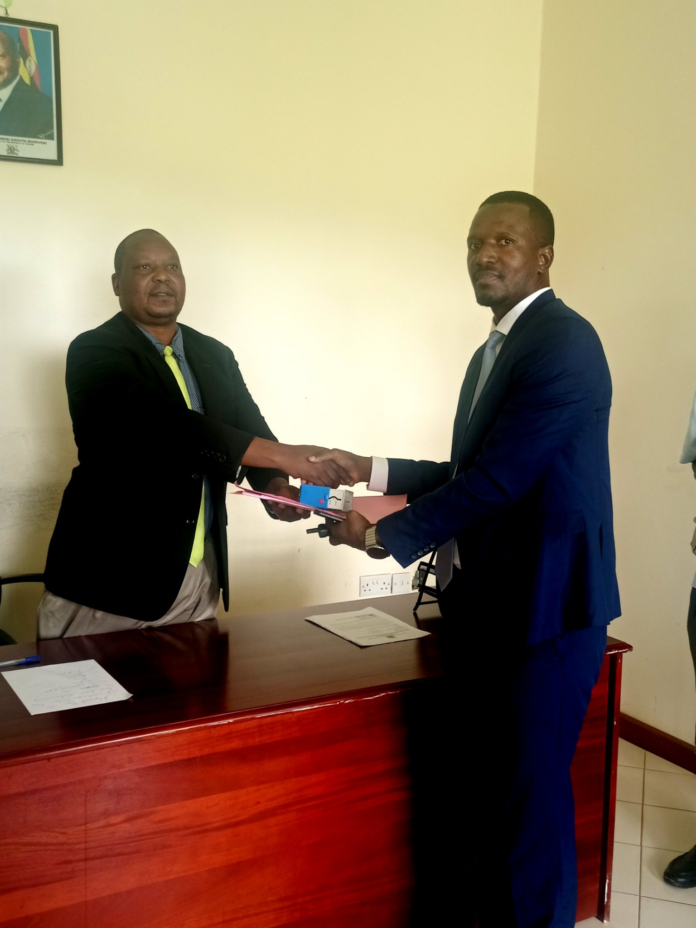
Signing the historic agreement are Godfrey Kuruhiira Akiiki, CAO of Buikwe District, center, and Gadi Yerushalmi, COO, CTI Africa, left, with Dr. Richard Bbosa, Buikwe District Health Officer, right.

CTI Africa Ltd has signed a far-reaching healthcare agreement with Buikwe District.

The agreement will transform the lives of all the district’s residents by implementing CTI’s ground-breaking LifeHealthTM software platform.

Speaking at the signing of the agreement, CTI’s CEO Dr. Michelle Barry said, “CTI will now be able to demonstrate the power of LifeHealth technology and innovation in a large-scale application. We are committed to a culturally relevant, effective, and sustainable model that bridges the gaps between technology and health, for those who have access to healthcare and those who don’t.” 

She noted that the Buikwe project will focus on the following areas:

  • Digitization of the district’s health informatics, which is currently paper-based and resource-intensive;
  • Unprecedented access to medical doctors for all 600,000 residents, through teleconsultation;
  • Giving each resident greater access to and control over their own medical records; 
  • Digital household health survey and mapping for higher precision in decision-making by the district’s health planners and providers;
  • Capacity-building for Village Health Teams (VHTs) through e-learning and scheduled training, to handle first-line intervention, such as taking vitals and first aid.

Following several months of public-private partnership strengthening, the agreement was signed on November 3, 2022, by Godfrey Kuruhiira Akiiki, the Chief Administrative Officer of Buikwe District, and Gadi Yerushalmi, the Chief Operating Officer of CTI Africa. 

Dr. Richard Bbosa, the Buikwe District Health Officer, who witnessed the signing, said “We are very excited to be collaborating with CTI/LifeHealth and bringing the future of healthcare to our people. The success of this initiative is imperative as we lead the country and Africa in deploying world-class digital innovation in the health sector. It’s like we are creating Wakanda for real!”

Michael Landau, founder and Executive Chairman of CTI, thanked the leadership of Buikwe for partnering with CTI-Life Health.

 “As we empower and enhance the lives of the citizens and support the government of Buikwe. Our goal is to improve lives and communities though our innovative healthcare solutions.” he said.

The project will be phased in over the next 12 months, with the program’s modular design ensuring scalability and replication in this and other large-scale initiatives.

CTI’s mission is to bring public and private institutions together with governments to unlock synergies that empower communities and build stronger nations. Their divisions include LifeHealthTM, LifeGrowTM, LifePayTM, and LifeDataTM.

Stories Continues after ad