Stanbic Bank
Stanbic Bank
18.8 C
Kampala
Stanbic Bank
Stanbic Bank
Home Blog Page 488

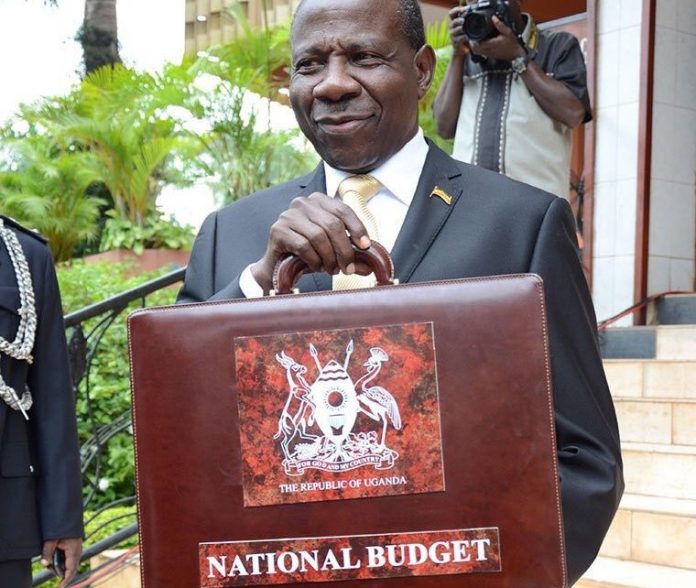
Uganda seeks to borrow €500 million from Eurobond to fund National Budget

Finance Minister, Matia Kasaija.

The Government of Uganda is seeking to borrow 500 million euros (about Shs2 trillion) to fund its budget through international creditors, including a Eurobond.

The proposed borrowing is likely to stoke fresh concern over Uganda’s ability to repay its rapidly expanding debt.

As a percentage of gross domestic product, public debt is now just short of 50%, finance ministry data shows, and the World Bank warned in June that Uganda needed to reign in ballooning public debt.

According to a letter written by Finance Minister Matia Kasaija, the government is inviting possible lenders to structure medium-term and long-term financing, including a possible Eurobond issue.

“Government is, therefore, seeking financing partners to structure medium-term and long-term financing, using all available financing options including the eurobond,” Kasaija said in the letter.

The minister added, “the credit proposals should have minimum 10-year terms and must be submitted by Nov. 18.” 

A Eurobond is a debt instrument that’s denominated in a currency other than the home currency of the country or market in which it is issued.

Uganda in 2014 considered eurobonds for government funding but later abandoned the idea, saying it was costly and opted for credit from low-interest bilateral lenders such as China.

The then Bank of Uganda governor Emmanuel Tumusiime-Mutebile (Late) said Uganda would use concessional loans for its development because the lending rates are lower and the loans are usually accompanied by grants of up to a quarter of the borrowed amount.

“We should not be complacent about the dangers of big projects built on sovereign debt because it would be unwise for African countries, which will never again get debt relief. From what we are seeing in Ghana, we are not yet ready to issue sovereign bonds,” Mr Mutebile said.

Stories Continues after ad

Housing Finance Bank answers the frequently answered questions about their Bwepwa Account Opening campaign

Head Mortgages & Consumer Banking, Mr. John B. Kaweesi

This interview with John B. Kaweesi, Head Mortgages & Consumer Banking, highlights Housing Finance Bank’s Remote Account Opening BwePwa, the latest addition to their digital innovations in line with the strategy to drive customer experience through operational efficiency.

Tell us about this Digital Account Opening

The HFB Mobile Banking App is a self-service platform which enables customers to send and receive money, track bank account activity, pay bills, load airtime and now, open a Housing Finance Bank account without visiting the branch. This offers the customer a faster, more convenient way to start banking with Housing Finance Bank, hence the name “Bwepwa”. The app can be downloaded from app store on any smartphone and is available for both new and existing customers.

Why Remote Account Opening Bwepwa?

We are ever improving our customers’ banking experience. This is yet another stride on this journey through the launch of our new account opening service. Customers can now open an account with us from wherever they are, whenever they want by simply downloading the HFB Mobile Banking App

How do I open an account online?

To get started, you need to download the HFB mobile app via the Google play store /IOS app store, open the app, and select the account opening option. You will need to have a valid National ID and phone number as one of the key requirements for this process.

How many accounts can I open online at one time?

You can open one account type at each submission

How can I make my initial deposit to keep my account active?

You can deposit the money by using the options listed below

  • HFB and ABC Agent banking                      
  • Mobile money
  • Funds transfers (EFT, RTGS &TT)
  • Money remittances
  • HFB Branch network.

What can I expect after my account is opened online?

It takes approximately 5 minutes to complete and submit a request which will be subjected to internal assessments. Your account number will then be sent via SMS.

One will be requested to collect their MasterCard from any of our nearest branches at should they require one.

Whom do I contact if I need help?

If you need any help, call us on 0800211082, send us WhatsApp on 0771888755, or visit any of our nearest branch.

What does the future look like for Housing Finance Bank?

Our strategy is consistent with that our customers’ preference, aspirations, convenience, and financial independence. This is achieved through initiatives like this one which increases the uptake of the financial services. We foresee an empowered Ugandan that has access to an array of banking and financial options that will foster financial independence.

Stories Continues after ad

URA grants special treatment to 24 tax-compliant firms

URA CG John Musinguzi Rujoki

Twenty-four companies have been chosen to receive preferential treatment when clearing their goods at Customs, after they exhibited high levels of compliance in their tax obligations.

During the engagement held at Speke Resort Munyonyo, URA customs audit officer, Mr James Malinzi noted that under Authorized Economic Operator (AEO), the companies will now enjoy fast clearance of their goods through simplified procedures and reduced inspection.

These companies join ninety-two others chosen earlier for the same treatment. The total of AEOs is now 118, 58 of these are agents, 60 are importers and exporters, 18 do self-management of their bonds and 31 are regionally recognized AEOs.

“Please encourage your clients to join the program because the more players in the AEO Program, the more benefits you will have. We are also revamping the area of the benefit scheme that is responsive, effective and makes URA accountable to you our clients,” Malinzi said of the improved benefits of the AEO programme.

An AEO is a company highly trusted by the revenue body-that even with less surveillance, such a company is expected to assess itself and willfully pay taxes. The companies are also able to self-regulate, self-assess and also work seamlessly with URA in regards to their operations with URA.  

AEO is a regional trade facilitation programme recommended by the World Customs Organization (WCO) to ease trade and customs clearance for tax-compliant importers and exporters.

The Commissioner General, Mr John Rujoki Musinguzi on the other hand thanked the AEOs for their contribution towards Uganda’s growing economy. He noted that in the FY 2021/22, AEOs contributed Shs 3.594 trillion which was approximately 42% of the total Customs revenue of Shs 8.444 trillion

“We have 118 AEOs who are responsible for more than 41% of the volumes of our international trade operations. This means that over 41% of our supply chain operations are handled by low-risk and reliable operators who benefit from managing themselves under the program,” CG emphasized on the role of the AEO.

URA’s Commissioner Customs, Abel Kagumire noted that nowadays, for one to qualify as an AEO, they must pass all URA compliance checks of Domestic taxes and Customs.

“In future, we are going to automate most of our processes and so we may add I.T as another stage of clearance before accreditation, Kagumire said.

He also encouraged representatives of successful companies to embrace The Electronic Fiscal Receipting and Invoicing Solution (EFRIS), an initiative that was introduced by the Government to improve business efficiencies and reduce the cost of compliance through improved record keeping.

Jaffer Abdallah one of the panelists during the engagement advocated for additional benefits for the AEOs to include; special treatment during banking, access to other government agencies and clearance at the airport.

“We need to have badges recognize us as AEOs and we can use them in places like banks and at the airport to avoid delays,” Jaffer boasted of how prestigious the AEO status is.

Stories Continues after ad

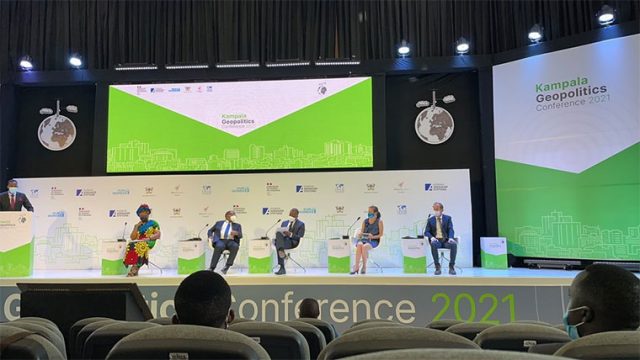
Kampala Geopolitics Conference 2022 set for tomorrow

Kampala-geopolitics-conference-2021

All is set for the 5th edition of the Kampala Geo-Politics conference that is slated to take place tomorrow on Tuesday 15th to 16th November 2022.

The conference that is organised by Knorad Adenauer-Stiftung in partnership with the French Embassy in Uganda, Makerere University, UN Women, Alliance Française Kampala and the Institut de Relations Internationales et Stratégiques (IRIS) will turn under the theme “Bringing International Debates to the African continent”.

Happening for the 5th time in Uganda, the Kampala Geopolitics conference was inspired by the “Geopolitics of Nantes” in France, a two-day academic public event that aims at discussing current geopolitical questions and trends.

According to the event’s organisers, the conference will be held at the Yusuf Lule Central Teaching facility auditorium located along the swimming pool road at Makerere University.

Over the past four years, the conference has tackled topics and trends affecting Ugandans living in the Kampala Metropolitan area, bringing discussions about how Ugandans can borrow a leaf from developed countries to better the city and the country at large.

This year’s conference will offer an interactive platform for dialogue and free exchange on contemporary, regional and international debates to move global debates to an African stage.

Experts from Uganda and the African continent will be joined by international researchers to engage in participatory and documented debates on global topics.

It is expected to host 14 roundtables with experts from Uganda, Africa and International researchers to engage on a variety of topics relating to global challenges, security, regional trends, sustainable development, sport, culture and society.

The conference will also include a series of Twitter spaces to extend the dialogue and debates beyond just the panelists to include the general public as well.

The two-day event will also feature a number of other activities including cultural performances, exhibitions, media training and a networking event.

Stories Continues after ad

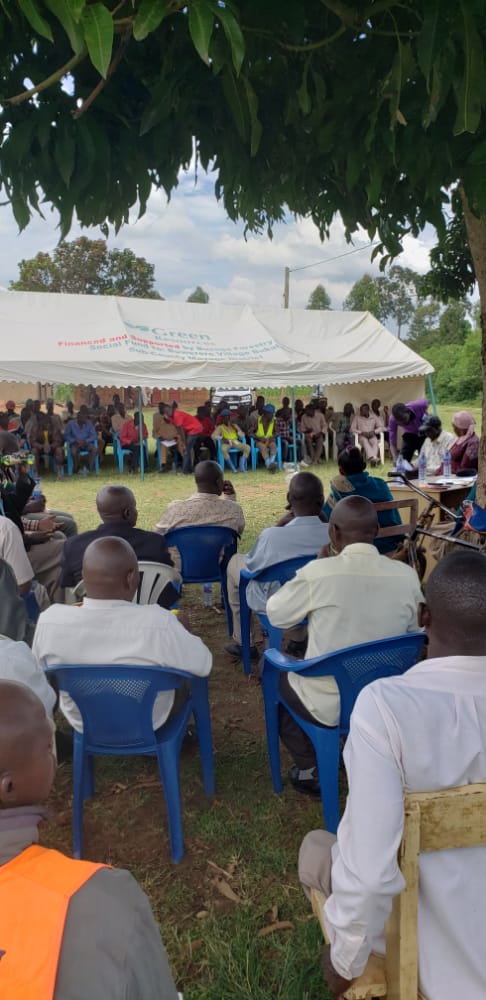
Mayuge Deputy RDC orders Busoga Forestry Company to return impounded motorcycles to owners

Busoga Forestry Company (BFC) has been given 48 hours within they must release all the motorcycles they impounded from the locals and parked them at their offices. 

The company has also been ordered to stop from carrying out operations without the involvement of the police. 

The order has been issued by Mayuge Deputy RDC , Trevor Solomon Baleke during a joint meeting of the BFC officials, Local leaders and residents neighboring the forest in Bukatube held at the sub county headquarters. 

“Our OC is here,” said Baleke while intruding the OC Bukatube to BFC officials and added “report all your grievances to her other than illegally holding people’s items because you feel they have offended you.”

“You cannot be the investigator,  State Attorney and  judge in a case where you are the complainant. I know our people sometimes make mistakes here and there but please report them to police. I don’t want to hear again that you have tortured our people,” said Baleke.

Baleke advised the BFC and the local communities neighboring the forest to value one another and coexist “because each one of you, need the other.”

The Deputy RDC made the remarks following several complaints of torture, extortion and importing of motorcycles reported by a section of residents who turned up for the meeting.

Some pinned the BFC enforcement team of carrying out illegal night operations in which they impound their motorcycles and bicycles and destruction of their food crops.

“They charge us between Shs80,000 and Shs200,000 should they find your goat grazing around the forest,” reported Jackson Basalirwa a resident of Kadaala village.

Fredrick Muwanika a resident of Buwolomera pinned BFC for torture. He cited an incident in which an elderly man was assaulted by BFC enforcement team to an extent of being unable to walk because his limbs were severely injured.

“This old man is still bedridden,” he said.

The new BFC Manager, Arthur Nanguyo apologized to the community and promised to prevail over his errant staff.

“We are very sorry. I apologize to you for all these incidents you have reported. And before the [Deputy] RDC, I promise that we are going to change,” he said.

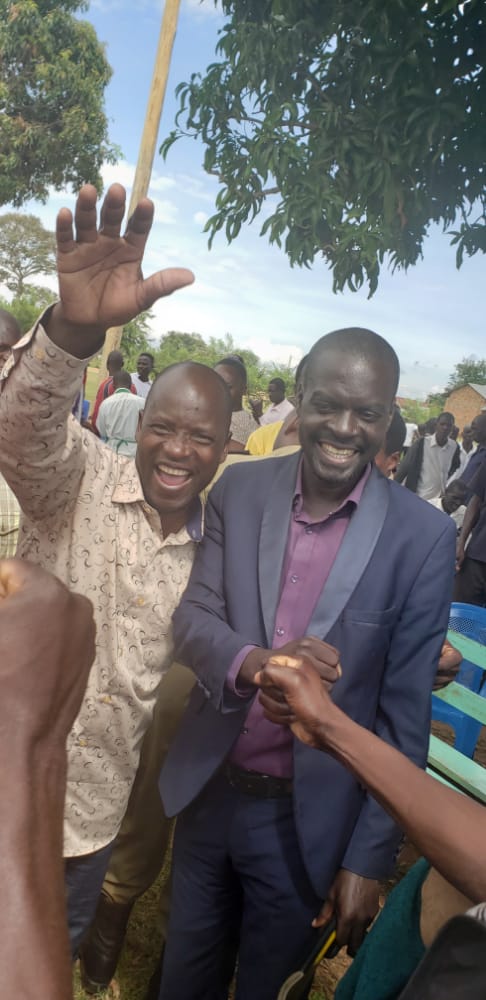
The locals thanked the Deputy RDC for paying attention to their problems.

Stories Continues after ad

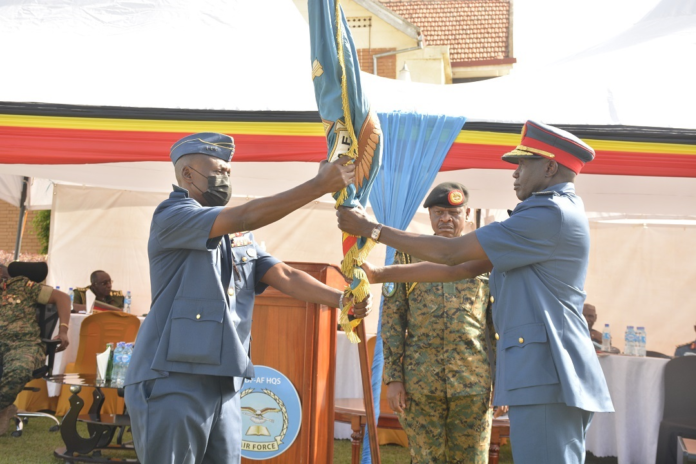
Lt Gen Lutaaya hands over Airforce office to Lt Gen Charles OKidi

Lt. Gen Lutaaya (left) hands over office to Lt.Gen Charles OKidi

The outgoing Commander Air Force Lt Gen Charles Lutaaya has handed over office of Uganda Peoples’ Defence Force – Air Force (UPDF-AF) command and control to the incoming Commander Lt Gen Charles Okidi at a ceremony held at Air Force headquarters, Entebbe.

Addressing the guests at the handover/takeover ceremony, the Chief of Defence Forces Gen Wilson Mbasu Mbadi thanked Lt Gen Lutaaya for being a selfless, loyal and dedicated officer. He congratulated and urged Lt Gen Lutaaya’s successor, Lt Gen Charles Okidi to make the Air Force better than what he had taken over.  “Enhance capacity through training but also work as a team because it is the only way you can achieve more”, Gen Mbadi cautioned the incoming commander.

The outgoing Commander Lt Gen Charles Lutaaya highlighted some of the achievements registered during his tenure of office. These included constructing and renovating a host of housing units to cater for the force’s accommodation by 2023, training of the force which has enhanced capacity building, repairing Aircrafts among other achievements. He thanked the Commander in Chief and the entire UPDF leadership for giving him the opportunity to serve under the Air Force for over 6 years. He wished the incoming commander who was hitherto his deputy the best of luck.

In his acceptance speech, the incoming commander Lt Gen Charles Okidi thanked His Excellency the President and the Commander in Chief of the UPDF for appointing him Commander Air Force. He pledged teamwork and accountability. “If you want to go fast, go alone, if you want to go far go with others. We can only achieve more through teamwork”, Lt Gen Okidi advised.  He then handed over the office of Deputy Commander to Brig Gen Kiggundu who had also just been promoted and appointed into the office of Deputy Commander Air force.

The handover/take over ceremony was attended by the UPDF Joint Chief of Staff Maj Gen Leopold Kyanda, the Chief of Logistics and Engineering Brig Gen Charles Bakahumura, the Chief of Personnel and Administration Brig Gen Sebugwawo, among others.

Stories Continues after ad

Shilling trades within a narrow range as dollar loses ground

Uganda shilling notes

The shilling continued to trade within a narrow range during the week opening Monday’s session at the 3780/3790 levels and trading marginally stronger at the 3770/3780 on Friday morning.

Inflows continue to trickle in from non-governmental organisations(NGOs), exporters and other sectors, with limited pockets of corporate demand as buyers watch for any further shilling strength to meet their requirements.

Catherine Kijjagulwe, Head of Trading at Absa Bank Uganda said the unit is anticipated to maintain trading within a range in the short term buoying within the 3750 – 3830 levels. The market waits to see if inflows will remain healthy as we draw close to the year-end festivities and if the 3750 psychological level will be breached eventually.

“Money Markets were fairly liquid during the week with overnight yields trading between the 9.00% and 11.00% levels. The mid-month tax cycle should start this week and may slightly impact the short-term Money Markets,” she said.

Bank of Uganda held a Shs285 billion Treasury Bill auction on Wednesday and the 91-day, 182-day and 364-day tenors cleared at averages of 11.498%,13.551% and 15.503% respectively. There is no government securities auction scheduled this week the next Treasury Bill auction is scheduled for Wednesday 23rd November 2022 and a 5-year and 20-year Treasury Bond auction on Wednesday 30th November 2022.

There is continued demand for dollars in the Kenyan market against a thin supply, the Kenya shilling remains weak overall trading within the 121.00-126.00 trading range.

She said the dollar lost some ground during Thursday’s session after the release of a softer-than-anticipated inflation print of 7.7% and core CPI print of 0.4% further reaffirming that the Fed may slow down with its aggressive rate hikes in the short term.

Euro strengthened on the back of dollar weakness touching highs of $1.0221 (Shs 3778) during the session and closing Thursday’s session at $1.0208 (Shs 3773).

The Pound followed suit and also strengthened to touch highs of $1.1730 (Shs 4336) during Thursday’s session.

Oil prices were also marginally higher on Thursday due to a weak dollar they had dipped earlier during the week due to some stockpiles in the US and reduced optimism that the China economy will fully reopen soon. Brent Crude traded at $95.93 (Shs 354610) a barrel and West Texas Intermediate traded at $88.64 (Shs 327662) a barrel.

Gold traded at $1761.81 (Shs 6.5million) an ounce.

Stories Continues after ad

Royal Mabati operations manager remanded over defrauding customer of Shs4.48m

The country Operations Manager for Royal Mabati, a steel manufacturing company, has been remanded for allegedly defrauding a customer of Shs4.48 million.

Esther Wanjugu is accused of failing to deliver the iron sheets to Mr Mercilus Opio Katandi for which he had deposited the money with the company.

Wanjugu appeared before Senior Principal Magistrate Esther Nakirya on Wednesday, November 9, 2022, and was charged with obtaining money by false pretence. She was then remanded to Luzira prison until November 22.

According to court documents, Mr Katandi, who is the operations and marketing manager of Kampala Media Limited, the owners of the Kampala Report, a news website, deposited Shs4.48 million with Royal Mabati in November 2020.

The money was for buying iron sheets at a later stage after starting on the construction of his house.

“At the time of payment, I told them I had not yet done the foundation, so I would come back and issue instructions to make the iron sheets, which they agreed to,” Mr Katandi said.

He adds that in October this year, when he went to the company to place an order for the iron sheets, the Country’s Operations Manager, Wanjugu, said this was not possible and that he should take her to court.

“The Country’s Operations Manager told me they can’t give me mabati because they had made it already and people in the stores sold it. I told her to put it in writing,” Mr Katandi’s affidavit adds.

He said the manager tossed him for a week and later told him that she was advised by her lawyers not to write a commitment letter.

“So, I went to Jinja Road Police station and lodged a complaint. Two officers escorted me to Royal Mabati and she told them to take her to court. So a case of obtaining money with false pretence was opened,” court documents quoting Mr Katandi add.

Wanjugu was summoned on October 18 to report to police but she didn’t. She was later detained by police.

On 1st November, she was given a police bond after she and her lawyers promised to discuss a payment option with Mr Katandi on November 3.

Police asked her to report to the station on Monday, November 6. But Wanjugu returned to the police, she told the officer that she had resolved to go to court.

She was asked to report on November 9. When she appeared in court, she was remanded to Luzira Prison until November 22.

Stories Continues after ad

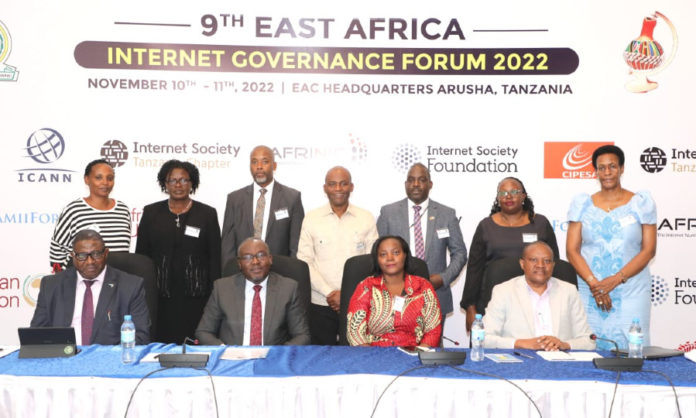
ICT experts in East Africa urged to develop locally relevant content and software

At the 9th East Africa Internet Governance Forum at the EAC Headquarters in Arusha, Tanzania.

Information, Communication and Technology (ICT) experts in East Africa have been called upon to develop locally relevant content, applications and services so as to make ICT meaningful in the daily lives and operations of people and organisations in the region. 

Tanzania’s Minister for ICT, Mr. Nape Moses Nnauye, said that to make ICT relevant in socio-economic development programmes in the region, ICT experts should develop locally relevant content and applications for diverse sectors including education, healthcare, environment, agriculture, products that are useful to local communities. 

“This could also mean locally relevant applications such as software or computerised systems that present end-user solutions,” said Mr. Nnauye. 

In a speech read on his behalf by the Arusha Regional Commission, Mr. John Mongella, during the opening of the 9th East Africa Internet Governance Forum at the EAC Headquarters in Arusha, Tanzania, singled out government information and services provided to citizens as a good example of local content that can be adapted for widespread distribution through the electronic environment as e-government services evolve. 

“Locally relevant content can also be information about basic healthcare such as disease outbreaks, which can be effectively broadcast by using different technologies such as radio, television or mobile telephony, particularly in rural areas of developing countries where in most cases there are limited medical facilities,” said Mr. Nnauye.  

“As individuals use ICTs for different communication purposes, ranging from communicating with family, business colleagues, or customers, this can be a significant aspect to further encourage new users of ICT,” added the Minister.

The Minister observed that irrespective of the relevance of the content, application, or service, its availability in local languages was critical if ICT is to be relevant and useful to the communities and groups targeted by ICT projects and/or policies.  

Mr. Nnauye said that ICT policies highlight a nation’s ambitions in the use of ICTs as a tool for better livelihoods, peace and security, good governance, education as well as an economy with a competitive advantage in the global market.  

“The potential of ICTs in economic development requires building an ‘enterprise ecosystem’ that offers ‘end to end solutions’ for the poor,” he added. 

Speaking at the forum, the EAC Deputy Secretary General in charge of Planning and Infrastructure, Eng. Steven Mlote, said that the EAC Secretariat was working with the Partner States to promote the establishment of communication infrastructure and services, as well as the standardisation of technologies and services in the region. 

“The EAC has worked closely with the Partner States in the development of National ICT policies, and efforts are ongoing towards the harmonisation of ICT policies, laws and regulations among the EAC Partner States. The region has also continued to promote ICT as a priority investment sector,” said Eng. Mlote. 

Eng. Mlote disclosed that the EAC Vision 2050 had set a target to attain 95% penetration of Internet and mobile networks in the region, and 67% of individuals in East Africa using the Internet by the year 2050.  

“To reach these targets, the EAC has set out to build and implement ICT development programmes that are consistent with national, regional and international aspirations and commitments. The programmes will seek to attain universal access to communication infrastructure and services; ensure availability of rich and diverse ICT content and applications; and build competence, confidence and security in the information society,” said Eng. Mlote. 

“With such aspirations, we shall therefore work towards reducing the cost and increasing the robustness of cross-border communications; narrowing the divide digital; and expanding digital connectivity across our region,” added the Deputy Secretary General. 

Eng. Mlote urged the participants at the forum to critically look into the Internet Governance issues relevant to the region and put in place a coordinated approach to address issues concerning the Information Society and Knowledge Management in the region.  

Also present at the event were: Members of Parliament from Tanzania and Uganda; Uganda’s High Commissioner to Tanzania, Amb. Anne Katusiime; Mr. Pierre Dandjinou, the Vice President, Global Stakeholder Engagement – Africa, ICANN; Ms. Anja Gengo, NRI Initiative Coordinator, UN Internet Governance Forum; Mr. Adil Suleiman, Senior Policy Officer, Infrastructure and Energy Department, African Union, Dr. Ally Simba, Executive Secretary, East Africa Communications Organisation, and; heads of private sector organisations.

Stories Continues after ad

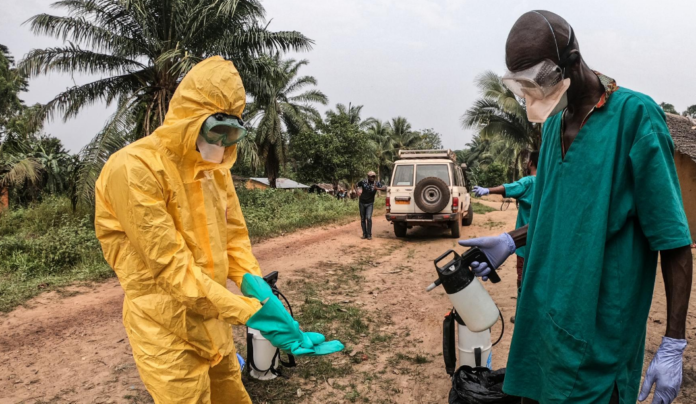
Over 130 cases of Sudan Ebola virus disease confirmed since outbreak

Health partners visiting Ebola-affected areas

From when the outbreak was declared on 20 September until 7 November, a total of 136 confirmed cases, 21 probable cases, and 53 confirmed deaths (CFR 38.9%) from Ebola disease caused by the Sudan ebolavirus (SUDV) have been reported, representing an increase of 18% and 66% respectively since the last 28 October 2022.

At least 21 probable deaths have been also reported since the beginning of the outbreak, with the last probable death notified on 29 September. Three additional cases and three additional deaths have been reported among healthcare workers since 28 October, resulting in a total of 18 cases and seven deaths among these workers.

Since 28 October 2022, one newly affected district has been reported (Masaka), leading to a total of eight districts reporting cases. The most affected district remains Mubende with 63 (46%) confirmed cases and 29 (55%) confirmed deaths, followed by Kassanda with 46 (34%) confirmed cases and 19 (36%) confirmed deaths. Two districts, Bunyangabu and Kagadi, have not reported cases for more than 40 days.

As of 7 November, a total of 1386 contacts in seven districts are currently under surveillance, with a follow-up rate of 92%. In the week commencing 31 October, an average of 1586 contacts were followed up daily, a decrease of 16% from the previous week (week commencing 24 October) when a daily average of 1896 contacts were followed up. A total of 34 contacts developed symptoms during the past week. Since the beginning of the outbreak, 3867 contacts have been registered, of which 2237 (68%) have completed the 21-day follow-up period.

As of 7 November, at least 2835 alerts have been received at a daily average of 71 alerts. Approximately 94% (2671) of all alerts received were investigated within 24 hours, of which 1120 were validated as suspected cases. The proportion of alerts investigated within 24 hours has been steadily increasing, and in the week commencing 31 October, nearly all alerts (657/659) were investigated within 24 hours, of which 31% (203) were validated as suspected cases.

Since the beginning of the outbreak, a total of 2139 samples were collected (suspects, repeat samples, swabs), of which 419 in the week commencing on 31 October (+11% increase as compared to the previous week when 377 samples were collected and tested).

Public health response

Partners in the Global Outbreak Alert and Response Network (GOARN) have deployed staff to support the response activities in Uganda, primarily for case management, infection prevention and control and WASH, epidemiology and surveillance, laboratory, Risk Communication and Community Engagement (RCCE) and Safe and. Dignified Burials (SDBs).

Preparedness and operational readiness in neighboring countries

The Ministry of Health in the six neighboring countries (Burundi, the Democratic Republic of the Congo, Kenya, Rwanda, South Sudan, and the United Republic of Tanzania), in-country and international partners, and WHO are supporting SUDV readiness actions. These include the activation of multi-sectoral coordination mechanisms for SUDV; refresher training of rapid response teams; refresher laboratory training; infection prevention and control at health care facilities; activation/strengthening of surveillance systems for SUDV; community engagement and risk communication; screenings at points of entry (PoE) and assessment and reinforcement of case management capacities, among other activities.

Countries are requested to cascade the operational readiness activities to sub-national levels in high-risk districts/states to stop the introduction of SUDV into their communities. A new online preparedness assessment tool has been developed to measure key performance indicators to quantify and document the functionality of preparedness capacities in multiple high-risk districts in Uganda and six countries neighboring Uganda to facilitate real-time monitoring of the actual readiness status.

In addition, external stakeholders in these six countries will jointly assess preparedness. The Joint Assessment Missions (JAM) will evaluate preparedness at the national level as well as in high-risk subnational-level districts/states. The JAM reports will provide a detailed picture of preparedness capacities in all pillars and in all subnational areas that are at risk.

WHO risk assessment

On 1 November 2022, WHO revised the risk assessment for this event from high to very high at the national level, and from low to high at the regional level, while the risk remained low at the global level.

The estimated very high risk at the national level is based on a combination of several factors including the lack of licensed medical countermeasures; the late detection of the SUDV outbreak and its spread to multiple districts (including to larger cities like Kampala, with a population of more than four million people and travel connections to many neighboring countries); a highly mobile population with reports of some high-risk contacts and symptomatic cases traveling between districts using public transportation; despite significant case-finding efforts, there is a possibility that some contacts may have been missed; reported challenges with community engagement in affected districts; many cases have presented at various health facilities with suboptimal infection prevention and control (IPC) practices.

The current outbreak is the first outbreak of Sudan ebolavirus in Uganda since 2012. Uganda has developed an increased capacity to respond to Ebola outbreaks over recent years and has a local capacity mobilized and organized with available resources to provide a robust response, but the system could be overwhelmed if the number of cases continues to rise and the outbreak spreads to other densely populated districts, as the country is simultaneously responding to multiple emergencies including outbreaks of anthrax, COVID-19, Crimean-Congo Haemorrhagic Fever, Rift Valley fever and yellow fever, as well as prevailing food insecurity.

At the regional level, the risk has been assessed as high due to the lack of licensed vaccines and therapeutics, mass population movements within and across neighboring countries, along with weak cross-border surveillance that further amplifies the risk of disease spread, and health systems that respond to multiple emergencies.

The risk will be continuously assessed based on available and shared information.

WHO advice

Successful SUDV outbreak control relies on applying a package of interventions, including clinical management, community engagement, surveillance and contact tracing, and strengthening laboratory capacity.

Implementation of IPC measures in health care (e.g., hand hygiene, training of health workers, adequate personal protective equipment (PPE) supplies, waste management, environmental cleaning, and disinfection etc.) with ongoing monitoring and supervision for implementation is required to reduce risks of health care facilities amplifying the outbreak. Ensuring the provision of safe and dignified burials, supporting IPC in community settings (including adequate WASH facilities, hand hygiene capacity and safe waste management) and community engagement and social mobilization are essential to prevent and mitigate ongoing transmission.

Upon case identification, early initiation of supportive treatment has been shown to significantly reduce deaths from SUDV.

Establishing active surveillance at points of entry is an essential component of the outbreak response to mitigate the risk of international spread due to the high cross-border mobility between Uganda and neighboring countries.

WHO advises against any restrictions on travel and/or trade to Uganda based on available information for the current outbreak.

Stories Continues after ad