Stanbic Bank
Stanbic Bank
18.8 C
Kampala
Stanbic Bank
Stanbic Bank
Home Blog Page 506

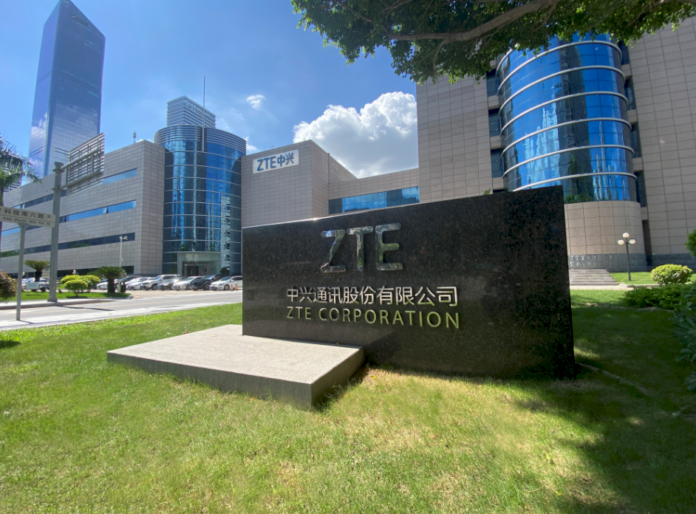
ZTE’s Wang Quan: Private 5G Network is Accelerating Global Digital Innovation

During the global 5G network commercialization, 5G private network has been widely recognized as the most effective mobile network service. According to the Private Mobile Networks Member Report provided by GSA, about 889 organizations all over the world have deployed private LTE/5G networks in 70 countries and territories, and 140 private networks have been deployed in the first half of 2022. Manufacturing is the industry that deploys the most private networks, followed by education, power utilities, and mining.

5G technology continues to evolve from “usable” to “efficient”. On the one hand, NPN, 5G and positioning, big data, edge computing, cloud computing, artificial intelligence, and other new technologies keep convergence and innovations. On the other hand, automation technologies, virtual private networks, independent private networks, uplink enhancement, 5G LAN, TSN and other 5G technologies that meet specific industry requirements are also gradually mature. These technologies build a solid foundation for 5G industry applications.

Since different vertical industries and users have different kinds of network requirements, including coverage, latency, bandwidth, security and reliability, private network services have huge market potentials. However, how can telecom operators break into this market? How to provide flexible and diversified services to meet the needs of industrial sites? How to reduce the construction costs of 5G private networks? How to develop in parallel with 5G ToC network? From this, Mr. Wang Quan, Vice President of ZTE, claimed at the 2022 5G Summit & User Congress, facing the booming 5G application requirements and great challenges, ZTE has launched a full series of iCube private network products and three highly bespoke private network scenarios. The “1+3” solution enables operators to provide private 5G as a service and release powerful 5G driving force.

All-in One iCube Private Network Products

ZTE launches All-in-One iCube 2.0 private network products to meet the diversified scenario requirements, enabling operators to provide private 5G  network as a service, and building a new 5G digital infrastructure with ultra-low costs, physical isolation, security and reliability, and continuous evolution for industries. Oriented to group-level applications, the full-capability 5GC can be deployed to provide complete network functions and cloudified features. The headquarters of group can manage branches in a unified manner. This solution has been implemented and launched in multiple large steel groups. For industrial campus applications, the standard i5GC can be deployed, and the 20Gbps forwarding capability can be provided by only two rack servers. Furthermore, at this summit, ZTE launched the new Mini5GC for field-level industrial applications. Featuring ultra-small, ultra-light, ultra-simple networking, and ultra-high integration, which can flexibly meet the requirements for dedicated scenarios such as safe explosion protection, flexible workstation adjustment, and vehicle-mounted emergency rescue in mining areas.

Three Highly Bespoke Private Network Scenarios

Oriented to smart mining, ZTE launched a dual-engine private network, which extends the network from ground to underground. Relying on Mini5GC product, with a height of 1U and a size of A3, the equipment can be placed in an explosion-proof box. ZTE has obtained the explosion-proof certification for mining purposes, so that 5G networks can be deployed in mines. Even if the communication link between the mining and the ground is broken, the mining services are not affected. The mine private 5G network provides high bandwidth and low latency for underground services while ensuring ultra-high reliability. In addition to data services, mining applications also require voice calls and voice dispatching capabilities. The iIMS network capability is added to the original 5GC network, providing a dual-engine private network with “data and voice” services, and helping industry customers implement HD voice and video calls in the mining area. In addition, they can also interconnect with the third-party voice dispatching manufacturers. The dual-engine private 5G network is integrated into the mining system to accelerate the intelligent transformation of mines.

Oriented to the power grid, ZTE launches a wide area private network, from a local area to a wide area. With the UPF+ high-availability solution, when the local UPF is disconnected with the control plane of the public network, the emergency access capability of local services is provided through the built-in “emergency control plane”. Network slicing is used to build multi-campus distributed and fully interconnected wide area networks for the power field. Recently, ZTE, together with China Mobile and NARI, won the “Most Innovative Private Network Project” award at Network X 2022 held in Amsterdam, Netherlands for its 5G green grid solution.

Oriented to manufacturing, ZTE launched the ICE (Industrial Communication Engine) private network, integrating CT and OT technologies, gradually developing from production assistance to industrial site networks. For example, multiple applications such as unmanned crane, intelligent quality inspection and coordination of multiple AGVs have been widely implemented. The ICE private network integrates key technologies such as 5G LAN, TSN, and FRER to achieve high-precision clock synchronization, ultra-low delay and jitter, reliable network transmission, and end-to-end closed-loop coordination. Due to the advantages of no wiring, flexible deployment and mobility, ICE private networks are widely used in smart factories, smart steel and smart ports.

All the industries are accelerating the implementation of 5G application scenarios, and 5G empowerment effect is gradually unleashed. With the large-scale applications of 5G ToB, in addition to above-mentioned three typical scenarios, there are many other scenarios such as transportation and logistics, healthcare, education, and public administration. The private networks market is an important bellwether of the success of 5G in industry. To accelerate the construction of new infrastructure and achieve continuous development of 5G ToB, ZTE will work with more industry partners in the next 1~3 years to combine product innovations with business model innovations and launch more scenario-based private network products and solutions, so as to empower the high-quality development of the industry and accelerate the prosperity of the 5G industry.

Stories Continues after ad

5GC Private Network 2.0 Empowerment and Efficiency Improvement Boosts High-Quality Development of the Industry

At present, speeding up the construction of new infrastructure and industrial digitalization has become an important strategic development direction of China. As a typical representative of information infrastructure, 5G has been deployed for large-scale commercial use in the domestic ToC field, providing a new impetus for the digital transformation of economy and society. Thousands of industries are accelerating the implementation of 5G application scenarios. China’s 5G application innovation cases cover 22 important industries in the national economy. 5G network is accelerating the implementation in industrial manufacturing, mining, steel, port, medical care, and other fields. The 5G empowerment effect is becoming more obvious.

5G network is mainly oriented to three major fields: eMBB, URLLC, and mMTC. eMBB is mainly used in the preliminary stage of 5G private networks to provide basic connectivity and high-bandwidth services for consumers or industry customers. With deepening of 5G in thousands of industries, 5G private network will enter the 2.0 era. URLLC and mMTC will gradually become the main application scenarios in the 5G B2B private network field, and ultra-low latency, ultra-high reliability, and ultra-large connection features of network become necessary.

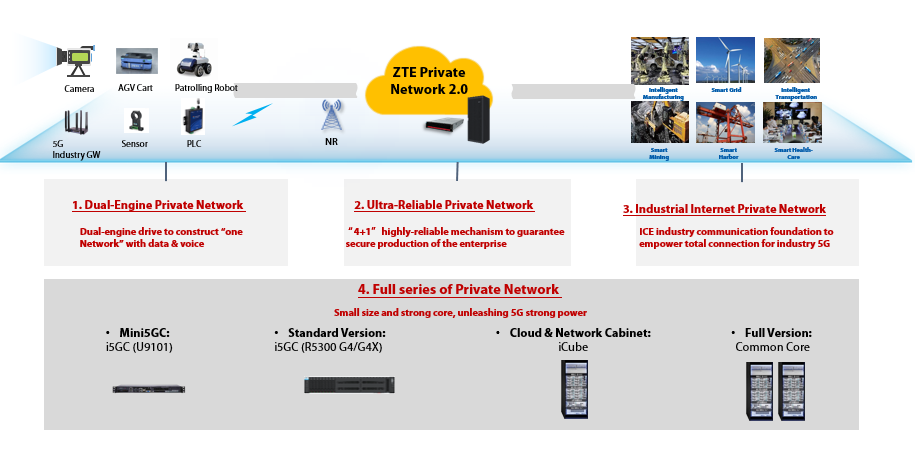
Oriented to the 14th Five-Year Plan for the development of digital economy, ZTE 5G core network evolves from a private network in the 1.0 era to a private network in the 2.0 era. ZTE launched the 5G core network 2.0 solution, providing a new cloud-network integrated 5G private network with ultra-low cost, physical isolation, security, and continuous evolution (see Figure 1). ZTE 5GC private network 2.0 focuses on four levels of innovation: Data & voice dual-engine private network, extreme reliability guarantee, ICE (Industrial Communication Engine, which is the industrial communication foundation), and a full-series of product systems, facilitating the high-quality development of these industries and continuously leading the digital transformation of them.

ZTE 5GC Private Network 2.0 Architecture

Dual-engine private network to construct a data & voice network

5G private network empowers industrial applications, not only for data services, but also for traditional voice services. In typical industrial scenarios such as coal mines, voice call and voice dispatching capabilities have become important parts of mine informatization.

Based on the industry 5G Core (i5GC) and industry IMS (iIMS) network capabilities, ZTE 5GC private-network 2.0 solution uses cloud cabinets to provide a “data and voice” dual-engine private network, and replicates ZTE’s experience in large-scale commercial VoNR in the B2C field to the B2B field.

This solution helps industry customers implement high-definition voice and video calls in mining areas, and fully implements the 5G network with full data and voice coverage. In addition, this solution can be interconnected with third-party voice dispatching vendors to fully integrate the 5G network into the private mine network and accelerate the intelligent upgrade and reconstruction of mines.

By deploying dedicated lightweight 5GC and IMS networks to private campuses (mining areas), the customer can use multiple kinds of terminals such as fixed and mobile terminals to make voice calls, and implement automatic/manual call distribution, and make other voice services for businesses. In addition, the private IMS can be interconnected with the operator’s public IMS to implement the interworking between private enterprise numbers and public phone numbers. Through the coordination between private network and public network, the advantages of private network can be given full play to provide enhanced voice capabilities.

To solve the problem that commercial terminals with Voice-Centric, which are widely used by industry customers, cannot access the network in the scenario where no IMS networks are deployed, ZTE launches the innovative AnyDevice solution. The P-CSCF component is built in i5GC to enhance the access engine and optimize the authentication logic, then industry customers can use any commercial terminal with Voice-Centric capability to access the B2B industry data private network without full IMS support, thus achieving zero-perception access, zero-hardware addition, and zero-terminal restriction, greatly enhancing the application scenarios of industrial private network.

Ultra-reliability private network to guarantee the security of the enterprise without worrying its production

As 5G goes deeper into the core services of enterprises, enterprises have higher requirements for the reliability of 5G network. According to the differentiated reliability requirements of the industry, the ZTE 5GC private network 2.0 takes the lead in grading the reliability of the industry private network, and provides the “4+1” high-reliability mechanism.

  • Level-1 reliability: Through the self-healing, rebirth, and migration mechanisms, local recovery is fast when a fault occurs. It is applicable to the scenario where service interruption requirements are not high.
  • Level-2 reliability: The 1+1 hardware redundancy mode is adopted, so there are no hardware single-point failure. The solution provides dual-networking with dual servers, switches, and firewalls, and dual-physical port backup. It is applicable to most private networks in the industry, and it is recommended for commercial deployment.
  • Level-3 reliability: 1+1 hot/backup mode and session-level synchronization. Services are not interrupted when a fault occurs. This mode is applicable to the industrial application scenarios where the core network has high reliability requirements.
  • Level-4 reliability: Through the introduction of dual-frequency 5G networks and end-to-end FRER (Frame Replication and Elimination for Reliability) technologies, providing mechanisms for the identification and duplication of frames to enable redundant transmissions, effectively reducing end-to-end latency, suppressing packet jitter, and improving end-to-end reliability. It is applicable to industrial application scenarios where end-to-end 5G systems have ultra-high reliability requirements.
  • Loading the lightweight control plane functions of core network in UPF: In the dedicated application scenarios of public network, UPFs have a built-in lightweight emergency control plane. When the link between campus network and public network is interrupted, local services are inertia, and terminals can be automatically connected to the emergency control plane and recover services quickly, so that network disconnection is not interrupted.

Determine the industry communication foundation to empower full-connection of the industry

To meet the latest industrial strategic requirements, a deterministic 5G network is the core capability of 5G private network in the industrial field. Traditional telecom networks are configured in best-effort forwarding modes. Both delay and jitter are uncertain, and determinism is a key factor in industrial connection design. Industrial control and automation applications often need to send and receive data at specific intervals, and once data is not delivered at a specified time, it will be considered abnormal, causing serious consequences.

Although the traditional industrial Ethernet has been widely used in the industrial Internet field, such as EtherCAT and PROFINET, there are many industrial Ethernet protocols, and the standards are confused. Different protocols cannot be interconnected, and it is difficult to form a unified standard in the industrial Internet field. TSN (Time Sensitive Networking) provides a unified solution for the 5G+ industrial Internet. The 5G TSN standard has been introduced by 3GPP R16, and is continuously enhanced in R17 and R18, laying the foundation for providing deterministic unified standards for industrial Internet.

ZTE 5GC private network 2.0 introduces the ICE industrial communication foundation oriented to industrial Internet. It provides a series of new architectures, new features, and network capabilities including hyperconvergence of Ethernet PDU sessions, 5G LAN, TSN, and wireless core network for 5G+ industrial Internet. It supports technologies such as high-precision clock synchronization, stream-defined forwarding models, and core network intelligent scheduling data forwarding and queue management to provide end-to-end deterministic latency jitter.

In October 2021, ZTE, China Mobile, and NR Electric jointly released the industry’s first end-to-end deterministic 5G TSN network at PT Expo China. This network can effectively solve the network jitter problem caused by the conflict between network delay and transmission conflict. By using the network slicing technology and the separated forwarding and control technology, the network fundamentally ensures reliable transmission and deterministic delay of the network, thereby ensuring secure and stable operation of the network. At Mobile World Congress in Barcelona in 2022, “Green Grid Solution Based on 5G TSN” won the Market Development Award from GTI Awards.

Full-series private network product system to release powerful 5G dynamic and power

ZTE provides four series of private core network products (Mini5GC, standard i5GC, iCube, and Common Core) from the Mini version to the full version, flexibly meeting the deployment requirements in different scenarios in different industries.

ZTE i5GC is an industry-oriented lightweight core network product. It can be deployed on the new-generation R5300 G4X server of ZTE. Only one G4X server can provide an independent 4G/5G-integrated lightweight core network, helping enterprises quickly build networks at low costs. Up to now, standard i5GC products based on the 5300 G4/G4X server series have been widely used in various industries, facilitating in-depth convergence and efficiency improvement of 5G and industries.

In order to meet the requirements of industrial site-level flexible networking, as well as the low power consumption and flameproof requirements of underground safety operations such as mines, ZTE released the Mini5GC product based on the U9101 server series in August 2022, which has the smallest size with the same performance in the industry. Mini5GC uses the cloud native container architecture, ultra-small chassis design, and plug-and-play technology. The power consumption of the entire system is lower than 100W. Mini5GC can be deployed in specific industry application scenarios with strict restrictions on dimensions, networking, and power consumption.

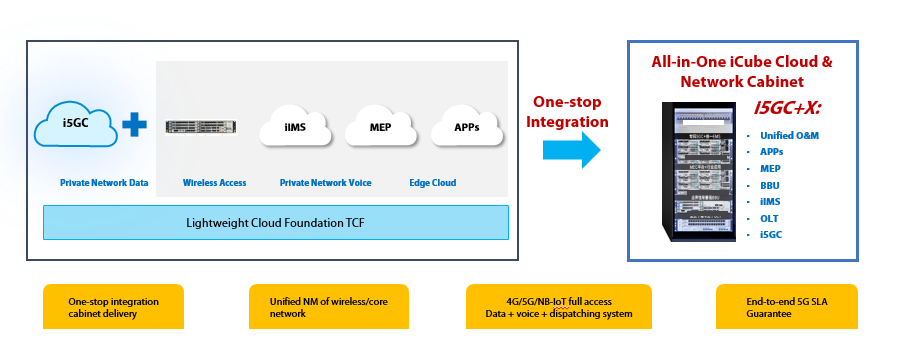
ZTE iCube cloud & network cabinet products are integrated with cloud, network, industry, and dimension in a one-stop mode. Based on the lightweight cloud foundation TCF, the cloud cabinets can be configured with i5GC, iIMS, BBUs, MEPs, OLTs, and preset typical applications as well as third-party APPs on demand. The cloud & network cabinets can be flexibly placed in enterprise campuses or mobile access equipment rooms to meet the “last mile” network connection and computing power requirements of industry customers such as mines, intelligent manufacturing, ports, and transportation (see Figure 2).

At Mobile World Congress 2022 in Barcelona, ZTE won the GTI Awards 2022 Innovative Mobile Service and Application Award and Excellence Award for its ZTE iCube 5G private network as a service solution, demonstrating its outstanding contribution to mobile service innovation, business model innovation, and sustainable development.

ZTE iCube 5G Cloud & Network Cabinet

ZTE’s full-version Common Core is designed for large-scale industrial campus. ZTE provides high-performance, full-featured, and highly secure standalone core networks for large-scale industries, meeting the requirements of industry application scenarios in complicated scenarios.

Conclusion

Along with deep development that 5G empowers industry, the industry urgently needs a new network that satisfies the characteristics of the industry. 5G evolves from a public network that provides basic connection capabilities to a new industry-dedicated core network that provides ultra-high bandwidth, deterministic latency jitter, ultra-high reliability, and ultra-simple local O&M. Under the guidance of China’s 14th Five-Year Plan and national 5G strategies, ZTE 5GC private network 2.0 solution continues to make contributions to the digital transformation of the industry.

Stories Continues after ad

Uganda, Kenya to hold tourism conference to boost intercountry exploration

Ambassador Paul Makubuya, the consul general of Uganda in Mombasa.

Uganda and Kenya are set to hold the first ever tourism conference with an aim of boosting intercountry exploration. It is scheduled to take place from 16th to 20th November in Mombasa accompanied by an exhibition.

According to ambassador Paul Makubuya, the consul general of Uganda in Mombasa, said the conference’s objective is to create synergies and complementarity between Uganda and Kenya coast tourism players, create awareness about the two destinations including the tourism packages they offer, explore the opportunities in joint marketing of tourism packages both countries have to offer and equip tourism players from both countries with firsthand experience.

“The tourism conference, exhibition and fam trip between Kenya and Uganda is intended to create synergies and complementarity explore tourism opportunities in both countries through joint marketing strategies, partnerships, linkages and tap into the employment opportunities in the tourism and travel industries for both countries,” Makubuya said.

He added, “these interventions will strengthen synergies, networks and diversity to maximise the tourism potential of both Uganda and coastal Kenya, thus development of regional and domestic connectivity which will in the long run attract large numbers of tourists.”

The tourism conference is being organised by the Uganda consulate in Mombasa Kenya, Uganda Tourism Board, Uganda Wildlife Authority, Uganda Airlines, the Private Sector Foundation of Uganda, Kenya Tourism Board, Kenya Coast Tourism Association and the counties of Mombasa, Kwale and Kilifi.

Stories Continues after ad

How MTN Kampala Marathon is nurturing Uganda’s athletic sport

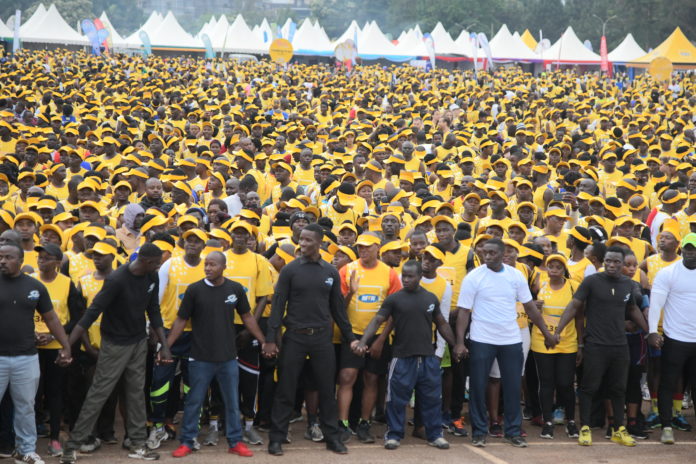
Participants at the MTN Kampala marathon

The MTN Kampala Marathon is one of the most famous races attracting thousands of participants across East Africa. On November 20, as many as 20,000 runners will head to Kololo Independence Grounds again. From there, some will run or jog a maximum of 42 kilometres of the marathon on the city roads.

This will be the 17 th edition of the MTN Kampala Marathon following a two-year break due to the coronavirus pandemic. And, whereas the marathon is celebrated for its charity, it has also provided a platform for talent identification for aspiring athletes so much so that Uganda is emerging as a strong competitor in athletics on the international stage, taking on Kenya and Ethiopia which have dominated the marathons for decades in East Africa.

Uganda Athletics Federation president, Dominic Otuchet, said in an interview that MTN Kampala Marathon has enabled local aspiring athletes to not only test themselves beside the elite athletes but also provided them with exposure to stakeholders in athletics to boost their chances to participate in international marathons.

“As it has been in the past, we are hoping that this marathon will see some of our aspiring athletes get signatures with international managers interested to promote their sport on the international scene,” he said.

“And, it is for that reason that we normally invite international athletes to participate in the MTN Kampala Marathon to raise its profile and competition. We usually want to ensure that our athletes get a new challenge and train hard.”

Otuchet said this year’s MTN Kampala Marathon is expected to involve elite athletes from neighboring countries including Kenya and Ethiopia.

“I, therefore, call upon aspiring athletes to compete in this race. Most of our international medalists were identified and nurtured through this marathon,” he said.

He cites Dorcus Inzikuri, Bonface Kiprop, Stella Chesang, Mercyline Chalangat, Stephen Kiprotich, Jacob Kiplimo, and Victor Kiplangat, among others, who have gained strong attention in athletic circles.

Dorcus Inzikuru participated in the inaugural MTN Kampala Marathon in 2004 and later won a gold medal in the women’s steeplechase during the World Championship in Helsinki, Finland in 2005. She had another spectacular performance in the Commonwealth Games in 2006 in Melbourne scooping a gold medal beside Boniface Kiprop.

Moses Kipsiro, a double gold medalist at the 2010 Commonwealth Games in New Delhi, India, tested his talent during the MTN Kampala Marathon in 2008.

Similarly, Stephen Kiprotich tested his running pace during the MTN Kampala Marathon in 2010 before going on to win at the 2012 London Summer Olympics. He became the second Ugandan to win Olympic Gold after John AKII-Bua in 1972.

Stella Chesang and Victor Kiplangat, too, had their talent identified during the MTN Kampala Marathon and are now world champions in athletics.

Chesang participated in the MTN Kampala Marathon in 2014 and in 2018 won a gold medal at the Commonwealth Games in Gold Coast, Queensland, Australia.

Kiplangat, who participated in the 2015 MTN Kampala Marathon, won a gold medal in the men’s marathon in the recently concluded Commonwealth Games at Smithfield in Birmingham, United Kingdom.

Commenting on the upcoming marathon, Kiplangat said it is a perfect opportunity for aspiring athletes to test their fitness. “It is the MTN Kampala Marathon that made some of us,” he said.

“I am encouraging aspiring athletes to come and run like 10kms, then, they can upgrade to half marathon and finally full marathon.”

Rhona Arinaitwe, Public Relations Manager at MTN Uganda Foundation said MTN is proud to be associated with the Federation for nurturing the country’s athletic talent.

“We are so glad for the transformations so far recorded as a result of the marathon and we remain committed to providing any necessary support towards the success of Ugandan athletes,” she said.

 MTN Uganda started the MTN Kampala Marathon in 2004 to raise funds for various causes including helping expectant mothers with maternity kits, resettling people displaced by war in northern Uganda, delivering clean water and improving sanitation in communities and schools, and improving maternal health facilities.

Stories Continues after ad

What if NUP existed during the 1970s –1980s

Amb. Mayega

It is the most tantalizing “what if NUP”, a party which I hear aspired to govern us “had existed during the 1970s and the early 1980s,” would have its apparatchiks been spared obliteration after meting out their grisly violence on then government supporters.

The unabated violence NUP goons are meting out on real, perceived and those lacking sympathy for their party wills now ball into pogroms if it is not nipped in the bud by security forces. To bring Ugandans to speed, as folks were attending the burial of Jakana Sulaiman Nadduli, son of venerated Mzei Abdul Naduli, in Nakaseke on October 25, 2022, NUP goons bludgeoned Ivan Kamuntu Majambere to near death and made off with his body guard’s weapon.

In stark contrast, it mind-boggles sane souls that whereas in the yonder past of the 1970s – early 1980s, it was government functionaries that bludgeoned its opponents, in this time and age, it is the opposition that clobbers and nails together the hands of NRM supporters. Not surprisingly though, the opposition-leaning media, human rights watch and lecturers from the west have been conspicuously silent about those acts of savagery and hooliganism; there’s so much implicit bias amongst that trio smacking of a tragi-comedy.

Before the Nakaseke ordeal, similar scenes of savagery by NUP goons had occurred in other places including one at the burial of the father of musician Walukaga in Masakawhere and when presidential adviser, Catherine Kusasira and artist Big Eye, were chased from the funeral; elsewhere, both Bebe Cool and Big Eye have braved another form of NUP goons’ repugnant savagery; the duo has been gruesomely pelted with bottles during their shows. During the last electoral period, scores of NRM supporters had their limbs fractured by the same blockheads; the chorus about arrests of those offenders by security has been as deceptive as it is deafening; those busts have been dubbed “abductions” by some of the hare-brained dregs.

Worryingly, the pluralistic democracy ushered in by the Yoweri Museveni administration is the reason some hoodlums are abusing the opened-up space in these splendid times; the available liberal latitude has simultaneously reared the ugly head of illiberal sentiments mostly from the uncouth corner in the central region; false stories abound about how NUP goons abduct and incarcerate themselves to blame it on government. Relatedly, stories are cooked about how NUP repatriates stranded nationals abroad; NUP has been waylaying returnees at the airport claiming to have funded their return. Those lies intended to blindside the truth loom over a huge heap of reality; security personnel will rightly continue to pick anyone with wayward behavior irrespective of whether they are borne from Magere or not.

The question is, who would tempt the gods by beating up government supporters in the 1970s and 1980s and they walked away unscathed? Nobody during those times ever tried to do so and if they did, that would have been their solicited waterloo. Some have even celebrated the death of others like in the case of General Elly Tumwine and the two children of Hon. Ronald Kibule; the African culture inhibits out fluxing of hate against the dead; it is an act of wizardry to do so, instead death cultivates unity in times of bereavement.

The Uganda Human Rights Commission issued a muted statement on the bludgeoning of Majambere; it failed to name NUP as the culprits yet the offenders wore NUP regalia and sang corresponding songs. In cases of excesses by elements in state security agencies, the UHRC has always roundly named them; that body ought to call a spade a spade; their muted statements cultivate more impunity. From the clips that went viral, it was abundantly clear that NUP goons were culpable and their actions bordered on attempted murder and firearm theft. Everyone also saw NUP leaders cheering those despicable acts as if to confirm the saying: what walks, swims and quacks like a duck is also a duck.

Thirdly, Uganda’s security services must rise to the occasion and bring those NUP delinquents, who most times seem to be high on the weed, to book; their hooliganism must not be allowed to germinate, grow and blossom because the offenders are not residing on planet mars; they are amidst us.

Elsewhere, our esteemed human rights defenders including human rights watch should rise to the occasion and document those acts of savagery or else in the future they shouldn’t come to Uganda brandishing their yearly reports.

Could their subsequent annual reports also include the shrinking space for the media in the western world where Russia’s RT and Sputnick media houses have been banned because of the Ukrainian debacle?

Ambassador Henry Mayega

Consul General

Uganda Consulate, Dubai, UAE

Stories Continues after ad

Protea Hotel Kampala rallies corporates on a blood donation drive

Blood donation

Simba Group’s Protea Hotel Kampala has partnered with the Uganda Blood Transfusion Services to host a blood donation drive in Kampala, helping to ease the blood shortage and save lives.

Phiona Nabisere, Operations Manager, Protea Hotel Kampala, said that the hotel is proud to partner with the Uganda Blood Transfusion Services on the donation drive and raise awareness of the benefit blood donation brings to the country. 

She added that the response to the event has been very encouraging, banding members of various communities together for a good cause.

“We are proud to partner with the Uganda Blood Transfusion Services for this important blood donation initiative. We are proud of our employees and guests for understanding the importance of giving back to the community and helping the sick and hospitals in the country by participating in this campaign,” Nabisere said. 

She said that they believe in the importance of making a positive contribution to the community and not only limiting their activities and endeavors to reach excellence in the hospitality sector. According to her, their aim is to make valuable contributions to the society they live in as much as possible, and they intend to hold this activity annually as a healthy exercise to encourage further participation.

Over 10 corporate executives, including Bollore Transport & Logistic MD Oliver Wells, Malaria Free Uganda Board Chairman Kenneth Mugisha, Simba Telecom CEO Flora, Umeme Ltd Managing Director Selestino Babungi, and MasterCard Foundation Country Head Andrey Bukenya are some of the confirmed donors. 

Protea Hotel by Marriott Kampala management has allocated the grounds for setting up the blood donation unit and provided all necessary facilities and support for Uganda Blood Transfusion Services medical staff.

The event forms part of Marriott International’s global CSR program ‘Serve 360: Doing Good in Every Direction which commits to creating a positive and sustainable impact.

This life savings initiative will take place at Protea Hotel Kampala on Wednesday, November 16th, 2022. Simba Group staff and associates will join the hotel guests and other invited corporate executives to donate their blood. The event is open to members of the public as well. 

Stories Continues after ad

Uganda Breweries Limited gets Authorized Economic Operator status

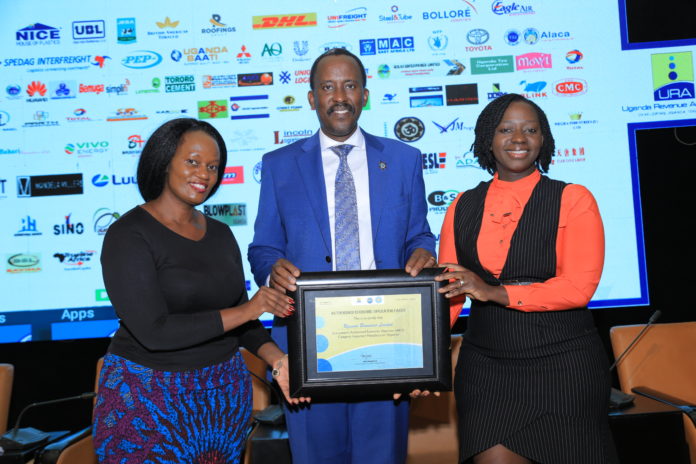
Uganda Revenue Authority (URA) has granted Uganda Breweries Limited (UBL) Authorized Economic Operator (AEO) license, during an event held at Speke Resort Munyonyo on November 11th 2022. 

AEO is a trade facilitation program on the international movement of goods that have been approved by or on behalf of the Customs administration that complies with the World Customs Organisation. 

According to URA, AEO facilitates trade and promotes the security of the international trade supply chain. 

“Under this status, businesses which comply with customs laws and regulations will benefit from customs preferential treatments such as fast clearance of their goods through simplified procedures, reduced inspection authorized company in Uganda is therefore eligible to apply and join the EAC AEO regional program and thus when authorized, can now enjoy the regional benefits which apply equally in all the five EAC countries.” 

“Uganda Breweries Limited will be in a position to perform electronic declarations without attaching supporting documents, ability to make pre-clearance or pre-arrival declarations and automatic renewal of withholding tax exemption,” Jackie Tahakanizibwa, UBL Corporate Relations, Public Policy, and Regulatory Affairs Manager said

“The long wait is over; we have been granted AEO status. I thank the team at URA for this development and all we can promise our clients and regulators is increased efficiency and improvement in production, “she said. 

Other benefits include priority treatment when Customs select the goods for examination and improved cargo handling efficiency at the seaport that results in quick container and truck turn-around time to minimize demurrage and truck detention costs. 

The primary targets for AEO are manufacturers, customs clearing agents, bonded warehouse keepers, importers, exporters, transporters, and freight forwarders. 

“Under the AEO program also, there is an arrangement called Mutual Recognition Arrangement (MRA); where other customs administrations recognize the AEO program of their counterparts. This can be at a bilateral, sub-regional or regional level.”  

According to data from the East African Community (EAC), AEO tackles these challenges by shifting the perspective, so that instead of focusing on the goods themselves, Customs focus on the traders. 

This implies that Customs can handle the consignments of such companies with fewer controls compared to others. That way the AEO program is an instrument for growing compliance.

“The AEO program is therefore looked at as one of the programs that will help Customs within the EAC improve efficiency and effectiveness in securing the international trade supply chain while at the same time facilitating trade.” 

AEO status also reduces the cost associated with the movement and clearance of goods, opens the doors for unlimited opportunities, and is the key to unlocking the potential of your businesses. 

Stories Continues after ad

U.S. offers Shs37.5 billion in rewards for information on Al-Shabaab key leaders

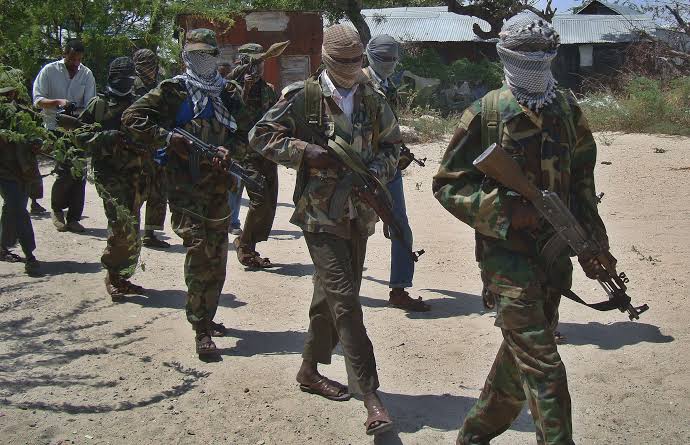
The United States Department of State Rewards for Justice (RFJ) program has announced reward offers of up to $10 million (Shs37.5 billion) for information leading to the identification or location of al-Shabaab key leaders Ahmed Diriye, Mahad Karate, and Jehad Mostafa.

According to the RFJ website, the U.S. is also offering a reward of up to $10 million for information leading to the disruption of the financial mechanisms of al-Shabaab. This announcement marks the first time that the Department has offered a reward for information on al-Shabaab’s financial networks.

Al-Shabaab is al-Qa’ida’s principal affiliate in East Africa. Al-Shabaab is responsible for numerous terrorist attacks in Somalia, Kenya, Uganda and neighboring countries that have killed thousands of people, including U.S. citizens.

The U.S. Department of State designated al-Shabaab as a Foreign Terrorist Organization (FTO) and Specially Designated Global Terrorist (SDGT) in March 2008. In April 2010, Al-Shabaab was also designated by the UNSC’s Somalia Sanctions Committee pursuant to paragraph 8 of resolution 1844 (2008).

Ahmed Diriye, al-Shabaab’s emir since September 2014, was designated by the Department as an SDGT on April 21, 2015 and by the UNSC’s Somalia Sanctions Committee on September 24, 2014. He was seen in a video meeting with al-Shabaab fighters prior to the January 2020 attack on Camp Simba in Manda Bay, Kenya, that killed one U.S. Army soldier and two U.S. contract personnel and wounded three additional U.S. personnel and one Kenyan soldier.

Mahad Karate was designated by the Department as an SDGT on April 21, 2015 and by the UNSC’s Somalia Sanctions Committee on February 26, 2021. Karate is al-Shabaab’s second or shadow deputy emir and continues to lead some al-Shabaab operations. Karate maintains some command responsibility over Amniyat, al-Shabaab’s intelligence and security wing, which oversees suicide attacks and assassinations in Somalia, Kenya, and other countries in the region, and provides logistics and support for al-Shabaab’s terrorist activities.

Jehad Mostafa is a U.S. citizen and former resident of California. Mostafa has served as a military instructor at al-Shabaab training camps, a leader of foreign fighters, a leader in al-Shabaab’s media wing, an intermediary between al-Shabaab and other terrorist organizations, and a leader in al-Shabaab’s use of explosives in terrorist attacks. In December 2019, he was indicted in federal court on charges of conspiring to provide material support to terrorists, conspiring to provide material support to al-Shabaab, and providing material support to al-Shabaab. The FBI assesses Mostafa to be the highest-ranking terrorist with U.S. citizenship fighting overseas.

Al-Shabaab continues to rely on financing and facilitation networks to sustain their operations and plan terrorist attacks globally. 

The Department of State is offering rewards for information leading to the identification and disruption of significant sources of revenue for al-Shabaab, including its exploitation of local natural resources, financial contributions by donors and financial facilitators, financial transactions by financial institutions and exchange houses, any businesses or investments owned or controlled by al-Shabaab or its financiers, international activity by front companies tied to al-Shabaab, criminal schemes involving its members and supporters – such as kidnapping-for-ransom operations, illicit financial schemes, and transfers of funding and material by al-Shabaab to its terrorist and militia proxies and partners.

Anyone with information on al-Shabaab’s key leaders, Ahmed Diriye, Mahad Karate, and Jehad Mostafa, and its financial mechanisms can contact Rewards for Justice via Signal, Telegram, or WhatsApp at +1-202-702-7843.

Since its inception in 1984, the program has paid out in excess of $250 million to more than 125 people across the globe who provided actionable information that had helped resolve threats to U.S. national security.

Stories Continues after ad

East Africa Public Relations week kicks off in Mombasa

Stephen Mwanga, PRAU President

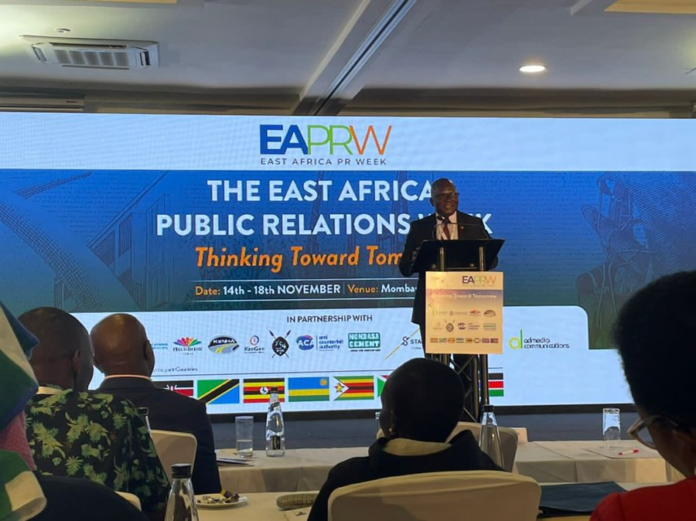
The first-ever East Africa Public Relations Week has kicked off today in Mombasa, Kenya under the theme “Enhancing Sustainability Through Communication”. 

This is a five day event that will run up to November 18th.

Speaking at the inaugural East Africa Public Relations Week in Mombasa, Stephen Mwanga, Public Relations Associations of Uganda (PRAU) President said, “It is refreshing to have PR practitioners all over East Africa in one place discussing key trends and issues.”

“PR professionals should be the ones running with the sustainability agenda in organizationS,” Mwanga urged.

The event is set to bring together some of East Africa’s brilliant minds in the communications sector in order to reinforce lasting partnerships among the participating countries, building on the goal to foster sustainable practices in line with the United Nations Sustainable Development Goals.

This event is an initiative of the Public Relations Society of Kenya (PRSK), and will be jointly hosted with other communications umbrella bodies in Tanzania, Uganda, South Sudan, Rwanda, The Democratic Republic of Congo and Burundi.

Some key topics will feature discussions on sustainability, climate change reporting, the blue economy, the post-pandemic workplace, and impactful partnerships.

The event will also commemorate the 50th anniversary of the Public Relations Society of Kenya- PRSK. Formed to guide and bring together PR practitioners in Kenya, the association will be celebrating different milestones achieved over the past 50 years, which include establishing a student-focused organization, establishing a Code of Ethics that guides the profession in the country, and creating the certification program which will be the most essential credential in the public relations world.

Stories Continues after ad

African region tops world in undiagnosed diabetes

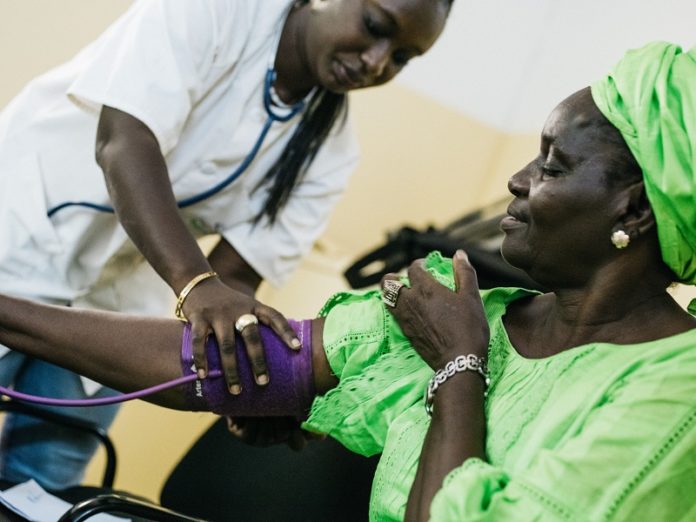
A doctor meets with a diabetes patient for a routine check-up.

Only 46% of people living with diabetes in the African region know their status, raising the risk of severe illness and death, potentially worsening the situation in the region which already has the world’s highest mortality rates due to the disease, a new analysis by World Health Organization (WHO) shows.

Globally, 55% of people with diabetes know they have diabetes. In the African region, a lack of testing facilities and equipment, an inadequate number of trained health personnel, poor access to health facilities and a lack of awareness about diabetes are some of the barriers to diabetes testing. Currently, 24 million adults are living with diabetes in Africa. The figure is projected to rise by 129% to 55 million by 2045.

In the African region, premature deaths from diabetes (defined as deaths occurring before the age of 70) stands at 58%, higher than the global average of 48%, while the region’s age-standardized death rate (a mathematical adjustment of different populations to have the same structure) for diabetes is 48 per 100 000 population, more than double the global rate of 23 per 100 000. In the region, only one in two people living with type 1 diabetes—the most common form of pediatric diabetes—has access to insulin treatment.

 “One of the greatest challenges to diabetes care is lack of diagnosis. Without testing, diabetes becomes a silent killer,” said Dr Matshidiso Moeti, WHO Regional Director for Africa. “While countries face several barriers to tackling diabetes, the rising prevalence of the disease is a wakeup call to reinforce health care, improve diagnosis, access to life-saving diabetes medicines and prioritize diabetes as a major health challenge.”

This year’s World Diabetes Day, which is being marked today under the theme “Access to Care” calls for better access to quality diabetes care as well as the importance of prevention and response.

For the first time ever, countries agreed in May 2022 to key global targets to improve diabetes diagnosis, and access to equitable, comprehensive, affordable, and quality treatment and care. The goals, contained in the WHO Global Diabetes Compact, aim to have 80% of people living with diabetes diagnosed; 80% of people diagnosed with the disease have good control of blood pressure and blood sugar.

Additionally, countries should strive to ensure all those diagnosed with type 1 diabetes have access to affordable insulin and blood glucose self-monitoring and that 60% of people with diabetes aged 40 years and above have access to cholesterol-lowering drugs. People living with diabetes have a higher risk of hypertension and are prone to high cholesterol—a risk factor for cardiovascular disease—than those without diabetes.

For people living with diabetes, access to affordable treatment, including insulin, is critical to their survival. Limited access to insulin puts their lives in danger. In rural Mozambique, for instance, the life expectancy of a child with type 1 diabetes is as low as seven months. Type 1 diabetes is due to the body’s inability to produce enough insulin, a hormone that regulates blood sugar.

Between 2011 and 2021, the region recorded a five-fold rise in type 1 diabetes among children and teenagers below 19 years, with cases surging from 4 per 1000 children to nearly 20 per 1000.

WHO is supporting African countries to improve their diabetes response. In August 2022, African health ministers endorsed a WHO-led initiative called PEN Plus to increase access to diagnosis, treatment and care of severe chronic diseases such as diabetes, cardiovascular diseases and mental and neurotological disorders.

The strategy calls on countries to adopt measures ensuring that essential medicines, technologies and diagnostics are available and accessible at district hospitals. Only 36% of countries in the African region have essential medicines for chronic diseases in public hospitals, according to a 2019 WHO survey.

Stories Continues after ad