Stanbic Bank
Stanbic Bank
20.1 C
Kampala
Stanbic Bank
Stanbic Bank
Home Blog Page 510

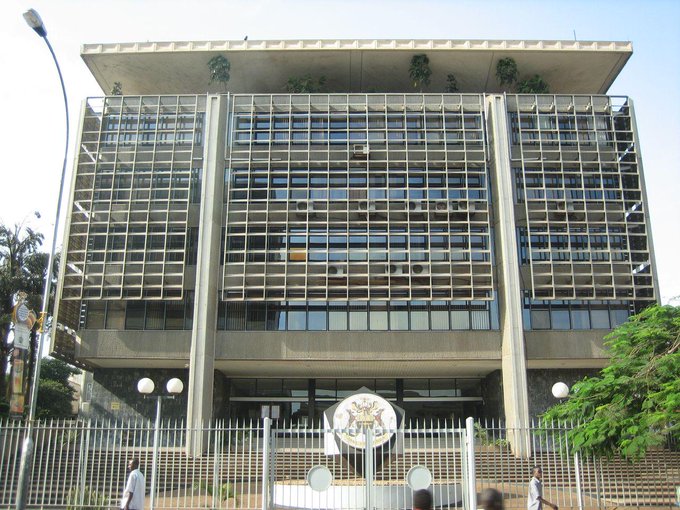
Increasing CBR: Is Bank of Uganda ignoring concerns of KACITA

Bank of Uganda Deputy Governor Michael Atingi-Ego

Traders under Kampala Capital City Traders Association (KACITA) recently warned against the continuous raising of the Central Bank Rate (CBR), saying it is making borrowing from commercial banks expensive. This has however not bothered BoU as it has set CBR for October at 10 percent as of yesterday.

While publishing the latest CBR for October, BoU Deputy Governor reasoned that a combination of global factors, the recent drought and a weaker shilling to U.S dollar exchange rate have driven inflation to the highest level recorded since 2012, and deteriorated the inflation outlook.

However, KACITA wants parliament to prevail over BoU, which continues to set high CBR as a measure to control what it says rising inflation, but this has led leading to high interest rates offered by commercial banks, sending away Kampala traders who contribute immensely to the economy of Uganda.

“The Central Bank Rate currently stands at 9 [September] percent compared to our counterparts in the East African Community; Rwanda (6 percent), Kenya (7.5 percent. This higher CBR means higher interest rates on bank loans to reduce the borrowing appetite by business people,” they said recently while meeting members of parliament.

Adding that: The higher CBR further affects production levels leading to scarcity of goods leading to high prices.”

An analyst has argued that if the CBR is increased further Uganda Revenue Authority will not be able to collect enough taxes required to fund government programmes as production will be low as investors fear high interest rates. “You remember the Commissioner General of URA was recently in the media saying they are not collecting enough taxes, which is forcing the government to continue borrowing at alarming rates,” he said.

KACITA led by their Chairperson, Thadeus Musoke, said due to the COVID-19 pandemic, several of their members lost property to banks due to unpaid loans and are struggling to get back to business, much as they are not happy with the current CBR of 9 percent.

The KACITA members say since they cannot borrow at high interest rates caused by the increase in CBR, loans on the other side continue to accumulate, but some members have had their properties attached. “Our loans accumulated, we tried to engage different government agencies and the banks but what was designed to help us was not effective enough because currently banks are auctioning buildings and property and the business communities cannot access top-ups,” Musoke said during the meeting held at Parliament Building yesterday.

Traders also are not happy that borrowing conditions at Uganda Development Bank (UDB) are stringent, sending away most of them, even though the interest rate there is lower than offered by a commercial bank. Government has given about Shs 600 billion to UDB in the last two years , lend at about 12 percent

KACITA members argue that the increase of the CBR and bank interest rates are forcing traders and other investors to downsize their workforce.

“Central banks set benchmark interest rates to guide borrowing costs and the pace of economic growth. Lower rates spur growth while higher ones restrain spending, investment, and stock market valuations. If rates rise too quickly, demand may decline, causing businesses to reduce output and cut jobs,” analysts add. KACITA says they have had to let off some staff to keep operations going.

In the quarter to April 2022, shilling lending rates in Uganda declined to an average of 19.0 percent compared to 19.3 percent in the quarter to January 2022 but most banks revised their lending rates upwards as BoU started raising the CBR in June 2022.

Stories Continues after ad

BoU increases lending rate to double digit figure amidst rising inflation

Bank of Uganda

The Bank of Uganda has increased the Central Bank Rate (CBR) to 10 per cent amid low economic growth fuelled by rising inflation.

While releasing the Monetary Policy Statement for October 2022 on Thursday, Dr Michael Atingi-Ego, the Deputy Governor, said they are increasing the lending rate because economic growth is expected to remain below its long-run trend until FY 2025/26.

“The outlook for inflation is highly uncertain as several risks lie ahead. The balance of risks is tilted upwards,” Dr Ego said in a statement.

He said the upside risks include: the entrenchment of higher inflation expectations, escalation of geopolitical tensions and the associated supply chain disruptions and stronger monetary policy tightening by major central banks further weakening the exchange rate, and the impact of adverse weather conditions on food production.

“The risks of global recession and tighter financial conditions will likely weigh on domestic economic growth. Moreover, the potential for a sustained weakening of the shilling exchange rate coupled with lower foreign exchange reserves and constrained demand for Uganda’s exports could add to the external financing strains,” he explained.

“The risks of global recession and tighter financial conditions will likely weigh on domestic economic growth. Moreover, the potential for a sustained weakening of the shilling exchange rate coupled with lower foreign exchange reserves and constrained demand for Uganda’s exports could add to the external financing strains,”said Michael Atingi-ego.

 In addition, he said, higher domestic interest rates, declining private sector credit and tight fiscal policy could further weigh down economic growth.

However, he said the domestic economy, which has weathered several shocks, is showing signs of recovery.

“The Composite Index of Economic Activity (CIEA) grew slightly by 1.2 percent in the quarter to August from 1.1 percent in the quarter to May 2022, supported by increased industrial activity. Also, business sentiments have improved since the previous forecast round,” the Deputy Governor said.

The move by the central bank comes after the annual headline inflation rose to 10 percent in September 2022 from 9 percent in August 2022.

The rising of interest rates increases the cost of borrowing, making both credit and investment more expensive.

The band on the CBR remains at +/-2 percentage points. The margins on the CBR for the rediscount and bank rates will remain at 3 and 4 percentage points. Consequently, the rediscount and bank rates will be 13 percent and 14 percent, respectively.

Stories Continues after ad

Reversing suicide, mental health crisis in Africa

World Health Organization (WHO) has launched a campaign to raise awareness and spur action for suicide prevention in the African region, which has the world’s highest rates of death by suicide.

Around 11 people per 100,000 per year die by suicide in the African region, higher than the global average of nine per 100,000 people. This is due in part to insufficient action to address and prevent the risk factors, including mental health conditions which currently affect 116 million people, up from 53 million in 1990.

The social media campaign, launched ahead of World Mental Health Day, aims to reach 10 million people across the region to raise public awareness and galvanize the support of governments and policymakers to increase focus and funding for mental health programming, including suicide prevention efforts.

Such efforts include equipping health workers to better support those dealing with suicidal thoughts, educating people who may experience these thoughts on where to go for help as well as sensitizing the public on how to identify and help those in need and to help tackle the stigma associated with suicide, epilepsy, mental health conditions and alcohol and drug abuse.

The African region is home to six of the 10 countries with the highest suicide rates worldwide. The common means of suicide in the region are hanging and pesticide self-poisoning and to a lesser extent drowning, use of a firearm, jumping from a height or medication overdose. Studies show that in Africa for each completed suicide, there are an estimated 20 attempted ones.

 “Suicide is a major public health problem and every death by suicide is a tragedy. Unfortunately, suicide prevention is rarely a priority in national health programmes,” said Dr Matshidiso Moeti, WHO Regional Director for Africa. “Significant investment must be made to tackle Africa’s growing burden of chronic diseases and non-infectious conditions such as mental disorders that can contribute to suicide.”

Mental health problems account for up to 11% of the risk factors associated with suicide. This year’s World Mental Health Day is being marked under the theme “Make Mental Health and Well-Being for All a Global Priority” to draw attention to the importance of mental health care and the need for better access to health services.

In Africa, underinvestment by governments is the greatest challenge to adequate mental health service provision. On average governments allocate less than 50 US cents per capita to mental health. Although it is an improvement from 10 US cents in 2017, it is still well below the recommended US$ 2 per capita for low-income countries. Additionally, mental health care is generally not included in national health insurance schemes.

Due to the low investment in mental health services, the African region has one psychiatrist for every 500 000 inhabitants, which is 100 times less than WHO recommendation. Additionally, mental health workers are mostly in urban areas, with primary and community health facilities having very few if any.

WHO is supporting countries to step up mental health services in the region. Primary health care workers in Zimbabwe are being trained under a WHO initiative to boost quality and access to mental health services. In Kenya, Uganda and Zimbabwe an initiative to develop country investment cases for mental health services has been concluded and advocacy is underway to mobilize resources. The Organization is also supporting Cabo Verde and Cote d’Ivoire to carry out national suicide situation analysis as a first step towards devising effective response measures.

In August 2022, African health ministers gathering for the Seventy-second session of the WHO Regional Committee for Africa—the region’s flagship health meeting—endorsed a new strategy to reinforce mental health care and set 2030 targets: all countries to have a policy or legislation on mental health, 60% of countries implementing the policy, 95% of countries monitoring and reporting on key mental health indicators and 80% of countries have a budget for mental health services.

 “Mental health is integral to wholesome health and well-being yet far too many people in our region who need help for mental health conditions do not receive it. It’s time to for radical change,” Dr Moeti said. “Ongoing efforts by countries should be reinforced and broadened to make mental health care a public health priority in the African region.”

Stories Continues after ad

KCCA exceeds revenue collection target for first quarter

Dorothy Kisaka,the embattled former KCCA Executive Director

Kampala Capital City Authority (KCCA) has hit and exceeded its revenue collection target for the first quarter of the financial year 2022/23. The revenue collected for this first quarter is Shs24.9 billion against a target of Shs24.7 billion implying a performance of 100.5%.

This was reported by Nobert Nowere, the acting Director of Revenue Collection during the KCCA top management retreat with members of the Parliamentary Presidential Affairs Committee at Serena Kigo.

According to Nowere, this is the highest revenue collection done during the first quarter of a financial year in the history of KCC/KCCA.

The Directorate of Revenue Collection is expected to collect Shs99.75 billion during the FY 2022/23.

The Minister for Kampala Capital City and Metropolitan Affairs, Hajjati Minsa Kabanda, applauded the efforts by the technical team to increase revenue collection.

Mrs. Jessica Ababiku, the chairperson of the committee highly commended the KCCA leadership for this achievement. She said it is a testimony that the gaps through which the revenue was being lost are being closed.

Since the establishment of KCCA, there has been tremendous growth in revenue collection from Shs40.96 billion in 2011/12 to Shs93.24 billion collected in 2021/22.

Dorothy Kisaka, the KCCA Executive Director revealed that in 2021/22 alone KCCA achieved a revenue growth of 16 percent during the tough COVID-19 economic city. Currently property rates constitute 47 percent of the total local revenue.

“We registered the highest revenue collection in the history of KCCA of Shs93.24 billion during the last financial year 2021/22 and a revenue growth of 16 percent despite the tough post COVID economic circumstances,” Kisaka said.

She revealed that much of this revenue increment has been realized because of a number of innovations and good revenue practices employed by KCCA.

KCCA has over the years automated or digitized virtually all the key revenue processes and has introduced the e-cities system which permitted almost all the revenue administration processes to be done online.

It has also identified a number of eligible taxpayers who were previously not paying taxes leading to expansion of the taxpayers’ base.

There are also vigorous taxpayer sensitization campaigns using electronic, print media and workshops to educate taxpayers.

The revaluing of all the properties within the city and regular enforcements are now being done to enforce collection of tax and fees arrears.

Another innovation is the formation of a special Unit to handle the large taxpayers who contribute the bulk of revenue collected by KCCA for specialized services to them.

The KCCA revenue streams include property rates, ground rent business license, street parking, park user fees, land fees, local service tax, Building fees, local hotel tax. Two missing revenues are markets revenue and advertising fees which are awaiting the legal framework.

During the retreat, discussions were about the revenue mobilization, mobility in the city, solid waste management, drainage, physical planning in the city and street children.

Stories Continues after ad

American Archbishop Foley Beach to grace 2023 Martyrs’ Day celebrations

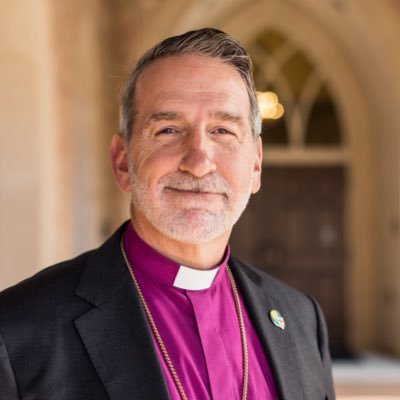
American Archbishop Foley Beach

The Archbishop of the Church of North America Foley Beach is set to grace the 2023 Anglican Martyrs’ day celebrations, Eagle Online has learnt. The revelation was made by the First Deputy Prime Minister Rebecca Kadaga.

Martyrs’ Day is marked on 3rd June every year in commemoration of the 23 Anglican and 22 Catholic believers who were killed on orders of Kabaka Mwanga between 1885 and 1887.

Under the theme;United for sustainable services and growth (Ephesians 4:11-16), Martyrs’ Day celebrations will be organized by the 10 dioceses of Eastern Uganda.

The dioceses include; Mbale, Bukedi, Soroti, Karamoja, central Busoga, North Mbale, North Karamoja, Busoga, Sebei, and Kumi.

According to Kadaga, President Yoweri Museveni will be the chief guest, Archbishop Beach will be the chief preacher and Archbishop will be the main celebrant.

“As we celebrate the martyrs, we need to start with the real one and that is Bishop James Hannington. It is his death that led to the others. When Joseph Balikudembe complained to the King that we have killed a man innocently that is how he was also killed in 1885 and that is how the journey of martyrdom started,” Kadaga said.

Kadaga said the next martyr’s day celebrations will be a unique. We have given the responsibility to the 10 dioceses to look for Shs 2 billion to organize the celebrations and their efforts will be visible.

“The former organizers; Buganda cluster speak one language, Kigezi cluster speak one language, Ankole cluster also speak one language but this time round the organizing cluster comprises of various tribes speaking different languages and that is the uniqueness about next year’s celebrations,” she added.

Eagle Online has also established that government processes to recognize Bishop James Hannington as one of the martyrs in Uganda. The location of Hannington’s remains was divulged to Bishop Alfred Tucker in 1892 and on 31st December 1892, his remains were reburied at Namirembe. He is commemorated by the Hannington memorial chapel in Namirembe Cathedral, Kampala, Uganda.

Stories Continues after ad

SUEZ acquires EnviroServ, South Africa’s largest waste management company

SUEZ together with Royal Bafokeng Holdings (RBH) and African Infrastructure Investment Managers (AIIM) completed the acquisition of EnviroServ Proprietary Holdings Limited and its subsidiaries (“EnviroServ”) after having received the approval of the local antitrust authorities, in accordance with the terms announced on 9th June 2022.  This acquisition will enable SUEZ to reinforce its positioning as an international leader in industrial and municipal waste treatment activities and to strengthen its position on the African continent.

Founded in 1979, EnviroServ collects, treats and disposes of general and hazardous waste to treatment and disposal facilities across South Africa, Mozambique and Uganda.  With a staff of

2,200 people and a turnover in excess of 80 million euros, it is the only player in South Africa with full national coverage and a complete offering for industries (including on-site management, collection, treatment, remediation and related services).  EnviroServ’s portfolio of customers includes a high number of multinational firms operating in the petrochemicals, manufacturing, metallurgical and mining sectors.

EnviroServ contributes to the circular economy by recycling 125 000 tons and managing 1.7 million tons of hazardous and general waste per year.  The company owns and operates a fleet of 175 specialised waste-transport vehicles, 10 treatment and disposal sites and manages a further 5 facilities within the 3 countries where it operates.  Thanks to the large portion of local shareholding , EnviroServ will remain committed to retaining its B-BBEEE Level 1 rating, the highest Broad-Based Black Economic Empowerment possible.

The new shareholders’ ambition is for EnviroServ to grow as the undisputed leader of environmental services in South Africa and the region, leveraging on its strong capabilities and SUEZ’s support to invest in infrastructure and operations, enrich its commercial offer and develop new waste treatment modes contributing to a more circular economy.

Sabrina Soussan, Chairman and CEO of SUEZ: “I am thrilled by EnviroServ joining SUEZ Group:  this is a team with a unique track record over the last 40 years, which enabled the company to become the leader in hazardous and non-hazardous waste treatment activities in Southern Africa.  I am convinced that SUEZ can further nurture the profitable growth of EnviroServ with additional references, best practices, innovation and investments.  I am equally convinced that the team’s skills, expertise and talents will support SUEZ Group in expanding its activities in South Africa as well as in other geographies.  With all Group employees, I would like to welcome our new colleagues and look forward to a bright, common future.”

Albertinah Kekana, CEO of RBH: “As the first waste and water management platform investment for RBH, we are pleased that the EnviroServ acquisition is now complete.  This is an opportunity to further diversify our portfolio and grow our exposure in the circular economy.  We look forward to working with our partners as we strive to make a meaningful contribution and respond to the sustainable development agenda.”

Dean Thompson, CEO of EnviroServ: “The delivery of sustainable waste solutions to the African market is a critical need for the continent.  EnviroServ Waste Management, a leading and environmentally responsible waste management company, is looking forward to the wealth of knowledge and experience that our new shareholders will bring to the South African waste markets.  This will further enhance our existing product and service offering and create a robust platform for innovation and growth.”

Present on the African continent since the construction of the Sherbine water treatment plant in Egypt in 1948, SUEZ has built more than 500 drinking water and sanitation plants that service most African capitals.  SUEZ is notably present in Morocco, Egypt, Senegal, Tunisia and Côte d’Ivoire.

Stories Continues after ad

Stanbic PMI: Improving demand supports private sector growth

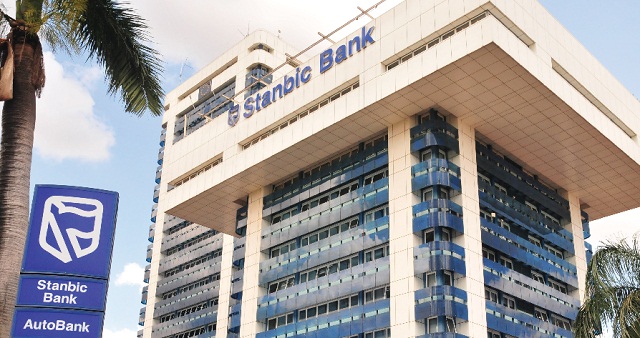
Stanbic Bank

The headline Stanbic Purchasing Managers’ Index posted 51.6 in September, up from 50.5 in August and the highest in five months as business conditions improved for the second successive month, although the latest reading was still below the series average of 52.5.

Released on September 5, the report contains the latest analysis of data collected from the monthly survey of business conditions in Uganda’s private sector.

David Kamugisha, the Head of Trading, Global Markets at Stanbic said, the decline in purchasing activity, which has led to declining inventories for the first time since September 2021, may indicate a possible decline in production in the short to medium term.

He said, “Businesses remained upbeat about the next 12 months premised by higher demand and the potential for price pressures to ease. Signs of improving demand contributed to a strengthening of business conditions in September as output and new orders increased. On the other hand, employment and purchasing activity dipped and costs continued to rise.”

The survey, sponsored by Stanbic Bank and produced by S&P Global, has been conducted since June 2016 and covers the agriculture, industry, construction, wholesale and retail, and service sectors.

The headline figure derived from the survey is the Purchasing Managers’ Index (PMI) which provides an early indication of operating conditions in Uganda.

The PMI is a composite index, calculated as a weighted average of five individual sub-components including, New Orders (30%), Output (25%), Employment (20%), Suppliers’ Delivery Times (15%) and Stocks of Purchases (10%).

Readings above 50.0 signal an improvement in business conditions in the previous month, while readings below 50.0 show a deterioration.

Commenting on the latest findings, MulaloMadula, Economist at Standard Bank said, “While still below the series average, the PMI is at its highest level in five months and has been in expansionary territory for the second consecutive month. The index’s persistence below the series average corroborates other data showing healthy, but below average growth.”

Madula said output and the growth of new orders, supported by expansion in demand, indicates a resilient business environment.

However, new orders for exports continue to decline, according to the survey. Moreover, adverse weather conditions this year could flatten productivity in the coffee sector and limit net exports.

Growth drivers

According to the index, strengthening demand conditions helped to support rises in output and new orders during September, in both cases for the second month running.

Growth was seen in the agriculture, industry and services sectors, but reductions were signaled in construction and wholesale & retail.

Despite improvements in output and new orders, Ugandan companies scaled back employment and purchasing activity. Workforce numbers were down for the fourth month running amid further signs of spare capacity, while input buying decreased for the second time in the past three months.

Important to note, however, was that lower purchasing activity fed through to a first reduction in stocks of inputs since September last year.

During the month, input prices continued to rise, with higher costs for cement, construction materials, electricity, and food products including sugar, fuel and pesticides all mentioned.

Companies also increased their salaries for the first time in three months amid rising living costs. With input costs increasing, firms also raised their own selling prices, extending the current sequence of inflation to 13 months.

Business confidence remained positive, with close to three-quarters of respondents predicting a rise in output over the next 12 months. Optimism reflected hopes that customer numbers and sales will rise alongside higher demand, with the potential for price pressures to ease.

Stories Continues after ad

Makerere University celebrates 100 years of existence 

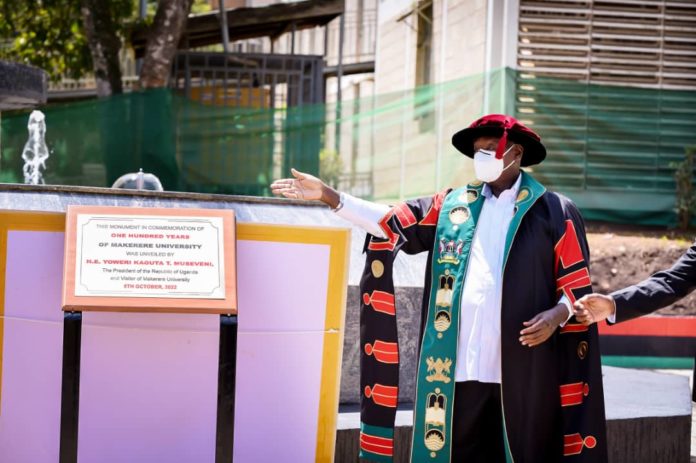
President Museveni at Makerere University for the grand centenary celebrations.

Makerere University, a well-known oldest institute in East Africa has today celebrated 100 years of existence in providing excellent services. Opening its doors to only 14 students in 1922, Makerere has grown to become one of the most prestigious Universities in Africa and the World over.

The centenary celebrations are under the theme, “Leveraging the 100 Years of Excellence in Building a Transformed Society”.

Makerere University’s alumni include presidents and prime ministers, among them Joseph Kabila (Democratic Republic of Congo), Julius Nyerere and Benjamin Mkapa (Tanzania), Mwai Kibaki (Kenya), and Milton Obote and Ruhakana Rugunda (Uganda).

Writers such as Ngugi wa Thiong’o from Kenya and David Rubadiri from Malawi, scholars and political activists such as Stella Nyanzi and Bobi Wine are also Makerere alumni.

Speaking at the event, Prof. Barnabas Nawangwe, the Vice Chancellor, said that nobody would have predicted that something that began with 14 bare feet students in grass thatched huts would evolve into what we have today.

“I pledge total commitment to Makerere University to ensure that our institution remains on the path to nurturing graduates and producing research responsible for national development,” Prof Nawangwe said.

Prof. Ezra Suruma, the Chancellor however challenged the Makerere lecturers to mind the quality of education and ethical content delivered to the students.

“I want to challenge the lecturers to put emphasis on the ethical content of education and that the character of our graduates is less important than the skills put in the field,” he said.

He added that the quality of service is still a challenge and this should be worked upon through sustainable and robust skilling of graduates in the different institutions.

Prof. Ezra Suruma: “It is my sincere prayer that Makerere will continue to lead the country in robust production of tomorrow’s leaders.”

Remembering the political move, Prof. Suruma said, “In 1980, I was a senior lecturer in Makerere and together with Joshua Mugyenyi we started the Uganda National Patriotic Movement which later became the National Resistance Movement. Makerere played a footnote in the foundation of NRM.”

Deputy Speaker, Thomas Tayebwa gave his journey to Makerere and the prosperous achievement in his life after passing through the gates of this great institution. “In 2001, with a metallic suitcase and Shs4,500 school fees for Makerere. I came to Makerere with no relatives in the government but today, I am Deputy Speaker of parliament.. I am one of the testimonies from the government.”

Tayebwa also highlighted the fact that rich students dominate the government scholarships. He says the scholarship system should be changed, “We are coming with a proposal so that children who should benefit from the scholarships, benefit.”

President Museveni, the special guest, said that he is one of the people who refused to come to Makerere. All his three choices were Dar-es-Salaam University because he wanted to be near Nyerere who always fronted for East African integration.

He said “The primacy of social change is technology and innovation. The Africans brought fire, domesticating of animals and crops and invention of iron. How did Africans lag behind? When the Europeans invented gunpowder, for us we didn’t know about it.”

He appreciated the science and technology faculties and applauded the administrators to put more emphasis in research and innovation.

“I congratulate Makerere, especially the science department. This is why I said 70% of scholarships should go to sciences. Recently I said salaries of scientists should be increased. Science is the Prima of society,” President Museveni said.

Stories Continues after ad

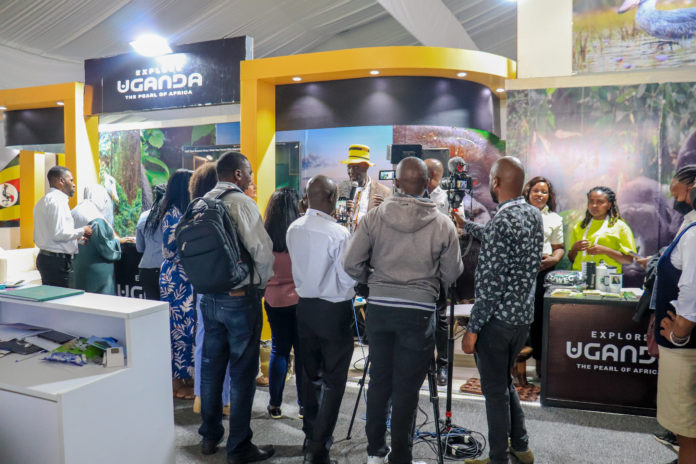
Uganda takes tourism promotion to Magical Kenya Tourism Expo 2022

Uganda at the Expo

Uganda is currently participating in the 11th edition of Magical Kenya Tourism Expo that started on 5th up to 7th October 2022 at the Bomas in Nairobi.

The Uganda Tourism Board (UTB) team at the expo is comprised of Director Ronald Kaggwa and Deputy CEO Bradford Ochieng together with staff in the marketing department. Uganda’s marketing contingent include Uganda Wildlife Authority, Uganda Wildlife Education Conservation Centre, Uganda Airlines, the private sector represented by tour operators, hoteliers among others.

This year’s expo has attracted over 200 exhibitors, 160 hosted buyers with travel trade and international media across over 30 countries from the globe.

Uganda’s participation in the Expo is key in positioning the country’s tourism products and services to the globe. Kenya as a country has previously contributed over 60% of inbound visitors making it a strategic source market for Uganda.

While at the Expo, Uganda Tourism Board will leverage on this opportunity to emphasize the new refreshed destination brand Explore Uganda – The Pearl of Africa that positions Uganda as a unique tourism destination.

To show case Uganda to the world, the board has so far hosted a media briefing and MKTE cocktail ‘night of magic’ which has already generated a lot of interest and traffic to destination Uganda exhibition stall. Other events planned include hosted buyer hangout, tourism board dinner, ATTA networking cocktail, closing cocktail and a speakers’ appreciation dinner.

UTB Director Ronald Kaggwa on the sidelines of the Expo revealed that tourism is listed among the foundational elements of the economy under Vision 2040. “In order to take advantage of the numerous opportunities available, it is imperative to aggressively market our destination, bring forward the brand image, reputation and Uganda’s unique identity,” he said.

Bradford Ochieng, UTB Deputy CEO noted that the board was working closely with Market Destination Representatives Ministry of Tourism, Wildlife and Antiquities and its agencies like Uganda Wildlife Authority (UWA), Uganda Wildlife Education Centre among others, private sector and development partners to market tourism destination Uganda.

“UTB is working to not only increase the number of tourists, but also add value on their spending. This will subsequently stimulate increased investments that create employment and inclusive development of the country,” he said.

Stories Continues after ad

Ex-Cop in Thailand kills 34 at day-care center

A former policeman killed 34 people on Thursday in a mass shooting at a children’s day-care center in Thailand, with media reporting the gunman later shot and killed himself.

The victims included 22 children as well as adults, police said in a statement.

Police colonel Jakkapat Vijitraithaya from Nong Bua Lam Phu province said the gunman went home and killed his wife and child after the mass shooting.

Prime Minister Prayut Chan-O-Cha on Thursday ordered an urgent probe after a former police officer murdered more than 30 people, most of them children, in a rampage at a nursery.

“Concerning this horrifying incident… I would like to express my deepest sorrow and condolences to the families of the dead and injured,” Prayut wrote on his official Facebook page, adding that he had told the national police chief to “fast-track an investigation.”

Earlier, police said a manhunt was under way for the shooter, and a government spokesman said the prime minister had alerted all agencies to apprehend the culprit.

Mass shootings are rare in Thailand even though the rate of gun ownership is high compared with some other countries in the region, and illegal weapons are common.

In 2020, a soldier angry over a property deal gone sour killed at least 29 people and wounded 57 in a rampage that spanned four locations.

Stories Continues after ad