Stanbic Bank
Stanbic Bank
18.3 C
Kampala
Stanbic Bank
Stanbic Bank
Home Blog Page 523

#OutToLunch: Let us have coffee over affordable housing

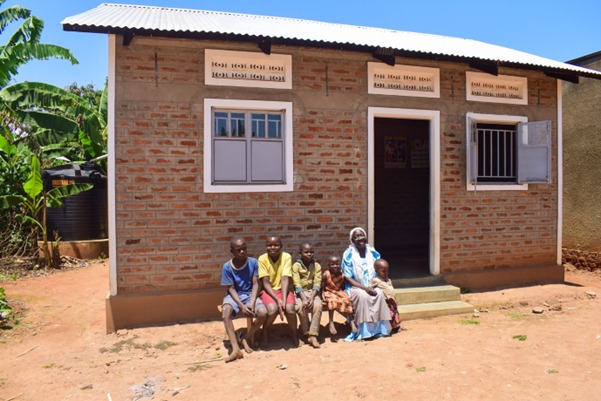
Photo caption: Jesca Magemeso, 58, poses for a family portrait with members of her household in front of their home in Buwaiswa Village, Buwaaya Sub- County, Mayuge District

By Denis Jjuuko

There are skits on social media of a landlady called Nakayiza. She can visit her tenants at any time and if she finds them eating chicken or meat, she wonders how they can be enjoying expensive foods while still renting. She castigates them for being such poor planners who enjoy life’s excesses instead of becoming landlords like herself.

But if the tenant made a mistake of not inviting her to partake in the meal and/or giving her a drumstick and gizzard, they would be in trouble. She would grab the saucepan and go with it telling them to report her to whoever they want and see if they would still live in her houses. She always strikes at meal time. Nakayiza is hilariously brutal to her tenants especially those who may be in arrears.

Nakayiza may be drama and she excels at it but her script writers know exactly what happens in the communities especially informal settlements where the majority of urban dwellers live in Uganda. Like Nakayiza, tenants in real life face such dehumanizing landlords every day.

Yet as Uganda’s population continues to grow, so is the need for decent housing especially in urban areas. Uganda is one of the most urbanizing countries on the continent thereby putting pressure on already strained housing facilities. The country has a deficit of about 2.3 million housing units and growing by about 200,000 annually.

Lack of proper housing leads to diseases and increases household poverty. A person fearing when Nakayiza would strike wouldn’t be able to have a decent meal at home. One time she complained of a family eating avocado yet a necessary food for children’s growth. But also, one wouldn’t be able to concentrate at anything because they spend all their time fearing when Nakayiza would strike.

This calls for more investment in affordable decent housing. By affordable I mean a house the majority of people would be able to own over a long period of time say 10 to 30 years. People would consider that they have a stake in the country and will work hard to ensure they can own the property at one stage in their lifetime thereby leading to economic growth.

I recently came up a report titled “A Ladder Up: The construction sector’s role in creating jobs and rebuilding emerging market economies,” commissioned by Habitat for Humanity and it had some interesting findings. For “every US$1 million in construction output creates an average of 97 jobs across countries ranging from 43 jobs per US$1 million in Mexico to 182 jobs per US$1 million in India,” the report reads.

I believe in Uganda, one US$1m invested in housing could create as many as 500 jobs. From informal workers such as porters and bricklayers to professional workers such as architects and engineers. No need to mention indirect workers at steel factories and the entire value chain and money paid to government for permits and such other things.

According to Habitat for Humanity Uganda, a two-bedroom affordable house in an urban area cost approximately Shs35m or US$9,000 (doesn’t include the cost of land). So, with US$1m, one can be able to build at least 100 houses in an urban area. In a not so urban area, the cost is Shs25m.
These numbers could go further down if the government lowered taxes on construction materials and there were massive projects planned so that they could enjoy economies of scale. Banks could be incentivized to provide affordable financing. Residential construction has a lot of potential.

“Investment in residential construction, in particular, represents a potential win-win for low- to middle-income countries, as it creates quality jobs while filling a massive void in affordable housing,” the report mentioned above further reads.

An investment of just US$1m in a community would change it forever. Once people aren’t worried of returning home during the rainy season when the landlord has removed one of the iron sheets, they would be able to push their other dreams.

As we have seen with Nakayiza and landlords like her, commercial tenants don’t go through the humiliation that residential tenants face. When a commercial tenant defaults, the landlord simply locks up the premises. The tenant’s family isn’t dehumanized. So residential housing for the country’s development is where we should put much more emphasis. It is high time we seriously had coffee on affordable housing.

The writer is a communication and visibility consultant. djjuuko@gmail.com

Stories Continues after ad

NSSF launches construction of Temangalo Housing Estate

National Social Security Fund (NSSF) has launched the construction of the Temangalo Housing estate. Located approximately 17 kilometers from the city center, the Estate consists of 3,500 houses.

The construction of phase one of the estate started in October 2021 and comprises 550 units; 200 bungalows, 100 townhouses, 50 villas, 200 apartments, and infrastructure and amenities like a water treatment plant, green spaces, public playgrounds, and a soccer pitch, among others.

Phase one is scheduled to be completed in June 2024 and 350 out of 550 units are already on the ground. When completed, the cheapest house will go for Shs 90 million.

Speaking at the launch, Richard Byarugaba, the Managing Director of NSSF, “We shall spend Shs 104 billion on phase one. Our underlying objective is to develop mixed-use affordable housing designed to accommodate different income classes. NSSF members will have a rent-to-own option at Temangalo, book and pay ‘rent’ towards your house.”

NSSF team led by the Managing Director Richard Byarugaba.

“We invest in real estate in order to achieve the Fund’s overall investment objective of earning a return for members, we seek to maximize return while minimizing risk, transforming neighborhoods, and creating jobs,” Byarugaba said.

In fulfilling its mandate, the NSSF Board of Directors will ensure that there is secure, profitable, and effective financial management, and 78 per cent of the project’s portfolio is invested in fixed income, 15 percent equities, and seven percent real estate.

The Fund’s investment mandate is vested in the Board of Directors, in consultation with the Minister of Finance Planning and Economic Development. The investment policy seeks to ensure a proper long-term asset mix, diversification, and prudent risk management.

Stories Continues after ad

BoU should take World Bank advice on increasing CBR

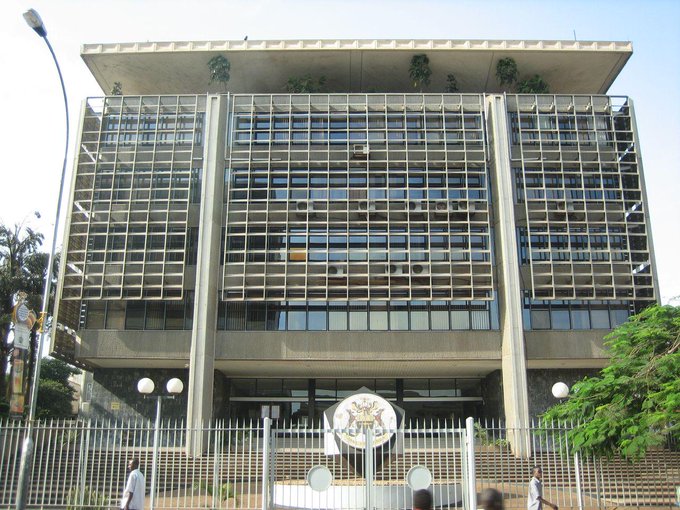
Bank of Uganda

At the Monetary Policy Committee (MPC) Meeting held on August 12, 2022, the Bank of Uganda increased the Central Bank Rate (CBR) by 50 basis points to 9 percent in effort to curb the skyrocketing inflation in the country.

This news website had already warned that the continuous increase of the CBR by BoU would hurt the economy as it discourages borrowing from commercial banks, which tag their interest rates to the CBR, though banks also consider other factors before increasing the interest rates.

“Big rate increases increase the risk of recession as it can cause an economy to slow,” warned experts recently.

This news website’s report about the continuous increase in the CBR was bad for Uganda and was seen as anti-BoU by some sections of the public. It was regarded as propaganda to discredit BoU work.

But on September 15, the World Bank also talked about the danger of increasing the CBR, the bank said the world may be edging toward a global recession in 2023 as central banks continue to increase CBR.

“Central banks around the world have been raising interest rates this year with a degree of synchronicity not seen over the past five decades—a trend that is likely to continue well into next year.”  

“Yet the currently expected trajectory of interest-rate increases and other policy actions may not be sufficient to bring global inflation back down to levels seen before the pandemic. Investors expect central banks to raise global monetary-policy rates to almost 4 percent through 2023—an increase of more than 2 percentage points over their 2021 average.”

“Unless supply disruptions and labor-market pressures subside, those interest-rate increases could leave the global core inflation rate (excluding energy) at about 5 percent in 2023—nearly double the five-year average before the pandemic, the study finds. To cut global inflation to a rate consistent with their targets, central banks may need to raise interest rates by an additional 2 percentage points, according to the report’s model. If this were accompanied by financial-market stress, global GDP growth would slow to 0.5 percent in 2023—a 0.4 percent contraction in per–capita terms that would meet the technical definition of a global recession.”

The study highlights the unusually fraught circumstances under which central banks are fighting inflation today. Several historical indicators of global recessions are already flashing warnings. The global economy is now in its steepest slowdown following a post-recession recovery since 1970. Global consumer confidence has already suffered a much sharper decline than in the run-up to previous global recessions. The world’s three largest economies—the United States, China, and the euro area—have been slowing sharply. Under the circumstances, even a moderate hit to the global economy over the next year could tip it into recession.

The study relies on insights from previous global recessions to analyze the recent evolution of economic activity and presents scenarios for 2022–24. A slowdown—such that the one now underway—typically calls for countercyclical policy to support activity. However, the threat of inflation and limited fiscal space are spurring policymakers in many countries to withdraw policy support even as the global economy slows sharply.

The experience of the 1970s, the policy responses to the 1975 global recession, the subsequent period of stagflation, and the global recession of 1982 illustrate the risk of allowing inflation to remain elevated for long while growth is weak. The 1982 global recession coincided with the second-lowest growth rate in developing economies over the past five decades, second only to 2020. It triggered more than 40 debt crises] and was followed by a decade of lost growth in many developing economies.

“Recent tightening of monetary and fiscal policies will likely prove helpful in reducing inflation,” said Ayhan Kose, the World Bank’s Acting Vice President for Equitable Growth, Finance, and Institutions. “But because they are highly synchronous across countries, they could be mutually compounding in tightening financial conditions and steepening the global growth slowdown. Policymakers in emerging markets and developing economies need to stand ready to manage the potential spillovers from globally synchronous tightening of policies.”

Central banks should persist in their efforts to control inflation—and it can be done without touching off a global recession, the study finds. But it will require concerted action by a variety of policymakers:

Central banks must communicate policy decisions clearly while safeguarding their independence. This could help anchor inflation expectations and reduce the degree of tightening needed. In advanced economies, central banks should keep in mind the cross-border spillover effects of monetary tightening. In emerging markets and developing economies, they should strengthen macroprudential regulations and build foreign-exchange reserves. 

Fiscal authorities will need to carefully calibrate the withdrawal of fiscal support measures while ensuring consistency with monetary-policy objectives. The fraction of countries tightening fiscal policies next year is expected to reach its highest level since the early 1990s. This could amplify the effects of monetary policy on growth. Policymakers should also put in place credible medium-term fiscal plans and provide targeted relief to vulnerable households.

Other economic policymakers will need to join in the fight against inflation—particularly by taking strong steps to boost global supply. These include: 

Easing labor-market constraints. Policy measures need to help increase labor-force participation and reduce price pressures. Labor-market policies can facilitate the reallocation of displaced workers.  

Boosting the global supply of commodities. Global coordination can go a long way in increasing food and energy supply. For energy commodities, policymakers should accelerate the transition to low–carbon energy sources and introduce measures to reduce energy consumption. 

Strengthening global trade networks. Policymakers should cooperate to alleviate global supply bottlenecks. They should support a rules-based international economic order, one that guards against the threat of protectionism and fragmentation that could further disrupt trade networks.

Stories Continues after ad

Putin mobilises more troops for Ukraine, accuses West of ‘nuclear blackmail’

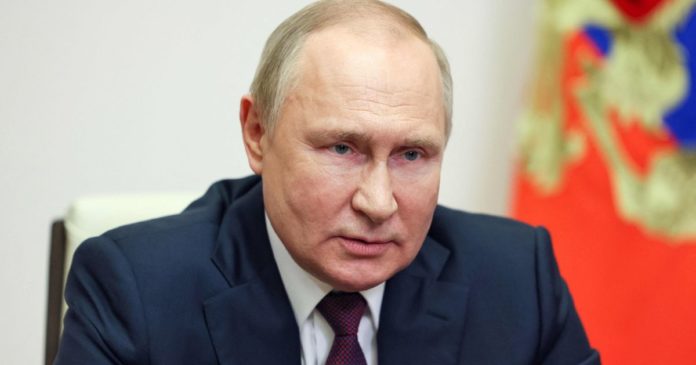
Russian President Vladimir Putin

Russian President Vladimir Putin on Wednesday called up 300,000 reservists to fight in Ukraine and said Moscow would respond with the might of all its vast arsenal if the West pursued what he called its “nuclear blackmail” over the conflict there.

It was Russia’s first such mobilisation since World War Two and signified a major escalation of the war, now in its seventh month.

It followed recent setbacks for Russian forces, who have been driven from areas they had captured in northeast Ukraine in a Ukrainian counter-offensive this month and are bogged down in the south.

In a televised address to the Russian nation, Putin said: “If the territorial integrity of our country is threatened, we will use all available means to protect our people – this is not a bluff”.

Russia had “lots of weapons to reply,” he said.

Russia’s defence minister said the partial mobilisation would see 300,000 reservists called up and would apply to those with previous military experience.

Although Russia has been involved in a number of conflicts since World War Two, this was the first such call-up since then. The Soviet Union’s long war in Afghanistan involved conscripts.

Defence Minister Sergei Shoigu said 5,397 Russian soldiers had been killed since the start of the conflict.

The United States said last month it believed between 70,000 and 80,000 Russian personnel had been killed or wounded, and in July estimated Russia’s death toll at around 15,000.

Ukrainian presidential adviser Mykhailo Podolyak said the Russian mobilisation was a predictable step that would prove extremely unpopular, and it underscored that the war was not going according to Moscow’s plan.

“Absolutely predictable appeal, which looks more like an attempt to justify their own failure,” Podolyak told Reuters. “The war is clearly not going according to Russia’s scenario.”

Before Putin’s address, world leaders meeting at the United Nations in New York denounced Russia’s invasion of Ukraine and plans for four occupied regions to hold referendums in the coming days on joining Russia.

In an apparently coordinated move, pro-Russian regional leaders on Tuesday announced referendums for Sept. 23-27 in Luhansk, Donetsk, Kherson and Zaporizhzhia provinces, representing around 15% of Ukrainian territory.

Russia already considers Luhansk and Donetsk, which together make up the Donbas region that Moscow partially occupied in 2014, to be independent states. Ukraine and the West consider all parts of Ukraine held by Russian forces to be illegally occupied.

Russia now holds about 60% of Donetsk and had captured nearly all of Luhansk by July after slow advances during months of intense fighting.

Those gains are now under threat after Russian forces were driven from neighbouring Kharkiv province this month, losing control of their main supply lines for much of the Donetsk and Luhansk frontlines.

In his address, Putin said the partial mobilisation of its 2 million-strong military reservists was to defend Russia and its territories. The West did not want peace in Ukraine, he said.

He said Washington, London, Brussels were pushing Kyiv to “transfer military operations to our territory” with the aim of the “complete plunder our country”.

Ukraine’s military has sporadically struck targets inside Russia throughout the conflict, using long-range weapons supplied by the West.

“Nuclear blackmail has also been used,” Putin said, citing Ukraine’s Zaporozhzhia nuclear power plant, the biggest in Europe. Both Russia and Ukraine have accused each other of endangering the plant in the fighting.

He accused officials of NATO countries of making statements about “the possibility and admissibility of using weapons of mass destruction against Russia – nuclear weapons”.

“To those who allow themselves such statements regarding Russia, I want to remind you that our country also has various means of destruction, and in some components more modern than those of the NATO countries.”

Putin restated his aim was to “liberate” the Donbas, Ukraine’s industrial heartland, and said most people there did not want to return to what he called the “yoke” of Ukraine.

German Chancellor Olaf Scholz, speaking to the U.N. General Assembly in New York, said Putin will only give up his “imperial ambitions” if he recognised he cannot win the war.

“This is why we will not accept any peace dictated by Russia and this is why Ukraine must be able to fend off Russia’s attack,” Scholz said.

Czech Prime Minister Petr Fiala said the mobilisation was “further proof that Russia is the sole aggressor”.

“It is needed to help Ukraine, and in our own interest, we must continue with it,” he said.

British defence minister Ben Wallace said the mobilisation was an admission by Putin that “his invasion is failing”.

U.S. ambassador to Ukraine Bridget Brink said Russia had shown weakness by announcing the mobilisation of reserves and setting out the referenda in the Russian-occupied territories.

China’s foreign ministry urged all parties to engage in dialogue and consultation and find a way to address the security concerns of all parties. 

Putin’s words also hit global markets, which have see-sawed since the Russian invasion of Ukraine on Feb. 24. The euro tumbled 0.7% against the dollar, European stock markets opened sharply lower, and investors piled into safe-haven bonds, pushing yields on German and U.S. government debt down.

Michel Hewson, chief markets strategist, CMC Markets, said: “It’s the fact that he’s decided to dust off the nuclear card that obviously hasn’t gone down well…I think there is a perception that he’s really upped the ante, and how does the West respond to it?

Putin calls the Russian action in Ukraine a “special military operation” to root out dangerous nationalists and “denazify” the country. The West says it is a land grab and an attempt to reconquer a country that broke free of Moscow’s rule with the break-up of the Soviet Union in 1991.

The war has killed thousands, destroyed cities and sent millions fleeing their homes.

Stories Continues after ad

Gates Foundation honours Vanessa Nakate with 2022 Goalkeepers Global Goals Award

Vanessa Nakate

As part of its annual Goalkeepers campaign, the Bill & Melinda Gates Foundation announced the winners of its Goalkeepers Global Goals Awards. The foundation recognized the work of four remarkable changemakers to advance progress towards the Sustainable Development Goals (SDGs) in their communities and around the world.

The four included Vanessa Nakate, a Ugandan climate justice activist and founder of the Africa-based Rise Up Movement which amplifies the voices of activists from Africa and across the world and the Green Schools Project which addresses energy poverty in rural schools in Uganda using economical and sustainable solutions to equip 24,000 schools with solar panels and eco stoves. 

Nakate was presented with the 2022 Campaign Award by Malala Yousafzai for her work to highlight the disproportionate impacts of climate change, bringing much-needed attention to the inequalities that it exacerbates, especially for women and girls in Africa.

Other winners were; Radhika Batra, co-founder of the nonprofit organization Every Infant Matters, which provides last-mile health solutions to disadvantaged children in India; Zahra Joya, a journalist from Afghanistan who founded and self-funded Rukhshana Media, an online news agency focused exclusively on covering issues that affect the women of Afghanistan and; Ursula von der Leyen, president of the European Commission.

The winners were announced at the Goalkeepers Awards Ceremony, which was attended by global leaders, influencers, and changemakers, and hosted by Tumelo Mothotoane, senior anchor at South African news broadcaster eNCA. Award presenters included Malala Fund co-founder and Nobel Peace Prize laureate, Malala Yousafzai; and entertainer and founder of Unicorn Island, Lilly Singh. The ceremony featured special performances by George the Poet and Grammy-nominated singer and performer, Somi.  

“While the world is far from being on track to reach the Global Goals by 2030, there is still cause for optimism. We’ve seen how human ingenuity and innovation can lead to game-changing breakthroughs and progress toward our shared goals, and that’s exactly what we see in this year’s Goalkeepers Global Goals Award winners,” said Blessing Omakwu, head of Goalkeepers. “Each show us how women are leading the way in coming up with the innovative solutions to move the numbers in the right direction, so that more people can lead healthy and productive lives.”

The 2022 Global Goalkeeper Award, which was presented by Bill Gates and Melinda French Gates, recognizes a leader who has driven progress on a global scale toward achieving the Sustainable Development Goals. This year’s award was presented to Ursula von der Leyen, president of the European Commission, who has shown determination in leading both the EU and global response to the COVID-19 pandemic, from crisis management to long-term recovery efforts. A champion of global health and equitable access, von der Leyen was instrumental in the creation of ACT-A, a global collaboration to accelerate development, production, and equitable access to COVID-19 tests, treatments, and vaccines.

She led the efforts of the European Union to support lower-income countries in responding to and recovering from the COVID-19 pandemic, including a commitment of €1 billion from the EU to boost manufacturing capacity in Africa in order to increase access to vaccines, medicines, and health technologies. In June 2020, at the Global Vaccine Summit, von der Leyen also announced a new European Commission’s contribution of €300 million to Gavi, the Vaccine Alliance. This is more than the sum of all previous EU contributions to Gavi.

The 2022 Changemaker Award, which was presented by Angelina Jolie, celebrates an individual who has inspired change using personal experience or from a position of leadership. This year’s award was presented to Zahra Joya of Afghanistan for her work to ensure women’s stories in her home country are reported on and reach the attention of the wider public.

Joya is the founder of Rukhshana Media, an online news agency focused exclusively on covering issues that affect the women of Afghanistan—the first national news organization of its kind. Joya is progressing SDG 5: Gender Equality and SDG 16: Peace Justice and Strong Institutions.   

The 2022 Progress Award, which was presented by Lilly Singh, celebrates an individual who supports progress via a science, technology, digital, or business initiative. This year’s award was presented to Dr. Radhika Batra of India for her work to tackle health inequalities by providing last-mile health solutions to disadvantaged children. Batra founded Every Infant Matters when she was working as a resident doctor in a hospital in the slums of New Delhi.

Since launching in 2017, the organization has saved 74,173 children from blindness; given prenatal vitamins to more than 40,000 disadvantaged women; and provided education to prevent gender inequality and the stigma of TB, HIV/AIDS, and blindness to more than 65,000 families. Batra is progressing SDG 3: Good Health & Well-Being and SDG 10: Reduced Inequalities. 

The announcement of the Goalkeepers Global Goals Award winners follows last week’s release of the Gates Foundation’s sixth annual Goalkeepers Report, “The Future of Progress,” co-authored by foundation co-chairs Bill Gates and Melinda French Gates. Despite significant setbacks caused by overlapping global crises, the report underscores opportunities to accelerate progress toward ending poverty, fighting inequality, and reducing the impacts of climate change.

In their respective essays, French Gates and Gates call for new approaches to achieving gender equality and food security. They also cite dramatic progress in dealing with the HIV/AIDS epidemic—a nearly 60% decline in annual deaths between 2000 and 2020—as an example of what can happen when the world invests in long-term solutions and innovative approaches to entrenched issues.

Stories Continues after ad

EACOP: Bobi Wine welcomes EU resolution

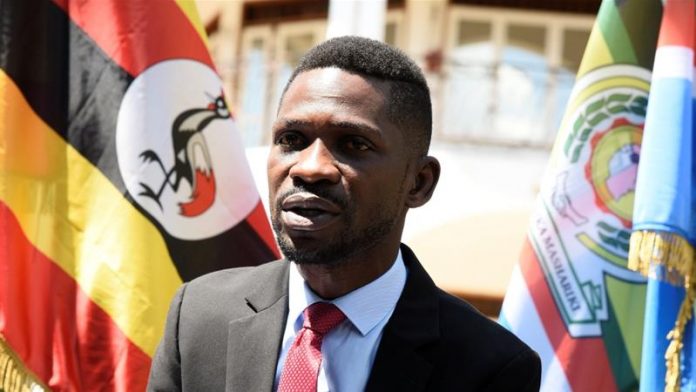
Bobi Wine

Former presidential candidate Robert Kyagulanyi Ssentamu aka Bobi Wine has welcomed European Parliament’s resolution saying they need more to stop the abductions and gross Human Rights abuses in Uganda.

Last week, the EU parliament passed a resolution calling on TotalEnergies to take one year before launching the 1445-kilometer East African Crude Oil Pipeline (EACOP) project to study the feasibility of an alternative route to better safeguard protected and sensitive ecosystems and the water resources of Uganda and Tanzania.

According to the resolution, EU parliament claimed that the project will generate up to 34 million tonnes of carbon emissions per year yet the International Energy Agency (IEA) warned in a 2021 report that limiting global warming to 1.5°C to prevent climate change’s most destructive impacts would require new oil and gas development to stop immediately.

They also said nearly 118,000 people are affected by the oil projects. Their homes were destroyed to facilitate the construction of access roads; their land was requisitioned without prior payment of fair and adequate compensation. The compensation paid is often far too low to allow farmers whose land has been expropriated to buy comparable land on which to continue farming.

“EU Parliament asks the authorities in Uganda and Tanzania to ensure human rights advocates, journalists, and civil society groups are free to carry out their work in at-risk communities and called for all arbitrarily arrested human rights defenders to be released immediately,” they said.

Bobi Wine said; “We have heard Museveni say that that is his oil. That is not his oil. That is our oil. We welcome the EU Parliament resolution, and we want even more. We have been calling for sanctions. I want to salute the Diaspora team and all Ugandans that have added to our call.”

“I also add my voice to the people suffering in the Diaspora. Many have had their organs taken away and been sexually abused, among others. Currently, more than 1000 Ugandans are stuck in the Diaspora.” he added.

Bobi Wine said today marks a full year since Kawempe North and Makindye West MPs; Ssegirinya Muhammad and Allan Ssewanyana were incarcerated and we continue to call for their release.

“We have seen a new wave of abductions and gross Human Rights abuses, and we expect everybody to raise their voices on that. No wonder the EU Parliament has cited gross Human Rights abuses, among others,” he said adding that the Ugandan government should address the issues raised by the EU parliament instead of urging it to back off the country’s oil.

MUSEVENI REACTION TO EU RESOLUTION

President Yoweri Museveni threatened to drag TotalEnergies to court if it withdrawals from the development of the East African Crude Oil Pipeline (EACOP) project.

Museveni remarked following the passing of the European Union (EU) resolutions urging TotalEnergies to take one year before launching the project to study the feasibility of an alternative route to better safeguard protected and sensitive ecosystems and the water resources of Uganda and Tanzania.

According to a source who attended the National Resistance Movement (NRM) Caucus on Friday 16th September at Kololo, Museveni said he didn’t support the development of EACOP from Uganda to Tanzania but he was convinced by TotalEnergies for the projects to begin.

Museveni said Uganda will drag TotalEnergies to court and the country is ready to contract another company to see oil flow by 2025.

Later through his Twitter handle, Museveni assured the country that the project shall proceed as stipulated in the contract we have with TotalEnergies and CNOOC.

“We should remember that Total Energies convinced me about the Pipeline idea; if they choose to listen to the EU Parliament, we shall find someone else to work with. Either way, we shall have our oil coming out by 2025 as planned. So, the people of Uganda should not worry,” Museveni said on Twitter

In February 2022, China National Offshore Oil Corporation (CNOOC) Uganda Limited and TotalEnergies (Total) announced their Final Investment Decision (FID) to respectively develop the Kingfisher Development Area (KFDA) and Tilenga upstream oil projects.

The signing of FID followed the accomplishment of the Host Government Agreements (HGA) agreement signed between the government of Uganda and Tanzania for the East African Crude Oil Pipeline (EACOP) project in 2021 planned to be complete by 2025.

The FID will see Total and CNOOC investing more than US$10 billion (Shs 38.1trillion) in developing crude oil production between Uganda and Tanzania. Out of the $10 billion, $3.5 billion (Shs 13.3trillion) will be spent on constructing a heated pipeline linking oil fields in western Uganda to the Indian Ocean port of Tanga in Tanzania. With 897 miles, the pipeline will be one of the World’s longest. The two oil drilling companies are expected to deliver a combined production of 230,000 barrels per day.

On 2nd September 2022, Sinopec Zhongyuan Oil Engineering announced that it kicked off the delivery of its first silent drilling rig from Sichuan Province of China for the Total Energies’ Tilenga drilling project in Uganda. The silent machine also demonstrates green, efficient, intelligent, and environmentally friendly features.

On 15th September 2022, CNOOC announced that an oilfield drilling rig reached Mombasa port and will soon be in Uganda.

“Steps to first oil. Kingfisher oilfield rig reaches Mombasa port and will soon be in Uganda. We are committed to delivering first oil to Uganda and there’s no turning back.” CNOOC said on Twitter.

EU PARLIAMENT’S CLAIMS

On Thursday 15 September, the European Union (EU) Parliament passed resolutions seeking to slow the implementation of the EACOP. The MPs questioned the growing economic influence of China and Russia in the energy sector. They claimed that Uganda’s authorities are interested in developing a nuclear power plant with Russian assistance.

“Tilenga project which is situated within the Murchison Falls natural protected area will jeopardize water resources and irremediably harm the livelihoods of farmers, fisher folk, and tourism business owners. EACOP will endanger nature reserves and habitats despite the project partners’ announcement of its economic and employment benefits, its impact on local communities and the environment is not worth the risk.”

They claimed that the project will generate up to 34 million tonnes of carbon emissions per year yet the International Energy Agency (IEA) warned in a 2021 report that limiting global warming to 1.5 °C to prevent climate change’s most destructive impacts would require new oil and gas development to stop immediately.

According to the resolutions, the MPs claimed that on 9 November 2021Uganda blocked a mission from the EU delegation and the embassies of France, Belgium, Denmark, Norway, and the Netherlands from entering the oil zone.

 “Nearly 118, 000 people are affected by the oil projects. Their homes were destroyed to facilitate the construction of access roads; their land was requisitioned without prior payment of fair and adequate compensation. The compensation paid is often far too low to allow farmers whose land has been expropriated to buy comparable land on which to continue farming. The rights of indigenous communities to free, prior and informed consent are not being respected in accordance with international standards.” they said

“EU expresses its concern about the human rights violations in Uganda and Tanzania linked to investments in fossil-fuel projects, including the wrongful imprisonment of human rights defenders, the arbitrary suspension of NGOs, arbitrary prison sentences, and the eviction of hundreds of people from their land without fair and adequate compensation,” they claimed

EU PARLIAMENT’S RESOLUTIONS ON UGANDA’S OIL

Sitting on Thursday 15th September, they asked the authorities to ensure human rights advocates, journalists, and civil society groups are free to carry out their work in at-risk communities and called for all arbitrarily arrested human rights defenders to be released immediately;

“The governments of Uganda and Tanzania should initiate concrete measures to ensure that authorities, security forces, and policies respect and comply with human rights standards,” they said in a statement.

They urged the Ugandan Government to reauthorize the 54 NGOs that have been arbitrarily closed or suspended and to grant those people who have been displaced without receiving fair and adequate compensation access to their land.

“EU Parliament reiterates its call on the Ugandan authorities to allow free, meaningful and unhindered access to the oil zone for civil society organizations, independent journalists, international observers and researchers,” read part of the statement.

The parliamentarians called EU and the international community to exert maximum pressure on Ugandan and Tanzanian authorities to protect the environment and to put an end to the extractive activities in protected and sensitive ecosystems, including the shores of Lake Albert, and commit to using the best available means to preserve the culture, health, and future of the communities affected and to explore alternatives in line with international climate and biodiversity commitments.

 “TotalEnergies should take one year before launching the project to study the feasibility of an alternative route to better safeguard protected and sensitive ecosystems and the water resources of Uganda and Tanzania, limiting the vulnerability of the watersheds in the African Great Lakes region and to explore alternative projects based on renewable energies for better economic development.”

Stories Continues after ad

UN Development Programme set to build Innovation Hub at Makerere University

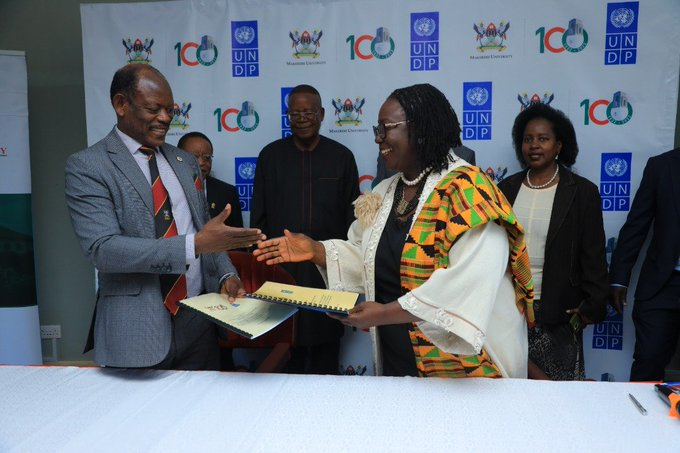
The United Nations Development Programme (UNDP) is set to build an innovation hub at Makerere University that is aimed at skilling students in various sectors with a view to empowering startups and creating jobs.

The Makerere Innovation Pod will be established through UNDP’s Timbuktoo initiative, a $1 billion youth innovation financing facility for Africa which aims to scale 1,000 high growth start-ups, improve 50 million livelihoods and generate $10 billion in value creation.

UN Resident Representative in Uganda Elsie Attafuah said the partnership with Makerere is anchored on five strategic areas; fostering innovation ecosystems in public universities,  Leveraging the Role of Universities in Grassroots Development and Establishing a regular Innovation Expo as a platform for youth innovators to network.

Others are promoting research on resilience, and strengthening gender equality in public institutions.

“UNDP is establishing the University Innovation Hub/ Pod, 10 other African Countries are also beneficiaries. Makerere is well placed to host this innovation pod which would be interdisciplinary in nature bringing together students, academia, and partners from all fields,” she said.

She said the University Innovation Pod will provide University Students with: Maker-Spaces that provide service to both engineering as well as creative design projects, with a standard set of equipment; a Design Lab that offers a host of programs in design thinking.

“The hub will support students to apply design principles toward solving any problem they are tackling; Collaborative Working Spaces to enable students create business ideas and host product demos, training events, speaker talks, & other community & collaboration building events,” Ms Attafuah added.

Makerere University Vice Chancellor Prof Barnabas Nawangwe welcomed the partnership with UNDP.

“I am delighted that Makerere will finally host an innovation hub to facilitate the transformation from research to commercial projects,” he said.

“The innovation hub will help us incubate the ideas developed by our students to ensure that they create companies that will create jobs for the many students we graduate every year,” he added.

The Makerere Vice Chancellor said Parish Development Model Policy lab will hopefully rescue the well intended program from the public nay-sayers.

Prof. Ezra Suruma, the university chancellor, also welcomed the partnership.

 “When I was in the Office of the Prime Minister, we focused so much on the problem of Implementation. As Makerere, we have to focus on making sure the PDM trickles down to the people at the grassroots to ensure poverty alleviation,” he said.

“As we sign this partnership, I hope this will set the ball rolling for an innovative program for society transformation in the next 100 years of Makerere University,” he added.

Stories Continues after ad
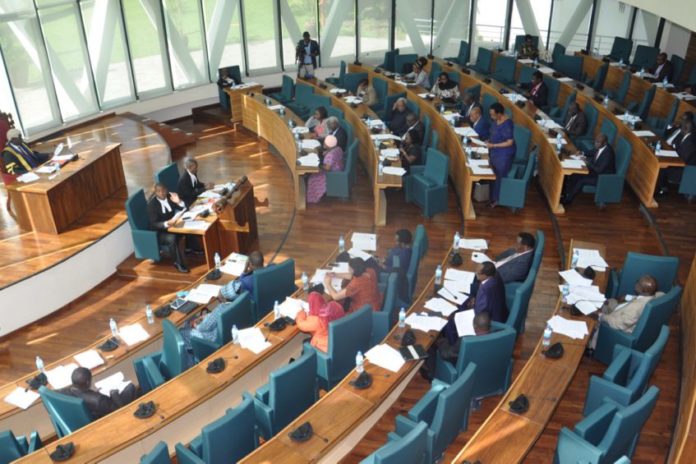
28 nominated for EALA seats

MPs in a sitting at the East African Legislative Assembly

Twenty eight aspirants have expressed interest in competing for Uganda’s nine slots at the East African Legislative Assembly (EALA).

On Monday, 19 September 2022, the nomination papers for 15 candidates, all independent aspirants, were received. 13 aspirants presented their nomination papers on Tuesday, 20 September 2022, the last day of the two-day activity presided over by the Clerk to Parliament, Adolf Mwesige Kasaija, at Parliament’s Conference Hall.

According to records, a total of 18 independent candidates presented their nomination papers, while six candidates from the ruling National Resistance Movement (NRM) party also expressed their interest.  

The Democratic Party, Justice Forum (JEEMA), Forum for Democratic Change (FDC), and Uganda People’s Congress (UPC) fielded one candidate each to compete for the opposition slots.

Those nominated on the second day included the six candidates fronted by NRM. These are Paul Musamali, Rose Akol, Stephen Odongo, James Kakooza, Mary Mugyenyi, and Denis Namara.

Also nominated on day two were candidates endorsed by several opposition political parties including DP’s Gerald Siranda, UPC’s Fred Ebil, and FDC’s Harold Kaija.

According to the Clerk to Parliament, Adolf Mwesige Kasaija, nomination documents are to be verified by a verification committee, and thereafter, the names of the successful candidates will be gazetted.

These will then be invited for open campaigning before Members of the 11th Parliament who form the electorate on Thursday, 29 September 2022 at Parliament.

According to the EALA road map, by September, Parliament should have selected and gazetted Uganda’s representatives to the Arusha-based Assembly.

Stories Continues after ad

Russia banned from Euro 2024 tournament

UEFA Euro 2024 Logo

Russia has been banned from qualification for Euro 2024 following the invasion of Ukraine, Uefa confirmed.

The country and its clubs have been banned from Uefa and Fifa competitions since the conflict began in February.

The qualifying draw for Euro 2024, which will be hosted by Germany, will take place in Frankfurt on 9 October.

Russia appealed against the bans to the Court of Arbitration for Sport (CAS), however these were dismissed in July.

The initial decision to ban Russian teams was made by Uefa’s executive committee on 28 February 2022 and then upheld by the Court of Arbitration for Sport on 15 July.

In a statement, Uefa added: “Russia is therefore not included in the Uefa European Football Championship 2022-24 qualifying draw.”

Russia has also been banned from the 2022 World Cup in Qatar, and were removed from March’s qualifying play-offs for the tournament.

The women’s team were excluded from this summer’s European Championship, with Portugal taking their place.

The country’s club sides were banned from this season’s Champions League, Europa League and Europa Conference League with Uefa also ending Russian energy giant Gazprom’s sponsorship deal.

The 2022 Champions League final was originally set to be played in St Petersburg, but was moved to Paris.

Stories Continues after ad

Allan Okello returns to KCCA FC on loan


Uganda Cranes creative midfielder Allan Okello has returned to KCCA FC on loan for the 2022/23 season from Algerian side AC Paradou. 

The 2019 FUFA Men’s Player of the year left KCCA FC for AC Paradou on a four years deal in January 2020.

Okello joined KCCA Soccer Academy in 2015 and he played for the club’s Junior Team in the FUFA Juniors League for two years.

He then rose through the ranks and later made his debut for KCCA FC senior team on 27th February 2017 at 16 years old. The left-footed player bagged a hattrick on his debut against Onduparaka FC in a game that ended 7-0 in favor of KCCA FC.

Okello later played for KCCA FC in the CAF Confederation Cup and CAF Champions League in 2017 and 2018 respectively.

During his first stint at KCCA FC, Okello played 112 games and scored a total of 39 goals in three years.

At the time of his departure for AC Paradou in January 2020, Okello was the club’s top scorer in the Uganda Premier League with six goals in the 10 games he played in the first round of the 2019/2020 season and was also the reigning FUFA Men’s Footballer of the year (2019).

Allan Okello, becomes the eleventh player to join KCCA FC in this transfer window after Haruna Lukwago, Daniel Isiagi, Mujuzi Musitafa, Shaban Muhamad, Tshisungu Kankonde, Moses Waiswa, Ssenoga Muhamed, and teenagers Faisal Wabyoona, Saidi Mayanja, and Allan Enyou.

Stories Continues after ad