Stanbic Bank
Stanbic Bank
21.2 C
Kampala
Stanbic Bank
Stanbic Bank
Home Blog Page 530

Don’t involve me in your internal issues, Museveni tells Kenyans

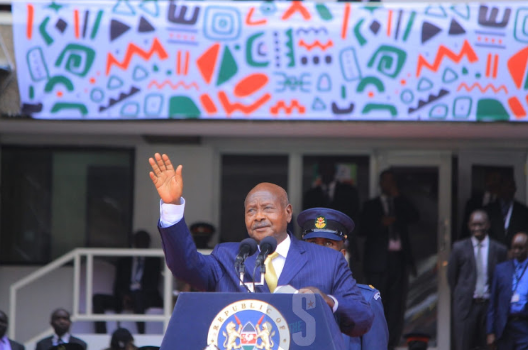
President Yoweri Museveni has told Kenyans not to involve him in their internal affairs.

This came after Kenyans gathered at Kasarani started chanting ‘Toboa’ when he said Deputy President Rigathi Gachagua had talked about challenges of leadership in African countries.

As the crowd persisted with the chants, Museveni asked them not to involve him in Kenya’s internal wrangles.

The reaction followed remarks by the deputy president where he seemed to be throwing jabs at former President Uhuru Kenyatta over how he ran his administration.

He said while watching KTN News, he saw young men talking about sharing power and sharing resources.

He said one young man on the show made a good point, which was the politics of identity versus the politics of issues.

He then challenged the political class in Africa to consider where prosperity comes.

“According to experience of 60 years I would advice Kenyans to know that prosperity comes from wealth creation,” Museveni said.

He added that he found a problem with the TV show saying that none of the participants talked about East African integration.

Stories Continues after ad

William Ruto sworn in as Kenya’s fifth president

William Ruto swears in

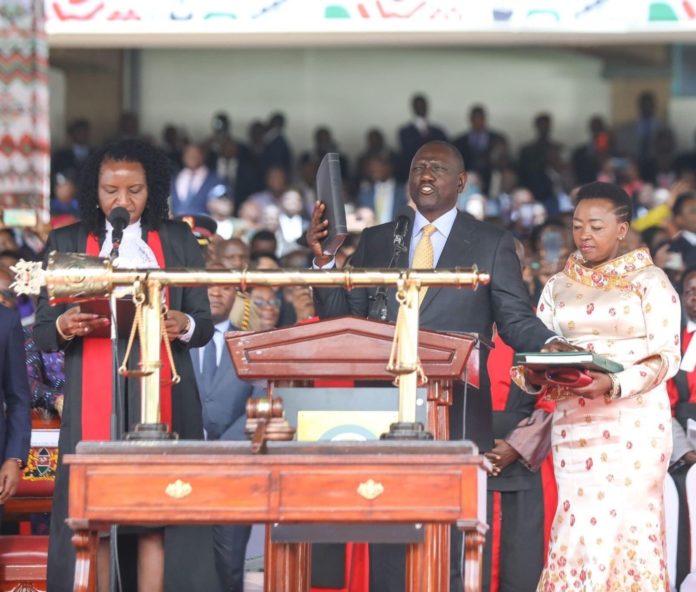
William Ruto has been sworn in as the fifth President of Kenya at Kasarani International Stadium in Nairobi.

Ruto took the Oath of Office at 12.44 pm in a swearing-in process led by the Judiciary under Chief Justice Martha Koome and the registrar Anne Amadi.

“I William Samoei Ruto, in full realisation of the high calling, I assume as the President of the Republic of Kenya, do swear that I will be faithful and bear true allegiance to the Republic of Kenya; that I will obey, preserve, protect and defend this Constitution of Kenya as by law established and all other laws of the Republic, and that I will protect and uphold the sovereignty, integrity, and dignity of the people of Kenya, so help me God,” said Ruto during his swearing-in.

Ruto also received the highest award in the country – Chief of the Order of the Golden Heart.

His deputy, Rigathi Gachagua, was also sworn in shortly after him.

The swearing-in and inauguration kicked off with the entry of President Uhuru Kenyatta aboard the Commander in Chief ceremonial vehicle, after which he inspected a full parade mounted by the Kenya Defence Forces under Lt-Col Gilbert Kinanga’s command.

The event was attended by tens of head of states and diplomats from across the world. They included East African Community presidents among others.

Stories Continues after ad

Collective Investment Scheme assets grow 13.7% in three months

Keith Kalyegira CEO of CMA

The level of savings and investment in Uganda’s capital markets has grown significantly, notwithstanding the reduction of disposable incomes as a result of the prevailing inflationary pressures, the Capital Markets Authority (CMA) latest Quarterly Bulletin update indicates.

The report indicates that Collective Investment Scheme (CIS) Managers had a total of Shs1.30 trillion in Assets Under Management (AUM) at the end of June 2022, representing a growth of 13.7 per cent from Shs1.15 trillion at the end of March 2022.

Analysis of CIS account types indicates that the largest growth was registered in the Umbrella Funds which constitute 70 per cent of the total CIS Assets Under Management.

The Umbrella Funds are invested in interest-bearing securities such as treasury bills, treasury bonds, corporate bonds, and fixed deposits with approved financial institutions. Other popular CIS account types are namely; the Balanced Fund, Money Market Fund, Fixed Income Fund, and Equity Fund.

This growth in AUM can be attributed to increased awareness about the benefits of investing through CIS vehicles among local investors, investor confidence owing to a sound regulatory regime, decent returns on investments and intensification of business development efforts by the five licensed CIS operators.

Similarly, the total AUM for Fund Managers licensed by CMA closed the second quarter of 2022 at Shs3.89 trillion, representing a growth of 0.7 per cent from Shs3.87 trillion at the end of March 2022.

Speaking about the growth in AUM, Keith Kalyegira, CEO of the CMA said: “Investing through a CIS makes the most sense during times like this when inflation is eating into the value of savings. With nominal returns on CIS funds currently averaging above 10% per annum, investors are able to preserve the purchasing power of their savings as the returns exceed the inflation rates.”

He added: “CIS’s offer a channel through which investors can earn a return on passive investments. CIS’s also ensure that Ugandans enjoy the benefits of having their savings managed by professionals. There are also the benefits of risk diversification, lower transaction costs, and access to a wide variety of securities investments with a small sum of at least Shs100,000. With a CIS, your securities can be sold when you deem it necessary, such as to pay school fees, in total or in part at any time.”

The licensed CIS managers are; UAP-Old Mutual Financial Services Limited, ICEA Lion Asset Management Limited, Britam Asset Managers Uganda Limited, Xeno Technologies Uganda Limited, and Sanlam Investments East Africa Limited.

Data from the Uganda Bureau of Statistics (UBOS) indicates that inflation as measured by the Consumer Price Index for Uganda for the 12 months to June 2022 increased to 6.8 per cent, up from 6.3 per cent registered in May 2022.

Stories Continues after ad

ZTE attended SATNAC 2022: Backing up Africa’s ICT Industry and Cloud as an Industry Trend

ZTE

Recently, the Southern Africa Telecommunication Networks and Applications Conference (SATNAC) was held in George, Cape Town. SATNAC is an annual event held under the auspices of Telkom, and it attracts more than 400 delegates every year.

ZTE is the Diamond Sponsor of SATNAC 2022. ZTE advocates bridging the digital divide with cost-effective solutions. Cloudalization is not only ZTE’s goal, but also the direction that the global industry is moving forward to now.

ZTE is a leading provider of ICT and communication infrastructure and services with operations in more than 160 countries. The company entered South Africa in 2001 and now it has physical presence in Johannesburg, Cape Town, PE, and Durban. The company provides communication solutions and products, such as 5G, optical broadband, data center, video conferencing, and CPE, in South Africa

CTO of ZTE Middle East & Africa Region Wu Jianjun is optimistic about the ICT industry in Africa. He said: “with 20+ years experience with various partners and clients in Africa, ZTE thinks Africa market is not an emerging market but a mature enough market. ICT is not only about communication, but also plays? an important role to benefit the society. Digitalization is fundamental for economic growth and talent education. The ICT industry in Africa will be more and more prosperous.”

Mr. Wu said that in terms of the current focus in the market, “basic connection, mobile broadband, and economic growth boost are the 3 aspects, and digitalization and cloud are the industry trends globally. ZTE could provide solutions and products to facilitate the focus and accelerate the industry trend.”

Emmanuel De La Gardette, from ZTE CTO Group, presented the maturity of cloud computing: the evolution of cloud architectures from centralized datacenters to all-distributed clouds (edge computer), allowing new performances and new types of service which are driven by the deployment of 5G and hyperscalar.

ZTE has been committed to becoming a driver of the digital economy. ZTE will continue to work with its customers and partners to promote digital transformation and boost the development of the communication industry in Africa.

Stories Continues after ad

Parliament directs Bamuturaki to account for Shs48.6m per diem received

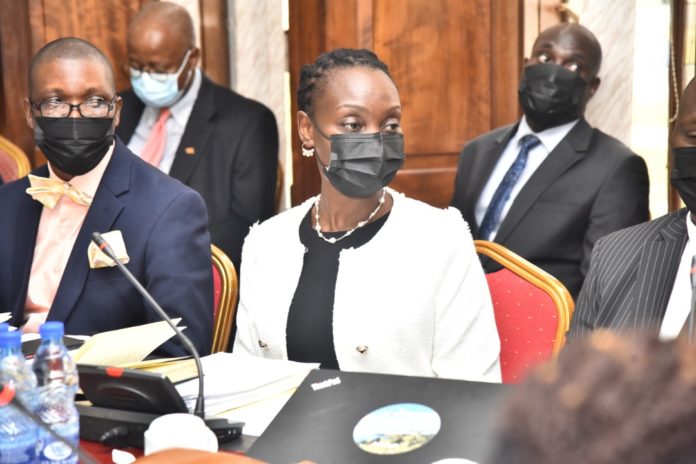
Uganda Airlines CEO Jennifer Bamuturaki (in white) appearing before COSASE

The Committee of Commissions Statutory and State Enterprises (COSASE) has tasked the Chief Executive Officer (CEO) of Uganda Airlines Jenifer Bamuturaki to account for the US$12,750 (Shs 48.6 million) per diem that she received to travel to different countries, but did not travel.

She reportedly received the money while serving as the Commercial Manager of the new airline and the acting CEO. Bamuturaki said she would respond in writing.

In tandem, the committee has given a 14 days ultimatum to Bamuturaki to present before the members her exact names after the committee discovered that she has more than three names she has been using which differ from her academic and other documents.

In 2019, Bamuturaki legally changed her name to Jennifer Arnold Lenkai but continues to use ‘Jennifer Bamuturaki’ on official documents.

Bamuturaki has been under scrutiny over the operations of the airline. The management of the company reportedly earns huge amounts of money despite making losses. The airline is reported to have recorded Shs 160 billion last financial year.

In 2018, Uganda mooted an idea to revive its airline and hence ordered four Bombardier CRJ900 regional Aircraft. In 2020, the government of Uganda received four Bombardier CRJ900 regional Aircraft that were ordered by Uganda National Airlines Company in July 2018 and two airbuses that were delivered in 2020 and 2021.

Following the arrival of airbuses, the country launched its long-range operations with non-stop intercontinental flights to the Middle East, Europe, and Asia.

Established in May 1976, Uganda Airlines, started operations in 1977 and was liquidated in May 2001 after efforts to privatize the company failed due to massive debts it had incurred.

Uganda Airlines is competing with Africa’s best such as South Africa Airways, Ethiopian Airways, Kenya Airways, Rwandair, and others on the continent, not forgetting International ones such as Emirates Airways, Qatar Airways, and Turkish Airways among others that land at Entebbe International Airport.

Stories Continues after ad

Ministries of Tourism, Culture disagree on harmonization

Peace Mutuuzo, state minister for Gender and Culture

The Ministry of Tourism and the Ministry of Gender and Culture have failed to reach an agreement on the proposal to have museums and monuments in Uganda be regulated under one Ministry, saying the two agencies have been working in harmony with no need to merge the two entities to oversee the historical sites sector.

This was during a meeting held with Parliament’s Committee on Tourism and Trade that is currently considering the Museums and Monuments Bill 2022 that seeks to protect cultural and natural heritage resources and the environment, strengthen and provide set up of institutional structure for effective management of the museums and monuments and to prohibit illicit trafficking of protected objects and to promote local content of cultural and natural heritage.

Clause 8 of the Museum and Monuments Bill stipulates the roles of the Minister of Culture, giving them powers to formulate, review policies and legislation on culture and heritage promotion, preservation and development for museums and heritage sites in Uganda.

However, a number of stakeholders were opposed to leaving these responsibilities to be handed over to the Ministry of Gender and Culture, arguing that the institution’s role is passive and instead proposed to have the Culture aspect of the Gender Ministry be merged with the Ministry of Tourism for effective monitoring and promotion of the historical sites.

The Committee had ordered the two Ministries of Culture and Tourism to harmonize their positions, but Minister of State for Culture, Peace Mutuzo accused officials from the Ministry of Tourism of betrayal, after they suggested to the Committee to have the Culture Ministry merged and taken to the Ministry of Tourism.

Minister Mutuzo informed the Committee that the two entities had agreed to have the tangible aspect of historical sites be regulated by the Ministry of Tourism, while the Ministry of Culture handles the intangible aspects that would fall under its watch.

“While we had harmonized and agreed that we are going to work separately, but in common, I would get shocked to see the Ministry which we have harmonized with and the position which we have come to defend here, deferring from what we have agreed on, I actually feel betrayed,” said Mutuzo.

She rejected the proposal to have her Ministry dragged back to the Ministry of Tourism, comparing the proposal to being raped.

“These two Ministries were separated 15years ago and for a purpose. Tourism can operate independently from the Ministry of Gender for as long as we can sit and harmonize on the things that bring us together. If you are proposing a marriage, you must seek for my consent, don’t come to rape here.”

However, Mwine Mpaka (Mbarara City South) said the Committee was forced to take a decision to have both the promotion of tangible and intangible historical sites be regulated under one Ministry, after the Culture Ministry failed to justify the role it plays in marketing and promotion of tourism in Uganda.

“So your justification is the reason why it can’t be taken to the Ministry of Culture is you would have been left with only wildlife, and you add the tourism value component to these sites, other than that, one Ministry can manage both. You have still not given us a justification on why one Ministry can’t manage both,” said Mwine.

But the Minister of State for Tourism, Martin Mugarra rejected the proposal for the merger of roles, saying the Tourism Committee has also failed to justify the need for the merger, because the Tourism and Culture Ministries have been managing the historical sites without any crisis.

He said:“We have been managing the museum since colonial times and nothing has happened, everything is okay. Because there is no management crisis, we aren’t losing the cultural history, let us not create a unique situation in Uganda, let us work like the others have been working. I still don’t see where the fear is. I am still trying to understand, what is it that you are trying to cure?”

Charles Okello (Nwoya East) however defended the Committee calling for the merger of the two entities saying they will be working for the same government and tasked the two Ministries to explain how they will register and regulate private entities as proposed in clause 18 of the bill.

“The Committee wanted to bring the two together… For us we think there are aspects that the law can help us to address. One of them is to bring participation of ordinary Ugandans on the issue of museums. Let us bring good faith on this table,” Okello said. 

The Museum and Monuments Bill 2022 seeks to repeal the Historical Monuments Act of 1967, Cap- 46, which the Government says has limited focus on preservation and protection of historical monuments, making it obsolete in terms of providing for a much wider cultural and natural heritage.

Stories Continues after ad

#Covid-19 threatens elimination of deadly form of meningitis in Africa

Health worker

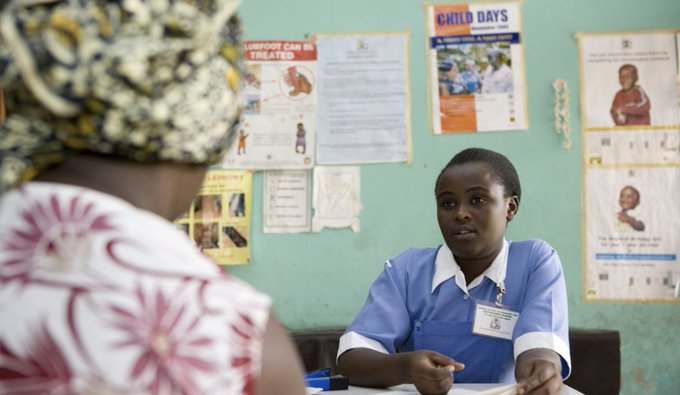
With the Covid-19 pandemic delaying meningitis vaccination campaigns for more than 50 million children in Africa, the region is at a heightened risk of outbreaks of meningitis type A, which has nearly been eliminated on the continent. In a race against time, World Health Organization (WHO) and partners have launched a roadmap aimed at stopping bacterial meningitis outbreaks by 2030, urging countries to implement it rapidly before the start of the meningitis season in January 2023.

The pandemic severely disrupted meningitis prevention and control services, with disease surveillance, laboratory confirmation of cases, and outbreak investigations all steeply declining. Based on reports from countries, WHO found that meningitis control activities were reduced by 50% in 2020 compared with 2019, with a slight improvement in 2021. Benin, Guinea, Guinea Bissau, Nigeria, and Togo delayed campaigns with the MenAfriVac vaccine aimed at protecting a total of 50 million children under 12 years of age against meningitis type A.

Historically, meningitis type A was the highest cause of meningitis outbreaks in Africa. In 2010, however, Africa embarked on a journey to defeat meningitis type A when an effective vaccine, MenAfriVac, was developed and deployed. The vaccine was developed in response to a plea from African health ministers after a meningitis type A outbreak in 1996 infected more than 250 000 people and killed over 25 000 in just a few months. With WHO and partners’ support, more than 350 million people in 24 high-risk African countries have received the MenAfriVac vaccine since 2010.

The drive to eliminate this type of meningitis has been immensely successful. While meningitis type A accounted for 90% of cases and deaths before 2010, no new cases have been reported since 2017. Controlling this lethal form of meningitis has led to fewer deaths from meningitis type A and other types of microorganisms. While 50% of people with meningitis died in 2004, in 2021, 95% of cases survived.

 “The defeat of meningitis type A is one of Africa’s biggest success stories in health, but the fallout from COVID-19 hampers our drive to eliminate this bacterial infection as a public health threat once and for all and could lead to catastrophic resurgences,” said Dr. Matshidiso Moeti, WHO Regional Director for Africa. “In prioritizing the response to COVID-19, we must not lose our focus on other health problems. I urge countries to ramp up implementation of the new WHO regional roadmap now, before the meningitis season begins in January 2023.”

While no meningitis type A case has been reported in Africa during the past five years, outbreaks still occur and are caused by other types of meningococcal bacteria. In 2019, 140 552 people in the African region died from all types of meningitis. Major outbreaks caused by meningitis type C have been recorded in seven meningitis belt countries since 2013. In 2021, a four-month outbreak in the Democratic Republic of the Congo claimed 205 lives. Moreover, the African region accounts for the highest number of new meningitis cases globally and is the only region to still experience outbreaks. The continent reports 100 cases of meningitis cases per 100 000 people, the highest incidence in the world.

 “More than 400 million Africans are still at risk of seasonal meningitis outbreaks, but the disease has remained off the radar for too long,” said Dr. Moeti. “Aside from the toll on human life, outbreaks negatively impact health systems, our fragile economies, and impoverish entire populations forced to contend with multiple health and socio-economic challenges.”

In an ambitious bid to defeat bacterial meningitis in the African region by 2030, the new regional strategy launched today sets out a roadmap for countries to shore up diagnosis, surveillance, care, advocacy, and vaccination to eliminate outbreaks, curb deaths by 70% and halve infections. WHO estimates that US$ 1.5 billion will be required between now and 2030 to implement the plan, which if countries fully adopt will save more than 140 000 lives every year in the region and significantly reduce disability.

Meningitis is caused by inflammation of the membranes that surround the brain and spinal cord and is transmitted via a sneeze, saliva, or phlegm from the nose and throat of infected persons. Acute bacterial meningitis is one of the deadliest and most disabling forms of illness. It can cause death within 24 hours and leaves one in five infected people with lifelong disability after infection. In Africa, the meningitis season is particularly long, stretching from January to June.

Although meningitis affects all ages, young children are most at risk, with around half of cases and deaths occurring in children under 5 years of age.

Stories Continues after ad
Three arrested over forgery of documents for US Visas

Handcuffs

Police in close coordination with the US Embassy in Kampala have arrested three suspects for allegedly submitting fraudulent documents for US Visas to the Embassy.

According to Police, two Diplomatic Notes dated 21st June 2022 and 4th July 2022, were issued by the Ministry of Foreign Affairs, using fraudulent or falsified police certificates.

“The attached police certificates that are alleged to have been signed by an unknown person on behalf of the Director for Interpol and International Relations, were established to be a forgery,” Police spokesperson Fred Enanga said.

“It is further established that the Diplomatic Note issued on the 21st June was signed by a one Opio Innocent, a 1st Secretary at the Ministry of Foreign Affairs. He however, did not give clear reasons for issuing the Diplomatic Note. The second Diplomatic Note dated 4th July was signed by a one Wandera Emmanuel a Foreign Service Officer, at the Ministry of Foreign Affairs. He claimed that we had signed the document after correcting an error on the original document, allegedly signed by his superior. He however, did not notify him of the changes,” Enanga added.

All the 11 applicants were fronted as police officers going for a training course in Washington D.C in the US. Out of the 11 applicants, 10 were established to be civilians, while one police officer, used false information, claiming he was a detective attached to CID Headquarters, yet he was a police driver.

Out of the 11 applicants, 3 travelled to the US and are wanted, three were arrested, two have their passports pending at the US Embassy and 3 had not submitted their documents.

“It is also surprising that the Diplomatic Notes were delivered to the US Embassy, by a one Kiwanuka Louise Mary, a courier at the Ministry of Foreign Affairs, after informally receiving them from an intermediary, known as Odong John Baptist, who was not an employee at the Ministry of Foreign Affairs,” Enanga said.

“We are investigating the entire racket for issuing Diplomatic Notes, in total disregard to the guidelines issued by the Ministry of Foreign Affairs, as well as inquiries in utterance of false documents and conspiracy. We have also re-instituted a similar case file, which was opened against Opio Innocent, for issuance of fraudulent Diplomatic Notes in 2017.”

The investigations do show that a number of travel agents, intermediaries in conspiracy with rogue officials, were submitting fraudulent applications for US visas at a cost. They compile profiles with forged work experience, bank documents, birth certificates, police certificates, marriage certificates among others, to help applicants acquire student visas, study visa’s and resident visas among others. 

Stories Continues after ad
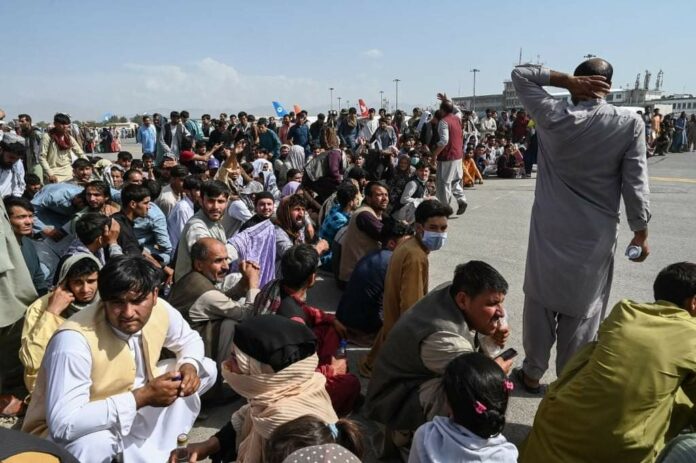
A year later, Afghan asylum seekers are still in Uganda

Afghan refugees

Uganda is still hosting Afghan asylum seekers, the Eagle Online has learnt. The revelation was made by Henry Oryem Okello, the State Minister for Foreign Affairs.

On 25 August 2021, Uganda received the first group of Afghan asylum seekers. The group comprised 51 evacuees including men, women, and children. Initially, the Afghans were meant to stay in Uganda for a period of three months however it is a year later, and the decision to have them relocated lies in the hands of the US government.

According to the United Nations High Commission for Refugees (UNHCR), Afghans make up one of the largest refugee populations worldwide. There are 2.6 million registered Afghan refugees in the world, of which 2.2 million are registered in Iran and Pakistan. Another 3.5 million people are internally displaced, having fled their homes and searching for refuge within the country.

“The Afghans are still in the country. We so far have less than 100 Afghans. We have not registered them as refugees, they are asylum seekers and they will soon be leaving the country,” Mr. Okello said adding that, “Uganda has not received any security threat from the Taliban despite hosting Afghan asylum seekers.”

The minister said the US government is accessing the security situation in Afghanistan and at the same time working on the program to have them relocated.

Due to its generosity and home to over 1.5 million refugees from South Sudan, the Democratic Republic of Congo (DRC), Somalia, Rwanda, Burundi, and other countries, the Afghans can be registered in  Uganda as refugees and allocated to various settlements. About 93 percent of refugees live in settlements located in 12 districts of Uganda and most of those in the urban areas live in the Kampala district.

Esther Anyakun, the minister of State for Refugees said the Afghan evacuees in the country were mostly working with the toppled government.

“Uganda is temporarily hosting the Afghan refugees before they could be relocated by the US government. We are hosting them on request from the US government to His Excellency President Yoweri Museveni,” Ms. Anyakun said.

The refugee bills are catered for by the American government ever since they arrived in the country. Unlike other asylum seekers, the Afghans were not registered and allocated to refugee camps but instead are hosted in various hotels in Kampala.

Ms. Dorothy Nanyonga, the Information Assistant at the US Embassy in Kampala has since not responded to questions sent to her as she asked.  

In August 2021, the Taliban took over Afghanistan and declared victory after Afghan President Ashraf Ghani fled the country. The militants’ return to rule brought an end to almost 20 years of a US-led coalition’s presence in Afghanistan. Kabul was the last major city to fall to a Taliban offensive that began in July 2021.

Stories Continues after ad

Micho summons Cranes squad to play Tony Mawejje testimonial matches, mini tournament in Libya

Tony Mawejje

Head Coach Milutin ‘Micho’ Sredojevic has named Uganda Cranes squad largely composed of U23 players to feature in the Tony Mawejje testimonial matches and the forthcoming Mini tournament in Libya.

Micho announced a squad of 35 including six foreign based players that will take part in the aforementioned tasks.

The Mawejje testimonial matches will be played this week on Wednesday and Friday in Lugogo and Masaka respectively.

The two games are in honour of former Uganda Cranes midfielder Mawejje who has decided to retire from football. He featured for the national team between 2004-2018 making 84 appearances and scoring 8 goals.

Coach Micho however indicates that the foreign based legion and players from Vipers will not feature in the testimonial matches but instead will join the team ahead of the trip to Libya.

“The six foreign based players and four players from Vipers SC will not be available for the testimonial matches but instead will join us on Sunday as we travel to Libya,” he told Fufa media.

The players include goalkeeper Giosue Bellagambi from Huddersfield Town FC, Abdul Azizi Kayondo, Musa Ramathan, Steven Sserwadda, Derrick Kakooza and Sadat Anaku.

The Vipers players on the other hand are Hillary Mukundane, Abdu Karim Watambala, Bright Anukani and Najib Yiga.

After the two testimonial matches, the team will travel to Libya on Sunday for a tri-nation tournament in Benghazi.

Uganda will face Libya on Wednesday, 21st September and take on Tanzania on Saturday, 24th September.

The games are meant to prepare the Uganda U23 team that will take on Guinea in the U23 AFCON Qualifiers that serve as gateway to the 2024 Summer Olympic Games.

Summoned Squad

Goalkeepers: Giosue Bellagambi (Huddersfield Town FC), Denis Otim (Express FC), Denis Kiggundu (Vipers SC), Shamulan Kamya (Impala Hill), Abdu Magada (Gadaffi FC)

Defenders: Garvin Kizito Mugweri (SC Villa), James Begisa (URA FC), Abdu Azizi Kayondo (Royal Monarchs), Derrick Ndahiro ( URA FC), Ibrahim Juma (Leganes FC), Musa Ramathan (Cincinnati FC), Kenneth Ssemakula (SC Villa), Hassan Jurua (KCCA FC), Hillary Mukundane (Vipers SC), Samson Kasozi (UPDF FC), Simon Baligenya (URA FC)

Midfielders: Bobosi Byaruganga (MFK Vyskov), Steven Serwadda (New York Red Bulls), Najib Yiga (Vipers SC), Abdukarim Watambala (Vipers SC), Ivan Irinimbabazi(Soltilo Bright Stars FC), Abdallah Salim (URA FC), Issa Bugembe (Soltilo Bright Stars FC), Faisal Wabyoona (KCCA FC), Saidi Mayanja (KCCA FC), Isma Mugulusi (Unattached), Rogers Mugisha (UPDF FC), Bright Anukani (Vipers SC)

Forwards: Hakim Kiwanuka (Proline FC), Travis Mutyaba (SC Villa), Titus Ssematimba (Wakiso Giants FC), Derrick Kakooza (Valmiera), Sadat Anaku(Dundee FC), Rogers Mato (KCCA FC), Richard Basangwa (Gaddafi FC)

Stories Continues after ad